

 Facebook
 X
X
 Pinterest
 Copy Link
Cost to Sell a Home in Washington State: 2026 Breakdown
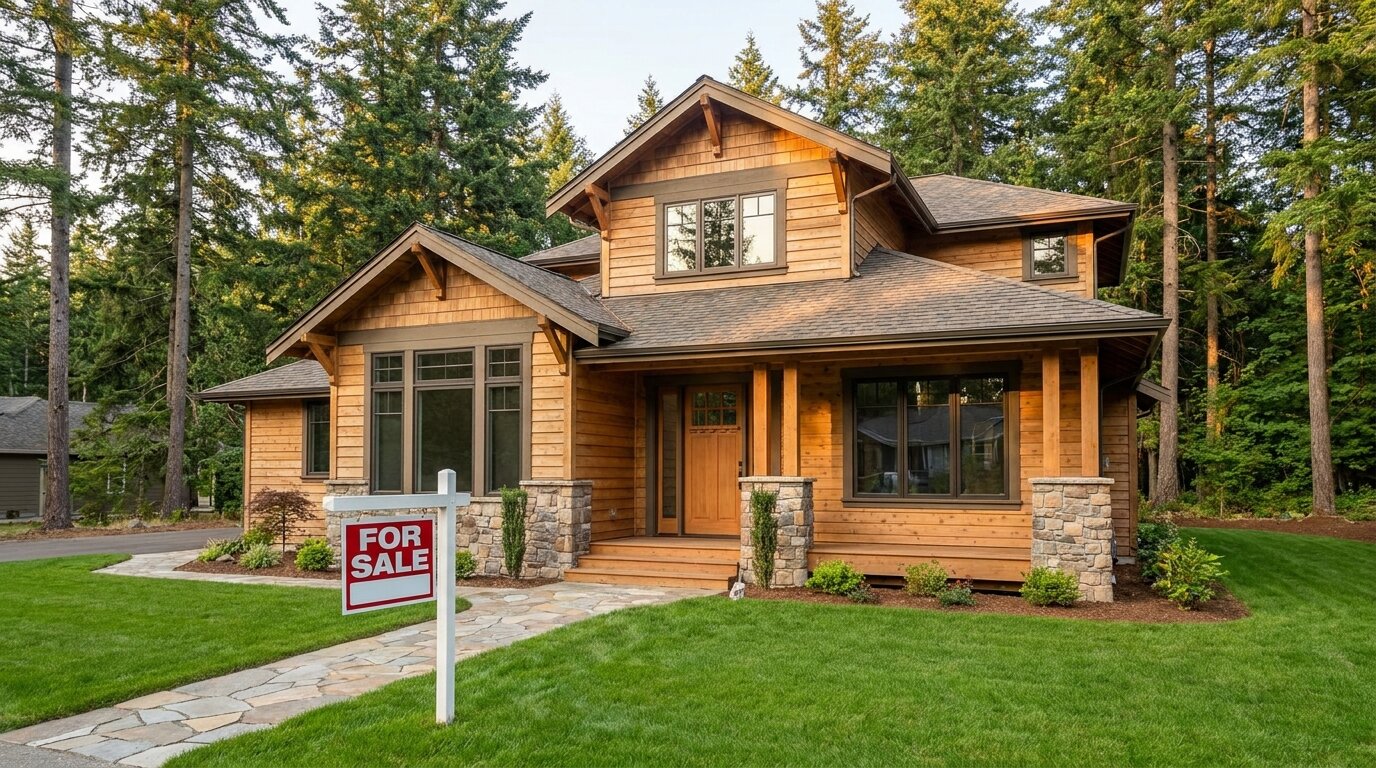
Most sellers ask me one question before anything else: “How much am I actually going to walk away with?” Not the sale price. The number after everything gets paid.
I do BPO work across east and south King County almost every day, pricing homes for banks and institutional clients. That work puts me in front of real closing statements constantly, and I can tell you the gap between what sellers expect to net and what they actually net is almost always caused by the same handful of costs. None of them are secret. Most sellers just never sat down and added them up.
Here’s the honest breakdown, King County numbers included, so you can run your own math before you decide anything.
The Big Four Costs, In Order of Size
Four costs make up almost all of what comes out of your proceeds at closing. Everything else is smaller line items. Here they are, biggest to smallest.
1. Real Estate Commission
This is the largest line item, almost every time. Washington’s average total commission sits around 5.9% right now, split between the listing agent and the buyer’s agent, though that split is negotiable and varies deal to deal. On the Eastside specifically, a lot of full-service listing agents run 2.5% to 3% on their side.
On a $900,000 sale, a 5.5% total commission is $49,500. That’s real money. It’s also the single biggest reason your net check is smaller than your sale price. It buys you something, though: professional pricing, marketing, negotiation, and someone managing the transaction so an inspection issue or a lowball appraisal doesn’t blindside you. Real estate commission are and have always been negotiable and will vary from transaction to transaction.
2. Real Estate Excise Tax (REET)
Washington charges a graduated excise tax on every home sale, and King County adds its own local portion on top. Here is the state schedule for 2026:
1.10% on the portion of the price up to $525,000
1.28% on the portion between $525,001 and $1,525,000
2.75% on the portion between $1,525,001 and $3,025,000
3.00% on anything above $3,025,000
King County adds a local REET of 0.50% on top of the state rate.
Run it on a $900,000 King County home: roughly 1.10% on the first $525,000 ($5,775) plus 1.28% on the remaining $375,000 ($4,800), for a state total near $10,575. Add the county’s 0.50% ($4,500) and you land around $15,075 in excise tax alone. Most sellers don’t plan for that number. They find out on the closing statement instead. For the full rate schedule and how it’s calculated, see Washington State Real Estate Excise Tax: Complete Guide for Sellers.
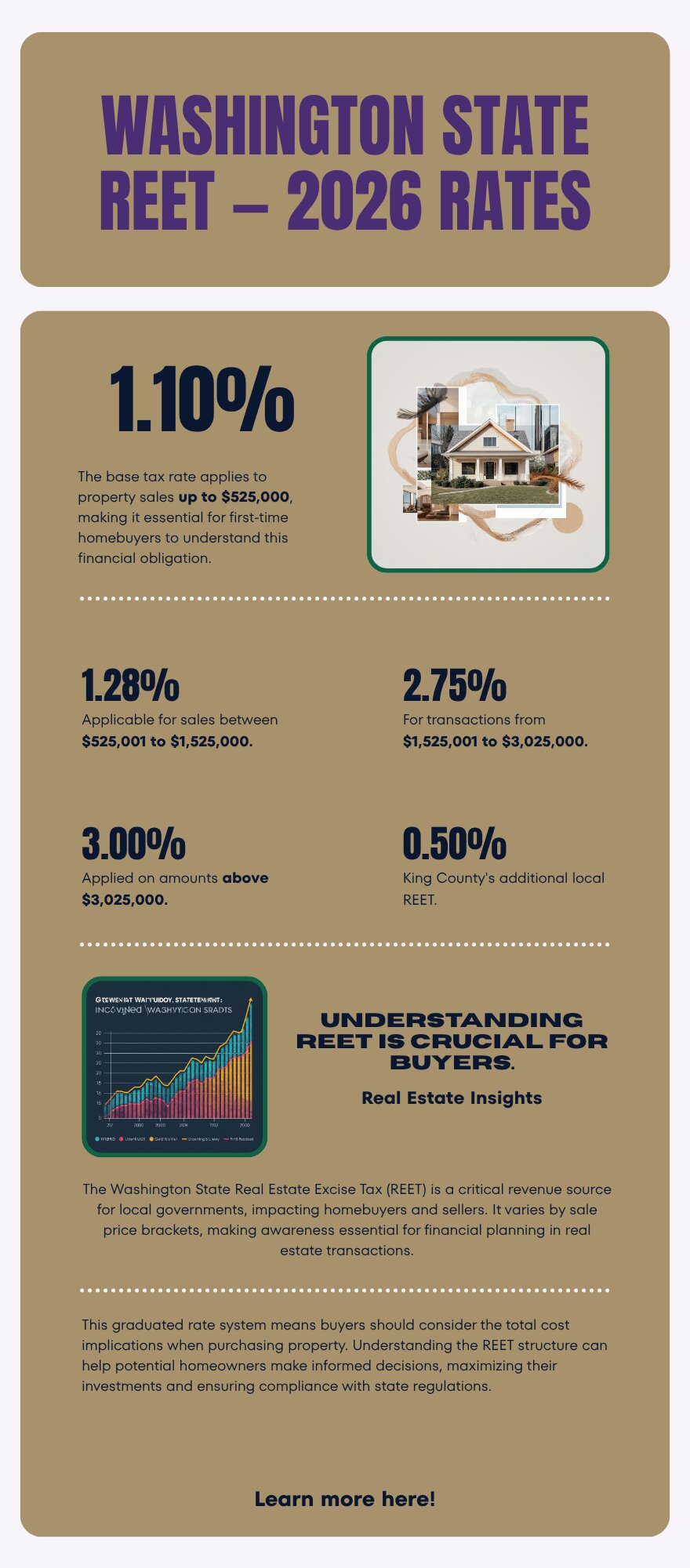
Washington’s REET is graduated. King County adds its own 0.50% on top of the state rate.
3. Title Insurance and Escrow Fees
Sellers in Washington typically pay for the owner’s title insurance policy, which protects the buyer against title defects. Escrow fees are usually split roughly in half between buyer and seller. Together these run a few thousand dollars on a typical King County sale, more on higher-priced homes since title insurance premiums scale with sale price.
Budget $2,500 to $5,000 for title and your share of escrow on a mid-range King County home. Your escrow company will give you exact numbers once you’re under contract. This range holds steady across most listings.
4. Buyer Concessions
This is the cost sellers underestimate the most, and it has become more common. Roughly 19% of recent King County sales included a seller concession, according to NWMLS data from this year. Most concessions land in the 1% to 3% range, and lenders generally cap them at 2% to 6% of the purchase price depending on loan type.
Agree to cover $10,000 to $20,000 in the buyer’s closing costs, or a rate buydown to get the deal done, and that comes straight out of your proceeds. It’s not a hidden fee. It’s a negotiated one. But it needs to be in your math from day one, not something you discover mid-negotiation. Buyers are budgeting their own closing costs at the same time. If you want to understand what they’re weighing against your ask, see Earnest Money in King County: How Much You Need in 2026.
Adding It Up: A Real Example
Here’s the full math on a $900,000 King County home, close to the current county median for single-family homes.
Sale price: $900,000
Commission (5.5%): $49,500
State + King County REET: $15,075
Title insurance + seller’s escrow share: $3,500
Buyer concession (2%): $18,000
Total selling costs: $86,075 (about 9.6% of sale price)
Estimated net before payoff of existing mortgage: $813,925
That 9.6% figure sits right in the middle of the 8% to 10% range most sellers should expect. Yours will move up or down depending on your commission rate, whether you offer a concession, and where your price lands in the excise tax brackets.

Knowing your real number before you list means no surprises at the closing table.
The Local Angle: South and East King County Specifics
Costs shift a little depending on where in King County you are selling.
In South King County cities like Kent, Auburn, Covington, and Maple Valley, home prices run below the county median, which keeps your excise tax bill lower in dollar terms even though the percentage stays close to the same. Sellers here also tend to see fewer aggressive concession requests right now, since inventory in the affordable price bands moves faster.
In East King County, Bellevue, Sammamish, and Issaquah sellers deal with higher price points. That pushes more of the sale into REET’s higher brackets once you cross $1,525,000. Sell above that threshold and your excise tax rate jumps from 1.28% to 2.75% on the portion above it. Run that difference through a calculator before you set your list price expectations.
I price homes across both sides of the county every week through my BPO work. The pattern holds. Sellers who know their real numbers going in negotiate from a position of confidence. Sellers who find out their net at the closing table are the ones who get blindsided. (Curious how that pricing work actually happens? Here’s how I price homes using BPO methodology.)
What This Means for You as a Seller
Before you list, do three things.
Run your own numbers using your actual expected sale price, not a rough guess. A $50,000 difference in price can shift which excise tax bracket you land in.
Ask your agent for a written net sheet before you sign a listing agreement. Any agent worth hiring will walk through commission, REET, title, and a realistic concession estimate with you up front, not after you get an offer.
Decide your concession tolerance before you are in a multiple-offer or slow-market negotiation. Knowing your floor ahead of time keeps you from making an emotional decision at the table.
Getting your home ready to list is its own cost and time decision. If you haven’t mapped that out yet, start with How to Prepare Your Home for Sale in King County.
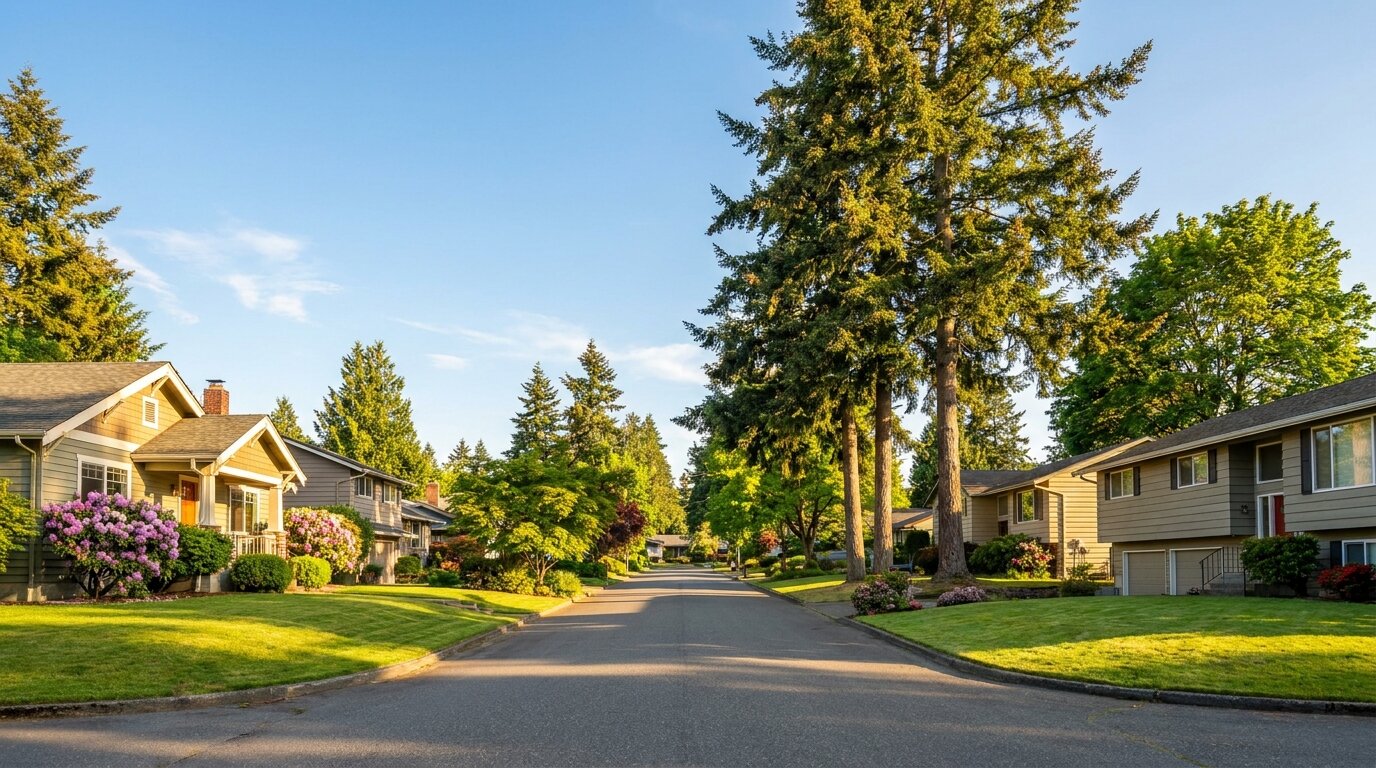
Selling costs shift depending on where in King County you list. South King County sellers see a different picture than the Eastside.
FAQ
How much does it cost to sell a house in King County, Washington?
Most King County sellers pay between 8% and 10% of their sale price in total selling costs, covering commission, real estate excise tax, title insurance, escrow fees, and any buyer concessions.
What is the real estate excise tax rate in King County?
Washington’s state REET is graduated: 1.10% up to $525,000, 1.28% from $525,001 to $1,525,000, 2.75% from $1,525,001 to $3,025,000, and 3.00% above that. King County adds a local 0.50% on top of the state rate.
Who pays closing costs when you sell a house in Washington State?
Sellers typically pay the real estate commission, the excise tax, the owner’s title insurance policy, and roughly half the escrow fee. Buyers typically pay their own lender fees, their half of escrow, and inspection costs.
Can you negotiate real estate commission in King County?
Yes. Commission is negotiable and varies by agent and by deal. Washington’s average total commission is around 5.9%, but the exact split between listing and buyer’s agent is a conversation you should have before signing a listing agreement.
Do I have to pay excise tax if I sell at a loss?
Yes. Washington’s REET is based on the sale price, not your profit or loss. Even if you sell for less than you paid, you still owe excise tax on the full sale price, with limited exceptions.
How much should I budget for seller concessions in King County?
Plan for 1% to 3% of your sale price if the market conditions or buyer financing call for it. Roughly 19% of recent King County sales included a seller concession, so it is worth building into your net sheet even if you hope not to need it.
Your guide to life outside Seattle.
253-350-0045 ·
greg@livingoutsideseattle.com ·
www.livingoutsideseattle.com
Months of Supply in Real Estate: What It Means for You
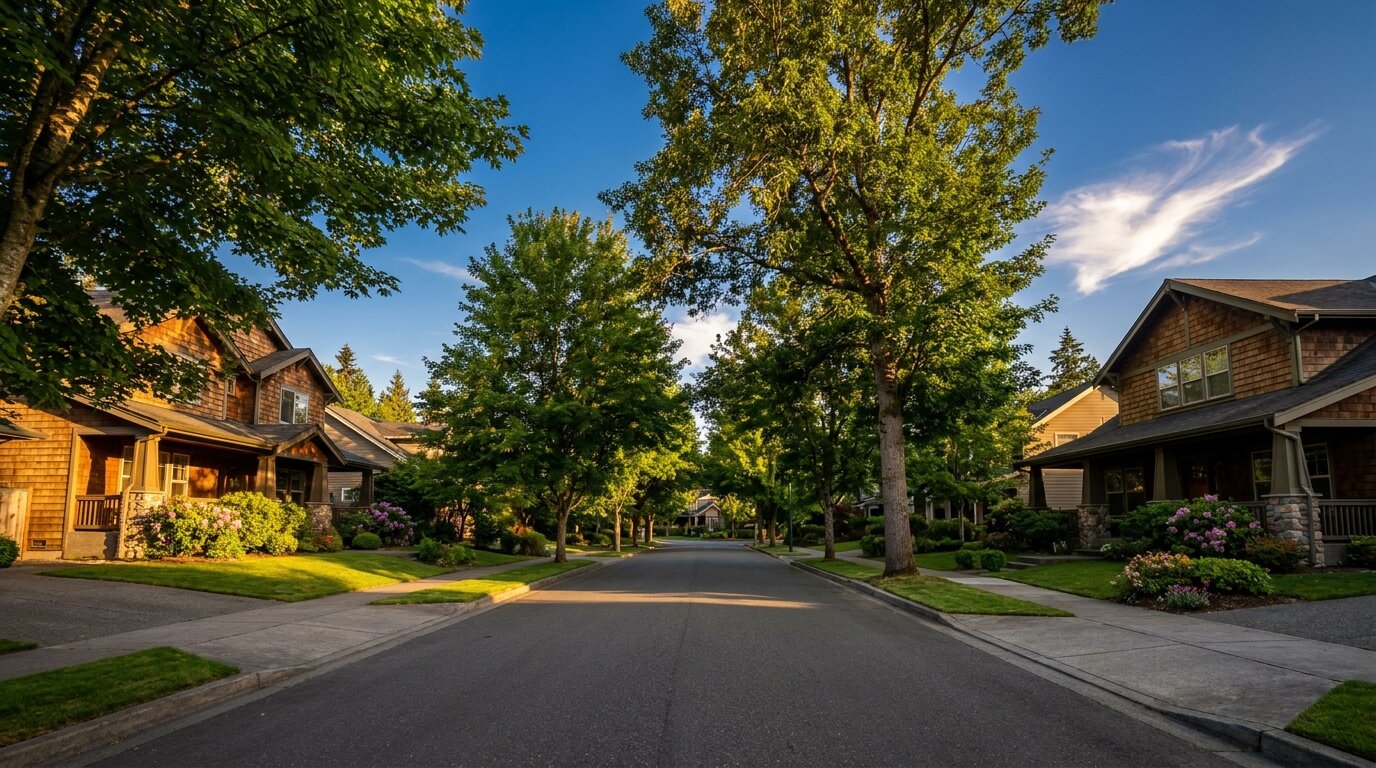
You’ll see this number in every market update, and here’s what it actually tells you and why it matters more than list price trends alone.
I look at months of supply data every single day. As a BPO field agent, I professionally price homes across east and south King County. Months of supply is one of the first numbers I pull before I put a value on a property. It tells me how much competition a seller is actually facing, how much patience a buyer needs right now, and whether the street-level conditions match what the headline market numbers suggest.
Most buyers and sellers hear this term in market update videos or agent reports and nod along without really knowing what it means in practice. That is frustrating, because this single number explains almost everything about what you can expect — whether you should push hard on price or stay patient, whether you should brace for multiple offers or expect negotiating room.
Here is the plain-English version, anchored to what is actually happening in King County right now.
How Months of Supply Is Actually Calculated
The formula is straightforward: divide the total number of active listings by the number of homes sold in the past month. The result tells you — if every house currently for sale kept selling at today’s rate and no new listings came on — how many months it would take to clear the market.
So if your city has 150 active listings and sold 50 homes last month, that is 3 months of supply. If it sold only 25 homes last month, that is 6 months of supply. Same number of homes, completely different market feel.
That math matters because it captures two things at once: how many homes are available and how fast buyers are absorbing them. List price trends can hide a lot. Months of supply does not.
The Three Zones: What Months of Supply Numbers Actually Mean
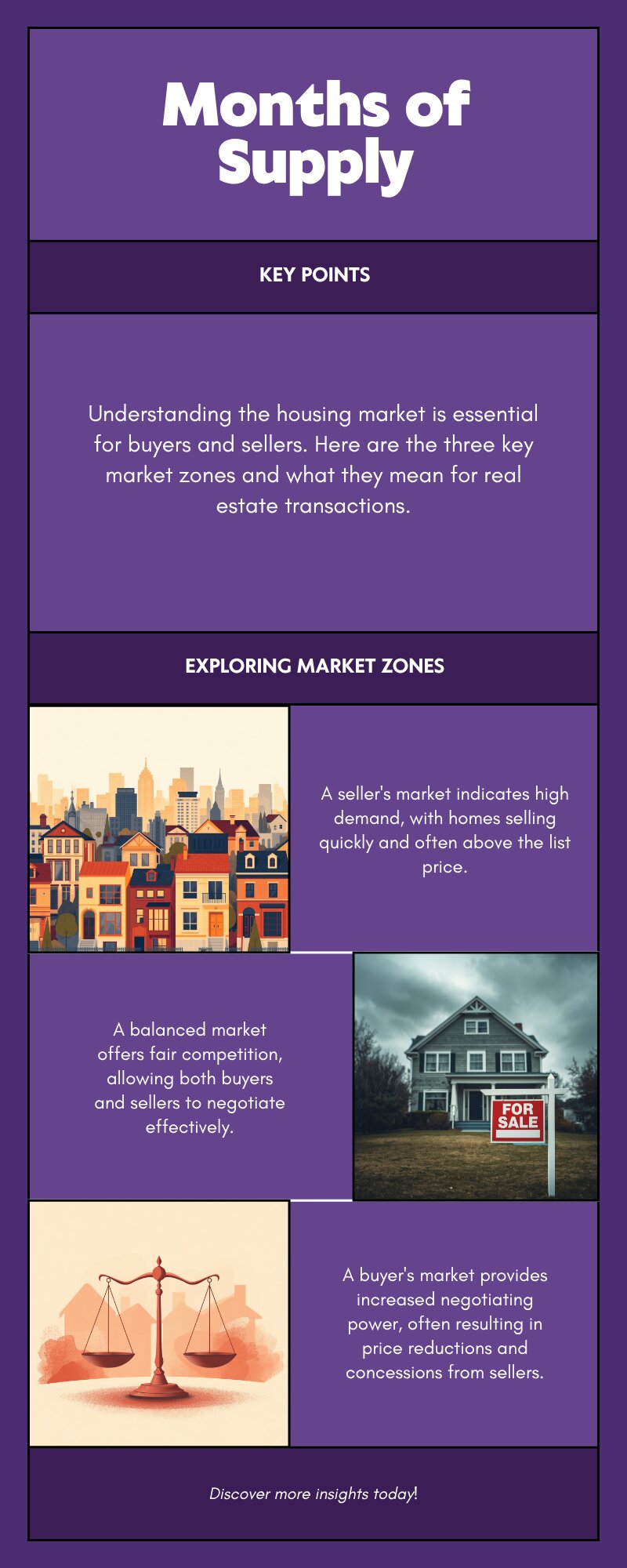
The three market zones defined by months of supply. King County sits at 3.4 months overall — seller-leaning but no longer as extreme as pandemic-era lows.
Under 3 Months: Seller’s Market
This is where most South King County single-family homes have been for years. When supply drops below 3 months, inventory moves fast. Sellers field multiple offers. Buyers often waive contingencies to compete. Homes sell at or above list price, sometimes the same week they go active. In this zone, pricing your home right from day one is critical — but pricing too low can actually cost you money if the market runs it up.
3 to 6 Months: Transitional or Balanced
This is where King County overall sits right now at roughly 3.4 months. The market is neither clearly seller-favored nor clearly buyer-favored. You will see days on market stretch a little longer. Price reductions start to appear, but mostly on overpriced homes. Sellers can still get strong results, but they cannot ignore condition or price. Buyers have a bit more room to negotiate but should not assume every deal has slack in it.
Over 6 Months: Buyer’s Market
When supply climbs above 6 months, buyers hold the cards. Sellers see price reductions, longer days on market, and homes sitting without offers. Sellers may need to offer concessions — rate buydowns, closing cost help, or repair credits — to get deals done. King County has not been in this territory broadly in years, but specific price ranges and property types have crossed into it. King County condos were sitting at roughly 4.2 months of supply in spring 2026, much closer to balanced than the single-family market.
Why King County Does Not Move as One Market
This is where months of supply becomes most useful — and where a lot of buyers and sellers get misled by county-level headlines.
King County’s overall reading of 3.4 months masks enormous variation by city, price range, and property type. Here is what I see from my BPO work:
South King County single-family homes — Renton, Kent, Auburn, Covington, Maple Valley — have consistently run tighter than the county average. Kent’s months of supply was sitting at 2.2 earlier this year, which means homes were moving fast with real competition. If you are a seller pricing a 4-bedroom house in Kent, you are in a different market than a seller pricing a condo in the same zip code.
The condo market countywide has more breathing room. At 4.2 months, King County condos are in that transitional zone where buyers can negotiate but sellers can still get decent results with smart pricing and good presentation.
New construction nationally is an outlier at 10-plus months of supply — that segment is sitting in clear buyer’s market territory. If you are weighing a new build against a resale, that supply dynamic affects your negotiating position directly.
The Eastside — Bellevue, Sammamish, Issaquah — tends to have its own rhythm. Premium pricing supports seller leverage even when supply ticks up, because demand from tech-sector buyers absorbs available homes regardless of inventory levels.

Knowing your sub-market’s months of supply changes the entire conversation with your agent — how aggressive to be on price, whether to push for concessions, and how fast to move.
For context, the national existing-home market sat at 4.5 months of supply in May 2026 — the most balanced it has been in nearly a decade. King County at 3.4 months is still tighter than the national norm. South King County single-family homes are tighter still.
The full picture across King County right now, as I see it on the ground:
King County Sub-Market Snapshot — June 2026
South KC single-family (Renton, Kent, Auburn): Still seller-leaning — under 3 months in most cities
King County condos: Transitional — around 4 months, more buyer room than many realize
Eastside luxury (Bellevue, Sammamish, Issaquah): Seller-favorable despite higher inventory
New construction (national): Buyer-favorable if you know how to negotiate
When I look at how to cross-reference months of supply data with other indicators, I use it alongside days on market and sale-to-list ratios. You can read more about how to interpret a full pricing picture in How to Read a CMA: King County Seller Guide.
What This Means If You Are Selling Right Now
If you are selling a single-family home in South King County today, you are operating in a seller-leaning market. That does not mean you can be sloppy with price or condition, but it does mean a well-prepared, correctly priced home should move.
Here is what months of supply should change about your strategy:
At under 3 months of supply: Price sharp. When inventory is low, the right price creates its own urgency. Overpricing in a low-supply market does not protect you — it just delays your sale until you cut. A home that sits in a tight market is a red flag to buyers, who assume something is wrong with it.
At 3 to 6 months of supply: Condition and presentation matter more. You cannot count on competition to bail out a house that needs work or a price that stretched too far. Budget for pre-listing repairs. Stage. Price based on true comps, not the number you want.
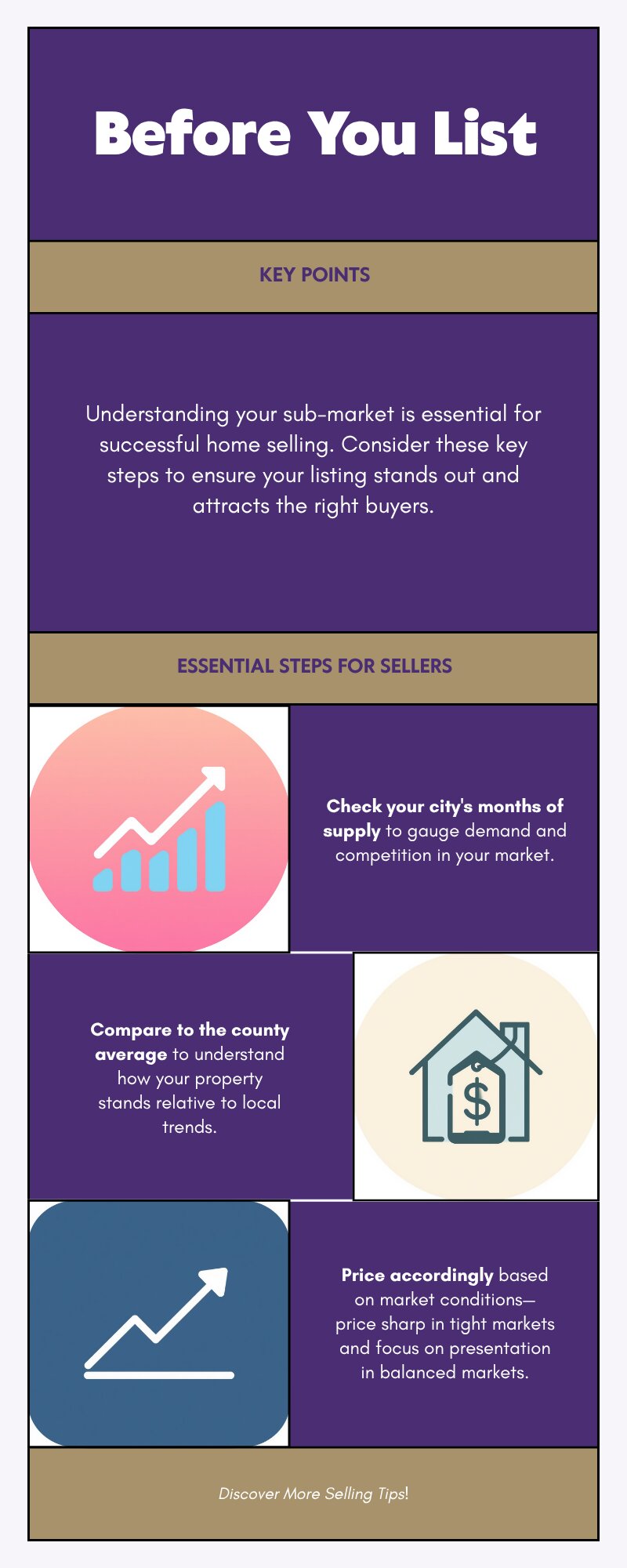
Three steps every seller should take before setting a list price. Your city’s months of supply changes everything about the right strategy.
If you want to see how these market conditions play out in a specific South KC city, the Kent inventory analysis breaks down exactly what 2.2 months of supply meant for sellers there — with real price data.
What This Means If You Are Buying Right Now
Months of supply is the first thing you should check before deciding how aggressive to be in an offer.
In a market under 3 months of supply: Go in clean and close to list price. Escalation clauses can protect you if you are competing. Waiving inspection contingencies is a risk — know what you are giving up before you do it. Waiting for a better deal often means waiting for a deal that never comes, because the next listing goes just as fast.
In a market between 3 and 6 months of supply: You have more room. Ask for closing cost help. Request an inspection without embarrassment. If a home has been on the market for three weeks, there is a real conversation to have on price. The seller knows the market has softened slightly.
If you are considering condos or new construction specifically, the supply numbers give you more leverage right now than most buyers realize. The King County condo buyer leverage guide walks through exactly how to use that supply data at the negotiating table.
The King County Housing Market Forecast for 2026 also puts these supply trends in longer-term context if you are trying to time your purchase decision.
Frequently Asked Questions
What is the difference between months of supply and days on market?
They measure related but different things. Days on market tells you how long individual homes sit before going under contract. Months of supply tells you how much total inventory exists relative to current demand. A city can have a short days on market (homes sell fast) AND a moderate months of supply (there are many homes to choose from). The combination gives you a complete picture. South King County often shows 7 to 14 days on market alongside 2 to 3 months of supply — meaning homes go fast but buyers still have reasonable selection.
Is 4.5 months of supply a buyer’s or seller’s market?
It depends on who you ask and what city you are in. Nationally, most economists call 5 to 6 months a balanced market. At 4.5 months you are near balanced, but still slightly seller-leaning. In King County specifically, 4.5 months would actually feel like significant relief for buyers compared to recent years. What matters most is how your specific sub-market compares to its own historical norms.
Can months of supply differ by price range within the same city?
Yes, and this is something I see constantly in my BPO work. A city can have 2 months of supply in the $600,000 to $800,000 range while sitting at 6 months in homes above $1.2 million. Buyers are more abundant at lower price points. When you hear an overall months-of-supply figure for a city, always ask your agent to break it down by price band for your specific budget.
How quickly can months of supply change?
Fast. A slow month of sales plus a wave of new listings can push a 2-month market to 4 months within 60 days. Seasonality matters too — winter typically adds supply without adding buyers, so months of supply can tick up in November and December even in strong markets. The data I use for BPOs is refreshed monthly, and conditions in one quarter do not guarantee the next.
Does low months of supply mean I should skip the inspection?
No. Low supply increases competition — it does not change what is inside the walls of the house. Waiving an inspection reduces your appeal to sellers, but it also eliminates your ability to negotiate repairs or walk away from a problem. In a tight market you might shorten the inspection period or offer a pre-inspection before submitting an offer. But waiving it entirely is a risk I would want every buyer to fully understand before agreeing to it.
How does King County compare to the rest of Washington State?
King County at 3.4 months of supply is tighter than most of Washington. The statewide Northwest MLS area was near 3.44 months in May 2026. Rural counties and mid-size cities across the state often carry higher supply levels, giving buyers more room. The closer you get to the Seattle metro — especially South King County — the tighter inventory gets.
Your guide to life outside Seattle.
253-350-0045 ·
greg@livingoutsideseattle.com ·
www.livingoutsideseattle.com
Home Inspection Seller Guide | King County WA 2026

Most sellers are nervous about the home inspection. Here’s what actually happens, what buyers are really looking for, and how to handle a repair request without losing your deal.
The call comes in after the inspection. Your agent says the buyer has a repair request. Your stomach drops.
I see this happen all the time. Sellers who have lived in their home for 10 or 15 years think they know every quirk of the place, and they still get surprised by what an inspector puts in a report. That’s not because something was hidden. It’s because most sellers have never seen a home inspection report before. When you see 40 items flagged in a 60-page document, it can feel catastrophic — even when 35 of those items are caulk gaps and light switch covers.
Here’s what the inspection process actually looks like from the seller’s side, what it means when a buyer sends repair requests, and how to respond without blowing up your sale. If you haven’t started prep yet, it’s worth reading our guide to preparing your home for sale in King County alongside this one.
How the Inspection Fits Into Your Sale Timeline
In King County, the buyer typically has a set window after mutual acceptance — often 7 to 10 days — to schedule and complete their inspection, review the report, and submit any requests. That window is spelled out in the purchase and sale agreement.
You don’t attend the inspection. As the seller, your job is to leave the home accessible and get out of the way. The inspection takes two to four hours depending on the size and condition of the property. Smaller condos in Renton or Auburn might be done in under two hours. A larger home in Covington or Maple Valley with a finished basement and detached garage can take closer to four.
After the inspection, the buyer gets a full written report — typically 30 to 60 pages with photos. The report goes to the buyer, not to you. You only see what the buyer chooses to share when they submit their requests.
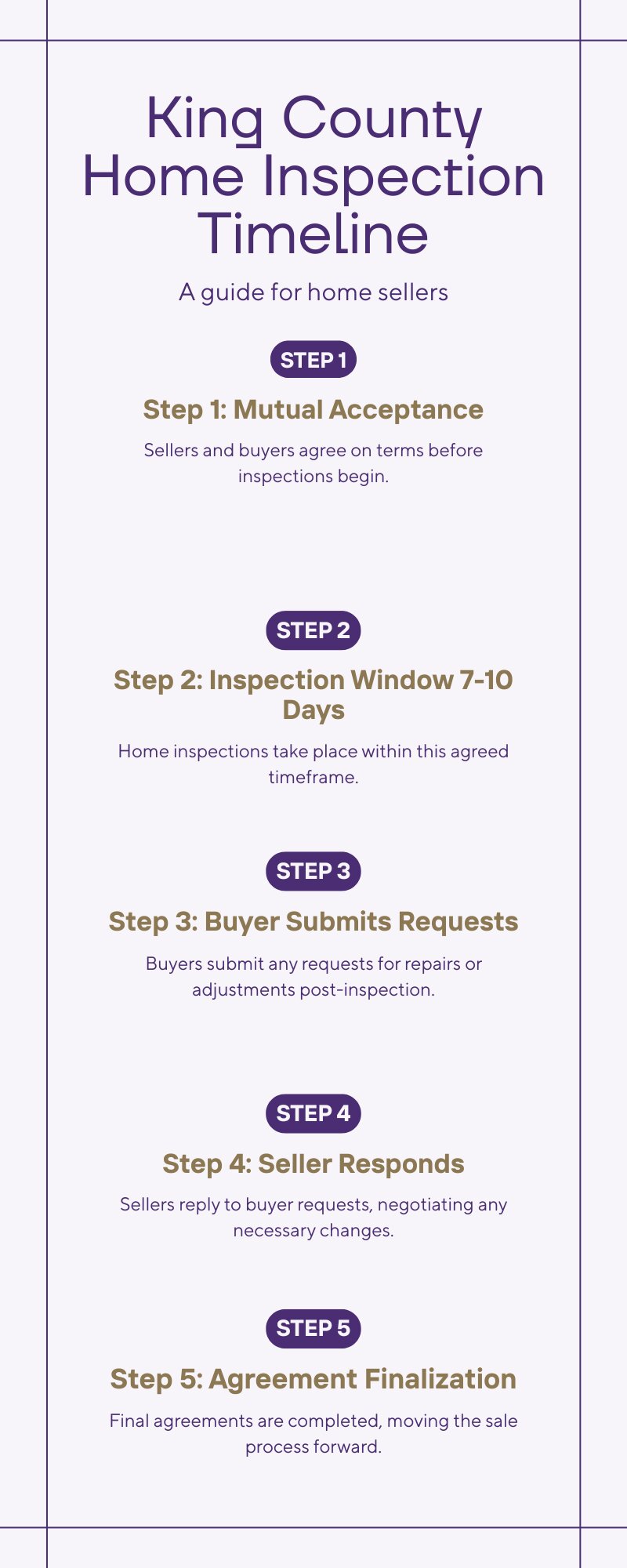
In King County, buyers typically have 7–10 days after mutual acceptance to complete their inspection and submit requests.
What the Inspector Actually Looks At
Home inspectors in Washington are licensed through the state Department of Licensing. They’re looking at the condition of the home’s systems and structure, not its cosmetic appearance. That means they won’t flag your dated kitchen tile, but they will flag a roof that’s near the end of its life.
The main areas every inspector covers are the roof and attic, the foundation and crawl space, the electrical panel and visible wiring, plumbing visible within the walls and under fixtures, the HVAC system including the furnace and any heat pumps, the water heater, windows and doors, and the exterior including drainage and grading.
In the Pacific Northwest, inspectors pay extra attention to moisture. We get a lot of rain here, and the most common serious findings in South and East King County homes come down to water — roof age, gutter condition, crawl space moisture, and signs of past leaks near windows and skylights. A good inspector is going to look hard at anywhere water could get in.
What Shows Up on a Report — and What It Actually Means
This is where sellers tend to panic. You’ll see a long list of items, many flagged with the same urgent-looking language, and it all starts to blur together.
Here’s how to read it: inspectors are trained to note everything they observe, regardless of severity. A missing dryer vent cover and a cracked heat exchanger show up in the same format — but one is a $12 fix from the hardware store and the other is a serious safety issue.
The findings that actually matter fall into a few categories.
Safety Issues
Safety issues are the ones buyers and their lenders care most about. Missing handrails on stairs, double-tapped breakers in the electrical panel, exposed wiring, carbon monoxide detector gaps — these get flagged and buyers expect them to be addressed.
In King County, older homes in Renton and Kent sometimes have Federal Pacific electrical panels, which can be an insurance problem for buyers. That’s a legitimate concern worth addressing before listing if you know about it.
Structural and Water Intrusion Issues
These are the ones that can kill deals or require significant renegotiation. Foundation cracks showing active movement, rot at the mudsill, or evidence of water in the crawl space fall here.
These aren’t always deal killers, but they need to be understood. Is this an old issue that’s been stable for years, or is water still moving? That question matters a lot to how a buyer responds.
Mechanical Systems Nearing End of Life
A furnace that’s 20 years old, a water heater at 12 years, a roof with 3 to 5 years of life left — these often show up in inspection reports. Buyers will sometimes ask for a credit here, especially in a more balanced market like we’re seeing in parts of King County in 2026.
This isn’t surprising news if you’ve owned the home for a while. Knowing the ages of your major systems before you list means you can factor them into your pricing strategy rather than scrambling to respond to them mid-contract.
Deferred Maintenance
This makes up the bulk of most reports. Caulk at tubs and windows, tree branches touching the roof, missing downspout extensions, minor gutter debris — these are normal house items that don’t represent serious problems.
Buyers sometimes include a long deferred maintenance list in their requests. That doesn’t mean you have to fix all of it. Knowing the difference between a genuine concern and a routine maintenance item is where your agent’s experience matters most.
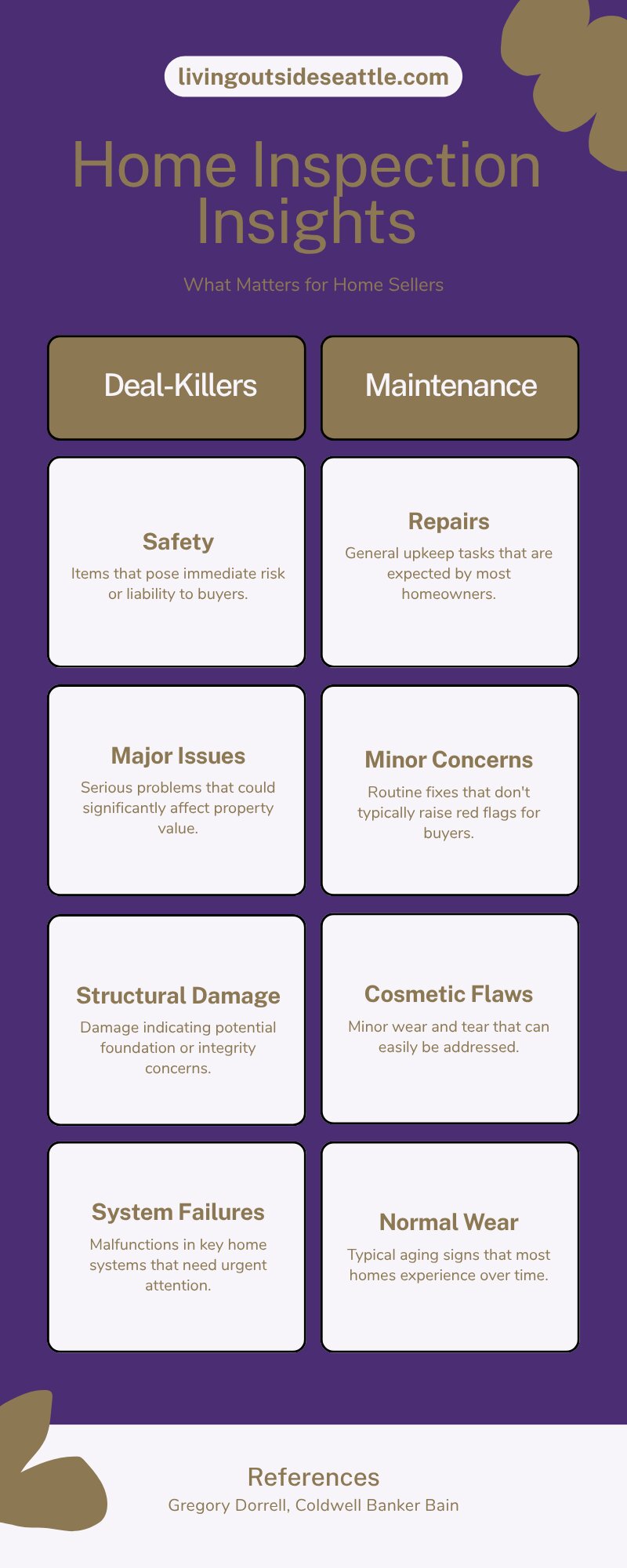
Most inspection reports are long. This is what the findings that actually matter look like compared to routine maintenance items.
Do You Have to Fix What the Buyer Asks For?
No. This surprises a lot of sellers.
Washington State does not require sellers to fix anything a buyer requests in an inspection response. The purchase and sale agreement sets up a negotiation. The buyer submits their requests. You have several options.
You can agree to the repairs and have them completed before closing, typically by licensed contractors. You can offer a dollar credit at closing instead of doing the work yourself, which buyers often prefer because it lets them choose their own contractor. You can agree to some items and decline others. Or you can decline the entire request and let the buyer decide whether to move forward or exercise their right to terminate.
The buyer’s decision has to happen within the inspection contingency window. If the timeline passes without resolution, the contingency typically expires and the sale proceeds as-is.
What you actually have to fix depends on what your contract says, not on any general legal requirement. If you’ve negotiated repairs as a condition of the sale, you’re obligated to complete them. If you respond by declining, the buyer gets to choose their path.
The Case For (and Against) a Pre-Listing Inspection
A pre-listing inspection means you hire an inspector before you go on the market. You find out what’s in the house before the buyer does.
The upside is real. A pre-listing inspection in King County typically costs $350 to 650+ depending on home size. That’s a small price to avoid being blindsided at the negotiating table. You can fix the things that matter on your own timeline and your own budget, rather than scrambling to get licensed contractors in before closing under time pressure. In a competitive market, some sellers share the pre-listing inspection report with buyers to build confidence and reduce the chance of an “inspection for information only” turning into a full renegotiation.
The downside is also real. If the inspection finds something serious, you’re now legally obligated to disclose it to buyers — even if you choose not to fix it. In Washington State, the disclosure requirements are strict. You can’t un-know what the inspector told you.
My general guidance: if the home is older than 15 to 20 years, or if you have any reason to believe there might be deferred maintenance issues in the crawl space, roof, or electrical, the pre-listing inspection is worth it. For newer homes in good condition, it’s less essential but still something that most buyers expect to see in King County.
What Kills Deals vs. What Buyers Overlook
The honest truth is that very few sales fall apart because of a home inspection. When a deal dies over inspection, it’s usually because a major undisclosed issue came to light — not because there were 40 items in the report.
The issues most likely to kill or seriously damage a deal are active roof leaks or significant roof deterioration, foundation problems showing current movement, evidence of water in the crawl space or basement that hasn’t been resolved, major plumbing failures like a failed main sewer line, and serious electrical hazards.
Buyers in King County are used to older housing stock. A 1975 Kent home or a 1985 Renton split-level is going to have some things on an inspection report. Experienced buyers and their agents know the difference between a well-maintained older home with normal findings and a house with real problems.
The things buyers most often overlook or accept as-is: cosmetic items, surface wear, minor roof maintenance items on an otherwise sound roof, single-pane windows in older homes, and deferred exterior maintenance like peeling paint or weathered decks.
What This Means for You as a Seller
Before you list, walk through your home with fresh eyes. Check the gutters. Look at what’s happening around the water heater and under sinks. Know the age of your roof and furnace. These aren’t things to hide — they’re things to understand so you can have an honest conversation with your agent about pricing and preparation.
When the inspection report comes in, read it with your agent before you react. Most items on a typical report are manageable. The ones that aren’t are the ones worth knowing about early. Understanding how pricing works in King County gives you a clearer sense of how to factor known conditions into your list price from the start.
You have more options than you think when repair requests arrive. A credit at closing is often cleaner than trying to coordinate contractors under a time crunch. Declining minor requests is completely legitimate. And pricing the home to reflect known conditions from the start — which is exactly what a BPO-trained pricing approach does — means you’re less likely to end up in a contentious renegotiation to begin with. You can also read our guide on how appraisals work in Washington State to understand the full picture of what happens between contract and closing.
Frequently Asked Questions
Does the seller have to be present during the home inspection?
No. In fact, it’s standard practice for sellers to leave during the inspection. It makes buyers and inspectors more comfortable, and it prevents awkward conversations about every item being noted.
How long does a home inspection take in King County?
Most inspections run two to four hours. A smaller condo or townhome might finish in 90 minutes. A larger single-family home with a crawl space, detached garage, and outbuildings in Covington or Maple Valley could take up to four hours or more.
What happens if I don’t agree to any repairs?
The buyer then has a choice: move forward with the purchase as-is, or exercise their right to terminate within the inspection contingency period. If they terminate, you get your home back on the market. If you’ve priced it correctly, another buyer will come.
What is a right-to-cure clause in Washington?
Washington contracts include a seller’s right to cure, which gives you the opportunity to respond to a repair request. You can agree, counter, or decline. It’s not a requirement to fix — it’s a framework for negotiation.
Should I get a pre-listing inspection in King County?
For homes older than 15 to 20 years, or any home where you have concerns about the crawl space, roof, or electrical system, a pre-listing inspection is usually worth the $350 to $550 cost. It lets you fix things on your terms and removes surprises from the process.
Can a buyer walk away after the inspection for any reason?
During the inspection contingency period, yes. The buyer can terminate for virtually any reason related to the inspection findings. Once that window closes, their options narrow significantly.
The inspection is one step in a process with a clear beginning and end. Most sellers who go through it — even with a long repair list — close. The ones who struggle are usually the ones who weren’t prepared for what they’d see. You can also review our guide to Washington State closing costs to understand the full financial picture before you list.
Your guide to life outside Seattle.
253-350-0045 ·
greg@livingoutsideseattle.com ·
www.livingoutsideseattle.com
King County Home Prices: What You Get at $450K–$700K
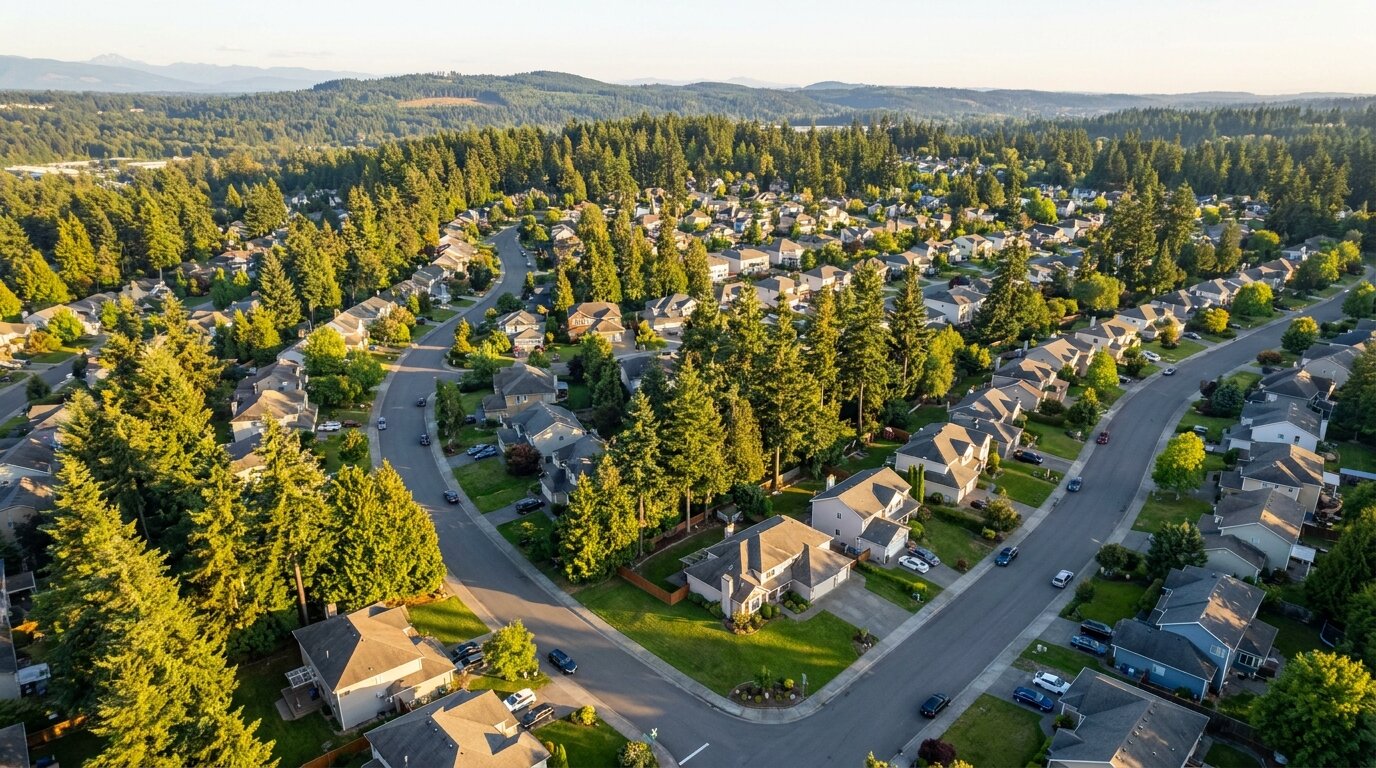
The King County median is pushing $860,000. But buyers with $450K to $700K aren’t out of the game — they’re just buying a different game. Here’s the city-by-city breakdown.
Why This Guide Exists
When I sit down with a first-time buyer, one of the first things they ask me is: “What can I actually get for my money in King County?” It’s the right question, and it deserves a real answer — not a vague “it depends.”
So here it is. This guide breaks down what buyers are realistically getting at four price points — $450K, $550K, $650K, and $700K — across the South and East King County cities where I work. I price homes in these markets every single day as a BPO field agent. I know what these dollars buy in Auburn, Kent, Federal Way, and Renton because I walk through these homes constantly.
The King County overall median is around $859,000 as of spring 2026. If your budget sits between $450K and $700K, you’re below that line — which means you’re working in South King County’s market, not the Eastside’s. That’s not a consolation prize. South King County has serious value, real neighborhoods, and in some price bands, genuine competition. Let me show you what I mean.
The Monthly Payment Reality First
Before we talk about what you get, let’s talk about what you’re paying each month. As of mid-June 2026, the 30-year fixed rate in Washington sits around 6.65%. With 10% down:
Monthly Payment Estimates at 6.65% (10% Down)
$450K purchase — ~$405K loan — roughly $2,610/month P&I
$550K purchase — ~$495K loan — roughly $3,190/month P&I
$650K purchase — ~$585K loan — roughly $3,769/month P&I
$700K purchase — ~$630K loan — roughly $4,060/month P&I
Add property taxes (roughly 0.9–1.1% annually in South KC cities), homeowner’s insurance (~$150–$200/month), and any HOA dues, and your true monthly cost is $300–$600 higher than those P&I numbers. I say this not to discourage you, but because buyers who know the full number make better decisions. If you want a deeper breakdown of total cost, the Total Cost of Homeownership in King County 2026 post does that math city by city.
$450K: Condos, Older Townhomes, and Entry-Level Single-Family
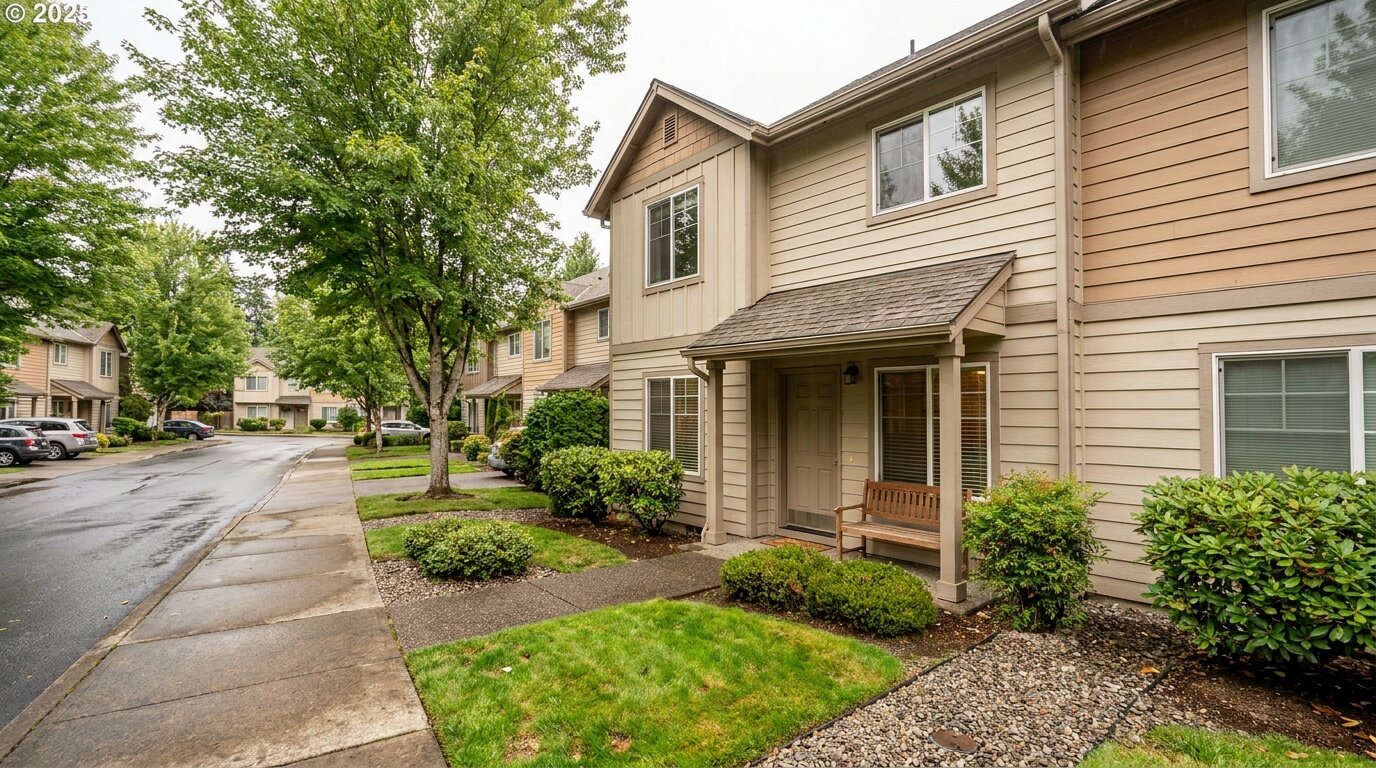
At $450K, condos and townhomes like this are your primary options in South King County — real ownership, real equity.
At $450K, you are not buying a single-family home in most of King County. You are buying into the condo and townhome market, or an older home that needs work. That’s honest, and it’s worth saying plainly.
Auburn and Federal Way Condos
This is the clearest entry point at this price. You can find 2-bedroom condos in the 900–1,100 square foot range in Auburn’s downtown corridor and Federal Way’s Twin Lakes and Steel Lake areas. These are typically 1990s–2000s construction, well-maintained, and in walkable locations. Federal Way’s coming light rail extension has kept demand steady here.
Kent Condos and Entry Townhomes
Downtown Kent has a handful of newer-ish condo buildings and townhome developments where you can get into 2-bedroom units around this price. Proximity to Kent Station (Sounder commuter rail) makes these appealing even at small square footage.
Older Single-Family in Auburn’s Core
Occasionally — especially if you’re patient and flexible — you can find a 3-bedroom, 1.5-bath from the 1960s or 70s in Auburn’s central neighborhoods. These homes need updating. They’re not turnkey. But they’re on real lots, and they’re fee-simple ownership with no HOA.
The so-what for buyers at this tier: this price point gets you into ownership and starts building equity. It is not a forever home for most families. But it is a real foothold, and in South King County, that foothold has appreciated over 5–7 year holds. If down payment is the obstacle, look at King County’s Down Payment Assistance programs — KCHA’s deferred loan and WSHFC’s Home Advantage can both help at this price tier.
$550K: Single-Family Becomes Possible
At $550K, the picture changes. This is where single-family homes start to appear in South King County — modestly, but genuinely.
Auburn
The $500K–$580K range is where Auburn’s townhome and entry single-family inventory overlaps. You can find 3-bedroom townhomes in Lakeland Hills with attached garages, HOA-managed exteriors, and good schools. Older single-family homes in West Auburn and parts of Auburn north that are move-in ready with cosmetic updates also show up here.
Federal Way
The $520K–$570K range opens up more of Federal Way’s residential neighborhoods — Twin Lakes, West Campus, and the areas closer to the Sound. You’re looking at 3-bedroom, 1-bath or 2-bath homes from the 1970s–1990s, on lots of 6,000–8,000 square feet. These aren’t large homes but they’re real houses.
Kent
Kent’s median sits around $635,000 right now, so $550K puts you below median. That doesn’t mean nothing is available — it means you’re competing for homes that need some work, or townhomes in East Hill where new construction density has been concentrated.
At $550K, you’re getting real space and real land in South King County. The financing math still works for households earning $130K–$150K+ (assuming roughly 40% DTI with standard conventional financing). If you’re using an FHA loan, the lower down payment option changes your cash requirement — FHA vs. Conventional for King County buyers has the full comparison.
$650K: The Sweet Spot for South King County
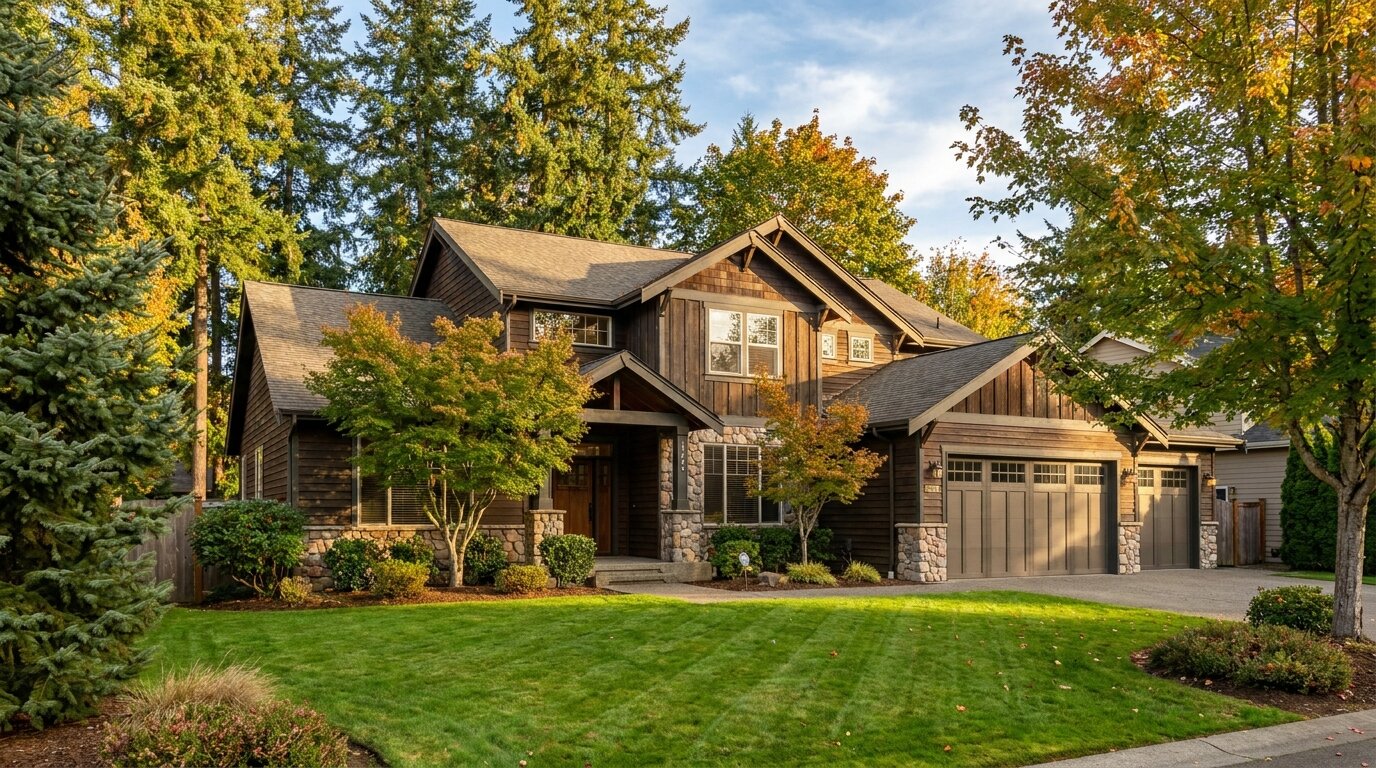
At $650K, South King County delivers 3-bedroom homes with yards and garages — the kind buyers stay in for a decade.
If I had to pick one price band where South King County buyers are getting the most for their money right now, it’s $625K–$675K. Here’s why.
Renton
Renton’s median runs around $650K. At this price, you’re in real competition for solid 3-bedroom, 2-bath homes in neighborhoods like Benson Hill, Talbot Hill, and parts of the Highlands. These are homes with garages, yards, and good bones. They’re not McMansions. They’re the kind of house where families put down roots for 10–15 years.
Kent East Hill
East Hill is Kent’s most family-oriented neighborhood, with newer construction and strong schools. At $650K you’re getting into 3-bedroom homes with 2-car garages, square footage in the 1,600–2,000 range, and HOA neighborhoods that maintain common areas well.
Auburn Lakeland Hills
Lakeland Hills continues to be one of the best pure-value plays in South KC. You can find 3–4 bedroom single-family homes in the $620K–$670K range on decent lots. The community is well-established and has held value through market cycles.
At $650K, you’re buying a home a family can actually live in for years without outgrowing. The rate environment means your monthly cost is real, but the asset you’re getting in exchange is also real. Homes in this range in South King County have shown 5-year appreciation patterns that make early ownership genuinely wealth-building.
$700K: Where the Options Widen
At $700K, you’re near or slightly above the median in most South King County cities, which means you have more choices, more leverage in negotiation, and access to some locations that were out of reach below.
Renton — Kennydale and Highlands
$700K in Renton opens up Kennydale and some pockets of the Highlands where the homes are larger, the lots more established, and the commute to both Seattle and Bellevue is genuinely good. 4-bedroom homes with finished basements become available here.
Kent and Covington Border Areas
Where Kent’s East Hill bleeds into unincorporated Covington, you’ll find homes in the $680K–$730K range that offer more space per dollar than anything inside the Seattle city limits at double the price. Lots of 10,000+ square feet, 4-bedroom layouts, and 2-car garages are realistic here.
Maple Valley
Maple Valley has been growing as buyers who need more space head south. At $700K you can find newer construction — some from the last 10 years — with modern kitchens, open floor plans, and trail access to the Maple Valley Trail system.
$700K in South King County buys a legitimately good house. It also buys a payment that requires solid household income — roughly $160K–$175K+ at current rates, depending on your other debt and down payment. If that math is tight right now, it’s worth looking at what rate buydowns can do — at this purchase price, a seller-funded 2-1 buydown can make a real difference in year-one payments.
What This Looks Like in King County Right Now

King County affordability by price tier — what each budget buys in South King County in 2026.
A few things to keep in mind as you use this guide.
Inventory across King County is up roughly 30% from a year ago. That matters. Buyers below $500K are still competing in a tight pool for limited condo and entry single-family inventory. Buyers in the $600K–$750K range have more breathing room. Days on market in South King County at this level have extended compared to 2024 — you often have time to think, inspect, and negotiate.
The pricing I’ve described reflects medians and typical ranges. Individual homes vary widely. A 1985 split-level in Federal Way at $520K might need $60K in deferred maintenance. A 2019 townhome in Auburn at $545K might be genuinely turnkey. My BPO work gives me a fast read on which is which — and that’s exactly the kind of analysis I bring to every buyer I work with.
Frequently Asked Questions
Can I buy a single-family home in King County for under $500K?
It’s possible, but uncommon. At $500K, you’re primarily in the condo and townhome market in South King County. Occasionally a distressed or estate-sale single-family home surfaces at this price, but expect deferred maintenance. Budget for updates if you’re pursuing this price point.
Which South King County city gives the most for $600K?
Right now, Auburn and Federal Way offer the most square footage and lot size for $600K. Kent is close but slightly pricier per square foot. Renton offers strong value at $600K but typically in smaller homes or older stock compared to Auburn.
How much income do I need to buy at $650K in King County?
With 10% down and a rate around 6.65%, your principal and interest is roughly $3,769/month. Add taxes, insurance, and HOA if applicable, and true housing cost approaches $4,300–$4,500/month. Most lenders want housing expense at or below 36–43% of gross monthly income, which puts the qualifying range around $125K–$150K household income.
Are these prices likely to rise or fall in the second half of 2026?
Inventory is up 30% countywide, which has softened prices at the top of the market. South King County’s sub-$700K segment has stayed relatively steady because demand from first-time buyers remains real. A meaningful rate drop could create a surge in buyer demand and push prices up. Waiting on that rate drop is a gamble — the data on buy-now vs. wait shows the math usually favors buying sooner.
What down payment do I need at these price points?
Conventional loans require 3–20% down. At $550K with 5% down, you’re bringing $27,500 plus closing costs. FHA requires 3.5% down but has loan limits to watch in King County. Down payment assistance programs from KCHA and WSHFC can help close the gap at the $450K–$600K range — see the full DPA guide.
Your guide to life outside Seattle.
253-350-0045 ·
greg@livingoutsideseattle.com ·
www.livingoutsideseattle.com
Contingent Offer Guide: King County WA 2026

A step-by-step guide for move-up sellers who need to buy their next home before the current one closes — and how to make a seller say yes.
If you own a home in King County and you need to buy your next place before you sell, you already know the problem. You can’t really afford two mortgages. But sellers don’t love contingent offers. So how do you make this work?
The short answer: contingent offers do get accepted in King County — especially right now. Inventory across South and East King County has grown compared to the peak frenzy years, which means sellers are more flexible than they’ve been in a long time. But “more flexible” doesn’t mean “they’ll accept anything.” The offer still has to be structured the right way.
Here’s what actually goes into a contingent offer that a seller will take seriously, and how the current King County market shapes those decisions.
What a Home Sale Contingency Actually Is
A home sale contingency means your offer to buy a new home depends on selling your current one first. In Washington state, this is typically documented using Form 22B — the Buyer’s Sale of Property Contingency Addendum. This form is used specifically when your home is not yet under contract.
There’s an important difference between that and Form 22Q, which is used when your home is already on the market. Sellers generally prefer 22Q because your sale is actively in motion. With 22B, the seller is essentially betting that you’ll get your home under contract within a set timeframe. That’s a bigger ask.
Form 22B requires you to list your home for sale within a specific number of days stated in the addendum — often 5 to 15 days. If you miss that window without taking action, you can lose all your contingency protections, including inspection and financing. That’s a real risk, and sellers know it.
The kick-out clause (also called the bump clause) is the seller’s main protection tool. It lets the seller keep marketing the property while your contingency is active. If another qualified buyer submits an offer, the seller issues a Form 44 bump notice. You then have a short window — typically 48 to 72 hours — to either remove your contingency and proceed, or step away. You’d use Form 46 to respond.
Understanding these mechanics matters because they shape every decision you make when structuring the offer.
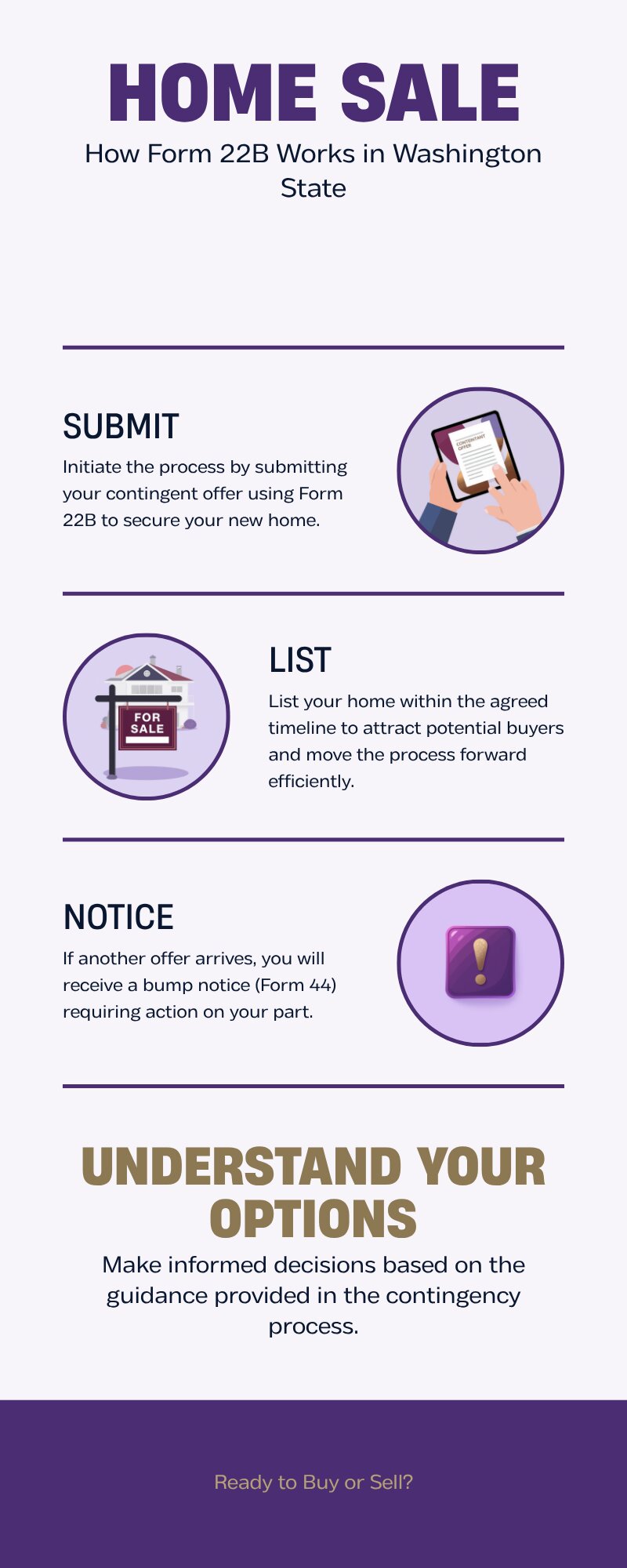
The Form 22B process in Washington state: submit your contingent offer, list your home, respond to any bump notice, and close. Understanding each step helps you structure an offer sellers will accept.
Why Sellers in King County Are More Open Right Now
This matters for timing. In 2021 and 2022, sellers in most King County markets had lines of competing buyers. A contingent offer was almost automatically rejected. That market has shifted.
In South King County — Renton, Kent, Auburn, Covington, Maple Valley — inventory has increased meaningfully. Days on market have stretched out in some price points. Sellers who aren’t priced perfectly are sitting longer than they expected. That means many sellers are now willing to consider a contingency they would have dismissed three years ago.
In East King County — Issaquah, Sammamish, Bellevue — things are still tighter. Demand holds up in those corridors because of proximity to tech employers. Contingent offers face more competition there, and the terms need to be sharper.
The key question isn’t whether a seller will accept a contingency in the abstract. It’s whether your specific offer removes enough risk for this specific seller to feel comfortable saying yes.
How to Structure a Contingent Offer Sellers Will Actually Accept
Start with your own home — before you make an offer
This sounds obvious, but a lot of buyers skip it. Before you make a contingent offer, have your home evaluated for a realistic list price. Not what you hope to get. What you will actually get in the current market.
If your agent gives you a vague range, push back. You need a real number, because their agent are going to ask the same question when reviewing your offer: does this buyer’s home actually sell? If you’re priced at a number that doesn’t clear the debt you need to carry, the contingency is a problem, not a solution. A solid CMA from a local agent is the starting point.
Get fully pre-approved, not just pre-qualified
A pre-qualification letter isn’t worth much in this context. You need a full pre-approval from a trusted lender who has verified your income, assets, and credit. In the cover letter or offer documents, make it clear when your pre-approval was issued and offer to have your lender speak directly with the listing agent.
Pre-approval shows the seller that when your home sells, there’s no question you can close. It’s one less thing for them to worry about.
Offer a tighter contingency timeline
A 90-day contingency window sends a signal: “I’m not sure my house will sell quickly.” A 30-day window sends a different signal: “I’m ready to move and I’ve priced my home to sell.”
In South King County in 2026, well-priced homes in the $600K–$800K range are still moving in under 20 days. If you’re confident in your pricing, a 21- to 30-day contingency period is realistic and reassuring to a seller. If your home has complications that will take longer to sell, be upfront with yourself about whether a contingency is the right structure at all.
Increase your earnest money
Standard earnest money in King County is typically 1% to 3% of the purchase price. In a contingent offer, going to 3% or higher tells the seller you’re serious and financially committed. Your contingency language still protects you if conditions aren’t met — the earnest money isn’t at risk if the deal falls apart because your home doesn’t sell. But the larger amount signals commitment and reduces seller anxiety.
Think of it this way: you’re asking a seller to take their home off the market while you sell yours. A meaningful earnest money deposit is how you compensate them for that risk.
Accept the kick-out clause
Some buyers resist the kick-out clause because it feels threatening. In practice, it’s almost always the right call. Sellers who won’t accept a contingency without a kick-out are simply protecting themselves. Agreeing to it upfront removes that friction entirely and shows you’re a reasonable buyer to work with.
The reality: if a seller receives another offer strong enough to trigger the bump notice, you have 48 to 72 hours to decide. If your home is under contract by then, you can typically remove the contingency and proceed. If it’s not, you can walk with your earnest money intact.
When a Contingent Offer Probably Won’t Work
There are situations where a contingent offer is the wrong tool, and it’s worth being honest about that.
If the home you want to buy is priced under $700K in South King County and has been on the market for less than a week, there may be multiple offers. A contingency puts you at a significant disadvantage. In that case, you need to think about whether you can compete without one.
If your current home is in a slower price range or has condition issues that will complicate a sale, a 30-day contingency window may not be realistic. Overpromising on your timeline and then needing an extension damages your credibility with the seller at exactly the wrong moment.
And in premium Eastside markets like Bellevue proper, Mercer Island, and Medina, contingent offers are still uncommon. If you’re buying in those price ranges and need to sell first, the alternatives below deserve serious consideration.
Alternatives to a Home Sale Contingency
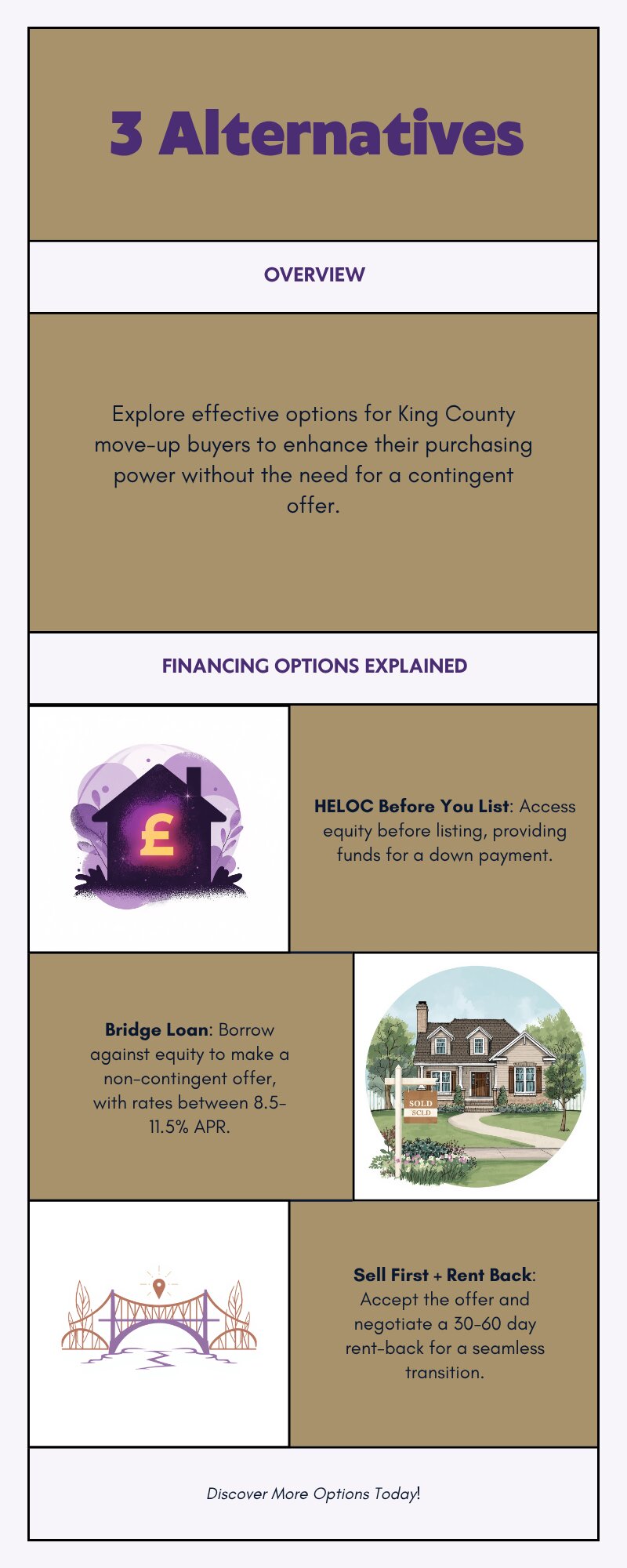
If a contingent offer won’t work in your target market, these three financing strategies let you buy without the contingency. Each has a different cost and risk profile — the right choice depends on your equity and timeline.
If a contingent offer won’t work in the market you’re buying in, there are three realistic alternatives for King County move-up buyers.
HELOC Before You List
If you have equity in your current home, opening a home equity line of credit before you put your home on the market gives you access to cash for a down payment on the new purchase. The critical timing issue: most lenders will freeze or close a HELOC once your home is actively listed. Open it before the sign goes up. This strategy works best when you have at least 25%–30% equity and a clean credit profile.
Bridge Loan
A bridge loan lets you borrow against your current home’s equity to fund the purchase of the new one, giving you a non-contingent offer. Bridge loan rates in 2026 are running 8.5% to 11.5% APR — significantly higher than a standard mortgage — so this is a short-term cost, not a long-term strategy. But if the numbers work and the new home is worth it, a non-contingent offer in a competitive market is a meaningful advantage. You’ll typically carry the bridge loan for 30 to 90 days until your current home closes.
Sell First, Then Rent Back or Short-Term Rent
Accept an offer on your current home and negotiate a 30- to 60-day rent-back period. Use that window to find and close on the next place without the contingency hanging over both deals. This approach takes the financial pressure off both transactions.
You can also explore whether renting your current home rather than selling changes your calculus entirely — though that’s a longer-term decision with its own trade-offs.
Each option has a cost and a risk profile. The right choice depends on your equity position, your risk tolerance, and how competitive the market is where you’re buying. This is worth spending real time on with both your agent and your lender before you make any offer.
The King County Sub-Market Difference
One thing I see buyers get wrong: treating King County as one market when making contingency decisions. It’s not.
In South King County — Renton, Kent, Auburn, Covington, Maple Valley — there’s more room to negotiate on contingency terms right now. Sellers in this range are seeing longer days on market in some price points and are more willing to work with a serious buyer who has structured things correctly.
In East King County near the tech corridors — Issaquah, Sammamish, the Bellevue fringes — demand holds up better and sellers have more leverage. Contingent offers face more competition and need to be tighter on timeline and earnest money.
And in premium Eastside markets like Bellevue proper, Mercer Island, and Medina, contingent offers are still rare. If you’re buying in those price ranges and need to sell first, the alternatives above deserve serious consideration.
Knowing which sub-market you’re in changes how you position every element of the offer.
What Sellers Actually Care About
When a seller reviews a contingent offer, three questions dominate: Will this buyer’s home sell? How fast? And what happens to me if it doesn’t?
Your job is to answer all three convincingly. That means a realistic list price on your current home, a tight timeline, solid pre-approval, meaningful earnest money, and a kick-out clause that gives the seller control if something better comes along.
A contingent offer structured this way isn’t a weakness. It’s a reasonable business arrangement that protects both sides. Sellers who understand that — and who aren’t getting five competing offers — will work with you.
Frequently Asked Questions
Can sellers in King County reject a contingent offer outright?
Yes, and they often do in competitive markets. Sellers are under no obligation to accept any offer. In slower segments — particularly South King County in 2026 — sellers are generally more willing to engage with contingent buyers who have structured their offer thoughtfully.
What is Form 22B in Washington state real estate?
Form 22B is the Buyer’s Sale of Property Contingency Addendum. It’s used when you need to sell your current home before closing on a new one and your home is not yet under contract. It specifies timelines for listing, sets conditions for removing the contingency, and includes kick-out clause provisions.
What is a kick-out clause and should I agree to it?
A kick-out clause (or bump clause) lets the seller keep marketing while your contingency is active. If they get another offer, they notify you and you have 48 to 72 hours to remove the contingency or step away. Agreeing to it is almost always smart — it makes your offer easier to accept and in practice rarely ends deals for well-prepared buyers.
How much earnest money should I offer on a contingent offer?
In King County, 2%–3% of the purchase price is a solid range for a contingent offer. It’s higher than the bare minimum and shows commitment. Your earnest money is still protected if the deal falls apart because your contingency conditions aren’t met.
Is a bridge loan better than a contingent offer?
It depends on your equity and risk tolerance. A bridge loan lets you make a non-contingent offer, which is stronger in competitive markets. But bridge loan rates are high (8.5%–11.5% APR in 2026) and you’re carrying two properties temporarily. A well-structured contingent offer is simpler and lower-risk if the market allows it.
How long should my contingency window be?
Shorter is better for seller confidence. In South King County, where well-priced homes move in 10–20 days, a 21- to 30-day contingency window is realistic. If you genuinely need longer, build that into your pricing strategy on your current home — a faster sale there supports a tighter window on the offer side.
Contingent offers aren’t a long shot in King County right now. They’re a normal part of how move-up buyers navigate this market. The difference between an offer that gets accepted and one that gets ignored comes down to preparation: realistic pricing on your home, tight timelines, strong financials, and terms that give the seller confidence.
Your guide to life outside Seattle.
253-350-0045 ·
greg@livingoutsideseattle.com ·
www.livingoutsideseattle.com
How Appraisals Work in Washington State Home Sales
What buyers and sellers in King County need to know — before a low appraisal derails your deal.
The appraisal is one of the quietest steps in a real estate transaction — until it isn’t. Most buyers and sellers go weeks without thinking about it. Then a number comes back lower than the agreed price, and suddenly everyone is scrambling to figure out what happens next.
I’ve seen it go both ways. A clean appraisal that closes without a hiccup. And a deal that almost fell apart because neither the buyer nor the seller understood what options were on the table. Understanding how appraisals work in Washington state — who orders it, what the appraiser is actually measuring, and what you can do when the number doesn’t match — puts you in a much stronger position before you ever get to that moment.
This guide walks through the full process from both sides.
What an Appraisal Actually Is — and Isn’t
A home appraisal is a formal, written opinion of market value prepared by a state-licensed appraiser. It answers one specific question: what would a willing buyer pay a willing seller for this property today, assuming neither party is under pressure and both have full information?
That is not the same as the Zillow estimate. It is not the county assessed value. And it is not what your neighbor’s house sold for last spring, unless that sale is genuinely comparable. Appraisers follow the Uniform Standards of Professional Appraisal Practice (USPAP), a national framework that governs methodology and ethics. The goal is independence — the appraiser works for the lender, not the buyer, not the seller, and not the agent.
This matters because the lender has a direct financial interest in making sure the home is actually worth what they’re about to loan against it. If you borrow $850,000 to buy a house worth $800,000, the lender is immediately underwater. The appraisal is their protection.
As a seller, that means the appraisal isn’t something you control. As a buyer, it means you have a built-in check on whether you’re overpaying — which in competitive markets like South King County, is more useful than it might seem.
How the Appraisal Process Works Step by Step
Who Orders It and When
In a standard financed transaction, the lender orders the appraisal after the purchase agreement is signed and the loan application is underway. They typically assign a licensed appraiser through an Appraisal Management Company (AMC), which keeps the appraiser independent from everyone else in the deal.
You don’t get to choose the appraiser. Your agent doesn’t get to choose the appraiser. This independence is intentional. The appraisal is typically scheduled within one to two weeks of the executed contract, and the full report usually comes back within three to seven business days after the visit.
What Happens During the Visit
The appraiser walks the property, takes measurements, notes the condition of major systems — roof, foundation, HVAC, electrical, plumbing — and documents any updates or upgrades. They’re not doing a home inspection. They’re not looking for problems to flag; they’re forming an objective picture of the property’s physical characteristics and condition relative to the market.
They’ll also photograph the exterior and interior, assess the lot, note the neighborhood, and factor in anything that affects livability or desirability — a busy arterial road that backs up to the property, for example, or a view that doesn’t show up in the tax records.
How Appraisers Determine Value
Most residential appraisals in Washington use the Sales Comparison Approach: the appraiser identifies three to five comparable homes (comps) that sold recently, nearby, and in similar condition. “Recently” means within the past six months. “Nearby” in dense King County markets might mean within half a mile; in rural areas like Black Diamond or Enumclaw, the radius might expand to several miles.
Then comes the adjustment process. If a comp sold with a renovated kitchen your home doesn’t have, the appraiser reduces that comp’s adjusted value. If your home has a finished basement the comp didn’t, an upward adjustment goes in. Square footage, lot size, bedroom count, garage, condition, location factors — all of these get adjusted line by line until the appraiser has a cleaned-up, side-by-side comparison. The final number they land on is the reconciled opinion of value.
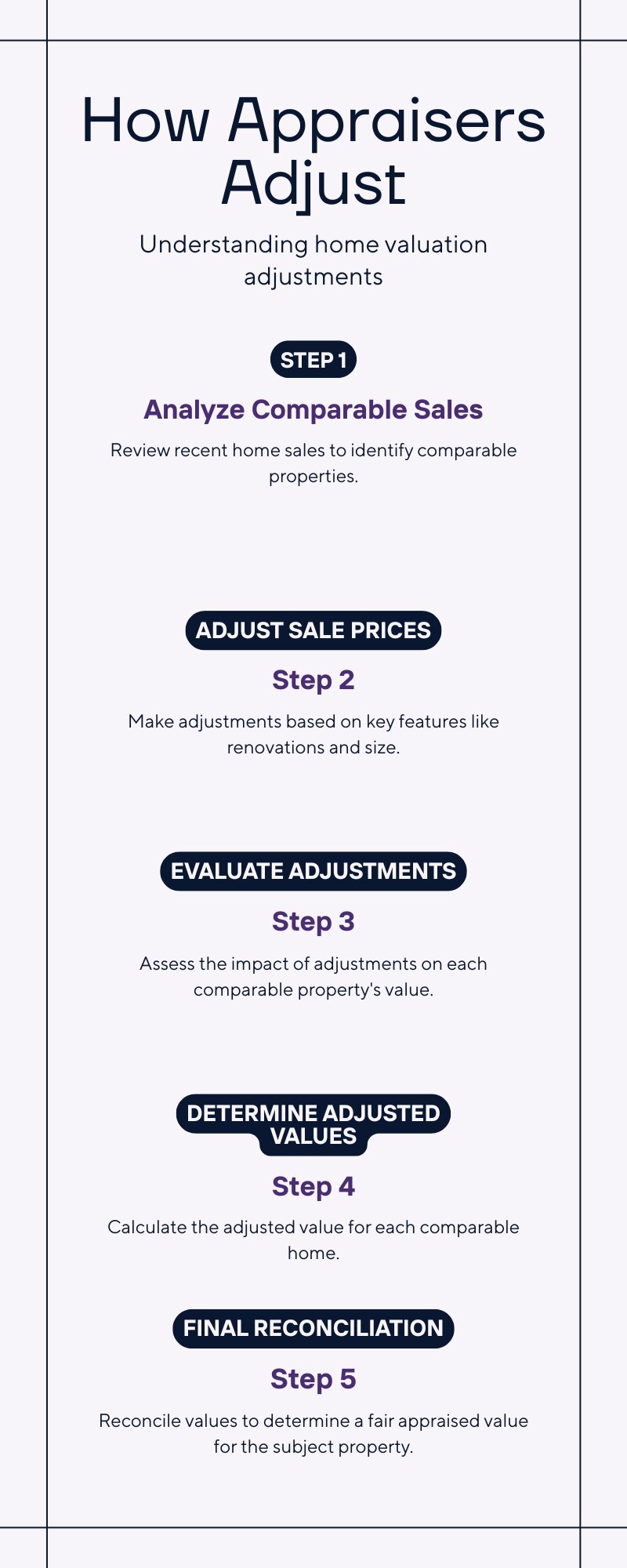
Appraisers adjust each comparable sale up or down based on differences in size, condition, upgrades, and location — then reconcile a final value from the range.
The King County Context: Why Appraisals Get Complicated Here
King County has some specific dynamics that affect how appraisals play out, and if you’re buying or selling in this market, it helps to know them going in.
Price velocity creates gaps. In fast-moving sub-markets like Renton, Kent, and Auburn, homes sometimes go under contract above asking price quickly. The problem: appraisers can only use closed sales as comps, not active listings or pending contracts. If prices have moved up in the past 90 days, the closed comps the appraiser pulls may not reflect where the market actually is right now. That’s one of the most common reasons appraisals come in below contract price in competitive conditions — and it’s worth understanding before you’re in a multiple-offer situation. Check out the current King County mortgage rate environment for broader context on what buyers are navigating right now.
Appraisal waivers are a real offer strategy. In multiple-offer situations, buyers sometimes waive the appraisal contingency entirely, or offer an “appraisal gap guarantee” — a commitment to cover a certain dollar amount above the appraised value in cash. This is common enough in King County that sellers and their agents have come to expect it on competitive listings. If you’re a buyer competing for a home and you can’t or won’t waive the appraisal contingency, your offer may lose to one that does — even if your price is the same.
New Washington law (effective January 1, 2026) added a twist for off-market deals. Under RCW 61.40.010, if a buyer makes an unsolicited offer on a property that isn’t listed and the seller has no agent, the buyer must pay for an appraisal and the unrepresented seller has a four-day window to back out after receiving the results. This was designed to protect homeowners from being pressured into below-market off-market sales — a real pattern in King County’s investor landscape.
Appraised value vs. assessed value. King County assessors set assessed values for property tax purposes, and they often lag market value by six to eighteen months. Don’t confuse the assessed value on your property tax statement with what an appraiser will determine. They’re calculated differently and serve different purposes. A home assessed at $680,000 for tax purposes can absolutely appraise at $850,000 in today’s market. If you want to understand the broader tax picture when selling, see our guide to capital gains on home sales in Washington state.
What Happens When the Appraisal Comes In Low
About 8.5% of appraisals come in below the agreed purchase price nationally. In fast-moving markets, that number is higher. When it happens, the lender will only loan based on the appraised value, not the contract price. So if you agreed to pay $900,000 and the appraisal comes in at $860,000, the lender will only underwrite a loan on $860,000. The $40,000 gap has to go somewhere.
Option 1: Renegotiate the Price
The buyer presents the appraisal to the seller and asks them to reduce the price to the appraised value. In a buyer-friendly market, sellers often agree. In a hot market where the seller has backup offers, they may not budge.
Option 2: Cover the Gap in Cash
The buyer brings an additional $40,000 to closing from their own funds to make up the difference. This is the “appraisal gap guarantee” in action. It requires the buyer to have the liquidity to do it.
Option 3: Challenge the Appraisal (ROV)
If the appraiser used weak comps, missed a recent comparable sale, or made a factual error about the property — wrong square footage, missed an update — the buyer’s agent can formally request a Reconsideration of Value (ROV) through the lender. This is not a guarantee of a different number, but legitimate errors do get corrected. Submit recent sales the appraiser missed, document discrepancies, and let the process work.
Cancel the contract. If the buyer has a standard appraisal contingency in place and the gap can’t be resolved, they can cancel and get their earnest money back. This is the protection the contingency provides — and it’s the only option that ends the deal.
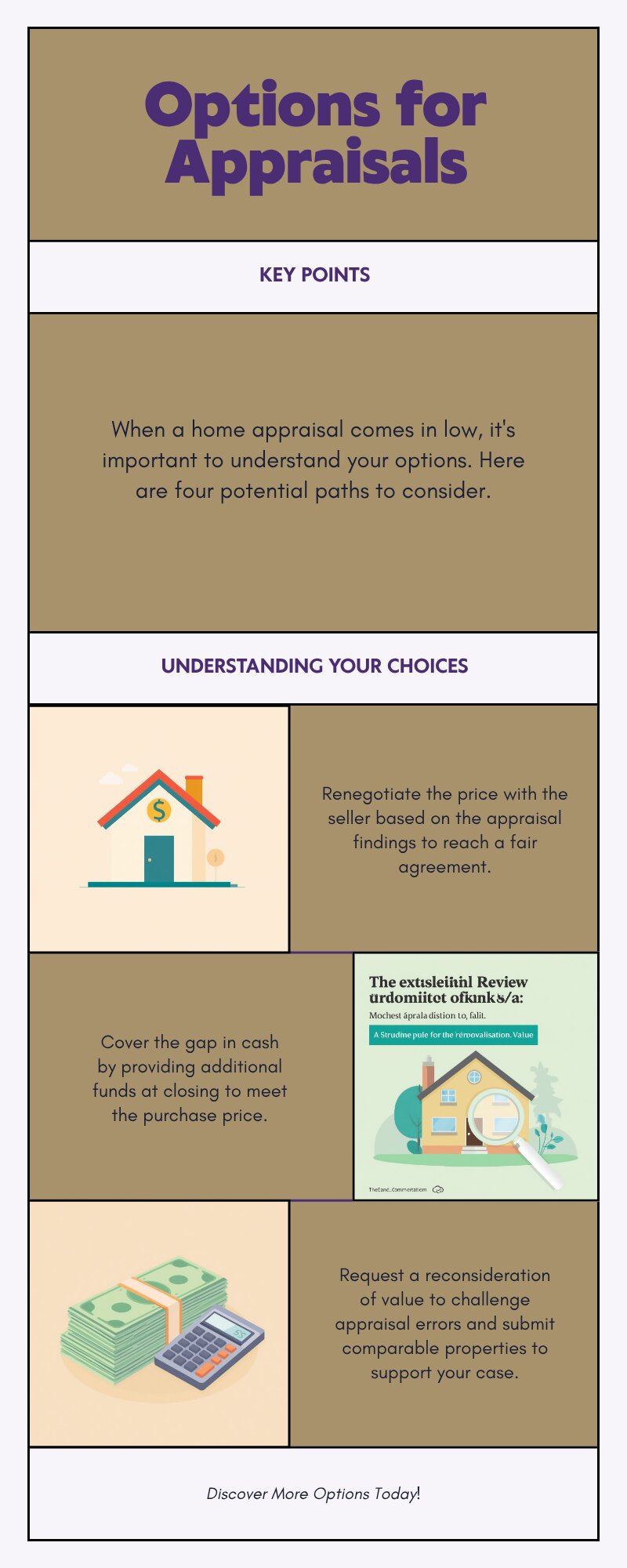
A low appraisal doesn’t have to end the deal. Four paths exist — and only one of them means canceling the contract.
How to Protect Yourself as a Seller
A few things sellers can do before the appraiser even shows up:
Make sure the home is clean and accessible. Appraisers aren’t swayed by staging, but physical condition matters. A cluttered, poorly lit home can look worse than it is. An appraiser who can’t access the attic or crawlspace notes it.
Prepare a comp package. Your agent can pull relevant comparable sales and present them to the appraiser at or before the visit. This doesn’t influence the appraiser’s independence — they’ll do their own research — but it ensures they’re aware of strong comps they might otherwise miss, especially if they’re not hyperlocally familiar with your specific neighborhood. See our guide on how to price your home to sell in King County for more on the comp selection process.
Disclose major updates with documentation. New roof, HVAC, kitchen renovation, ADU added — document the dates and costs. Appraisers make upward adjustments for improvements, but they need to know about them. Don’t assume it’s obvious.
Consider a pre-listing appraisal. For higher-value or unusual properties where standard comps are hard to find, a pre-listing appraisal ($400–$900) gives you an independent data point before you price the home and before a buyer’s lender gets involved. For more on getting your home ready before listing, see how to prepare your home for sale in King County.
How to Protect Yourself as a Buyer
Keep the appraisal contingency in place unless you’re prepared to cover the gap. The contingency exists to protect you. Waiving it means you’re on the hook for the full purchase price no matter what the appraiser says. Only waive it if you’ve done the math on the gap you could realistically face and you’re prepared to cover it.
Understand the difference between appraised value and market value. If ten other buyers are willing to pay $900,000 and the appraisal comes in at $860,000, the market value is arguably closer to $900,000. Appraisals are backward-looking by design — they’re based on what sold, not what competing buyers are currently bidding. In fast-rising neighborhoods, this lag is real and it favors sellers.
Ask your lender about appraisal waivers before you make an offer. Some conventional loan programs (Fannie Mae, Freddie Mac) allow automated valuation models to stand in for a full appraisal under certain conditions — generally when the loan-to-value ratio is low and the data quality is high. If you qualify for a waiver, you avoid the process entirely. Your lender will know whether your specific loan profile qualifies.
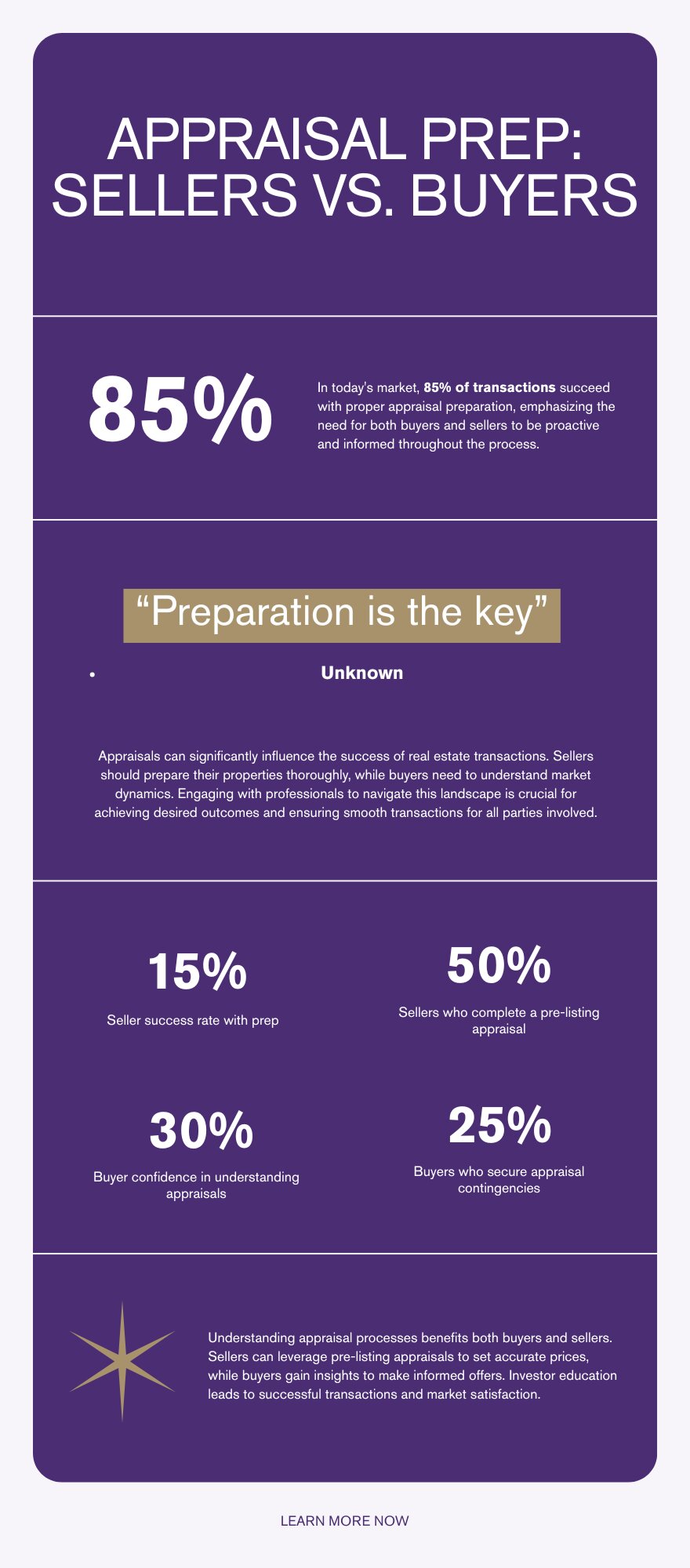
Sellers and buyers face different appraisal risks. A few simple steps before the appraiser visits can make a meaningful difference in how the process goes.
What This Means for You in King County Right Now
The King County market in 2026 is more balanced than it was in 2021 and 2022, but it’s not uniform. South King County sub-markets — Renton, Kent, Auburn, Covington — are still moving faster than the county average, with median days on market well under 30. In those conditions, appraisal gaps remain a real possibility, especially on homes priced above $750,000 where comps thin out.
For sellers in those markets, pricing accuracy matters more than ever. A home priced right at market value has a much better chance of appraising at contract price. A home priced at the high edge of the range, hoping for a bidding war, risks the appraisal gap problem — which puts the deal back in negotiation right when you thought it was done.
Frequently Asked Questions
How much does a home appraisal cost in Washington state?
In King County, expect $400–$900 for a standard single-family appraisal. Complex properties, acreage homes, or homes in more rural areas (Black Diamond, Enumclaw) may run higher. The buyer pays the appraisal fee as part of closing costs.
How long does an appraisal take in Washington state?
The appraiser typically completes the site visit within one to two weeks of the purchase agreement being signed. The written report usually comes back three to seven business days after the visit. Total time from contract to receiving the appraisal: roughly two to three weeks.
Can a seller refuse to let an appraiser in?
Technically yes, but refusing the appraisal kills the buyer’s financing and ends the deal. Under the terms of most purchase agreements, the seller is expected to provide reasonable access. A refusal to cooperate is effectively a decision to blow up the transaction.
What is a Reconsideration of Value (ROV) in Washington?
An ROV is a formal request to the lender asking the appraiser to reconsider the value based on new information — comparable sales the appraiser missed, factual errors in the report, or evidence the adjustments were unreasonable. It does not guarantee a different outcome, but it is a legitimate tool when the original report contains real errors or omissions.
What’s the difference between appraised value and assessed value in King County?
Assessed value is set by the King County Assessor’s office for property tax purposes and typically lags market value by six to eighteen months. Appraised value is determined by a licensed appraiser for a lending transaction, using current comparable sales. They’re calculated differently and serve different purposes. Don’t use your property tax statement to set your list price.
Do appraisals expire?
Yes. Most lenders will only accept an appraisal completed within 120 days (four months) of the loan closing date. If your deal takes longer than expected, the lender may require a reappraisal or an update to the original report.
The appraisal doesn’t have to be the part of the transaction that surprises you. If you’re selling, a solid pricing strategy from the start gives you the best shot at a clean appraisal. If you’re buying, understanding your options before you’re in contract — not after the number comes back low — puts you in control of what happens next.
Your guide to life outside Seattle.
253-350-0045 ·
greg@livingoutsideseattle.com ·
www.livingoutsideseattle.com
Rent Out vs. Sell Your King County Home: The Real Math
Should you become a landlord or cash out? Here’s the real math King County homeowners need before making this call.
If you’ve been sitting on a home in Renton, Kent, Auburn, or anywhere in South or East King County, you’ve probably had this thought: what if I just rented it out instead of selling? Especially with home values still holding strong — median prices around $859,000 countywide in spring 2026 — the idea of collecting rent every month while your property appreciates sounds appealing.
But the math is more complicated than it looks on paper. And Washington’s landlord-tenant laws changed significantly in 2025, adding rules most homeowners-turned-landlords don’t know about until it’s too late.
This post walks through both sides of the decision — actual rental income projections, net sale proceeds, tax implications, cash flow math, and the real-world landlord responsibilities that don’t show up in the rosy scenarios. By the time you’re done reading, you’ll know which option makes more financial sense for your situation.
The Rental Income Side: What King County Homes Actually Rent For
Let’s start with what you could realistically collect in rent. King County single-family rental rates in 2026 vary a lot by city and home size, but here are realistic ranges for typical South and East King County homes.
Three-bedroom single-family homes in Renton are pulling $2,800 to $3,200 per month. In Kent, the range is closer to $2,400 to $2,800. Auburn runs slightly lower, typically $2,200 to $2,600 for a comparable home. Move east to Issaquah or Sammamish, and a three-bedroom can fetch $3,200 to $3,800 monthly.
Sounds like solid money. But gross rent is not your income. Your net cash flow depends on what you owe and what it costs to run the property.
Here’s a real example. Say you own a three-bedroom home in Renton worth $700,000. You bought it five years ago, your current mortgage balance is $480,000, and your rate is 4.5%. Your monthly carrying costs look something like this:
Monthly Carrying Costs — High Mortgage Scenario
Mortgage P&I at 4.5% on $480K balance: ~$2,430
Property taxes (King County ~1.0% annually): ~$583/month
Landlord insurance (~15% more than owner-occupied): ~$150/month
Maintenance reserve (1% of value per year / 12): ~$583/month
Total carrying costs: ~$3,746/month
At $3,000 rent: -$746/month before vacancy or management fees
If you hired a property manager — which handles tenant screening, rent collection, and maintenance coordination — expect to pay 8% to 10% of gross rent, or another $240 to $300 per month on top of that negative.
That scenario doesn’t cash flow. It costs you money every month to keep it.
Now flip it. Same Renton home, but you paid it down to $300,000 and your rate is 3.0% from a 2021 refinance. Monthly P&I drops to approximately $1,265. Suddenly the same $3,000 rent gives you positive cash flow after all expenses. That’s the home where keeping it as a rental makes financial sense.

Two scenarios, same rent. The only thing that changes the outcome is what you owe. Run your actual numbers before deciding.
The Sale Side: What You Actually Walk Away With
When you sell, you get a lump sum. But net proceeds are not the same as your home’s sale price. Here’s what comes out.
Real Estate Excise Tax (REET) in King County runs approximately 1.78% of the sale price on a home in the $700,000 to $1.5 million range. On a $700,000 sale, that’s $12,460. Agent commissions typically run 5% to 6% total — on $700,000, that’s $35,000 to $42,000. Closing costs — title insurance, escrow, pro-rated taxes — add another $3,000 to $5,000.
So on a $700,000 sale, you might net $635,000 to $649,000 before any mortgage payoff. Subtract the $480,000 balance, and you walk away with roughly $155,000 to $169,000 in cash. That’s a down payment on your next home, a fully funded investment account, or two years of rental losses avoided.
If you’re in a lower-equity position — say $300,000 owed on a $700,000 home — the sale gives you approximately $355,000 to $369,000 cash in hand. Now the math shifts. Holding the property becomes more interesting because you have equity working for you every year.
Tax Implications: Where Things Get Complicated
This is the part most homeowners don’t think through carefully enough.
If you sell your primary residence, Washington’s $500,000 capital gains exclusion (for married couples; $250,000 for single filers) likely protects your gain from federal tax entirely, provided you’ve lived there two of the last five years. Washington state has no income tax, so there’s no state capital gains tax on primary residence sales either. You pay REET at closing and that’s largely it. For a full breakdown of how Washington taxes work on a home sale, see our guide to capital gains on home sales in Washington State.
If you convert to a rental and sell later, the tax picture changes. Once you stop living there as your primary residence, you start losing your exclusion eligibility. Sell after the two-year primary-residence window closes, and your gain becomes a taxable long-term capital gain at the federal level — 15% or 20% depending on your income bracket, plus potentially a 3.8% Net Investment Income Tax if your household income exceeds $250,000.
There’s also depreciation recapture to account for. Once you convert to a rental, the IRS lets you deduct depreciation each year — roughly 1/27.5 of the structure’s value annually. When you eventually sell, the IRS recaptures that depreciation at up to 25%. That can be a meaningful surprise at tax time.
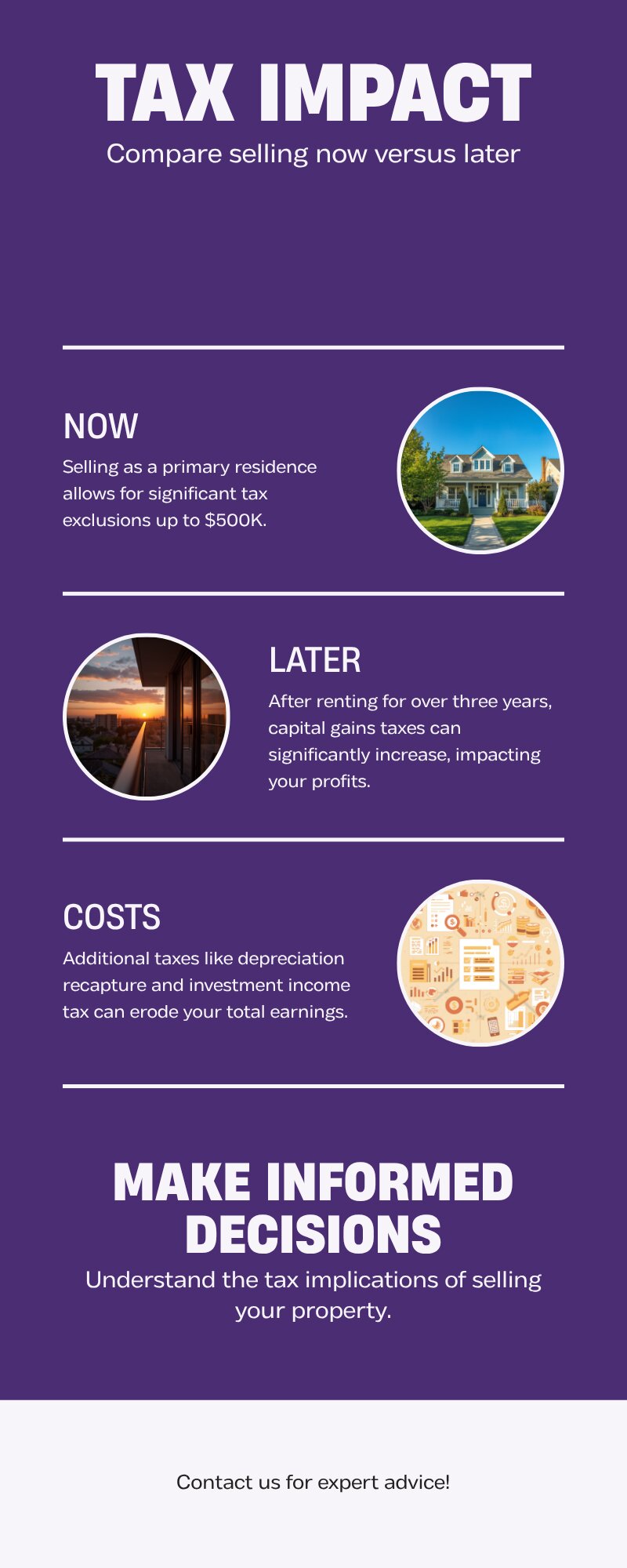
The two-year primary residence window is the biggest tax variable in this decision. Once it closes, your sale proceeds become a taxable event.
Washington Landlord Law in 2026: What Changed
Before you decide to rent, you need to know that Washington’s landlord-tenant laws shifted significantly starting in 2025. These aren’t small tweaks — they meaningfully change what it means to be a landlord here.
Rent Stabilization (HB 1217)
Effective May 2025, annual rent increases are capped at 7% plus CPI, or 10%, whichever is lower. For 2026, the maximum is 9.683%. You cannot raise rent at all during the first 12 months of a tenancy. Any increase requires 90 days written notice using a state-standardized form sent via certified mail.
What this means for you: if rents rise faster than that cap, you can’t keep pace. If a great tenant moves in at below-market rent, you’re limited in how quickly you can adjust.
Just Cause Eviction Requirements
You can’t simply decide not to renew a lease at the end of the term. You need a legally recognized reason — nonpayment, lease violation, owner move-in, or a handful of other specific grounds.
Eviction timelines are not quick. Nonpayment requires a 14-day notice before you can file. Most violations require a 10-day notice to comply. Court processes add weeks or months. Evicting a non-paying tenant in King County can realistically take three to six months — during which you carry all costs with no rent coming in.
The Local Angle: King County Specifics That Change the Math
A few things about King County shift the calculus compared to national averages.
Property taxes here are real. King County’s effective property tax rate runs around 0.93% to 1.1% depending on city and levy district. On a $700,000 home, that’s $6,500 to $7,700 per year — a cost that doesn’t go away when you become a landlord. And unlike a primary residence, you can’t homestead-exempt your way to a lower bill.
Current King County mortgage rates sit around 6.4% in mid-2026. If you bought in the last two to three years at these rates, your P&I is substantially higher than someone who refinanced in 2021. That gap is often what separates a cash-flowing rental from a money-losing one.
The rental market is competitive but not unlimited. Rents have stayed strong in South King County, but they’ve also flattened. Rent growth has run around 4% year over year in the broader Seattle metro, but Washington’s new stabilization caps limit how much future increases can catch up.
Home appreciation is still the strongest long-term argument for the rental side. If your home appreciates 3% to 4% annually from a $700,000 base, that’s $21,000 to $28,000 per year in equity gain. Even if you’re slightly cash-flow negative on rent, appreciation can still make the investment pencil out — if you’re patient and prepared for the landlord role.
South King County in particular — Renton, Kent, Auburn, Covington — remains a strong long-term hold for landlords who are disciplined about tenant selection and maintenance. These are stable demand markets with diverse employment bases. But that’s a different conversation than “I’ll rent it out for a year and see how it goes.”
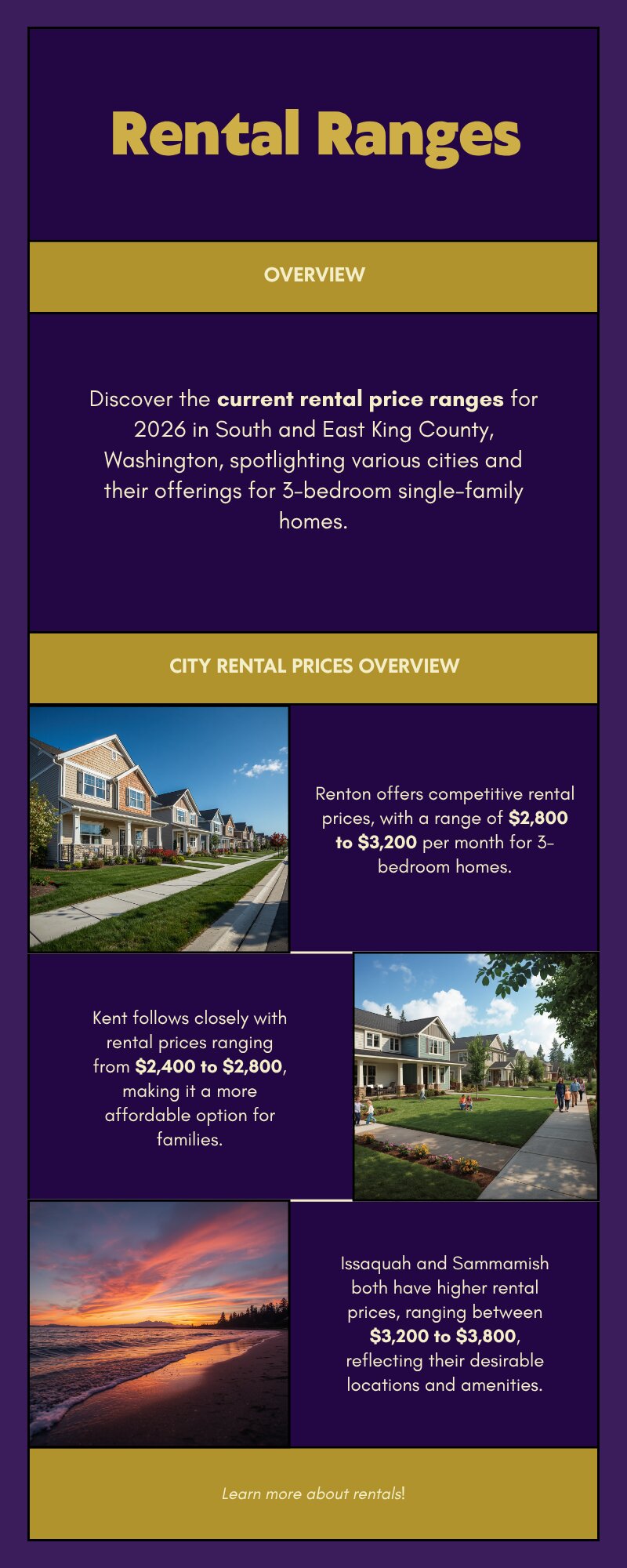
South King County rents are strong but not unlimited. Your specific city, neighborhood, and home condition determine the real number you’ll collect.
When Renting Makes Financial Sense
Based on the math and the landlord landscape, here’s when keeping the property and renting usually wins.
You have a low-rate mortgage (under 4%) that generates positive monthly cash flow after all expenses. Your principal balance is low relative to value — meaning the equity is working for you as an asset even if rent doesn’t fully cover costs. You’re planning to return and live in the home within three to five years, preserving your primary residence exclusion. Or you’re committed to building a rental portfolio long-term and understand that this first property is an investment, not passive income.
When Selling Makes More Sense
Selling wins when you have a high-rate or high-balance mortgage that won’t cash flow at current rents. When your equity is substantial and a lump sum now serves your goals better than monthly income later. When you want simplicity — no tenant calls, no maintenance surprises, no navigating the 90-day rent increase notice process. Or when you need to deploy that equity into your next home and you can’t do both.
If you decide to sell, you’ll want to prepare your home strategically and price it right from day one — two steps that consistently separate fast, full-price sales from drawn-out ones.
What This Means for You
If you’re weighing this decision right now, here’s a simple three-step filter before you call anyone.
First, run your actual monthly carry cost — mortgage P&I, taxes, insurance, and a 1% annual maintenance reserve divided by 12. Compare that to realistic rent for your specific home and neighborhood, not the top of the range.
Second, calculate your net sale proceeds. Look at your current loan payoff, subtract estimated closing costs and agent fees, and ask yourself whether that lump sum helps you more than the monthly difference between rent and expenses.
Third, get a real conversation with a tax professional about your gain and your exclusion window. If you’ve lived in the home two of the last five years, the clock is ticking on that federal exclusion. Don’t let it expire accidentally while you’re hoping the rental market improves.
I can walk you through the numbers on your specific home — no obligation, no pressure. If renting makes more sense, I’ll tell you that. If selling makes more sense, I’ll tell you that too.
FAQ: Renting Out vs. Selling Your King County Home
Can I rent out my King County home and still avoid capital gains tax when I sell later?
Only if you sell within the IRS’s primary residence window — you must have lived in the home two of the last five years when you sell. If you rent it out for more than three years before selling, you lose the $250,000/$500,000 federal exclusion. Washington state has no capital gains tax, but federal tax on investment property gains runs 15–20% plus potential Net Investment Income Tax.
What can I realistically charge for rent on a King County single-family home in 2026?
A three-bedroom home in South King County (Renton, Kent, Auburn) typically rents for $2,400 to $3,200 per month depending on condition, location, and size. East King County (Issaquah, Sammamish, Bellevue) runs higher, often $3,200 to $3,800 for a comparable home.
Does Washington state have rent control in 2026?
Yes, as of May 2025. Under HB 1217, annual rent increases are capped at 7% plus CPI, or 10%, whichever is lower. For 2026, the cap is 9.683%. You can’t raise rent in the first 12 months of a tenancy, and you must give 90 days written notice — certified mail, state-standardized form — before any increase.
How long does it take to evict a non-paying tenant in King County?
Realistically, three to six months from missed payment to vacant possession. You must issue a 14-day pay-or-vacate notice, file in court if they don’t comply, wait for a hearing, and execute the order. During that entire period you’re carrying costs with no rent. Landlord insurance with loss-of-rent coverage can offset some of this risk.
Should I hire a property manager if I rent out my King County home?
For most first-time landlords, yes. A professional property manager handles tenant screening, lease compliance under Washington’s updated laws, maintenance coordination, and the 90-day rent increase documentation process. Typical fees run 8–10% of gross rent monthly. That cost is real, but so is the protection it provides.
What’s the real estate excise tax (REET) on selling my home in King County?
REET is graduated in Washington. On homes selling between $700,000 and $1.5 million, the effective combined rate runs approximately 1.28% to 2.5% depending on the price tier. For a $700,000 sale, budget roughly $12,000 to $13,000 for REET at closing. It comes out of proceeds automatically at the title company.
The decision between renting and selling isn’t one-size-fits-all. It’s a math problem that looks different for every household depending on what you owe, what you’d net, and what you actually want your life to look like over the next three to five years. Run the numbers honestly — including the ones people usually skip — and the right answer tends to become obvious.
Your guide to life outside Seattle.
253-350-0045 ·
greg@livingoutsideseattle.com ·
www.livingoutsideseattle.com
Condo vs Townhouse vs Single-Family in King County
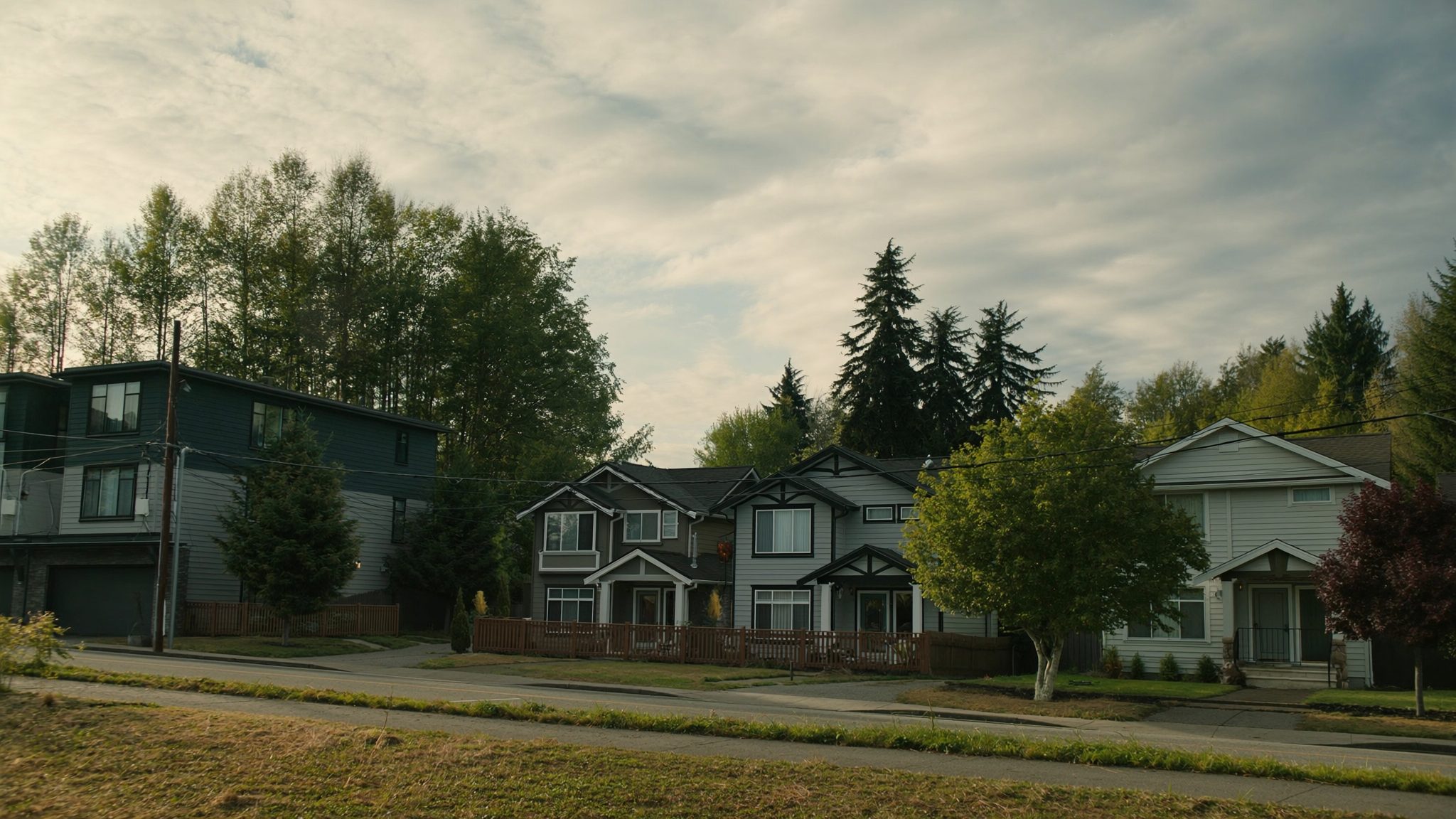
You’ve got three completely different products at three completely different price points. Here’s what actually separates them — and which one fits your situation in King County right now.
When most buyers start looking at homes in King County, they type a budget into Redfin and let the results decide the property type for them. That usually works fine until they’re deep into a transaction and suddenly discover that their condo doesn’t qualify for the loan they planned on, or that the townhouse HOA has a pending special assessment they didn’t know about.
The property type decision matters a lot more than most people realize. It affects what you pay every month, how quickly you can sell when the time comes, what your lender will let you borrow, and what you’re actually responsible for maintaining. I’ve walked buyers through all three, and the ones who end up happiest are almost always the ones who understood the differences before they started shopping — not after.
So here’s the full comparison. Condos, townhouses, and single-family homes. What you own, what you pay for, how they appreciate, how they finance, and who each one is actually right for in the King County market.
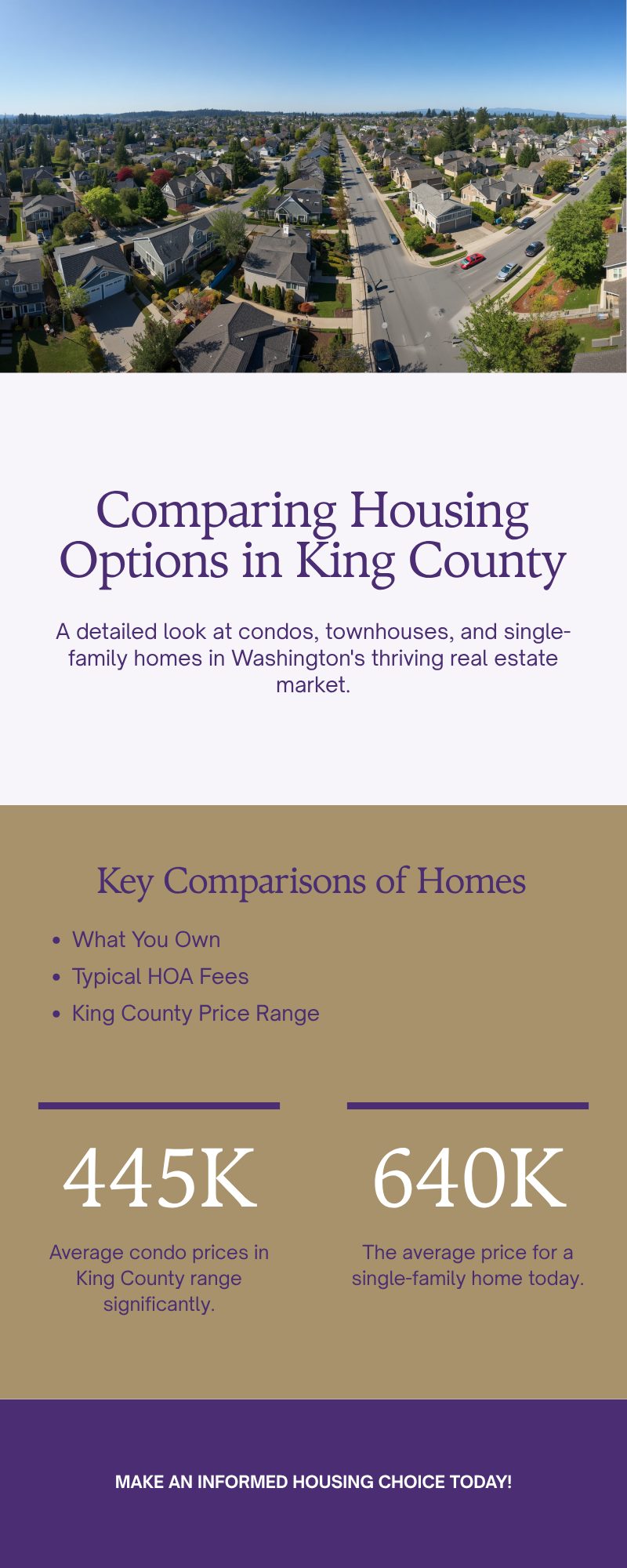
Property type comparison for King County buyers — ownership structure, HOA fees, and who each is right for.
What You Actually Own
This is where most people have fuzzy thinking, and it matters more than any other single factor.
Single-Family Home
When you buy a single-family home, you own the building and the land underneath it. Full stop. No HOA involved in most cases, though some planned neighborhoods do have one for shared amenities. If the roof leaks, that’s on you. If you want to paint the front door a different color, go for it. Your lot is yours to build a deck on or plant a garden in. That full ownership is exactly what makes SFHs appreciate the way they do. Land in King County is genuinely scarce, and land ownership transfers that value directly to you.
Townhouse
When you buy a townhouse, you typically own the structure and the land it sits on. Townhouses in King County are usually fee-simple, meaning you own your unit from the ground up. You share walls with neighbors, and there’s usually an HOA covering the common areas — shared driveways, landscaping, maybe a small courtyard. But the land is yours. That’s a meaningful difference from a condo, and it means townhouse appreciation tends to track closer to single-family than to condo over time.
Condo
When you buy a condo, you own the interior of your unit and a share of common areas. The land, the roof, the exterior walls, the lobby — all of that belongs to the HOA. Maintenance of those shared elements comes out of your monthly dues and out of a reserve fund that the HOA is supposed to be building over time. That arrangement is convenient right up until the roof needs replacing and the reserve fund is underfunded. More on that below.
The Price Gap Is Real in 2026
In King County as of early 2026, you’re looking at roughly these price ranges depending on what you’re buying and where.
Single-family homes in South King County — Renton, Kent, Auburn, Maple Valley — are running between $640,000 and $850,000 for typical resale product. The countywide median is hovering around $880,000. Anything under $600K in the SFH category tends to be smaller footprints or locations where the trade-off is commute time or school district.
Townhouses in those same South King County cities are typically coming in between $450,000 and $650,000. New construction townhomes near light rail corridors or in Kent’s East Hill area have been active in the $500K–$600K range. They’re a real path for buyers who want a two-car garage and a backyard without the $800K price tag.
Condos are the most variable. King County’s condo median dropped sharply — from around $690,000 in early 2025 to closer to $445,000–$577,000 in early 2026, depending on location. That’s a significant decline driven by a real imbalance in supply and demand for condos right now. More inventory, softer buyer demand, and a financing environment that makes condo purchases harder have all contributed. If you want to understand what current mortgage rates mean for your monthly payment across these price ranges, that post walks through the exact math.
How They Finance — This Is the Part That Surprises People
Financing a single-family home is the most straightforward of the three. Conventional loans, FHA, VA — all of these work with minimal restrictions. With strong credit and 3–5% down, you can access the full range of loan products.
Townhouses generally finance similarly to single-family homes, with one caveat. If the townhouse is part of a condo regime — meaning the ownership is structured legally as a condo even though it looks like a townhouse — lender scrutiny increases. Always ask your agent how the title is structured before assuming it finances like an SFH.
Condos are where financing gets genuinely complicated, and buyers often don’t find out until they’re already in contract.
Lenders classify condos as either warrantable or non-warrantable. A warrantable condo meets guidelines set by Fannie Mae and Freddie Mac — the HOA is financially healthy, owner-occupancy is above a certain threshold, no single entity owns too large a percentage of units, and the building isn’t in litigation. Those loans behave pretty normally. The interest rate runs about 0.125–0.375% higher than a comparable SFH purchase, and you can put as little as 3–5% down with good credit.
A non-warrantable condo is a different story. These are condos that don’t meet those standards — maybe the rental occupancy is too high, or the HOA has pending litigation, or the reserve fund is critically underfunded. Lenders who will touch these at all typically require 20–25% down and charge rates 0.5–1.5% higher than the warrantable equivalent. Some lenders won’t touch them at all.
HOA Fees and Hidden Costs: What to Actually Look For
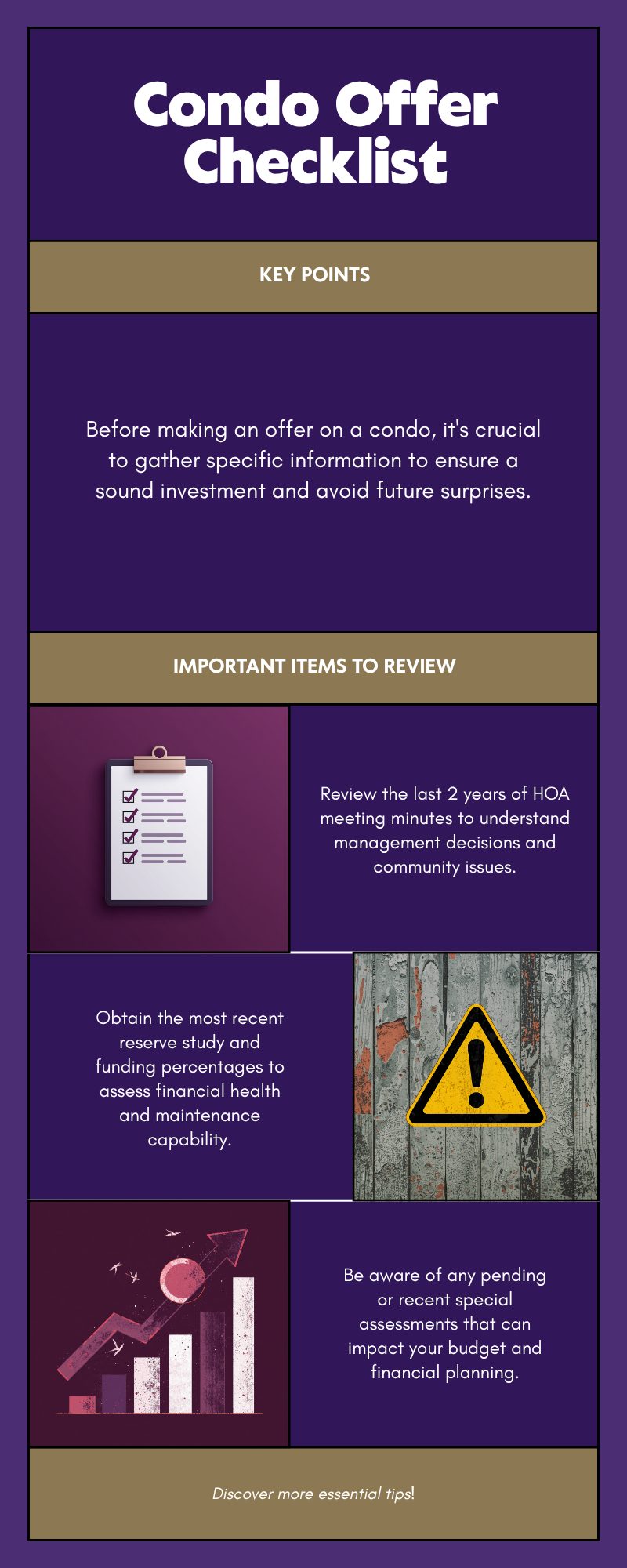
Request these documents before you make an offer on any condo in King County.
Every property type can have an HOA, but the nature and risk of HOA involvement varies considerably.
For single-family homes in planned communities, HOA fees tend to be modest — often $50–$150/month — and cover things like neighborhood common areas or a community pool. These are relatively low-risk from a special assessment standpoint as long as there aren’t major shared structures.
Townhouse HOAs typically run $200–$500/month in King County and cover shared exterior maintenance, landscaping, and common areas. The key question is: what exactly is the HOA responsible for? Some townhouse HOAs cover roof and siding; others leave the exterior entirely to you. Read the CCRs before you make an offer.
Condo HOAs carry the most complexity. Downtown Seattle condos can run $400–$1,000+/month. South King County condos tend to be lower — $250–$550/month — but can spike with age and deferred maintenance. And that brings us to the single biggest risk most condo buyers underestimate: the special assessment.
Washington State law (RCW 64.34.380 for condos) requires HOAs to conduct reserve studies and update them annually. A well-funded HOA sets aside money every month to cover large future expenses — roof replacement, elevator service, parking structure repairs. When an HOA is underfunded, it can’t pay for those repairs out of reserves. The result is a special assessment: a one-time charge to every unit owner, sometimes running $5,000–$30,000+ per unit.
Before you make an offer on a condo, request the last two years of HOA meeting minutes, the most recent reserve study, and the current percent-funded figure. If the reserve study shows less than 70% funding and the minutes mention deferred maintenance or upcoming projects, factor a special assessment into your budget. If they won’t provide these documents, that’s your answer.
Appreciation Patterns: Which One Builds Wealth Faster?
This is the question every buyer wants a clean answer to, and the honest answer is that it depends on time horizon and what you’re comparing.
Single-family homes in King County have the strongest long-term appreciation track record, driven primarily by land scarcity. As the region has grown, land in South King County has become more constrained. Homes in Renton, Maple Valley, and Auburn have all seen substantial appreciation over the last decade. In May 2026, single-family inventory in King County was tight enough at 2.8 months of supply to support pricing stability, with homes selling at 101.9% of list price on average. My East and South King County market update has the current numbers.
Townhouses tend to appreciate in line with or slightly below SFH rates, depending on the product. New construction townhomes near transit corridors have performed well as demand for lower-maintenance, urban-adjacent living has grown. Fee-simple townhouses — where you own the land — typically hold value better than leasehold or condo-regime townhouses.
Condos are the most volatile of the three. The sharp drop in King County condo prices in 2025–2026 illustrates this clearly. Condos have periods of strong appreciation, particularly during high-demand, low-inventory cycles, but they also fall harder when demand softens. The oversupply of condo inventory right now, combined with the financing friction around non-warrantable buildings, has pushed prices down in ways that SFH and townhouse buyers haven’t experienced. That said, the current condo pricing environment does present a genuine opportunity for buyers who do the due diligence. Buying at a cyclical low in a well-run building in a strong location can produce solid returns. The key word is “well-run.”
The King County Local Angle: How Each Property Type Plays Out Here
South King County gives you examples of all three property types at accessible prices, and the differences matter more in this market than national averages suggest.
In Renton, you’ll find a mix of SFH in the $650K–$850K range, townhomes clustered near the Renton Highlands and Landing area in the $450K–$600K range, and condos in the Renton downtown corridor that have come down considerably in price. The light rail connection at the Renton Transit Center has increased buyer interest in Renton townhouses specifically. If you’re buying in Renton and considering a condo, the warrantability question is especially relevant — several Renton condo buildings are older and require careful reserve fund scrutiny. The Living in Renton guide covers the full neighborhood breakdown.
In Kent, townhomes in the $450K–$550K range have been some of the more active product in 2026. The first-time buyer guide for Kent covers the buy-now-vs-wait math that many Kent buyers are working through, and townhomes tend to be the property type that makes that math work at current rates.
In Auburn and Maple Valley, single-family homes still dominate the inventory. Townhouse product exists but is more limited. If you’re drawn to these communities for the school districts and neighborhood feel, the calculus often pushes toward SFH even if it means stretching the budget a bit further.
East King County — Issaquah, Bellevue, Sammamish — has a strong townhouse market particularly in the Issaquah Highlands and Talus communities, where mixed-use development has produced a large supply of attached product. These are generally well-maintained and have active HOAs with healthy reserves, but due diligence still matters.
What This Means for You as a Buyer
If you’re a first-time buyer in South or East King County in 2026, here’s the practical framework I’d use.
Budget Under $500,000
You’re likely looking at condos or newer townhomes. Condos offer the lowest purchase price but require more due diligence. Prioritize buildings with healthy reserves and warrantable financing status. If you can get into a well-run building at today’s discounted prices, you’re buying in at a favorable point in the condo cycle.
Budget $500,000–$700,000
Townhouses become your primary option for getting into ownership with land included. New and newer construction townhomes in Kent, Renton, and Federal Way fit this range. Prioritize fee-simple structures over condo-regime townhouses, and read the HOA docs before you fall in love with a floor plan.
Budget $700,000+
Single-family homes in South King County become realistic. You’ll find the strongest appreciation track record and the simplest financing path. The trade-off is less lock-and-leave convenience and more maintenance responsibility.
Frequently Asked Questions
What is the difference between a condo and a townhouse in King County?
A condo is a unit in a shared building where you own the interior space and a share of common areas. A townhouse is usually a multi-level attached home where you own the structure and the land it sits on. This difference in land ownership typically makes townhouses appreciate more like single-family homes and finance more like them too.
Is it harder to get a loan for a condo than a house in King County?
Yes, generally. Condos face additional lender scrutiny around HOA financial health, owner-occupancy ratios, and reserve fund adequacy. If a condo is classified as non-warrantable, you’ll typically need a larger down payment and accept a higher interest rate. Single-family homes and fee-simple townhouses don’t have this additional layer of review.
Are condos a good investment right now in King County?
Condo prices dropped significantly in 2025–2026, which means buyers who do careful due diligence can potentially buy at a cyclical low. The risk is that you’re buying into a shared financial structure (the HOA), so the quality of the building’s finances matters as much as the unit itself. In a well-run building, current pricing represents a real opportunity. In a poorly funded building, you’re taking on someone else’s deferred maintenance.
How much are HOA fees for condos vs. townhouses in South King County?
Condo HOA fees in South King County typically run $250–$550/month for older and mid-range buildings. Townhouse HOAs tend to be lower — $150–$400/month — and generally cover less exterior maintenance. Downtown Seattle and Eastside condos can run $400–$1,000+/month. Always include HOA dues in your monthly payment calculation when comparing properties.
What is a reserve fund and why does it matter when buying a condo?
A reserve fund is the HOA’s savings account for large future repairs — roof replacement, elevators, structural work. Washington State requires condos to conduct reserve studies and update them annually. If the reserve fund is significantly underfunded (below 70% of what it should hold), the risk of a special assessment increases. Special assessments are one-time charges to all unit owners that can run thousands to tens of thousands of dollars.
Can I use an FHA loan to buy a condo in King County?
Yes, but the condo building must be on the FHA-approved list. FHA imposes strict requirements on owner-occupancy rates, commercial space ratios, and HOA financial health. Search the HUD database to check a specific building’s approval status before getting too far into the transaction.
The property type you choose is one of the first big decisions in the buying process, and it shapes everything that follows — financing, monthly costs, what you maintain, and what you eventually sell. Understanding the differences upfront saves a lot of mid-transaction surprises.
Your guide to life outside Seattle.
253-350-0045 ·
greg@livingoutsideseattle.com ·
www.livingoutsideseattle.com
