

 Facebook
 X
X
 Pinterest
 Copy Link
Home Inspection Seller Guide | King County WA 2026
Most sellers are nervous about the home inspection. Here’s what actually happens, what buyers are really looking for, and how to handle a repair request without losing your deal.
The call comes in after the inspection. Your agent says the buyer has a repair request. Your stomach drops.
I see this happen all the time. Sellers who have lived in their home for 10 or 15 years think they know every quirk of the place, and they still get surprised by what an inspector puts in a report. That’s not because something was hidden. It’s because most sellers have never seen a home inspection report before. When you see 40 items flagged in a 60-page document, it can feel catastrophic — even when 35 of those items are caulk gaps and light switch covers.
Here’s what the inspection process actually looks like from the seller’s side, what it means when a buyer sends repair requests, and how to respond without blowing up your sale. If you haven’t started prep yet, it’s worth reading our guide to preparing your home for sale in King County alongside this one.
How the Inspection Fits Into Your Sale Timeline
In King County, the buyer typically has a set window after mutual acceptance — often 7 to 10 days — to schedule and complete their inspection, review the report, and submit any requests. That window is spelled out in the purchase and sale agreement.
You don’t attend the inspection. As the seller, your job is to leave the home accessible and get out of the way. The inspection takes two to four hours depending on the size and condition of the property. Smaller condos in Renton or Auburn might be done in under two hours. A larger home in Covington or Maple Valley with a finished basement and detached garage can take closer to four.
After the inspection, the buyer gets a full written report — typically 30 to 60 pages with photos. The report goes to the buyer, not to you. You only see what the buyer chooses to share when they submit their requests.
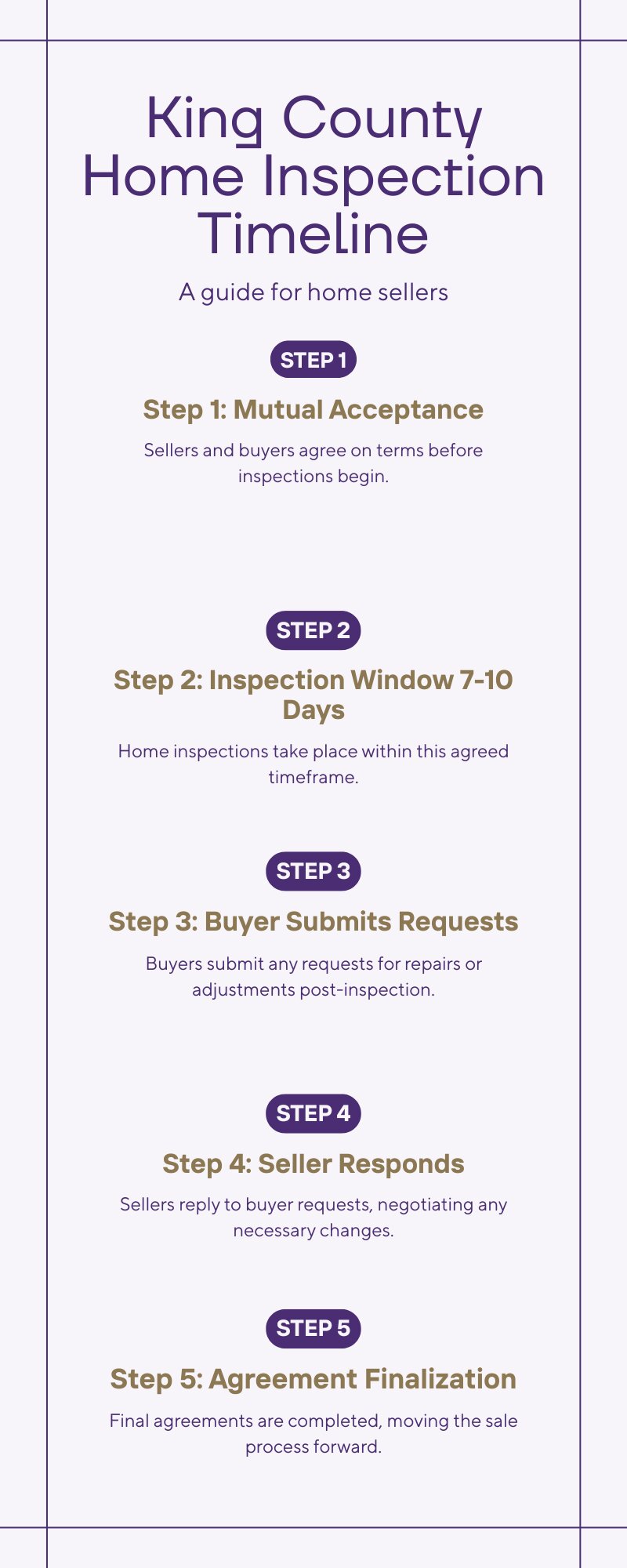
In King County, buyers typically have 7–10 days after mutual acceptance to complete their inspection and submit requests.
What the Inspector Actually Looks At
Home inspectors in Washington are licensed through the state Department of Licensing. They’re looking at the condition of the home’s systems and structure, not its cosmetic appearance. That means they won’t flag your dated kitchen tile, but they will flag a roof that’s near the end of its life.
The main areas every inspector covers are the roof and attic, the foundation and crawl space, the electrical panel and visible wiring, plumbing visible within the walls and under fixtures, the HVAC system including the furnace and any heat pumps, the water heater, windows and doors, and the exterior including drainage and grading.
In the Pacific Northwest, inspectors pay extra attention to moisture. We get a lot of rain here, and the most common serious findings in South and East King County homes come down to water — roof age, gutter condition, crawl space moisture, and signs of past leaks near windows and skylights. A good inspector is going to look hard at anywhere water could get in.
What Shows Up on a Report — and What It Actually Means
This is where sellers tend to panic. You’ll see a long list of items, many flagged with the same urgent-looking language, and it all starts to blur together.
Here’s how to read it: inspectors are trained to note everything they observe, regardless of severity. A missing dryer vent cover and a cracked heat exchanger show up in the same format — but one is a $12 fix from the hardware store and the other is a serious safety issue.
The findings that actually matter fall into a few categories.
Safety Issues
Safety issues are the ones buyers and their lenders care most about. Missing handrails on stairs, double-tapped breakers in the electrical panel, exposed wiring, carbon monoxide detector gaps — these get flagged and buyers expect them to be addressed.
In King County, older homes in Renton and Kent sometimes have Federal Pacific electrical panels, which can be an insurance problem for buyers. That’s a legitimate concern worth addressing before listing if you know about it.
Structural and Water Intrusion Issues
These are the ones that can kill deals or require significant renegotiation. Foundation cracks showing active movement, rot at the mudsill, or evidence of water in the crawl space fall here.
These aren’t always deal killers, but they need to be understood. Is this an old issue that’s been stable for years, or is water still moving? That question matters a lot to how a buyer responds.
Mechanical Systems Nearing End of Life
A furnace that’s 20 years old, a water heater at 12 years, a roof with 3 to 5 years of life left — these often show up in inspection reports. Buyers will sometimes ask for a credit here, especially in a more balanced market like we’re seeing in parts of King County in 2026.
This isn’t surprising news if you’ve owned the home for a while. Knowing the ages of your major systems before you list means you can factor them into your pricing strategy rather than scrambling to respond to them mid-contract.
Deferred Maintenance
This makes up the bulk of most reports. Caulk at tubs and windows, tree branches touching the roof, missing downspout extensions, minor gutter debris — these are normal house items that don’t represent serious problems.
Buyers sometimes include a long deferred maintenance list in their requests. That doesn’t mean you have to fix all of it. Knowing the difference between a genuine concern and a routine maintenance item is where your agent’s experience matters most.
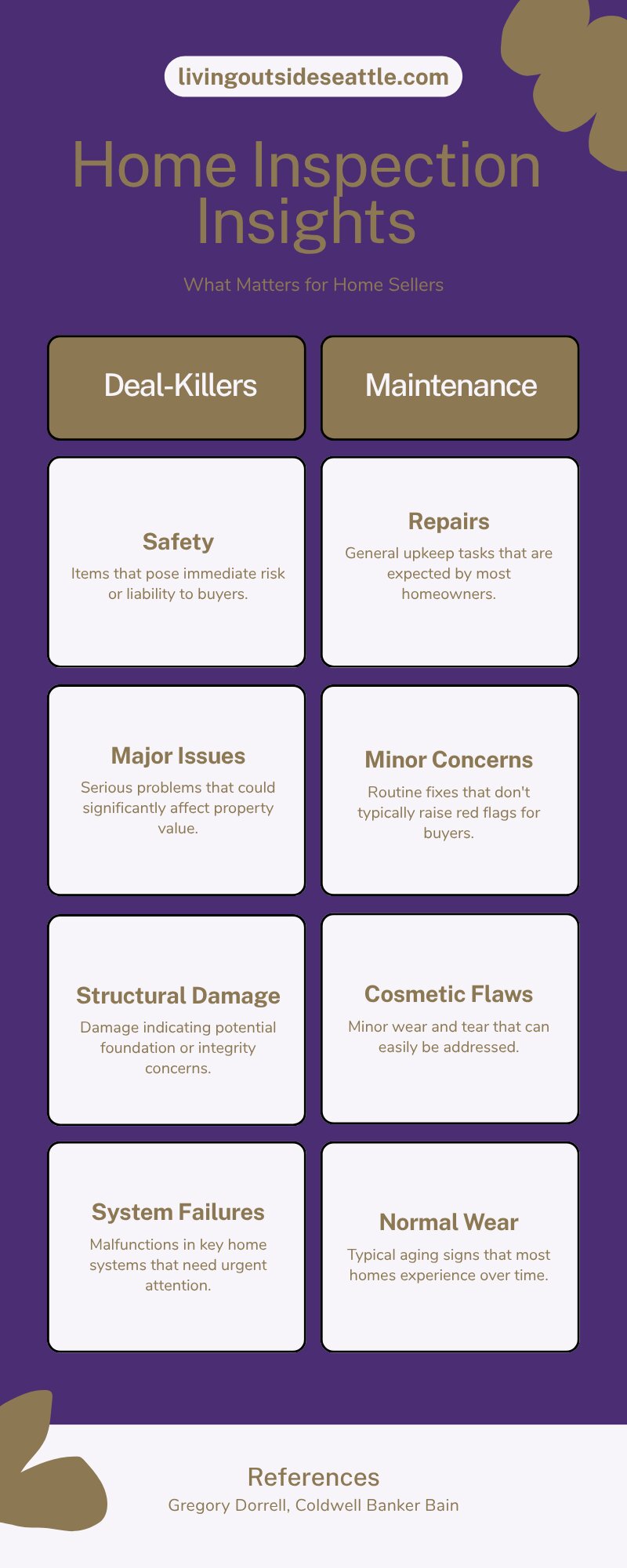
Most inspection reports are long. This is what the findings that actually matter look like compared to routine maintenance items.
Do You Have to Fix What the Buyer Asks For?
No. This surprises a lot of sellers.
Washington State does not require sellers to fix anything a buyer requests in an inspection response. The purchase and sale agreement sets up a negotiation. The buyer submits their requests. You have several options.
You can agree to the repairs and have them completed before closing, typically by licensed contractors. You can offer a dollar credit at closing instead of doing the work yourself, which buyers often prefer because it lets them choose their own contractor. You can agree to some items and decline others. Or you can decline the entire request and let the buyer decide whether to move forward or exercise their right to terminate.
The buyer’s decision has to happen within the inspection contingency window. If the timeline passes without resolution, the contingency typically expires and the sale proceeds as-is.
What you actually have to fix depends on what your contract says, not on any general legal requirement. If you’ve negotiated repairs as a condition of the sale, you’re obligated to complete them. If you respond by declining, the buyer gets to choose their path.
The Case For (and Against) a Pre-Listing Inspection
A pre-listing inspection means you hire an inspector before you go on the market. You find out what’s in the house before the buyer does.
The upside is real. A pre-listing inspection in King County typically costs $350 to 650+ depending on home size. That’s a small price to avoid being blindsided at the negotiating table. You can fix the things that matter on your own timeline and your own budget, rather than scrambling to get licensed contractors in before closing under time pressure. In a competitive market, some sellers share the pre-listing inspection report with buyers to build confidence and reduce the chance of an “inspection for information only” turning into a full renegotiation.
The downside is also real. If the inspection finds something serious, you’re now legally obligated to disclose it to buyers — even if you choose not to fix it. In Washington State, the disclosure requirements are strict. You can’t un-know what the inspector told you.
My general guidance: if the home is older than 15 to 20 years, or if you have any reason to believe there might be deferred maintenance issues in the crawl space, roof, or electrical, the pre-listing inspection is worth it. For newer homes in good condition, it’s less essential but still something that most buyers expect to see in King County.
What Kills Deals vs. What Buyers Overlook
The honest truth is that very few sales fall apart because of a home inspection. When a deal dies over inspection, it’s usually because a major undisclosed issue came to light — not because there were 40 items in the report.
The issues most likely to kill or seriously damage a deal are active roof leaks or significant roof deterioration, foundation problems showing current movement, evidence of water in the crawl space or basement that hasn’t been resolved, major plumbing failures like a failed main sewer line, and serious electrical hazards.
Buyers in King County are used to older housing stock. A 1975 Kent home or a 1985 Renton split-level is going to have some things on an inspection report. Experienced buyers and their agents know the difference between a well-maintained older home with normal findings and a house with real problems.
The things buyers most often overlook or accept as-is: cosmetic items, surface wear, minor roof maintenance items on an otherwise sound roof, single-pane windows in older homes, and deferred exterior maintenance like peeling paint or weathered decks.
What This Means for You as a Seller
Before you list, walk through your home with fresh eyes. Check the gutters. Look at what’s happening around the water heater and under sinks. Know the age of your roof and furnace. These aren’t things to hide — they’re things to understand so you can have an honest conversation with your agent about pricing and preparation.
When the inspection report comes in, read it with your agent before you react. Most items on a typical report are manageable. The ones that aren’t are the ones worth knowing about early. Understanding how pricing works in King County gives you a clearer sense of how to factor known conditions into your list price from the start.
You have more options than you think when repair requests arrive. A credit at closing is often cleaner than trying to coordinate contractors under a time crunch. Declining minor requests is completely legitimate. And pricing the home to reflect known conditions from the start — which is exactly what a BPO-trained pricing approach does — means you’re less likely to end up in a contentious renegotiation to begin with. You can also read our guide on how appraisals work in Washington State to understand the full picture of what happens between contract and closing.
Frequently Asked Questions
Does the seller have to be present during the home inspection?
No. In fact, it’s standard practice for sellers to leave during the inspection. It makes buyers and inspectors more comfortable, and it prevents awkward conversations about every item being noted.
How long does a home inspection take in King County?
Most inspections run two to four hours. A smaller condo or townhome might finish in 90 minutes. A larger single-family home with a crawl space, detached garage, and outbuildings in Covington or Maple Valley could take up to four hours or more.
What happens if I don’t agree to any repairs?
The buyer then has a choice: move forward with the purchase as-is, or exercise their right to terminate within the inspection contingency period. If they terminate, you get your home back on the market. If you’ve priced it correctly, another buyer will come.
What is a right-to-cure clause in Washington?
Washington contracts include a seller’s right to cure, which gives you the opportunity to respond to a repair request. You can agree, counter, or decline. It’s not a requirement to fix — it’s a framework for negotiation.
Should I get a pre-listing inspection in King County?
For homes older than 15 to 20 years, or any home where you have concerns about the crawl space, roof, or electrical system, a pre-listing inspection is usually worth the $350 to $550 cost. It lets you fix things on your terms and removes surprises from the process.
Can a buyer walk away after the inspection for any reason?
During the inspection contingency period, yes. The buyer can terminate for virtually any reason related to the inspection findings. Once that window closes, their options narrow significantly.
The inspection is one step in a process with a clear beginning and end. Most sellers who go through it — even with a long repair list — close. The ones who struggle are usually the ones who weren’t prepared for what they’d see. You can also review our guide to Washington State closing costs to understand the full financial picture before you list.
Your guide to life outside Seattle.
253-350-0045 ·
greg@livingoutsideseattle.com ·
www.livingoutsideseattle.com
This Guide Has Moved
This article has been folded into our maintained guide: How to Prepare Your Home for Sale in King County. You are being taken there now.
Property Tax Rates in King County Cities 2026
Buyers ask me all the time: “What are the property taxes going to be on this house?” It’s a fair question, and the answer matters more than most people realize when they’re focused on the purchase price and interest rate. On a $700,000 home, the difference between buying in Auburn and buying in Issaquah works out to roughly $2,500 a year — or about $210 a month that never shows up in a mortgage quote.
This post lays out the 2026 effective property tax rates for the eight cities I work in most across South and East King County. I also cover how the calculation works, why rates differ between cities just a few miles apart, and what this means if you’re running affordability math as a buyer or net-proceeds math as a seller.
Why King County Has No Single Tax Rate
A lot of buyers ask: “What’s the property tax rate in King County?” There isn’t one. Your bill is the sum of every taxing district whose boundary includes your property. That stack typically includes:
The Typical Levy Stack
Washington State levy — applies uniformly statewide
King County general levy — county services and administration
King County library district — public library system
City levy — varies by incorporated city; absent in unincorporated areas like Covington
School district levy — the single biggest variable between nearby cities
Fire district levy — local fire and rescue services
Emergency Medical Services (EMS) levy
Any voter-approved bond measures — school construction, parks, etc.
Two homes a mile apart — one in the Issaquah School District, one in the Kent School District — can carry meaningfully different tax bills even if their market values are identical. School district boundaries are the biggest driver of rate variation across South and East King County.
The 2026 total property tax collection in King County came in at $8.4 billion, up 10% from 2025’s $7.7 billion. That increase flows from rising assessed values, not any single rate change. But the effect on individual monthly payments is real.
2026 Property Tax Rates by City
These are median effective rates — actual tax bills divided by assessed market values — based on King County parcel data. Rates vary by ZIP code within each city, primarily because of school district boundaries. (Source: Ownwell, April 2026.)
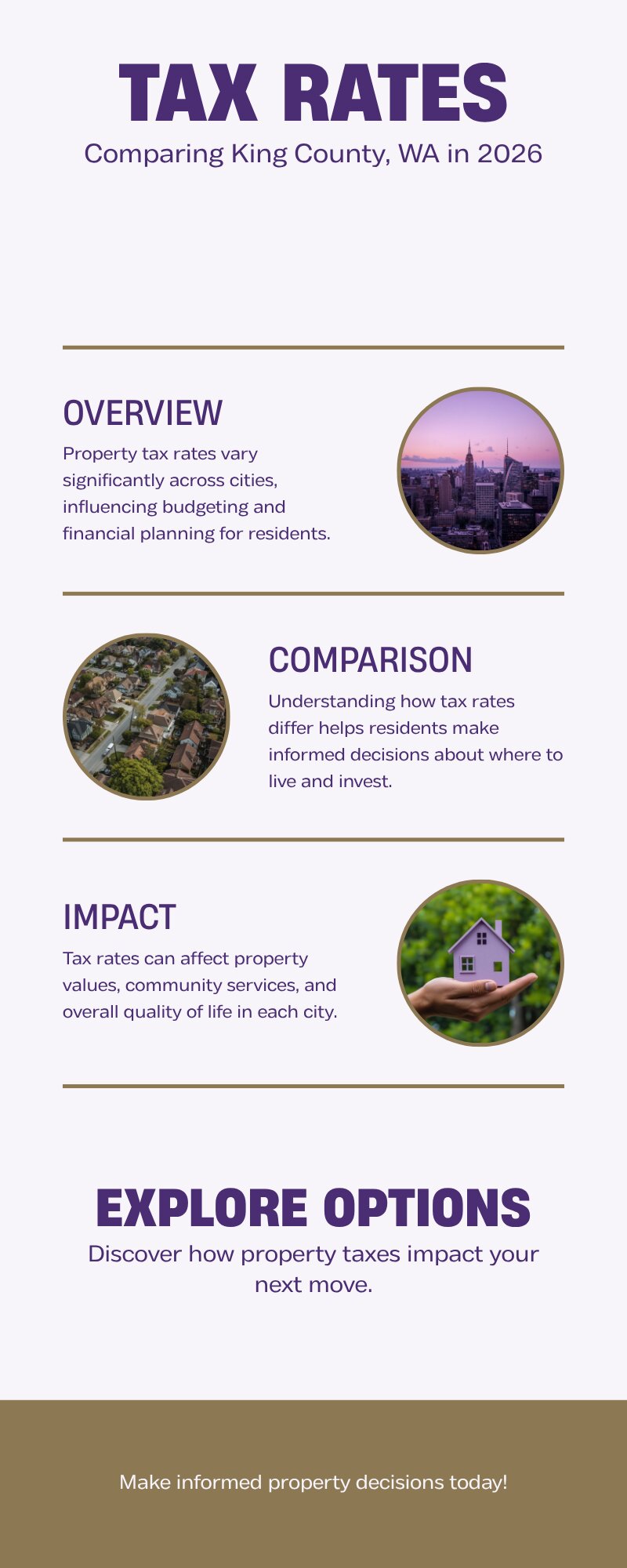
2026 effective property tax rates for eight cities in South and East King County. Auburn carries the highest rate; Issaquah and Sammamish sit well below the county median of 0.99%. Source: Ownwell, April 2026.
| City | Effective Rate | Median Home Value | Median Annual Bill |
|---|---|---|---|
| Auburn | 1.19% | $566,000 | $6,477 |
| Maple Valley | 1.11% | $722,000 | $7,963 |
| Renton | 1.03% | $688,000 | $7,145 |
| Covington | 1.03% | $574,000 | $5,862 |
| Kent | 1.01% | $587,000 | $5,919 |
| Federal Way | 1.00% | $542,000 | $5,412 |
| Sammamish | 0.89% | $1,384,000 | $12,054 |
| Issaquah | 0.83% | $1,031,000 | $9,132 |
| King County Avg | 0.99% | $774,000 | $7,644 |
How to Calculate Your King County Tax Bill
King County uses this formula:
(Assessed Value ÷ 1,000) × Levy Rate = Annual Tax Bill
For a home assessed at $650,000 in Renton with a levy rate of approximately $10.30 per $1,000:
$650,000 ÷ 1,000 = $650
$650 × $10.30 = $6,695 per year (~$558/month in escrow)
A few important things to understand about that assessed value:
King County Reassesses Every Year
Washington has no equivalent to California’s Proposition 13. Your assessed value is adjusted annually based on market conditions. If home prices in your neighborhood rose 8% last year, your assessment likely reflects that — and your bill goes up accordingly.
Your 2026 bill is calculated from the value as of January 1, 2025. So the assessment lags the market by about a year — but it catches up.
Buying at a Higher Price Does Not Reset Your Taxes
The assessor determines value independently of your sale price. A sale at market value is data they will consider in future assessments — but it doesn’t trigger an immediate reset the way it does in some other states. So if you buy a house below assessed value, your taxes don’t automatically drop either.
For the most accurate number on any specific parcel, use the King County eReal Property lookup at blue.kingcounty.com. Search by address to see the current assessed value and the levy rate stack broken down by district. It takes about 90 seconds and gives you a far more accurate number than any city average.
Why Issaquah and Sammamish Rates Are Lower
Issaquah (0.83%) and Sammamish (0.89%) sit well below the county average — yet their median tax bills are higher in dollar terms because home values there are much larger. Lower rates in these cities generally reflect two things.
First, fewer overlapping special districts. Some areas carry smaller bond debt loads than South King County cities, which compresses the total levy stack. Second — and this is the counterintuitive part — when the total assessed value base in a school district rises, the rate needed to raise the same budget dollar amount actually falls. High home values spread the levy cost across more dollars, pushing the percentage rate down.
City-by-City: What Buyers and Sellers Should Know

Understanding your property tax rate before you make an offer helps buyers budget accurately and keeps sellers from being surprised at closing.
Auburn (1.19%)
Auburn carries the highest effective rate among the cities we track, with a $6,477 median annual bill on a $566,000 home. Rates vary by ZIP — the 98001 and 98002 ZIP codes trend higher than 98092. Buyers should ask their lender to calculate PITI based on the specific parcel, not a city average.
Maple Valley (1.11%)
Maple Valley’s rate and its growing median home value combine to produce one of the larger median bills in South King County at $7,963 per year. School construction bonds have contributed to the rate here. Strong schools drive demand for the area, and those same schools come with levy costs built into the rate.
Renton (1.03%)
Renton’s 1.03% rate on a $688,000 median home produces a $7,145 median annual bill. Rates vary within Renton by school district boundary — homes in the Issaquah School District portion of eastern Renton trend lower than those in the Renton School District. This surprises a lot of buyers who assume all of “Renton” carries one rate.
Covington (1.03%)
Covington shares Renton’s effective rate but with a lower median home value ($574,000), producing a $5,862 median bill. Covington is unincorporated King County, which means no separate city levy — one reason the total rate stays competitive. For buyers priced out of Maple Valley, Covington often offers similar inventory at lower total monthly carrying costs.
Kent (1.01%)
Kent sits nearly at the county average. The $5,919 median annual bill on a $587,000 home is one of the more affordable in this group in absolute dollar terms. Kent has one of the widest ranges of home types in South King County — condos to large single-family homes — so the actual bill on any specific purchase will vary considerably from the median.
Federal Way (1.00%)
Federal Way sits right at the county median rate and has the lowest median home value on this list at $542,000, producing a $5,412 median annual bill. For first-time buyers working with a tighter budget, Federal Way offers the lowest combined price-and-tax entry point among these eight cities.
Sammamish (0.89%)
Lower rate, but higher everything else. The $1,384,000 median home value produces a $12,054 median annual bill — over $1,000 a month in tax escrow — despite the below-average rate. Sammamish draws buyers who prioritize the Issaquah or Lake Washington school districts, newer construction, and lower density. That demand drives values, which keeps the rate lower but doesn’t lower the bill.
Issaquah (0.83%)
The lowest rate on this list. Issaquah’s 0.83% on a $1,031,000 median home means a $9,132 median annual bill. Part of the reason rates are lower is that the area’s high assessed value base spreads the levy burden across more dollars. School district quality drives demand, and demand drives values — which, counterintuitively, keeps the rate lower than South King County cities.
Important Property Tax Dates in King County
| Date | What Happens |
|---|---|
| January 1 | Assessment date — value is frozen for the year’s calculation |
| February 10 | Tax bills mailed |
| April 30 | First half payment due |
| July 1 | Appeal deadline — do not miss this |
| October 31 | Second half payment due |
The appeal window matters. If you receive your assessment notice and believe the value is too high — based on comparable sales or property condition — you have until July 1 to file with the King County Board of Equalization. Once that deadline passes, your ability to contest that year’s bill is gone.
Exemptions That Can Lower Your Bill
Washington offers several exemption programs worth knowing about, especially if you’re buying for a family member or planning long-term.
Senior/Disabled Exemption. Homeowners 61 or older — or permanently disabled — with household income under the program threshold may qualify for a significant reduction in assessed value and a freeze on future increases. This is one of the most valuable programs in the state and often goes unclaimed by people who don’t know it exists.
Veteran Exemption. Qualifying veterans with a service-connected disability may be eligible for a partial property tax reduction.
All exemptions require the home to be your primary residence. Investment properties and second homes do not qualify. To apply or check eligibility, contact the King County Assessor’s office at assessor.info@kingcounty.gov or (206) 296-7300.
What This Means for Your Buy or Sell Decision
For buyers: Your lender uses your total PITI payment — principal, interest, taxes, and insurance — to calculate affordability. Property taxes are a real monthly cost, not a closing-day item. On a $700,000 home, the difference between a 0.83% rate (Issaquah, ~$484/month) and a 1.19% rate (Auburn, ~$694/month) is $210 per month. Over a 30-year loan, that’s $75,600 in additional tax payments — more than most buyers realize when they’re focused on the interest rate.
For sellers: When a buyer’s lender calculates their debt-to-income ratio, property taxes push more buyers out of qualifying range at the higher end of pricing. In cities with higher effective rates, price sensitivity tends to be greater. Knowing your city’s rate — and being able to show the buyer the actual parcel-level calculation — is a transparency move that builds trust during negotiations.
For a broader look at all the costs of owning a home in King County, this post on total cost of homeownership in King County walks through the full monthly cost picture beyond just taxes. And if you’re a seller thinking about your net proceeds, Washington’s capital gains rules are the other tax conversation worth having before you list.
Run Your Own Numbers in 90 Seconds
To get the exact levy rate for any property you’re considering:
- Go to blue.kingcounty.com/Assessor/eRealProperty
- Search by address
- Find the “Current Year Tax” section — it shows the assessed value and the levy rate stack broken down by district
- Divide the tax bill by the assessed value to get the effective rate
This is the most accurate number you’ll find. I walk buyers and sellers through this lookup regularly — it often changes how they think about two comparable homes in different parts of the county. For where home values are heading in 2026 — which directly affects future assessed values and bills — here’s the King County housing market forecast.
Frequently Asked Questions
What is the property tax rate in King County in 2026?
The countywide median effective rate is 0.99%, but rates vary by city from 0.83% (Issaquah) to over 1.19% (Auburn). The rate for any specific property depends on all the overlapping taxing districts — state, county, city, school district, fire, EMS, and local bond measures.
When are King County property taxes due in 2026?
Half by April 30, and the other half by October 31. Tax bills are mailed in February. If your home has a mortgage, your lender typically collects taxes through escrow and pays on your behalf.
When is the King County property tax appeal deadline?
July 1 each year. If you receive your assessment notice and believe the value is too high, file with the King County Board of Equalization before that date. You’ll need supporting evidence like comparable sales or documentation of property condition issues.
Does buying at a higher price increase your property taxes right away?
Not automatically. King County reassesses independently based on market data. Your sale price is information the assessor will consider, but the assessment may not change until the next annual cycle. That said, sales well above assessed value typically result in higher assessments in subsequent years.
Where can I look up the exact property tax for a specific address?
Use the King County eReal Property portal at blue.kingcounty.com/Assessor/eRealProperty. It shows the current assessed value, each levy in the stack, and the total bill for any parcel in the county.
Are there exemptions that lower property taxes in King County?
Yes. The Senior/Disabled exemption is the most significant — qualifying homeowners 61 or older with income under the program threshold can freeze their assessed value and reduce their bill. Veteran exemptions are also available. All require the home to be your primary residence. Contact the King County Assessor at (206) 296-7300 or assessor.info@kingcounty.gov to check eligibility.
Data sourced from Ownwell (April 2026) and King County Assessor public records. Rates shown are median effective rates and will vary by specific parcel and ZIP code within each city. Verify levy rates for any specific property at blue.kingcounty.com before making financial decisions.
Your guide to life outside Seattle.
253-350-0045 ·
greg@livingoutsideseattle.com ·
www.livingoutsideseattle.com
HELOC vs. Cash-Out Refinance: King County Guide 2026
Most King County homeowners are sitting on well over six figures of equity. Here’s how to use it without giving up the mortgage rate you fought for.
If you bought your home in King County more than a few years ago, you’re probably wealthier than you think. The typical American homeowner with a mortgage is holding around $212,000 in equity they could actually borrow against. In King County, where the median home sits near $835,000, plenty of homeowners I work with in Renton, Kent, and Covington are well past that number.
The question I hear all the time: how do I get to that money without wrecking the 3% mortgage I locked in years ago? There are two main answers. A home equity line of credit, or a cash-out refinance. They sound similar. They are not. Pick the wrong one and it can cost you hundreds of dollars a month for decades.
I price homes every day as a BPO field agent, so I see what equity positions actually look like across South and East King County. Let me walk you through how each option works, what each one costs, and the simple math that tells you which one fits your situation.
How a HELOC Works (and What It Costs)
A HELOC is a line of credit secured by your house. Think of it like a credit card with a much lower rate and your home as collateral. The bank approves you for a limit, often up to 80% or 85% of your home’s value minus what you owe. You draw what you need, when you need it, and you only pay interest on what you’ve actually used.
The national average HELOC rate in June 2026 is sitting around 7.25% to 7.4%, not far off the 2026 low of 7.19% from March. HELOC rates are variable. They move with the prime rate, which is currently 6.75%. If the Fed cuts, your rate drops. If the Fed hikes, it climbs. That flexibility cuts both ways, and you need to be honest with yourself about whether your budget can handle a rate that moves.
Costs are the quiet advantage here. Most HELOCs come with low or no closing costs. Compare that to what you’ll see below for a refinance, and the gap is real money.
How a Cash-Out Refinance Works (and What It Costs)
A cash-out refinance replaces your entire existing mortgage with a new, bigger one. You owe $400,000 and want $100,000 in cash? Your new loan is $500,000, and the whole thing carries today’s rate. In 2026 that means roughly 6.8% for most borrowers, with the best-qualified getting closer to 6.25%.
That word “entire” is the trap. You’re not borrowing $100,000 at today’s rate. You’re re-borrowing all $500,000 at today’s rate, including the $400,000 you already had locked at something much lower.
Then come the closing costs. A cash-out refinance typically runs 2% to 5% of the full new loan amount. On a $500,000 loan, that’s $10,000 to $25,000. On a HELOC, you’d often pay close to nothing to open it.
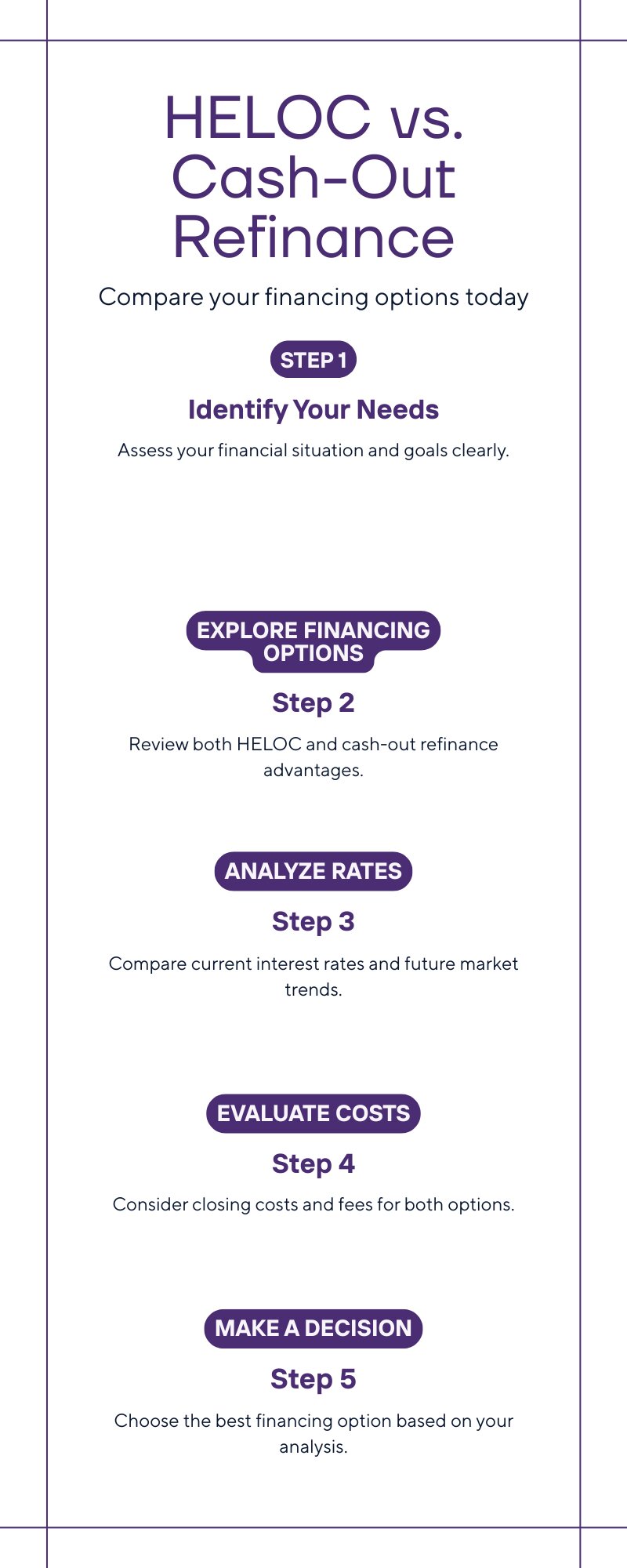
The core difference: a HELOC adds a second loan, a cash-out refinance replaces your entire mortgage at today’s rate.
HELOC vs. Cash-Out Refinance: The Math That Decides It
Here’s a real-world King County example. Say you own a home worth $850,000, you owe $400,000 at 3%, and you want $100,000 for a remodel.
Keep your mortgage and add a HELOC
Your existing payment stays around $1,686 a month in principal and interest. Interest on the full $100,000 HELOC draw at 7.4% runs about $617 a month during the draw period. Total: roughly $2,300 a month.
Cash-out refinance instead
A new $500,000 loan at 6.6% costs about $3,193 a month. That’s nearly $900 more every month than the HELOC route, plus five figures in closing costs, for the exact same $100,000 in your pocket. Over ten years that monthly gap is more than $100,000. The HELOC isn’t just a little better in this scenario. It’s not close.
So when does the refinance win? Two cases. First, if your current rate is already high. Buyers who purchased in late 2023 or 2024 at 7% or above can sometimes refinance today, pull cash out, and barely change their payment. Second, if you need one large fixed sum and you want one predictable fixed payment for 30 years. Some people sleep better with that, and that’s a legitimate reason.
The Tax Rules Most Homeowners Get Wrong
A lot of people still believe HELOC interest is automatically deductible. It isn’t. Under current IRS rules, interest on a HELOC or cash-out refinance is only deductible if the money goes toward buying, building, or substantially improving the home that secures the loan. A kitchen remodel in your Kent home can qualify. Paying off credit cards or buying a car does not.
Two more catches. You have to itemize your deductions to claim it, and most households take the standard deduction instead. And the burden of proof is on you, so keep every contractor invoice and receipt. If you’re borrowing a meaningful amount, a one-hour conversation with a CPA before you sign is worth far more than it costs. I’m a real estate agent, not a tax advisor, and this is exactly the kind of decision where the right professional pays for itself.
The Local Angle: King County Equity in 2026
King County’s median home price has come down about 7.5% from last year. I know that sounds like bad news for equity. Here’s the context that matters: if you bought in Renton or Auburn before 2021, your home is still worth dramatically more than you paid. A pullback from the peak hasn’t erased years of gains. Most long-term owners in South King County are still holding $200,000 to $400,000 or more in usable equity.
What I see in the field is homeowners using that equity three ways. Remodels are the big one, especially kitchens and primary suites in 1980s and 1990s homes in Covington and Maple Valley, where an updated home sells noticeably faster. Second is debt consolidation, which can make sense at 7.4% against credit cards charging 22%, as long as the spending that built the debt stops. Third, and growing fast, is move-up buyers using a HELOC as bridge money to buy their next home before selling their current one. If that’s your situation, I broke down how that strategy works in my contingent offer guide for King County, and I compared the keep-or-sell decision in renting out your King County home vs. selling.
One more local note. Where prices go from here affects how much cushion you have. My King County housing market forecast for 2026 covers the inventory and price trends that matter if you’re deciding whether to tap equity now or wait.
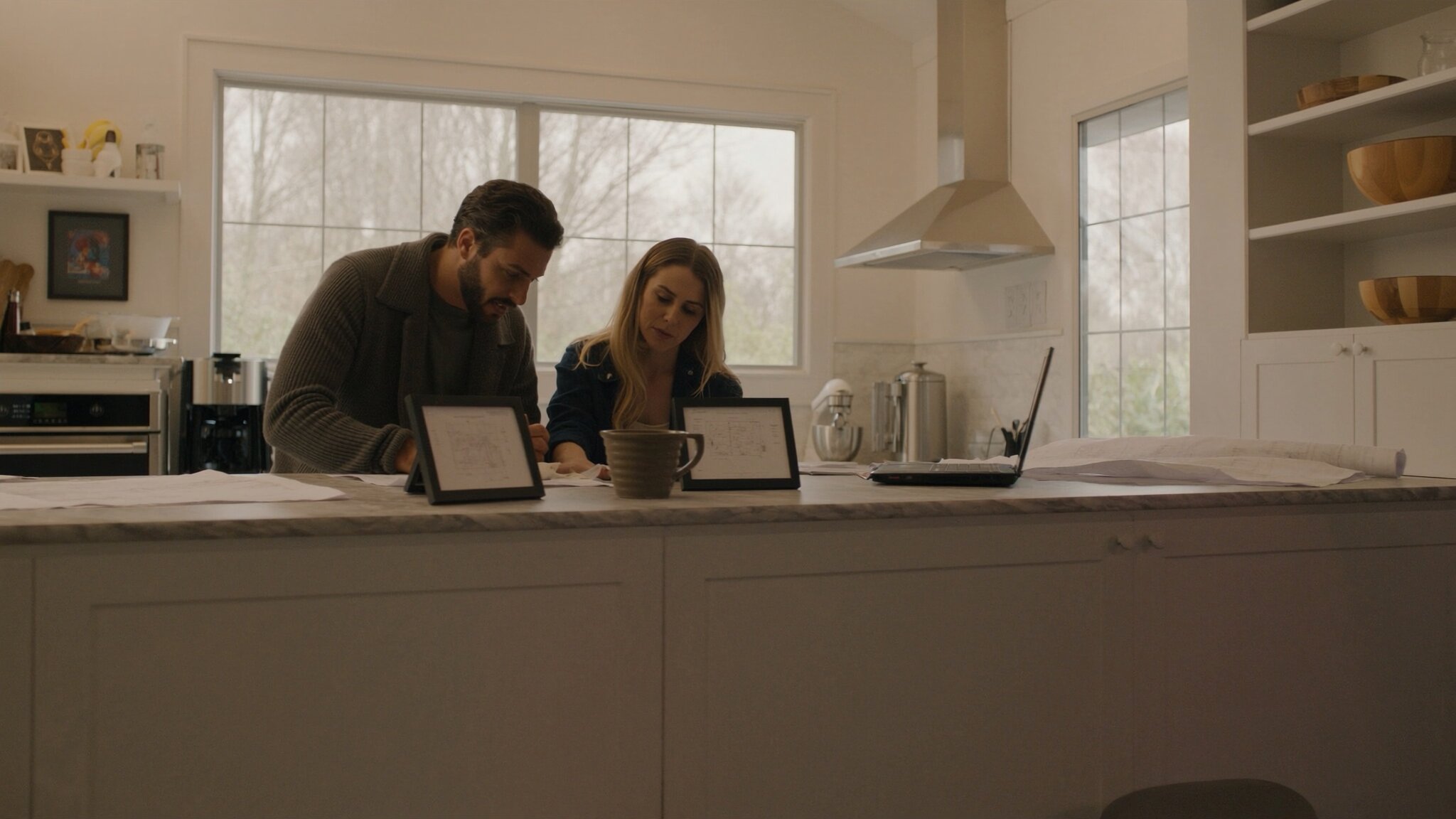
Kitchen and primary suite remodels are the most common use of equity I see across South King County.
What This Means for You
If you’re a King County homeowner with a mortgage rate under 5.5%, start with the HELOC conversation. Keeping your existing rate is worth real money every month, and the rate math above shows how much. Get quotes from at least three lenders, including a local credit union, because HELOC rates and fees vary more than first mortgage rates do.
If your rate is 6.5% or higher, run both options side by side. A cash-out refinance might lower your rate and put cash in your pocket at the same time. Current rate context is in my King County mortgage rates guide.
And before either one, get a real valuation. Every dollar of borrowing power depends on what your home is actually worth, and online estimates in our market routinely miss by tens of thousands. If you’re also weighing what a sale would net you instead, my guide to capital gains on home sales in Washington covers the tax side of that decision.
FAQ
Is a HELOC or cash-out refinance better in 2026?
For most homeowners, a HELOC. The majority of King County mortgage holders have rates between 2.5% and 5%, and a cash-out refinance would replace that low rate with today’s 6.5% to 7% on the entire balance. A HELOC charges a higher rate, but only on the smaller amount you borrow.
How much equity can I borrow against my King County home?
Most lenders let you borrow up to 80% or 85% of your home’s value, minus your current mortgage balance. On an $850,000 home with $400,000 owed, that’s roughly $280,000 to $322,000 in available credit, depending on the lender and your qualifications.
Does opening a HELOC change my current mortgage rate?
No. A HELOC is a separate second loan. Your existing mortgage, its rate, and its payment stay exactly the same. That’s the main reason HELOCs are winning in 2026.
Is HELOC interest tax deductible?
Only if the money is used to buy, build, or substantially improve the home securing the loan, and only if you itemize deductions. Home improvements can qualify. Debt payoff, tuition, and cars don’t. Confirm your situation with a tax professional.
Can I use a HELOC to buy my next house before selling my current one?
Yes, and it’s one of the most common moves I see from move-up sellers in Renton and Kent. You open the HELOC on your current home while you still live there, use the draw for the down payment on the next home, then pay the line off when your old home sells.
What credit score do I need for a HELOC?
Most lenders want 680 or higher, with the best rates going to borrowers above 740. You’ll also generally need to keep at least 15% to 20% equity in the home after the line is opened.
Your home equity is a tool. Used well, it funds the remodel, clears the expensive debt, or bridges you into your next home. Used carelessly, it puts the roof over your head at risk. The right first step is knowing your real number.
Your guide to life outside Seattle.
253-350-0045 ·
greg@livingoutsideseattle.com ·
www.livingoutsideseattle.com
Relocating to King County from Out of State: 2026 Guide

A complete guide to neighborhoods, commutes, school districts, home prices, and how to buy before you move — from a local agent who knows this market by the block.
Most people moving to King County from out of state make the same mistake. They pick a city based on how close it is to downtown Seattle — and end up in a neighborhood that costs more, commutes worse, and feels nothing like what they imagined. I’ve helped enough relocators land here to know that the research most people do from a thousand miles away misses the things that actually matter once you show up.
This guide is the one I wish every out-of-state buyer had before their first house-hunting trip.
The City You Think You Want vs. the City That Actually Fits
When people tell me they’re moving to King County, they usually say “Seattle” or “Bellevue.” Those are fine places — I’m not going to talk you out of them — but they’re not the only options, and for most buyers coming from places like Phoenix, Denver, or the Bay Area, they’re not the right options either.
Here’s the honest breakdown.
Seattle
Urban neighborhoods, walkable coffee shops, quick access to Amazon and the medical corridor. Condos start around $500,000 and single-family homes run $871,000 median. If you’re working downtown and don’t have kids in public school, Seattle makes a lot of sense. If you’re working remotely or your employer is on the Eastside, the math gets harder fast.
Bellevue and the Eastside Tech Corridor
Redmond, Kirkland, and Sammamish are where most Microsoft, Google, and Amazon Eastside employees land. Schools are exceptional. Median prices are high: Bellevue runs $1.2 million and up, Sammamish hovers around $1.3 million. Issaquah sits at roughly $950,000 and still delivers top-tier school district quality for meaningfully less than its neighbors — that’s a real value play on the Eastside.
South King County
This is where I’d send most relocating families who are sticker-shocked by Eastside prices. Renton: $763,000 median, 12 miles from downtown Seattle, direct freeway access to the Boeing complex and the Amazon Renton campus. Kent: $647,000 median, the largest city in South King County, commuter rail service and one of the most diverse food scenes in the county. Auburn: $609,000 median, opening three new schools and rapidly growing. Maple Valley and Covington offer a quieter, more rural feel with large lots and 30-35 minute drives to employment centers.
None of those cities feel like settling. They feel like what most of the Pacific Northwest actually looks like — big trees, trail access, good neighbors, reasonable prices.

South King County neighborhoods like Renton, Kent, and Auburn offer large lots, trail access, and mountain proximity — at prices well below the Eastside.
What Surprises Relocators Most
I’ve had this conversation dozens of times. Here are the things that catch people off guard.
The gray is real, but it’s not rain. Seattle averages 92 rainy days a year — actually fewer than New York City or Miami. What people don’t expect is the persistent overcast: from October through May, the sky is more often gray than blue. It’s rarely dramatic. It’s just steady. Locals wear hoods, not umbrellas. You get used to it, but it’s worth knowing before you buy a house with a south-facing yard expecting sunshine nine months a year.
Traffic is directional and predictable. The I-405 corridor and I-5 are congested at the same times every day. If your commute runs south-to-north in the morning, you’re going the right direction. The light rail — which now reaches Federal Way and will extend further — is worth building your neighborhood choice around. I always ask relocating buyers: what’s your daily destination, and what time of day? That answer often changes which city we’re looking in.
Washington has no state income tax. This is the one that catches transplants from California off guard in the best way. Washington’s sales tax runs about 10.35% in King County, which is higher than you may be used to. But for most buyers, the absence of state income tax more than makes up for it. At a $200,000 household income, the tax savings versus California run roughly $16,000 a year.
The housing market here moves fast. South King County homes were selling in 6-14 days on average as of spring 2026. Coming from a slower market, buyers often underestimate how quickly they need to be ready to act. I’ve watched buyers from out of state lose homes they loved because they needed two more days to decide. Get pre-approved before you start touring — that’s the single biggest thing you can do to protect yourself.
School Districts: What the Rankings Don’t Tell You
If you have kids, school districts will drive a significant part of your city decision. Here’s how King County’s major districts actually stack up.
Tier 1 (Exceptional, reflected in prices): Bellevue, Mercer Island, Lake Washington, Northshore, and Issaquah school districts all carry top ratings and directly drive home values. If you’re buying in Issaquah, you’re getting Tier 1 schools at prices that are meaningfully below Bellevue and Sammamish — that’s the best value on the Eastside for school-focused families.
Tier 2 (Solid, good value): Federal Way Unified has improved significantly over the past five years and serves a growing commuter population near the new light rail station.
Tier 3 (Uneven — research by school, not just district): Renton and Kent school districts have significant internal variation. Hazen Senior High in Renton ranks #82 statewide, while other Renton high schools rank much lower. When I’m working with a relocating family buying in Renton or Kent, I always map the home address to the specific school assignment before we make an offer. The difference between two houses a mile apart can be significant.
Auburn School District is mid-tier overall but actively investing — three new schools are in development, and the district is growing alongside the city. If you’re buying in Auburn with a 10-15 year horizon, you’re buying into an improving situation.
How to Buy a Home Before You Move
This is the part most relocation guides skip over. Buying a home you’ve never stood inside, in a city you’ve never lived in, with an agent you met on Zoom — it’s genuinely stressful. Here’s how to do it right.

Buying from out of state works — but it takes the right prep. Full pre-approval, a local agent, and at least one in-person trip before closing.
Get fully pre-approved before you tour anything
Not pre-qualified — pre-approved, with income documentation verified and a real credit pull completed. Remote workers should get a Permanent Remote Work Letter from their employer in writing before applying. Verbal confirmation won’t satisfy an underwriter when you’re competing against local buyers who’ve been pre-approved for weeks.
Use virtual tours to eliminate, not to decide
Video tours are useful for crossing homes off the list. They are not reliable for choosing one. If at all possible, plan one trip to King County before your closing date — ideally to tour your top two or three candidates in person, walk the neighborhoods, and get a feel for the commute. If travel truly isn’t possible, ask your agent to do a live video walkthrough during a private showing and narrate everything the camera doesn’t capture.
Understand how Washington closings work
Washington is an escrow state. There are no real estate attorneys at the closing table — an escrow officer and title company facilitate the process. Closings can be done electronically, which makes remote buying workable. You’ll wire funds and sign documents digitally. The process is straightforward once you know what to expect. Also know that Washington’s wet western climate makes moisture intrusion, crawl space condition, and roof health the top three inspection items — do not skip the inspection to be competitive.
The Local Angle: What the King County Market Looks Like Right Now
King County inventory is up roughly 35% year over year as of spring 2026. That’s meaningful. It means relocators have more options, more negotiating leverage, and fewer situations where they need to waive every contingency to win. Inspection contingencies are back on the table in most South King County transactions. Seller concessions — including buydowns and closing cost help — are more common than at any point since 2019.
For a relocator on a tight timeline, this is a much better environment than 2022 or 2023. You’re not walking into a war. You’re walking into a real market where your offer gets read and your questions get answered.
The overall King County median was $880,000 in March 2026. But that number obscures the real value story. If your target is South King County — Renton, Kent, Auburn, Maple Valley — you’re looking at a $609,000 to $763,000 range, with growing inventory and motivated sellers.
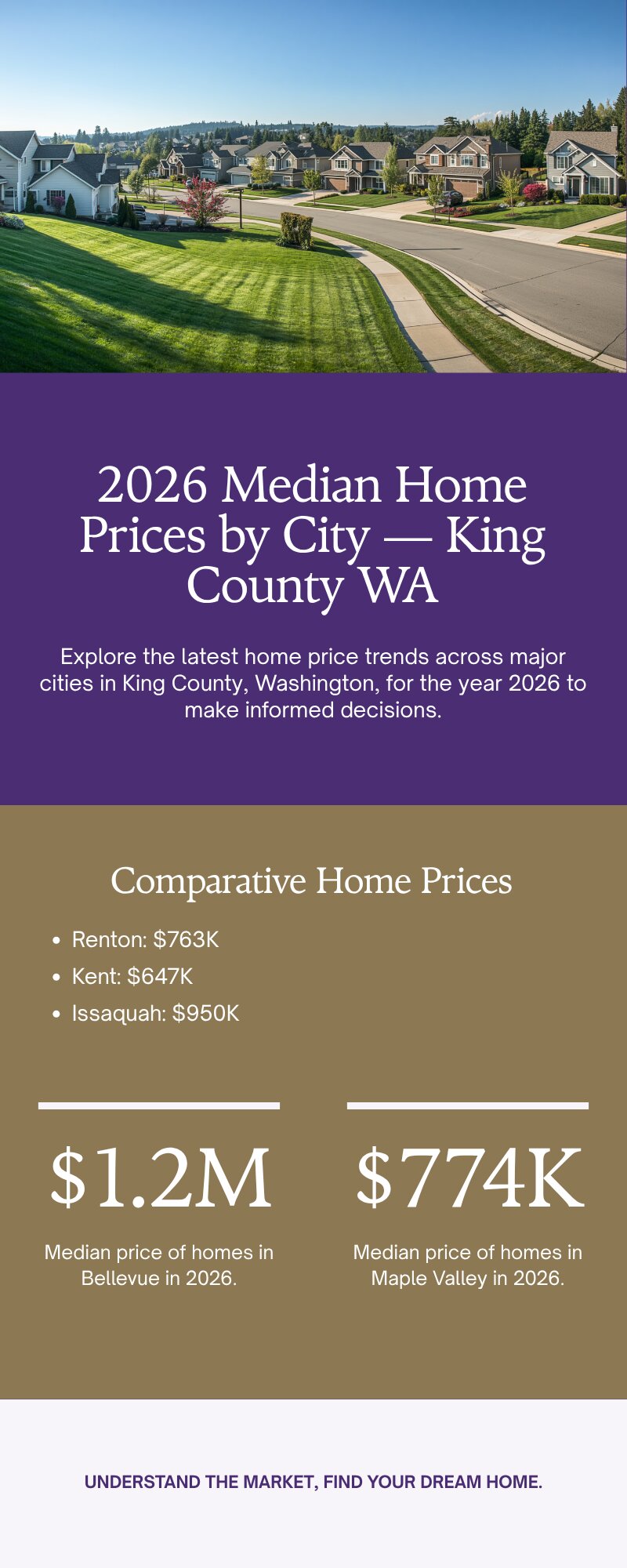
2026 median home prices across King County. South King County cities offer the best value for relocators who don’t need to be in Seattle or on the Eastside every day. Source: King County MLS, spring 2026.
For more on what’s driving these conditions, see my King County mortgage rates overview for 2026 and total cost of homeownership breakdown by city.
What This Means for You as a Relocating Buyer
Start your neighborhood research with your daily destination, not with a map of the county. Where will you spend Tuesday mornings? That question is more useful than “how far is it from downtown Seattle.”
Build your city shortlist around school district tier, commute direction, and price ceiling — in that order. Then let the neighborhoods inside those cities narrow your search.
Get pre-approved before your first house-hunting trip. In South King County, a well-priced home can go under contract in a week. Showing up financially ready is the difference between buying the house and watching it disappear.
And check the down payment assistance programs available to King County buyers. If your household income is under roughly $175,000, you may qualify for programs that put $10,000 to $55,000 toward your down payment. See the full 2026 down payment assistance guide for eligibility and how to stack programs.
If you’re also weighing where to land specifically in South King County, my guide to relocating to Auburn, Washington covers one of the county’s fastest-growing cities in detail.
Frequently Asked Questions
Is King County expensive compared to other major metros?
King County’s median home price of $880,000 puts it in the top tier nationally — roughly on par with Los Angeles and San Diego. However, the absence of Washington state income tax makes total cost of living comparisons more favorable than the home price alone suggests. At a $200,000 household income, the tax savings versus California run roughly $16,000 a year — which offsets a meaningful portion of the price premium over time.
How long does it take to buy a home in King County?
From pre-approval to closing, most transactions run 30 to 45 days. In competitive South King County neighborhoods, timelines can compress. An out-of-state buyer with full pre-approval and a clear target area can move from first showing to accepted offer in a single trip if the timing is right.
Do I need to be physically present to close?
No. Washington State allows electronic closings. You can sign documents remotely and wire funds from anywhere. Some buyers close on King County homes without ever setting foot in the state prior to moving in — though I strongly recommend at least one visit before making an offer.
What are the biggest mistakes out-of-state buyers make?
Three come up repeatedly: choosing a city based on proximity to Seattle when their actual commute destination is elsewhere; arriving without pre-approval and losing homes they loved; and skipping the inspection to strengthen an offer — a risk that almost never pays off in a western Washington climate.
What school districts are best for families relocating to South King County?
Within South King County, the answer is school-specific rather than district-specific. Renton and Kent both have high-performing individual schools alongside lower-performing ones. When I’m working with a family in those areas, we map every address to its specific school assignment before making an offer. Issaquah School District is the clearest top-tier pick on the Eastside at a relatively accessible price point.
Is now a good time to buy as a relocating buyer?
King County inventory is at its highest level in years, inspection contingencies are standard again in most areas, and seller concessions are available. For a relocating buyer with solid pre-approval and flexibility on timing, this is a more favorable environment than it’s been since before the pandemic. See the total cost of homeownership guide for the math on waiting vs. buying now.
Moving to King County is a big decision. The region is genuinely excellent — trails, mountains, water, good jobs, and communities that feel like home once you’re here. The hard part is choosing the right community before you’ve lived in any of them. That’s what I’m here for.
Your guide to life outside Seattle.
253-350-0045 ·
greg@livingoutsideseattle.com ·
www.livingoutsideseattle.com
Empty Nester Downsizing Guide: King County WA 2026
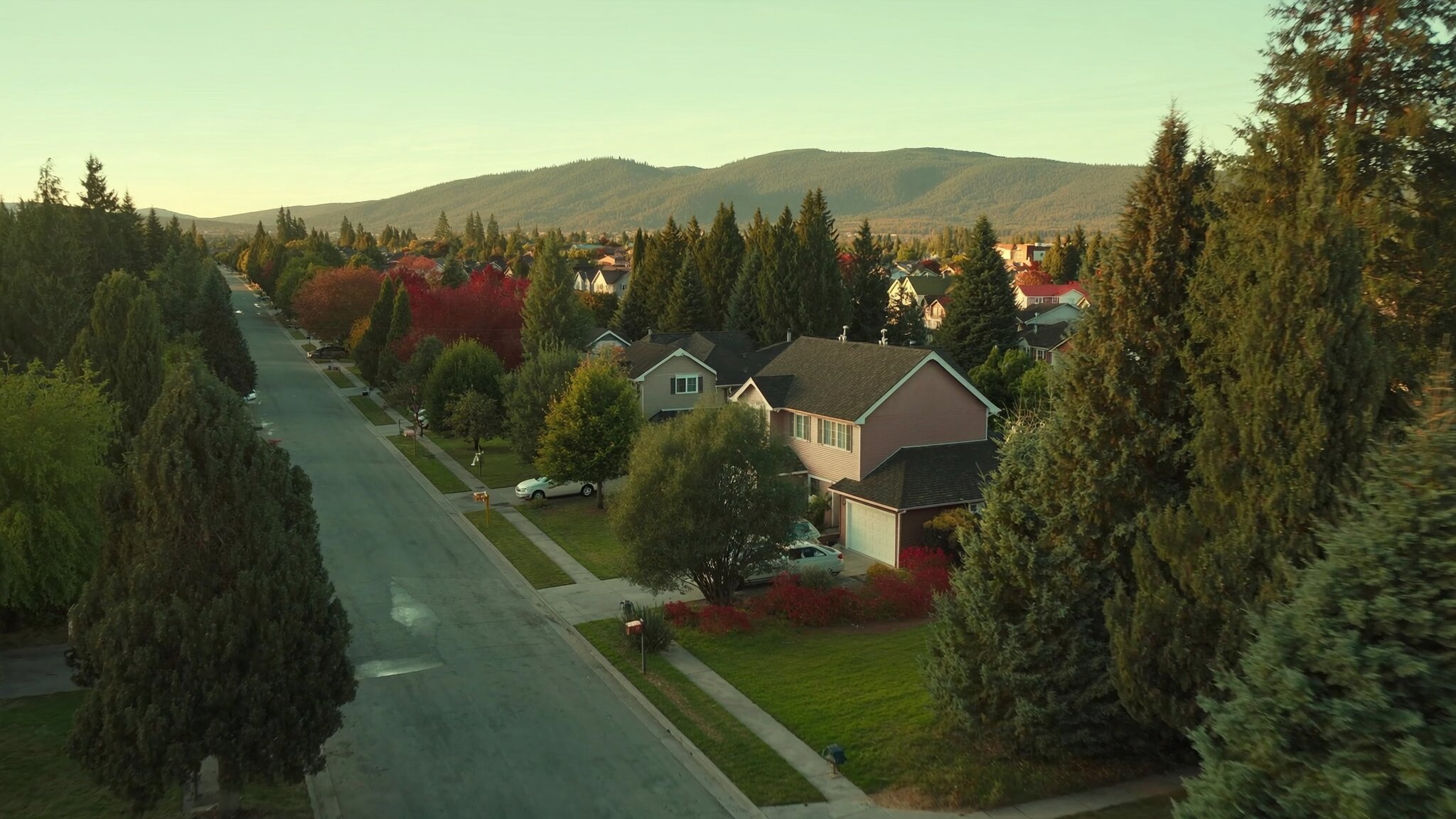
You raised your family in that house. Now it’s time to figure out what comes next.
The kids are gone. The guest rooms sit empty most of the year. You are mowing a lawn, heating rooms, and paying property taxes on square footage you stopped using years ago. If that sounds familiar, you are in good company.
A 2026 Redfin study found that empty-nest boomers own 28% of the nation’s large homes — while millennial families with kids own just 16% of that same housing stock. In King County, that mismatch is especially sharp. Homeowners who bought in Renton, Kent, Auburn, Covington, and Maple Valley in the 1990s or early 2000s are sitting on significant equity in homes that no longer fit their day-to-day lives.
Downsizing sounds simple. Sell the big house, buy something smaller, pocket the difference. But when you actually start thinking through it — what to keep, where to land, condo vs. smaller single-family, the tax implications, the emotional weight of it — it gets complicated fast. This guide is designed to help you think it through clearly, not push you toward any particular decision.
Is This the Right Time to Downsize?
Before you think about where you are going, it helps to get honest about why you want to move. The right reasons to downsize are different from the wrong ones — and the market does not care which is driving you.
Strong reasons to move
The house genuinely does not fit your life anymore. You are paying for space you do not use. Maintenance is becoming a burden rather than a source of pride. You want to free up equity for retirement, travel, or helping your kids. You want to live somewhere more walkable or lower-maintenance. These are all clear, grounded reasons to take the next step.
Reasons to pause
You are reacting to a difficult transition — a recent empty nest, a loss, family pressure. You are hoping the market will time itself perfectly. None of these are reasons to stay forever, but they are reasons to slow down and give the decision more space before you commit.
The 2026 King County market actually gives you more room to breathe than the market of three or four years ago. Active listings across the county rose nearly 38% year over year, which means you are not scrambling in a panic-buy environment on the purchase side. That is real breathing room worth using.
The Financial Picture: What You Are Actually Working With
If you bought in South or East King County before 2015, your equity position is likely substantial. King County’s median home price has hovered around $850,000 to $900,000 for most homes over 2,000 square feet in established areas. A home you bought for $350,000 in Renton in 2005 could easily have a current market value in the $700,000 to $800,000 range, depending on condition and location.
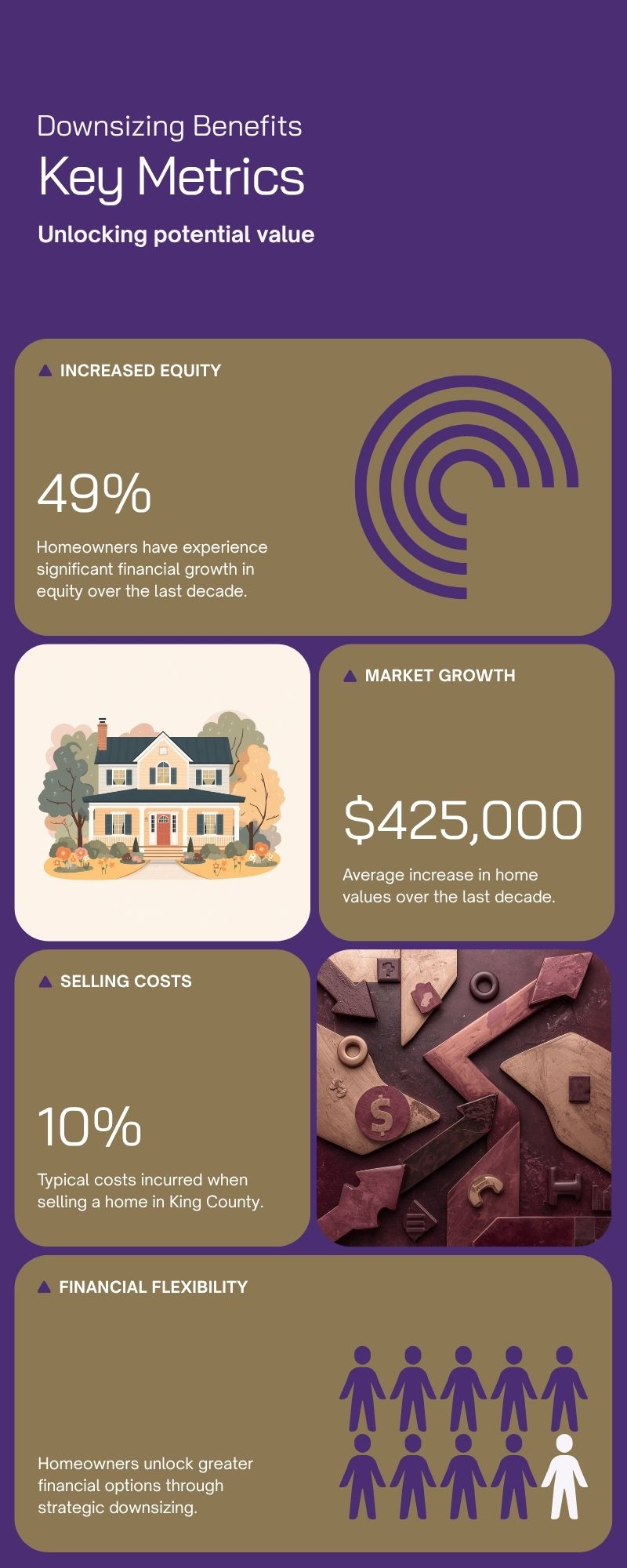
Sample equity math for a South King County homeowner who bought in 2005. Your numbers will differ — reach out for a free home value estimate.
Here is the tax piece that matters most: Washington state does not impose a capital gains tax on real estate sales. The state capital gains tax, which went through rate changes in 2025, still explicitly exempts real property. What you do need to account for is the federal exclusion: if you have lived in the home as your primary residence for at least two of the last five years, the first $500,000 in gain (for married couples filing jointly) is excluded from federal capital gains tax. For most King County empty nesters who have owned their home for 15 to 25 years, this exclusion covers the bulk or all of their gain.
You will also owe Washington’s Real Estate Excise Tax (REET) as the seller — a graduated rate that runs roughly 1.28% on the first $525,000 of the sale price and higher on amounts above that. On a $750,000 sale, budget approximately $10,000 to $12,000 for REET, plus standard seller costs like agent commission, title, and escrow. Full breakdown in the Capital Gains on Home Sales in Washington State guide.
The bottom line: for most King County empty nesters, downsizing is a significant equity event — and often a tax-advantaged one. The financial case is usually strong. The harder questions are about lifestyle, not math.
Condo vs. Smaller Single-Family: The Real Tradeoff
This is the question I hear most often from clients in this situation, and the honest answer is: it depends on which part of the hassle you are trying to escape.
If you want to eliminate maintenance entirely
A condo is the cleaner solution. No lawn, no roof, no gutters. The HOA handles exterior upkeep. The tradeoff is that you pay monthly dues — often $400 to $700 per month in South and East King County — and you give up direct control over your living space. You also need to do HOA due diligence: check the reserve fund, look at the meeting minutes, understand the rental cap rules. A condo with a thin reserve fund is a future special assessment waiting to happen.
If you want less house but still want a yard
A smaller single-family home in South King County may be the better fit. Cities like Renton, Kent, and Auburn have an inventory of well-maintained 1,100 to 1,600 square foot single-family homes that are a real step down in upkeep from a 2,500-square-foot house — without eliminating outdoor space entirely. These homes also tend to appreciate more reliably than condos over time and are easier to sell when you eventually need to.
If you want a community built for your stage of life
Consider a 55+ community. Providence Point in Issaquah is one example — a gated active adult community with strong amenities and a tight-knit neighborhood feel.
For a side-by-side breakdown of all three property types, the Condo vs. Townhouse vs. Single-Family in King County guide covers the full comparison.
King County: Where to Land
Geography matters when you are downsizing because the type of life you want in your next home often lines up with a specific part of the county.
South King County: Renton, Kent, Auburn, Covington, Maple Valley
Your dollar goes further here. Smaller single-family homes in established neighborhoods run $475,000 to $650,000 depending on city and condition. If you want to stay close to where you raised your family, keep your existing doctor and dentist, and stay within 20 minutes of your current neighborhood, South KC is the logical landing zone. Covington and Maple Valley in particular have quiet, low-maintenance pockets that work well for empty nesters who want more space than a condo but less upkeep than a large house.
East King County: Issaquah, Sammamish, Bellevue Adjacent
If the Eastside is home and walkability or trail access matters to you, the Issaquah corridor has strong options. Prices are higher — plan on $650,000 to $850,000 even for smaller homes — but the quality of life amenities are strong and the housing stock holds value well. Issaquah’s older neighborhoods have more modest footprints that work well for downsizing without going condo.
If you have already thought about this in the Sammamish context, the Should I Downsize My Sammamish Home post covers the local tradeoffs in detail.
What to Keep, What to Let Go
This part is where most people get stuck. The house itself is a straightforward financial transaction. The stuff inside carries thirty years of accumulated life, and deciding what to do with it is genuinely hard.
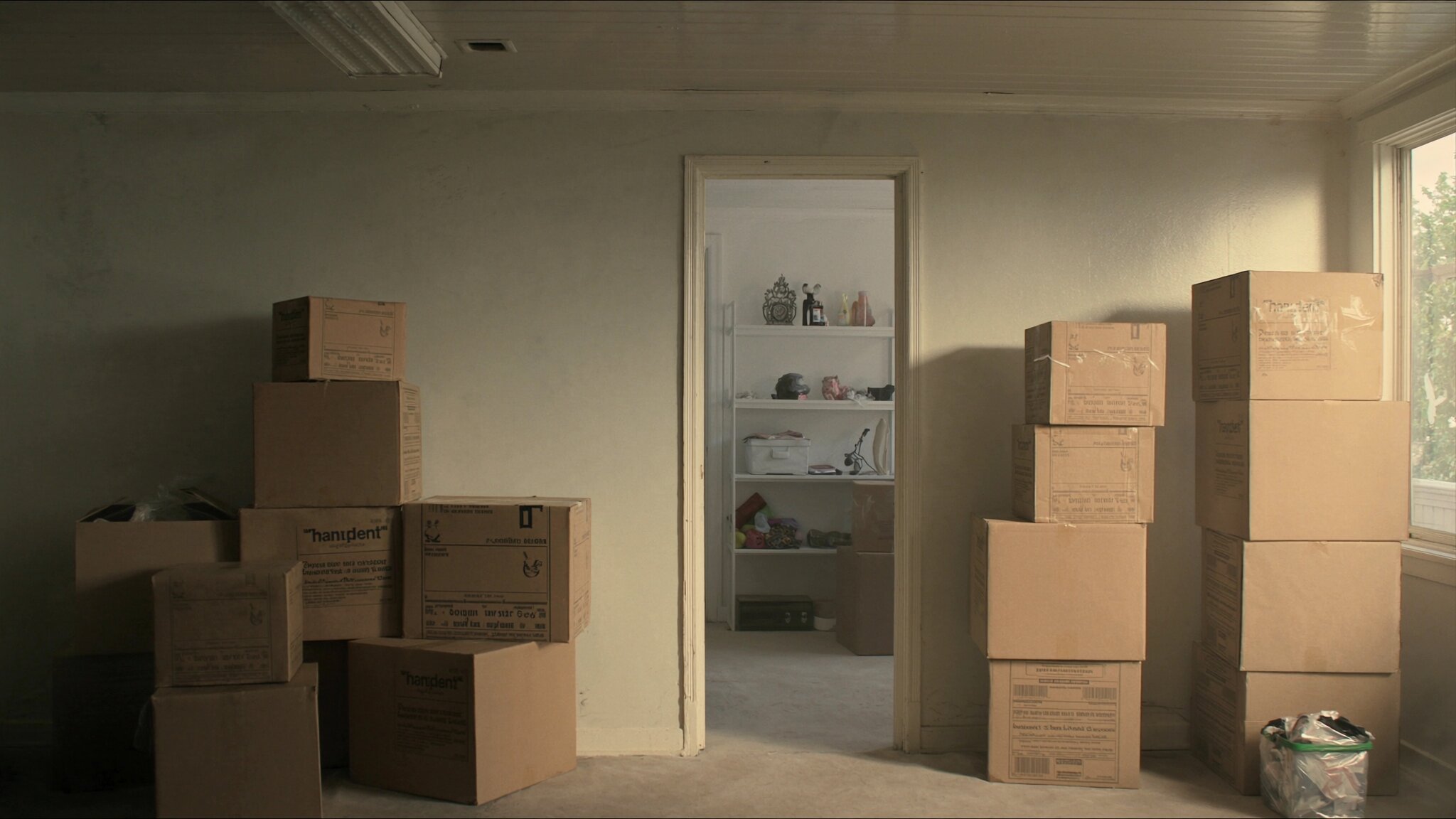
Starting the declutter process 12 to 18 months before you list gives you time to make good decisions without the pressure of a closing deadline.
Start 12 to 18 months before you list
This is not about the stuff — it is about your mental state. Moving from a family home to a smaller place after 20 or 30 years is a real transition. Starting early gives you time to process decisions without pressure and to let go of things gradually rather than all at once.
Measure first, then decide
Before you get sentimental about the dining table, find out if it fits in the new space. Many people hold on to things for emotional reasons only to discover the item would not have worked in the new home anyway. Get the floor plan of your target home type and measure everything you plan to keep.
Set a firm deadline with your kids
Adult children are a variable in every downsizing move. Items that belong to them, childhood memorabilia they might want, furniture they might claim — these need a hard deadline. “You have until October 1 to pick up what you want. After that, it goes.” Kindly stated, firmly enforced.
The right order
Go room by room in this sequence: living spaces, bedrooms, clothes, kitchen, office, guest rooms, garage, attic. Leave sentimental storage for last. The physical stuff builds decision-making muscle for the harder emotional items.
For high-value items, use Facebook Marketplace, Craigslist, or a local estate sale company. A well-run estate sale can move significant furniture volume in a weekend and put money in your pocket rather than requiring dump runs.
The practical goal: move only what you would buy again today if you were furnishing the new space from scratch.
What This Means for Move-Down Sellers
If you have been living in your King County family home for 15 or more years and the house no longer fits your life, 2026 is a reasonable year to act. Inventory is up, which helps you on the buy side. Your equity position is likely strong. The federal tax exclusion probably covers your gain. And the market has enough selection that you are not forced into a rushed decision on where you land.
Frequently Asked Questions
How much equity does the average King County empty nester have?
There is no universal number, but homeowners who bought in South King County before 2015 at prices between $250,000 and $450,000 are typically sitting on $300,000 to $500,000 or more in equity, depending on current value and remaining mortgage balance. Your equity is the difference between your current market value and what you owe — not what you paid.
Do I owe taxes when I downsize in Washington State?
Washington state does not tax real estate capital gains. At the federal level, married couples filing jointly can exclude up to $500,000 in gain from the sale of a primary residence they have lived in for at least two of the last five years. Most King County empty nesters fall well within this exclusion. Talk to a CPA about your specific situation before closing.
Is a condo right for a downsizing move?
It depends. Condos work well if eliminating exterior maintenance is your primary goal and you are comfortable with HOA fees and rules. They carry more financing and resale risk than single-family homes, and they require more due diligence upfront — reserve fund, rental caps, meeting minutes. Do not skip the HOA review.
How long does downsizing take?
From the first serious conversation to handing over keys, plan 12 to 18 months if you want the process to feel manageable. That includes decluttering, preparing the home for sale, selling, buying, and moving. Compressing it into three to four months is possible but stressful for most people.
What if I still have a low mortgage rate on my current home?
A 3% rate feels like a golden ticket — and it is, until you calculate what you are spending to keep that ticket. If the cost of maintaining and occupying a home larger than you need exceeds the financial cost of giving up the rate, the math usually still favors moving. It is a personal calculation worth doing carefully. I can help you run the numbers.
When is the best time of year to sell in King County?
Spring (March through June) is historically the strongest window for seller pricing in King County. Fall (September through October) is a solid second choice. If you are planning a move, working backward from a spring listing date and starting prep 12 months before gives you the best combination of market timing and preparation time.
This is not a small decision. The family home carries more than just square footage — it carries time. But there is also a real opportunity in the next chapter, and getting the move right starts with thinking it through clearly rather than rushing.
When you are ready to talk through your specific situation in Renton, Kent, Auburn, Covington, Maple Valley, or anywhere in South or East King County, reach out directly.
Your guide to life outside Seattle.
253-350-0045 ·
greg@livingoutsideseattle.com ·
www.livingoutsideseattle.com
Condo vs Townhouse vs Single-Family in King County
You’ve got three completely different products at three completely different price points. Here’s what actually separates them — and which one fits your situation in King County right now.
When most buyers start looking at homes in King County, they type a budget into Redfin and let the results decide the property type for them. That usually works fine until they’re deep into a transaction and suddenly discover that their condo doesn’t qualify for the loan they planned on, or that the townhouse HOA has a pending special assessment they didn’t know about.
The property type decision matters a lot more than most people realize. It affects what you pay every month, how quickly you can sell when the time comes, what your lender will let you borrow, and what you’re actually responsible for maintaining. I’ve walked buyers through all three, and the ones who end up happiest are almost always the ones who understood the differences before they started shopping — not after.
So here’s the full comparison. Condos, townhouses, and single-family homes. What you own, what you pay for, how they appreciate, how they finance, and who each one is actually right for in the King County market.
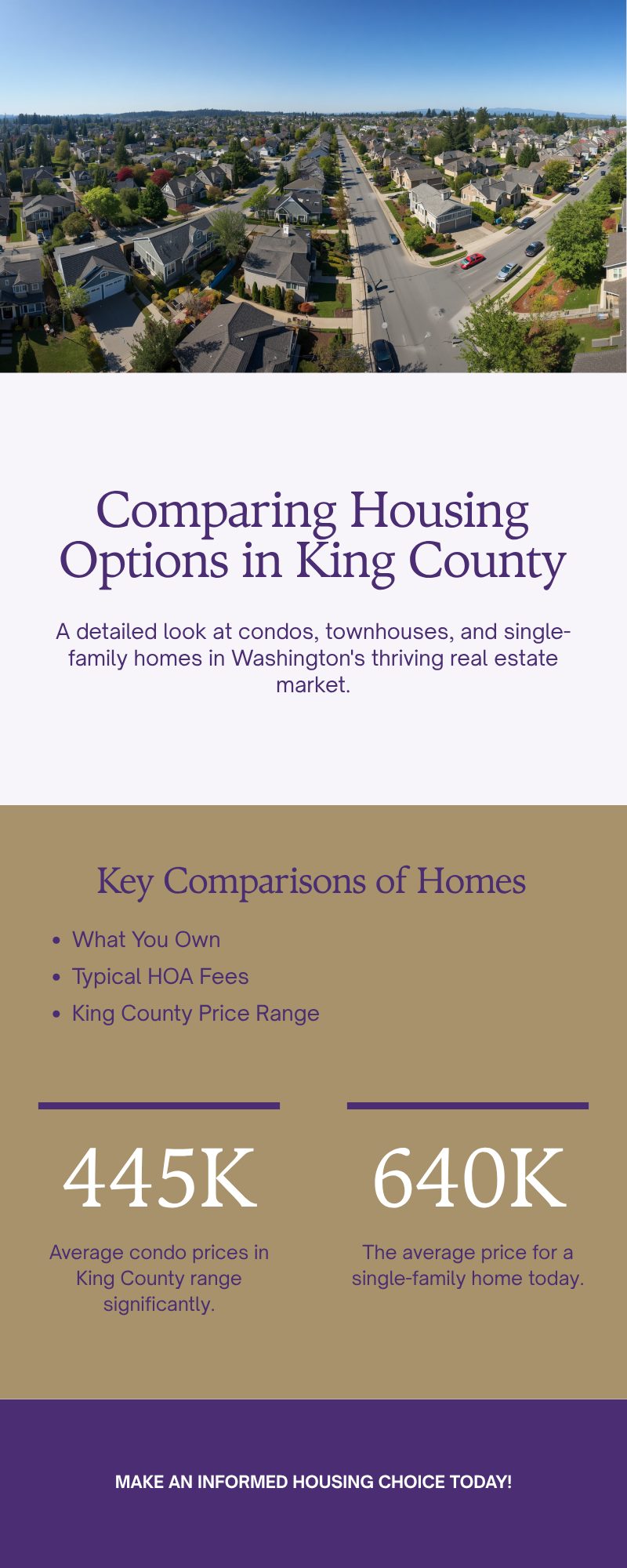
Property type comparison for King County buyers — ownership structure, HOA fees, and who each is right for.
What You Actually Own
This is where most people have fuzzy thinking, and it matters more than any other single factor.
Single-Family Home
When you buy a single-family home, you own the building and the land underneath it. Full stop. No HOA involved in most cases, though some planned neighborhoods do have one for shared amenities. If the roof leaks, that’s on you. If you want to paint the front door a different color, go for it. Your lot is yours to build a deck on or plant a garden in. That full ownership is exactly what makes SFHs appreciate the way they do. Land in King County is genuinely scarce, and land ownership transfers that value directly to you.
Townhouse
When you buy a townhouse, you typically own the structure and the land it sits on. Townhouses in King County are usually fee-simple, meaning you own your unit from the ground up. You share walls with neighbors, and there’s usually an HOA covering the common areas — shared driveways, landscaping, maybe a small courtyard. But the land is yours. That’s a meaningful difference from a condo, and it means townhouse appreciation tends to track closer to single-family than to condo over time.
Condo
When you buy a condo, you own the interior of your unit and a share of common areas. The land, the roof, the exterior walls, the lobby — all of that belongs to the HOA. Maintenance of those shared elements comes out of your monthly dues and out of a reserve fund that the HOA is supposed to be building over time. That arrangement is convenient right up until the roof needs replacing and the reserve fund is underfunded. More on that below.
The Price Gap Is Real in 2026
In King County as of early 2026, you’re looking at roughly these price ranges depending on what you’re buying and where.
Single-family homes in South King County — Renton, Kent, Auburn, Maple Valley — are running between $640,000 and $850,000 for typical resale product. The countywide median is hovering around $880,000. Anything under $600K in the SFH category tends to be smaller footprints or locations where the trade-off is commute time or school district.
Townhouses in those same South King County cities are typically coming in between $450,000 and $650,000. New construction townhomes near light rail corridors or in Kent’s East Hill area have been active in the $500K–$600K range. They’re a real path for buyers who want a two-car garage and a backyard without the $800K price tag.
Condos are the most variable. King County’s condo median dropped sharply — from around $690,000 in early 2025 to closer to $445,000–$577,000 in early 2026, depending on location. That’s a significant decline driven by a real imbalance in supply and demand for condos right now. More inventory, softer buyer demand, and a financing environment that makes condo purchases harder have all contributed. If you want to understand what current mortgage rates mean for your monthly payment across these price ranges, that post walks through the exact math.
How They Finance — This Is the Part That Surprises People
Financing a single-family home is the most straightforward of the three. Conventional loans, FHA, VA — all of these work with minimal restrictions. With strong credit and 3–5% down, you can access the full range of loan products.
Townhouses generally finance similarly to single-family homes, with one caveat. If the townhouse is part of a condo regime — meaning the ownership is structured legally as a condo even though it looks like a townhouse — lender scrutiny increases. Always ask your agent how the title is structured before assuming it finances like an SFH.
Condos are where financing gets genuinely complicated, and buyers often don’t find out until they’re already in contract.
Lenders classify condos as either warrantable or non-warrantable. A warrantable condo meets guidelines set by Fannie Mae and Freddie Mac — the HOA is financially healthy, owner-occupancy is above a certain threshold, no single entity owns too large a percentage of units, and the building isn’t in litigation. Those loans behave pretty normally. The interest rate runs about 0.125–0.375% higher than a comparable SFH purchase, and you can put as little as 3–5% down with good credit.
A non-warrantable condo is a different story. These are condos that don’t meet those standards — maybe the rental occupancy is too high, or the HOA has pending litigation, or the reserve fund is critically underfunded. Lenders who will touch these at all typically require 20–25% down and charge rates 0.5–1.5% higher than the warrantable equivalent. Some lenders won’t touch them at all.
HOA Fees and Hidden Costs: What to Actually Look For
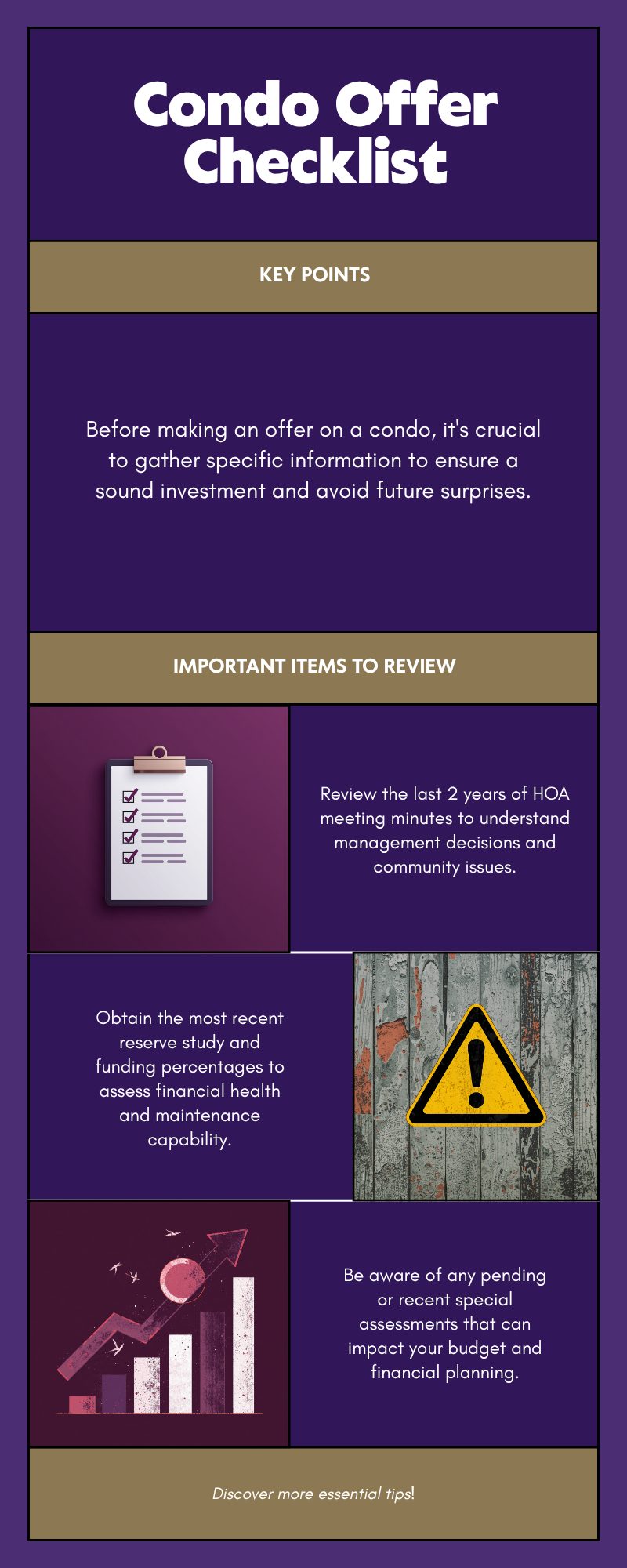
Request these documents before you make an offer on any condo in King County.
Every property type can have an HOA, but the nature and risk of HOA involvement varies considerably.
For single-family homes in planned communities, HOA fees tend to be modest — often $50–$150/month — and cover things like neighborhood common areas or a community pool. These are relatively low-risk from a special assessment standpoint as long as there aren’t major shared structures.
Townhouse HOAs typically run $200–$500/month in King County and cover shared exterior maintenance, landscaping, and common areas. The key question is: what exactly is the HOA responsible for? Some townhouse HOAs cover roof and siding; others leave the exterior entirely to you. Read the CCRs before you make an offer.
Condo HOAs carry the most complexity. Downtown Seattle condos can run $400–$1,000+/month. South King County condos tend to be lower — $250–$550/month — but can spike with age and deferred maintenance. And that brings us to the single biggest risk most condo buyers underestimate: the special assessment.
Washington State law (RCW 64.34.380 for condos) requires HOAs to conduct reserve studies and update them annually. A well-funded HOA sets aside money every month to cover large future expenses — roof replacement, elevator service, parking structure repairs. When an HOA is underfunded, it can’t pay for those repairs out of reserves. The result is a special assessment: a one-time charge to every unit owner, sometimes running $5,000–$30,000+ per unit.
Before you make an offer on a condo, request the last two years of HOA meeting minutes, the most recent reserve study, and the current percent-funded figure. If the reserve study shows less than 70% funding and the minutes mention deferred maintenance or upcoming projects, factor a special assessment into your budget. If they won’t provide these documents, that’s your answer.
Appreciation Patterns: Which One Builds Wealth Faster?
This is the question every buyer wants a clean answer to, and the honest answer is that it depends on time horizon and what you’re comparing.
Single-family homes in King County have the strongest long-term appreciation track record, driven primarily by land scarcity. As the region has grown, land in South King County has become more constrained. Homes in Renton, Maple Valley, and Auburn have all seen substantial appreciation over the last decade. In May 2026, single-family inventory in King County was tight enough at 2.8 months of supply to support pricing stability, with homes selling at 101.9% of list price on average. My East and South King County market update has the current numbers.
Townhouses tend to appreciate in line with or slightly below SFH rates, depending on the product. New construction townhomes near transit corridors have performed well as demand for lower-maintenance, urban-adjacent living has grown. Fee-simple townhouses — where you own the land — typically hold value better than leasehold or condo-regime townhouses.
Condos are the most volatile of the three. The sharp drop in King County condo prices in 2025–2026 illustrates this clearly. Condos have periods of strong appreciation, particularly during high-demand, low-inventory cycles, but they also fall harder when demand softens. The oversupply of condo inventory right now, combined with the financing friction around non-warrantable buildings, has pushed prices down in ways that SFH and townhouse buyers haven’t experienced. That said, the current condo pricing environment does present a genuine opportunity for buyers who do the due diligence. Buying at a cyclical low in a well-run building in a strong location can produce solid returns. The key word is “well-run.”
The King County Local Angle: How Each Property Type Plays Out Here
South King County gives you examples of all three property types at accessible prices, and the differences matter more in this market than national averages suggest.
In Renton, you’ll find a mix of SFH in the $650K–$850K range, townhomes clustered near the Renton Highlands and Landing area in the $450K–$600K range, and condos in the Renton downtown corridor that have come down considerably in price. The light rail connection at the Renton Transit Center has increased buyer interest in Renton townhouses specifically. If you’re buying in Renton and considering a condo, the warrantability question is especially relevant — several Renton condo buildings are older and require careful reserve fund scrutiny. The Living in Renton guide covers the full neighborhood breakdown.
In Kent, townhomes in the $450K–$550K range have been some of the more active product in 2026. The first-time buyer guide for Kent covers the buy-now-vs-wait math that many Kent buyers are working through, and townhomes tend to be the property type that makes that math work at current rates.
In Auburn and Maple Valley, single-family homes still dominate the inventory. Townhouse product exists but is more limited. If you’re drawn to these communities for the school districts and neighborhood feel, the calculus often pushes toward SFH even if it means stretching the budget a bit further.
East King County — Issaquah, Bellevue, Sammamish — has a strong townhouse market particularly in the Issaquah Highlands and Talus communities, where mixed-use development has produced a large supply of attached product. These are generally well-maintained and have active HOAs with healthy reserves, but due diligence still matters.
What This Means for You as a Buyer
If you’re a first-time buyer in South or East King County in 2026, here’s the practical framework I’d use.
Budget Under $500,000
You’re likely looking at condos or newer townhomes. Condos offer the lowest purchase price but require more due diligence. Prioritize buildings with healthy reserves and warrantable financing status. If you can get into a well-run building at today’s discounted prices, you’re buying in at a favorable point in the condo cycle.
Budget $500,000–$700,000
Townhouses become your primary option for getting into ownership with land included. New and newer construction townhomes in Kent, Renton, and Federal Way fit this range. Prioritize fee-simple structures over condo-regime townhouses, and read the HOA docs before you fall in love with a floor plan.
Budget $700,000+
Single-family homes in South King County become realistic. You’ll find the strongest appreciation track record and the simplest financing path. The trade-off is less lock-and-leave convenience and more maintenance responsibility.
Frequently Asked Questions
What is the difference between a condo and a townhouse in King County?
A condo is a unit in a shared building where you own the interior space and a share of common areas. A townhouse is usually a multi-level attached home where you own the structure and the land it sits on. This difference in land ownership typically makes townhouses appreciate more like single-family homes and finance more like them too.
Is it harder to get a loan for a condo than a house in King County?
Yes, generally. Condos face additional lender scrutiny around HOA financial health, owner-occupancy ratios, and reserve fund adequacy. If a condo is classified as non-warrantable, you’ll typically need a larger down payment and accept a higher interest rate. Single-family homes and fee-simple townhouses don’t have this additional layer of review.
Are condos a good investment right now in King County?
Condo prices dropped significantly in 2025–2026, which means buyers who do careful due diligence can potentially buy at a cyclical low. The risk is that you’re buying into a shared financial structure (the HOA), so the quality of the building’s finances matters as much as the unit itself. In a well-run building, current pricing represents a real opportunity. In a poorly funded building, you’re taking on someone else’s deferred maintenance.
How much are HOA fees for condos vs. townhouses in South King County?
Condo HOA fees in South King County typically run $250–$550/month for older and mid-range buildings. Townhouse HOAs tend to be lower — $150–$400/month — and generally cover less exterior maintenance. Downtown Seattle and Eastside condos can run $400–$1,000+/month. Always include HOA dues in your monthly payment calculation when comparing properties.
What is a reserve fund and why does it matter when buying a condo?
A reserve fund is the HOA’s savings account for large future repairs — roof replacement, elevators, structural work. Washington State requires condos to conduct reserve studies and update them annually. If the reserve fund is significantly underfunded (below 70% of what it should hold), the risk of a special assessment increases. Special assessments are one-time charges to all unit owners that can run thousands to tens of thousands of dollars.
Can I use an FHA loan to buy a condo in King County?
Yes, but the condo building must be on the FHA-approved list. FHA imposes strict requirements on owner-occupancy rates, commercial space ratios, and HOA financial health. Search the HUD database to check a specific building’s approval status before getting too far into the transaction.
The property type you choose is one of the first big decisions in the buying process, and it shapes everything that follows — financing, monthly costs, what you maintain, and what you eventually sell. Understanding the differences upfront saves a lot of mid-transaction surprises.
Your guide to life outside Seattle.
253-350-0045 ·
greg@livingoutsideseattle.com ·
www.livingoutsideseattle.com
This Guide Has Moved
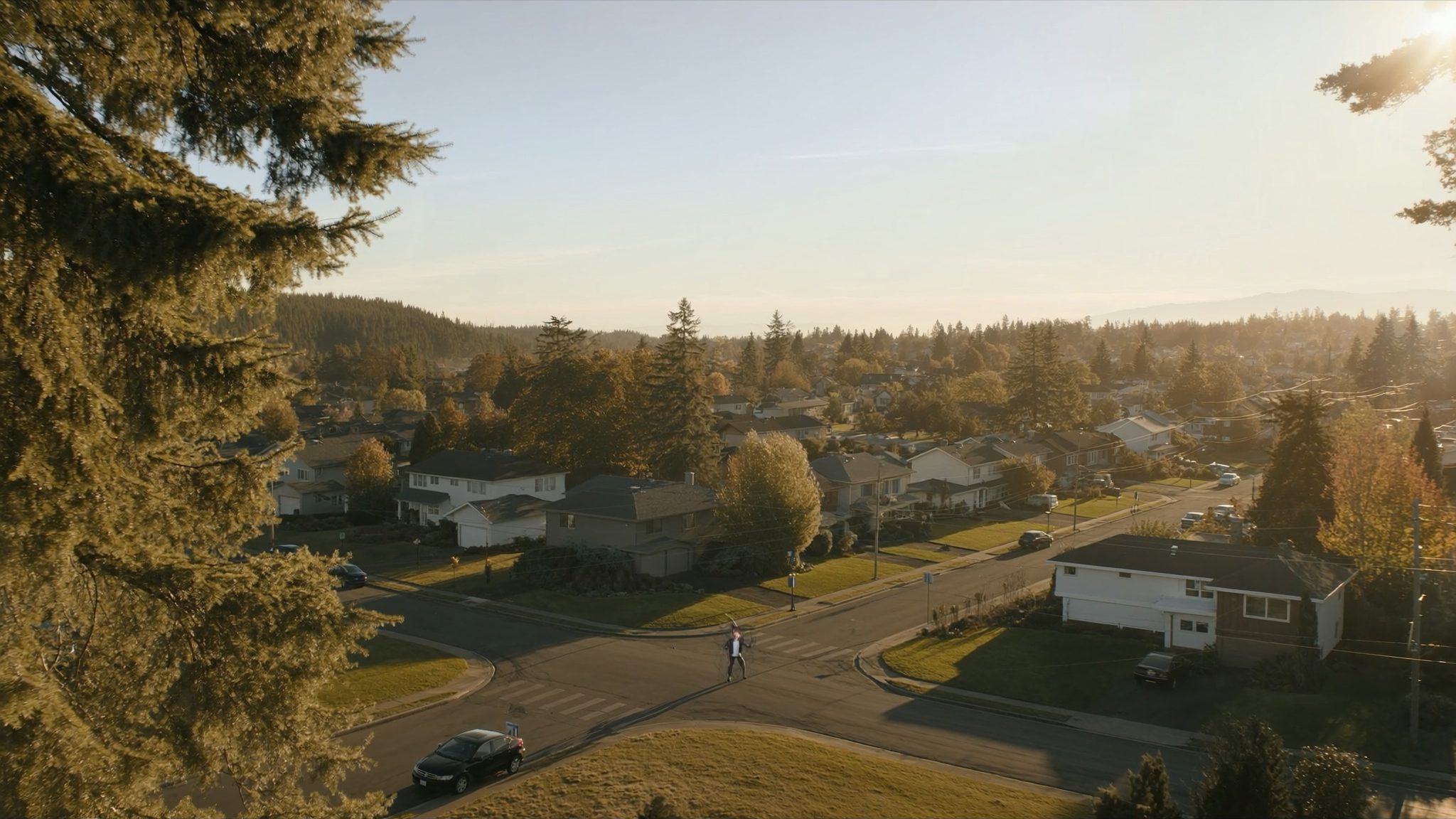
This article has been folded into our maintained guide: East & South King County Market Update [July 2026]. You are being taken there now.
