

 Facebook
 X
X
 Pinterest
 Copy Link
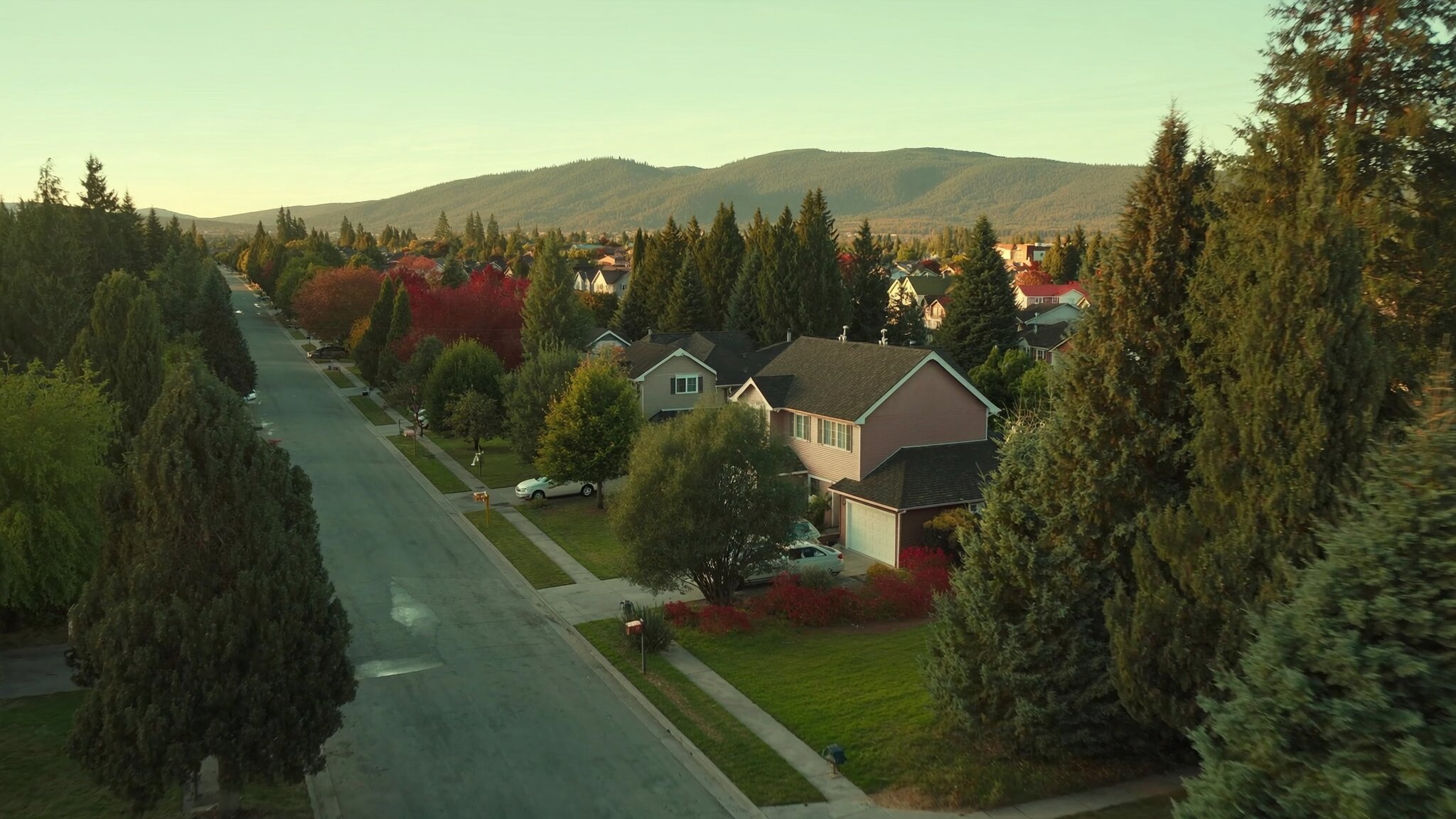
You raised your family in that house. Now it’s time to figure out what comes next.
The kids are gone. The guest rooms sit empty most of the year. You are mowing a lawn, heating rooms, and paying property taxes on square footage you stopped using years ago. If that sounds familiar, you are in good company.
A 2026 Redfin study found that empty-nest boomers own 28% of the nation’s large homes — while millennial families with kids own just 16% of that same housing stock. In King County, that mismatch is especially sharp. Homeowners who bought in Renton, Kent, Auburn, Covington, and Maple Valley in the 1990s or early 2000s are sitting on significant equity in homes that no longer fit their day-to-day lives.
Downsizing sounds simple. Sell the big house, buy something smaller, pocket the difference. But when you actually start thinking through it — what to keep, where to land, condo vs. smaller single-family, the tax implications, the emotional weight of it — it gets complicated fast. This guide is designed to help you think it through clearly, not push you toward any particular decision.
Is This the Right Time to Downsize?
Before you think about where you are going, it helps to get honest about why you want to move. The right reasons to downsize are different from the wrong ones — and the market does not care which is driving you.
Strong reasons to move
The house genuinely does not fit your life anymore. You are paying for space you do not use. Maintenance is becoming a burden rather than a source of pride. You want to free up equity for retirement, travel, or helping your kids. You want to live somewhere more walkable or lower-maintenance. These are all clear, grounded reasons to take the next step.
Reasons to pause
You are reacting to a difficult transition — a recent empty nest, a loss, family pressure. You are hoping the market will time itself perfectly. None of these are reasons to stay forever, but they are reasons to slow down and give the decision more space before you commit.
The 2026 King County market actually gives you more room to breathe than the market of three or four years ago. Active listings across the county rose nearly 38% year over year, which means you are not scrambling in a panic-buy environment on the purchase side. That is real breathing room worth using.
The Financial Picture: What You Are Actually Working With
If you bought in South or East King County before 2015, your equity position is likely substantial. King County’s median home price has hovered around $850,000 to $900,000 for most homes over 2,000 square feet in established areas. A home you bought for $350,000 in Renton in 2005 could easily have a current market value in the $700,000 to $800,000 range, depending on condition and location.
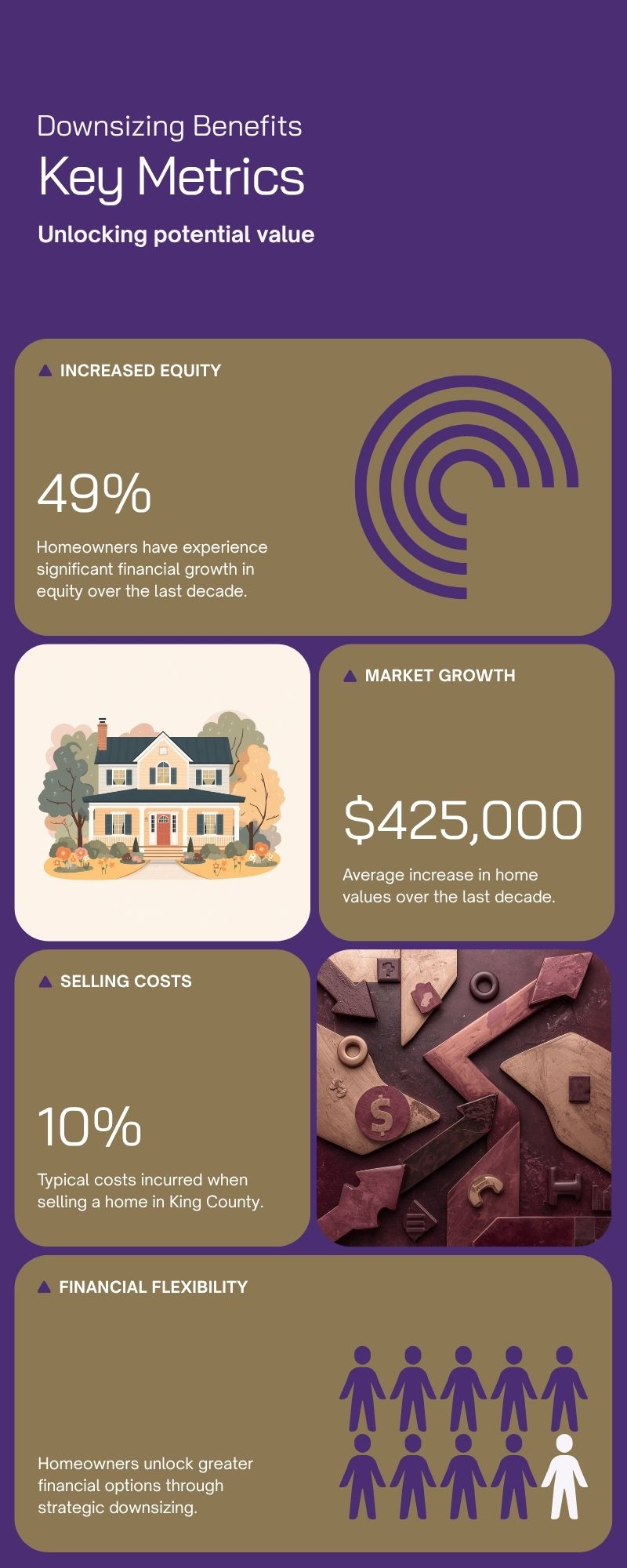
Sample equity math for a South King County homeowner who bought in 2005. Your numbers will differ — reach out for a free home value estimate.
Here is the tax piece that matters most: Washington state does not impose a capital gains tax on real estate sales. The state capital gains tax, which went through rate changes in 2025, still explicitly exempts real property. What you do need to account for is the federal exclusion: if you have lived in the home as your primary residence for at least two of the last five years, the first $500,000 in gain (for married couples filing jointly) is excluded from federal capital gains tax. For most King County empty nesters who have owned their home for 15 to 25 years, this exclusion covers the bulk or all of their gain.
You will also owe Washington’s Real Estate Excise Tax (REET) as the seller — a graduated rate that runs roughly 1.28% on the first $525,000 of the sale price and higher on amounts above that. On a $750,000 sale, budget approximately $10,000 to $12,000 for REET, plus standard seller costs like agent commission, title, and escrow. Full breakdown in the Capital Gains on Home Sales in Washington State guide.
The bottom line: for most King County empty nesters, downsizing is a significant equity event — and often a tax-advantaged one. The financial case is usually strong. The harder questions are about lifestyle, not math.
Condo vs. Smaller Single-Family: The Real Tradeoff
This is the question I hear most often from clients in this situation, and the honest answer is: it depends on which part of the hassle you are trying to escape.
If you want to eliminate maintenance entirely
A condo is the cleaner solution. No lawn, no roof, no gutters. The HOA handles exterior upkeep. The tradeoff is that you pay monthly dues — often $400 to $700 per month in South and East King County — and you give up direct control over your living space. You also need to do HOA due diligence: check the reserve fund, look at the meeting minutes, understand the rental cap rules. A condo with a thin reserve fund is a future special assessment waiting to happen.
If you want less house but still want a yard
A smaller single-family home in South King County may be the better fit. Cities like Renton, Kent, and Auburn have an inventory of well-maintained 1,100 to 1,600 square foot single-family homes that are a real step down in upkeep from a 2,500-square-foot house — without eliminating outdoor space entirely. These homes also tend to appreciate more reliably than condos over time and are easier to sell when you eventually need to.
If you want a community built for your stage of life
Consider a 55+ community. Providence Point in Issaquah is one example — a gated active adult community with strong amenities and a tight-knit neighborhood feel.
For a side-by-side breakdown of all three property types, the Condo vs. Townhouse vs. Single-Family in King County guide covers the full comparison.
King County: Where to Land
Geography matters when you are downsizing because the type of life you want in your next home often lines up with a specific part of the county.
South King County: Renton, Kent, Auburn, Covington, Maple Valley
Your dollar goes further here. Smaller single-family homes in established neighborhoods run $475,000 to $650,000 depending on city and condition. If you want to stay close to where you raised your family, keep your existing doctor and dentist, and stay within 20 minutes of your current neighborhood, South KC is the logical landing zone. Covington and Maple Valley in particular have quiet, low-maintenance pockets that work well for empty nesters who want more space than a condo but less upkeep than a large house.
East King County: Issaquah, Sammamish, Bellevue Adjacent
If the Eastside is home and walkability or trail access matters to you, the Issaquah corridor has strong options. Prices are higher — plan on $650,000 to $850,000 even for smaller homes — but the quality of life amenities are strong and the housing stock holds value well. Issaquah’s older neighborhoods have more modest footprints that work well for downsizing without going condo.
If you have already thought about this in the Sammamish context, the Should I Downsize My Sammamish Home post covers the local tradeoffs in detail.
What to Keep, What to Let Go
This part is where most people get stuck. The house itself is a straightforward financial transaction. The stuff inside carries thirty years of accumulated life, and deciding what to do with it is genuinely hard.
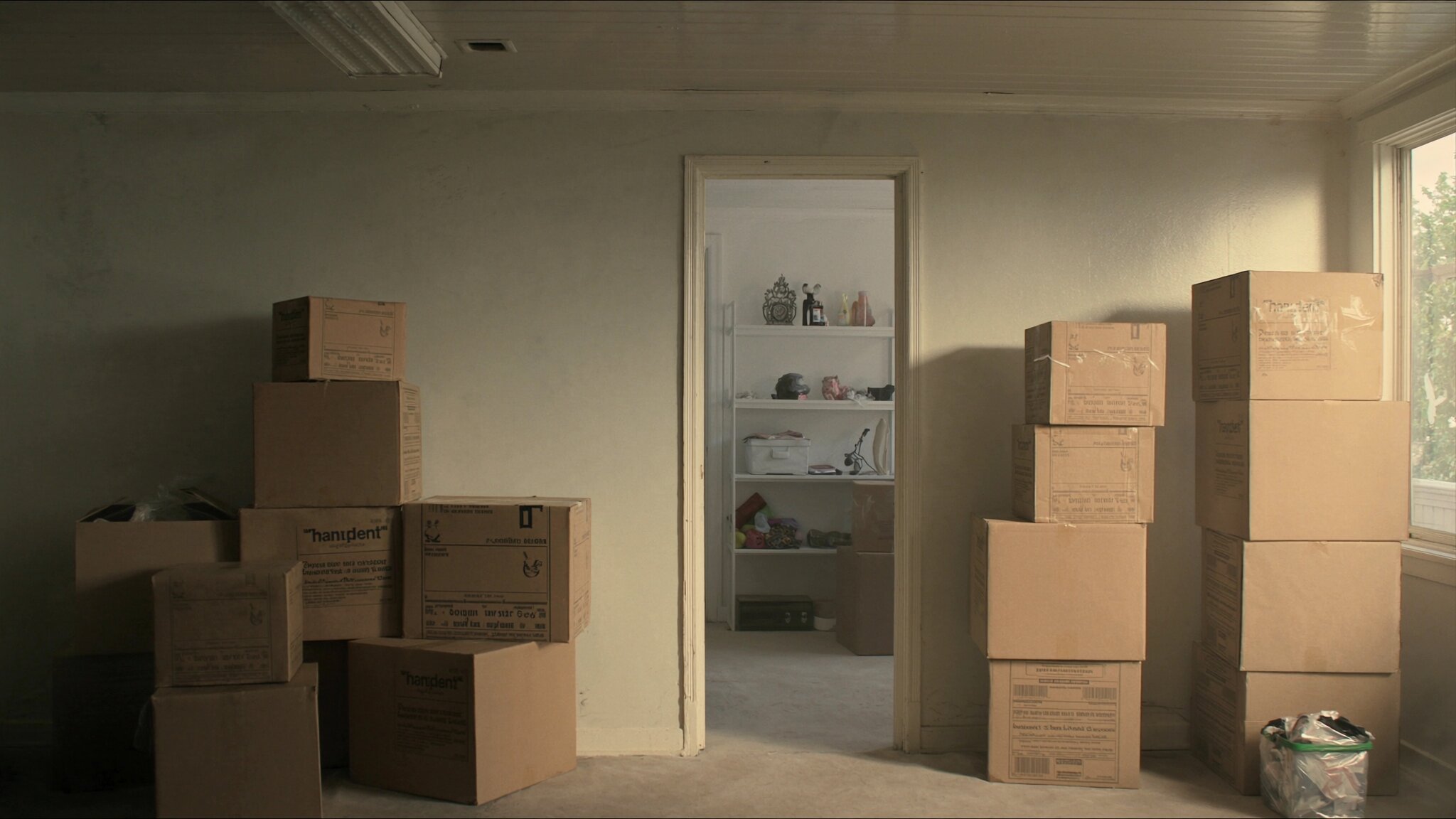
Starting the declutter process 12 to 18 months before you list gives you time to make good decisions without the pressure of a closing deadline.
Start 12 to 18 months before you list
This is not about the stuff — it is about your mental state. Moving from a family home to a smaller place after 20 or 30 years is a real transition. Starting early gives you time to process decisions without pressure and to let go of things gradually rather than all at once.
Measure first, then decide
Before you get sentimental about the dining table, find out if it fits in the new space. Many people hold on to things for emotional reasons only to discover the item would not have worked in the new home anyway. Get the floor plan of your target home type and measure everything you plan to keep.
Set a firm deadline with your kids
Adult children are a variable in every downsizing move. Items that belong to them, childhood memorabilia they might want, furniture they might claim — these need a hard deadline. “You have until October 1 to pick up what you want. After that, it goes.” Kindly stated, firmly enforced.
The right order
Go room by room in this sequence: living spaces, bedrooms, clothes, kitchen, office, guest rooms, garage, attic. Leave sentimental storage for last. The physical stuff builds decision-making muscle for the harder emotional items.
For high-value items, use Facebook Marketplace, Craigslist, or a local estate sale company. A well-run estate sale can move significant furniture volume in a weekend and put money in your pocket rather than requiring dump runs.
The practical goal: move only what you would buy again today if you were furnishing the new space from scratch.
What This Means for Move-Down Sellers
If you have been living in your King County family home for 15 or more years and the house no longer fits your life, 2026 is a reasonable year to act. Inventory is up, which helps you on the buy side. Your equity position is likely strong. The federal tax exclusion probably covers your gain. And the market has enough selection that you are not forced into a rushed decision on where you land.
Frequently Asked Questions
How much equity does the average King County empty nester have?
There is no universal number, but homeowners who bought in South King County before 2015 at prices between $250,000 and $450,000 are typically sitting on $300,000 to $500,000 or more in equity, depending on current value and remaining mortgage balance. Your equity is the difference between your current market value and what you owe — not what you paid.
Do I owe taxes when I downsize in Washington State?
Washington state does not tax real estate capital gains. At the federal level, married couples filing jointly can exclude up to $500,000 in gain from the sale of a primary residence they have lived in for at least two of the last five years. Most King County empty nesters fall well within this exclusion. Talk to a CPA about your specific situation before closing.
Is a condo right for a downsizing move?
It depends. Condos work well if eliminating exterior maintenance is your primary goal and you are comfortable with HOA fees and rules. They carry more financing and resale risk than single-family homes, and they require more due diligence upfront — reserve fund, rental caps, meeting minutes. Do not skip the HOA review.
How long does downsizing take?
From the first serious conversation to handing over keys, plan 12 to 18 months if you want the process to feel manageable. That includes decluttering, preparing the home for sale, selling, buying, and moving. Compressing it into three to four months is possible but stressful for most people.
What if I still have a low mortgage rate on my current home?
A 3% rate feels like a golden ticket — and it is, until you calculate what you are spending to keep that ticket. If the cost of maintaining and occupying a home larger than you need exceeds the financial cost of giving up the rate, the math usually still favors moving. It is a personal calculation worth doing carefully. I can help you run the numbers.
When is the best time of year to sell in King County?
Spring (March through June) is historically the strongest window for seller pricing in King County. Fall (September through October) is a solid second choice. If you are planning a move, working backward from a spring listing date and starting prep 12 months before gives you the best combination of market timing and preparation time.
This is not a small decision. The family home carries more than just square footage — it carries time. But there is also a real opportunity in the next chapter, and getting the move right starts with thinking it through clearly rather than rushing.
When you are ready to talk through your specific situation in Renton, Kent, Auburn, Covington, Maple Valley, or anywhere in South or East King County, reach out directly.
Your guide to life outside Seattle.
253-350-0045 · greg@livingoutsideseattle.com · www.livingoutsideseattle.com
