If you’re the executor of an estate that includes a King County home, the question you’re probably asking is: how long is this going to take, and how much is it going to cost?
The honest answers: 4 to 6 months for a straightforward estate, and more than most heirs expect on costs. Here’s what to plan for.
The Step-by-Step Probate Timeline in Washington State
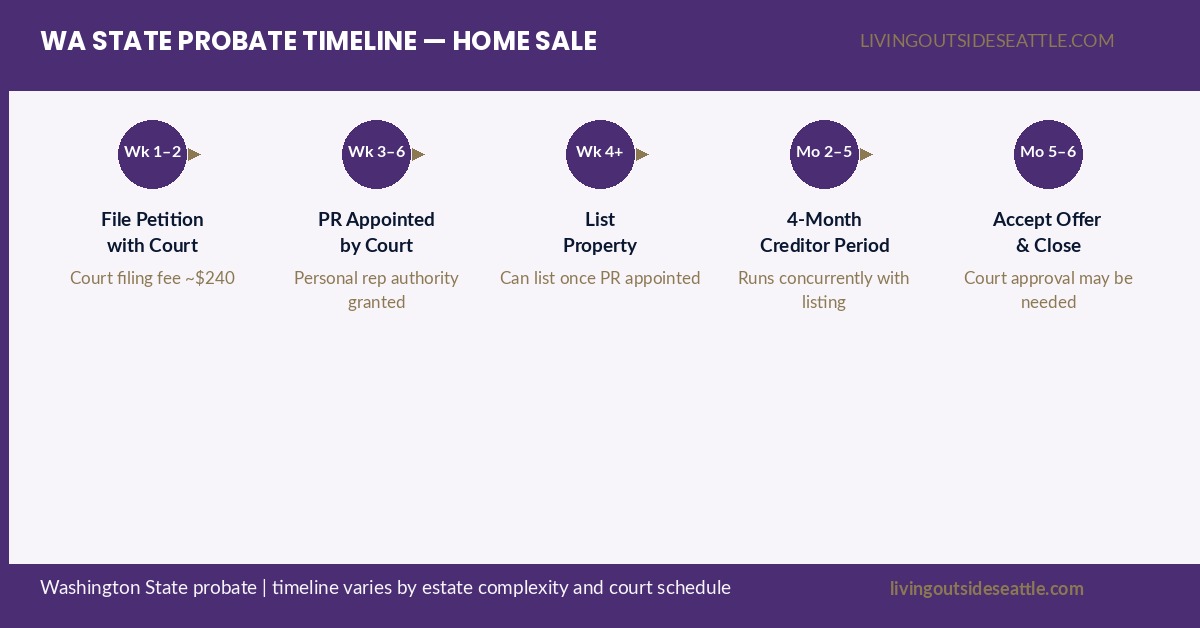
Filing → Court appointment (weeks 3–6) → List property → Creditor period (4 months, runs concurrently) → Close escrow.
Washington’s probate process follows a predictable sequence. Understanding each step in advance lets you minimize delays and keep the process moving.
Week 1 to 3: File the Probate Petition
The first step is filing a petition to open probate with the King County Superior Court. This petition identifies the deceased, lists the estate’s assets including the real property, and names the proposed personal representative. If there’s a will, it’s filed with the petition. If there’s no will, the court follows Washington’s intestate succession laws to determine who inherits.
The 40-day filing deadline runs from the date of death. File promptly.
Week 3 to 6: Court Hearing and Appointment
The court schedules an initial hearing, typically 3 to 6 weeks after filing. At that hearing, the personal representative is formally appointed and issued Letters Testamentary (with a will) or Letters of Administration (without a will). These letters give the personal representative authority to act on behalf of the estate, including listing the real property for sale.
Week 6 Onward: Creditor Notice Period
Once the personal representative is appointed, they publish a Notice to Creditors in a local newspaper. Washington law then gives creditors 4 months from the date of publication to file claims against the estate. This is often the longest period in the process and it runs concurrently with everything else — meaning you can and should be listing the property during this window.
Concurrent: List and Sell the Property
Once the personal representative has Letters Testamentary, they have legal authority to list and sell the property. You don’t need to wait for probate to conclude. List the property, accept an offer, open escrow, and structure the closing to occur after the creditor period ends. In most cases that aligns naturally with a 45 to 60 day closing timeline.
What Probate Costs in King County — A Realistic Breakdown
Cost Item
Typical Range
Court filing fees
$500–$800 total
Attorney fees (straightforward estate)
$2,000–$4,000
Attorney fees (contested estate)
$8,000–$20,000+
Property taxes (per month)
$667–$1,500+
Vacant home insurance (per month)
$100–$200
Real estate selling costs (REET + commissions + escrow)
7%–9% of sale price
Figures are estimates. Verify with your probate attorney. King County, Washington, 2026.
On a $1.2M King County home in probate for 5 months, total holding costs outside of legal fees can easily reach $6,000 to $10,000. This is money the estate spends while the clock runs. Moving efficiently through the process is worth real money.
What Slows Probate Down — and How to Avoid It
Disputes among heirs. If multiple heirs disagree about whether to sell, when to sell, or what price to accept, the process can stall for months. Get legal counsel before you list if you’re anticipating pushback.
Title complications. Old liens, unresolved easements, or unclear ownership history can delay closing. A preliminary title report early in the process identifies these issues when you still have time to resolve them.
Delayed filing. The single most common source of unnecessary delay is heirs waiting months before filing the probate petition. The estate doesn’t benefit from that wait. File promptly.
Deferred property maintenance. A home that’s been sitting vacant for 3 months often has condition issues. Have the property inspected early and address anything that will come up in a buyer’s inspection.
Frequently Asked Questions
How long does it take to sell a house in probate in Washington State?
For a straightforward estate with one property, no disputes, and a ready buyer, the full process from filing to closing runs 4 to 6 months. You can list the property and accept an offer once the personal representative is appointed (3 to 6 weeks after filing) and close after the 4-month creditor period. Moving quickly through filing and listing in parallel is the biggest time-saver.
Do I need an EIN to sell a probate property in Washington State?
Yes. Before listing the property, apply for an EIN (Employer Identification Number) at IRS.gov. The estate operates as a separate financial entity for tax purposes and all estate financial activity, including the home sale proceeds, must flow through the estate’s EIN, not your personal Social Security number.
Can an executor sell a house without court approval in Washington State?
In most cases, yes. Washington’s Independent Administration of Estates Act grants most personal representatives “nonintervention powers,” meaning they can list, accept offers, and close without returning to court for approval of each transaction. If nonintervention powers were not granted at the initial hearing, the executor may need court approval to sell, which adds time and cost.
What is the 40-day probate deadline in Washington State?
Washington law requires the petition to open probate to be filed within 40 days of the date of death. Missing this window doesn’t prevent you from opening probate, but it affects the creditor notification timeline and certain statutory protections. There is no benefit to waiting — file promptly.
Navigating the Sale Side
Once you have your Letters Testamentary and you’re ready to list the property, the sale process works essentially like a standard King County home sale. What’s different is the documentation requirements at escrow. The title company and buyer’s lender will need to see the Letters Testamentary, a copy of the probate filing, and confirmation that no pending creditor claims would cloud title.
I work with heirs and executors navigating probate sales regularly. If you’re at the point where you’re ready to think about listing a property, I’m happy to walk through what the market looks like right now, what preparation makes sense before listing, and what a realistic timeline and net proceeds calculation looks like for the specific property.
Gregory Dorrell is a licensed real estate broker (WA License #111862) with Coldwell Banker Bain. This post is provided for general informational purposes and does not constitute legal advice. Work with a qualified Washington State probate attorney for guidance specific to your situation.
Most sellers are nervous about the home inspection. Here’s what actually happens, what buyers are really looking for, and how to handle a repair request without losing your deal.
The call comes in after the inspection. Your agent says the buyer has a repair request. Your stomach drops.
I see this happen all the time. Sellers who have lived in their home for 10 or 15 years think they know every quirk of the place, and they still get surprised by what an inspector puts in a report. That’s not because something was hidden. It’s because most sellers have never seen a home inspection report before. When you see 40 items flagged in a 60-page document, it can feel catastrophic — even when 35 of those items are caulk gaps and light switch covers.
Here’s what the inspection process actually looks like from the seller’s side, what it means when a buyer sends repair requests, and how to respond without blowing up your sale. If you haven’t started prep yet, it’s worth reading our guide to preparing your home for sale in King County alongside this one.
How the Inspection Fits Into Your Sale Timeline
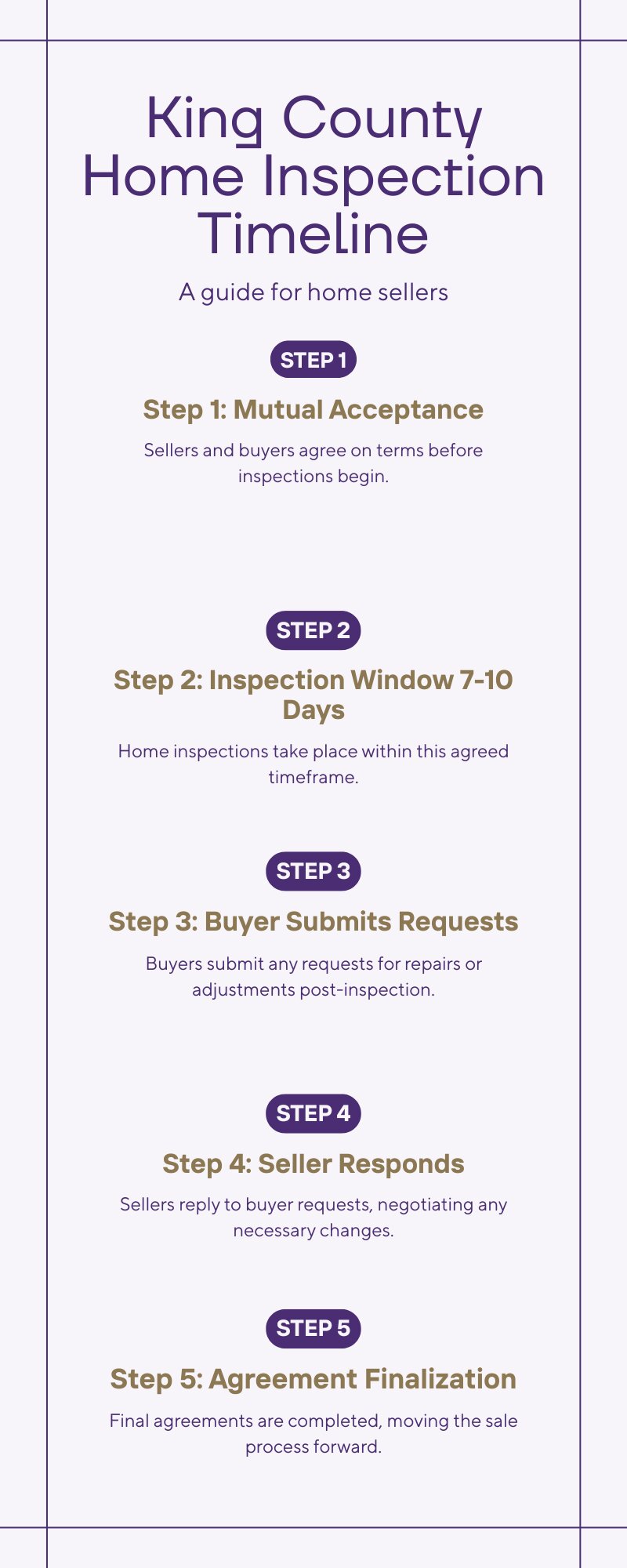
In King County, the buyer typically has a set window after mutual acceptance — often 7 to 10 days — to schedule and complete their inspection, review the report, and submit any requests. That window is spelled out in the purchase and sale agreement.
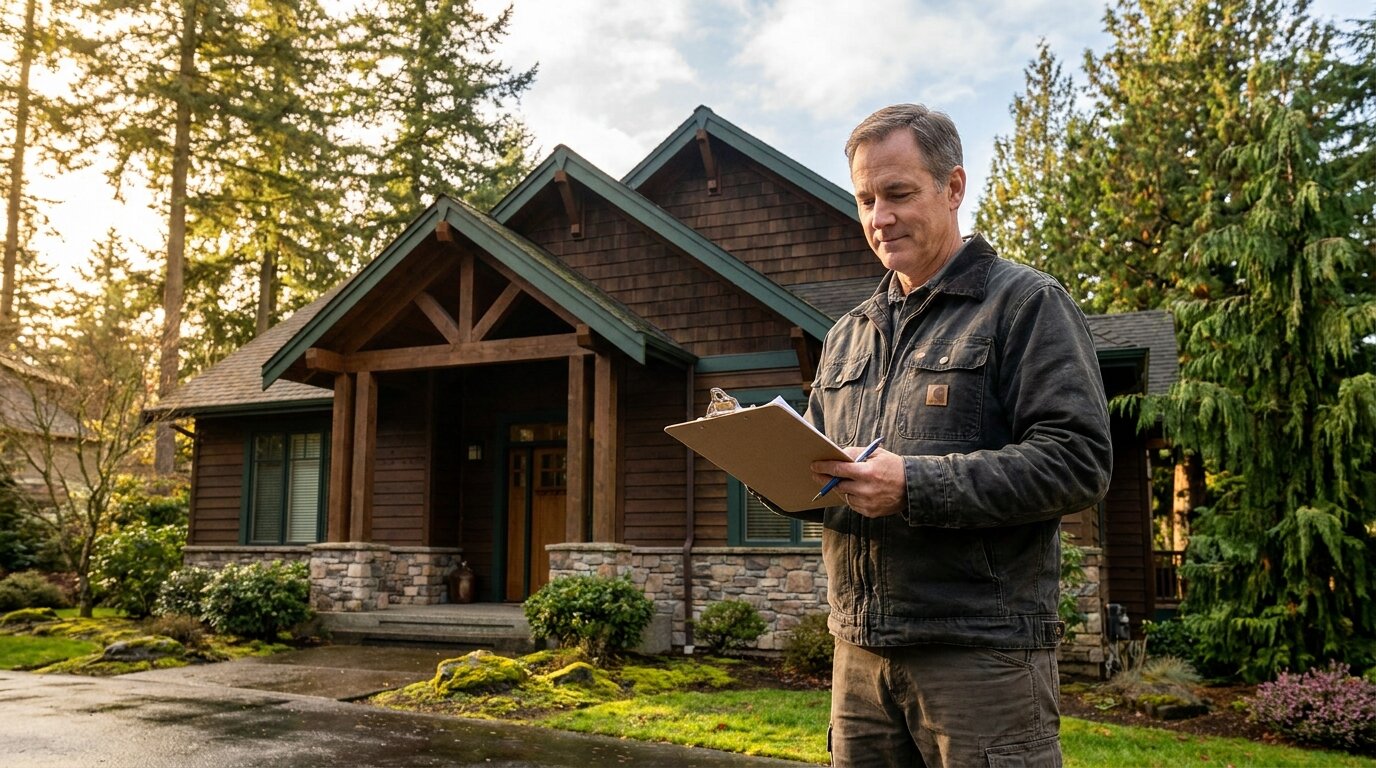
You don’t attend the inspection. As the seller, your job is to leave the home accessible and get out of the way. The inspection takes two to four hours depending on the size and condition of the property. Smaller condos in Renton or Auburn might be done in under two hours. A larger home in Covington or Maple Valley with a finished basement and detached garage can take closer to four.
After the inspection, the buyer gets a full written report — typically 30 to 60 pages with photos. The report goes to the buyer, not to you. You only see what the buyer chooses to share when they submit their requests.
In King County, buyers typically have 7–10 days after mutual acceptance to complete their inspection and submit requests.
What the Inspector Actually Looks At
Home inspectors in Washington are licensed through the state Department of Licensing. They’re looking at the condition of the home’s systems and structure, not its cosmetic appearance. That means they won’t flag your dated kitchen tile, but they will flag a roof that’s near the end of its life.
The main areas every inspector covers are the roof and attic, the foundation and crawl space, the electrical panel and visible wiring, plumbing visible within the walls and under fixtures, the HVAC system including the furnace and any heat pumps, the water heater, windows and doors, and the exterior including drainage and grading.
In the Pacific Northwest, inspectors pay extra attention to moisture. We get a lot of rain here, and the most common serious findings in South and East King County homes come down to water — roof age, gutter condition, crawl space moisture, and signs of past leaks near windows and skylights. A good inspector is going to look hard at anywhere water could get in.
What Shows Up on a Report — and What It Actually Means
This is where sellers tend to panic. You’ll see a long list of items, many flagged with the same urgent-looking language, and it all starts to blur together.
Here’s how to read it: inspectors are trained to note everything they observe, regardless of severity. A missing dryer vent cover and a cracked heat exchanger show up in the same format — but one is a $12 fix from the hardware store and the other is a serious safety issue.
The findings that actually matter fall into a few categories.
Safety Issues
Safety issues are the ones buyers and their lenders care most about. Missing handrails on stairs, double-tapped breakers in the electrical panel, exposed wiring, carbon monoxide detector gaps — these get flagged and buyers expect them to be addressed.
In King County, older homes in Renton and Kent sometimes have Federal Pacific electrical panels, which can be an insurance problem for buyers. That’s a legitimate concern worth addressing before listing if you know about it.
Structural and Water Intrusion Issues
These are the ones that can kill deals or require significant renegotiation. Foundation cracks showing active movement, rot at the mudsill, or evidence of water in the crawl space fall here.
These aren’t always deal killers, but they need to be understood. Is this an old issue that’s been stable for years, or is water still moving? That question matters a lot to how a buyer responds.
Mechanical Systems Nearing End of Life
A furnace that’s 20 years old, a water heater at 12 years, a roof with 3 to 5 years of life left — these often show up in inspection reports. Buyers will sometimes ask for a credit here, especially in a more balanced market like we’re seeing in parts of King County in 2026.
This isn’t surprising news if you’ve owned the home for a while. Knowing the ages of your major systems before you list means you can factor them into your pricing strategy rather than scrambling to respond to them mid-contract.
Deferred Maintenance
This makes up the bulk of most reports. Caulk at tubs and windows, tree branches touching the roof, missing downspout extensions, minor gutter debris — these are normal house items that don’t represent serious problems.
Buyers sometimes include a long deferred maintenance list in their requests. That doesn’t mean you have to fix all of it. Knowing the difference between a genuine concern and a routine maintenance item is where your agent’s experience matters most.
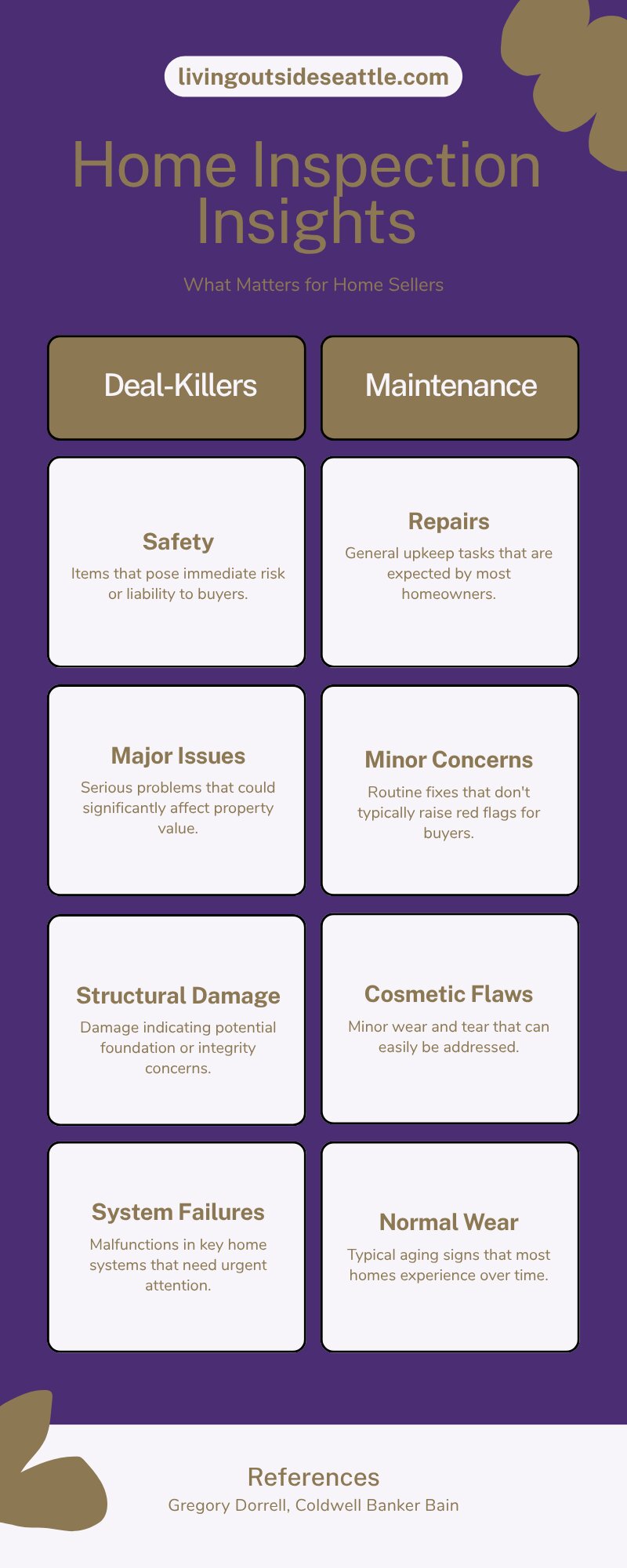
Most inspection reports are long. This is what the findings that actually matter look like compared to routine maintenance items.
Do You Have to Fix What the Buyer Asks For?
No. This surprises a lot of sellers.
Washington State does not require sellers to fix anything a buyer requests in an inspection response. The purchase and sale agreement sets up a negotiation. The buyer submits their requests. You have several options.
You can agree to the repairs and have them completed before closing, typically by licensed contractors. You can offer a dollar credit at closing instead of doing the work yourself, which buyers often prefer because it lets them choose their own contractor. You can agree to some items and decline others. Or you can decline the entire request and let the buyer decide whether to move forward or exercise their right to terminate.
The buyer’s decision has to happen within the inspection contingency window. If the timeline passes without resolution, the contingency typically expires and the sale proceeds as-is.
What you actually have to fix depends on what your contract says, not on any general legal requirement. If you’ve negotiated repairs as a condition of the sale, you’re obligated to complete them. If you respond by declining, the buyer gets to choose their path.
The Case For (and Against) a Pre-Listing Inspection
A pre-listing inspection means you hire an inspector before you go on the market. You find out what’s in the house before the buyer does.
The upside is real. A pre-listing inspection in King County typically costs $350 to 650+ depending on home size. That’s a small price to avoid being blindsided at the negotiating table. You can fix the things that matter on your own timeline and your own budget, rather than scrambling to get licensed contractors in before closing under time pressure. In a competitive market, some sellers share the pre-listing inspection report with buyers to build confidence and reduce the chance of an “inspection for information only” turning into a full renegotiation.
The downside is also real. If the inspection finds something serious, you’re now legally obligated to disclose it to buyers — even if you choose not to fix it. In Washington State, the disclosure requirements are strict. You can’t un-know what the inspector told you.
My general guidance: if the home is older than 15 to 20 years, or if you have any reason to believe there might be deferred maintenance issues in the crawl space, roof, or electrical, the pre-listing inspection is worth it. For newer homes in good condition, it’s less essential but still something that most buyers expect to see in King County.
What Kills Deals vs. What Buyers Overlook
The honest truth is that very few sales fall apart because of a home inspection. When a deal dies over inspection, it’s usually because a major undisclosed issue came to light — not because there were 40 items in the report.
The issues most likely to kill or seriously damage a deal are active roof leaks or significant roof deterioration, foundation problems showing current movement, evidence of water in the crawl space or basement that hasn’t been resolved, major plumbing failures like a failed main sewer line, and serious electrical hazards.
Buyers in King County are used to older housing stock. A 1975 Kent home or a 1985 Renton split-level is going to have some things on an inspection report. Experienced buyers and their agents know the difference between a well-maintained older home with normal findings and a house with real problems.
The things buyers most often overlook or accept as-is: cosmetic items, surface wear, minor roof maintenance items on an otherwise sound roof, single-pane windows in older homes, and deferred exterior maintenance like peeling paint or weathered decks.
What This Means for You as a Seller
Before you list, walk through your home with fresh eyes. Check the gutters. Look at what’s happening around the water heater and under sinks. Know the age of your roof and furnace. These aren’t things to hide — they’re things to understand so you can have an honest conversation with your agent about pricing and preparation.
When the inspection report comes in, read it with your agent before you react. Most items on a typical report are manageable. The ones that aren’t are the ones worth knowing about early. Understanding how pricing works in King County gives you a clearer sense of how to factor known conditions into your list price from the start.
You have more options than you think when repair requests arrive. A credit at closing is often cleaner than trying to coordinate contractors under a time crunch. Declining minor requests is completely legitimate. And pricing the home to reflect known conditions from the start — which is exactly what a BPO-trained pricing approach does — means you’re less likely to end up in a contentious renegotiation to begin with. You can also read our guide on how appraisals work in Washington State to understand the full picture of what happens between contract and closing.
Frequently Asked Questions
Does the seller have to be present during the home inspection?
No. In fact, it’s standard practice for sellers to leave during the inspection. It makes buyers and inspectors more comfortable, and it prevents awkward conversations about every item being noted.
How long does a home inspection take in King County?
Most inspections run two to four hours. A smaller condo or townhome might finish in 90 minutes. A larger single-family home with a crawl space, detached garage, and outbuildings in Covington or Maple Valley could take up to four hours or more.
What happens if I don’t agree to any repairs?
The buyer then has a choice: move forward with the purchase as-is, or exercise their right to terminate within the inspection contingency period. If they terminate, you get your home back on the market. If you’ve priced it correctly, another buyer will come.
What is a right-to-cure clause in Washington?
Washington contracts include a seller’s right to cure, which gives you the opportunity to respond to a repair request. You can agree, counter, or decline. It’s not a requirement to fix — it’s a framework for negotiation.
Should I get a pre-listing inspection in King County?
For homes older than 15 to 20 years, or any home where you have concerns about the crawl space, roof, or electrical system, a pre-listing inspection is usually worth the $350 to $550 cost. It lets you fix things on your terms and removes surprises from the process.
Can a buyer walk away after the inspection for any reason?
During the inspection contingency period, yes. The buyer can terminate for virtually any reason related to the inspection findings. Once that window closes, their options narrow significantly.
The inspection is one step in a process with a clear beginning and end. Most sellers who go through it — even with a long repair list — close. The ones who struggle are usually the ones who weren’t prepared for what they’d see. You can also review our guide to Washington State closing costs to understand the full financial picture before you list.
Klahanie is one of the most talked-about planned communities in the Sammamish area, and for good reason. This is a Family-First Established neighborhood built primarily in the late 1980s through mid-1990s, with community amenities that most Sammamish neighborhoods simply don’t have. There’s a catch that buyers need to know about up front: Klahanie sits on a district line, and your specific address will determine whether your kids go to school in Issaquah or Bellevue. That’s not a deal-breaker. But it’s something you need to verify before making an offer, not after.
What is it actually like to live in Klahanie in 2026?
Tuesday morning in Klahanie has a rhythm to it. The community trails pick up traffic early. Dog walkers, runners, parents pushing strollers before the workday starts. The Klahanie Community Association’s paved trail network connects through the neighborhood, so residents don’t have to get in a car to move around. By 8:30 AM the streets quiet down fast. It’s the kind of neighborhood where the morning actually feels slow once the school run is done.
Weekends center on the community amenities. The pools are a genuine social hub in summer. The tennis courts see consistent use through the spring and fall. There’s organized recreation for kids through the community association, and the neighborhood’s internal trail system gives families a real outdoor option without leaving the development. Klahanie also sits close enough to Lake Sammamish State Park that it’s a short drive to the beach on a Saturday. You see a lot of buyers who specifically chose Klahanie over other Sammamish neighborhoods for the amenity infrastructure.
Who buys here? Tech workers who wanted the structured community feel that Klahanie offers. A lot of buyers who looked at HOA-governed Sammamish neighborhoods and chose Klahanie specifically because the community association runs programming and maintains infrastructure that smaller HOAs can’t support. The community skews toward dual-income households with school-age children. Move-up buyers from Seattle and Bellevue who want space and community but don’t want to feel isolated.
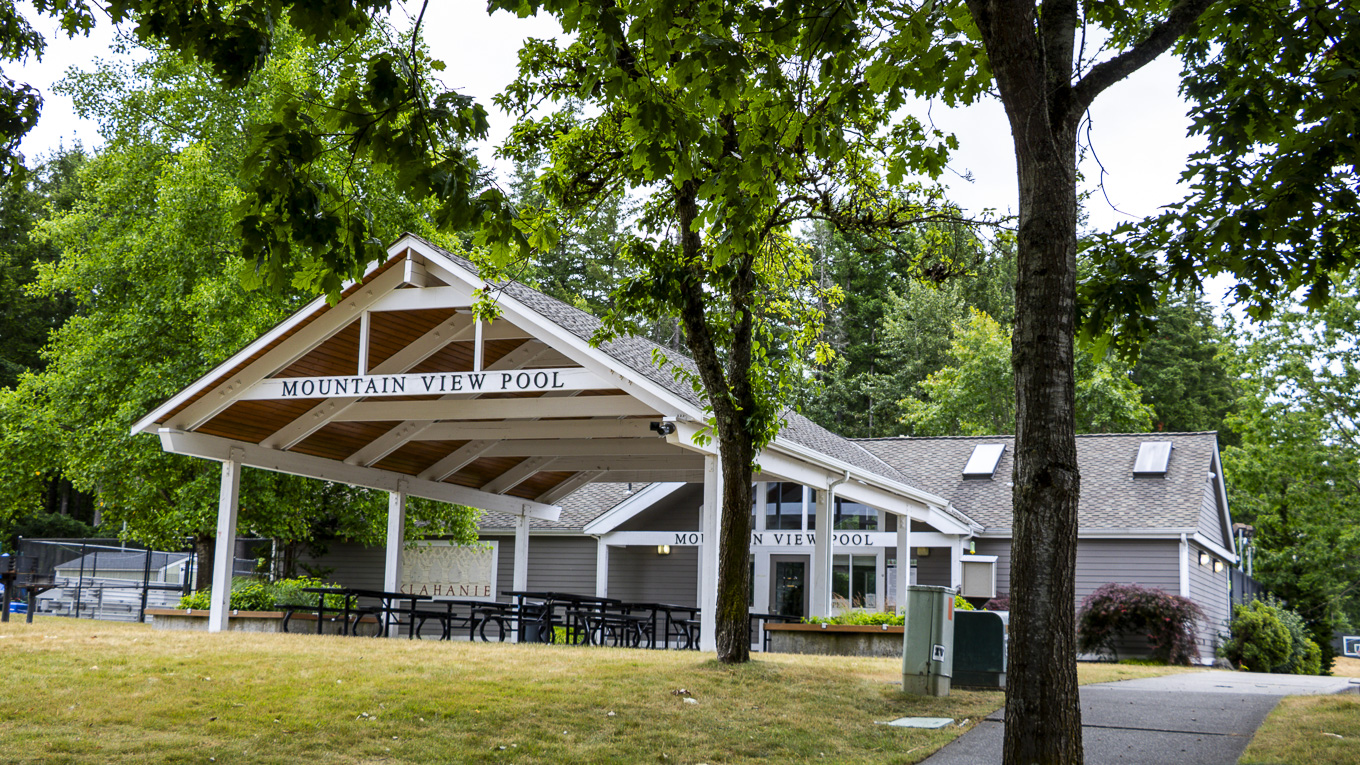
Klahanie is one of the few Sammamish neighborhoods with a full community amenity package maintained by the Klahanie Community Association, including pools, tennis courts, and paved internal trails.
Homes in Klahanie: What the Data Shows
Klahanie’s homes were built in several phases between 1987 and 1997. The mix is broader here than in most Sammamish neighborhoods: you have detached single-family homes, attached townhomes, and some condominium-style units depending on which part of Klahanie you’re in. Single-family homes typically run from 1,800 to 3,200 square feet, with lots on the smaller side compared to other Sammamish neighborhoods. The townhome product runs 1,200 to 1,800 square feet. Klahanie was ahead of its time as a master-planned community, and the infrastructure shows it. But the homes themselves are 30 to 35 years old, which means buyers need to budget for mechanical and systems replacement on many properties. This is the oldest housing stock in Sammamish.
Metric
Klahanie (98075)
King County
Median Sales Price (May 2026)
~$1,050,000
~$859,000
Median Days on Market
~26 days
~28 days
Active Listings Change (vs. Jan 2026)
+31%
+30%
Data reflects the 98075 ZIP code. Klahanie’s price range varies significantly by product type. Detached single-family homes command a substantial premium over attached townhomes in the same community. Verify current inventory with a licensed REALTOR.
This is the most important thing to know about Klahanie schools: your address determines your district. Klahanie sits on the boundary between Issaquah School District and Bellevue School District. Some streets feed into Issaquah, others into Bellevue. Both districts are excellent. But the school assignment process, the specific schools your kids attend, and the busing logistics are completely different depending on which side of the line your home sits on. Always verify your specific address with both districts before writing an offer.
If your address is in the Issaquah School District, the most common feeder is Endeavour Elementary, Pine Lake Middle School, and Skyline High School. Endeavour Elementary has a strong technology integration program. Pine Lake Middle is a well-regarded school with deep elective options. Skyline High School has a consistently high college readiness rate. If your address falls in the Bellevue School District, the feeder is typically Spiritridge Elementary, Tillicum Middle School, and Newport High School. Newport has an especially strong reputation for academic rigor and college placement.
The day-to-day experience is similar either way: bus service to neighborhood stops, relatively short distances to school. The meaningful difference is which district’s programming, athletics, and course offerings you’re working with. Some families specifically target one district over the other. If that’s you, narrow your Klahanie search to the appropriate streets before scheduling tours.
Klahanie addresses split between Issaquah and Bellevue school districts. Always verify your specific address with the appropriate school district (Issaquah or Bellevue) before writing an offer. Do not assume based on neighboring homes.
Getting to Work from Klahanie
Most Klahanie commuters take the community roads north to NE 8th Street and then connect to SR-202 west toward Redmond, or head south to I-90 via Issaquah Hobart Road. I-90 access is about four miles from the community core. For Bellevue commuters, the I-90 to I-405 connection works well. For Microsoft workers in Redmond, the SR-202 route avoids I-90 entirely and runs about 12 to 14 miles. For Seattle commuters, I-90 westbound is the main route but can back up significantly at the Mercer Island interchange during peak hours. The Issaquah Highlands Park and Ride serves this part of the plateau with Metro and Sound Transit express service.
Destination
Distance
2026 Drive (Peak AM)
Transit Option
Downtown Seattle
24 miles
40 to 60 min
I-90 West / ST 554 Express
Bellevue / Amazon
16 miles
25 to 40 min
I-90 to I-405 / ST 554
Microsoft (Redmond)
12 miles
18 to 30 min
SR-202 / 2 Line Link Rail
SeaTac Airport
28 miles
35 to 55 min
I-90 to I-405 to I-5
Klahanie homes date to the late 1980s through mid-1990s, making this the oldest housing stock in Sammamish. Buyers should budget for major systems replacement on many properties in this price range.
What I See as a Valuation Expert in Klahanie
In Klahanie, the age of the build is always the first thing that matters for valuation. Klahanie’s homes are 30 to 35 years old, and that means a lot of the original mechanical systems are approaching end of useful life. HVAC units from the original construction years, original roofing on homes that haven’t had roof replacements, and original siding that may be showing wear. Buyers at this price point in Klahanie need a thorough inspection and should expect to price in $40,000 to $100,000 in deferred capital work, especially on the detached homes.
What drives value up inside Klahanie is the product type and the updates. Detached single-family homes sell at a substantial premium over attached townhomes of the same vintage. Full kitchen and bath renovations on the older stock reliably move the needle here because buyers are comparing updated Klahanie product against newer homes in other Sammamish neighborhoods, and the community amenity package gives updated Klahanie homes a real argument. Homes that have had full mechanical updates and kitchen renovations sell faster and at stronger price-per-square-foot than anything else in the community.
The school district assignment matters to value here more than in most Sammamish neighborhoods. Homes on the Bellevue School District side of the line, specifically those feeding into Newport High School, often command a premium over comparable Issaquah-assigned homes in the same development. This is not universal, but It’s common enough to flag. If you’re buying and can be flexible about school district, it’s worth understanding which side of the line each property you’re considering falls on.
Valuation Insight
“Detached homes in Klahanie with full mechanical updates and renovated kitchens sell for $100,000 to $150,000 above unupdated comparable-sized homes in the same community. The age of the stock creates a real value spread here.”
10-Year Lens
Klahanie’s core advantage is the community infrastructure. As Sammamish grows and newer developments lack the amenity depth that Klahanie has, the community association model here becomes a bigger differentiator. Properties that have been updated will hold their value well. The school district access to both Issaquah and Bellevue also creates durable demand from two different buyer pools.
Honest counter-risk: The age of the housing stock is a real exposure. As competing newer Sammamish neighborhoods mature, updated homes in those areas will increasingly compete with Klahanie’s unupdated product. Buyers who don’t plan to update may see their resale value squeezed by newer construction in the mid-2030s.
Frequently Asked Questions About Klahanie
Q: Is Klahanie a good place to live in Sammamish? A: Yes, if you want a community with real amenity infrastructure and access to two strong school districts. Klahanie has more built-in community than most Sammamish neighborhoods. The tradeoff is that the housing stock is older and buyers need to budget for updates and system replacements on most properties.
Q: What schools serve Klahanie? A: Klahanie addresses split between Issaquah and Bellevue school districts. Issaquah addresses typically feed into Endeavour Elementary, Pine Lake Middle, and Skyline High. Bellevue addresses feed into Spiritridge Elementary, Tillicum Middle, and Newport High. You must verify your specific address with the district before writing an offer.
Q: What are homes like in Klahanie? A: A mix of detached single-family homes and attached townhomes, mostly built between 1987 and 1997. Single-family homes run 1,800 to 3,200 square feet. Median sale price as of mid-2026 is around $1.05M across all product types, with detached homes commanding a significant premium over townhomes.
Q: How far is Klahanie from Seattle? A: About 24 miles from downtown Seattle via I-90. Peak-hour drive time is typically 40 to 60 minutes. Microsoft’s Redmond campus is about 12 miles and 18 to 30 minutes. Bellevue is about 16 miles and 25 to 40 minutes in peak traffic.
Explore Klahanie Yourself
The best way to understand Klahanie is to walk or drive the trail network and see the community amenities for yourself. The internal path system gives you a good sense of why residents value this community’s infrastructure over other Sammamish neighborhoods with fewer built-in amenities.
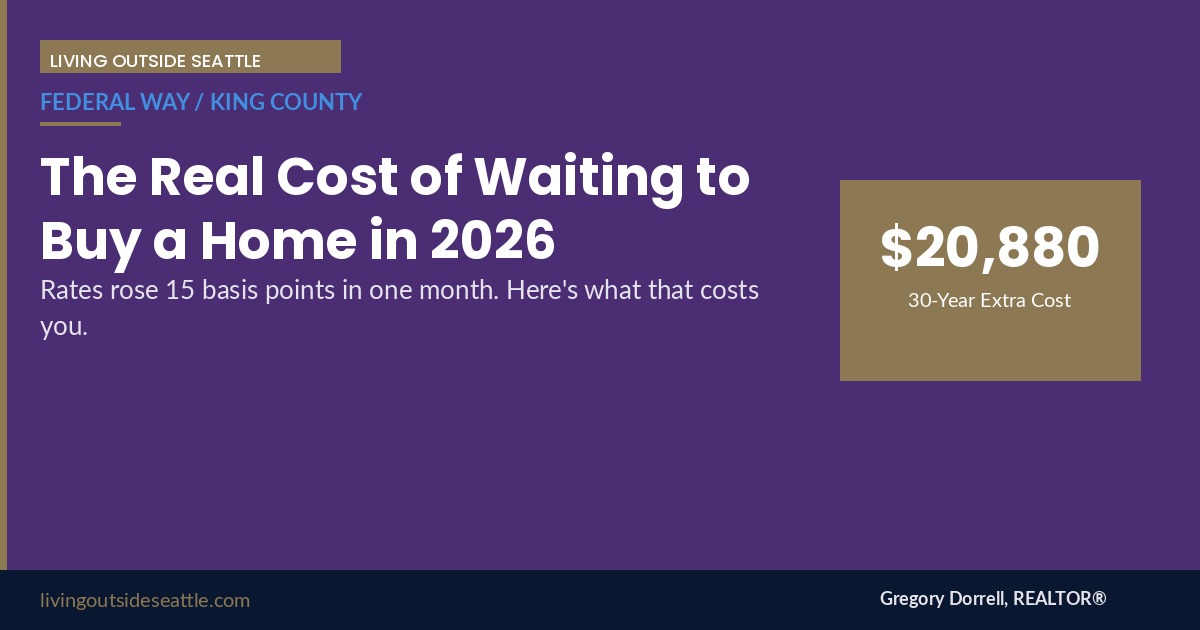
Mortgage rates were 6.37% in early May. As of the first week of June they’re at 6.52%.
That’s a 15-basis-point increase in one month. If you’ve been waiting for rates to drop before buying a home in King County, the math on that decision has gotten worse, not better.
Here’s what the numbers actually look like.
The Monthly Payment Math at Today’s Rates
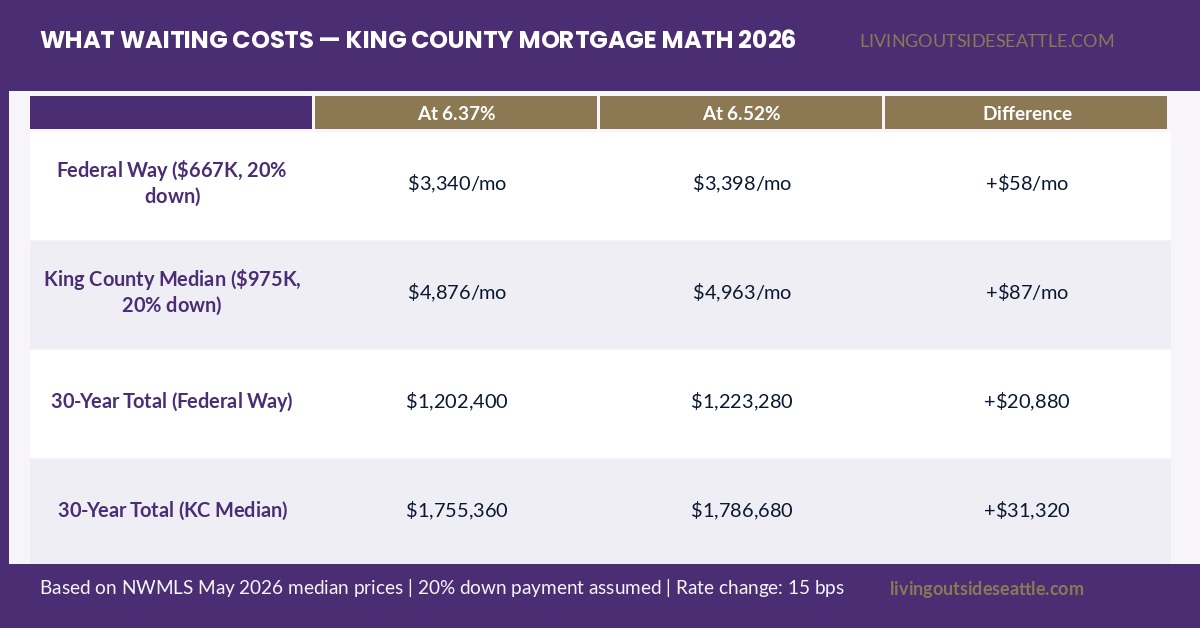
At 6.52% vs. 6.37%, the monthly payment difference on a Federal Way home is $58/month. Over 30 years: $20,880.
Let’s use Federal Way as the example, because it’s the most relevant market for buyers who are rate-sensitive and making value-driven decisions. Federal Way’s residential median in May 2026 was $667,475.
With 10% down, your loan is approximately $600,727.
On a $975,000 King County residential median with 20% down ($780,000 loan): at 6.37% that’s $4,874/month; at 6.52% that’s $4,943/month — $69 more per month, $2,070 per year.
These numbers sound small. They’re not. At already-stretched affordability levels, every basis point matters for buyers right at the edge of qualification. And this is a one-month move.
What Waiting Six Months Actually Costs
The “wait for rates to drop” calculation has to account for three things that most buyers don’t put together at the same time: what rates might do, what prices might do, and the rent you continue paying while you wait.
The rate outlook. No major forecaster is projecting the 30-year fixed below 6% before late 2026, and even that assumes a Fed cut in September that isn’t guaranteed. Wells Fargo, Fannie Mae, and the Mortgage Bankers Association all have consensus projections in the 6.2% to 6.5% range through Q3. Waiting six months and finding rates are still at 6.4% is a real possibility.
The price outlook. The King County residential median is $975,000, up 1.2% from a year ago even in this environment. County-wide prices have not collapsed despite all the inventory building and national headline anxiety. Waiting for prices to fall while paying rent is a bet that may not pay off. If prices hold flat and rates hold flat, the only thing waiting costs you is rent.
The rent clock. The median asking rent in King County for a two-bedroom unit is approximately $2,200 to $2,600 depending on location. If you’re paying $2,400 a month in rent and you wait six months to buy, that’s $14,400 out the door with nothing to show for it on a balance sheet.
The buyer who waits six months hoping for a rate drop that doesn’t come has spent $14,400 in rent, is now looking at the same or slightly higher rates, and has the same or slightly higher purchase price to deal with.
The Federal Way Math Specifically
Federal Way is where the cost-of-waiting conversation is most acute right now. Here’s why.
The city’s +5.1% year-over-year price growth in May is being driven in part by buyers who are migrating south from Renton and Kent because Federal Way gives them more house per dollar. That migration trend is active right now. The buyers who wait six months to see if that trend reverses may be walking into a market where Federal Way inventory has tightened further and prices have continued their upward move.
At $667,475 with 10% down and a rate of 6.52%, your monthly payment on principal and interest is $3,814. Add property taxes (approximately $5,500 to $7,000 per year in Federal Way, so $458 to $583 per month), homeowner’s insurance ($125 to $175 per month), and you’re looking at a total monthly housing cost of approximately $4,400 to $4,570.
If you’re currently renting at $2,200 to $2,400 a month, the buy side is meaningfully more expensive on a monthly basis. That’s the honest picture. Buying is not automatically cheaper than renting in today’s market. What it gives you is equity accumulation, inflation protection on your housing cost, and a locked-in payment that doesn’t increase when rents go up.
I’m not arguing that every renter in King County should buy immediately regardless of circumstances. There are real situations where waiting is the right call.
If your employment situation is uncertain, this is not the time to lock in a $4,000+ monthly commitment. Job stability matters more than rate optimization.
If you haven’t saved a down payment and closing costs, you’re not ready to buy yet regardless of rates. Rushing into a purchase without adequate reserves is one of the most common and painful financial mistakes first-time buyers make.
If you’re planning to move within three years, the transaction costs of buying and selling within a short window often erase any equity gains. The three-year rule of thumb still applies: you need to plan to stay at least three years for buying to make financial sense over renting.
But if you’re stably employed, have your down payment ready, and plan to stay for five or more years, the cost-of-waiting math is working against you right now. Not dramatically. But consistently.
Frequently Asked Questions
Should I buy a home now or wait for rates to drop in King County?
If you’re stably employed, have a down payment ready, and plan to stay 5+ years, the math currently favors buying. Rates rose from 6.37% to 6.52% in one month. Every month you rent at $2,200 to $2,600 is money that builds no equity. Rate forecasts for Q3 2026 project 6.2% to 6.5%, not a dramatic drop. Waiting makes sense if your job is uncertain, you haven’t saved reserves, or your timeline is under 3 years.
How much does mortgage rate impact monthly payment in King County?
On the $975,000 King County SFR median with 20% down (a $780,000 loan), every 0.25% change in rate is approximately $135/month. Going from 6.25% to 6.5% costs $1,620 more per year. On a Federal Way home at $667,475 with 10% down ($600,727 loan), each 0.25% swing is about $97/month.
Are King County home prices expected to drop in 2026?
County-wide, the residential median is $975,000, up 1.2% year over year as of May 2026. A dramatic price collapse is not in the forecast — Washington State’s structural housing undersupply limits how far prices can fall even in a softer environment. The declines visible in Sammamish and Issaquah are luxury-segment corrections, not a county-wide collapse.
What is the minimum down payment to buy a home in Federal Way WA?
Conventional loans typically require 3% to 20% down depending on the loan type. On Federal Way’s $667,475 median: a 3% down payment is $20,024 (plus PMI); a 10% down payment is $66,748; a 20% down payment is $133,495. First-time buyers in Washington may also qualify for WSHFC Home Advantage down payment assistance programs.
Ready to Run Your Numbers?
The “should I buy now or wait” question is worth doing with a real calculator and real local data, not a national article. I’m happy to run a side-by-side analysis for your situation: what buying looks like today versus what waiting six or twelve months might cost.
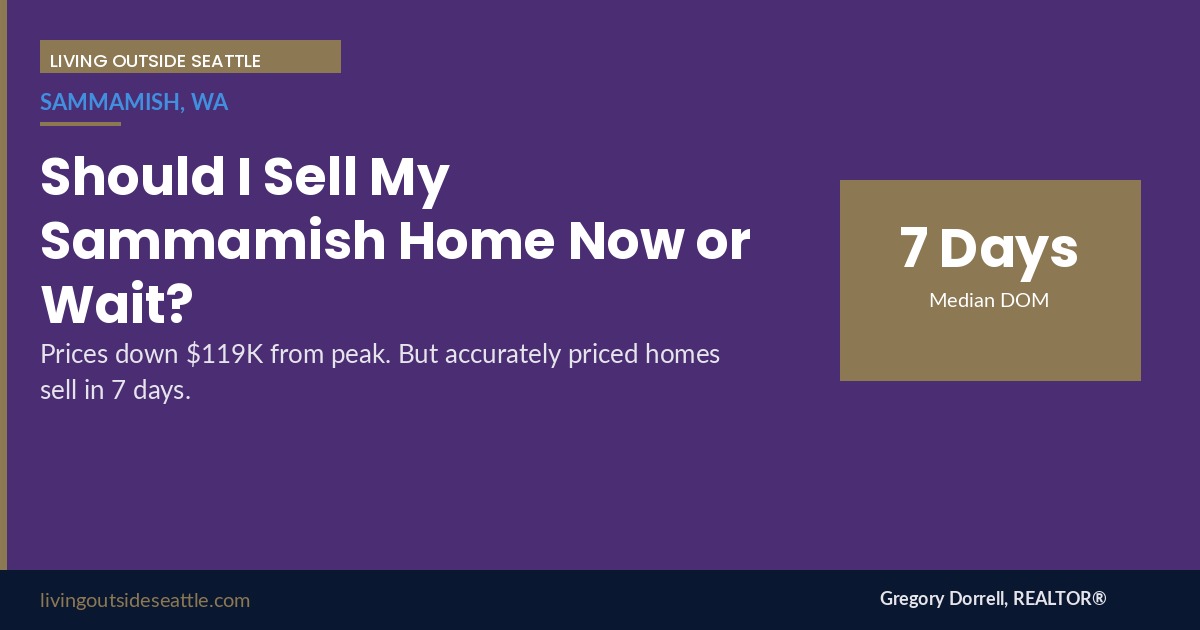
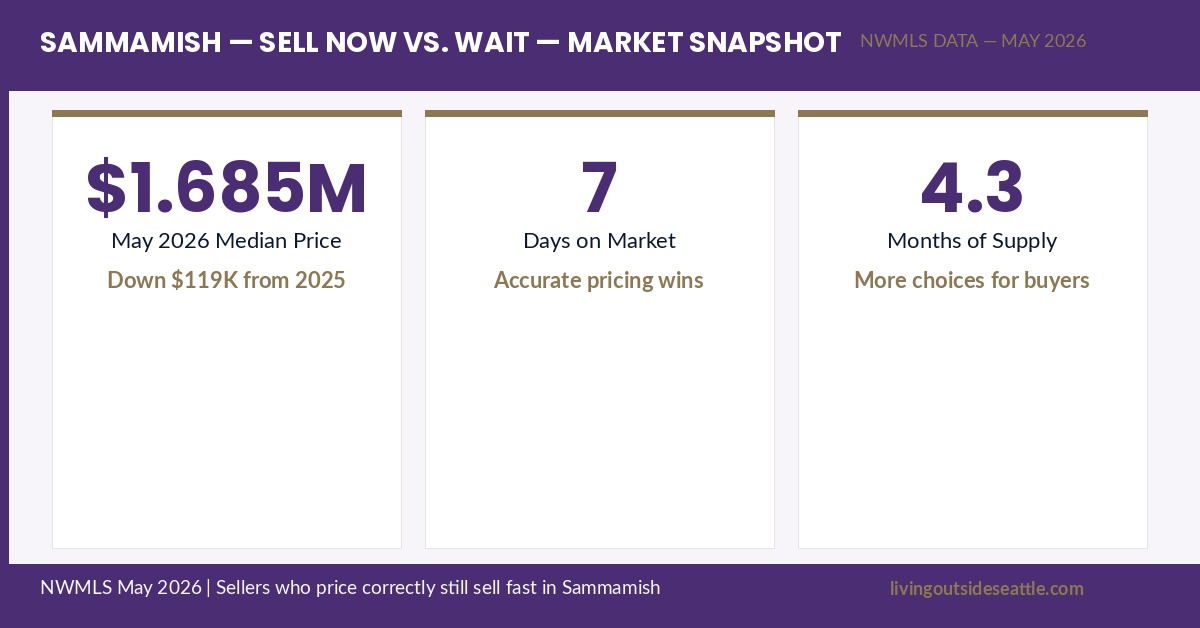
The Sammamish residential median price has dropped $119,000 from May 2025 to May 2026. Months supply is at 4.3. If you’re sitting in a $1.5M to $2M+ home on the Sammamish plateau wondering whether to sell now or hold on and hope the market recovers, here’s the data-backed honest answer.
It depends on what you’re waiting for. And the math on waiting may not work the way you hope.
What the Sammamish Market Is Doing Right Now
Sammamish median residential price peaked above $1.9M in 2022. May 2026: $1,685,000. The correction is real but homes still sell in 7 days when priced accurately.
The NWMLS data for May 2026. Sammamish residential median sale price: $1,685,000. Down from $1,804,000 in May 2025 and down from a peak around $1,900,000+ in the 2022 to early 2023 window. The correction from peak is somewhere in the 10% to 15% range depending on your specific neighborhood and product type.
Months supply: 4.3. That’s the most inventory-heavy reading Sammamish has seen in years. It doesn’t mean the market is flooded, but it does mean buyers have options. Sellers are competing for attention in a way they weren’t in 2021.
The 7-day median DOM tells you the market is still functioning. Correctly priced homes are moving. But the price at which they clear is lower than it was 18 months ago.
The Case for Selling Now
If you’re planning to sell eventually, selling now has some arguments in its favor that are easy to underestimate.
You capture 4.3 months of inventory competition before it potentially builds further. If rates stay at 6.5% or higher through the rest of 2026, the high-end Sammamish buyer pool continues to be constrained. More sellers decide to wait. But supply often doesn’t wait. Listings keep coming. More supply against the same demand pool means continued downward pressure on price.
Your next purchase also benefits from the correction. If you’re selling a $1.7M Sammamish home to buy something else in King County, you’re selling into a soft market but potentially buying into one too. A Renton or Bellevue purchase at today’s prices may also be more favorable than 18 months ago. The correction isn’t just on your sale. It may also be on your buy.
The holding cost of waiting is real. Property taxes on a $1.7M Sammamish home run roughly $15,000 to $20,000 per year. If you wait 12 more months and the market recovers 3%, you’ve gained approximately $50,000 in value. But you’ve also paid $15,000 to $20,000 in taxes, plus insurance, maintenance, and the opportunity cost of your equity sitting in an illiquid asset. The net gain from waiting is smaller than the gross price recovery.
The Case for Waiting
There are scenarios where waiting makes sense. Be honest about whether yours actually fits one.
Rates drop meaningfully. If the Fed cuts rates in September or December of 2026 and the 30-year fixed falls to 5.75% or below, the Sammamish buyer pool expands materially. That scenario is possible but not guaranteed.
You have no place to go. If you haven’t identified your next home and moving in the current environment would require you to rent or live in limbo, the non-financial costs of selling now might outweigh the financial argument. Timing a sale to your next purchase is legitimate.
You don’t need to sell. This is the simplest and most honest answer. If you have no financial pressure to sell, no near-term life change driving a move, and you genuinely believe the Sammamish market recovers to its peak within 3 to 5 years, holding isn’t irrational. Just be clear with yourself that you’re making that bet deliberately.
What Waiting Doesn’t Fix
There’s a version of waiting that I see regularly and it rarely ends well. It goes like this: a seller lists at a peak-era price, sits for 30 to 45 days with little activity, gets uncomfortable, reduces once, waits more, reduces again, eventually accepts an offer that’s $80,000 below what they could have gotten on day 5 with accurate pricing.
The market is efficient. Buyers in the $1.5M to $2M range are doing thorough research. They see the days on market ticking up. An overpriced listing that chases the market down almost always nets less than one that enters with accurate pricing and generates early competitive interest.
How much have Sammamish home prices dropped in 2026?
As of May 2026, the Sammamish residential median is $1,685,000, down 6.6% from $1,804,000 in May 2025. That’s a $119,000 decline in the median over 12 months. The correction is more pronounced above $2M, where the high-end buyer pool has contracted most visibly due to tech sector uncertainty and Washington’s shifting tax climate for high earners.
How long does it take to sell a home in Sammamish right now?
The median days on market in Sammamish is 7 days as of May 2026. Correctly priced homes are still moving quickly. The caveat: with 4.3 months of supply, there’s more competition among sellers than there’s been in years, and buyers have more choices. The homes that are moving in 7 days are the ones that entered the market with an accurate price, not an aspirational one.
Will Sammamish home prices recover in 2026 or keep falling?
The trajectory depends heavily on interest rates. If the Fed cuts rates in September 2026 and the 30-year fixed pulls back to 5.75% or below, the Sammamish buyer pool expands materially and prices stabilize or recover. If rates hold at 6.5%+ through year-end, inventory continues to build and further modest price compression is possible. No one can predict this with certainty.
What are the total costs to sell a Sammamish home in 2026?
Budget 7% to 9% of the sale price for total selling costs: REET (2.75% on the portion between $1.5M and $3M), agent commissions, title and escrow fees, and any pre-listing preparation. On a $1.685M home, total selling costs run approximately $118,000 to $152,000. A net proceeds analysis before you list is the most useful step you can take.
The Professional Valuation Question
I assess property values in Sammamish and across the Sammamish plateau professionally as part of my BPO work. The difference in value between a home that’s been maintained well, has updated finishes, and sits on a usable lot versus a dated home on a sloped lot in the same neighborhood can be $150,000 to $250,000. The county-wide or even zip code-level median doesn’t tell you where your specific home sits within that range.
Ready to Look at Your Numbers?
The decision to sell or wait is ultimately personal, but it should be made with real data. I’m happy to walk through what your specific Sammamish home would realistically sell for right now, what your net proceeds look like after selling costs, and how that compares to your next move.
The condo you can afford in Bellevue depends far more on the building’s paperwork than on the unit itself. Here is how to read both before you write an offer.
Bellevue is the one Eastside market where a condo can be the smart buy and the risky buy at the same time. The unit looks great. The view is real. Then you pull the HOA documents and find a reserve account that cannot cover the next roof, or a building that no lender will finance with a normal loan. I see this pattern constantly in my valuation work, and it is the single biggest reason Bellevue condo deals fall apart.
This Bellevue condo buyer guide walks you through what actually matters when you buy here in 2026: what you will pay by neighborhood, how to vet an HOA so you do not inherit someone else’s deferred maintenance, the financing trap that catches first-time buyers, and what to inspect that a standard home inspector will skip. The goal is simple. By the end, you should be able to look at a listing and a document packet and know whether it is a deal or a problem dressed up as a deal.
What You Will Actually Pay: Bellevue Condo Prices by Neighborhood
The first thing to understand is that “Bellevue condo prices” is almost a meaningless phrase. The spread between neighborhoods is enormous, and where you shop sets your budget more than anything else you decide.
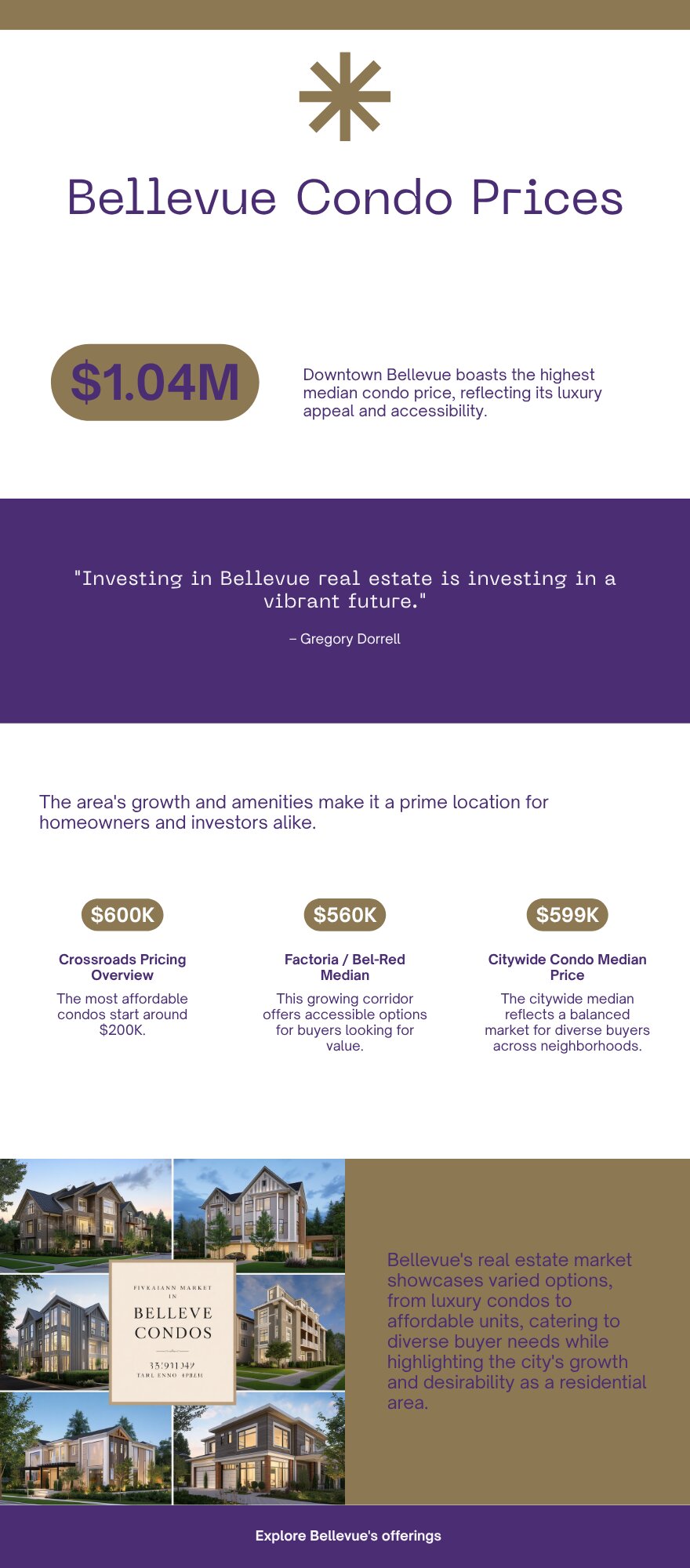
The citywide median condo list price sits around $599,000 in 2026, with roughly 38 days on the market. That number hides a wide range. Here is how the main areas break down.
Downtown Bellevue (98004)
Downtown is the premium play. Median condo list prices here run around $1.04 million, with one-bedroom luxury units near $874,000 and two-bedrooms around $1.65 million. You are paying for walkability, towers with concierge service, and being steps from the new light rail. The 2 Line is opening through downtown Bellevue in 2026, and buildings near the Bellevue Downtown and East Main stations are pricing that access in. What this means for you: downtown is where you go for lifestyle and transit, not for value.
Crossroads
Crossroads is the affordability story in Bellevue. Condos here start under $600,000, and you can still find units in the $200,000s through the $500,000s. For a first-time buyer who wants a Bellevue address and a Bellevue School District zone without a million-dollar mortgage, this is the most realistic entry point. What this means for you: if your budget is under $500,000, Crossroads is probably where your search starts and ends.
Factoria / Bel-Red
Factoria’s condo market starts around $560,000, which makes it another accessible door into the city. The Bel-Red corridor is changing fast as light rail and new development reshape the area, so this is a neighborhood where buying in early could pay off. What this means for you: Bel-Red and Factoria give you a middle path, more space than downtown for less money, with upside as the corridor builds out.
Where you shop sets your budget. Downtown runs near $1M while Crossroads starts under $600K.
One more number that matters: across all closed sales, the average Bellevue condo trades around $496,000. Listings often start higher than they close, especially downtown and in Crossroads where there is more room to negotiate and units sit longer. So do not treat a list price as the price. There is often room to work.
The HOA Is Buying You, Too: How to Vet the Association
Here is the part most first-time condo buyers underestimate. When you buy a condo, you are not just buying a unit. You are buying a share of a small business called the homeowners association, and that business has a balance sheet, debts, and risks. A beautiful unit inside a poorly run HOA is a bad buy.
In Washington, the law is now firmly on your side when it comes to information. Under RCW 64.90, every condo association that is not exempt must maintain a reserve study, update it annually, and get a full professional site inspection at least every third year. The reserve study has to include a 30-year projection, and reserve funds must sit in a segregated account. That is not optional. It is statutory. So if a seller or HOA cannot produce a current reserve study, that itself is a red flag.
When you go under contract, you receive a resale certificate package. Read it like your money depends on it, because it does. Here is what to pull and what to look for.
The reserve study
Confirm it was updated within the last three years and includes the 30-year projection. A reserve study that shows the account is badly underfunded is telling you a special assessment is coming. Someone is going to pay for that roof, those elevators, and that siding. If the reserves are not there, that someone is you.
Twelve to twenty-four months of meeting minutes
This is where the truth lives. Minutes reveal pending litigation, deferred maintenance the board keeps postponing, owner conflict, and any special assessment being discussed. A building can look pristine and still have a lawsuit or a six-figure repair hiding in the minutes.
The budget and delinquency rate
Look at how many owners are behind on dues. If more than 15 percent of owners are over 60 days past due, that alone can make the building hard to finance. High delinquency also means the working budget is stretched thin.
The master insurance policy
Confirm the building carries adequate hazard and liability coverage. Insurance costs have climbed across Washington, and underinsured buildings can face sudden dues increases or assessments.
The paperwork is the deal. Pull all of this before you write an offer.
There is also new protection worth knowing. Senate Bill 5686, effective January 1, 2026, added safeguards around special assessments and assessment-lien foreclosures, including a 30-day notice, a standstill period, and access to a meet-and-confer process. That is good news if you ever fall behind, but it does not change the basic homework. You still want to buy into a building that will never need to lean on those protections.
The Financing Trap: Warrantable vs. Non-Warrantable
This is the one that catches people off guard, and it can blow up a deal at the last minute. Not every condo can be bought with a normal loan.
A warrantable condo is a building that meets Fannie Mae and Freddie Mac standards. When a building is warrantable, you can use a standard conventional loan, including 3 percent down options, plus FHA and VA financing, at normal interest rates. A non-warrantable condo fails one of those tests. When that happens, conventional, FHA, VA, and USDA loans are off the table, and you are pushed into a specialty portfolio loan with a higher rate and usually a bigger down payment.
What makes a building non-warrantable? The common triggers are: a single owner or entity controlling more than 10 percent of the units; too many units owned by investors rather than occupied by owners, since lenders generally want at least 51 percent owner-occupied; reserves that are too thin; more than 15 percent of owners more than 60 days behind on dues; active litigation involving the association, which is common in newer buildings with construction defect claims; or too much of the building’s square footage used for commercial space.
So what this means for you is concrete: before you fall in love with a unit, ask your lender to confirm the building is warrantable. A good loan officer can check the project against Fannie Mae’s Condo Project Manager database quickly. If it comes back non-warrantable, you are not necessarily out, but you need to know going in that your financing, rate, and down payment all change. Walking into that surprise three weeks before closing is how people lose earnest money and homes.
What to Inspect That a Standard Inspector Will Miss
A normal home inspection covers your unit. It does not cover the building, and the building is where the expensive problems live. So your due diligence has to look in two directions at once.
Inside the unit, you want the usual: plumbing, electrical, appliances, windows, and signs of water intrusion, which matters more in our wet climate than almost anywhere. But the bigger questions are about the shared systems you are buying a fraction of. How old is the roof, and is it funded in the reserve study? What is the condition of the siding and the building envelope, which is the single most expensive thing a Pacific Northwest condo can face? When were the elevators, boilers, and shared HVAC last serviced or replaced?
The Local Angle: How Bellevue Condos Differ from the Rest of King County
If you have shopped condos in Kent, Renton, or Auburn, Bellevue will feel like a different sport. A few things set it apart.
First, the price floor is higher. The same dollars that buy a comfortable condo in South King County buy you a smaller unit, or a Crossroads or Factoria address, in Bellevue. That is the tradeoff for the schools, the jobs, and the Eastside location.
Second, HOA dues run higher, especially downtown. A luxury downtown building can charge anywhere from $800 to more than $1,500 a month once you factor in elevators, concierge staff, garages, and amenities. That dues figure is part of your real monthly cost, and it affects how much loan you qualify for. A $1,200 monthly HOA payment is the equivalent of carrying a much larger mortgage. So when you compare a Bellevue condo to a South King County townhome, compare the all-in monthly number, not just the price.
Third, light rail is reshaping value right now. With the 2 Line opening through downtown Bellevue in 2026 and the Bel-Red corridor building out, location relative to a station is becoming a bigger price driver than it has ever been on the Eastside. That cuts both ways. Transit-adjacent units may cost more today, but they also tend to hold value better. If you are buying to stay five to ten years, proximity to a station is worth paying attention to.
What This Means for You as a Buyer
Buying a Bellevue condo in 2026 comes down to three decisions, in this order.
Pick your neighborhood by budget first. If you are under $500,000, you are realistically looking at Crossroads or Factoria, and that is fine. Those are real Bellevue addresses with real Bellevue schools. Downtown is a lifestyle and transit decision, not a value one.
Vet the HOA before you vet the view. Get the reserve study, the minutes, the budget, and the insurance policy, and read them or have someone read them for you. A great unit in a broken HOA is the most common expensive mistake I see.
Confirm financing on the building, not just on you. Get your lender to verify the project is warrantable early. If it is not, decide whether the specialty loan terms still make the deal work before you are emotionally committed.
Do those three things in order and you will avoid almost every condo horror story out there. Skip them and you are gambling.
Read the reserve study before you fall for the view.
Frequently Asked Questions
How much do you need to buy a condo in Bellevue in 2026?
Plan around the citywide median of roughly $599,000, but your real number depends on neighborhood. Crossroads and Factoria condos start in the $500,000s and below, while downtown high-rises run near or above $1 million. Remember to budget monthly HOA dues, which range from a few hundred dollars to more than $1,500, into what you can actually afford.
What is a non-warrantable condo and why does it matter?
A non-warrantable condo is a building that fails Fannie Mae and Freddie Mac standards, often because of too many investor-owned units, thin reserves, high dues delinquency, or active litigation. It matters because you cannot use a standard conventional, FHA, or VA loan to buy one. You would need a specialty loan with a higher rate and larger down payment, so always confirm warrantability before you make an offer.
What HOA documents should I review before buying a Bellevue condo?
Pull the reserve study (updated within the last three years with a 30-year projection), 12 to 24 months of meeting minutes, the operating budget and delinquency rate, the master insurance policy, and any pending special assessments. Washington law requires associations to maintain a current reserve study, so a missing one is a warning sign.
Are Bellevue condos a good investment in 2026?
It depends on the building and the location. Transit-adjacent units near the new 2 Line stations and in the developing Bel-Red corridor are positioned to hold value well. A unit in a financially healthy, warrantable building is a reasonable buy. A cheaper unit in a building with thin reserves or pending litigation can cost you far more later through special assessments.
How much are HOA dues for a Bellevue condo?
Dues vary widely by building. Smaller, simpler buildings charge a few hundred dollars a month, while downtown luxury high-rises with elevators, concierge service, and amenities can run from $800 to more than $1,500 monthly. Always factor the dues into your total monthly housing cost, because lenders count them when calculating what you qualify for.
Should I buy a condo or a townhome in Bellevue?
Condos usually cost less up front and come with shared-building risk through the HOA. Townhomes often have lower or simpler dues but cost more. The right answer depends on your budget, how long you plan to stay, and how much shared maintenance risk you are comfortable taking on. Run the all-in monthly cost on both before deciding.
Trossachs is one of the most consistent performers in Sammamish real estate, and it doesn’t get as much attention as it deserves. This is a Family-First Established community on the southwest corner of the Sammamish Plateau, built primarily in the 1990s and early 2000s, and it has held its value through every market shift I’ve watched on the Eastside. If you’re comparing Sammamish neighborhoods and you want a place with deep roots, strong schools, and actual trail access right from your neighborhood, Trossachs belongs on your list.
What is it actually like to live in Trossachs in 2026?
Tuesday morning at 7:15 AM in Trossachs is a school run. The streets pick up for about 20 minutes as parents drive kids to Sunny Hills Elementary or the bus stop. Then the neighborhood goes quiet. Really quiet. You get a few dog walkers on the cul-de-sac loops, maybe someone pulling out late for a Bellevue commute. But by 8:15 the plateau has settled back into the kind of stillness that a lot of Eastside buyers spend years searching for.
Saturdays run on trails and soccer fields. Pine Lake Park gets heavy foot traffic from Trossachs residents on weekend mornings. Kids have organized sports at the Sammamish parks system through the fall and spring seasons. You see a lot of families at the Issaquah Farmers Market in the warmer months, and the Trossachs neighborhood association runs its own community events through the year. This is not a neighborhood where people disappear inside their homes. There’s a real community culture here.
Who lives in Trossachs? Mostly tech buyers who came for the Issaquah school district. A lot of Microsoft and Amazon employees who made the Eastside move and decided to stay here rather than keep looking. The homes skew toward move-up size buyers: people who wanted more than 2,000 square feet, a real backyard, and a neighborhood that wouldn’t feel anonymous. Trossachs is not the flashiest address in Sammamish. But it’s one of the most livable, and the people who buy here tend to stay.
Pine Lake Park borders Trossachs on the south side. The trail system connects the neighborhood to several miles of forested paths without needing to get in a car.
Homes in Trossachs: What the Data Shows
Most Trossachs homes were built between 1994 and 2005. The dominant style is two-story Northwest traditional with craftsman-influenced detailing: covered porches, board-and-batten accents, and medium-pitch gable roofs. Square footage typically runs from 2,400 to 3,800 square feet, with most homes landing in the 2,800 to 3,200 range. Lot sizes are conventional Sammamish plateau lots, roughly 6,000 to 9,000 square feet, with mature landscaping throughout since the neighborhood has had 25 to 30 years to grow in. The community is entirely single-family detached homes. Most of Trossachs is governed by one of several smaller HOAs that keep the common areas well-maintained. You will not find condos or townhomes here.
Metric
Trossachs (98075)
King County
Median Sales Price (May 2026)
~$1,275,000
~$859,000
Median Days on Market
~22 days
~28 days
Active Listings Change (vs. Jan 2026)
+27%
+30%
Data reflects the 98075 ZIP code (southern Sammamish). Trossachs homes vary by size, condition, and lot position. Verify current inventory with a licensed REALTOR before drawing comparisons.
Trossachs is entirely within the Issaquah School District. The standard feeder pipeline for most Trossachs addresses is Sunny Hills Elementary, Pine Lake Middle School, and Skyline High School. Always verify your specific address with the Issaquah School District before writing an offer, since some streets in the southwest plateau can fall in a different attendance zone.
Sunny Hills Elementary runs one of the stronger STEM programs in the district at the elementary level. Pine Lake Middle School is well-regarded for its combination of academics and elective depth, including a strong band program and science electives that feed well into Skyline’s advanced coursework. Skyline High School consistently scores above state average on college readiness metrics and sends a high percentage of graduates to four-year universities. The school’s STEM and IB pathway options are a genuine draw for families relocating from high-performing metro districts.
The daily pipeline runs smoothly from Trossachs. Most elementary-age kids walk or take the neighborhood bus to Sunny Hills. Middle schoolers bus to Pine Lake. High schoolers either drive or take the district bus to Skyline. The commute is short by any measure. None of these schools are more than about four miles from the neighborhood core.
School ratings and attendance zones change. Always verify your specific address with the Issaquah School District before writing an offer.
Getting to Work from Trossachs
Most Trossachs commuters take SE 56th Street west to Issaquah Hobart Road and then connect to I-90 at exit 17 or exit 15. From there it’s a straight shot east to the SR-520 junction for Redmond, or west over the floating bridge to Bellevue and Seattle. Peak-hour I-90 westbound can back up at the Mercer Island interchange, so leaving before 7:30 AM makes a difference. For transit, the Issaquah Highlands Park and Ride is about six miles from Trossachs and serves Metro routes and Sound Transit 554 express service.
Destination
Distance
2026 Drive (Peak AM)
Transit Option
Downtown Seattle
26 miles
40 to 60 min
I-90 West / ST 554 Express
Bellevue / Amazon
18 miles
25 to 40 min
I-90 to I-405 / ST 554
Microsoft (Redmond)
14 miles
20 to 35 min
I-90 to SR-520 East
SeaTac Airport
30 miles
35 to 55 min
I-90 to I-405 to I-5
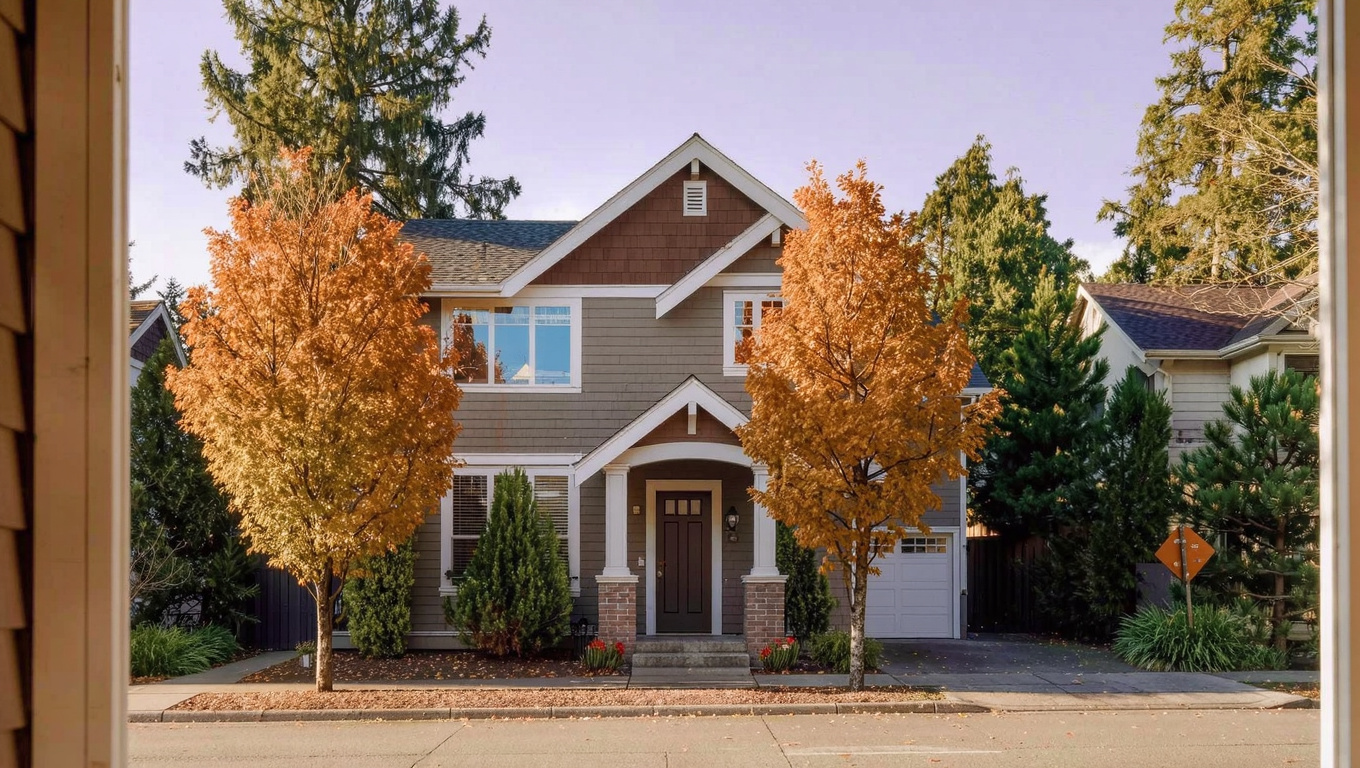
Trossachs homes were mostly built in the 1990s through early 2000s. The two-story craftsman-influenced style is the norm, and most properties show 25 to 30 years of mature landscaping.
What I See as a Valuation Expert in Trossachs
In Trossachs, valuation weight goes to three things first: the lot position, the build era, and the original builder. Trossachs has a mix of builders from the 1990s production era, and there are real differences in build quality between subdivisions. The homes that show the highest comparable sales are typically on lots with private yard space and no rear-neighbor visual overlap. Premium lot position in Trossachs can add $40,000 to $80,000 to final sale price versus a mid-block home with identical square footage.
HOA compliance and curb appeal matter a lot here because this is an HOA-governed community. Homes that have kept up with exterior paint cycles, landscaping standards, and minor repairs consistently sell faster and closer to asking price than ones that show deferred maintenance. The first impression from the street is a real pricing factor in Trossachs, not just an aesthetic one. Buyers are comparing multiple well-maintained options, so anything that stands out as neglected draws offers with larger inspection holdbacks.
What moves first in Trossachs are the homes that back to Pine Lake Park or have a trail easement behind them. Buyers pay a genuine premium for that direct trail access. Updated kitchens with an open layout to the family room also move faster here because the 1990s floor plans often have a more closed kitchen, and buyers want the open-concept flow. Full kitchen remodels on Trossachs homes reliably recoup well above average because the neighborhood demand supports the price lift.
Valuation Insight
“Trail-backing lots in Trossachs consistently sell $50,000 to $80,000 above comparable mid-block homes of the same size. That trail premium is one of the most durable in Sammamish.”
10-Year Lens
Trossachs is well-positioned for the next decade. The combination of Issaquah school district access, Pine Lake Park adjacency, and proximity to both the Bellevue and Redmond tech corridors creates durable demand. The neighborhood’s mature tree canopy and established character are also hard to replicate in newer construction. As Sammamish adds density along its commercial corridors, Trossachs will hold its single-family residential identity. I expect sustained demand here regardless of broader market cycles.
Honest counter-risk: Trossachs homes from the 1990s are approaching the age when major systems need replacement. Buyers should expect HVAC, roof, and potentially siding replacement on older homes. Factor $40,000 to $80,000 in deferred capital work into your offer analysis on any home built before 2000.
Frequently Asked Questions About Trossachs
Q: Is Trossachs a good place to live in Sammamish? A: Yes, if you want an established family neighborhood with Issaquah schools and direct trail access. Trossachs is one of the most livable areas on the Sammamish Plateau. The community is well-maintained, the schools are strong, and the trail connection to Pine Lake Park is a genuine quality-of-life asset most neighborhoods at this price point can’t match.
Q: What are homes like in Trossachs? A: Mostly two-story single-family homes built in the 1990s to early 2000s. Most run 2,400 to 3,800 square feet, with a median sale price around $1.27M as of mid-2026. The neighborhood is all detached homes and is entirely HOA-governed.
Q: What schools serve Trossachs? A: Most Trossachs addresses feed into Sunny Hills Elementary, Pine Lake Middle School, and Skyline High School in the Issaquah School District. Always verify your specific address with the district before making an offer, since attendance boundaries can shift.
Q: How far is Trossachs from Seattle? A: About 26 miles from downtown Seattle via I-90. Peak-hour drive time is typically 40 to 60 minutes. Most residents commute to Bellevue or Redmond, which are 18 and 14 miles respectively and take 25 to 40 minutes in morning traffic.
Explore Trossachs Yourself
The best way to get a feel for Trossachs is to drive the loop roads on a weekend morning and walk the Pine Lake trail from one of the neighborhood access points. You’ll get a sense of the lot sizes, the tree coverage, and what daily life actually looks like here.
 Facebook
 X
X
 Pinterest
 Copy Link