
EastsideIssaquahKing County Cities May 21, 2026

Living in Montreux Issaquah

Living in Montreux, Issaquah: What You Need to Know in 2026

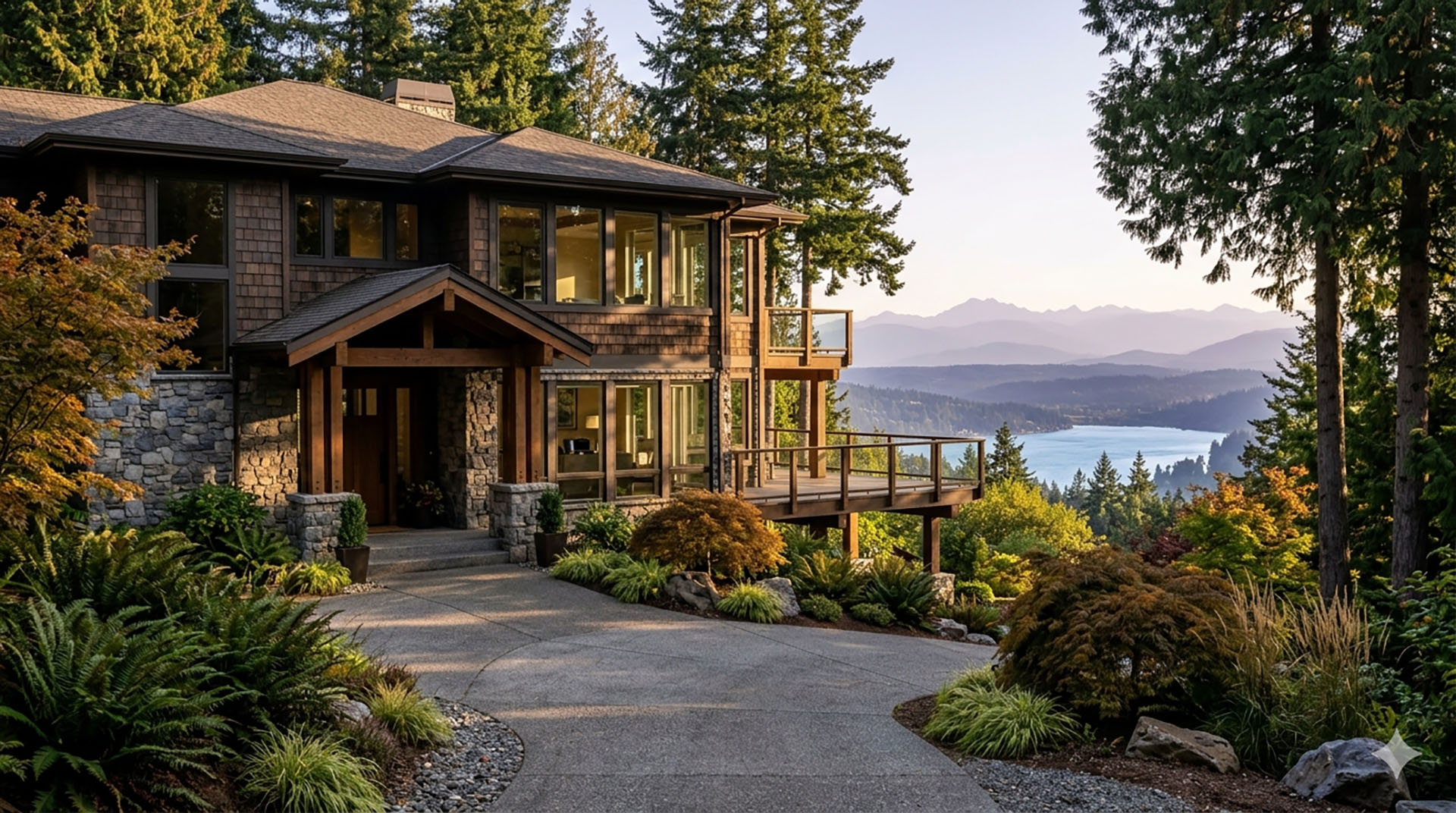
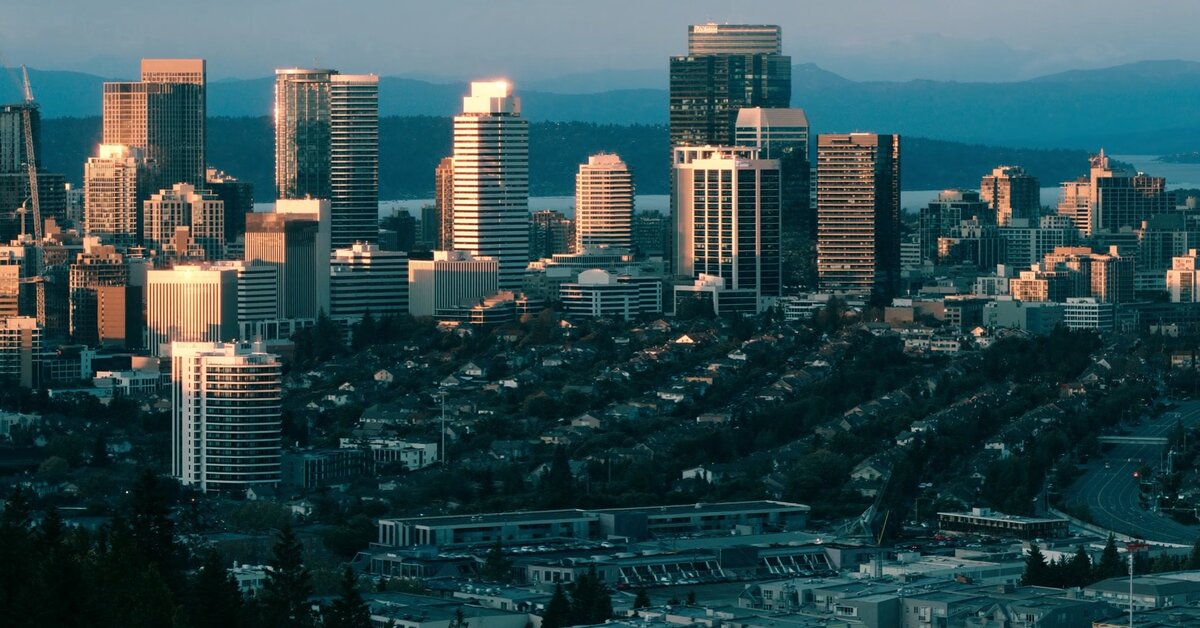
Montreux is the gated luxury community perched on the northern slopes of Cougar Mountain, with views toward Lake Sammamish and quick access to I-90. In 2026, with buyers in the upper price brackets looking for privacy, custom construction, and a setting that feels like an Eastside retreat without losing tech corridor proximity, Montreux is one of the most established luxury options in the region. If you want a home with serious square footage, a real view, and the security of a gated entry without driving an hour from Bellevue, Montreux is the kind of neighborhood that delivers.

What is it actually like to live in Montreux in 2026?

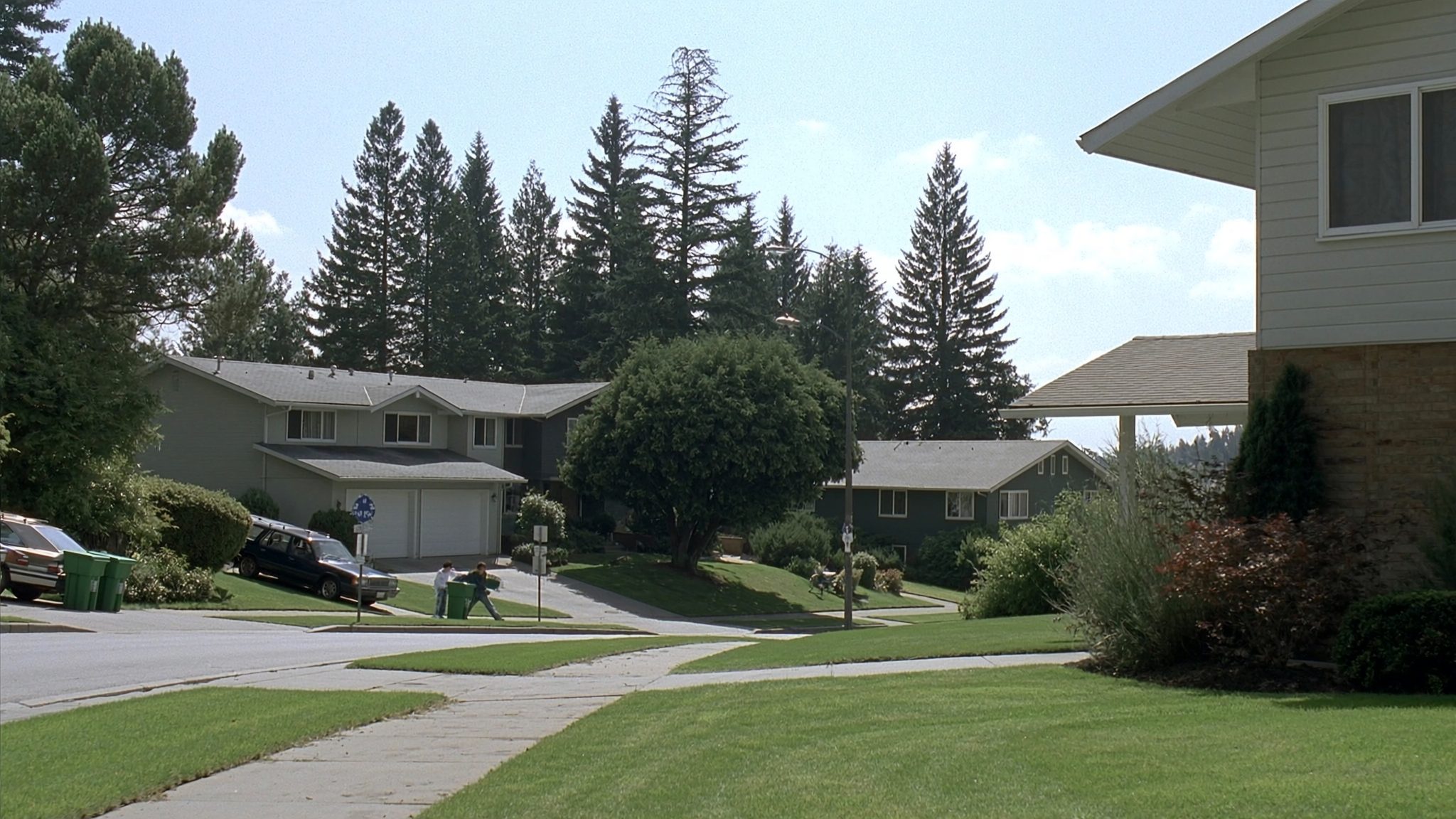
On a weekday morning, Montreux feels private and quiet. The gated entry keeps outside traffic away, and the internal streets curve up the hillside with mature landscaping screening one home from the next. Tech executives and senior professionals leave for I-90 between 7 and 9 AM. The pace inside the gates stays calm even during peak commute hours, which is a real benefit for residents who work from home or run businesses with international hours.

On a weekend, Montreux turns more visible but still calm. Residents walk dogs along the internal paths, head into Issaquah for shopping or dining, or drive five minutes to Lake Sammamish for paddleboard sessions or quick day trips. The community clubhouse, pool, and sport court see steady use, and the internal walking paths are popular for early-morning and evening loops. The neighborhood does not have a commercial core, which is part of the appeal.

Most residents are senior tech executives, business owners, dual-income professionals at the top of their fields, and a meaningful share of relocators from the Bay Area and other tech corridors. Montreux has a more international demographic mix than older Issaquah luxury neighborhoods, reflecting the broader Eastside tech trend. What separates Montreux from other Issaquah neighborhoods is the combination of factors: gated access, custom construction, lake views from many homes, and the HOA-managed common amenities that buyers in this price range expect.
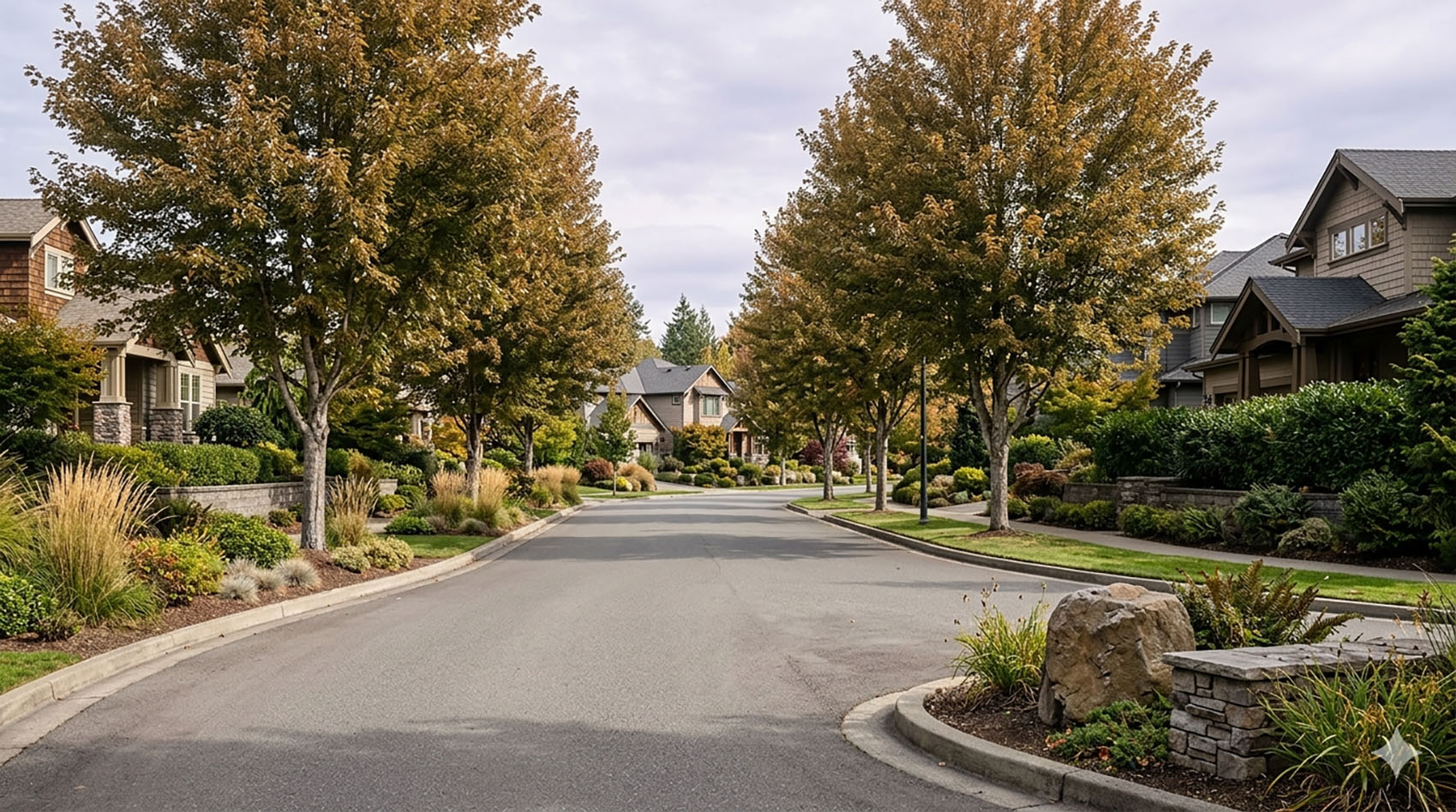
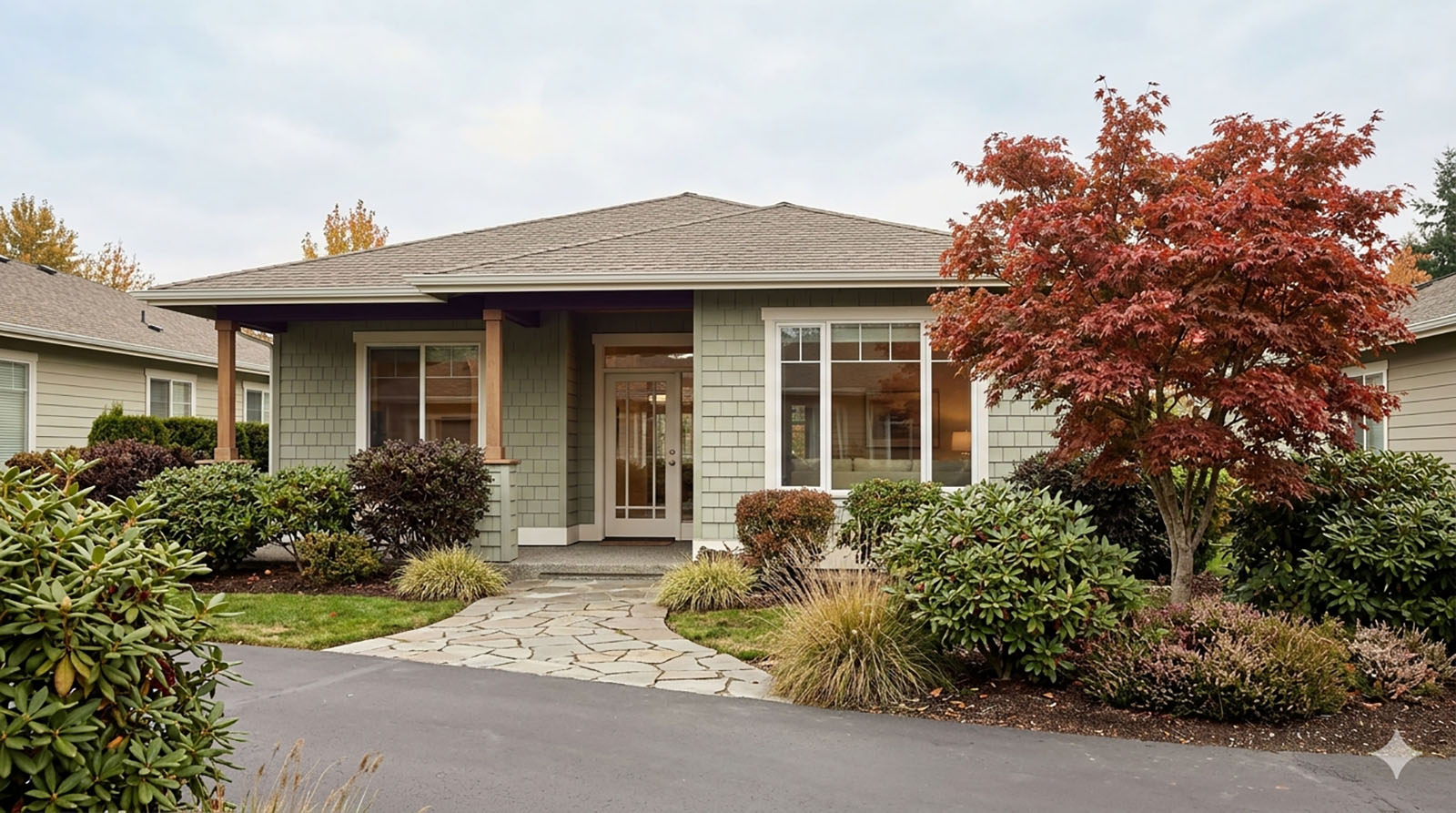
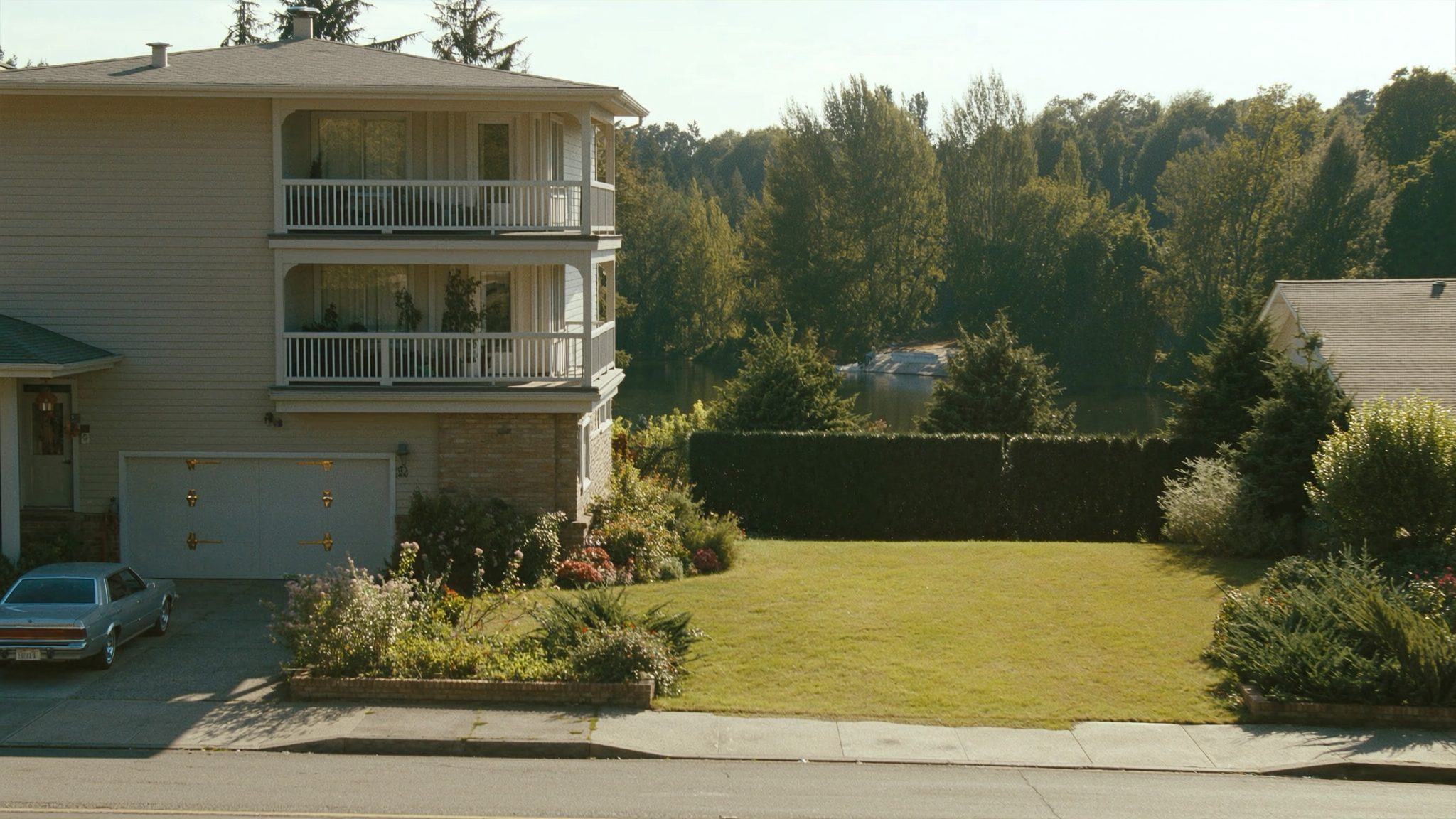
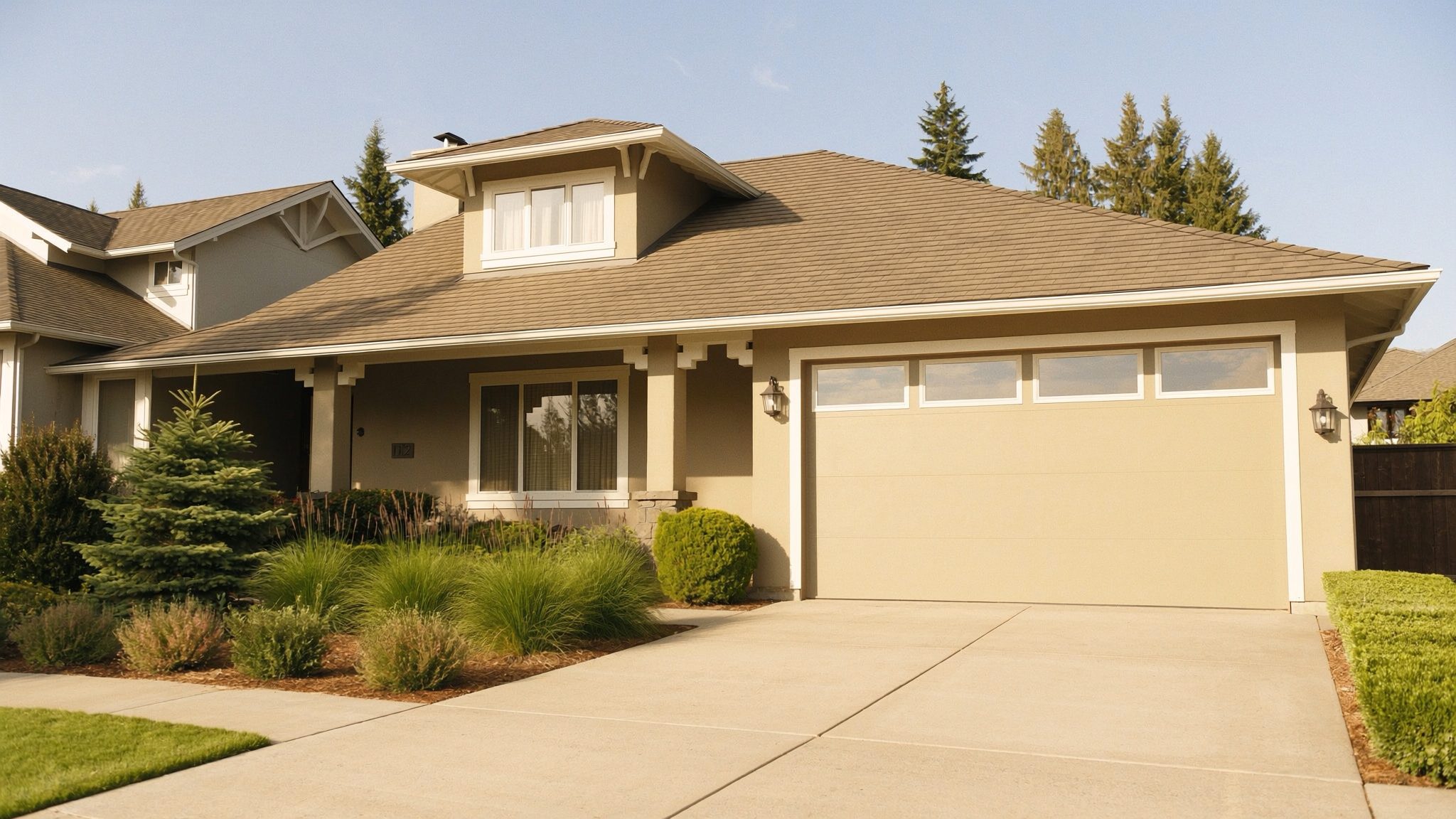
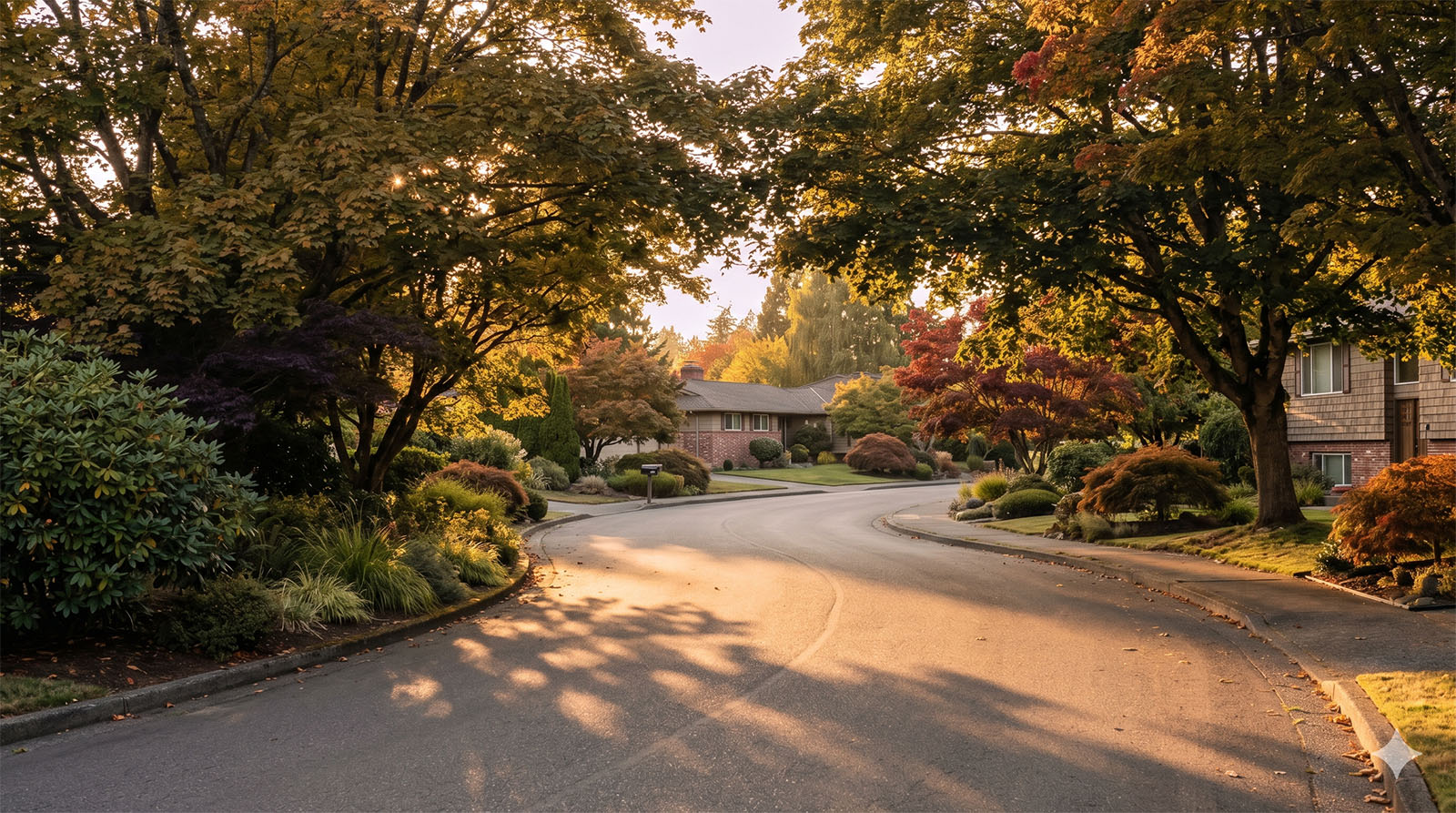
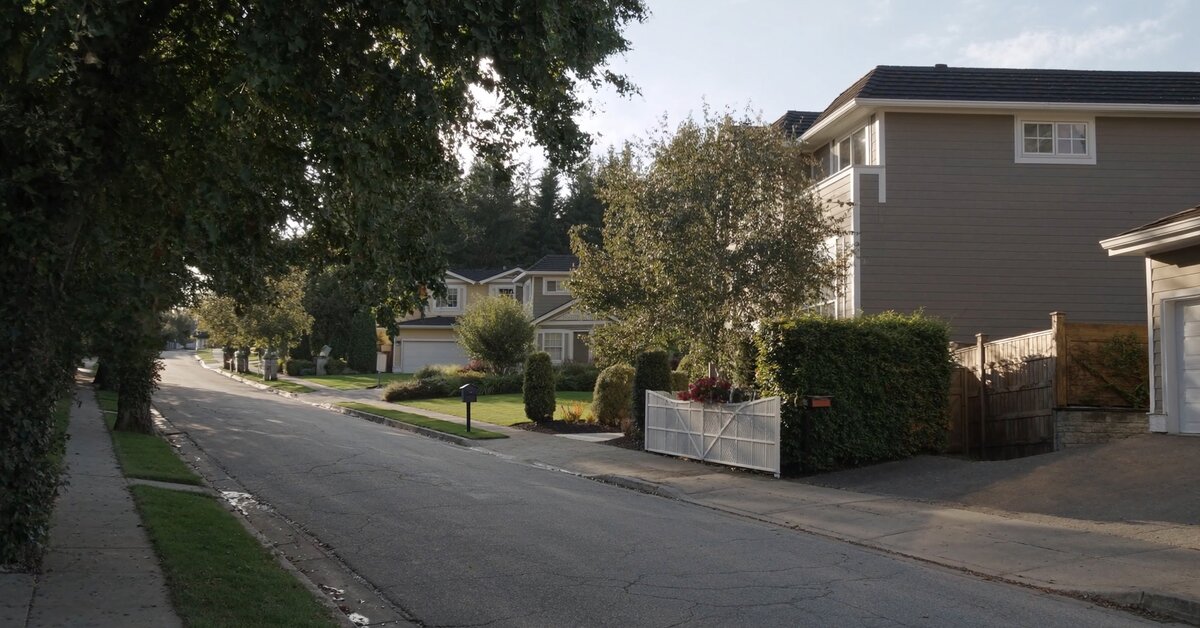
An interior residential street inside the gated Montreux community in Issaquah, with mature landscaping.

Homes in Montreux: What the Data Shows

Most homes in Montreux were built between the late 1990s and the mid-2000s, with a smaller share of newer custom rebuilds where owners have torn down and replaced original homes. Single-family homes typically run 3,500 to over 6,000 square feet on lots between 7,000 and 12,000 square feet, with some custom homes on larger view lots. The architectural style is mostly Northwest Contemporary and modern transitional, with high-end finishes including hardwood floors, granite or quartz counters, gourmet kitchens, and spa-style primary suites. Many homes have territorial or Lake Sammamish views, with the homes near the upper edge of the development carrying the best sight lines. Montreux also includes The Village at Montreux, a smaller condo and townhome project for buyers who want gated community access at a lower entry price.

Market Pulse Montreux (98027) King County
Median Sales Price (May 2026) ~$2,050,000 ~$859,000
Median Days on Market ~14 days ~28 days
Active Listings Change (vs. Jan 2026) +12% +30%

Estimates based on current NWMLS data for the Montreux subdivision within the 98027 ZIP code. Days on market run far below the broader market average because inventory is consistently low and qualified buyers move quickly when the right home appears.

Schools Serving Montreux

Most Montreux kids attend Sunset Elementary in Bellevue, then Pacific Cascade Middle School, then Issaquah High School. All three are part of the Issaquah School District. Always confirm your specific address with the district before writing an offer because some Montreux properties have been reassigned over the years.

Sunset Elementary is one of the more diverse schools in the district and has a strong inclusive learning environment. Pacific Cascade Middle School has strong STEM and arts programs and routinely sends kids to Issaquah High prepared for AP and IB-style coursework. Issaquah High is one of the top-rated public high schools in Washington, with a 93 percent graduation rate, strong AP offerings, and a competitive athletics presence.

The school pipeline for Montreux involves driving for most families. None of the schools are walking distance, which is normal for an upscale Eastside community. Most kids ride buses to elementary and middle school, then drive themselves to Issaquah High once they are old enough.

Getting to Work from Montreux

Montreux residents typically take Newport Way to reach I-90 at exit 15 or 17. The exact route depends on which side of the hill you live on. The gated entry adds about a minute to the start of any trip but provides the privacy benefit residents value.

Destination Distance 2026 Peak Drive (AM) Transit Option
Downtown Seattle 16 miles 32 to 50 min I-90 / ST 554 from Issaquah Highlands P&R
Bellevue / Amazon Bellevue 7 miles 18 to 28 min I-90 to I-405 / ST 554
Microsoft (Redmond) 10 miles 22 to 32 min I-90 to SR-520 / Connector Bus
SeaTac Airport 22 miles 35 to 50 min I-405 to I-5 / Drive

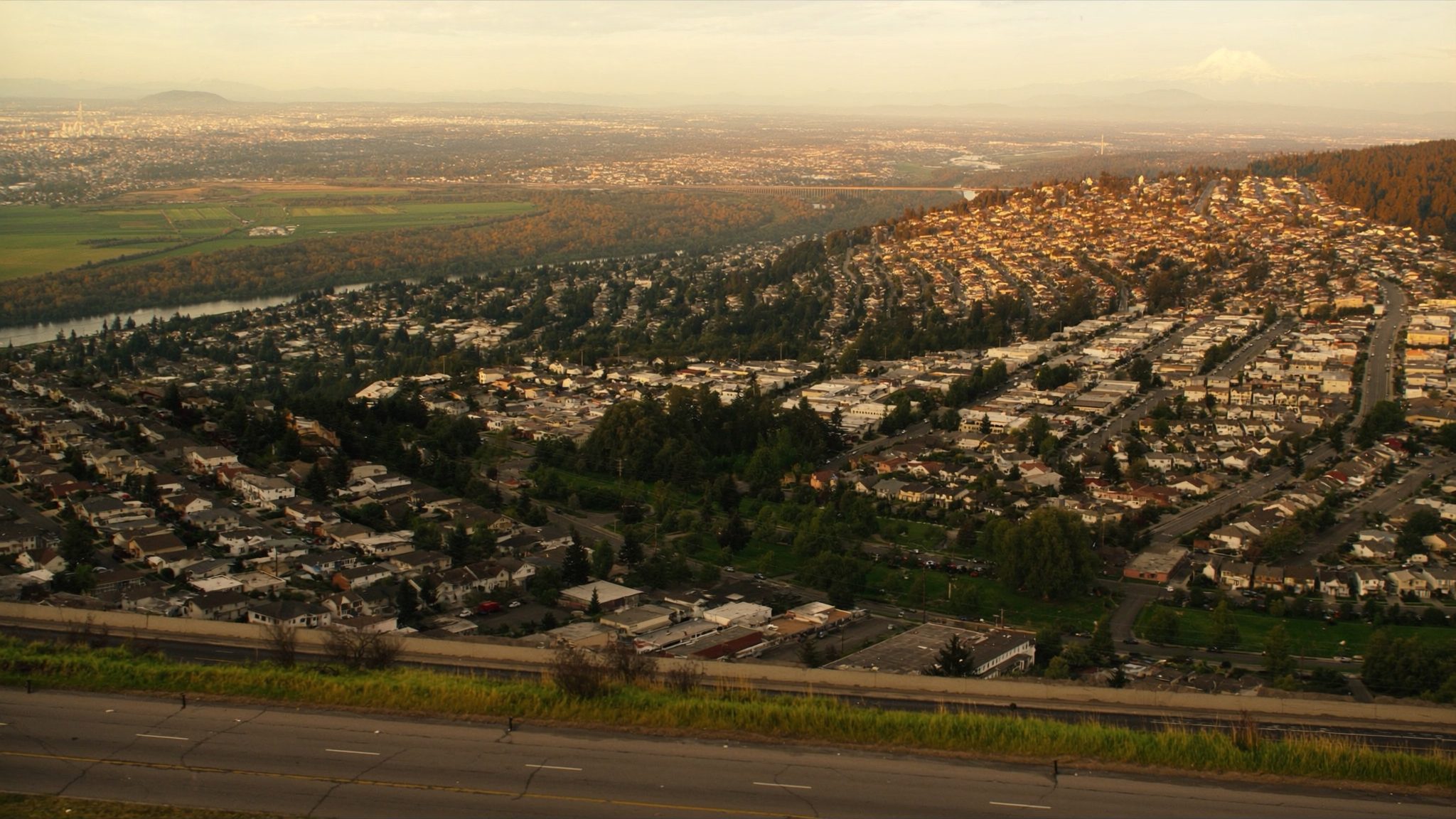
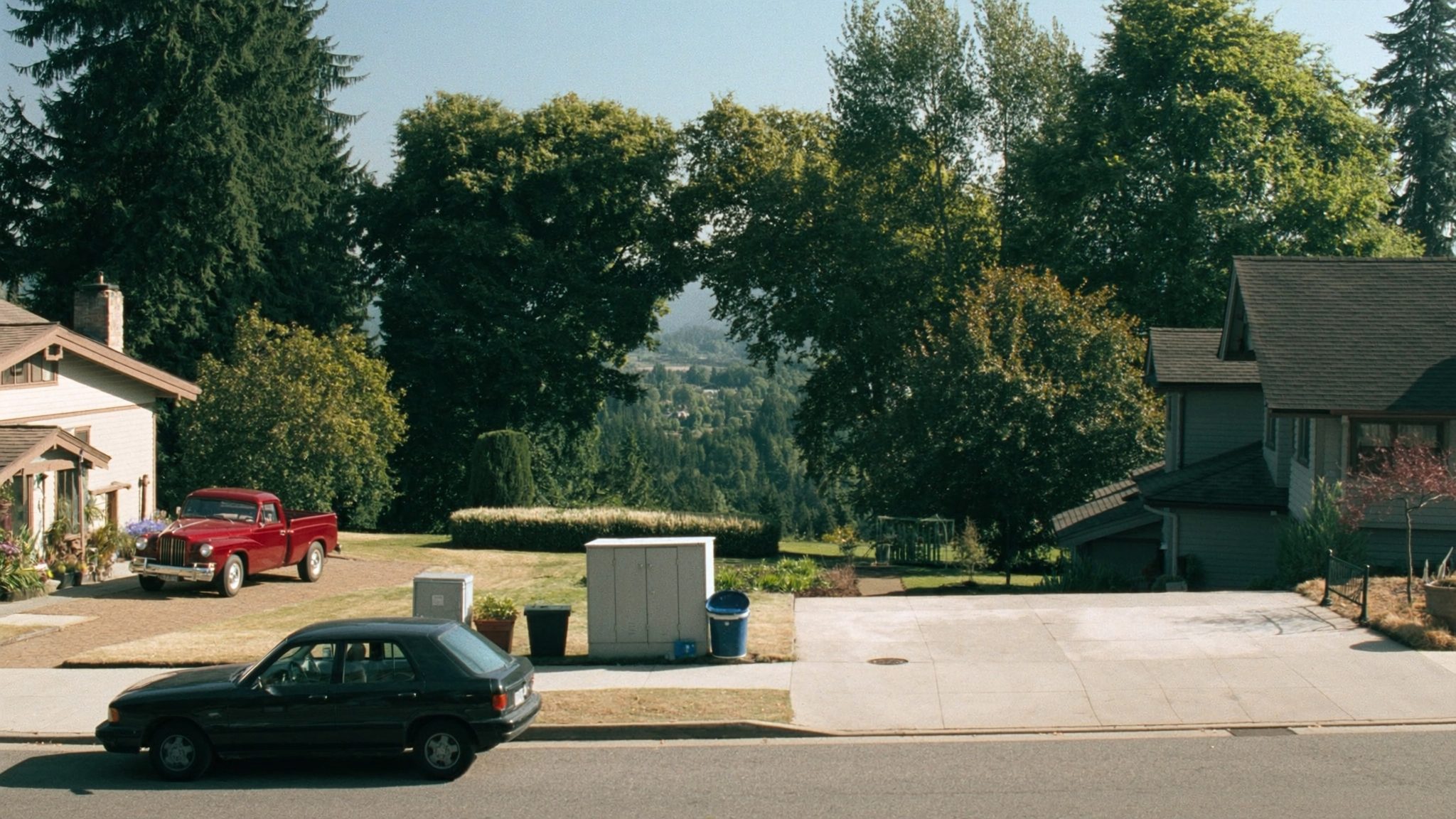
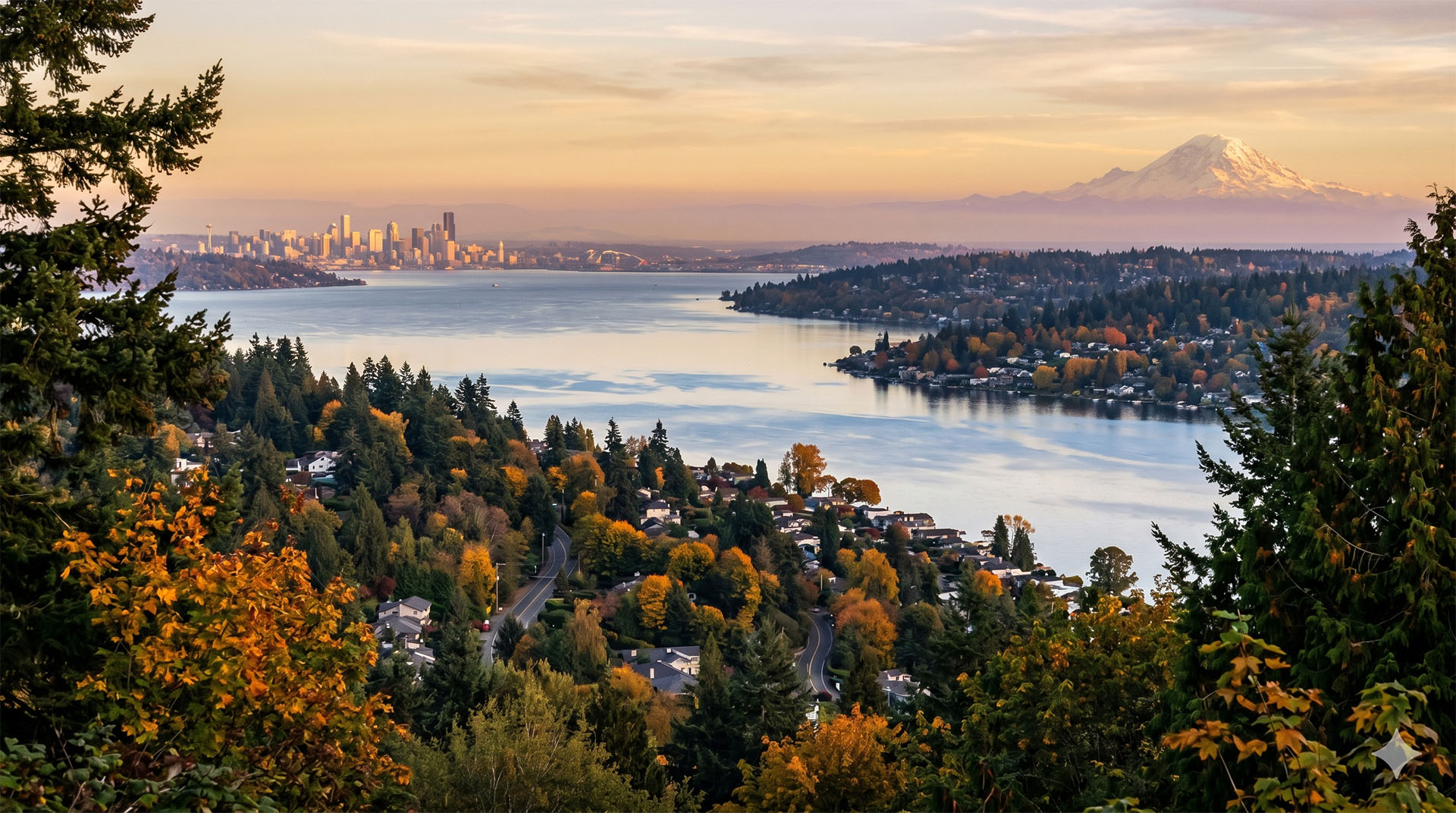
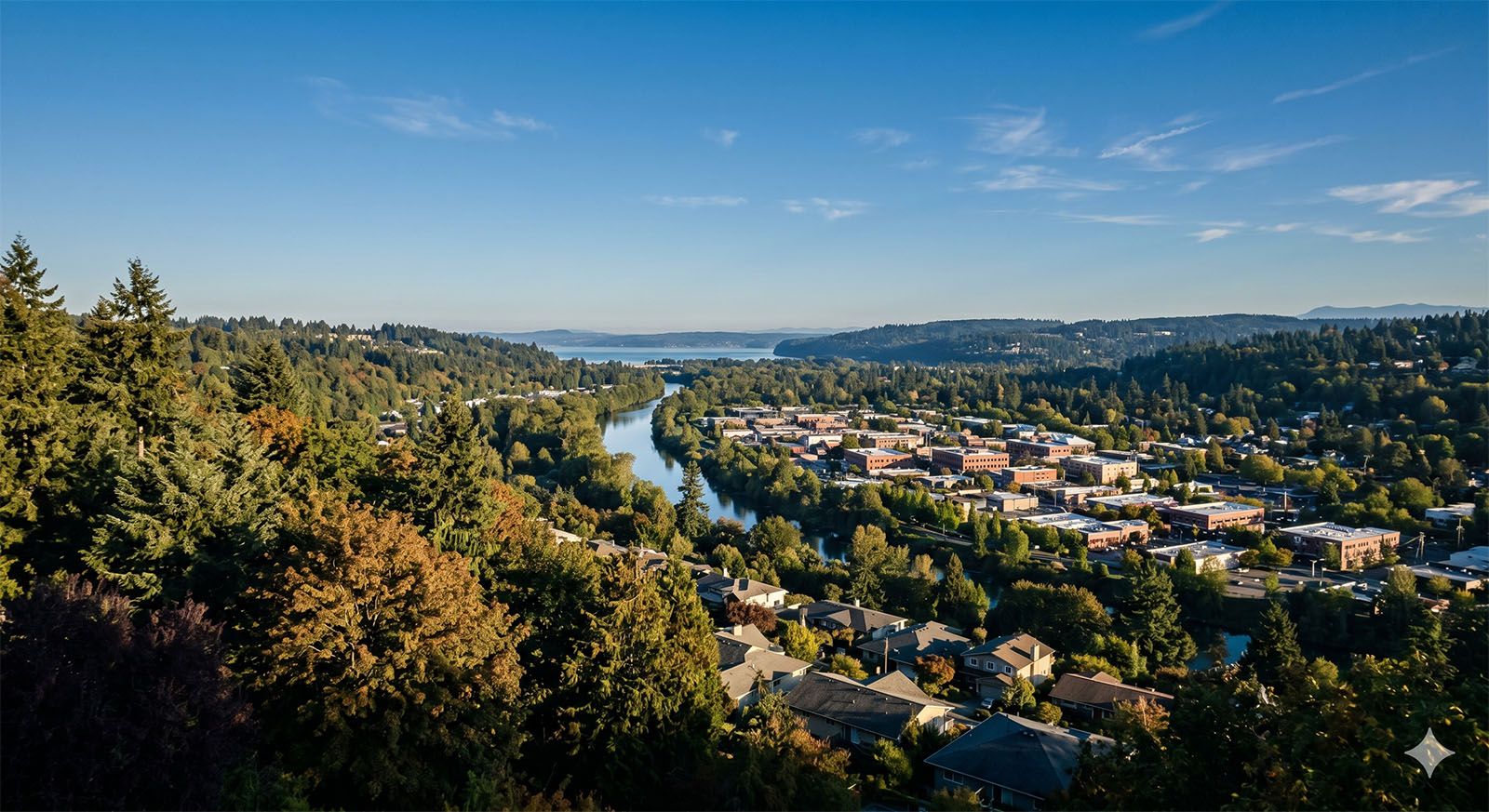
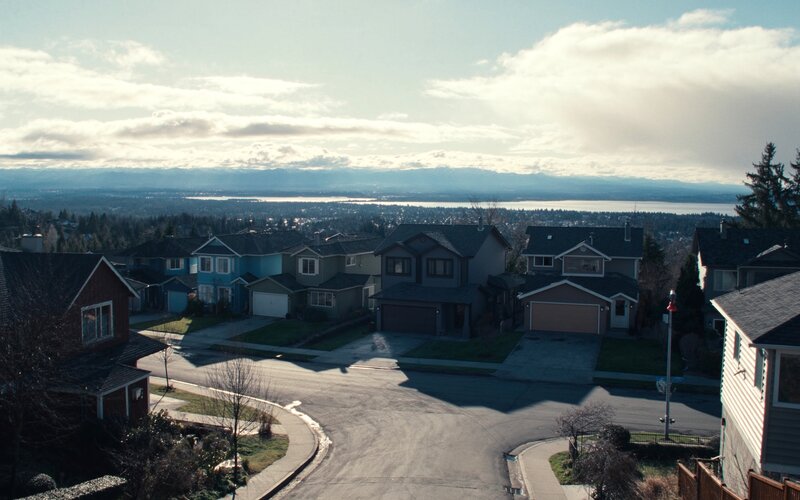
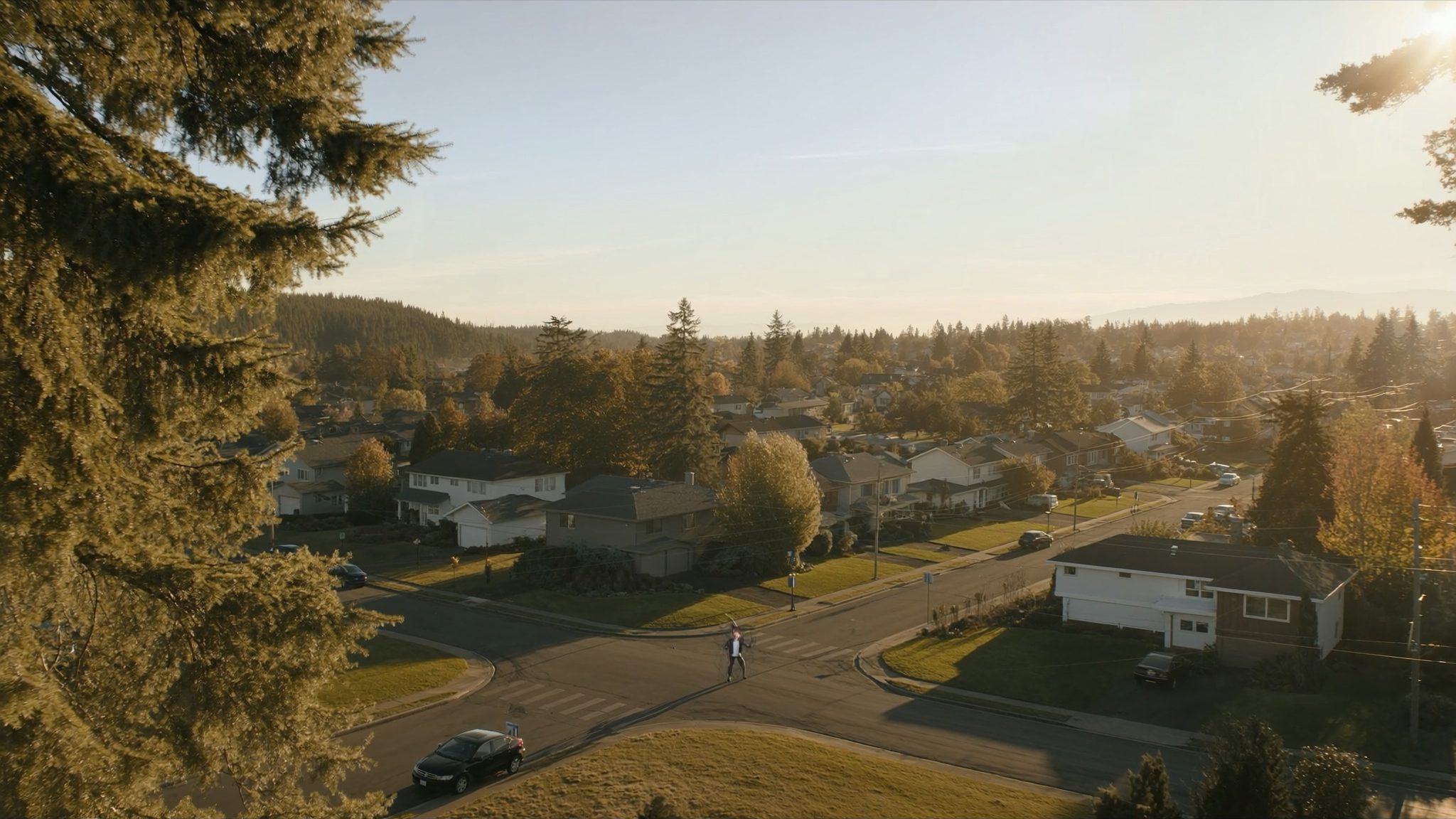
View from the Montreux community in Issaquah, looking northwest toward Lake Sammamish and the Olympic Mountains.

What I See as a Valuation Expert in Montreux

The HOA picture in Montreux is significant and important to understand. Monthly dues typically run $400 to $700 per month, depending on the village and product type, with townhomes and condos at the higher end because they include more shared maintenance. The HOA covers gate operations, common area landscaping, the clubhouse, pool, sport court, walking paths, and exterior maintenance for the attached product types. When I assess homes in Montreux for institutional lenders, I always pull the resale certificate and the most recent reserve study. The community is now twenty-plus years old, and capital reserves are entering a critical period for major projects like clubhouse renovation, pool replacement, and road resurfacing. A weak reserve fund and a pending special assessment can change a buyer’s monthly cost picture quickly.

Curb appeal in Montreux is high because the master plan required mature landscaping, consistent architectural standards, and HOA-managed common areas. The neighborhood looks substantially the same today as when buyers first toured it years ago, which is rare. Where individual variation matters most is in the home itself. Updated kitchens, refreshed primary suites, recent roof replacement, and modern HVAC systems all add real appraised value. A 2002 build with a 2018 roof and a 2020 kitchen renovation will appraise stronger than a similar-vintage home where systems and finishes have not been updated.

Within Montreux, certain pockets and lots carry premium pricing. Lots with clear Lake Sammamish views, homes near the upper edge of the development with maximum elevation, properties backing directly to Cougar Mountain greenbelt, and any home with a flat usable backyard tend to move first when they hit the market.

Explore Montreux Yourself

The fastest way to know if Montreux fits is to drive past the gated entry on Newport Way to see the setting from the outside, then schedule a private showing to walk the internal streets and see the housing variety in person.

View Montreux on Google Maps →

Your guide to life outside Seattle.

Gregory Dorrell | Coldwell Banker Bain | WA License #111862
253-350-0045  ·
greg@livingoutsideseattle.com  ·
www.livingoutsideseattle.com
King County Market Update May 20, 2026

King County Real Estate Market Update May 2026

King County Real Estate Market Update May 2026: Why South King County Is the Story Nobody’s Telling

The countywide numbers look alarming. But this week’s King County real estate market update reveals a much more interesting story happening right in your backyard.

If you’ve been following the news, you’ve probably seen the headlines. This King County real estate market update tells you what they’re missing: Seattle has 8,630 homes on the market right now. A normal April has around 4,600. That’s an 88% inventory spike, driven by tech layoffs, years of affordability pressure, and outbound migration from the city.

That story is real. But it’s not the story that matters most if you’re buying or selling in east and south King County.

Here’s what I’m seeing on the ground: while the Eastside luxury market absorbs that inventory shock and Seattle condos sit longer, the communities I work in every day — Renton, Kent, Auburn, Covington, Maple Valley — are telling a different story. It’s not a hot market. It’s something more useful: a market with clear rules, predictable timelines, and real opportunity for buyers who know how to read it.

Let me break it down.

The Big Picture: King County at a Glance

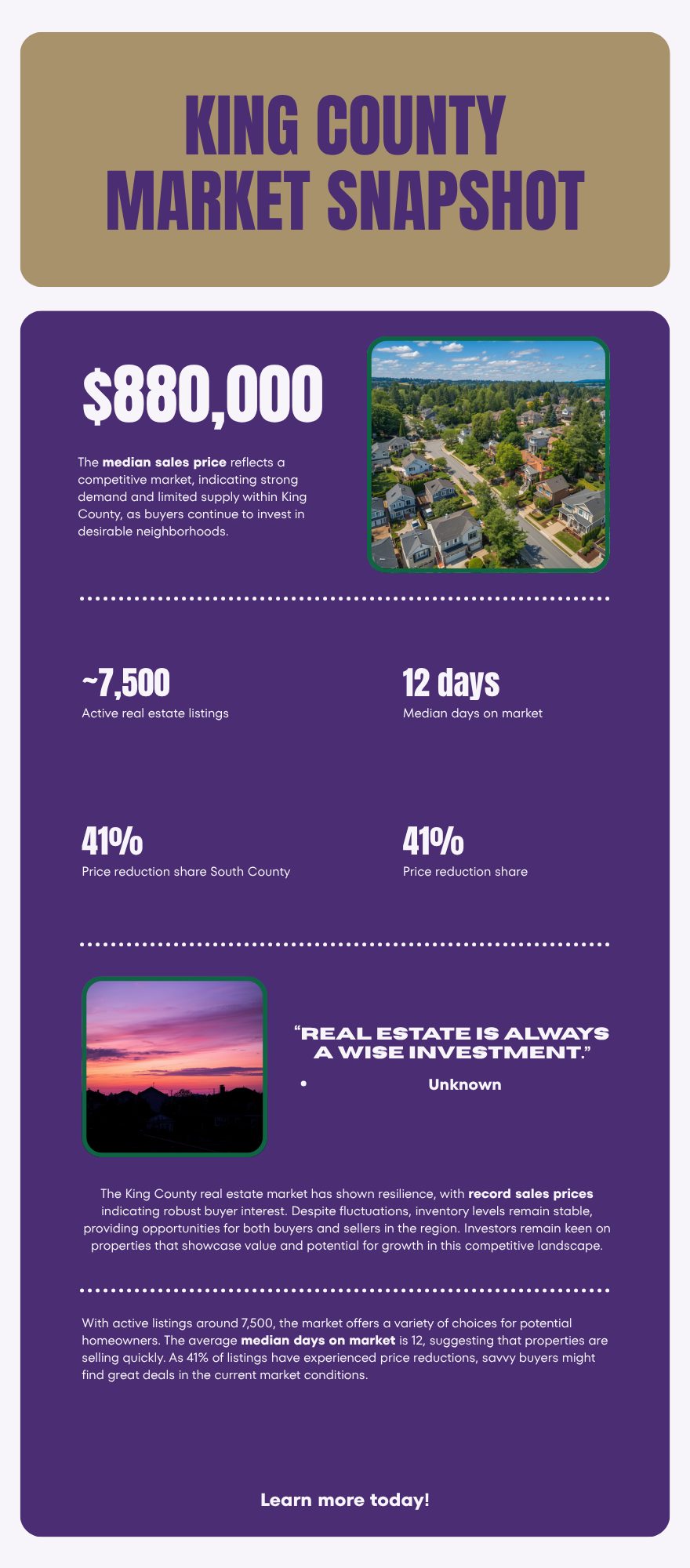
The countywide numbers tell a story of a market in transition. The typical King County home value has dropped 5.5% year over year. Active listings are up sharply. But the key metric I keep coming back to is this: 41% of active sellers in Renton and the South County pocket have cut their prices in the last 14 days.

That is a massive signal. It tells you exactly who is winning and who is losing right now — and why the difference comes down to pricing discipline on day one.


King County market snapshot showing median sales price, active listings, days on market, and price reduction share — May 2026

King County Market Snapshot — May 18, 2026 | Source: NWMLS

Mortgage rates have been remarkably stable, holding between 6.0% and 6.6% all month. For a deeper look at exactly what buyers are paying right now, see King County Mortgage Rates 2026: What Buyers Are Actually Paying. The Fed’s key rate sits around 3.5%–3.75%, and there’s no sign of movement in the near term. That predictability is a gift for buyers who have been waiting for a sign that the ground has stopped shaking.

South King County Housing Market: City-by-City Breakdown

Renton: The Epicenter of the Divergence

Renton is ground zero for what I call the pricing divide. (For a full breakdown of Renton neighborhoods, schools, and lifestyle, see my Living in Renton, WA — 2026 Guide.) The median price is holding at $640,000–$788,000 depending on the area and property type, but that number is masking a lot of internal movement.

That 41% price reduction figure I mentioned? Most of that is concentrated right here. Sellers who priced their homes based on what their neighbor got in 2022 — or even early 2024 — are discovering the market has moved on. Homes that are correctly priced for today’s buyer pool are still moving. Homes that aren’t are sitting, then cutting, then sitting some more.

For buyers, Renton right now is exactly the kind of market where having someone who professionally values properties every single day gives you a real edge. You don’t have to guess which homes are fairly priced. That’s what I do.

Kent: Patience Is the New Strategy

Kent’s median is sitting around $695,000 with healthy active inventory. The story here is condition and staging. (Full neighborhood breakdown in my Living in Kent, WA — 2026 Guide.) Sellers who are showing well and pricing precisely to current comps are doing fine. Sellers who are not are watching their listings drift past the 30-day mark — and once you’re past 30 days in this market, buyers start wondering what’s wrong with the house.

If you’re thinking about selling in Kent, the prep work matters more right now than it has in years. I can help you figure out what’s worth doing and what isn’t before you spend money on the wrong improvements.

Auburn and Federal Way: The Affordability Anchor

These two cities continue to be where the first-time buyer action is — and there’s a reason for that.


Young couple touring a well-maintained home in Auburn or Federal Way, warm natural light, Pacific Northwest setting

Federal Way is holding its ground at a $615,000 median with 8.9% year-over-year price growth. (See the full Living in Federal Way, WA — 2026 Guide for neighborhood and school details.) Think about that for a second: while much of King County is down 5% year over year, Federal Way is up nearly 9%. The flight to affordability south is not slowing down — it’s accelerating.

Auburn is staying competitive under $650,000. Well-priced homes are moving in about 10 days. (Thinking about Auburn specifically? Read Should I Wait to Buy a Home in Auburn WA? The Real Math.) And here’s a detail worth knowing: HomeSight currently offers up to $45,000 in down payment assistance as a 30-year deferred loan for buyers in Auburn and unincorporated south King County. The income limit is around $157,000 — which covers a lot of the first-time buyer households I work with.

Maple Valley and Covington: The Sweet Spot

Maple Valley is one of the few places in King County right now where I’d tell sellers they’re still in a strong position. Homes sold in March and April came in at 99.9% of list price. Average days on market was 26. Average sales price was $764,000 — a fraction of the county average of $1.197M, with significantly more space and a quality of life that Seattle simply can’t compete with.

Covington sits just south and offers similar value. These are the communities I watch most closely on my BPO routes, and what I see is a market that never got as overheated as the Eastside — which means it doesn’t have as far to fall.

Sammamish and the Eastside: A Tale of Two Price Points

Sammamish is holding at a $1.62M median with turnkey properties still moving in 5 days. Move-in-ready homes under $2M in the tech corridor are averaging 6 days on market — demand from companies like OpenAI’s Eastside expansion is keeping the entry-level luxury segment active.

But luxury over $3M? That inventory is starting to accumulate. The tech layoff story — 4,798 King County workers affected through April 2026, outpacing last year’s pace — is being felt most acutely at the high end. If you’re a buyer with a $3M+ budget, you have more options than you’ve had in years.

First-Time Homebuyer Guide: What This Market Means for Buyers in King County

This is genuinely one of the better moments to be a buyer in south and east King County in the last several years. Here’s why.

Rates are stable. You can model your payment with confidence and know the floor isn’t about to drop out from under you. Inventory is up, which means you have actual choices instead of competing with 12 offers on every house. And in a market where 41% of sellers have already cut prices, you have something that was nearly impossible two years ago: negotiating room.

The key is knowing which homes are correctly priced and which are still catching up to reality. That’s not always obvious from the listing. A home that just cut its price might still be overpriced. A home that hasn’t cut might be a genuine deal. This is exactly where my BPO work becomes practical for you — I assess property values professionally every day, and I can tell you before you write an offer whether you’re getting fair value or overpaying.

If you’re a first-time buyer focused on Auburn, Federal Way, or the Covington area, ask me about current down payment assistance programs. There is real money available right now that most buyers aren’t using.

What This Means If You’re Selling

If you’re thinking about selling in 2026, the single most important thing I can tell you is this: price for 2026, not 2022. And before you list, make sure you’ve done the right prep work — I’ve written a full guide to preparing your home for sale in King County covering exactly what to fix, what to skip, and how to sequence it all.


Infographic: 41% of homes had a price cut in South King County. Correctly priced homes still sell in 12 days at 99.9% of list price.

41% of homes had a price cut in South King County in the last 14 days. Pricing discipline on day one is the difference between selling and sitting.

The data is unambiguous. The top 10% of turnkey properties are still getting multiple offers. Homes with minor deferred maintenance or optimistic pricing are sitting. The market has not crashed — but it has recalibrated, and sellers who try to test the ceiling are the ones generating those price reduction statistics.

What does correct pricing look like right now? It means pulling the last 60–90 days of closed comps in your specific neighborhood, not the last 18 months. It means accounting for condition honestly. And it means understanding that buyers today are more sophisticated — they have more time to research and they’re walking away from overpriced homes instead of competing for them.

The good news: if you’re in Maple Valley, Covington, Federal Way, or south Auburn, you’re starting from a strong position. Your market has not experienced the same inventory shock as Seattle. Your days on market are manageable. A well-prepared, correctly priced listing in these communities can still have a very clean transaction.

The BPO Advantage: Why Pricing Precision Matters More Right Now

I want to be direct about something. Most agents estimate home values using a handful of recent sales and some market intuition. That’s fine in a stable market where everything is moving in the same direction.

This is not that market.

Right now, two homes on the same street in Renton can have very different values based on condition, updates, lot, and how quickly the seller needs to move. Getting the price wrong by even 3–5% can mean the difference between selling in 12 days and sitting for 45 days and chasing the market down.

I bring that same lens to every home I help a client price or evaluate — whether you’re buying in Renton or selling in Maple Valley.

Frequently Asked Questions: King County Real Estate Market May 2026

Is now a good time to buy a home in King County?

For buyers focused on south and east King County — Renton, Kent, Auburn, Covington, and Maple Valley — yes. Inventory is up, rates are stable, and 41% of sellers have already cut prices, which means negotiating room exists that wasn’t there in 2022 or 2023. The key is identifying which homes are correctly priced and which are still catching up to reality.

Why are so many homes sitting on the market in King County right now?

The short answer is a combination of tech sector layoffs (nearly 4,800 King County workers affected through April 2026), years of accumulated affordability pressure, and outbound migration from Seattle. Sellers who priced based on 2022 peak values are sitting. Sellers who priced for 2026 conditions are still moving in 12 days or fewer.

What is the average home price in Renton WA in 2026?

As of May 2026, the Renton median home price is approximately $640,000–$788,000 depending on the area and property type, with homes selling around 98% of list price. About 41% of active Renton listings have had price reductions in the past 14 days, creating real opportunity for well-informed buyers.

Are there down payment assistance programs for first-time buyers in King County?

Yes. HomeSight currently offers up to $45,000 in down payment assistance as a 30-year deferred loan for buyers purchasing in Auburn, Federal Way, Tukwila, and unincorporated King County. The Washington State Housing Finance Commission’s Home Advantage program has income limits up to $180,000 for King County. FHA loans in King County have a 2026 limit of $1,149,825. Ask me about which programs fit your income and target price range.

Thinking about selling in Renton? When is the best time?

The data is clear: right now. Read Best Time to Sell a House in Renton WA: Spring 2026 for the full breakdown. And if you have significant equity, also review Capital Gains on Home Sales in Washington State before you list.

What is a BPO and why does it matter when buying or selling a home?

A Broker Price Opinion (BPO) is a professional property valuation used by lenders and banks to determine what a home is actually worth — independent of what the seller is asking. As an active BPO field agent, I do these assessments every single day. When I value your home for listing or analyze a home you want to offer on, I’m using the same methodology lenders use, not just comparing recent sales.

What to Watch Over the Next Few Weeks

Keep an eye on the South County price reduction data. If it holds at 41% or rises, that tells us sellers are still in denial about where the market is. If it starts to drop, it means pricing is catching up to reality and the market could tighten up again.

Also watch mortgage rates. We’ve had unusual stability in the 6.0%–6.6% range all month. If the 10-year Treasury moves, rates will follow — and even a half-point drop could unlock a meaningful wave of buyers who have been sitting on the sidelines.

If you’ve been waiting to figure out your next move — whether that’s buying in Renton, selling in Maple Valley, or finally getting that first home in Auburn — now is a good time to get the numbers in front of you and make a real decision.

Your guide to life outside Seattle.

Gregory Dorrell | Coldwell Banker Bain | WA License #111862
253-350-0045  ·
greg@livingoutsideseattle.com  ·
www.livingoutsideseattle.com
Buyer Resources May 20, 2026

First-Time Home Buyer in Kent WA: Buy Now or Wait?

First-Time Home Buyer in Kent WA: Buy Now or Wait?

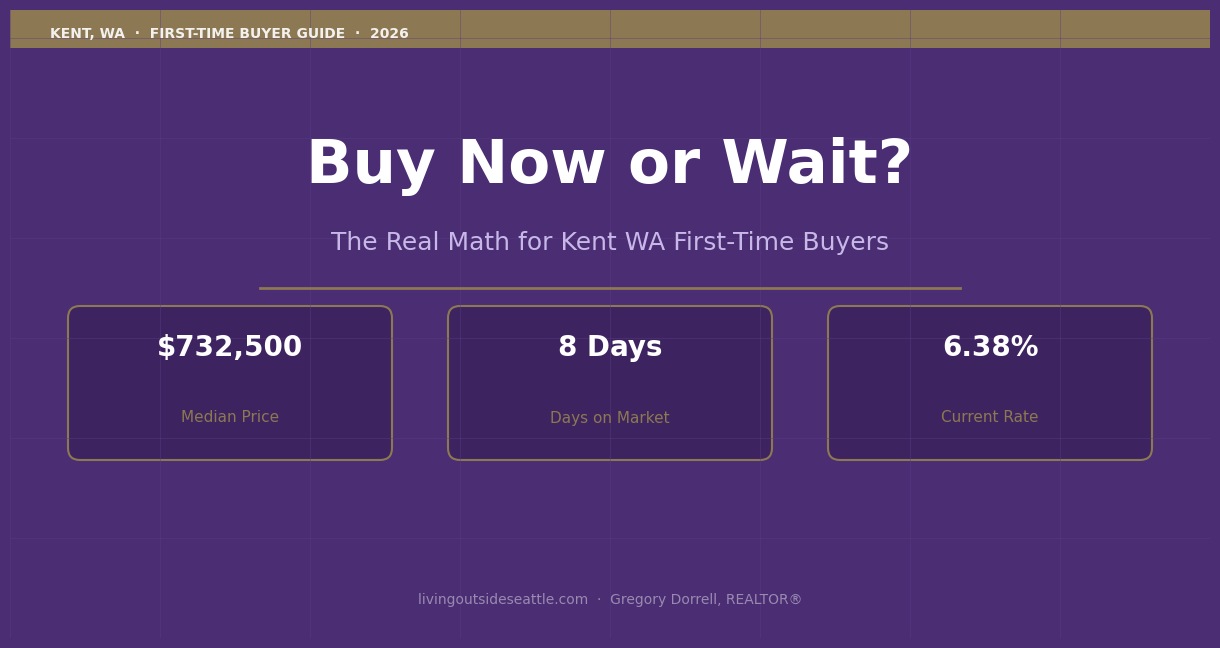
This is the conversation I’m having with nearly every first-time home buyer in Kent, WA right now. The mortgage rate is 6.38 percent as of late March 2026, which is high enough to sting but not high enough to stop you from buying. Should you go in now and refinance later when rates drop, or should you wait?

Let me walk you through the actual math, because the answer isn’t as obvious as it sounds.

Kent WA Housing Market: What First-Time Buyers Face Right Now

Kent is one of the most affordable single-family home markets in our region right now. In March 2026, the median sale price was $732,500 with a median days on market of 8 days. That DOM gives you breathing room, but not endless time. It’s the sweet spot where you can be thoughtful without leaving money on the table.

If you’re a first-time buyer looking at Kent, you’re probably looking at a mortgage in the $650,000-$800,000 range. At 6.38 percent, that’s a real monthly payment to think about.

So the question becomes: should you lock in now and hope rates drop so you can refinance, or should you wait and see what rates do?

The answer depends on five things: refinancing costs, break-even timeframe, price appreciation, how long you plan to stay, and your financial stress tolerance.

How Much Does It Cost to Refinance in Washington State?

Mortgage refinance break-even timeline for Kent WA first-time buyers 2026

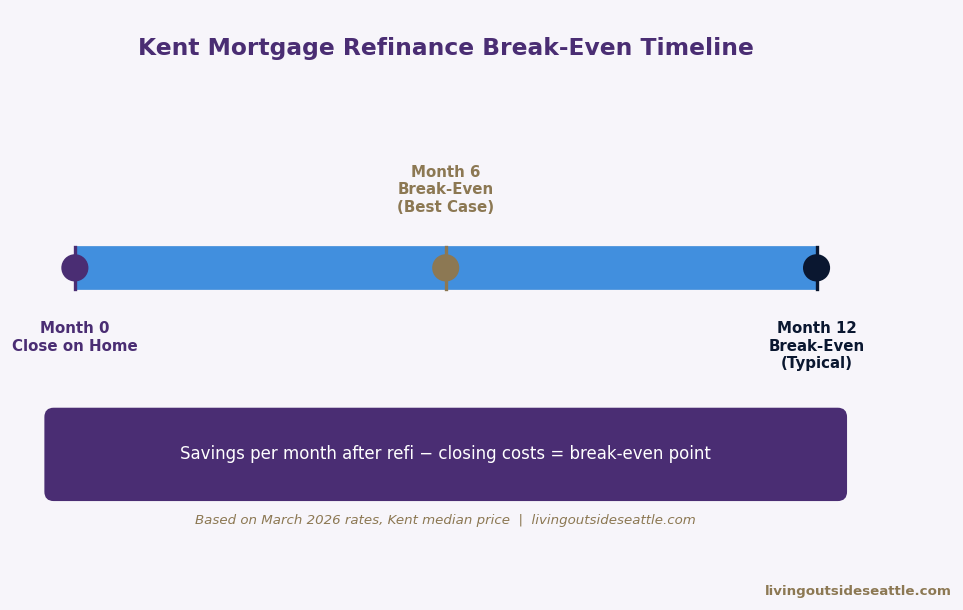
Refinancing isn’t free. When you refinance, you pay closing costs again. These typically run $3,000-$5,000 depending on loan amount, lender, and your credit profile. Some of that cost gets rolled into the new loan, but you’re still out of pocket for some portion upfront.

Let’s say you buy a $732,500 home now at 6.38 percent with a 30-year mortgage. Your principal and interest payment is roughly $4,430 per month. Your property tax, insurance, and HOA (if any) add another $800-$1,200 depending on neighborhood.

If rates dropped to 5.38 percent, your new principal and interest payment would be roughly $3,970 per month. That’s a savings of about $460 per month.

Here’s where it gets real: it takes you about 6-7 months of that $460 monthly savings to break even on $3,000-$3,500 in refinancing costs. If you stay in the home for 2+ years, you’re always ahead by refinancing. If rates only drop to 5.88 percent, your break-even stretches to 10-12 months.

The key variable is how far rates actually drop. A 1-percentage-point drop makes sense. A 0.5-percentage-point drop takes longer to break even. More than 1 point is great, but nobody knows if that happens.

Does Kent Home Price Appreciation Change the Buy-Now Math?

Here’s what many people miss: the monthly payment math ignores price appreciation. If you wait and prices appreciate while you’re sitting on the sidelines, that price gain might exceed what you save on interest rate reduction.

In Kent specifically, I’ve evaluated hundreds of properties across the market as a BPO field inspector. What I see is that Kent’s price-per-square-foot has stayed relatively stable compared to higher-priced markets like Sammamish or Bellevue. That stability is good for your peace of mind but suggests modest appreciation, not explosive growth.

Let’s run a scenario. If Kent median prices appreciate 3 percent annually, that $732,500 home is worth $754,675 in a year. You’ve built $22,175 in equity through price appreciation alone (assuming you put 10 percent down and financed $659,250).

If you waited and refinanced from 6.38 percent to 5.38 percent after a one-year delay, you’d save $460 per month for the remaining 29 years of the loan, which is roughly $160,000 in total interest savings. But you lost out on the $22,175 in price appreciation equity you could have built by owning for that year.

The math gets complex fast. The point is that waiting isn’t free, either.

Will Mortgage Rates Drop in 2026? What Kent Buyers Should Know

Let me be honest: nobody knows where rates go from here. I’m looking at a 30-year fixed at 6.38 percent in late March 2026, up 40 basis points in just four weeks due to Middle East tensions and oil price volatility. That’s how unpredictable the environment is.

Rates could drop. They could stay stable. They could move higher. Betting your purchase decision on a rate forecast is a bet I wouldn’t make. Betting your purchase decision on affordability, neighborhood, and your life circumstances makes more sense.

Why Kent WA Is Still a Strong Market for First-Time Buyers

As a first-time buyer, you’re probably not in a position to wait indefinitely. You might be ready to move for a job, growing out of an apartment, or just tired of renting and building equity for someone else.

Kent is a solid first-time buyer market because it’s affordable relative to higher-priced East King County alternatives, it has decent schools, and it has real community character. Homes are priced in a range where a $75,000-$100,000 down payment (if you’ve saved that) gives you real traction.

Kent first-time buyers also have access to Washington State Housing Finance Commission programs — including Home Advantage, which offers down payment assistance that can meaningfully reduce the upfront cost. first-time buyer programs Washington state These programs don’t eliminate the rate question, but they do change the affordability math enough to be worth knowing about before you assume ownership is out of reach.

The timing question isn’t as important as the fundamentals question: is this the right home for me in the right neighborhood at a price I can afford and sustain?

Buy Now or Wait in Kent WA: The Decision Framework

If you can afford the 6.38 percent rate and a refinance in a few years won’t stress you financially, buy now. You lock in price certainty, you start building equity immediately, and you get the benefit of owning the home you actually want instead of waiting for a hypothetical rate drop.

If rates drop significantly (1+ percentage point), you refinance and you’re ahead. If rates stay flat or move higher, you’re still in a home in Kent that you wanted to be in. The worst case is rates drop modestly (0.25-0.5 percent), your break-even timeline gets longer, and you live in a home you like while waiting for that refinance window to open. That’s not a tragedy.

If you can’t afford the 6.38 percent rate right now and you’re counting on a refinance to make the numbers work, wait. Don’t overextend yourself on the assumption that rates drop. That’s how people get into trouble.

If you’re genuinely uncertain whether you want to stay in Kent for 2+ years, or if your job situation is volatile, wait. Refinancing assumes you stay in the home long enough for the savings to matter.

Kent WA Real Estate Market Advantages for First-Time Buyers

The 8-day DOM means you don’t have to rush, but you also don’t have months and months to deliberate. There’s real inventory (homes actively for sale), which means you have choices. That’s good for a buyer. You can be selective about neighborhood, condition, and price without feeling like you’re leaving deals on the table.

Homes in Kent that are priced right and in good condition are still moving fast. That tells me that buyers see value in the market right now, and that value is real.

Frequently Asked Questions: First-Time Home Buyers in Kent WA

What is the median home price in Kent WA in 2026?

As of March 2026, the median single-family home price in Kent, Washington is $732,500. The median days on market is 8 days, slightly longer than the King County average of 7 days, giving first-time buyers a bit more time to make decisions without losing competitive homes.

Should I buy a house now or wait for mortgage rates to drop?

If you can comfortably afford the current payment at 6.38% and plan to stay in the home 2+ years, buying now in Kent gives you immediate equity building and price certainty. If rates drop 1 percentage point or more, you can refinance — and with a $700K loan, that saves roughly $460/month after a break-even period of 6-12 months. If you can’t afford the current rate, waiting is smarter than overextending.

How much does it cost to refinance a mortgage in Washington state?

Refinancing in Washington state typically costs $3,000-$5,000 in closing costs depending on loan size, lender, and your credit profile. Some lenders offer “no-cost” refinances that roll fees into the rate. The break-even point — when your monthly savings exceed what you paid in closing costs — is typically 6-12 months for a 1-percentage-point rate drop.

Are there first-time buyer programs available in Kent WA?

Yes. The Washington State Housing Finance Commission (WSHFC) offers the Home Advantage program, which provides down payment assistance and competitive first mortgage rates for qualifying buyers. Some programs allow down payments as low as 3-5%. Talk to a lender about income limits and qualification requirements before assuming you don’t qualify.

Your guide to life outside Seattle.

Gregory Dorrell | Coldwell Banker Bain | WA License #111862
253-350-0045  ·
greg@livingoutsideseattle.com  ·
www.livingoutsideseattle.com
Gregory Dorrell is a REALTOR® with Coldwell Banker Bain specializing in East and South King County real estate. This content is for informational purposes and does not constitute professional real estate, financial, or mortgage advice. Consult with your lender, financial advisor, and a licensed professional before making real estate decisions.


Uncategorized May 20, 2026

Should I Downsize My Sammamish Home? A Local Agent’s Guide


Should I Downsize My Sammamish Home? A Local Agent’s Guide

One question I hear constantly from Sammamish homeowners: “Greg, I have a 3% mortgage rate. Am I crazy to sell?” The way the question gets asked tells me everything. There’s guilt in it. Like they’re about to throw money away.

Here’s what I know from 13+ years of field work evaluating properties across King County: the math is much closer than people think. And sometimes the right answer has nothing to do with the rate.

Let me walk you through how to actually think about this.

Why Sammamish Homeowners Are Downsizing Now (Hint: It’s Not the Rate)

First, context. New listings across King County are up 16.5% year-over-year as of March 2026. That’s not random. It’s rate-locked sellers finally making a move. Why now? Life happens. Kids graduate. Retirement calls. A job changes. And at some point, the rate you’re paying becomes less important than the life you’re living.

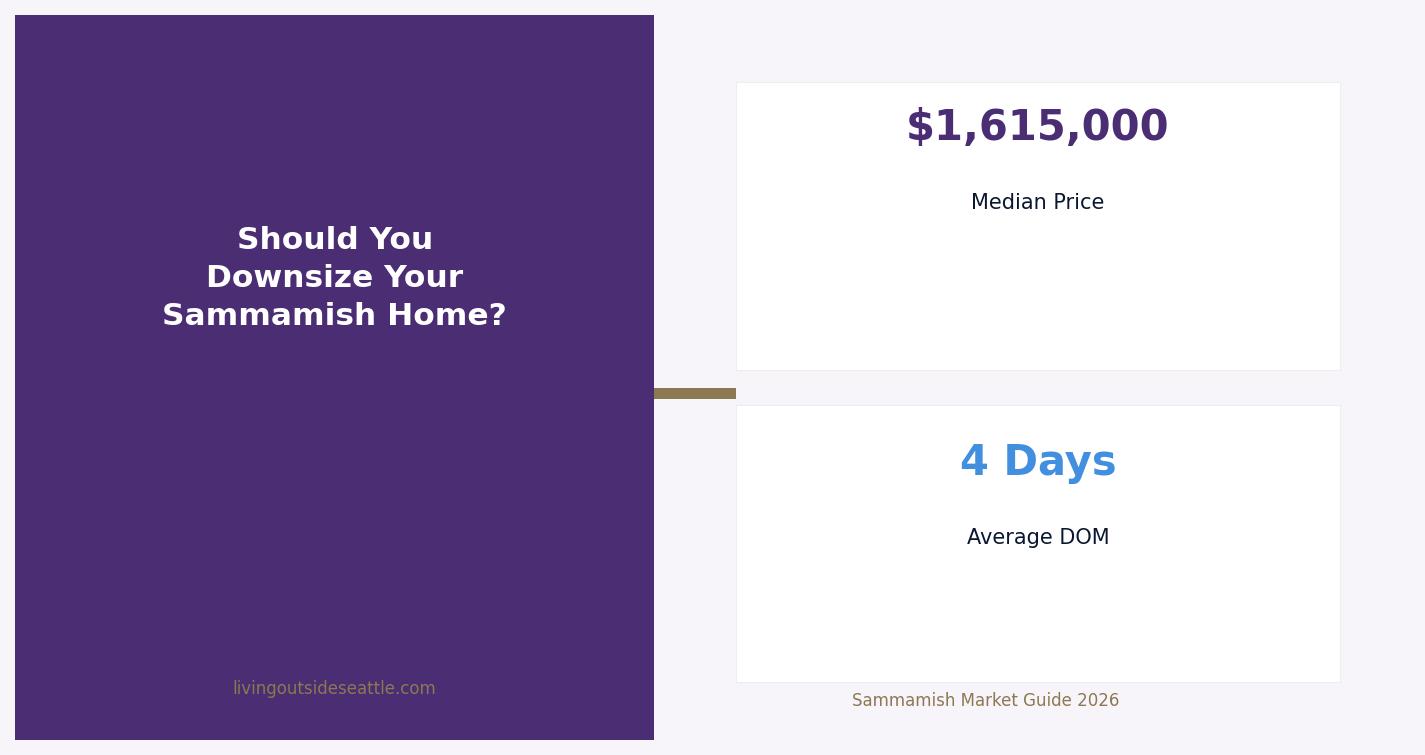
Sammamish inventory sits at 96 homes for sale with a median price of $1,615,000. Homes are moving fast here, too: median 4 days on market. If you’re thinking about downsizing, this is a strong moment to list.

The Financial Reality: What You’ll Actually Pocket Downsizing in Sammamish

Sammamish home downsize mortgage payment comparison 3% vs 6.38% rate 2026

Let’s use real numbers. Say you own a Sammamish home worth $1,615,000 today, the March 2026 median. Many of you bought between $800,000 and $1,000,000 when the market was softer. You likely have $600,000 or more in equity.

Your current mortgage is $300,000 at 3%. Monthly payment: about $1,265.

Now you sell. After real estate commissions, title, escrow, and loan payoff, you pocket roughly $1,100,000. Not $1,615,000. That’s the number that matters.

You buy a downsized home in Sammamish or nearby for $900,000. You put $600,000 down. Your new mortgage is $300,000 at today’s rate of 6.38%. Monthly payment: about $1,875.

So you pay roughly $610 more per month. Over 30 years, that’s about $220,000. Sounds bad.

But wait. Your old payment was $1,265. Your new payment is $1,875. You also own a home worth $900,000 instead of $1,615,000. You have $700,000 less in property debt. Your net worth shifted, not in dollars, but in flexibility.

Downsizing for the Right Reasons: Life Changes Trump Rate Lock-In

I’ll be honest: the rate differential stings. Going from 3% to 6.38% is real. But here’s what I see when I’m out evaluating homes five or six days a week in Sammamish: people aren’t staying for the payment. They’re staying because they’re afraid to move.

The actual reasons to downsize are not financial. They’re life. You want a single-story instead of managing a second floor with a knee issue. You want less yard to maintain. You want to be closer to downtown Sammamish or Eastside activity. You want to spend your equity on travel or grandkids instead of home maintenance.

Those reasons are worth the rate trade-off more often than the spreadsheet shows.

5 Key Factors Before You Downsize in Sammamish (Beyond the Mortgage Rate)

If you do sell, know this: Sammamish homes in excellent condition are moving at list price or above. The March 2026 list price ratio for Sammamish was 100%. That means homes priced right are getting what they’re listed for. Condition matters enormously. Buyers want move-in ready, even if they plan renovations later.

You’re also looking at capital gains exclusion, which matters. If you’ve lived in your Sammamish home as your primary residence for at least two of the last five years, you can exclude up to $250,000 in gains if you’re single, or $500,000 if you’re married. After 20+ years of ownership, that’s real money.

A 1031 exchange might apply if you’re thinking about investment property, but that’s worth separate analysis with your tax advisor.

The mortgage rate lock-in has felt permanent for a long time. It’s not anymore. Inventory is up, rates are what they are, and homes are still moving. If your reason for downsizing is life, not pure spreadsheet math, the financial piece will sort itself out.

Frequently Asked Questions About Downsizing in Sammamish

At what age should I downsize my Sammamish home?

There’s no “right age.” Most downsizers I work with are 55-70, but I’ve seen 45-year-olds move to single-story homes for simplicity and families with empty nests at any age. The trigger is usually a life change — retirement, health, an empty nest, a lifestyle shift — not a calendar date. Your situation is unique.

Will downsizing to a smaller home in Sammamish actually lower my taxes?

Property tax is assessed on the new home’s value, not savings from the old home. If your new Sammamish home is appraised lower, your annual property tax bill will be lower. You’ll also gain a capital gains exclusion ($250K-$500K depending on filing status) when you sell — that’s where the real tax savings usually come in. Talk to a CPA about your specific situation.

What’s the fastest way to sell my Sammamish home before I downsize?

The fastest option is a cash sale (7 days, but usually at a lower price). The smarter route is listing with an agent — Sammamish homes priced right sell at or above list price and close in 15-30 days. Since condition matters enormously here, a traditional sale often nets more even if it takes a little longer.

Can I do a 1031 exchange when downsizing my Sammamish home?

Only if you’re selling investment property and buying investment property of the same or greater value. If you’re selling your primary residence and buying a smaller primary residence, a 1031 exchange doesn’t apply. But you get the capital gains exclusion instead — often the better deal. Check with a tax advisor for your specific case.

Your guide to life outside Seattle.

Gregory Dorrell | Coldwell Banker Bain | WA License #111862
253-350-0045  ·
greg@livingoutsideseattle.com  ·
www.livingoutsideseattle.com
Gregory Dorrell is a licensed REALTOR® in Washington State (License #111862) with Coldwell Banker Bain. Market data sourced from NWMLS/MLS InfoSparks March 2026. This content is for informational purposes and not financial or tax advice. Please consult a tax advisor regarding capital gains, 1031 exchanges, or other tax implications specific to your situation.


55+ NeighborhoodEastsideIssaquahKing County Cities May 20, 2026

Living in Providence Point Issaquah

Living in Providence Point, Issaquah: What You Need to Know in 2026

Providence Point is the calm active adult community on the north end of Squak Mountain, restricted to residents 55 and older under federal HOPA rules. In 2026, with more buyers approaching retirement and looking for low-maintenance lifestyles, real community amenities, and a setting that delivers privacy without isolation, Providence Point is one of the most established choices in King County. If you want a home where the HOA handles the lawn, the roof, and the exterior, with a clubhouse and pool a short walk from your front door, this is the kind of neighborhood that delivers.

What is it actually like to live in Providence Point in 2026?

On a weekday morning, Providence Point feels relaxed and well-tended. Residents walk the internal paths with coffee in hand, head to the clubhouse for fitness classes or coffee with neighbors, or drive out for early appointments. The streets are quiet and the landscaping is professionally maintained, which is part of what residents pay for. The community has a steady rhythm that suits people who have moved past the rush-hour years.

On a weekend, Providence Point stays calm but more active. Residents host visitors, head into Issaquah for shopping or a meal, or use the clubhouse and pool. The community runs regular events including book clubs, holiday parties, and exercise programs. There is no commercial core inside Providence Point, which keeps outside traffic away and reinforces the calm setting.

Residents are 55 and older by community rule, so the demographic is naturally weighted toward retirees, semi-retirees, and downsizers. Many residents moved here from larger Eastside homes after their kids were grown, trading square footage and yard work for a manageable home and built-in community. What separates Providence Point from other 55-plus options on the Eastside is the established feel. The community has been around long enough that landscaping is mature, the social fabric is real, and the HOA has a long track record of management.

The community clubhouse at Providence Point in Issaquah, set in mature landscaping.

Homes in Providence Point: What the Data Shows

Most homes in Providence Point were built between the late 1980s and the 2000s, with the bulk of construction in the 1990s. The community is divided into multiple villages, each with its own sub-association, which means home types and HOA structures vary by village. You will find single-level detached homes, attached patio homes with no shared walls upstairs, traditional townhomes, and condo-style units. Sizes typically run 900 to 1,800 square feet on small lots, with many units designed around accessibility features like single-level living, wide doorways, and walk-in showers. The architectural style is classic Pacific Northwest with covered entries, mature landscaping, and consistent paint palettes.

Market Pulse Providence Point (98027) King County
Median Sales Price (May 2026) ~$695,000 ~$859,000
Median Days on Market ~24 days ~28 days
Active Listings Change (vs. Jan 2026) +22% +30%

Estimates based on current NWMLS data for the Providence Point sub-areas within the 98027 ZIP code. Pricing varies meaningfully by village and unit type, with detached single-level homes running well above the median and condo-style units running below.

School District Context for Providence Point

Providence Point is an age-restricted community for residents 55 and older under federal HOPA rules, so most residents do not have school-age children in the home. The community sits within the Issaquah School District boundaries, which still affects long-term property values and matters for any future resale to a non-restricted buyer if the community ever changes status, or for grandchildren visiting. The district is consistently rated in the top tier of Washington school districts, which is a quiet supporting factor in the neighborhood’s resale performance.

For reference, the immediately surrounding Issaquah School District boundary covers Issaquah Valley Elementary, Issaquah Middle School, and Issaquah High School. None of these schools are walking distance from Providence Point, but they are the assigned schools for the broader area.

The district reputation matters for resale even in a 55+ community because the broader real estate market values district quality. When you eventually sell, you are competing for buyer attention against other 55+ communities in less-well-rated districts, and the Issaquah School District boundary is one of the quiet advantages Providence Point carries.

Getting Around from Providence Point

Providence Point sits just south of the Issaquah retail core, with quick access to Front Street, I-90, and the Issaquah Transit Center. The location is one of the most convenient on the Eastside for residents who still travel regularly.

Destination Distance 2026 Peak Drive (AM) Transit Option
Downtown Seattle 17 miles 35 to 55 min I-90 / ST 554 from Issaquah Transit Center
Bellevue / Eastside Medical 9 miles 22 to 32 min I-90 to I-405 / ST 554
Swedish Issaquah Hospital 3 miles 7 to 12 min Drive
SeaTac Airport 22 miles 35 to 50 min I-405 to I-5 / Drive

Note: Swedish Issaquah Hospital replaces Microsoft on this table because for the 55+ buyer, proximity to medical care often matters more than proximity to the tech corridor.

A single-level detached patio home in the Providence Point active adult community in Issaquah.

What I See as a Valuation Expert in Providence Point

The HOA picture in Providence Point is the single most important valuation factor in the entire community. Monthly dues vary by village and unit type but typically run $400 to $700 per month, with some larger detached homes paying $300 to $500. The HOA covers exterior maintenance, roofs, paint, landscaping, insurance for common areas, the clubhouse, the pool, and most utility allocations beyond the unit itself. That sounds like a lot, and it is, but it is exactly what residents are paying for. When I assess homes in Providence Point for institutional lenders, the first document I read is the HOA reserve study. A weak reserve fund and a pending special assessment can change a buyer’s monthly cost picture quickly. Always pull the resale certificate and the most recent reserve study before you write an offer.

Curb appeal is consistent throughout Providence Point because the HOA controls landscaping and exterior paint. That consistency supports stable property values but also means individual units do not stand out the way they might in a fee-simple neighborhood. Where individual variation matters is interior condition. A fully updated unit with new flooring, modern kitchen, and accessible bathroom features will sell faster and at a meaningful premium over a similar-vintage unit with original finishes. The interior is the only part of the property the homeowner controls, so it is also the only part where they can add or lose value.

Within Providence Point, certain villages and unit types sell faster and at the top of the price range. Single-level detached homes always move first because they are the most desired and the rarest in the community. Units with private patios backing to greenbelt or forested borders also command premiums. End units and corner units in the attached product types tend to outperform interior units.

Explore Providence Point Yourself

The fastest way to know if Providence Point fits is to drive through the perimeter loop, walk a section of the internal paths, and stop by the clubhouse to see the social rhythm in person.

View Providence Point on Google Maps →

Your guide to life outside Seattle.

Gregory Dorrell | Coldwell Banker Bain | WA License #111862
253-350-0045  ·
greg@livingoutsideseattle.com  ·
www.livingoutsideseattle.com
King County CitiesSouth King County May 18, 2026

Living in Kent, WA | 2026 Real Estate & Lifestyle Guide

Living in Kent, WA: Your 2026 Real Estate & Lifestyle Guide

Why Kent Stands Out in 2026

King County’s median home price is around $859,000 as of May 2026. Kent’s median comes in well below that — typically between $575,000 and $640,000 for a single-family home. That gap is exactly why Kent is the most-searched affordable city in south King County for first-time buyers right now. With 140,000 residents, Kent is the third-largest city in King County and one of the largest in Washington state. It is a real city — not just a suburb — with its own downtown, employment base, and cultural identity.

The 30% inventory increase across the county is being felt here. Buyers now have time to breathe, inspect, and negotiate. Sellers need to price with more discipline than they have in years. That shift benefits buyers in a big way.

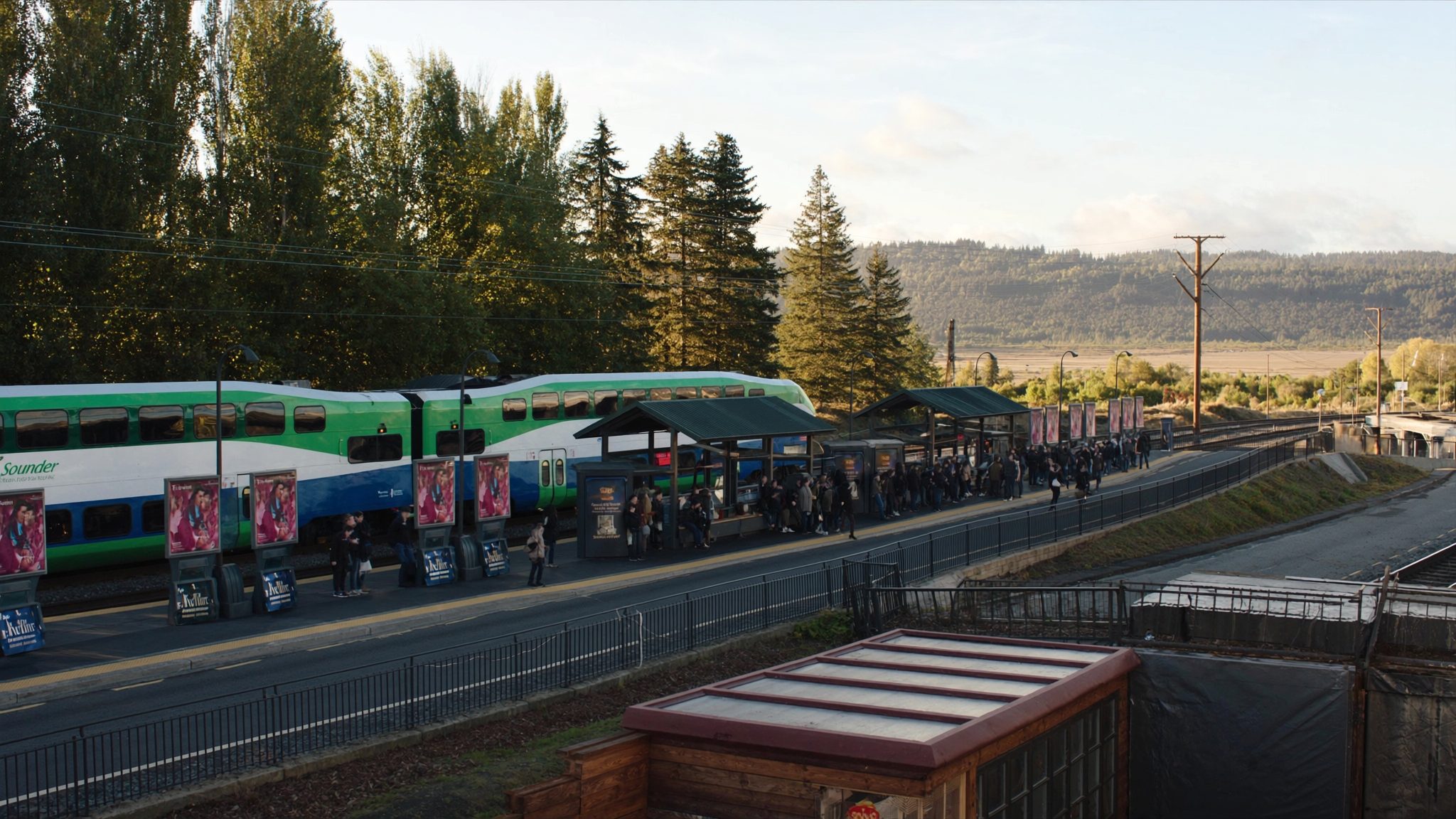
Who is buying in Kent in 2026? A lot of first-time buyers priced out of Renton or the Eastside. Working families who need SR-167 and I-5 access for jobs across south King County, Boeing, the Port of Seattle, and the Kent Industrial Valley — one of the largest warehouse and logistics clusters in the Pacific Northwest. Kent is also drawing relocators from California and other high-cost states who see it as a genuine bargain. The Kent Sounder Station and Sound Transit bus connections to Seattle are major draws for buyers who do not want to drive every day. Kent is practical, affordable, and consistently underrated.

Kent Washington Sounder commuter train station providing direct rail access to downtown Seattle from south King County
The Kent Sounder Station connects residents to downtown Seattle in about 40 to 50 minutes — no freeway required.

Commute Times from Kent

Kent is one of the best-connected cities in south King County for commuters. The Kent Sounder Station runs commuter rail to downtown Seattle. Sound Transit express buses operate from multiple Kent park-and-ride facilities. SR-167 (Valley Freeway) runs the length of the city — north to Renton and I-405, south to Auburn and SR-18. I-5 is accessible to the west, and SR-516 connects East Hill toward Covington and Maple Valley.

Destination Distance 2026 Peak Commute Transit Option
Downtown Seattle 25 miles 40 to 60 min Sounder Train / I-5
Amazon (South Lake Union) 25 miles 45 to 65 min Sounder + Link Transfer
Microsoft (Redmond) 25 miles 40 to 55 min SR-167 to SR-520 / Drive
Bellevue Tech Corridor 18 miles 30 to 45 min SR-167 to I-405 / Drive
SeaTac Airport 12 miles 15 to 25 min SR-167 / Drive

Kent’s proximity to SeaTac Airport — about 12 miles — is one of the most underrated practical advantages of living here. If you travel regularly for work, being 15 to 25 minutes from the airport without fighting Seattle traffic is a genuine lifestyle improvement.

Neighborhoods in Kent: A Quick Look

Kent is a geographically large city with a distinct East Hill plateau, a valley floor, and the original downtown core. Each area has its own feel, price range, and school assignment.

Kent Washington East Hill residential neighborhood street with Pacific Northwest homes and mature trees
Kent East Hill — the most popular residential area in the city, with strong schools, parks, and the widest selection of move-in-ready homes.

Kent East Hill

East Hill is the most populous residential part of Kent, sitting on the plateau above the valley to the east of downtown. The character is diverse and family-oriented, with a mix of established 1980s and 1990s subdivisions and newer construction from the 2000s and 2010s. Homes typically run 1,600 to 3,200 sq ft on lots from 5,000 to 9,000 sq ft. East Hill is served by the Kent School District. Elementary options include Meridian, Lake Youngs, and Panther Lake — feeding into Meridian Middle School and Kentwood High School. Kentwood has strong programs and a large, engaged student body. Covington Park and Lake Meridian Park are the major recreational anchors. Lake Meridian offers swimming, boat launches, and walking trails. East Hill is where most Kent families end up — the combination of schools, parks, and price point is hard to beat in south King County.

Schools (Kent School District):

Meridian Elementary  ·
Lake Youngs Elementary  ·
Meridian Middle School  ·
Kentwood High School

Kent West Hill

West Hill sits on the plateau west of downtown, between the valley floor and SR-99. The character is older and more varied than East Hill, with housing dating from the 1960s through the 1980s and a wider range of property conditions. Homes run 1,200 to 2,400 sq ft on lots from 6,000 to 10,000 sq ft. Ranch-style and split-level homes are common. The Kent School District serves this area — Soos Creek Elementary and nearby schools feed into Kent-Meridian High School, which has strong vocational and technical programs. The Soos Creek Trail corridor runs through here, providing miles of biking and walking. Buyers who want more land and a lower entry price than East Hill often find solid opportunities on West Hill.

Schools (Kent School District):

Soos Creek Elementary  ·
Mill Creek Middle School  ·
Kent-Meridian High School

Downtown Kent / Valley Floor

The original downtown Kent and the valley floor sit at the base of the plateaus along the Green River. The character is urban-for-Kent — close to commercial corridors, the Sounder station, and Kent Station retail center with a theater and dining. Housing is a mix of older craftsman and mid-century homes, newer condos and townhomes near the transit center. Single-family homes run 1,000 to 1,800 sq ft on compact lots, with prices among the lowest in the city. The Kent School District serves this area. The Green River Trail connects right through downtown Kent, providing biking and walking access north to Renton and south toward Auburn. For buyers who want the lowest price point and the best Sounder access, downtown Kent is the search area.

Schools (Kent School District):

Kent Elementary  ·
Neely O’Brien Elementary  ·
Mill Creek Middle School  ·
Kent-Meridian High School

Panther Lake

Panther Lake is a semi-urban neighborhood in the central part of East Hill, taking its name from the small lake at its heart. The character is quiet and residential, with a mix of 1980s and 1990s construction and some newer townhome developments around the lake perimeter. Homes range from 1,400 to 2,600 sq ft on lots from 6,000 to 9,000 sq ft. The Kent School District serves this area — Panther Lake Elementary feeds into Meridian Middle School and Kentwood High. The lake itself is the community anchor, with a small park and trail loop around the water. Panther Lake is a solid middle-market option for buyers who want a true neighborhood feel with a small water amenity at an East Hill price.

Schools (Kent School District):

Panther Lake Elementary  ·
Meridian Middle School  ·
Kentwood High School

Lake Meridian

Lake Meridian is one of Kent’s premier residential areas, surrounding the large swim lake of the same name in the central-east part of East Hill. The character is active and community-driven — Lake Meridian Park has a beach, boat launch, and swimming area that draws the whole neighborhood on summer weekends. Homes closest to the lake are the most desirable, with lakefront properties commanding real premiums. Overall neighborhood homes run 1,800 to 3,400 sq ft on lots from 7,000 to 12,000 sq ft, with some larger lots backing to the lake. The Kent School District serves this area — Lake Youngs Elementary and Meridian Middle School feed into Kentwood High. This neighborhood consistently sells faster and holds value better than most other Kent areas because lake access is a genuinely rare amenity.

Schools (Kent School District):

Lake Youngs Elementary  ·
Meridian Middle School  ·
Kentwood High School

Soos Creek Corridor

The Soos Creek corridor runs roughly north-south through the eastern part of Kent, and the residential neighborhoods here back to — or are near — the Soos Creek Wetlands and trail system. The character is greenbelt-adjacent and slightly more rural-feeling than other East Hill neighborhoods. Homes tend toward 1980s and 1990s construction, running 1,500 to 2,800 sq ft on lots from 7,000 to 15,000 sq ft, with some backing directly to the greenbelt. The Kent School District serves this area. The Soos Creek Trail runs 12 miles from Auburn to Renton — a major asset for walkers, runners, and cyclists. Buyers who want a backyard that feels more like the Pacific Northwest than a typical suburb should look closely here.

Schools (Kent School District):

Soos Creek Elementary  ·
Martin Sortun Elementary  ·
Meridian Middle School  ·
Kentlake High School

Kent Station / Midway

The Midway area connects Kent’s north end to the SeaTac and Des Moines corridor along SR-99 and I-5. It has historically been more commercial and transitional, but it is seeing residential development as the region grows. Housing here is a mix of older single-family homes on larger lots, newer townhomes, and multi-family buildings. Single-family prices are among the lowest in the city — often starting in the $475,000 to $550,000 range. The Kent School District serves this area. SeaTac proximity is the major practical advantage — 12 minutes to the airport without I-5 is a legitimate lifestyle feature. Buyers focused on value and airport access often find their best options here.

Schools (Kent School District):

Springbrook Elementary  ·
Neely O’Brien Elementary  ·
Mill Creek Middle School  ·
Kentridge High School

Covington / SE Kent

The southeast edge of Kent transitions toward Covington, where lot sizes increase and the character shifts toward semi-rural. Homes here tend to be on larger parcels — often a quarter to half acre — with 1990s and early 2000s construction running 1,800 to 3,500 sq ft. Some pockets fall in the Kent School District and others in the Tahoma School District — Tahoma High School is consistently rated one of the best in Washington State. School assignment confirmation is essential before you write an offer here. Buyers who want more land without moving all the way to Covington often find good value in the SE Kent zone.

Schools (Kent or Tahoma SD — verify by address):

Martin Sortun Elementary  ·
Meridian Middle School  ·
Kentlake High School  ·
Tahoma Senior High School

Meridian Valley

Meridian Valley sits along the northern border of Kent where the city meets Renton. Homes in this area run 1,800 to 3,200 sq ft on lots from 6,500 to 12,000 sq ft, with mostly 1980s and 1990s construction. The Kent School District serves the Kent portions. This part of the city has strong SR-167 access, which cuts commute times to Renton and Bellevue significantly. Lake Youngs Reservoir is a short drive, and the Soos Creek trail network connects nearby. Buyers looking for the most convenient north Kent access to I-405 and the Eastside should put Meridian Valley on their search map.

Schools (Kent School District):

Meridian Elementary  ·
Lake Youngs Elementary  ·
Meridian Middle School  ·
Kentridge High School

Scenic Hill

Scenic Hill is one of Kent’s oldest and most established residential neighborhoods, sitting on the hillside west of downtown with territorial views of the Kent valley. The character is classic Pacific Northwest — mature firs, established yards, older homes with real character, and a tight-knit community. Most homes were built between 1950 and 1980, running 1,400 to 2,400 sq ft on lots from 8,000 to 14,000 sq ft. Many homes have partial views of the valley and mountains on clear days. The Kent School District serves Scenic Hill. Kent Elementary and Mill Creek Middle School are common assignments, feeding into Kent-Meridian High. Scenic Hill Park provides trail access and views. For buyers who want an older home with character, a larger lot, and a view component in Kent, Scenic Hill is one of the first places I recommend.

Schools (Kent School District):

Kent Elementary  ·
Mill Creek Middle School  ·
Kent-Meridian High School

Kent Washington real estate market 2026 -- craftsman home with landscaped yard representing home values and investment in King County
Well-priced Kent homes in good school zones are still selling in two to four weeks in 2026 — even with the countywide inventory increase.

Market Dynamics & Investment Value in Kent

Kent is the most affordable city in King County at meaningful scale. In 2026, that affordability advantage shows up clearly in buyer demand. Even with a 30% inventory increase countywide, well-priced Kent homes in good school zones are still moving in two to four weeks. That is not as fast as the frenzied three-to-five-day pace of 2021 and 2022, but it is still healthy activity for a market absorbing rising rates and softening demand at the same time.

The neighborhoods that have held value best in Kent over the last 12 months are the ones you would expect: Lake Meridian, Trossachs-adjacent areas near the Covington border, and anything in the Kent School District with a Kentwood High School assignment. Homes in those zones have stayed flat to slightly positive on price. Areas that have softened more include parts of West Hill and the downtown valley, where older housing stock gives buyers more condition hesitation when they have better options to compare against.

Kent’s light industrial employment base in the valley provides economic stability that some other South King County cities lack. Boeing, Blue Origin, and numerous logistics and warehouse firms employ tens of thousands of workers within 10 miles of most Kent neighborhoods. That blue-collar employment demand supports home prices at the entry level in ways that are less visible than tech employment but arguably more stable.

Scenic Hill neighborhood in Kent Washington with older craftsman homes mature trees and territorial views of the Kent valley
Scenic Hill — Kent’s most established hillside neighborhood, with larger lots, mature trees, and partial valley views.

Frequently Asked Questions: Living in Kent, WA

Is Kent, WA a good place to live?

Kent is a strong fit for buyers who want affordability, practical transit access, and a real Pacific Northwest lifestyle without Eastside prices. With 140,000 residents, it has the services and infrastructure of a real city — not just a suburb. For first-time buyers, growing families, and people moving from higher-cost markets, Kent consistently ranks as one of the best value cities in the Seattle metro.

What is the average home price in Kent, WA in 2026?

Kent’s median home price in 2026 runs between $575,000 and $640,000 for single-family homes. East Hill and Lake Meridian areas run higher — $620,000 to $750,000. Downtown Kent and West Hill offer more entry-level options starting in the $475,000 to $530,000 range. Homes are averaging three to five weeks on market in good school zones, giving buyers meaningful time to inspect compared to prior years.

What are the best neighborhoods in Kent, WA?

For families with kids, East Hill and Lake Meridian lead the pack — schools, parks, and price point all align. For the best Sounder access and lowest prices, Downtown Kent is worth a close look. For more breathing room and greenbelt access, the Soos Creek Corridor and SE Kent near the Covington edge offer larger lots. Scenic Hill is the best option for buyers who want character, views, and a true neighborhood feel.

How far is Kent, WA from Seattle?

Kent is about 25 miles south of downtown Seattle. By Sounder commuter train, the trip takes roughly 40 to 50 minutes without freeway driving. By car on I-5, expect 40 to 60 minutes during AM peak hours. For frequent Seattle commuters, the Sounder is one of Kent’s most practical advantages — and the 12-mile proximity to SeaTac is genuinely useful for business travelers.

What school district serves Kent, WA?

Most of Kent is served by the Kent School District. Parts of southeast Kent near the Covington border fall in the Tahoma School District, which includes Tahoma High School — one of the top-rated high schools in Washington State. Always confirm the school district for any specific address before writing an offer.

Explore Kent Yourself

Kent rewards exploration. Drive East Hill on a Saturday, walk the Green River Trail segment through town, then drive the Kent Station area to understand the transit access. The city is bigger and more varied than most people expect until they actually move through it.

View Kent on Google Maps

Your guide to life outside Seattle.

Gregory Dorrell | Coldwell Banker Bain | WA License #111862
253-350-0045 ·
greg@livingoutsideseattle.com ·
www.livingoutsideseattle.com
King County CitiesSouth King County May 18, 2026

Living in Federal Way, WA | 2026 Real Estate & Lifestyle Guide

Living in Federal Way, WA: Your 2026 Real Estate & Lifestyle Guide

Why Federal Way Stands Out in 2026

King County’s median home price sits around $859,000 as of May 2026. Federal Way’s median is one of the lowest in the county for a city of its size — typically between $525,000 and $580,000. That makes Federal Way one of the most accessible communities in King County for buyers who need more home for their dollar. With over 100,000 residents, Federal Way is the fourth-largest city in King County. It sits right on the I-5 corridor between Seattle and Tacoma, with SeaTac Airport 12 miles to the north and the South King County job base within easy reach.

The city has had a complicated reputation, but the picture in 2026 is more nuanced than the old story suggests. Federal Way has significant natural assets — Puget Sound waterfront at Dash Point State Park, Steel Lake, and the Celebration Park athletic complex — that most people outside the city do not know about. The downtown core around The Commons is still transitional, but the I-5 corridor has seen steady commercial investment. And the Link Light Rail connection is now operational, which changes the commute math for a lot of buyers. Federal Way is not pretending to be somewhere else. It is a practical, affordable city with real amenities, and in 2026, smart buyers are paying attention.

Federal Way Transit Center with Sound Transit Link light rail station connecting Federal Way to Seattle and SeaTac Airport
The Federal Way Link Extension opened in 2024 — giving residents direct 1 Line light rail access to SeaTac Airport in about 20 minutes and downtown Seattle in about 50 minutes.

Commute Times from Federal Way

Federal Way’s transit situation improved significantly with the opening of the Federal Way Link Extension in 2024. The 1 Line now includes the Federal Way Transit Center Station, giving residents direct light rail access to Seattle without getting on I-5. This is a meaningful change and one of the key reasons buyer interest has picked up near the transit center. I-5 remains the primary driving corridor, while SR-99 provides a slower but practical surface alternative. SR-18 connects east toward Auburn and Covington.

Destination Distance 2026 Peak Commute Transit Option
Downtown Seattle 27 miles 35 to 55 min 1 Line Light Rail / I-5
Amazon (South Lake Union) 28 miles 40 to 60 min Link Transfer at Westlake / Drive
Microsoft (Redmond) 35 miles 50 to 70 min Drive / SR-99 to I-405
Bellevue Tech Corridor 25 miles 40 to 55 min I-5 to I-405 / Drive
SeaTac Airport 12 miles 15 to 25 min 1 Line Light Rail (direct) / Drive

The Link Light Rail connection to SeaTac is one of the best practical advantages of living in Federal Way in 2026. The direct rail ride from Federal Way Transit Center to the airport takes about 20 minutes — no parking, no stress.

Neighborhoods in Federal Way: A Quick Look

Federal Way covers a large area with distinct communities that vary in character, price, and proximity to amenities. Here is a guide to the major neighborhoods buyers should know.

Twin Lakes neighborhood in Federal Way Washington with Pacific Northwest homes surrounding the lake and mature trees
Twin Lakes — one of Federal Way’s most desirable neighborhoods, where 1970s and 1980s homes surround two small lakes with park access and trails.

Dash Point / Lakota

Dash Point is Federal Way’s most distinctive neighborhood, sitting on the Puget Sound waterfront in the northwest corner of the city. The character is genuinely coastal Pacific Northwest — bluff-top homes with Sound views, forest trails, and proximity to Dash Point State Park, which has one of the few accessible sandy beaches on this stretch of Puget Sound. Homes range from 1960s and 1970s construction to newer custom builds, typically 1,800 to 3,500 sq ft. Waterfront and view properties command significant premiums. Lakota sits immediately east with a similar wooded character. Dash Point Park trails connect directly to the neighborhood.

Schools (Federal Way School District):

Lake Grove Elementary  · 
Lakota Middle School  · 
Decatur High School

Twin Lakes

Twin Lakes is one of Federal Way’s most established and sought-after neighborhoods, centered on two lakes in the western-central part of the city. The character is mature and community-driven, with strong HOA governance and a consistent aesthetic. Homes were mostly built between 1972 and 1990, running 1,800 to 3,000 sq ft on lots from 7,500 to 12,000 sq ft. The Twin Lakes Community Club manages shared amenities including lake access and beach areas. Twin Lakes is consistently one of Federal Way’s fastest-selling neighborhoods because the lake access and HOA maintenance hold value in ways other areas do not always match.

Schools (Federal Way School District):

Twin Lakes Elementary  · 
Lakeland Elementary  · 
Lakota Middle School  · 
Decatur High School

Steel Lake / Downtown Core

The Steel Lake area and downtown Federal Way sit in the central part of the city, centered on Steel Lake Park and the commercial corridor along S 320th Street. Steel Lake Park is Federal Way’s largest community park, with a swim beach, sports fields, picnic areas, and a boat launch. Homes run 1,200 to 2,400 sq ft on lots from 6,000 to 10,000 sq ft, with prices among the most accessible in the city. The Federal Way Transit Center is nearby — direct Light Rail to Seattle and SeaTac is walking distance for some residents. For buyers who want maximum transit access and affordability, the Steel Lake corridor deserves serious attention.

Schools (Federal Way School District):

Steel Lake Elementary  · 
Sacajawea Middle School  · 
Federal Way High School

North Federal Way / Jovita

North Federal Way runs along the city’s border with Des Moines and Kent, with Jovita being a specific neighborhood in the northeast corner. The character is quiet and suburban, with 1970s and 1980s construction dominating the housing stock. Homes typically run 1,400 to 2,400 sq ft on lots from 7,000 to 11,000 sq ft. Easy I-5 access makes commuting toward Seattle or Tacoma straightforward. Federal Way High School is the district’s oldest school with broad program offerings. Buyers in north Federal Way get slightly shorter commutes to SeaTac and Kent while staying in the Federal Way price bracket.

Schools (Federal Way School District):

Sunnycrest Elementary  · 
Totem Middle School  · 
Federal Way High School

Mirror Lake

Mirror Lake is a quiet residential area in the central-west part of Federal Way, anchored by the small lake it shares its name with. The character is calm and neighborhood-oriented, with a mix of 1970s ranch homes, 1980s two-stories, and some newer infill. Homes run 1,400 to 2,600 sq ft on lots from 7,000 to 10,000 sq ft. The lake provides a pleasant green backdrop for surrounding homes. Mirror Lake Elementary is one of the district’s well-regarded schools. Prices run slightly above the Federal Way average because of the school assignments and established neighborhood feel.

Schools (Federal Way School District):

Mirror Lake Elementary  · 
Lakota Middle School  · 
Decatur High School

Celebration Park / Easter Lake

The Celebration Park area sits in the southwest part of Federal Way, organized around one of the largest athletic park complexes in the region — 19 athletic fields, trails, and significant green space. Easter Lake is a small neighborhood lake nearby. Homes in this corridor run 1,500 to 2,800 sq ft on 1980s and 1990s construction, with lots from 7,000 to 12,000 sq ft. Todd Beamer High is one of the newer schools in the district and has developed a strong academic culture. Buyers with kids in youth sports often prioritize this area for obvious reasons.

Schools (Federal Way School District):

Wildwood Elementary  · 
Sequoyah Middle School  · 
Todd Beamer High School

Redondo / Marine Hills

Redondo sits at Federal Way’s northwest corner near Des Moines. The character here is coastal and slightly upscale for Federal Way — Redondo Beach provides Puget Sound access with a small marina, waterfront dining, and stunning Cascade and Olympic Mountain views on clear days. Marine Hills is the residential neighborhood climbing the bluff above Redondo, with homes from modest 1960s ramblers to larger view properties from the 1980s and 1990s. Home sizes run 1,400 to 2,800 sq ft on lots from 7,000 to 14,000 sq ft. Buyers who want Puget Sound access at Federal Way prices should seriously explore Redondo.

Schools (Federal Way School District):

Redondo Elementary  · 
Lakota Middle School  · 
Decatur High School

South Federal Way / Camelot

South Federal Way and the Camelot area sit near the Pierce County line, south of S 356th Street. The character is quieter and more suburban than the city core, with larger lots and a mix of older established homes and newer construction. Homes run 1,500 to 3,000 sq ft on lots from 8,000 to 14,000 sq ft. Some newer subdivisions have HOAs with maintained common areas. SR-18 provides east access toward Auburn, opening commuting options other Federal Way neighborhoods do not have. This is one of Federal Way’s most affordable sectors by square foot. Always confirm school assignment based on the specific address near the district boundary.

Schools (Federal Way School District — verify by address):

Camelot Elementary  · 
Sequoyah Middle School  · 
Todd Beamer High School

Wynstone

Wynstone is a planned residential community in the eastern part of Federal Way, built in the 1990s and 2000s with a consistent aesthetic and HOA management. Single-family homes run 1,800 to 3,000 sq ft on lots from 5,000 to 8,000 sq ft, with prices in the $525,000 to $650,000 range. Thomas Jefferson has strong fine arts programs and a dedicated community. Buyers who want newer construction in a managed community at Federal Way prices will find Wynstone competitive.

Schools (Federal Way School District):

Valhalla Elementary  · 
Illahee Middle School  · 
Thomas Jefferson High School

The Villages / Brittany Lane

The Villages and Brittany Lane are two adjacent subdivisions in the north-central part of Federal Way with newer construction at a reasonable price. Homes were mostly built between 1995 and 2010, running 2,000 to 3,400 sq ft on lots from 5,000 to 9,000 sq ft — Northwest contemporary style with open floor plans and attached garages. Buyers who want move-in-ready construction with HOA-maintained common areas find these neighborhoods an easy transition. Celebration Park and Steel Lake Park are both a short drive away.

Schools (Federal Way School District):

Panther Lake Elementary  · 
Lake Grove Elementary  · 
Lakota Middle School  · 
Decatur High School

Federal Way Washington real estate market 2026 -- well-maintained Pacific Northwest home representing affordable King County housing values
Federal Way’s median home price of $525,000 to $580,000 makes it one of the most affordable entry points into King County for buyers who need light rail access.

Market Dynamics & Investment Value in Federal Way

Federal Way’s market has been shifting in ways buyers should understand in 2026. The 30% inventory increase countywide has given buyers more time and more options than they have had since 2018. Homes that would have gone under contract in a weekend in 2022 are now sitting two to five weeks before offers come in. That shift means buyers can inspect properly, request repairs, and negotiate without the all-or-nothing sprint. That is a meaningful quality-of-life improvement for the buying process.

Price trends over the last 12 months show modest softening in the $550,000 to $650,000 range, while homes under $525,000 have held relatively steady because of persistent demand from first-time buyers. The Light Rail opening in 2024 added a specific boost to properties within one to two miles of the Federal Way Transit Center — homes in that radius have outperformed the broader Federal Way market by roughly 5% to 8% on price stability over the past 12 months.

Federal Way’s proximity to both Seattle and Tacoma gives it practical resilience that pure bedroom communities do not always have. The employment base here is diverse — Port of Tacoma, Boeing in Auburn and Renton, Joint Base Lewis-McChord to the south, and the growing South King County logistics sector. That diversity of employment reduces the single-employer risk that some Seattle-adjacent markets face when tech companies cut headcount.

Dash Point State Park beach in Federal Way Washington with Puget Sound and Olympic Mountains view
Dash Point State Park — Federal Way’s hidden gem, with 3,301 acres of forest, a sandy Puget Sound beach, and Olympic Mountain views that most buyers don’t know exist until they move here.

Frequently Asked Questions: Living in Federal Way, WA

Is Federal Way, WA a good place to live?

Federal Way is a strong fit for buyers who want affordability, light rail access, and Puget Sound proximity without Seattle prices. It is not the most polished city in King County, but it offers something genuinely hard to find: Sound waterfront access, a direct rail connection to SeaTac, and home prices $300,000 below the county median. For first-time buyers, families on a budget, and frequent travelers, Federal Way delivers strong practical value.

What is the average home price in Federal Way, WA in 2026?

Federal Way’s median home price in 2026 runs between $525,000 and $580,000 for single-family homes citywide. Twin Lakes and Dash Point areas run higher — $600,000 to $750,000 depending on views and lake access. South Federal Way and parts of the downtown core offer the most affordable entry points, often starting under $500,000. Homes are averaging two to five weeks on market in 2026.

What are the best neighborhoods in Federal Way, WA?

For outdoor lifestyle and Puget Sound access, Dash Point and Redondo are standouts. For established neighborhood character and lake access, Twin Lakes consistently holds value the best. For transit access and affordability, Steel Lake near the Federal Way Transit Center is the smart choice. For newer construction and family-friendly parks, Wynstone and the Celebration Park area deliver well.

How does Federal Way connect to Seattle in 2026?

The Federal Way Link Extension opened in 2024, adding Federal Way Transit Center Station to the 1 Line. The direct rail ride to downtown Seattle takes about 35 minutes. SeaTac is about 20 minutes by rail — no parking, no traffic. By car on I-5, expect 35 to 55 minutes to downtown Seattle during AM peak hours depending on conditions.

What school district serves Federal Way, WA?

Most of Federal Way is served by the Federal Way School District. Parts of south Federal Way near the Pierce County line may fall near school district boundaries — always confirm the specific school assignment for any address before writing an offer. The district has multiple high schools including Decatur, Federal Way, Todd Beamer, and Thomas Jefferson.

Explore Federal Way Yourself

Start at Dash Point State Park for the Sound view and trail walk. Then drive through Twin Lakes to see the established neighborhood character. Finish at Steel Lake Park on a weekend afternoon when the community is out. You will understand what Federal Way is actually about.

View Federal Way on Google Maps

Your guide to life outside Seattle.

Gregory Dorrell | Coldwell Banker Bain | WA License #111862
253-350-0045 ·
greg@livingoutsideseattle.com ·
www.livingoutsideseattle.com
RentonSouth King County May 18, 2026

Living in Renton, WA – Your 2026 Real Estate & Lifestyle Guide


Living in Renton, WA | 2026 Real Estate & Lifestyle Guide


Living in Renton, WA: Your 2026 Guide to Real Estate, Neighborhoods & Life in the Boeing-Amazon Corridor

Why Renton Stands Out in 2026

King County’s median home price sits at about $859,000 as of May 2026. That’s a big number. Renton’s median runs closer to $650,000 — real savings compared to Bellevue or Seattle, without giving up location. Inventory across King County is up about 30% from last year. That means buyers in Renton have more homes to choose from, more time to think, and more room to negotiate. Most buyers here are working professionals, Boeing and Amazon employees, and families who want good schools without a Bellevue price tag.

Renton has a feel that’s hard to find anywhere else in King County. You get Lake Washington to the northwest, the Cedar River running through downtown, and Mount Rainier framed perfectly on a clear day from the Highlands. The 405 runs right through the city, so you’re 15 minutes from Bellevue on a good morning. Boeing’s Renton Factory — where 737s roll off the line — sits right along the lake. That factory is part of the city’s identity. So are the newer mixed-use developments at The Landing, the trail systems along the Cedar River, and a downtown that’s been quietly improving for the last decade. This is a working city that’s grown into something genuinely livable.

Gene Coulon Memorial Beach Park on Lake Washington in Renton WA

Commute Times from Renton

Renton’s transit picture improved significantly with the Stride S2 Bus Rapid Transit line, which launched service along the 405 corridor. The S2 connects Renton to Bellevue and Lynnwood, with a stop at South Renton Transit Center. For Link Light Rail riders, the Rainier Beach Station (Line 1) is about 10 minutes north in Seattle and offers a car-free connection to downtown Seattle and Sea-Tac. Most Renton residents still drive to work, but the options are better now than they’ve ever been.

Destination Distance 2026 Peak Commute (AM Drive) Transit Option
Downtown Seattle 12 miles 25-45 min I-405 N to I-5 N / Drive
Amazon (South Lake Union) 14 miles 30-50 min I-405 N + I-5 N / Drive
Microsoft (Redmond) 18 miles 30-50 min I-405 N / Stride S2 + Transfer
Bellevue Tech Corridor 10 miles 15-30 min I-405 N / Stride S2
SeaTac Airport 9 miles 15-25 min I-405 S to SR-167 / Link Light Rail (via Rainier Beach)

Drive times reflect typical AM peak conditions. Transit times include walk and wait. Always check Google Maps before your first commute day.

Cedar River Trail through autumn forest in Renton WA

Neighborhoods in Renton: A Quick Look

Renton is a big city with a lot of distinct neighborhoods. Each one has its own price range, vibe, and school profile. Below is a quick overview of the 10 neighborhoods covered in this guide.

The Landing

The Landing is Renton’s newest face. Built on the former Boeing manufacturing site along Lake Washington, this mixed-use district has condos, townhomes, restaurants, and a Target — all within walking distance of the waterfront. It draws young professionals and Boeing employees who want low-maintenance living close to the lake. Homes here are mostly condos and attached townhomes from the mid-2000s through 2020s. Square footage typically runs 700 to 1,400 sq ft. The feel is urban and walkable, which is genuinely rare in south King County. A short walk to Gene Coulon Memorial Beach Park puts Lake Washington right in your backyard.

Schools (Renton School District):

Hazel Valley Elementary  · 
Nelsen Middle School  · 
Renton High School

Kennydale

Kennydale sits on a hillside above Lake Washington in north Renton. It’s one of the most sought-after areas in the city. Homes range from 1960s ramblers to newer two-story builds, typically 1,500 to 2,800 sq ft on lots between 6,000 and 10,000 sq ft. Many homes have territorial views of the lake and the Seattle skyline. The neighborhood borders Gene Coulon Park, giving residents easy access to Lake Washington shoreline, swimming, and boat launches. The vibe here is established, quiet, and family-oriented. It tends to hold value well because of the views and the access to the lake.

Schools (Renton School District):

Kennydale Elementary  · 
McKnight Middle School  · 
Hazen High School

Renton Highlands

The Highlands is one of Renton’s largest and most diverse neighborhoods. It sits on a plateau east of downtown, offering wide views of the Cascades on clear days. Housing ranges from 1950s and 1960s ranchers to newer infill construction. Homes typically run 1,100 to 2,200 sq ft on mid-size lots. This is a working-class neighborhood with strong community roots. You’ll find a mix of longtime owners and newer arrivals drawn by relative affordability. The neighborhood has a community center, parks, and easy access to 405. For buyers who want space and value over prestige, the Highlands offers both.

Schools (Renton School District):

Highlands Elementary  · 
McKnight Middle School  · 
Hazen High School

Talbot Hill

Talbot Hill rises just south of downtown Renton and offers some of the best views in the city — Rainier, the valley, and on clear days, the Olympic Mountains. This is a quiet, established neighborhood with mostly single-family homes from the 1960s through 1990s. Typical home sizes run 1,400 to 2,400 sq ft on generous lots. Many properties have been updated over the years, making this a nice spot for buyers who want character homes with equity upside. Talbot Ridge Natural Area gives hikers a wooded escape right in the neighborhood. Prices here often come in under Kennydale while delivering comparable city views.

Schools (Renton School District):

Talbot Hill Elementary  · 
Nelsen Middle School  · 
Renton High School

East Renton

East Renton is a transitional neighborhood — part suburb, part semi-rural. It sits on the eastern edge of the city, bordering unincorporated King County and Maple Valley territory. Homes here are often larger and on bigger lots — think 1,600 to 3,000 sq ft on parcels ranging from 8,000 sq ft to a quarter-acre. Many properties were built in the 1980s and 1990s. The feel is quiet and spread out. Buyers get more land for the money here than almost anywhere else in Renton proper. Maple Valley Highway (SR-169) is the main artery, connecting residents south to Maple Valley and north to Renton’s urban core. Issaquah School District serves portions of East Renton, which is a major draw for families.

Schools (Issaquah School District — verify by address):

Grand Ridge Elementary  · 
Pacific Cascade Middle School  · 
Issaquah High School

Kennydale residential street at golden hour in Renton WA

Benson Hill

Benson Hill was unincorporated King County until Renton annexed it in 2008. That history shows in the housing stock — larger lots, more variety in home styles, and a quieter feel compared to the urban core. Homes typically run 1,400 to 2,600 sq ft on lots up to a third of an acre. The neighborhood has a strong sense of community and a diverse mix of residents. Soos Creek Trail is nearby, offering miles of paved trail for cycling and walking. For buyers who want space, trees, and proximity to both Renton and Kent, Benson Hill consistently delivers. Note: Kent School District serves the southern part of Benson Hill and Renton School District covers the northern section — school assignment depends on your exact address.

Schools (verify district by address):

Renton SD: 
Benson Hill Elementary  · 
Hazen High School
  |  
Kent SD: 
Soos Creek Elementary  · 
Kent-Meridian High School

Cascade

The Cascade neighborhood wraps around the south and east slopes of Renton’s central plateau. It’s a mid-density residential area with a solid mix of 1960s to 1980s single-family homes and some attached housing. Typical homes run 1,100 to 1,900 sq ft on standard city lots. Good access to major routes including SR-169 and I-405. The Cedar River Trail runs near the neighborhood’s western edge, making it easy to walk or bike to downtown. Cascade tends to attract first-time buyers and investors because prices remain below Kennydale and Talbot Hill. The trade-off is less dramatic views and a more urban density, but the location and access to trails make up for it.

Schools (Renton School District):

Cascade Elementary  · 
Nelsen Middle School  · 
Renton High School

Fairwood

Fairwood is a planned community in the southeastern corner of Renton. It was developed primarily in the 1970s and 1980s, with curving streets, mature trees, and a strong homeowners association presence. Homes typically run 1,500 to 2,800 sq ft on well-maintained lots. The neighborhood has a classic suburban feel — safe, green, and consistent. The Fairwood Golf Course sits in the heart of the community and gives the area an open, park-like feel even in denser sections. Fairwood consistently attracts families looking for a classic suburban experience at a price below Sammamish or Covington.

Schools (Kent School District):

Fairwood Elementary  · 
Northwood Middle School  · 
Lindbergh High School

May Valley

May Valley is the quiet edge of Renton. It sits in the valley between Renton and Issaquah, bordered by Cougar Mountain Regional Wildland Park to the south. This is where Renton gets genuinely semi-rural. Homes here are often on larger parcels — a quarter acre up to multiple acres — and many have privacy, trees, and room to breathe. Architectural styles range from 1970s split-levels to newer custom builds. Home sizes run 1,600 to 3,500 sq ft. The vibe is peaceful and outdoors-oriented. If you’re a hiker, mountain biker, or someone who just wants quiet mornings, May Valley is worth every minute of the drive. Issaquah School District serves the eastern portion of May Valley.

Schools (Issaquah School District — verify by address):

Sunny Hills Elementary  · 
Pacific Cascade Middle School  · 
Issaquah High School

Downtown Renton

Downtown Renton sits along the Cedar River and has been through a real transformation over the past 10 years. New apartments, local restaurants, farmers markets, and the renovated Piazza Park have helped shake the old industrial image. The housing stock in and around downtown is a mix — older single-family homes, mid-century apartments, and newer multi-family buildings. This area is best for buyers who want walkability, proximity to amenities, and don’t need a big yard. The Cedar River Trail is a five-minute walk from most of downtown, connecting all the way to Maple Valley. For urban buyers who want Seattle-adjacent living without Seattle prices, downtown Renton is a real option.

Schools (Renton School District):

Renton Park Elementary  · 
Nelsen Middle School  · 
Renton High School

Market Dynamics & Investment Value in Renton

The inventory surge we’re seeing across King County right now is real — and it’s working in buyers’ favor. As of May 2026, there are roughly 30% more active listings than there were a year ago. That means less competition on individual homes. You’re less likely to end up in a 10-offer bidding war. Sellers who priced aggressively are having to reduce or negotiate. If you’ve been sitting on the sidelines waiting for the market to cool down a little, this year is closer to that window than anything we’ve seen since 2019.

Renton’s prices have held up better than some other cities in King County. The median in Renton sits around $650,000 as of May 2026. That’s down slightly from the peak in 2022, but values have mostly stabilized over the last 18 months. Kennydale and Talbot Hill, with their lake views and established character, have held value the best. Benson Hill and Fairwood have been more sensitive to interest rate changes because they serve more first-time buyers whose purchasing power moves with rates.

The homes that hold value best in Renton share a few traits. They’re in good school districts — Issaquah or the stronger Renton School District feeder schools. They have usable lots. They have views, trail access, or lake proximity. And they were built after 1990 or have been meaningfully updated. Older homes in the Highlands or Cascade on flat lots with no distinguishing features tend to move slower in a balanced market like this one.

One honest caution: parts of Renton — particularly near the Cedar River and the lower valley areas — sit in FEMA-designated flood zones. If a home looks unusually affordable, it’s worth checking the FEMA Flood Map before you get attached to it. Flood insurance adds to your monthly cost and can complicate future resale. I flag this regularly in my BPO work for lenders, and buyers should too.

Explore Renton Yourself

Cedar River valley and downtown Renton overlook Washington

The best way to understand Renton is to drive it. Start at Gene Coulon Memorial Beach Park on a Saturday morning, walk the waterfront, and watch the Boeing flight line across the lake. Then head up the hill to Kennydale and look out over Lake Washington. Come back down through downtown, walk the Cedar River Trail, and grab coffee on South 3rd Street. You’ll understand in two hours why people keep choosing Renton over pricier alternatives.


View Renton on Google Maps →

Your guide to life outside Seattle.

Gregory Dorrell | Coldwell Banker Bain | WA License #111862
253-350-0045  · 
greg@livingoutsideseattle.com  · 
www.livingoutsideseattle.com
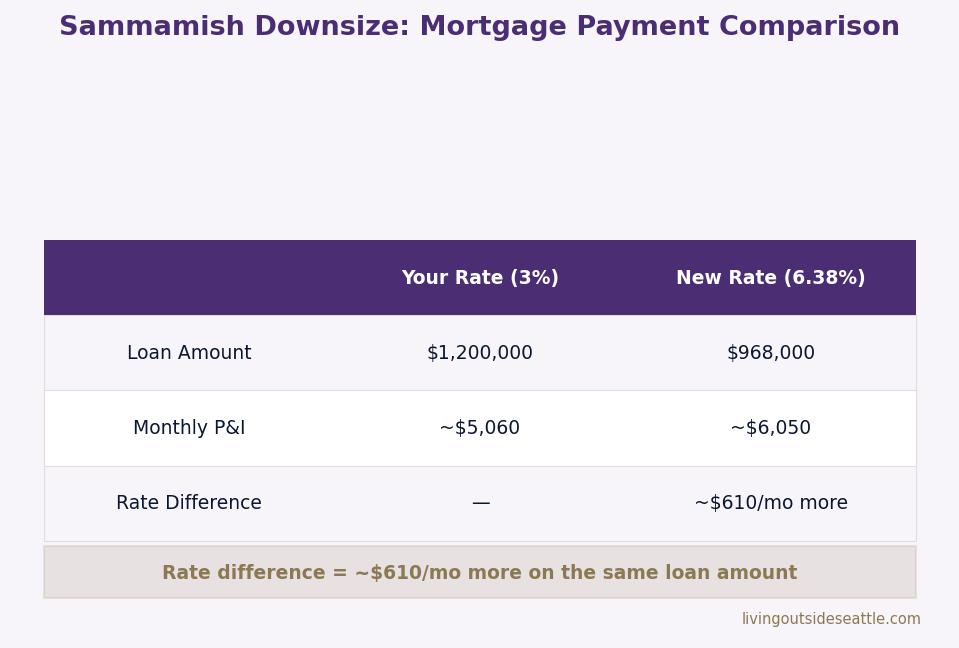

EastsideKing County Cities May 18, 2026

Living in Bellevue, WA – Your 2026 Real Estate & Lifestyle Guide

Living in Bellevue, WA: Your 2026 Real Estate & Lifestyle Guide

Is Bellevue, WA a Good Place to Live?

Living in Bellevue, WA puts you at the center of one of the most dynamic cities in the Pacific Northwest. In March 2026, the East Link 2 Line opened across Lake Washington for the first time, connecting Bellevue Downtown Station to Seattle’s Westlake Station in about 25 minutes. That is a trip that used to mean 45 to 60 minutes in traffic on I-90. That single change transformed what it means to live in Bellevue. You now get the space, the schools, and the lifestyle of the Eastside with a fast, traffic-free ride into the city whenever you need it.

Add in the Bellevue School District — ranked the #1 school district in Washington for 2026 by Niche, for the third year in a row — and you start to understand why buyers keep choosing Bellevue even at prices that would have seemed extraordinary just a decade ago. The citywide median home price sits around $1.5 million in spring 2026. That number is real, and it reflects real demand. Bellevue is not cheap. But for families who want top schools, walkable urban amenities, tech employer proximity, and now light rail to Seattle, it continues to deliver on every front.

The feel of Bellevue depends entirely on which neighborhood you are in. Downtown has the energy of a real city — glass towers, Whole Foods, Lincoln Square, and light rail at your doorstep. Drive five minutes south into Somerset and you are on a forested hillside with Olympic Mountain views and a quiet residential feel that has nothing in common with downtown. Drive northeast into Bridle Trails and you are in a semi-rural enclave where some homeowners keep horses. Bellevue is not one city. It is several, layered on top of each other, and picking the right one requires knowing what each area actually looks like on a weekday morning.

Bellevue Washington residential street with mature trees and Pacific Northwest homes
Bellevue’s residential character varies dramatically by neighborhood — from quiet forested streets in Bridle Trails to walkable urban blocks in Downtown.

Bellevue WA Real Estate Market in 2026

The Bellevue market sits at a citywide median of approximately $1.5 million in spring 2026, up modestly from a year ago. The range is wide. Condos in Factoria and Crossroads start below $600,000. Single-family homes in West Bellevue and Medina run $2 million to $5 million and higher. The pricing story in Bellevue is really several different stories depending on which neighborhood and which housing type you are shopping.

What has changed in 2026 is the pace. Bellevue spent 2021 through 2023 as one of the most aggressive seller’s markets in the country — waived inspections, waived financing, offers 15% over asking. That era is not fully over, but it has cooled. Well-priced homes in strong school zones are still moving in two to three weeks. Overpriced homes or homes with condition issues are now sitting for four to six weeks, which gives buyers time to breathe, inspect, and negotiate. That is a healthy market, even if some sellers have not fully adjusted their expectations yet.

The light rail opening is worth tracking closely as a market signal. Neighborhoods within walking distance of Bellevue Downtown Station and South Bellevue Station have seen increased buyer interest since the March 2026 opening. Downtown condos and townhomes in particular have attracted buyers who previously only looked at Seattle because of the transit access.

Commute Times from Bellevue, WA

Bellevue’s commute story changed significantly in March 2026 when the 2 Line opened across Lake Washington. For the first time, you can get from Bellevue Downtown Station to Seattle’s Westlake Station in about 25 to 28 minutes by rail, with trains running every 8 to 10 minutes during peak hours. That is a genuine alternative to driving I-90, which during AM rush can run 45 to 60 minutes depending on the day. The 2 Line also runs east to Redmond Technology Station, making it useful for Microsoft commuters heading the other direction.

Bellevue Washington East Link 2 Line light rail station opened March 2026
The 2 Line opened across Lake Washington in March 2026, connecting Bellevue Downtown Station to Seattle’s Westlake Station in about 25 minutes.
Destination Distance 2026 Peak Commute Transit Option
Downtown Seattle 10 miles 25 min rail / 45-60 min drive 2 Line light rail
Amazon (South Lake Union) 12 miles 30 min rail / 45-55 min drive 2 Line to Capitol Hill transfer
Microsoft (Redmond) 8 miles 15-25 min drive / 20 min rail SR-520 or 2 Line east
Bellevue Tech Corridor 0-5 miles 5-15 min drive Drive / 2 Line / walk
SeaTac Airport 15 miles 25-40 min drive / 45 min rail I-405 South or 2 Line to 1 Line

The 2 Line runs every 8-10 minutes during peak hours. For anyone working in downtown Seattle or South Lake Union, this changes the calculus on living in Bellevue compared to even a year ago.

Best Neighborhoods in Bellevue, WA

Bellevue has more variety than most people realize. You can buy a condo near light rail for under $700,000, a Craftsman in Somerset for $2 million, or a waterfront estate in West Bellevue for $4 million-plus. Here is a practical breakdown of each neighborhood to help you figure out where to start looking.

West Bellevue

West Bellevue is Bellevue’s most exclusive address. This area runs between downtown and Lake Washington, and includes some of the highest-priced real estate in Washington State. Homes range from $2 million for a modest single-family to $10 million-plus for lakefront estates. The character is established, private, and tree-lined — large lots, mature landscaping, and very little turnover. Medina and Hunts Point are technically separate cities but feel like the same fabric. All are served by the Bellevue School District. Students typically attend Bellevue High School, rated 10/10 on GreatSchools. If waterfront or near-water luxury is on your list, this is the area.

Downtown Bellevue

Downtown Bellevue has become a genuine urban core over the last decade. Whole Foods, Lincoln Square, Bellevue Square, and a dense concentration of tech offices anchor a walkable city center that rivals any suburb in the country for amenities. Housing is predominantly condos and high-rise apartments, with prices ranging from the mid-$600,000s for a one-bedroom to $3 million-plus for a penthouse. Bellevue Downtown Station on the 2 Line makes this the most transit-connected address in the city — 25 minutes to Seattle by rail, no traffic. Buyers who want walkability, urban energy, and the fastest commute to Seattle on the Eastside will find Downtown Bellevue is now in a different conversation than it was two years ago.

Somerset

Somerset sits on a hillside in southeast Bellevue with some of the best views in the city — Olympic Mountains, Puget Sound, Lake Washington, and downtown Bellevue all visible from the right lot. Homes are mostly single-family, built from the 1970s through the 1990s, ranging from 1,800 to 4,000 square feet on lots of 7,000 to 15,000 square feet. The median runs around $2 million. Somerset is served by the Bellevue School District and feeds into Newport High School, ranked #3 in Washington State by US News. Somerset Community Park and the Lakemont trail system are right at the door. This is one of the best value propositions in Bellevue for buyers who want a view, a yard, and top BSD schools at a price below West Bellevue.

Bridle Trails

Bridle Trails is one of Bellevue’s most distinctive neighborhoods — a semi-rural enclave in the northeast part of the city, built around the Bridle Trails State Park equestrian system. Homes sit on larger lots, often half an acre or more, with horses allowed in some sections. The character is quiet and wooded, a genuine contrast to the dense urban core just a few miles away. Homes range from 2,500 to 5,000 square feet, mostly built from the 1970s through the 1990s, with some newer construction on the edges. The median runs $2 million to $2.5 million. Bridle Trails is served by the Bellevue School District and feeds into Interlake High School, ranked #7 in Washington by US News. If you want acreage, privacy, and a trail system in your backyard while staying close to Bellevue and Kirkland, Bridle Trails belongs on your list.

Newport Hills

Newport Hills is a family-oriented neighborhood in southeast Bellevue, sitting just north of the I-90 corridor and west of Lakemont. The area has an established, walkable character — tree-lined streets, a small neighborhood shopping center, and a genuine sense of community that newer master-planned areas do not always achieve. Homes are primarily single-family, built from the 1960s through the 1980s, ranging from 1,600 to 3,000 square feet on lots of 8,000 to 15,000 square feet. The median runs around $1.5 million to $1.8 million. Newport Hills is served by the Bellevue School District and feeds into Newport High School. Newport Hills Park and the Coal Creek Trail are both easily walkable from most addresses here.

Crossroads

Crossroads is one of Bellevue’s most diverse and accessible neighborhoods, located in the central-east part of the city around the Crossroads Shopping Center. The character is practical and community-oriented, with a well-known farmer’s market, a community center, and a shopping district that reflects the neighborhood’s genuine cultural mix. Housing ranges from condos and townhomes in the $600,000s to single-family homes in the $900,000 to $1.3 million range. This is the most affordable Bellevue option for buyers who want a single-family home with a yard and full access to the Bellevue School District. Students typically attend Sammamish Senior High School, rated 8/10 on GreatSchools. For buyers priced out of Somerset or Lakemont, Crossroads is worth a serious look.

Eastgate / Factoria

Eastgate and Factoria sit in the southeast corner of Bellevue near I-90, making them the city’s most commuter-practical neighborhoods for anyone heading toward Issaquah or the South Sammamish Plateau. Factoria is primarily condos and townhomes — the most affordable entry point in Bellevue proper — with median condo prices starting below $600,000. Eastgate has a wider mix, with single-family medians in the $1.1 million to $1.4 million range. South Bellevue Station on the 2 Line is right in this area, connecting the neighborhood to downtown Seattle by rail in about 20 minutes. Both areas are served by the Bellevue School District. This corridor is worth serious consideration for buyers who want BSD school access at the lowest possible price of entry.

Lakemont

Lakemont is a newer master-planned community in southeast Bellevue, developed primarily in the 1990s and 2000s on a forested hillside above I-90. The character is clean, family-oriented, and trail-connected — the Lakemont trail network links directly to Cougar Mountain Regional Wildland Park, one of the best open-space parks on the Eastside. Homes range from 2,000 to 4,000 square feet on lots of 5,000 to 10,000 square feet, with a median around $1.4 million to $1.6 million. Lakemont is served by the Bellevue School District and feeds into Newport High School. Buyers who want a newer home, a trail-connected community, and a slightly more accessible price than Somerset will find Lakemont worth a close look.

West Bellevue Washington luxury residential homes representing the Eastside's premium real estate market
Bellevue has more neighborhood variety than most people realize — from walkable downtown condos under $700K to West Bellevue estates above $4M.

Bellevue WA Home Values and Investment Outlook

Bellevue’s market is one of the most durable in King County over any 10-year horizon. The fundamentals are real: the #1 school district in Washington, a growing downtown employment base, and now direct light rail to Seattle. These are not marketing claims. They are the reasons buyers keep absorbing the price premium year after year.

What is different in 2026 is that the absorption of that premium is less frantic. Well-priced homes in the $1 million to $2 million range are still competitive. Above $2 million, the market has more days on market and more room to negotiate than at any point in the last five years. Luxury buyers are asking for inspections, financing contingencies, and price reductions. That is a meaningful shift. The same home that sold with 8 offers in 2022 is now selling with 2 offers and a price reduction after three weeks if the listing price was stretched.

The neighborhoods that hold value best in Bellevue consistently share these traits: Bellevue School District assignment, construction from 1990 or later, a usable yard, and access to parks or trails. Downtown condos with light rail walkability have gained a new premium since March 2026. The areas softening the most are larger older homes above $2.5 million in need of updates — buyers at that price point want turnkey and they have the negotiating room to demand it.

Bellevue Washington modern Craftsman home exterior representing 2026 real estate market values
Well-priced Bellevue homes in the $1M-$2M range are still competitive in 2026, but the luxury market above $2.5M has more room to negotiate than at any point in the last five years.

Frequently Asked Questions: Living in Bellevue, WA

Is Bellevue, WA a good place to live?

Bellevue consistently ranks as one of the best cities to live in Washington State. The combination of the #1-ranked school district in Washington, a walkable urban downtown, light rail to Seattle, and proximity to Eastside tech employers makes it a top destination for families and professionals. The main tradeoffs are high home prices and cost of living.

What is the average home price in Bellevue, WA in 2026?

The citywide median home price in Bellevue is approximately $1.5 million as of spring 2026. The range is wide — condos in Factoria and Eastgate start below $600,000, while single-family homes in West Bellevue and Somerset run $2 million to $4 million and higher. The most competitive price bracket is $1 million to $1.8 million for well-located single-family homes in the Bellevue School District.

What school district is Bellevue, WA in?

Nearly all of Bellevue is served by the Bellevue School District (BSD 405), ranked the #1 school district in Washington for 2026 by Niche. The district’s high schools — Bellevue, Newport, Interlake, and Sammamish — all have strong academic profiles, with Newport and Interlake ranking in the top 10 in the state. Always confirm the specific feeder school for any address before writing an offer.

Is there light rail in Bellevue, WA?

Yes. As of March 2026, the 2 Line (East Link) opened across Lake Washington. Bellevue has two stations: Bellevue Downtown Station and South Bellevue Station. The ride to Seattle’s Westlake Station takes about 25 to 28 minutes. The line also runs east to Redmond Technology Station. Trains run every 8 to 10 minutes during peak hours.

How far is Bellevue from Seattle?

Bellevue is about 10 miles east of downtown Seattle, separated by Lake Washington. By car on I-90 during AM peak, expect 45 to 60 minutes. By the 2 Line from Bellevue Downtown Station, the trip to Westlake Station takes about 25 minutes — consistently faster than driving during rush hour.

Explore Bellevue, WA Yourself

The best way to understand Bellevue is to walk it. Start at Bellevue Downtown Park, then walk through Bellevue Square and over to the 2 Line station. Drive south to Somerset for the views, then cut through Crossroads to see the community market. Finish by looping through Bridle Trails to see what Bellevue looks like when you get off the main roads. One afternoon does more than a month of listings research.


View Bellevue on Google Maps →

Your guide to life outside Seattle.

Gregory Dorrell | Coldwell Banker Bain | WA License #111862
253-350-0045  · 
greg@livingoutsideseattle.com  · 
www.livingoutsideseattle.com
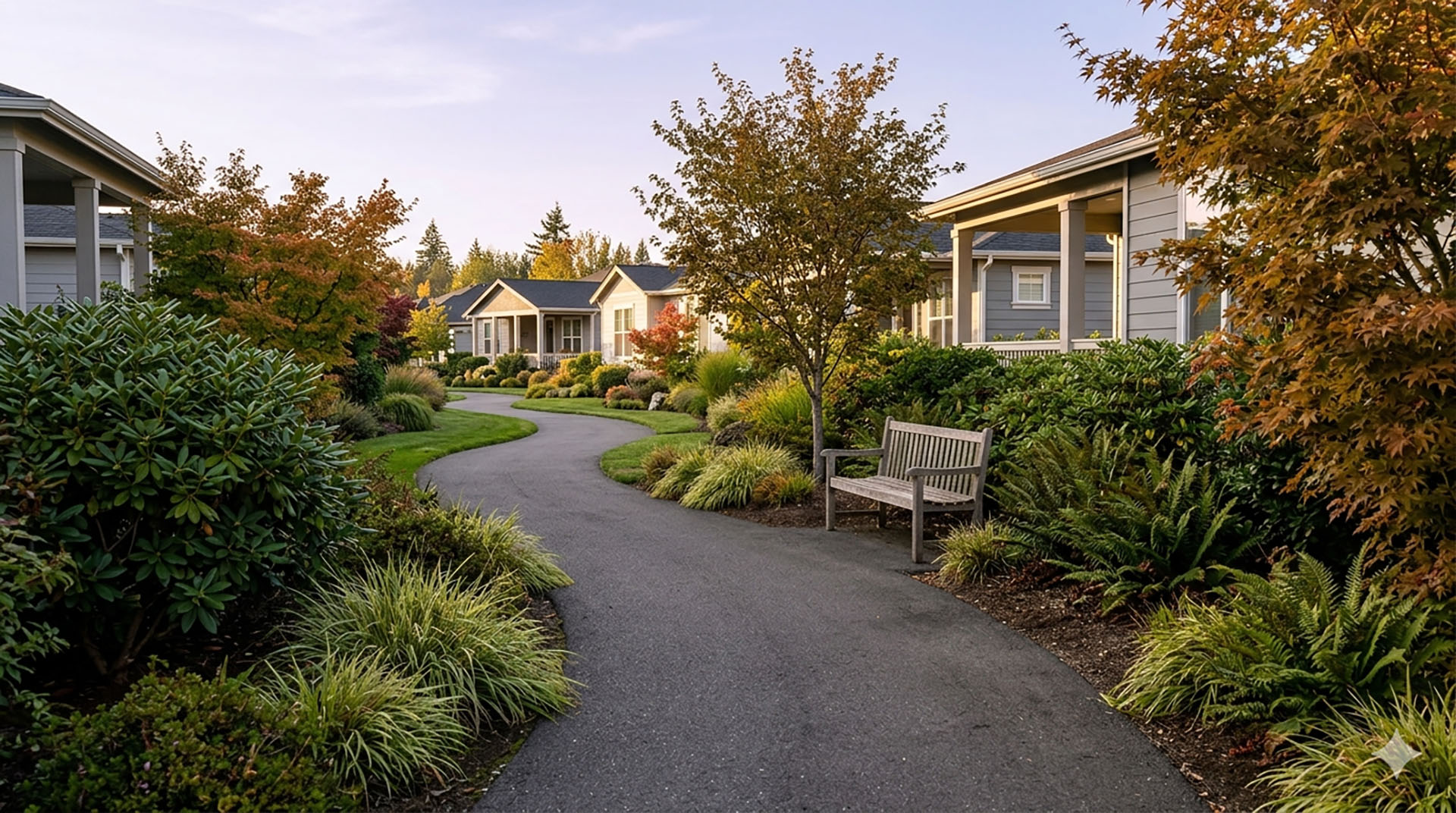
Seller Resources May 18, 2026

Selling a Home in Federal Way WA 2026: What Sellers Need to Know


Selling a Home in Federal Way WA 2026: What Sellers Need to Know Now

Selling a home in Federal Way WA in 2026 requires understanding something that has nothing to do with Federal Way directly. In the last four weeks of March, mortgage rates jumped 40 basis points because of events in Iran and oil price volatility. The Federal Reserve didn’t do it. The King County market didn’t do it. But the impact on your buyer pool is immediate and real.

Federal Way’s median home price is $686,500. At the end of February, a buyer putting 10% down was looking at a monthly payment of roughly $3,800. Today, that same buyer is looking at $3,940. That’s $140 more per month for the exact same house. For some buyers, that’s the difference between qualifying and not qualifying.

Federal Way Real Estate Market Update: March 2026

How high mortgage rates shrink the King County buyer pool — 2026 seller impact analysis

Federal Way has had a softer recent history than some parts of King County. I say that based on 13+ years of field work as a BPO inspector walking Federal Way neighborhoods five to six days a week. I understand the condition spread and the pricing dynamics in this market directly.

The good news: Federal Way is recovering. The median days on market in March 2026 was 7 days, right in line with the King County average. Homes are moving at a solid pace when they’re priced right and presented well.

But that pace is now under pressure. Rate volatility has shrunk the buyer pool, and more inventory is available county-wide. Your home needs to be more competitive than it was four weeks ago.

Current market context worth knowing:

Federal Way median asking price is around $700,000, with a median sale price of $686,500 for single-family homes. Homes are averaging 7 days on market when priced accurately. King County inventory jumped 37.5% year-over-year to 5,071 homes for sale in March 2026. That means more competition for each qualified buyer.

The Payment Math: What Rising Rates Cost Your Federal Way Buyer

Let’s get specific. Federal Way median: $686,500. Here’s what happened to that buyer’s payment in four weeks.

Late February at 5.98% with 10% down: monthly payment roughly $3,800.
Late March at 6.38% with 10% down: monthly payment roughly $3,940.
Difference: $140 per month.

For buyers using debt-to-income ratios (typically 43% of gross monthly income), that $140 monthly swing means they need about $3,900 more in annual gross income to qualify for the same $686,500 home today versus four weeks ago. Some buyers in your pool have that extra qualifying income. Many don’t.

And with King County inventory up 37.5%, those buyers who can’t stretch have other options. They’ll look at the home two streets over that’s priced at $685,000 instead of $695,000.

Federal Way Home Pricing Strategy When Rates Are High

Rate volatility makes buyers more price-sensitive, not less. They’re already running tight qualification numbers. If your home is listed at $695,000 and a comparable sold recently for $680,000, you’ll feel that gap in your showing activity.

The King County list price ratio is holding at 100%, meaning homes are selling at asking price on average. But that’s an average. In Federal Way, with softer demand than Eastside markets like Sammamish (4-day median DOM), you can’t be at the top of the pricing range and expect quick results.

Sellers who are pricing right and presenting their homes well are still moving in 7 days in Federal Way. That’s the data. But it requires discipline from the start. It requires understanding your market positioning and not relying on the market to bail you out on price because rates feel temporary.

If you were planning to list at the top of your pricing range, this is the moment to recalibrate. The buyers who would have stretched to your high-end price are now stretching just to qualify at the median.

What Federal Way Sellers Still Have Going for Them

Here’s what’s working in your favor. Buyer competition is far softer than 2022. You’re unlikely to face 15 offers. Multiple-offer situations are the exception, not the rule. That’s actually good news for you, because it means the right buyer at the right price will move methodically and commit. They’re not going anywhere. They’re just more selective about which listings they pursue.

The sellers moving homes quickly in Federal Way right now are the ones priced for the actual market, not priced for hope.

You also have location. Federal Way has solid schools, real job growth, and commute access to both Seattle and Tacoma job centers. South King County buyers specifically seeking Federal Way aren’t disappearing. They’re just being more deliberate with rate pressure squeezing their monthly budgets.

Why Mortgage Rates Spiked and When They Might Come Back Down

This is useful context for your listing strategy. The rate spike isn’t Fed policy. The Fed is on pause. It’s the bond market reacting to geopolitical events and oil price concerns, and bond markets can reverse as fast as they move.

A de-escalation in the Middle East or OPEC production increase could soften rates quickly. A home that doesn’t move at $695,000 at 6.38% might move at $705,000 at 5.38% because the monthly payment would be similar.

But you can’t list for “rates might drop.” You list for where rates are today and what your market actually supports.

The data is clear. Your buyer pool has tightened. Your pricing needs to reflect that reality.

Is the Federal Way Market Recovering in 2026?

Federal Way isn’t declining. It’s stabilizing and recovering. The rate volatility we’re experiencing is temporary, and the underlying market fundamentals here are solid. The city has good schools, job growth, and real demand from buyers who specifically want South King County. That demand is genuine. It’s just temporarily squeezed by rate pressure.

That means if you’re selling, position your home to catch the buyer who is choosing Federal Way specifically, not just shopping it because it happens to have available inventory.

How to Sell a Home in Federal Way at 6.38% Mortgage Rates

5 seller strategies for high mortgage rate market King County 2026

Price realistically for the current rate environment. Don’t price for 5.5% rates hoping the market recovers before your listing expires.

Condition matters more than ever right now. If a buyer is already stretched on qualification, they’re not going to offer on a home that also needs work. Put in the prep work.

Marketing matters more with more inventory. Your home needs to stand out online and in person. Professional photos, accurate pricing, and clear presentation are table stakes, not differentiators.

Be flexible on terms. If a buyer needs a two-week possession and you can accommodate it, do it. If a buyer needs a rate buydown contribution and you can offer it, consider it. Buydowns are often cheaper than dropping your price and are more visible to buyers as a benefit.

Work with someone who understands Federal Way specifically. General King County trends don’t always map to Federal Way. The recovery here has been real but softer than hot Eastside markets, and that dynamic still matters even as the county rebounds.

Frequently Asked Questions: Selling a Home in Federal Way WA 2026

How do rising mortgage rates affect home sellers in Federal Way?

Higher rates reduce the number of buyers who qualify for homes in Federal Way’s price range. At the $686,500 median, the rate jump from 5.98% to 6.38% added roughly $140 per month to a buyer’s payment. Some buyers who qualified four weeks ago no longer do, which shrinks the competitive pool for your listing and makes accurate pricing more critical.

Is Federal Way a buyer’s market or seller’s market in 2026?

As of March 2026, Federal Way is still technically a seller’s market. Homes are selling in 7 days at 100% of list price on average. But rate pressure is shifting leverage toward buyers who have more options with inventory up 37.5% year-over-year. The best-positioned sellers are pricing accurately and presenting their homes in top condition from day one.

Should I lower my price to sell faster in Federal Way?

Not necessarily. Homes priced correctly for their condition and location are still moving in 7 days. The key is accurate pricing from the start, not a reduction later. Overpricing and then reducing costs you more time and typically produces a lower final price than listing right the first time.

How long does it take to sell a home in Federal Way right now?

The median days on market in Federal Way was 7 days in March 2026, right in line with the King County average. Well-priced, well-presented homes are moving quickly. Homes that sat longer were mostly cases of overpricing or condition issues, not market weakness.

What is the average home price in Federal Way WA in 2026?

The median sale price for single-family homes in Federal Way was $686,500 as of March 2026. Homes are selling at 100% of list price on average when priced correctly. Federal Way remains one of the more affordable South King County markets, which attracts buyers from both the Seattle and Tacoma corridors.

Your guide to life outside Seattle.

Gregory Dorrell | Coldwell Banker Bain | WA License #111862
253-350-0045  ·
greg@livingoutsideseattle.com  ·
www.livingoutsideseattle.com
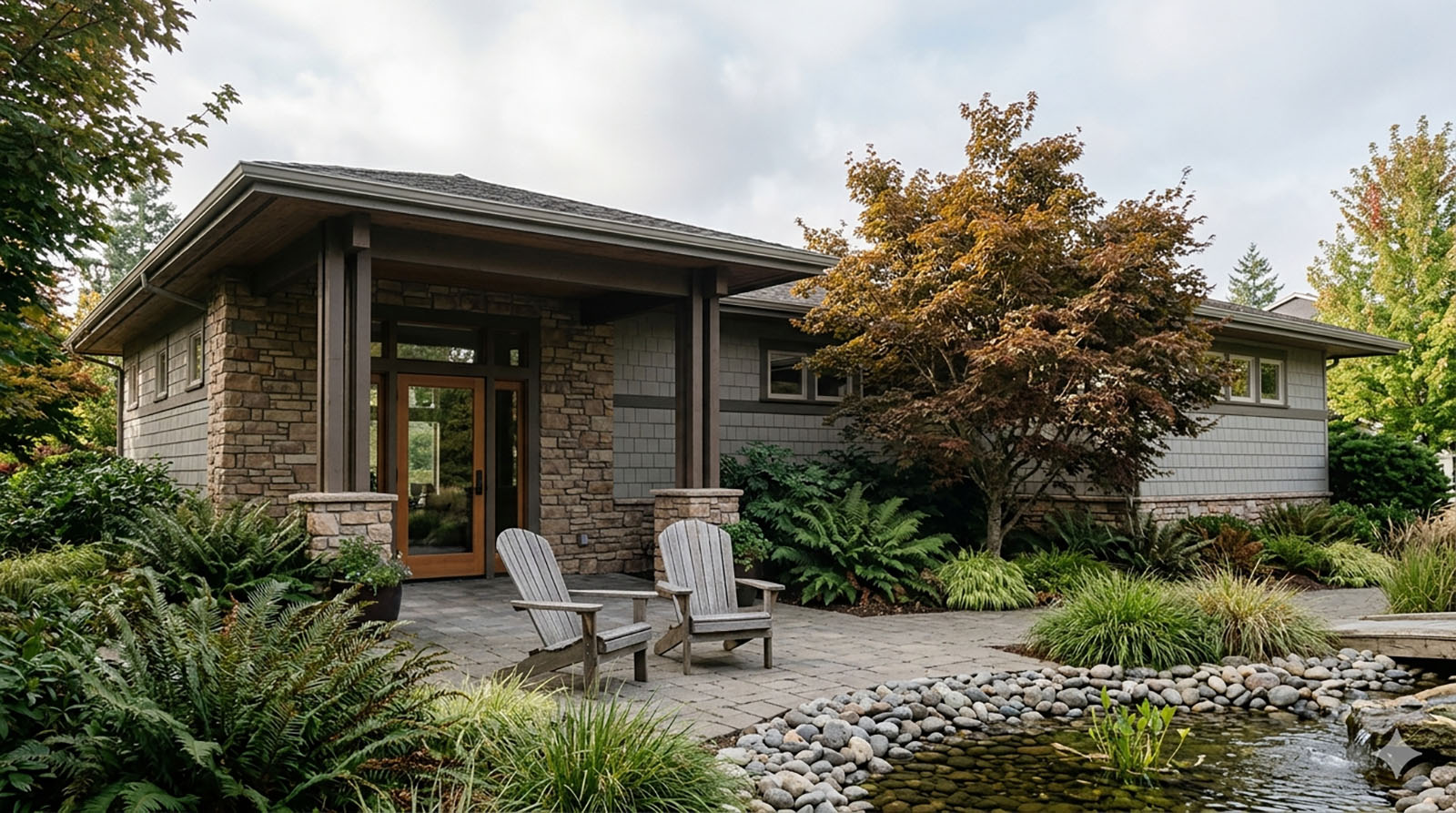
Gregory Dorrell is a licensed real estate broker (WA License #111862) with Coldwell Banker Bain. This post is provided for informational purposes and does not constitute financial or investment advice. Mortgage rates, home prices, and market conditions are subject to change. Please consult with a mortgage lender and real estate professional for current market information and personalized advice.