EastsideMarket InsightsSeller ResourcesUncategorized August 11, 2026

What It Costs to Sell a Home in Sammamish: Net Proceeds Explained

Sammamish sellers ask me about price more than any other topic. The median list price sitting active right now is around $1,497,000, and recent closed sales in the area are landing closer to $1,686,000. But the number that actually matters isn’t the sale price. It’s what lands in your account after everyone gets paid. Here’s the honest breakdown.

Start With the Sale Price, Not the List Price

Sammamish is a market where list and sale price can diverge in your favor. The homes selling right now are coming in above the median active list price, which tells you serious buyers are still competing for the right properties even with King County sitting at nearly 16 weeks of supply countywide. That’s not true everywhere in my service area. It’s a Sammamish-specific dynamic driven by school district demand and limited inventory in the neighborhoods people actually want.

Run your own net proceeds off your likely sale price, not your Zestimate. I can pull a data-backed number for your specific home in about the time it takes to walk your home once.

Real Estate Commission

Commission is negotiable and I won’t pretend otherwise. Most Sammamish listings run in the 2.5 to 3 percent range for the listing side, with a separate negotiated amount for the buyer’s agent since the NAR settlement changed how that gets structured. On a $1.6 million sale, even a half-percent difference in total commission is $8,000. Ask specifically what you’re paying for and what your agent’s actual marketing plan looks like before you sign anything.

Washington’s Real Estate Excise Tax Hits Harder Here

This is where Sammamish sellers get surprised. Washington’s REET is graduated, meaning higher sale prices get taxed at a higher rate on the portion above certain thresholds. At $1.6 million, you’re paying the top bracket on a meaningful chunk of your sale price, plus King County’s local REET addition on top of the state rate. I’ve walked sellers through this who assumed REET was a flat 1.28 percent like it used to be years ago. It isn’t anymore, and at Sammamish prices, that difference is real money. I break down the full graduated schedule and how to calculate your exact number in my Washington State REET guide.

Prep and Concessions

Sammamish buyers at this price point expect move-in ready. If your home needs work, you’re choosing between paying for repairs now or offering a credit at closing. Either way it comes out of your net. About 18 percent of King County homes are still selling over list price right now, and well-prepped Sammamish homes are disproportionately represented in that group. Money spent on the right prep, not everything, tends to come back at closing.

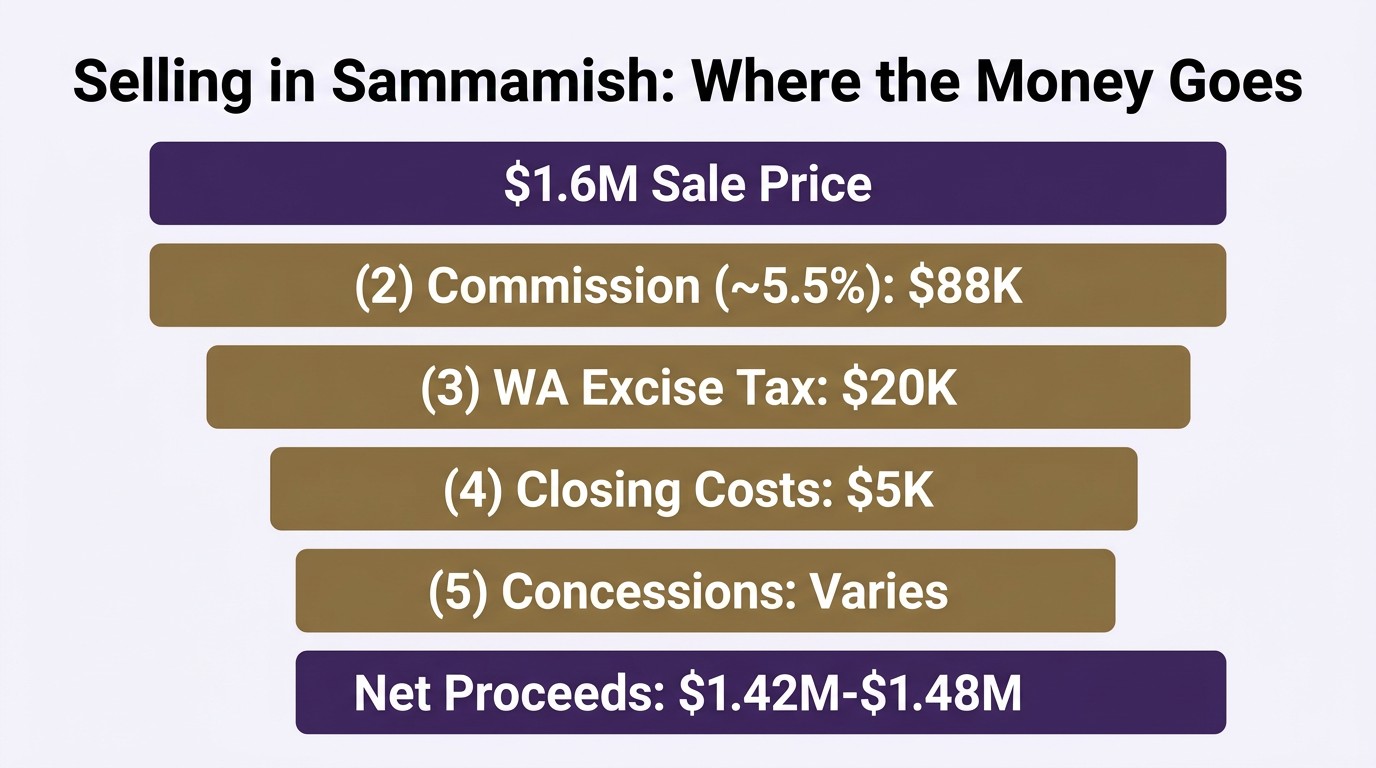
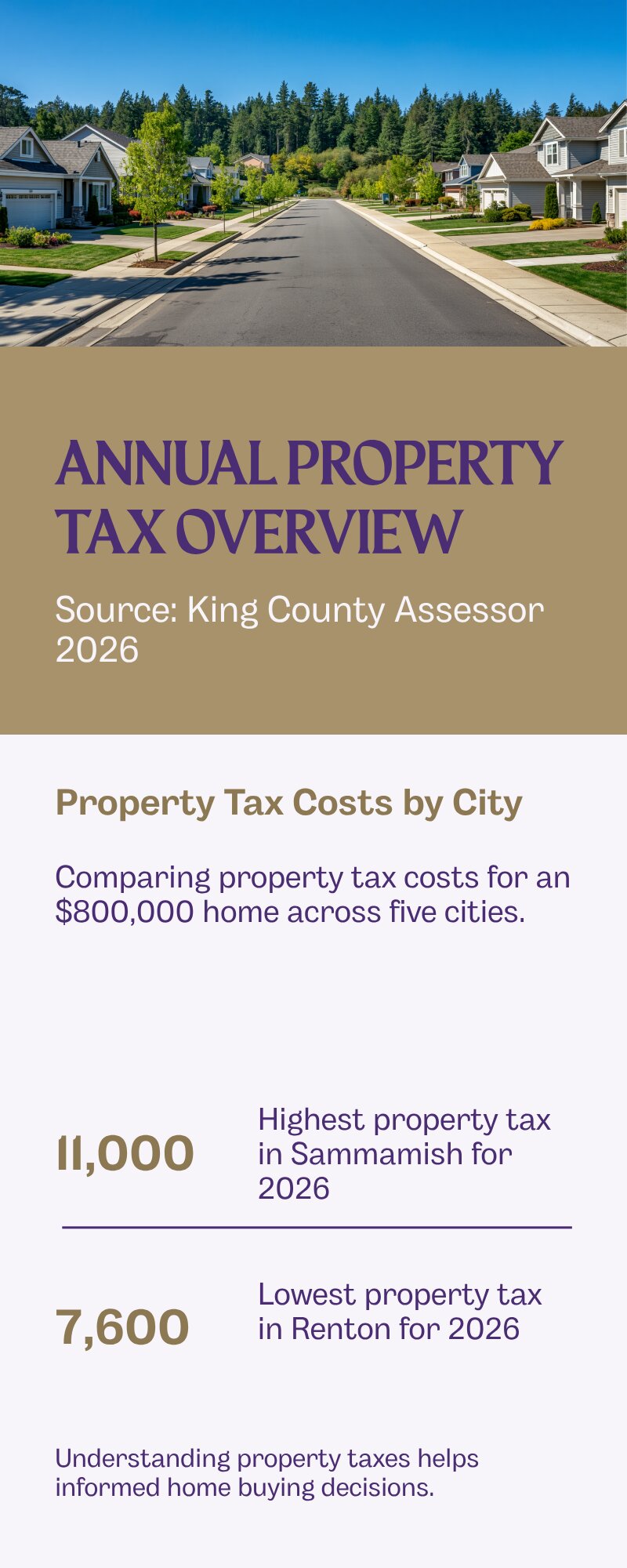
Sammamish home sale net proceeds breakdown chart 2026

On a $1.6M Sammamish sale, commission, excise tax, and closing costs typically bring net proceeds to $1.42M–$1.48M.

What a $1.6 Million Sale Actually Nets

Here’s a realistic range, not a guarantee, for a $1.6 million Sammamish sale in today’s market:

Cost Estimated Range
Commission (~5–5.5% combined) $80,000–$88,000
Real Estate Excise Tax $19,000–$21,000
Title, escrow, closing costs $4,000–$6,000
Negotiated concessions/repair credits $0–$15,000 (variable)

Figures are approximate and based on a $1.6M Sammamish sale price. Verify current NWMLS data and REET brackets for your exact sale price.

Net that out and most Sammamish sellers at this price point walk away with somewhere between $1.42 million and $1.48 million, before whatever you still owe on your mortgage. Your specific number depends on your loan payoff, your exact sale price, and how negotiations go. I run this math with actual numbers for every seller I work with, not a rule of thumb.

Frequently Asked Questions

How much does it cost to sell a home in Sammamish?

Most Sammamish sellers pay somewhere between 6 and 7 percent of their sale price in total costs, combining commission, Washington’s real estate excise tax, and standard closing costs. At a $1.6 million sale price, that’s typically $95,000 to $115,000 before any prep or concessions.

Why is excise tax higher in Sammamish than other King County cities?

It isn’t a different rate for the city. It’s that Washington’s REET is graduated, so higher sale prices push more of the transaction into higher tax brackets. Sammamish’s higher median price means sellers there feel that graduated structure more than sellers in South King County typically do.

What will I actually net from selling my Sammamish home?

It depends on your sale price, your mortgage payoff, commission negotiated, and any closing concessions. As a general range, expect to net roughly 85 to 90 percent of your sale price after standard costs, before subtracting whatever you still owe on the home.

Your guide to life outside Seattle.

Gregory Dorrell |
Coldwell Banker Bain | WA License #111862
253-350-0045
·

greg@livingoutsideseattle.com

·

www.livingoutsideseattle.com

Gregory Dorrell is a licensed real estate broker (WA License #111862) with Coldwell Banker Bain. Market data from NWMLS, week of August 2, 2026. This post is provided for informational purposes and does not constitute financial, tax, or legal advice.

Seller Resources July 25, 2026

Cost to Sell a Home in Washington State: 2026 Breakdown

Most sellers ask me one question before anything else: “How much am I actually going to walk away with?” Not the sale price. The number after everything gets paid.

I do BPO work across east and south King County almost every day, pricing homes for banks and institutional clients. That work puts me in front of real closing statements constantly, and I can tell you the gap between what sellers expect to net and what they actually net is almost always caused by the same handful of costs. None of them are secret. Most sellers just never sat down and added them up.

Here’s the honest breakdown, King County numbers included, so you can run your own math before you decide anything.

The Big Four Costs, In Order of Size

Four costs make up almost all of what comes out of your proceeds at closing. Everything else is smaller line items. Here they are, biggest to smallest.

1. Real Estate Commission

This is the largest line item, almost every time. Washington’s average total commission sits around 5.9% right now, split between the listing agent and the buyer’s agent, though that split is negotiable and varies deal to deal. On the Eastside specifically, a lot of full-service listing agents run 2.5% to 3% on their side.

On a $900,000 sale, a 5.5% total commission is $49,500. That’s real money. It’s also the single biggest reason your net check is smaller than your sale price. It buys you something, though: professional pricing, marketing, negotiation, and someone managing the transaction so an inspection issue or a lowball appraisal doesn’t blindside you. Real estate commission are and have always been negotiable and will vary from transaction to transaction.

2. Real Estate Excise Tax (REET)

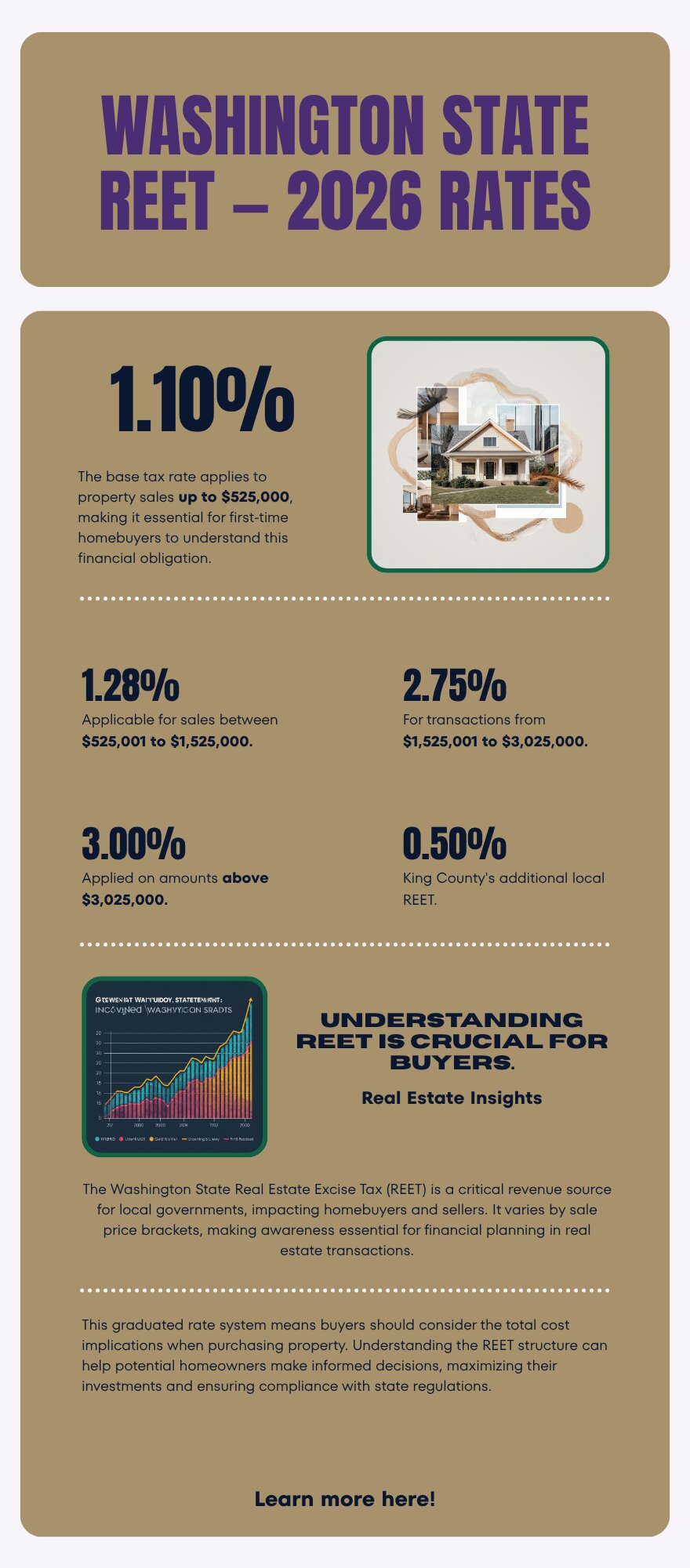
Washington charges a graduated excise tax on every home sale, and King County adds its own local portion on top. Here is the state schedule for 2026:

1.10% on the portion of the price up to $525,000

1.28% on the portion between $525,001 and $1,525,000

2.75% on the portion between $1,525,001 and $3,025,000

3.00% on anything above $3,025,000

King County adds a local REET of 0.50% on top of the state rate.

Run it on a $900,000 King County home: roughly 1.10% on the first $525,000 ($5,775) plus 1.28% on the remaining $375,000 ($4,800), for a state total near $10,575. Add the county’s 0.50% ($4,500) and you land around $15,075 in excise tax alone. Most sellers don’t plan for that number. They find out on the closing statement instead. For the full rate schedule and how it’s calculated, see Washington State Real Estate Excise Tax: Complete Guide for Sellers.

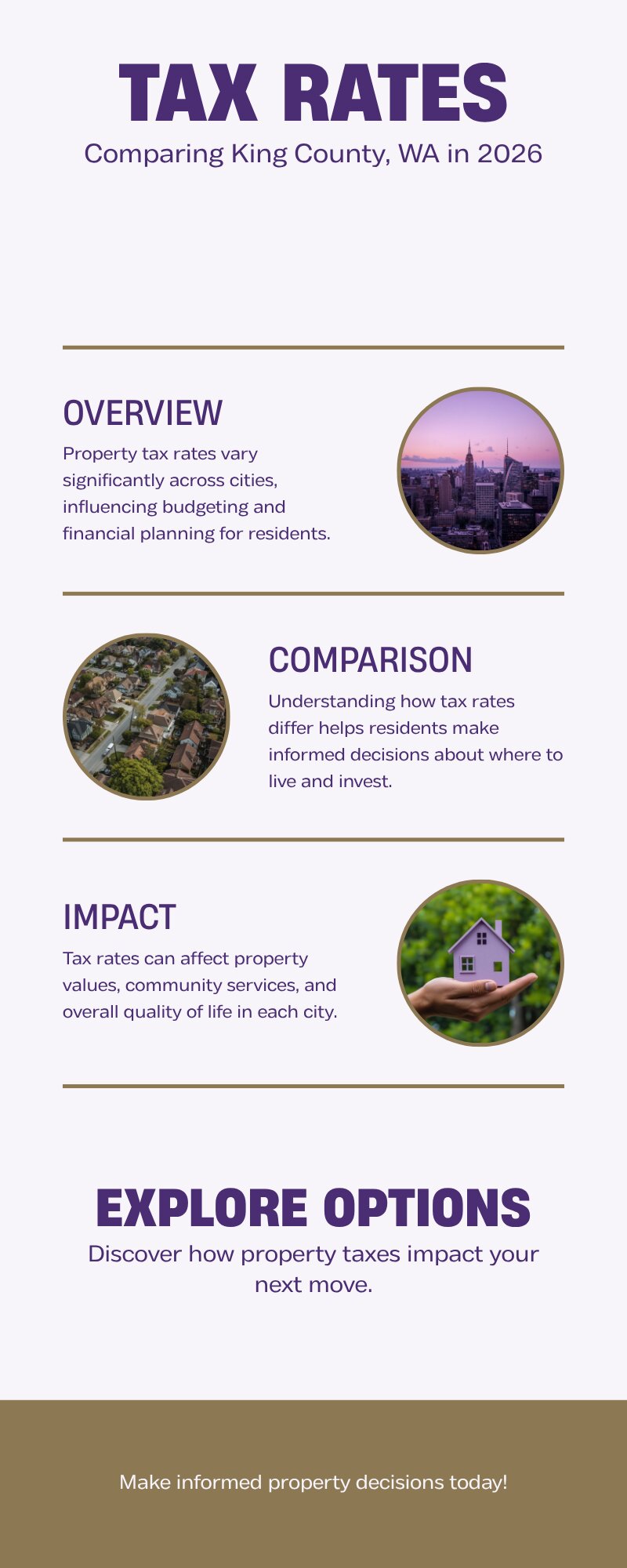
Washington State real estate excise tax bracket schedule King County 2026

Washington’s REET is graduated. King County adds its own 0.50% on top of the state rate.

3. Title Insurance and Escrow Fees

Sellers in Washington typically pay for the owner’s title insurance policy, which protects the buyer against title defects. Escrow fees are usually split roughly in half between buyer and seller. Together these run a few thousand dollars on a typical King County sale, more on higher-priced homes since title insurance premiums scale with sale price.

Budget $2,500 to $5,000 for title and your share of escrow on a mid-range King County home. Your escrow company will give you exact numbers once you’re under contract. This range holds steady across most listings.

4. Buyer Concessions

This is the cost sellers underestimate the most, and it has become more common. Roughly 19% of recent King County sales included a seller concession, according to NWMLS data from this year. Most concessions land in the 1% to 3% range, and lenders generally cap them at 2% to 6% of the purchase price depending on loan type.

Agree to cover $10,000 to $20,000 in the buyer’s closing costs, or a rate buydown to get the deal done, and that comes straight out of your proceeds. It’s not a hidden fee. It’s a negotiated one. But it needs to be in your math from day one, not something you discover mid-negotiation. Buyers are budgeting their own closing costs at the same time. If you want to understand what they’re weighing against your ask, see Earnest Money in King County: How Much You Need in 2026.

Adding It Up: A Real Example

Here’s the full math on a $900,000 King County home, close to the current county median for single-family homes.

Sale price: $900,000

Commission (5.5%): $49,500

State + King County REET: $15,075

Title insurance + seller’s escrow share: $3,500

Buyer concession (2%): $18,000

Total selling costs: $86,075 (about 9.6% of sale price)

Estimated net before payoff of existing mortgage: $813,925

That 9.6% figure sits right in the middle of the 8% to 10% range most sellers should expect. Yours will move up or down depending on your commission rate, whether you offer a concession, and where your price lands in the excise tax brackets.

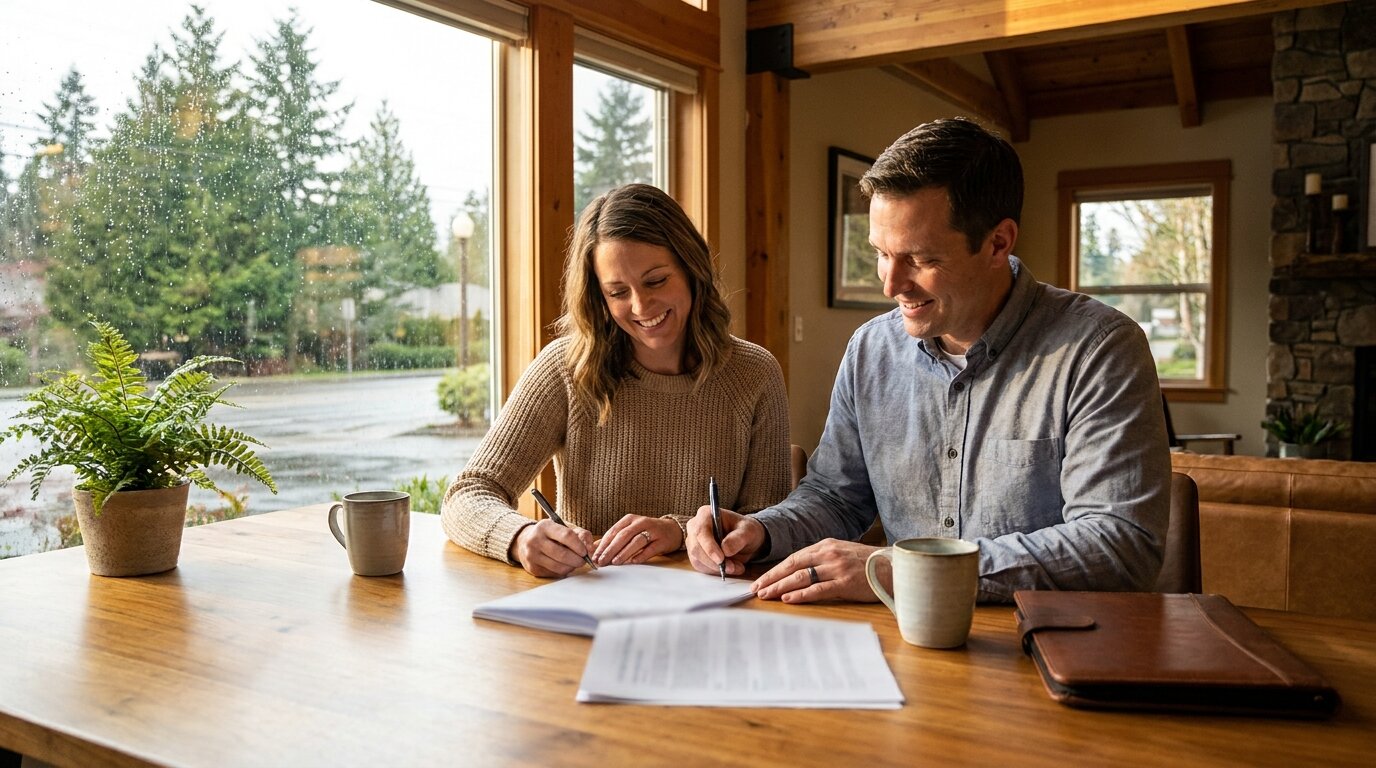
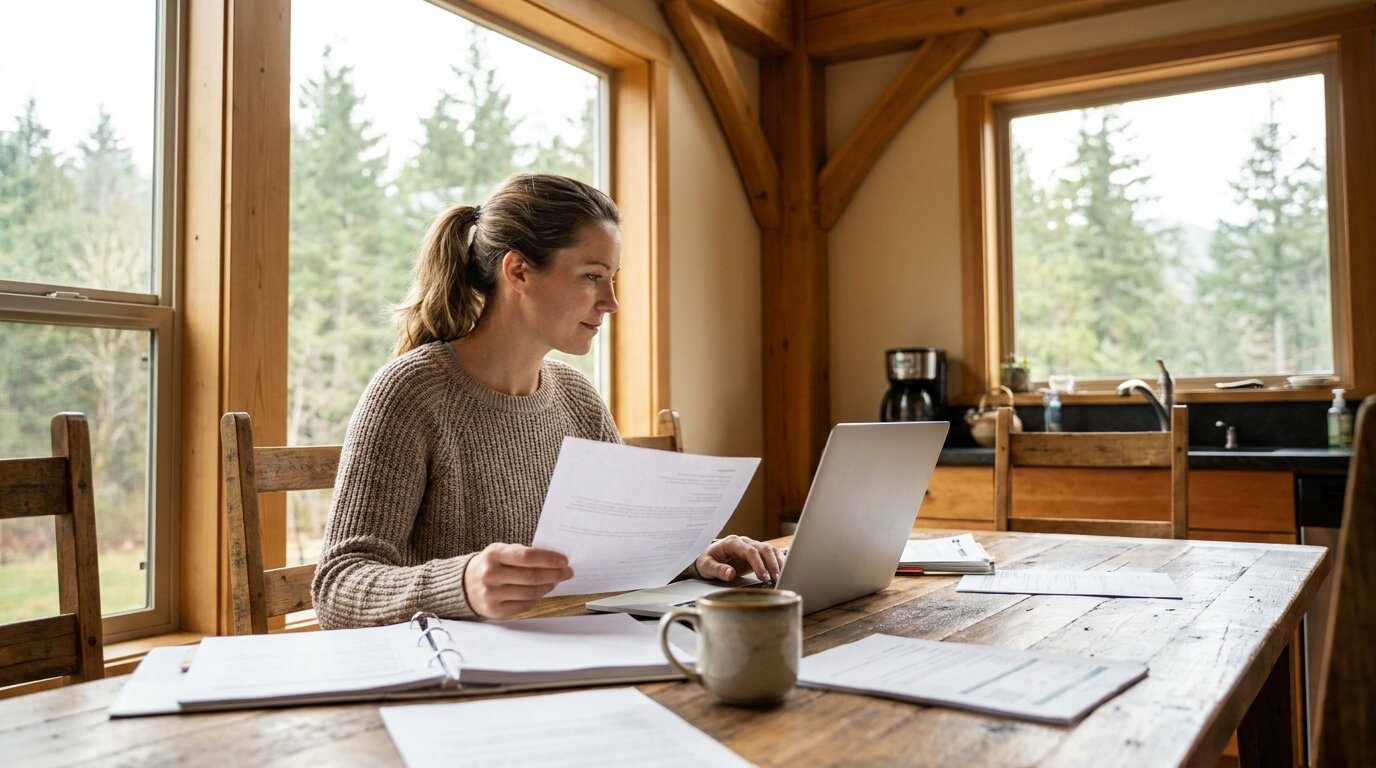
Homeowner reviewing home sale net proceeds worksheet King County WA

Knowing your real number before you list means no surprises at the closing table.

The Local Angle: South and East King County Specifics

Costs shift a little depending on where in King County you are selling.

In South King County cities like Kent, Auburn, Covington, and Maple Valley, home prices run below the county median, which keeps your excise tax bill lower in dollar terms even though the percentage stays close to the same. Sellers here also tend to see fewer aggressive concession requests right now, since inventory in the affordable price bands moves faster.

In East King County, Bellevue, Sammamish, and Issaquah sellers deal with higher price points. That pushes more of the sale into REET’s higher brackets once you cross $1,525,000. Sell above that threshold and your excise tax rate jumps from 1.28% to 2.75% on the portion above it. Run that difference through a calculator before you set your list price expectations.

I price homes across both sides of the county every week through my BPO work. The pattern holds. Sellers who know their real numbers going in negotiate from a position of confidence. Sellers who find out their net at the closing table are the ones who get blindsided. (Curious how that pricing work actually happens? Here’s how I price homes using BPO methodology.)

What This Means for You as a Seller

Before you list, do three things.

Run your own numbers using your actual expected sale price, not a rough guess. A $50,000 difference in price can shift which excise tax bracket you land in.

Ask your agent for a written net sheet before you sign a listing agreement. Any agent worth hiring will walk through commission, REET, title, and a realistic concession estimate with you up front, not after you get an offer.

Decide your concession tolerance before you are in a multiple-offer or slow-market negotiation. Knowing your floor ahead of time keeps you from making an emotional decision at the table.

Getting your home ready to list is its own cost and time decision. If you haven’t mapped that out yet, start with How to Prepare Your Home for Sale in King County.

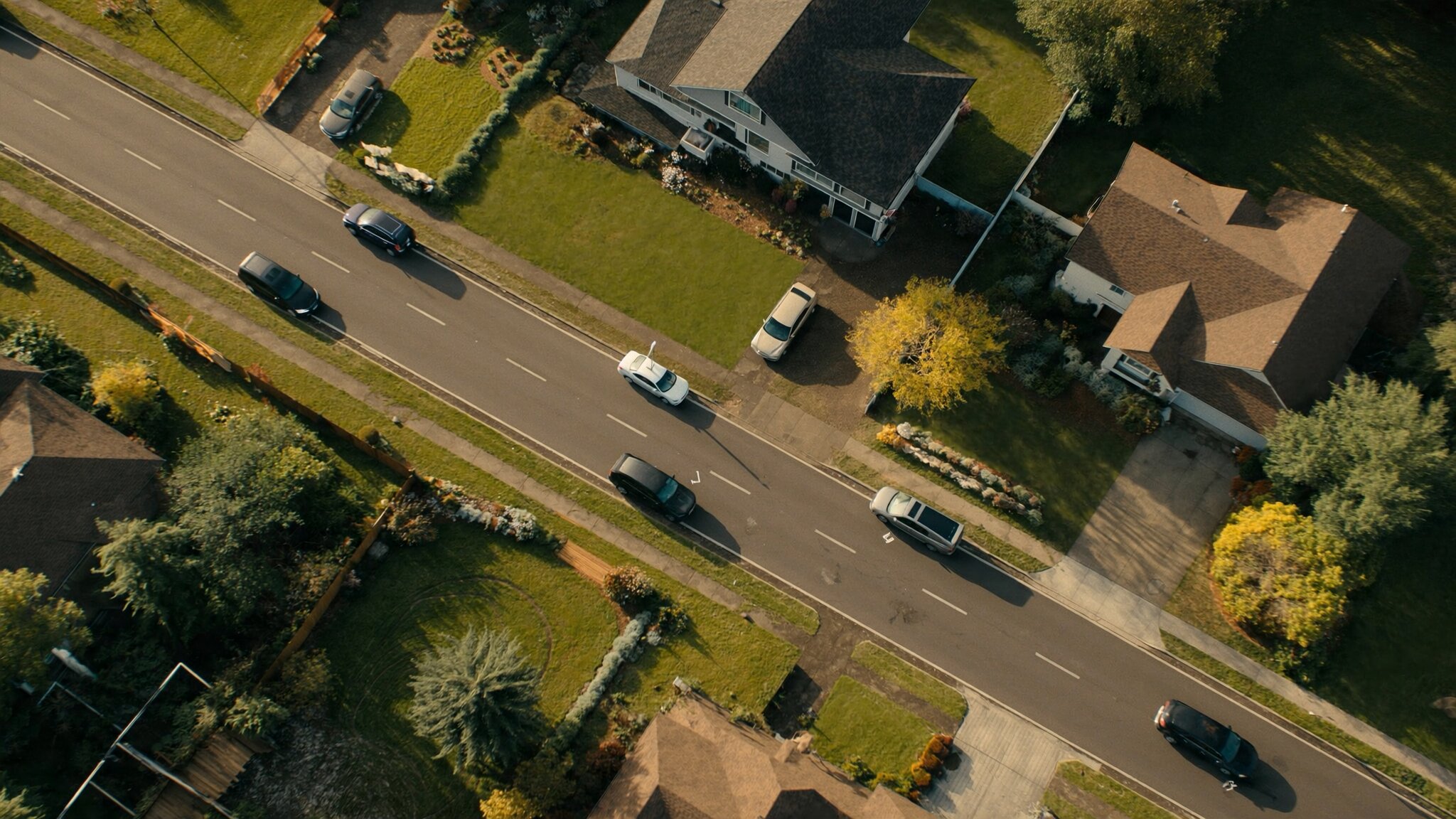
South King County neighborhood street view Kent Auburn Covington WA

Selling costs shift depending on where in King County you list. South King County sellers see a different picture than the Eastside.

FAQ

How much does it cost to sell a house in King County, Washington?

Most King County sellers pay between 8% and 10% of their sale price in total selling costs, covering commission, real estate excise tax, title insurance, escrow fees, and any buyer concessions.

What is the real estate excise tax rate in King County?

Washington’s state REET is graduated: 1.10% up to $525,000, 1.28% from $525,001 to $1,525,000, 2.75% from $1,525,001 to $3,025,000, and 3.00% above that. King County adds a local 0.50% on top of the state rate.

Who pays closing costs when you sell a house in Washington State?

Sellers typically pay the real estate commission, the excise tax, the owner’s title insurance policy, and roughly half the escrow fee. Buyers typically pay their own lender fees, their half of escrow, and inspection costs.

Can you negotiate real estate commission in King County?

Yes. Commission is negotiable and varies by agent and by deal. Washington’s average total commission is around 5.9%, but the exact split between listing and buyer’s agent is a conversation you should have before signing a listing agreement.

Do I have to pay excise tax if I sell at a loss?

Yes. Washington’s REET is based on the sale price, not your profit or loss. Even if you sell for less than you paid, you still owe excise tax on the full sale price, with limited exceptions.

How much should I budget for seller concessions in King County?

Plan for 1% to 3% of your sale price if the market conditions or buyer financing call for it. Roughly 19% of recent King County sales included a seller concession, so it is worth building into your net sheet even if you hope not to need it.

Your guide to life outside Seattle.

Gregory Dorrell | Coldwell Banker Bain | WA License #111862
253-350-0045  ·
greg@livingoutsideseattle.com  ·
www.livingoutsideseattle.com

Market InsightsSeller Resources July 22, 2026

Seller Concessions in King County: A Full Guide

Give a buyer a reason to say yes without cutting your price. Here is how concessions actually work in today’s market.

I do BPO work across east and south King County every day, and lately I am seeing the same request show up in offer after offer: a concession. Not a lower price. A credit, a buydown, a repair allowance. Something that makes the deal pencil out for the buyer without touching the number on the listing.

If you are selling right now, you need to understand what a concession actually is, what it costs you, and when it works better than just dropping your price. This is not the same conversation everywhere in King County. What makes sense in a still-tight Renton starter home market is not what makes sense if you are selling a condo in a building with 3 competing listings.

What a Seller Concession Actually Is

A concession is money you agree to give back to the buyer at closing, structured a specific way in the purchase agreement. It shows up on the closing statement, not as a lower list price. The home still sells for its listed number. You are just contributing part of your proceeds toward the buyer’s costs.

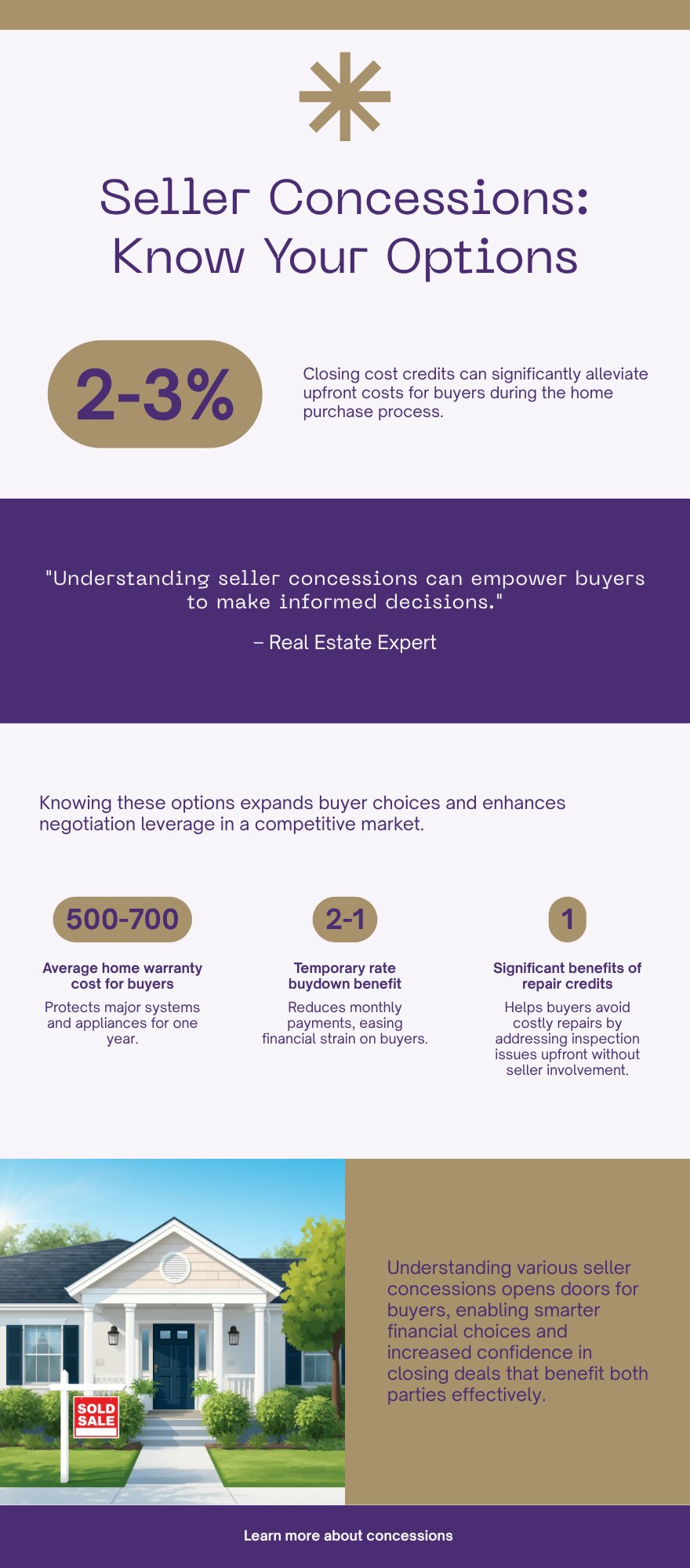
Three types show up most often in King County deals right now.

Closing Cost Credit

The simplest concession. You agree to cover 2% to 3% of the buyer’s closing costs: their lender fees, title insurance, escrow charges. This helps buyers who have the income to qualify for the loan but are short on cash to actually close. First-time buyers in Kent and Auburn run into this constantly. They can afford the payment. They cannot afford to also come up with $18,000 in closing costs on top of a down payment.

Rate Buydown

Instead of paying closing costs, you deposit money into an account that temporarily or permanently lowers the buyer’s interest rate. A temporary 2-1 buydown drops the rate by 2 points in year one and 1 point in year two, then it reverts to the full note rate. A permanent buydown pays discount points at closing to lower the rate for the life of the loan. I wrote a full breakdown of how buydowns work and what they cost in the mortgage rate buydown guide if you want the mechanics. Short version here: buydowns solve a monthly payment problem, not a cash-to-close problem.

Repair Credit

Covers something the inspection turned up that you would rather pay for in cash than fix yourself. Common when you are selling an older home in Auburn or Federal Way and the inspection flags a roof with a few years left, an aging water heater, or electrical panel work. If you want to know what an inspector is actually going to flag before it becomes a negotiation, my home inspection seller guide walks through it. You give the buyer money instead of hiring a contractor and managing the repair on your own timeline.

Home Warranty

The smallest concession and often the easiest yes. A one-year policy runs $500 to $700 and gives the buyer coverage on major systems and appliances. It is a low-cost way to close a deal that is close but not quite there.

Infographic comparing four types of King County seller concessions: closing cost credit, rate buydown, repair credit, home warranty

The four concession types King County sellers see most, side by side.

Concessions vs. a Price Reduction: They Solve Different Problems

This is the part sellers get backwards most often. A price reduction and a concession are not interchangeable. They fix different symptoms.

A price reduction fixes a visibility problem. If your home is not showing up in buyer searches, if you are getting almost no traffic, the number is too high for how the market is searching. Buyers filter by price range online before they ever see your listing. Drop the price and you show up to a new set of buyers who never saw the home before. If you want the full picture on getting the number right from the start, I cover that in how to price your home to sell in King County.

A concession fixes a conversion problem. If you are getting showings, even good ones, but no offers, buyers are seeing the home and still walking away. That usually means the home is priced fine but something else is stopping them: they cannot cover cash to close, the payment is a stretch at current rates, or an inspection issue is spooking them. A concession addresses that specific friction without resetting your price in the public record.

The honest reality: if your home has been sitting with almost no showings for three or four weeks, no concession fixes that. You need a price adjustment. If your home is getting showings and going under contract twice only to fall through at inspection or financing, a concession targeted at the actual reason those deals died is usually the smarter move.

How Much Does a Concession Actually Cost You

Run the math before you agree to anything. A $700,000 King County sale with a 3% closing cost credit costs you $21,000 off your net proceeds. That sounds like a lot until you compare it to a straight $21,000 price cut, which also reduces your net by $21,000 but resets the public sale price and can affect appraisal comps for every home that sells near you afterward, including your neighbors’. If you want to see how a concession fits into your full cost-to-sell picture alongside commission and excise tax, I broke down the complete math in what it costs to sell a home in Washington State.

There is a real limit here too. Conventional loans cap seller concessions based on the buyer’s down payment: buyers putting down less than 10% are typically capped around 3% of the sale price, buyers putting 10% to 25% down can usually go up to 6%, and buyers putting 25% or more down can go higher. FHA and VA loans have their own caps, generally more generous on FHA and capped differently on VA. Your agent needs to check the buyer’s loan type before you agree to a number, because a concession that exceeds the cap does not get approved by the lender. It just falls apart at underwriting after you have already accepted the offer.

The Local Angle: King County Specifics

King County is not one market right now, and that matters for this decision specifically.

Single-family inventory in tight submarkets like Renton and parts of Kent is still moving fast enough that concessions are less common. If you are selling a well-priced starter home in a walkable Renton neighborhood, you likely will not need to offer one. Multiple offers are still happening in that segment, and buyers competing against each other are not asking sellers for closing cost help.

Condos and higher price bands are a different story. Inventory has grown across King County through 2026, and condo buyers especially are negotiating harder. If you are selling a condo in Bellevue or a higher-priced single-family home in Sammamish or Issaquah, expect concession requests to be part of most serious offers. Buyers in this segment have more choices, and they know it.

South King County cities like Auburn, Federal Way, and Covington see concessions most often tied to closing cost help for first-time buyers, since that is the dominant buyer profile in those markets. East King County concessions more often show up as rate buydowns, because buyers there are stretching further on payment relative to income and a lower rate does more for their monthly budget than a closing cost credit would.

Know which buyer profile you are selling to before you decide what concession, if any, makes sense.

What This Means for You as a Seller

Do not offer a concession preemptively before you have any offers or real market feedback. Wait until you have data: showing counts, buyer agent feedback, whether offers are coming in and falling through. A concession should respond to a specific, identified problem, not a guess.

When an offer comes in asking for a concession, ask your agent what type and why. A buyer asking for a rate buydown has a monthly payment concern. A buyer asking for a closing cost credit has a cash concern. Those point to different underlying situations and tell you something about how close that buyer actually is to being able to complete the purchase.

Compare the concession cost to your next-best alternative, which is usually sitting on the market longer while carrying your mortgage, taxes, and insurance, or dropping your price instead. Run the real numbers both ways before you say yes or no.

Real estate closing table with buyers reviewing paperwork, King County Washington home sale

Concessions are negotiated privately and settled at the closing table, never disclosed in public listing history.

Frequently Asked Questions

Do I have to offer a concession to sell my home in King County?

No. Whether a concession makes sense depends on your specific market segment, your showing activity, and buyer feedback. Many single-family sellers in tighter King County submarkets sell without ever offering one.

Is a concession the same as paying the buyer’s agent commission?

No, those are separate line items on the closing statement, though both come out of your net proceeds. A concession specifically covers the buyer’s closing costs, rate buydown, or repairs. Earnest money is a separate deposit entirely, from the buyer’s side — see earnest money in King County if a buyer’s offer has you wondering how that piece works.

How do I know if a buyer’s concession request is within loan limits?

Your agent should confirm the buyer’s loan type and down payment percentage before you counter or accept. Conventional loan concession caps scale with down payment size, and FHA and VA loans each have their own separate limits.

Does offering a concession make my home look desperate?

Not if it is not disclosed publicly and not offered until you have a specific reason to. Concessions are negotiated privately within an accepted offer. They do not appear as a price change in public listing history the way a price reduction does.

Can I offer a concession and still get close to full asking price?

Yes, and that is often the entire point. A concession lets you hold your list price while still closing the gap that is stopping a buyer from moving forward. That is different from a price cut, which lowers the number everyone sees.

Should I offer a concession before listing or wait for an offer?

Wait. Offering one before you have any market feedback means giving away money you might not have needed to. Let the first two to three weeks of activity tell you whether a concession is actually the problem you need to solve.

Your guide to life outside Seattle.

Gregory Dorrell | Coldwell Banker Bain | WA License #111862
253-350-0045  ·
greg@livingoutsideseattle.com  ·
www.livingoutsideseattle.com

King County Market Update July 14, 2026

East & South King County Market Update [July 2026]

What changed this week in the King County market?

Countywide activity kept cooling this week. Closings dropped to 388, the slowest week since January, and new listings fell to 743. Active inventory eased slightly to 7,647, but with fewer sales clearing, weeks of supply pushed up to 19.7, the highest reading of 2026. The county median sale price slipped to $825,000, and just 17.5% of sales closed above list, also a 2026 low.

South King County did most of the slowing. Closings fell to 77 from 107 last week, weeks of supply jumped to 19.4 from 14, and the median sale price came back to $650,000. Here is the part that headline number hides: pendings rose to 169 from 143. Buyers down south are still writing offers, they just have not reached the closing table yet.

The Eastside went the other way. Closings ticked up to 90, supply eased to 24 weeks, and pendings cooled to 148. The median sale price came down to $1,337,500, which means the value side has finally caught up with the volume slowdown I flagged last week.

The takeaway: these two markets traded places. The Eastside is settling into its price level, while South King County’s dip looks like a timing gap rather than a demand problem. Watch the South King pending count next Monday. If those close, the slow week was noise.

Looking further out than this week? Read the King County housing market forecast for 2026.

Nationally, Freddie Mac’s weekly survey put the 30-year fixed at 6.67 percent on August 13, down slightly from 6.69 percent the week before, while the National Association of Realtors reports 1.54 million homes for sale, about 4.6 months of supply, and existing home sales running at a 4.06 million annual pace. King County residential supply is still tighter than the national picture at 3.8 months on the latest monthly NWMLS data, and local closings hold far closer to full list price than the national average.

Is King County a buyer’s or seller’s market right now?

King County at a glance: July 2026 (NWMLS)

Metric Residential Condo
Median sale price $1,000,000 $520,000
Change vs. last month +0.5% +0.9%
Change vs. last year +0.1% −3.7%
Closed sales 1,504 413
New listings 3,099 1,016
Active listings 5,423 2,540
Months of supply 3.8 6.0
Median days on market 11 28
% of list price received 100% 99.1%

King County, July 2026 closed-sale data. Source: NWMLS via InfoSparks.

Two different markets are hiding in that table. Single-family homes county-wide are still moving quickly at asking price. Condos are carrying nearly twice the supply, taking more than twice as long to sell, and their median price has fallen harder over the past year. If you own a condo and plan to sell, pricing honestly matters more for you than for anyone else in this report.

The table below is the heart of this page. It compares all seven cities I serve, plus the county itself, using July 2026 NWMLS closed-sale data. This month the split looks different than it has in a while: Sammamish, Issaquah, and Federal Way all posted real year-over-year price gains, while Bellevue, Renton, and Auburn slipped slightly. Supply widened almost everywhere compared to last year, giving buyers more room across the board.

City comparison: July 2026 (single-family, NWMLS)

City Median price YoY Active listings Months of supply Median DOM % of list received Closed sales
Bellevue $1,830,000 −1.1% 372 4.9 13 97.7% 85
Sammamish $1,725,000 +5.3% 253 5.5 18 97.3% 57
Issaquah $1,575,000 +7.9% 135 4.4 9 97.5% 41
Renton $810,000 −4.7% 317 3.9 19 100% 80
Kent $700,000 +1.4% 270 3.8 11 100% 82
Auburn $649,000 −1.2% 247 3.5 18 100% 65
Federal Way $645,000 +7.5% 180 3.5 15 100% 59
King County (single-family) $1,000,000 +0.1% 5,423 3.8 11 100% 1,504
King County (condo) $520,000 −3.7% 2,540 6.0 28 99.1% 413

July 2026 closed-sale data. Each city’s figures are its own true NWMLS numbers. I never average medians across cities. Source: NWMLS via InfoSparks.

How is the Bellevue housing market right now?

Median price YoY Months of supply Median DOM % of list Active Closed
$1,830,000 −1.1% 4.9 13 97.7% 372 85

Single-family, July 2026. Source: NWMLS.

Bellevue is really two markets. Move-in-ready homes under the luxury tier still draw serious competition, while the condo segment and un-staged or dated listings carry the most negotiating room in the entire county. If you are comparing renting against owning here, my Bellevue rent vs. buy breakdown runs the actual numbers.

Is the Sammamish market cooling off?

Median price YoY Months of supply Median DOM % of list Active Closed
$1,725,000 +5.3% 5.5 18 97.3% 253 57

Single-family, July 2026. Source: NWMLS.

Sammamish is almost entirely one product type, larger single-family homes, so when supply builds the whole city feels it at once. Buyers here are taking their time and looking hard at lot slope, drainage, and road noise before they write. My neighborhood guides for Sahalee and East Lake Sammamish Parkway cover the pockets buyers ask about most.

Is Issaquah still a good buy on the Eastside?

Median price YoY Months of supply Median DOM % of list Active Closed
$1,575,000 +7.9% 4.4 9 97.5% 135 41

Single-family, July 2026. Source: NWMLS.

The Issaquah Highlands keeps pulling steady showing traffic because it is the most affordable way into Eastside schools without paying Bellevue or Sammamish prices. I wrote up the full case in my Issaquah buyer opportunity guide.

What are home prices doing in Renton?

Median price YoY Months of supply Median DOM % of list Active Closed
$810,000 −4.7% 3.9 19 100% 317 80

Single-family, July 2026. Source: NWMLS.

Renton is three markets wearing one name. The Highlands, Benson Hill, and downtown each price and move differently, which is why the citywide median bounces around. It stays the top landing spot for buyers who work on the Eastside but will not pay Eastside prices. Start with my downtown Renton guide if you are new to the city.

Is Kent a good place to buy a home right now?

Median price YoY Months of supply Median DOM % of list Active Closed
$700,000 +1.4% 3.8 11 100% 270 82

Single-family, July 2026. Source: NWMLS.

East Hill family homes are the engine here, and demand for them has not let up. Steady markets punish guesswork, so pricing accuracy matters more in Kent than almost anywhere I work. If you are weighing the move, start with my guide to buying a home in Kent and the Kent family neighborhoods breakdown.

Why are Auburn homes selling so fast?

Median price YoY Months of supply Median DOM % of list Active Closed
$649,000 −1.2% 3.5 18 100% 247 65

Single-family, July 2026. Source: NWMLS.

Auburn is the most affordable single-family entry point of my seven cities, and buyers know it. When the median home goes pending in eight days, showing up without a pre-approval letter means losing the house. Lakeland Hills and the Enumclaw plateau side keep drawing families who want newer construction for less. My guide to living in Auburn covers the neighborhoods and what your budget buys in each.

Is Federal Way the best value in King County?

Median price YoY Months of supply Median DOM % of list Active Closed
$645,000 +7.5% 3.5 15 100% 180 59

Single-family, July 2026. Source: NWMLS.

Federal Way sits in the sweet spot between Seattle and Tacoma commutes, and starter homes here have stayed insulated from the cooling happening on the Eastside. My Living in Federal Way guide maps out where those values are.

What does this mean if you’re buying or selling right now?

If you’re buying: your leverage depends on which half of the county you’re shopping. On the Eastside, use the extra supply. Ask for inspection time, negotiate on homes that have sat past three weeks, and don’t chase overpriced listings. In South King County, come prepared to move fast on the good ones, because they still go in under two weeks. Either way, with rates near their best level in almost two months, it may be worth a look at a rate buydown to bring the payment down further.

If you’re selling: the market is telling sellers one thing loudly: price to the current comps, not to your neighbor’s sale from March. Hundreds of King County sellers cut their price this week alone, and every one of those cuts started with an asking price the market rejected. Condition matters more than it has in years. If you get the first two weeks right, you sell. My guide on how to price your home to sell in King County walks through exactly how I build a list price.

Frequently asked questions

Is now a good time to buy in South King County?

If the payment works for you, yes. Prices in Kent, Auburn, and Federal Way are up modestly from last year, so waiting has not been rewarding buyers there. Inventory is better than it has been in years, and rates just hit a seven-week low. The value end of the county is competitive but not frantic.

Which King County suburb has the lowest home prices?

Among my seven cities, Federal Way and Auburn are essentially tied for the lowest single-family medians in July 2026, both just under $650,000. Kent isn’t far behind. For the lowest entry point of all, condos remain the cheapest way to own in King County.

Are Eastside home prices dropping?

June medians in Bellevue, Sammamish, and Issaquah all came in below last year, and supply on the Eastside has grown faster than anywhere else in the county. That reads as a real cooling, not a collapse. Well-priced homes still sell in under two weeks. The overpriced ones are the ones sitting and cutting.

How often is this page updated?

Every Monday I refresh the “what changed this week” section with the newest NWMLS activity. Once a month, when the new monthly data lands, I rebuild every table and city capsule on this page. Bookmark it. The URL never changes.

Your guide to life outside Seattle.

Gregory Dorrell | Coldwell Banker Bain | WA License #111862
253-350-0045  ·
greg@livingoutsideseattle.com  ·
www.livingoutsideseattle.com

EastsideKing County CitiesSammamishUncategorized July 7, 2026

Plateau Communities, Sammamish WA | 2026 Guide

When people say they’re looking at Sammamish, they’re often looking at what falls under the “Plateau Communities” umbrella — the mix of established and more recently developed neighborhoods across the city’s interior plateau that don’t have the specific defining feature of a lake view, a golf course, or a ridgeline. This is the broadest category in Sammamish real estate and also the most varied. Price ranges here span from the mid-$800s for original ranch-style homes to over $1.5M for newer construction on larger lots. Schools are split between Issaquah School District and Lake Washington School District depending on your address — and that split is not intuitive from a map. If you’re buying in this part of Sammamish, the address-level school verification is mandatory.

What is it actually like to live in Plateau Communities in 2026?

The plateau interior is Sammamish’s most family-oriented environment. The city’s extensive trail network — 45-plus miles at last count — connects most plateau neighborhoods to parks, open space, and ultimately to the East Lake Sammamish Trail along the water. Kids ride bikes to friends’ houses on connected paths. The parks are maintained well and used heavily on weekends. The pace here is genuinely suburban in the best sense — quiet streets, neighbors who know each other, schools that feed consistent cohorts of families from the same neighborhoods.

The variation within this category is significant. Original Sammamish homes from the 1970s through early 1990s tend toward ranch and split-level styles on larger lots with mature trees — they’re often the entry point into Sammamish homeownership, and buyers who move into them typically update over time. Communities built in the late 1990s through 2010s have more contemporary designs on smaller lots but newer infrastructure. Communities built in the 2010s and 2020s are the most turnkey but also the most densely sited. The decade of construction tells a lot of the story about what to expect.

Who lives here? The full demographic range of Sammamish. First-time buyers, growing families, established households who moved here for the schools and stayed for the community. Tech workers from Microsoft, Amazon, and the broader Bellevue-Redmond corridor who want the Sammamish quality of life without a lake view premium. Parents who researched school districts before they chose a neighborhood and made a deliberate district-driven decision about their address.
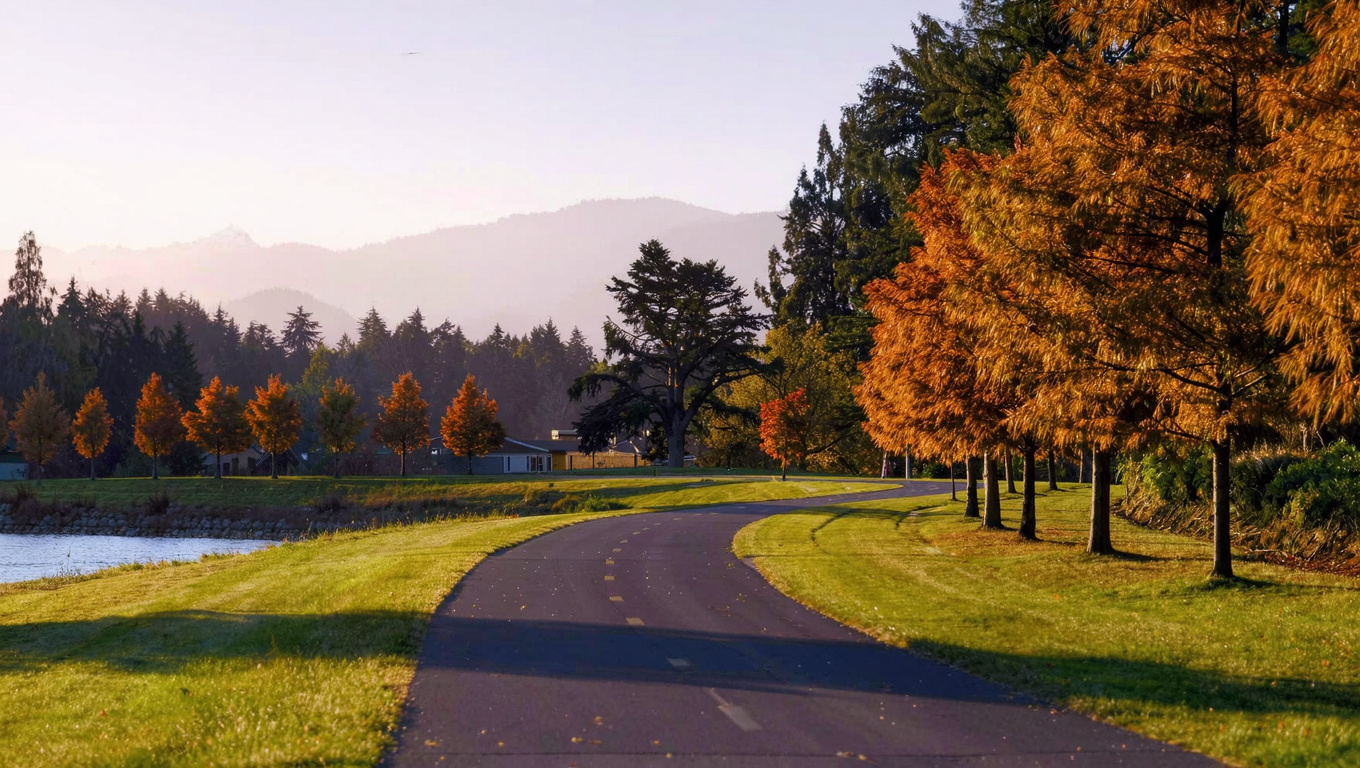
Wide paved community trail curving through open park space in an established Sammamish Washington plateau neighborhood with ornamental trees in autumn color, mature Douglas fir at the forest edge, and Cascade foothills softly visible in the background
Sammamish maintains over 45 miles of city trails connecting plateau neighborhoods to parks, open space, and the East Lake Sammamish Trail along the water. For residents in plateau interior neighborhoods, the trail network is the primary recreational infrastructure — and it’s genuinely well used.

Homes in Plateau Communities: What the Data Shows

The price range within this category is the widest in Sammamish. Original stock from the 1970s and 1980s on larger lots can come in under $1M. Quality production homes from the 2000s on standard lots typically trade in the $1M to $1.35M range. Newer communities with contemporary designs and higher finish levels start around $1.35M and move up from there. What drives the variation: decade of construction, lot size, update level, school district, and proximity to parks and trails. At any price point, the same variables apply — the numbers just shift.

Metric Plateau Communities (98074 / 98075) King County
Median Sales Price (May 2026) ~$1,075,000 ~$859,000
Median Days on Market ~26 days ~28 days
Active Listings Change (vs. Jan 2026) +28% +30%

Plateau interior communities span a wide price range depending on age, lot size, school district, and update level. The median shown reflects the broad middle of this category. Verify current inventory with a licensed REALTOR.

This is the section that matters most for families buying in the plateau interior. Sammamish is split between Issaquah School District and Lake Washington School District, and the boundary does not follow logical geographic lines. Two homes on the same block can feed into different districts. This is not a detail to check after you’ve found a home you want — it’s a filter to apply before you start touring.

Issaquah School District (ISD) — Most of South and Central Sammamish

Most plateau interior addresses feed into one of the following Issaquah SD pipelines. The most common for central and south Sammamish:

Pipeline A: Sunny Hills Elementary → Pine Lake Middle → Skyline High

Pipeline B: Endeavour Elementary → Pine Lake Middle → Skyline High

Lake Washington School District (LWSD) — North Sammamish and Parts of Central Plateau

Northern plateau addresses and some central Sammamish addresses feed into Lake Washington SD instead of Issaquah. The most common LWSD pipeline in Sammamish:

Pipeline: Alcott Elementary → Inglewood Middle → Eastlake High

⚠ Always Verify Your Specific Address

Do not rely on a general neighborhood description or a map to determine your school district. Use the official district boundary lookup tools before writing an offer. Both ISD and LWSD provide free address lookup on their websites.

Getting to Work from Plateau Communities

Commute times from the plateau interior are reasonably consistent across most addresses because Sammamish’s road network funnels traffic to a limited number of exits from the plateau — primarily NE 8th Street toward I-90, and Redmond-Fall City Road toward Redmond and SR-520. Most plateau communities are within 5 to 10 minutes of one of these two main corridors. What varies is whether you hit the same bottleneck points as the rest of Sammamish at peak hours, which you do.

Destination Distance 2026 Drive (Peak AM) Route
Downtown Seattle 23 miles 35 to 55 min I-90 West
Bellevue / Amazon 14 miles 20 to 35 min I-90 / I-405
Microsoft (Redmond) 10 miles 15 to 28 min Redmond-Fall City Rd / 2 Line
SeaTac Airport 27 miles 38 to 55 min I-90 / I-405 / I-5
Quality two-story craftsman Pacific Northwest home exterior in an established Sammamish Washington plateau neighborhood with well-maintained siding, covered front entry, mature evergreen foundation plantings, and generous lot with HOA-maintained streetscape
The plateau interior contains homes from multiple eras — original ranches and split-levels on larger lots, quality production builds from the 1990s and 2000s, and newer construction from the 2010s and 2020s. The decade of construction tells a lot of the story about what to expect in terms of lot size, finishes, and maintenance cycle.

What I See as a Valuation Expert in Plateau Communities

Plateau interior is where I spend the most time doing appraisal and BPO work in Sammamish because the comp pool is deepest here. The broad range of home ages and styles means I can find meaningful data for almost any subject property, but it also means that context matters enormously. A 1985 ranch on a 12,000 square foot lot and a 2008 two-story on an 8,000 square foot lot are not interchangeable comps even if their list prices overlap. I’m always building a custom story for each property rather than running a simple bracket adjustment.

The variables that matter most within the plateau interior: school district assignment (ISD vs. LWSD is a genuine price differential — buyers pay to be in one district over the other depending on their family’s priorities), proximity to the trail network and parks, lot size relative to neighborhood norms, and update level. Kitchen and bath updates still move the needle meaningfully here. A home with a current kitchen in the $950K-$1.2M range will see significantly faster sale time and stronger offers than a comparable footprint with a 2003 original kitchen.

Valuation Insight

“School district assignment is worth real money in the plateau interior — I’ve tracked the ISD vs. LWSD differential at $40,000 to $80,000 on comparable properties at similar price points, depending on which district the buyer’s family is targeting. Confirm the district before you fall in love with the house.”

10-Year Lens

The plateau interior has the deepest, most liquid market in Sammamish. It will continue to attract the broadest buyer demographic — families for the schools, tech workers for the commute, move-up buyers for the lot sizes — which provides strong demand support across market cycles. The biggest medium-term driver here is the City of Sammamish’s ongoing trail and park investments, which have consistently improved the livability argument for interior neighborhoods.

Honest counter-risk: Traffic congestion remains Sammamish’s most cited negative. Plateau Road and NE 8th Street are the main arteries and they are not getting less busy. If your household depends on consistent early-morning commutes, build in actual test-drive time before deciding on a specific address.

Frequently Asked Questions About Plateau Communities

Q: How do I know which school district I’m in?
A: Use the address lookup tool on the Issaquah School District website (issaquah.wednet.edu) and the Lake Washington School District website (lwsd.org). Do this for every address you’re seriously considering before writing an offer — district boundaries in Sammamish are not intuitive.

Q: What’s the price range for plateau interior homes?
A: Wide — from the mid-$800s for original 1970s-1980s ranches on large lots to over $1.5M for newer construction with updated finishes. The median for this category is approximately $1.075M as of mid-2026, but the meaningful number is the specific tier you’re buying in, not the broad average.

Q: Is the school district assignment worth paying a premium for?
A: For families with school-age children who have done their district research, yes — I’ve tracked the ISD vs. LWSD premium at $40,000 to $80,000 on comparable properties. Which district carries the premium depends on which one the buyer is targeting. Both are strong districts.

Q: What are the biggest value drivers within plateau interior neighborhoods?
A: School district, lot size, trail and park access, and update level. In that order for most buyer profiles. A well-updated kitchen and bath will move you to the top of the market for your tier. Deferred maintenance and dated finishes will keep you sitting.

Explore Plateau Communities Yourself

The Sammamish trail system is the best starting point for understanding the plateau interior. Download the city trail map from the City of Sammamish website and plan a drive or walk through the neighborhoods you’re considering. The difference between a neighborhood with direct trail access and one that requires driving to a trailhead is noticeable in daily life.

Bigger Picture

Want the full Sammamish story?

Compare neighborhoods, commute times, school districts, and what’s driving the 2026 market.

Read the Full 2026 Sammamish Living Guide →

Your guide to life outside Seattle.

Gregory Dorrell | Coldwell Banker Bain | WA License #111862
253-350-0045 · greg@livingoutsideseattle.com · www.livingoutsideseattle.com
Buyer Resources July 5, 2026

Sammamish Neighborhood Guide: Best Areas by Budget 2026

You’ve already picked Sammamish. Now you need to pick a piece of it.

That’s harder than it sounds. Sammamish isn’t one neighborhood, it’s six or seven distinct ones stitched together on the plateau east of Lake Sammamish, and they don’t feel the same, cost the same, or send your kids to the same school district.

If you’re moving to King County from out of state and Sammamish is your target city, this guide breaks down the real differences between Klahanie, Trossachs, Pine Lake, Tally Ho/Inglewood Hill, the East Lake Sammamish Parkway corridor, and Beaver Lake. By the end, you should know which one fits your budget and your life.

Klahanie: The Entry Point With the Most House for Your Money

Klahanie sits on the southern edge of Sammamish and it’s the biggest neighborhood in the city, with more than 3,000 homes. It was built mostly in the 1990s, so you’re looking at classic Pacific Northwest suburban construction: two-story homes, decent-sized lots, mature trees that actually block your neighbor’s view instead of just decorating the yard.

Median price here runs around $1.29M, which sounds like a lot until you compare it to the rest of Sammamish. This is where a family coming from a lower cost-of-living market gets the most square footage and lot size for the dollar in this city.

So what does that mean for you? If your budget tops out in the low-to-mid $1M range and you still want to say you live in Sammamish, Klahanie is where that math works. It’s also the neighborhood with the most built-in community infrastructure: parks, trails, and a private community club with pools and sport courts that a lot of families factor into the decision.

Klahanie falls in the Issaquah School District. If school assignment is a top priority, that matters, because half of Sammamish doesn’t feed Issaquah schools at all. More on that split below.

If Klahanie’s the entry point, worth a direct comparison against a step-up option nearby: see the full Aldarra neighborhood guide for a look at Sammamish’s golf-course community at a higher price point.

Trossachs: Scenic, School-Focused, and Slightly Quieter

Trossachs sits on the northeastern edge of the city, another 1990s-era community, and it’s the neighborhood I hear described most often as “the quiet one.” It’s smaller than Klahanie, more residential in feel, with parks woven through the streets rather than concentrated in one spot.

Families choose Trossachs specifically for school access. It’s zoned into the Issaquah School District, and it consistently draws relocating families who did their research on school ratings before they did research on the neighborhood itself. That’s backwards in my opinion, but it’s common, and it tells you something about how seriously buyers here take the schools question.

Price-wise, Trossachs sits in the middle of the Sammamish range, generally above Klahanie and below Pine Lake, though inventory is thin enough that a single listing can skew the numbers in a given month. If you’re relocating and school district certainty matters more than shaving costs, Trossachs is worth a serious look before you widen your search.

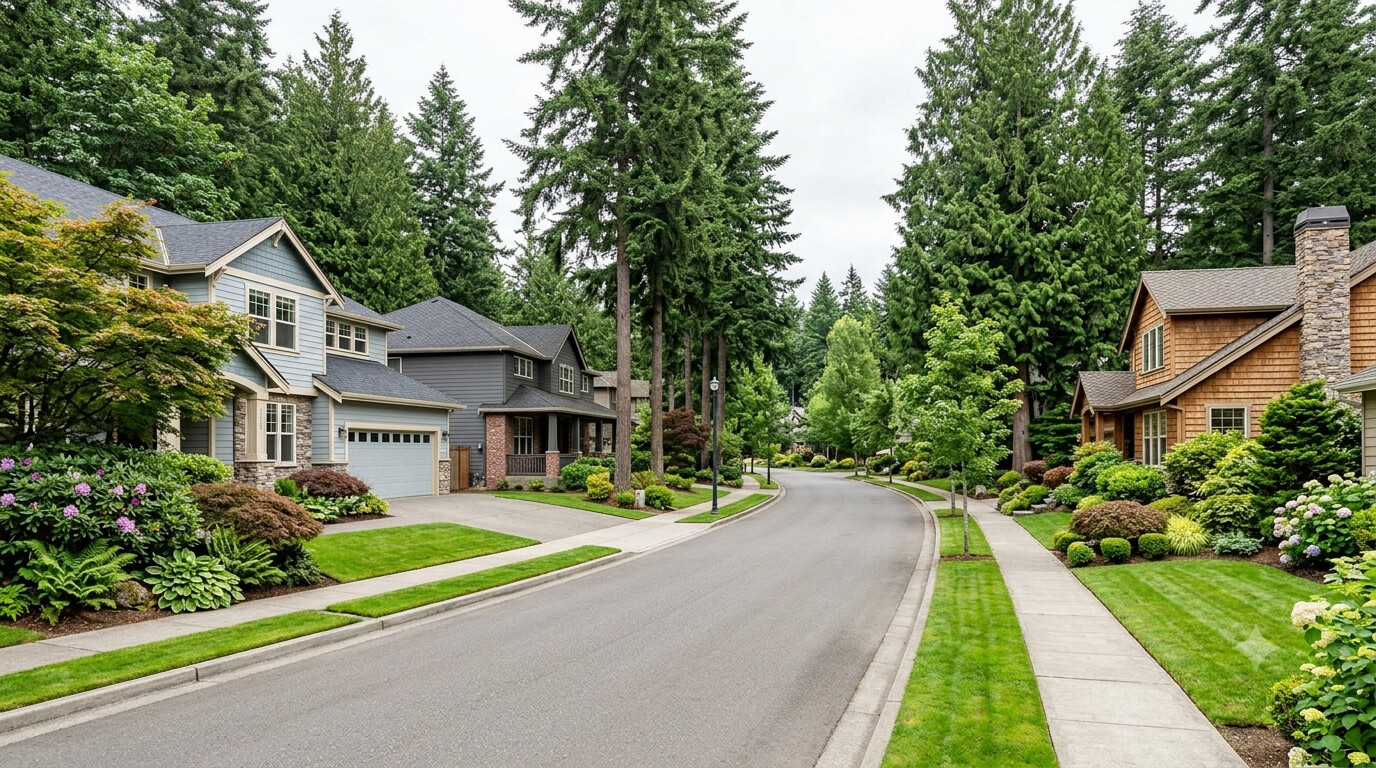
Quiet residential street in Trossachs neighborhood, Sammamish WA

Trossachs is one of four Sammamish neighborhoods zoned into the Issaquah School District.

Pine Lake: Established, Central, and Priced Like It

Pine Lake is centrally located and it’s one of the older, more established parts of Sammamish, with homes built mostly between 1970 and 2010. That range matters. It means you’ll find a mix of dated ranch-style homes that need work sitting next to fully remodeled or rebuilt properties, sometimes on the same block.

Median price in Pine Lake runs around $1.86M, making it one of the more expensive neighborhoods in the city outside the immediate lakefront. Buyers pay for the location: central access to shopping, the Pine Lake community itself, and a long track record of strong resale value.

Here’s the honest field note. When I do BPOs in Pine Lake, the spread between the best-maintained homes and the ones that need real work is wider than in newer neighborhoods like Klahanie or Trossachs. If you’re buying here, budget time and money for updates, or be very specific with your agent about wanting a turnkey property, because the older housing stock varies a lot more than the median price suggests.

Tally Ho and Inglewood Hill: Northern Sammamish, Lake Washington Schools

Tally Ho and Inglewood Hill sit in the northern part of the city, and this is where the school district conversation flips. This area, along with neighborhoods like Sahalee, Heritage Hills, Timberline, and The Villages, feeds into the Lake Washington School District rather than Issaquah, with Eastlake High School serving as the primary comprehensive high school for this part of Sammamish. For a deeper look at this side of the city, see the Tally Ho / Inglewood Hill neighborhood guide and the Sahalee neighborhood guide, both zoned into Lake Washington schools.

Lake Washington School District is ranked among the top districts in the state, right alongside Issaquah. So this isn’t a case of one side being the school-quality winner. It’s a case of two strong districts serving different halves of the same city, and you need to know which side of the line a specific address sits on before you fall in love with it.

Inglewood Hill in particular tends to draw buyers who want proximity to Redmond. The commute to the Microsoft campus from this part of Sammamish runs roughly 15 to 25 minutes, noticeably shorter than the drive from the southern neighborhoods, which matters if one household earner is commuting daily to the Eastside tech corridor.

East Lake Sammamish Parkway Corridor: The Lake Life Premium

This is the corridor that hugs the eastern shore of Lake Sammamish, and it’s where buyers pay directly for water. Homes here range from older two-story properties to full rebuilds, and lot sizes tend to be generous enough for gardens, play space, or just room to breathe.

This is also the most expensive stretch in our guide. West Lake Sammamish properties with direct water access carry a median around $2.67M, and even non-waterfront homes along the parkway trade at a real premium over the rest of the city. The area also connects directly to the 11-mile East Lake Sammamish Trail and Lake Sammamish State Park, so you’re paying for recreation access as much as the water view itself.

So what’s the “so what” here? If your budget realistically starts above $2M and lake access or lake proximity is non-negotiable, this corridor is where you concentrate your search. Below that number, you’re better served looking at Pine Lake or Trossachs, where you get strong Sammamish fundamentals without competing for waterfront inventory. For pricing and lot detail specific to this stretch, see the East Lake Sammamish Parkway neighborhood guide.

Beaver Lake: Natural Setting, Steady Demand

Beaver Lake, sometimes called Beaver Lake Estates, sits toward the established, older end of the age range, built mostly between 1970 and 2010, similar to Pine Lake. What sets it apart is direct proximity to Beaver Lake itself, which gives the neighborhood a quieter, more natural feel than the denser parts of the plateau.

This neighborhood is zoned into the Issaquah School District along with Klahanie, Trossachs, and Pine Lake, which puts the entire southern half of Sammamish, from Beaver Lake down through Klahanie, on one school system, while the northern neighborhoods run through Lake Washington schools.

Demand in Beaver Lake tends to be steady rather than explosive. It doesn’t get the bidding-war attention that lakefront parkway homes do, but it also doesn’t sit on the market long, because buyers who want established trees, a slower pace, and still-strong schools keep circling back to it.

The Local Angle: Making Sense of the School District Split

This is the piece that trips up almost every relocating family, so it gets its own section. Sammamish is not entirely in one school district. The dividing line runs roughly along SE 8th Street.

South of that line, you’re in the Issaquah School District: Klahanie, Trossachs, Pine Lake, and Beaver Lake all fall here. North of the line, you’re in Lake Washington School District: Sahalee, Heritage Hills, Inglewood Hill, Timberline, The Villages, Summer Ridge, Vintage, and Tally Ho.

Both districts rank in the top five in Washington state, so this isn’t a story about one side losing out academically. It’s a practical logistics issue. Your kids’ specific elementary, middle, and high school assignment depends on the exact address, not the city name on the listing. Before you get attached to a house, confirm the district and the specific school using the district’s official boundary lookup tool, because boundary lines inside a single neighborhood can occasionally split blocks.

What This Means for You

If you’re relocating to King County and Sammamish is the city you’ve settled on, work backward from two numbers: your real budget ceiling and how much weight school assignment carries in your decision.

Under $1.4M, Klahanie is where your money stretches furthest, with strong Issaquah School District access and the most built-in community amenities. Between $1.5M and $1.9M, Trossachs and Pine Lake both work, with Trossachs leaning more toward newer construction and Pine Lake leaning more central but with more variable housing condition. If Lake Washington School District specifically is your target, look north to Inglewood Hill or Tally Ho, and factor in the shorter Redmond commute as a bonus. Above $2M, especially if lake access matters to your family’s lifestyle, the East Lake Sammamish Parkway corridor is where your search should concentrate.

Whatever budget you land in, get a school boundary confirmation and a recent BPO-level valuation on any specific address before you make an offer. A city-wide median tells you almost nothing about what a particular street is actually worth.

FAQ

Which Sammamish neighborhood is the most affordable?

Klahanie is generally the most accessible entry point in the city, with a median price around $1.29M, well below the citywide median of roughly $1.6M.

Is Sammamish in the Issaquah School District or Lake Washington School District?

Both. Sammamish splits roughly along SE 8th Street. South of that line (Klahanie, Trossachs, Pine Lake, Beaver Lake) is Issaquah School District. North of it (Sahalee, Inglewood Hill, Tally Ho, Timberline) is Lake Washington School District.

What’s the commute like from Sammamish to Microsoft or Amazon?

Redmond (Microsoft) runs about 15 to 25 minutes from northern Sammamish neighborhoods like Inglewood Hill, and 20 to 35 minutes from the southern plateau. Bellevue and Seattle-based commutes take longer and are more car-dependent, since Sammamish has limited transit infrastructure.

Which Sammamish neighborhood has the best lake access?

The East Lake Sammamish Parkway corridor and West Lake Sammamish offer the most direct water access, with West Lake Sammamish median prices running around $2.67M for waterfront and near-waterfront properties.

Is Pine Lake or Trossachs better for a family relocating to Sammamish?

Both are strong, Issaquah School District options. Trossachs tends to have more consistent 1990s-era construction, while Pine Lake’s older housing stock (1970 to 2010) varies more in condition, so budget extra due diligence time if you’re considering Pine Lake.

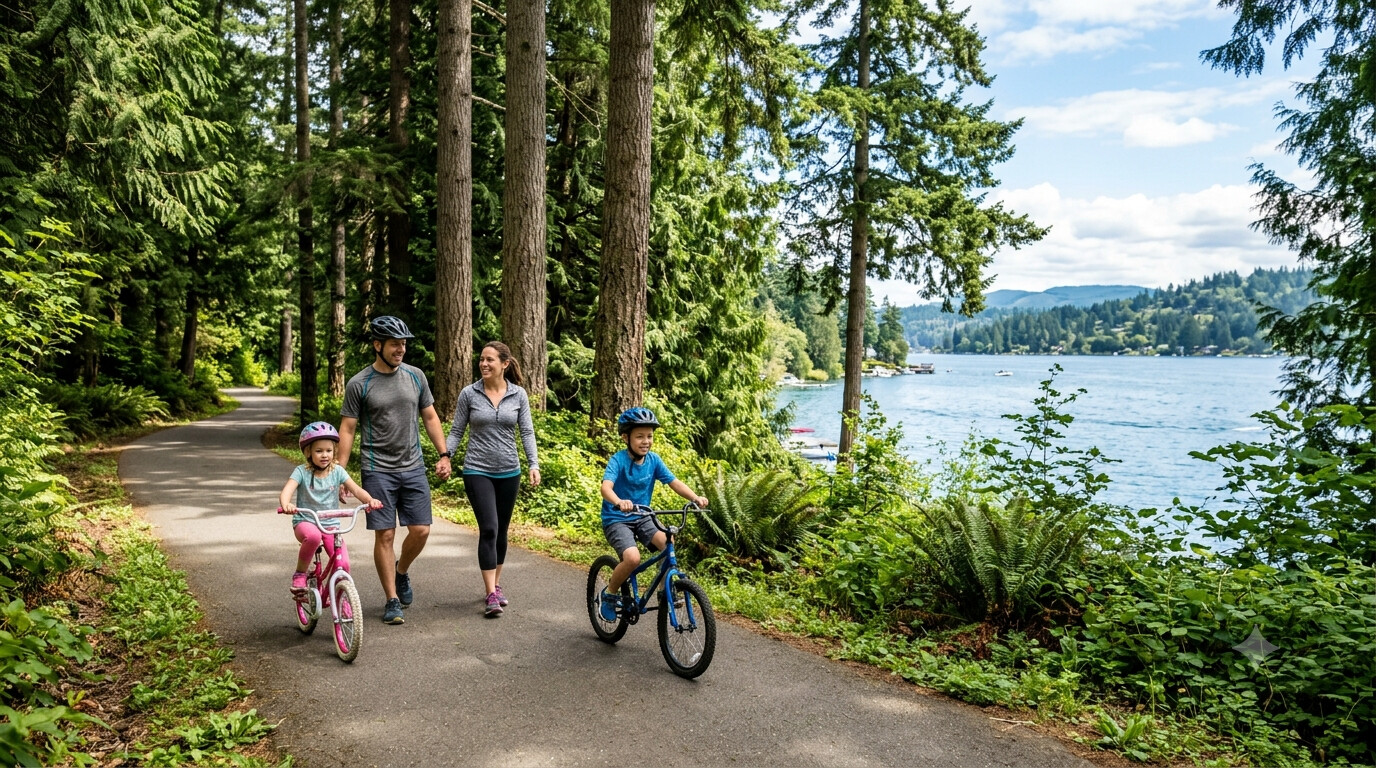
Family walking the East Lake Sammamish Trail near Lake Sammamish, Sammamish WA

The East Lake Sammamish Trail runs 11 miles and connects directly to Lake Sammamish State Park.

Six neighborhoods, two school districts, and a price range that spans over a million dollars inside one city limit. That’s a lot to sort through from out of state, and it’s exactly the kind of decision where a local field perspective saves you from guessing.

I do pricing analysis in these neighborhoods every week as part of my BPO work, which means I’m not working from a stale market report when I tell you what a specific street is actually worth. If you’re relocating and trying to figure out which Sammamish neighborhood fits your budget and your family, reach out and let’s talk specifics.

Your guide to life outside Seattle.

Gregory Dorrell | Coldwell Banker Bain | WA License #111862
253-350-0045  ·
greg@livingoutsideseattle.com  ·
www.livingoutsideseattle.com
King County NeighborhoodsSammamish July 5, 2026

Living in Aldarra, Sammamish WA | 2026 Guide

Aldarra is one of Sammamish’s most intentionally designed neighborhoods. Built out mostly in the 2000s, it was planned from the start to balance generous lot sizes with meaningful community open space — and that planning shows. The neighborhood has a cohesive feel that many Sammamish communities lack, with maintained green space woven between the homes rather than tucked away as an afterthought. If you’re looking for an upscale Sammamish address where the community design was taken seriously, Aldarra is on the short list to consider.

What is it actually like to live in Aldarra in 2026?

Aldarra has a quieter, more established character than neighborhoods that were still building out in the late 2010s. The lots are large by Sammamish standards — many run 10,000 to 15,000 square feet — and the homes were built with the kind of setbacks and landscaping buffers that give the streetscape a sense of scale. Morning walks through the community trail network feel genuinely unhurried because the paths wind through maintained open space rather than cutting along property lines.

The HOA in Aldarra is active and the community shows it. Common areas are well maintained. The trail network is kept in good condition. This is not an HOA that exists only on paper — residents cite the consistent maintenance standards as a significant part of why they chose Aldarra over comparable neighborhoods. That consistency also supports property values because buyers entering the community see immediately that the environment has been cared for.

Who lives in Aldarra? The buyer profile skews toward established families and move-up buyers who have already lived on the Sammamish plateau or the Eastside and know exactly what they want in a second or third home purchase. Tech executives, senior professionals, and buyers relocating from Bellevue neighborhoods who want more lot size and a quieter pace without giving up the Eastside location. It’s a deliberate choice, not a starter neighborhood.

Wide paved community trail winding through open maintained green space in Aldarra neighborhood Sammamish Washington with ornamental trees in autumn color and mature Douglas fir at the forest edge
Aldarra’s trail network threads through community open space rather than running along property fences. The maintained green space is a planned feature of the original community design, not an add-on — and a significant part of what buyers pay for here.

Homes in Aldarra: What the Data Shows

Homes in Aldarra were built primarily between 2000 and 2010, with most running between 3,000 and 5,000 square feet. These are not custom homes in the Sahalee sense — many were built by quality production builders on individual lots — but the construction standards are above the Sammamish average and the lot sizes provide a sense of space that is noticeably different from denser plateau neighborhoods. The community has reached a phase where the original landscaping has matured, which adds to both the aesthetic quality and the actual property values.

Metric Aldarra (98075) King County
Median Sales Price (May 2026) ~$1,525,000 ~$859,000
Median Days on Market ~28 days ~28 days
Active Listings Change (vs. Jan 2026) +22% +30%

Aldarra trades at a significant premium over the King County median, supported by lot size, build quality, community design, and the Issaquah School District pipeline. Verify current inventory with a licensed REALTOR.

Search Active Aldarra Listings

Updated daily from the MLS. No account required.

Schools Serving Aldarra

Aldarra feeds into Issaquah School District. Most addresses run through Sunny Hills Elementary, Pine Lake Middle School, and Skyline High School. This is a consistent Issaquah SD pipeline that runs across several established Sammamish neighborhoods and is one of the reasons buyers prioritize the south and central plateau areas when school district matters. Skyline High School is one of the larger ISD high schools with a strong college prep track and a broad course catalog. At Aldarra’s price point, buyers will typically be comparing ISD favorably with Bellevue and Lake Washington districts — the outcomes and resources are competitive.

Verify the Schools Yourself

Always verify your specific address with Issaquah School District before writing an offer.

Getting to Work from Aldarra

Aldarra sits in the south-central portion of Sammamish, with the best route to Bellevue and Seattle running via SE 8th Street to Issaquah-Hobart Road, then connecting to I-90 or SR-900. For Microsoft’s Redmond campus, the most direct path goes north through Sammamish and out via Redmond-Fall City Road. The commute times from Aldarra are representative of the broader south Sammamish experience — competitive for Bellevue and Issaquah, slightly longer for downtown Seattle.

Destination Distance 2026 Drive (Peak AM) Route
Downtown Seattle 25 miles 40 to 58 min I-90 West
Bellevue / Amazon 15 miles 22 to 38 min I-90 / I-405
Microsoft (Redmond) 12 miles 18 to 30 min Redmond-Fall City Rd / 2 Line
SeaTac Airport 28 miles 40 to 55 min I-90 / I-405 / I-5
Large custom Pacific Northwest luxury home exterior in Aldarra neighborhood Sammamish Washington with upscale 2000s construction, high-quality stone veneer and cedar details, three-car garage, and mature evergreen landscaping on a generous lot
Aldarra homes were built mostly between 2000 and 2010, with generous lot sizes and construction quality that sits above the Sammamish average. The original landscaping has now matured, adding to the neighborhood’s established character.

What I See as a Valuation Expert in Aldarra

Aldarra is one of the most consistently valued Sammamish neighborhoods I work in. The comp pool is deep enough to support clean appraisals, the community’s cohesive design keeps the environmental quality stable, and the buyer demographic is experienced enough that the market here tends to be less speculative than some of the plateau’s more recently developed areas. When I’m pricing a listing in Aldarra, I’m not hunting for outlier comps — I can find meaningful data points consistently.

What moves the needle within Aldarra: lot size and position relative to the community open space and trail network are the biggest premium drivers. A home that backs directly onto maintained open space — no rear neighbor, trail access out the back gate — will consistently command a premium over a comparable home on a standard interior lot. I’ve tracked that premium at $75,000 to $125,000 depending on the depth and quality of the open space exposure. The other major driver is update quality. Aldarra buyers are comparing against new construction alternatives in nearby communities and they expect kitchens and baths to be current. Homes with dated finishes from the original build sit longer and negotiate more than the market average.

Valuation Insight

“Aldarra lots that back directly onto community open space sell for $75,000 to $125,000 above comparable interior lots on the same street. That open-space adjacency is permanent and can’t be built out — it’s the one Aldarra variable I’d pay a premium for without hesitation.”

10-Year Lens

Aldarra’s fundamentals are strong for the medium and long term. The Issaquah SD pipeline, the community design quality, the large lots, and the location between Bellevue and Issaquah all support continued demand. As the plateau’s newer communities develop and mature, Aldarra’s established character will be more, not less, valuable to the buyer segment it serves.

Honest counter-risk: Homes built in 2000–2010 are entering the window where mechanical systems — HVAC, roofing, windows, water heaters — are approaching or at end of useful life. At Aldarra’s price point, buyers expect everything to be current. Pre-listing inspections and proactive replacement of aging systems will generate better outcomes than hoping buyers don’t flag them in their own inspection.

Frequently Asked Questions About Aldarra

Q: What makes Aldarra different from other Sammamish neighborhoods?
A: The planned community design — specifically the integrated open space and trail network — distinguishes it from most Sammamish HOA neighborhoods. The green space was designed in from the start, not added afterward, and the HOA actively maintains it. Combined with larger-than-average lots and 2000s build quality, it creates a noticeably different environment.

Q: What schools serve Aldarra?
A: Issaquah School District. Most addresses feed into Sunny Hills Elementary, Pine Lake Middle School, and Skyline High School. Verify your specific address with the district before writing an offer.

Q: What are home prices like in Aldarra?
A: Median sale price runs around $1.525M as of mid-2026. Open-space-backing lots command premiums of $75,000 to $125,000 over comparable interior lots.

Q: Does Aldarra have trail access to East Lake Sammamish Trail?
A: The community trail network connects to access points that link to the East Lake Sammamish Trail, giving residents a path to the 11-mile lakeside route without driving. This is one of the neighborhood’s genuine lifestyle advantages.

Explore Aldarra Yourself

The best way to understand Aldarra is to walk the interior trail network on a weekday morning. The open space design, the mature landscaping, and the pace of the community will tell you quickly whether this is the right fit for what you’re looking for.

Bigger Picture

Want the full Sammamish story?

Compare neighborhoods, commute times, school districts, and what’s driving the 2026 market.

Read the Full 2026 Sammamish Living Guide →

Your guide to life outside Seattle.

Gregory Dorrell | Coldwell Banker Bain | WA License #111862
253-350-0045 · greg@livingoutsideseattle.com · www.livingoutsideseattle.com
EastsideKing County CitiesSammamish July 4, 2026

Living in Sahalee, Sammamish WA | 2026 Guide

Sahalee is the only neighborhood in Sammamish built around a world-class golf course. Sahalee Country Club has hosted the PGA Championship, the US Senior Open, and multiple WGC events. That’s not the reason people live here — the golf course is a private club with its own membership structure separate from living in the community — but it shapes the entire character of the neighborhood. The course’s old-growth Douglas fir and western red cedar create a natural environment that is simply not found in any other Sammamish neighborhood. Homes here are custom-built, larger than the Sammamish average, and priced accordingly. This is the highest-end address on the plateau.

What is it actually like to live in Sahalee in 2026?

Sahalee is a gated community, and it has the privacy that comes with that structure. The roads inside are calm. The lots are generous. There’s no through traffic because there’s nowhere to go through to. Most homes here were custom-designed and built between the late 1990s and mid-2000s, and the quality of construction is notably higher than the standard Sammamish HOA neighborhood. You’re looking at stone, real wood, serious architectural detail, and homes that were built to a standard, not to a price point.

The Sahalee Country Club membership is a separate transaction from buying a home here. Not every resident is a member, though many are. The course’s old-growth tree canopy surrounds much of the community and creates a forest environment unlike anything else in Sammamish. You’re essentially living in a forest neighborhood that happens to have a championship golf course threaded through it. On weekend mornings, the community paths are quiet, the trees are dense, and the contrast with the busier plateau neighborhoods is immediate.

Who lives here? Senior tech executives and partners who have moved up from Bellevue or Kirkland neighborhoods. Buyers who specifically want the gated privacy and custom construction quality that Sahalee’s lot sizes and build standards deliver. Golf club members who chose their neighborhood to match their recreational life. It skews toward established buyers — people who have done the plateau research and decided this is the address they want.

Manicured fairway at Sahalee Country Club in Sammamish, Washington with towering old-growth Douglas fir and western red cedar forming a natural forest cathedral around the golf hole
Sahalee Country Club has hosted the PGA Championship and multiple WGC events. The old-growth Douglas fir corridor surrounding the course defines the neighborhood’s environment — there is no comparable tree canopy anywhere else in Sammamish.

Homes in Sahalee: What the Data Shows

Sahalee homes are custom builds on large lots, most constructed between 1998 and 2007. Square footage typically runs from 3,200 to over 6,000 square feet. These are not production homes — they were designed individually, built with higher-than-standard material quality, and sited to work with the course environment. The number of homes within the community is limited by design, which keeps supply constrained and supports value even in softer broader markets. When Sahalee homes sell, they take longer on average than the Sammamish median because the buyer pool is smaller and more deliberate. That’s a feature, not a problem.

Metric Sahalee (98074) King County
Median Sales Price (May 2026) ~$2,100,000 ~$859,000
Median Days on Market ~45 days ~28 days
Active Listings Change (vs. Jan 2026) +15% +30%

Sahalee’s limited inventory and constrained supply keep prices well above Sammamish averages. Course-adjacent and course-view lots command the strongest premiums. Verify current inventory with a licensed REALTOR.

Search Active Sahalee Listings

Updated daily from the MLS. No account required.

Schools Serving Sahalee

Sahalee feeds into Issaquah School District. Most addresses in the community go through Sunny Hills Elementary, Pine Lake Middle School, and Skyline High School. This is the same strong Issaquah pipeline that serves Trossachs and several other established Sammamish neighborhoods. Skyline High School is one of the larger Issaquah District high schools with a broad course catalog and strong college placement. For buyers at Sahalee’s price point who are comparing schools across Eastside districts, Issaquah SD competes very favorably with Bellevue and Lake Washington districts on academic outcomes.

Verify the Schools Yourself

Always verify your specific address with Issaquah School District before writing an offer.

Getting to Work from Sahalee

Sahalee sits in the north-central part of Sammamish, which gives it reasonable access to multiple route options. NE 228th Street connects west to Redmond-Fall City Road for the Microsoft Redmond campus — one of the shorter commutes in the Sammamish market. For Seattle and Bellevue, the drive goes south to NE 8th Street and connects to the plateau’s main arteries west toward I-90 or north toward SR-520. At Sahalee’s price point, most buyers are evaluating private or hybrid commute patterns, but the infrastructure supports any standard route.

Destination Distance 2026 Drive (Peak AM) Transit Option
Downtown Seattle 22 miles 38 to 55 min I-90 West / SR-520 West
Bellevue / Amazon 14 miles 20 to 35 min SR-520 / I-405
Microsoft (Redmond) 8 miles 14 to 22 min Redmond-Fall City Rd / 2 Line
SeaTac Airport 29 miles 40 to 60 min I-90 / I-405 / I-5
Custom Pacific Northwest luxury home exterior in the Sahalee gated community of Sammamish, Washington with high-quality stone and cedar details, mature evergreen landscaping, and upscale streetscape
Sahalee homes are custom-designed and individually built, most dating to 1998 through 2007. The construction quality here is materially above the Sammamish standard — stone, real cedar, serious architectural detail, and generous lot sizes throughout.

What I See as a Valuation Expert in Sahalee

Sahalee is one of the most defensible value positions in Sammamish and among the most complex to appraise. The comparable sales pool is small, the price range wide within the community, and the subject-specific variables — lot position relative to the course, view exposure, build quality — are enormous. I approach every Sahalee assignment expecting that no two properties will trade on the same logic. A course-adjacent lot with a fairway view and a fully updated interior operates in a completely different price tier than a back-of-community lot with a standard build quality, even at the same square footage.

What holds value consistently here: course adjacency, the tree canopy environment, and homes that have had thoughtful updates that match the original construction quality. The buyers at this price point are not easily impressed by standard renovation packages — they’re comparing against custom construction options in Bellevue and Kirkland. Sahalee homes that have been maintained and updated at a level that matches their original quality compete well. Homes that have been partially updated with builder-grade finishes in a custom-build shell are actually harder to sell here than in lower-priced Sammamish neighborhoods.

Valuation Insight

“Sahalee’s limited inventory is one of its best long-term value arguments. You can’t build another Sahalee — the course footprint, the old-growth trees, and the gated community infrastructure are fixed assets that no new Sammamish development can replicate.”

10-Year Lens

Sahalee’s value will continue to be anchored by scarcity and the permanence of its defining assets. The golf course, the old-growth forest corridor, and the gated privacy are not replicable. As Sammamish’s plateau builds out and neighborhood character becomes more homogeneous elsewhere, Sahalee becomes more distinct, not less. Well-maintained properties here should see strong demand from established buyers who have already moved through the broader Eastside market and are looking for the definitive address.

Honest counter-risk: The custom build age (late 1990s to mid-2000s) means mechanicals and systems are approaching major replacement cycles on many homes. At Sahalee’s price point, buyers expect everything to be at the highest standard — deferred maintenance here is more expensive to correct than anywhere else in Sammamish.

Frequently Asked Questions About Sahalee

Q: Do you have to be a Sahalee Country Club member to live there?
A: No. Club membership is a separate transaction from buying a home in the community. Many residents are members and many are not. Living within the gates does not guarantee or require club access.

Q: What schools serve Sahalee?
A: Issaquah School District. Most addresses feed into Sunny Hills Elementary, Pine Lake Middle School, and Skyline High School. Verify your specific address with the district before writing an offer.

Q: What are home prices like in Sahalee?
A: Median sale price runs around $2.1M as of mid-2026. Course-adjacent and course-view properties command a meaningful premium above the community median. Homes tend to take longer to sell here because the buyer pool is smaller and more deliberate.

Q: Is Sahalee gated?
A: Yes. Sahalee is a gated community with controlled access. This contributes significantly to the privacy and quiet character that distinguishes it from other Sammamish neighborhoods.

Explore Sahalee Yourself

The best way to understand the Sahalee environment is to drive NE 228th Street along the course perimeter on a clear morning and see the old-growth tree corridor firsthand. You’ll understand immediately why this is a different category of Sammamish neighborhood.

Bigger Picture

Want the full Sammamish story?

Compare neighborhoods, commute times, school districts, and what’s driving the 2026 market.

Read the Full 2026 Sammamish Living Guide →

Your guide to life outside Seattle.

Gregory Dorrell | Coldwell Banker Bain | WA License #111862
253-350-0045 · greg@livingoutsideseattle.com · www.livingoutsideseattle.com
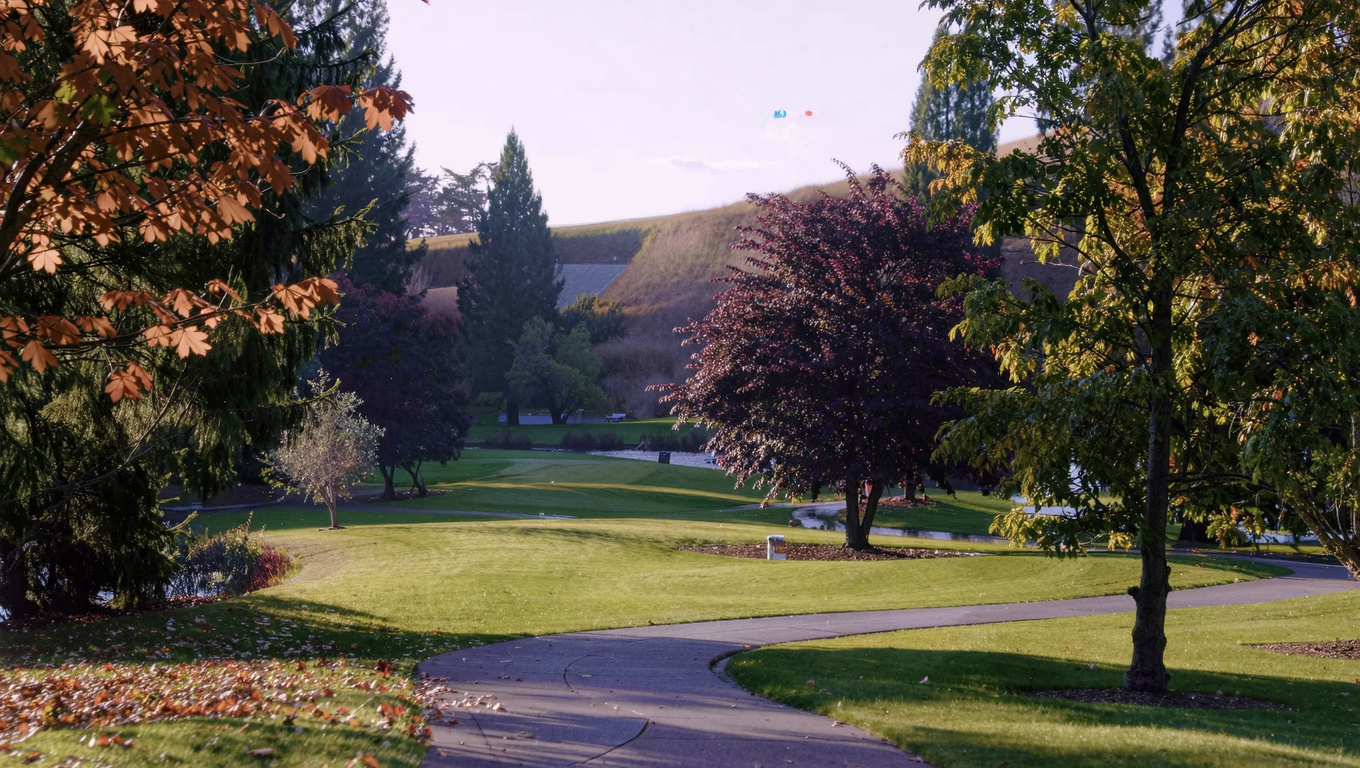
EastsideKing County CitiesSammamish July 1, 2026

East Lake Sammamish Parkway, Sammamish WA | 2026

East Lake Sammamish Parkway is a different kind of Sammamish address. Most of the city sits up on the plateau interior, away from the water. The Parkway runs along the eastern shoreline of Lake Sammamish itself, and the homes here — on the hillside above the road — sit in a position that the rest of Sammamish simply cannot offer: direct proximity to a 2,600-acre lake, the East Lake Sammamish Trail running right along the water’s edge, and the kind of views that make people who didn’t know this corridor existed kick themselves for not looking sooner. This is Issaquah School District territory, and the price point reflects everything the location delivers.

What is it actually like to live on East Lake Sammamish Parkway in 2026?

Morning on the Parkway has a specific quality to it. You can walk or cycle down to the trail before most of Sammamish has left the house. The trail runs flat along the water and connects north toward Redmond and south toward Issaquah — for cycling commuters, it’s an actual route to work, not just a recreational loop. Kayakers launch from access points along the shore. On summer mornings the lake picks up early, and by 8 AM there are already paddlers out on the water. This is a lifestyle that plateau interior neighborhoods approximate with parks and paths. The Parkway delivers the actual thing.

The homes sit on the hillside above the road, many at elevations that give them lake views across the water. The lots are generally larger than plateau interior Sammamish, and the construction runs from the 1980s through mid-2000s — a wide range, which means the market here has both older homes that require significant investment and updated homes that compete directly with new construction on lifestyle appeal. The neighborhood character is quieter and more private than the busier plateau communities; the Parkway road itself handles through traffic, but the residential streets are calm.

Buyers who end up here are often people who looked at the plateau interior, did the numbers, and decided the lake proximity was worth the premium. Tech workers from Microsoft and Amazon who run or cycle the trail before work. Buyers who want to raise kids next to a functioning outdoor environment rather than a managed park. Move-up buyers from Seattle and Bellevue who want the definitive Eastside outdoor lifestyle address.

Paved East Lake Sammamish Trail running along the eastern shoreline of Lake Sammamish in Washington with calm lake water to the left and dense Pacific Northwest forest to the right
The East Lake Sammamish Trail runs 11 miles along the lake’s eastern shoreline, accessible directly from the Parkway corridor. For residents here, it’s not a destination — it’s the front door.

Homes on East Lake Sammamish Parkway: What the Data Shows

The housing stock along the Parkway corridor is the most varied in Sammamish by age and type. You have 1980s ranch-style homes that have been fully renovated sitting next to 2000s custom builds that were designed specifically to capture lake views. Lot sizes run larger than most Sammamish neighborhoods, often a half acre or more. The price range is correspondingly wide — entry-level Parkway properties with limited lake exposure start lower than comparable plateau homes, while lake-view properties with updated interiors are among the highest-priced single-family homes in Sammamish overall.

Metric ELSP Corridor (98074 / 98075) King County
Median Sales Price (May 2026) ~$1,350,000 ~$859,000
Median Days on Market ~28 days ~28 days
Active Listings Change (vs. Jan 2026) +22% +30%

Price range on the Parkway is wide — lake-view properties with updated interiors trade well above the median. Verify current inventory with a licensed REALTOR.

Search Active East Lake Sammamish Parkway Listings

Updated daily from the MLS. No account required.

Schools Serving East Lake Sammamish Parkway

The Parkway corridor feeds into Issaquah School District. Most addresses along this stretch go through Beaver Lake Elementary, Pine Lake Middle School, and Skyline High School — the same strong pipeline that serves the Pine Lake neighborhood directly above. For the northern end of the Parkway closer to Redmond, some addresses may shift to different boundary assignments, so always verify your specific address with Issaquah School District before writing an offer.

Issaquah School District is consistently one of the highest-performing districts in Washington state. Skyline High School has a strong college readiness record and a broad AP course selection. For families comparing the Parkway to other Eastside lake-adjacent neighborhoods in different districts, the Issaquah assignment is a genuine advantage — you’re getting strong schools alongside the premium lake address.

Verify the Schools Yourself

Always verify your specific address with Issaquah School District before writing an offer. Boundary assignments on the northern end of the Parkway may vary.

Getting to Work from East Lake Sammamish Parkway

The Parkway runs north-south along the lake, with connections up to the plateau interior at several points. For Seattle commuters, the drive goes up to the plateau and then west to I-90 — adding a few minutes versus plateau interior neighborhoods, but very manageable in the right direction. For Redmond and Microsoft workers, the northern end of the Parkway connects directly to Redmond-Fall City Road and then west to campus — this is one of the better Sammamish locations for the Redmond commute. Bellevue is accessible via Redmond and SR-520 or via I-90 through Issaquah. For cyclists, the East Lake Sammamish Trail runs all the way to Redmond and connects to the broader trail network.

Destination Distance 2026 Drive (Peak AM) Transit / Alt Option
Downtown Seattle 22 miles 38 to 55 min I-90 West / ST 554
Bellevue / Amazon 14 miles 20 to 35 min SR-520 or I-90 / I-405
Microsoft (Redmond) 9 miles 14 to 24 min Redmond-Fall City Rd / Trail
SeaTac Airport 28 miles 38 to 55 min I-90 / I-405 / I-5

Quality late 1990s to 2000s Pacific Northwest home exterior on East Lake Sammamish Parkway in Sammamish Washington with mature landscaping and hillside siting that implies lake views
Homes on East Lake Sammamish Parkway range from updated 1980s ranches to custom 2000s builds. The elevated hillside siting is consistent — properties here sit above the trail and road, which is what creates lake view potential on many lots.

What I See as a Valuation Expert on East Lake Sammamish Parkway

The Parkway is one of the most complex valuation assignments in my Sammamish work, and I mean that in a good way. The price spread here is wider than anywhere else in the city. A well-updated home with genuine unobstructed lake views can trade at $400,000 to $600,000 above a comparable-square-footage home 200 feet away without lake exposure. That’s not a small difference and it comes entirely from the view component. When I’m doing appraisals here for lenders, the view analysis is as much of the work as the comparable sales analysis.

What I always flag for buyers: not every home on the Parkway has a lake view. The road runs along the base of the hillside, and properties at lower elevations or obscured by trees may have no meaningful view at all despite the prestigious address. Walk the lot. Look west. Understand what the view is before you build your offer around a view premium. Buying a Parkway address without confirming the view is one of the more expensive mistakes I see buyers make in this market.

The age variation is also real. Updated mid-2000s custom homes compete with new Eastside construction. 1980s ranches, even well-maintained, require significant capital to bring to current market standards. The trail and lake access don’t substitute for a structurally sound, well-maintained property — they amplify the value of one when it’s already there.

Valuation Insight

“Confirmed, unobstructed lake views on East Lake Sammamish Parkway are worth $400,000 to $600,000 above comparable non-view properties on the same road. But not every Parkway address has a view. Confirm it before you price it in.”

10-Year Lens

Lake Sammamish is a permanent asset. The trail is a permanent asset. Issaquah School District is a permanent asset. The Parkway corridor’s value proposition doesn’t depend on new development or community investment — it depends on location, and the location is fixed. Well-maintained, view-confirmed properties here should continue to appreciate in line with or above the broader Sammamish market. The scarcity argument for lakeside addresses is only getting stronger as the plateau builds out.

Honest counter-risk: Traffic on the Parkway itself has increased as Sammamish has grown. The road is a through-route between Redmond and Issaquah, and peak-hour traffic on ELSP has worsened over the past decade. Properties with good driveway setback from the road are more insulated from this than properties right on the highway edge.

Frequently Asked Questions About East Lake Sammamish Parkway

Q: Do all homes on East Lake Sammamish Parkway have lake views?
A: No. Homes sit on the hillside above the road at various elevations. Some have clear, unobstructed views across the lake. Others are obscured by trees or topography. Always confirm the view from the specific property before writing an offer — the view component drives enormous value differences on the same street.

Q: What schools serve East Lake Sammamish Parkway?
A: Issaquah School District. Most addresses feed into Beaver Lake Elementary, Pine Lake Middle, and Skyline High School. Verify your specific address with the district before writing an offer.

Q: Can residents access the East Lake Sammamish Trail?
A: Yes. The trail runs along the lake’s eastern shoreline directly adjacent to the Parkway and is accessible from multiple points. It’s a flat, paved, 11-mile multi-use trail that connects north to Redmond and south to Issaquah.

Q: What are home prices like on East Lake Sammamish Parkway?
A: The median runs around $1.35M, but the range is wide. Unupdated homes without lake views start lower. Updated homes with confirmed lake views trade significantly above the median — sometimes by $400,000 or more. There is no neighborhood in Sammamish with a wider internal price spread.

Explore East Lake Sammamish Parkway Yourself

Drive the Parkway from north to south on a clear day and look west at each opening in the tree line. Then park and walk the East Lake Sammamish Trail for a mile. That combination will give you a clear picture of why buyers pay a premium for this address over any interior Sammamish neighborhood.

Bigger Picture

Want the full Sammamish story?

Compare neighborhoods, commute times, school districts, and what’s driving the 2026 market.

Read the Full 2026 Sammamish Living Guide →

Your guide to life outside Seattle.

Gregory Dorrell | Coldwell Banker Bain | WA License #111862
253-350-0045 · greg@livingoutsideseattle.com · www.livingoutsideseattle.com
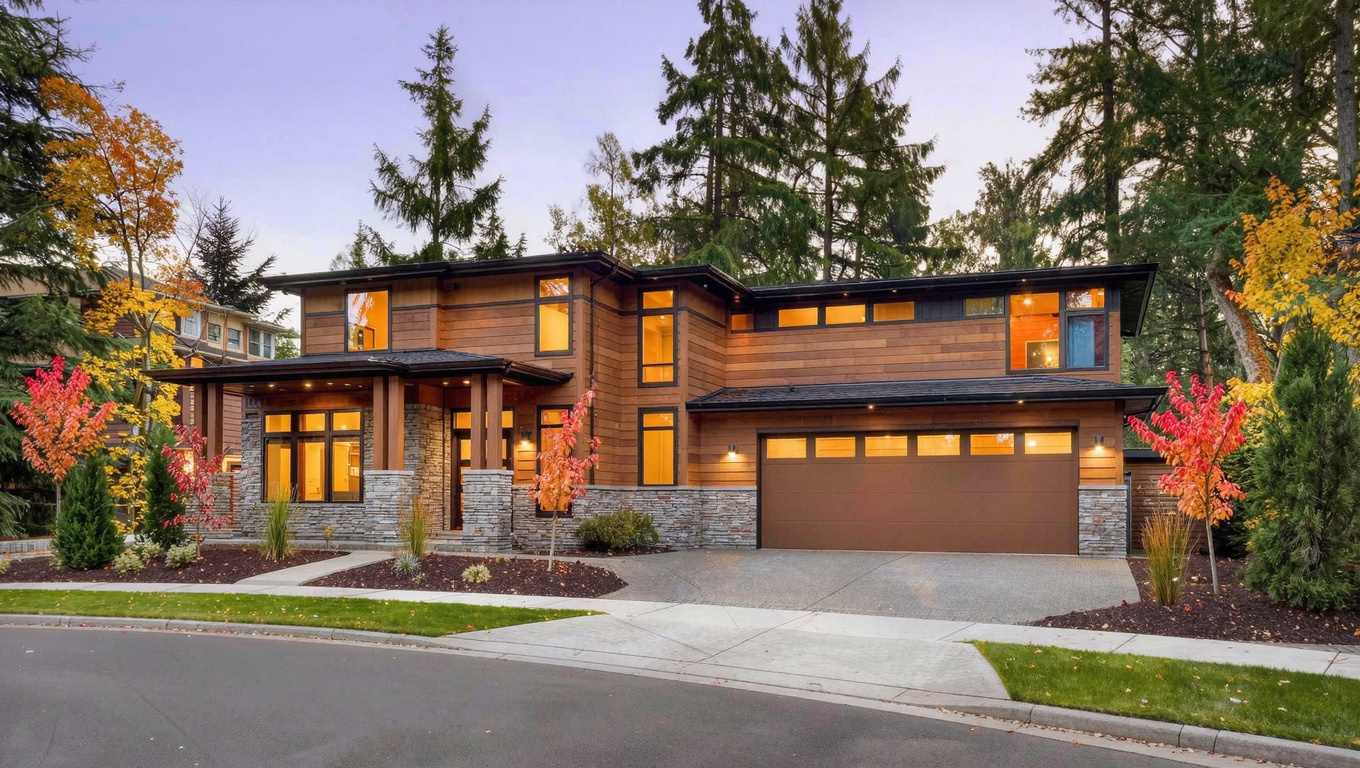
EastsideKing County CitiesSammamish June 29, 2026

Living in Tally Ho & Inglewood Hill, Sammamish | 2026

Tally Ho and Inglewood Hill sit on the northwestern edge of Sammamish, in a part of the plateau that the real estate world doesn’t always break out separately but locals definitely treat as distinct. The defining characteristic here is the terrain and what that terrain delivers: Inglewood Hill Road runs along a ridgeline with westward views of Lake Sammamish and, on clear days, the Olympic Mountains beyond. These aren’t incidental views. For the right property on the right street, the view component is a meaningful driver of value. These neighborhoods feed into Lake Washington School District rather than Issaquah School District, which makes them the natural choice for families specifically targeting Alcott Elementary, Inglewood Middle, and Eastlake High School.

What is it actually like to live in Tally Ho and Inglewood Hill in 2026?

The northwest corner of Sammamish feels different from the plateau interior. The terrain varies more. There’s rolling topography along Inglewood Hill Road that creates natural view corridors toward the lake and the west. Streets feel less uniform than the flat-grid development you see further east in the city. The neighborhood has an established, settled quality — most of the construction here runs from the mid-1990s through mid-2000s, with mature trees and landscaping that have had decades to grow. It doesn’t feel like a new subdivision and that’s largely intentional from buyers who chose this area.

The Lake Washington School District connection shapes the community character in a specific way. Buyers who end up here often did targeted research to find a Sammamish address that feeds into LWSD rather than Issaquah SD. Eastlake High School in particular draws buyers who specifically want that program. The neighborhood skews toward buyers who prioritize school-age programming, similar to the rest of Sammamish, but there’s a higher proportion of buyers who made a deliberate school district choice rather than just landing in Sammamish generally.

Daily life here mixes well with access to the East Lake Sammamish Trail — a flat, paved multi-use trail that runs along the lake’s eastern edge and connects north to Redmond and south toward Issaquah. Residents use it for cycling commutes, running, and recreational riding. The trail access from this area is genuinely excellent, one of the benefits of being at the western edge of the plateau close to the lake.

Westward ridgeline view from Inglewood Hill in Sammamish, Washington showing Lake Sammamish and Olympic Mountains silhouette through gaps in mature Pacific Northwest treeline
Inglewood Hill Road runs along a ridgeline on the western edge of the Sammamish Plateau. The right properties on the right streets have genuine westward views of Lake Sammamish and, on clear days, the Olympic Mountains.

Homes in Tally Ho and Inglewood Hill: What the Data Shows

The housing stock here runs primarily mid-1990s through mid-2000s construction, two-story detached single-family homes, ranging from about 2,000 to 3,600 square feet depending on the subdivision and lot. Lots are generally larger than you’ll find in the interior Sammamish neighborhoods, which reflects the slightly older development pattern in this area. The terrain means lot topography varies significantly from street to street — some lots are flat, others slope toward lake views, and that variation drives real price differences within a small geographic area.

Metric Tally Ho / Inglewood Hill (98074) King County
Median Sales Price (May 2026) ~$1,225,000 ~$859,000
Median Days on Market ~25 days ~28 days
Active Listings Change (vs. Jan 2026) +29% +30%

Data reflects the 98074 ZIP code. View lots and trail-proximate properties on Inglewood Hill command a meaningful premium. Verify current inventory with a licensed REALTOR.

Search Active Tally Ho & Inglewood Hill Listings

Updated daily from the MLS. No account required.

Schools Serving Tally Ho and Inglewood Hill

Tally Ho and Inglewood Hill feed into Lake Washington School District, which sets them apart from the majority of Sammamish that goes through Issaquah SD. The standard feeder for most addresses in this area is Alcott Elementary, Inglewood Middle School, and Eastlake High School. Lake Washington School District is consistently ranked among the top districts in Washington state, with strong academics, competitive athletics, and a broad range of elective and AP programming at the high school level.

Eastlake High School has a strong reputation for college preparation and a competitive STEM program. Alcott Elementary is a smaller school with a strong community reputation and consistently high parent satisfaction. Some addresses at the edges of this area may fall into different boundary zones, so as always: verify your specific address with Lake Washington School District before writing an offer. The district boundary in this part of Sammamish follows the city’s western edge fairly closely, but edge cases exist.

Verify the Schools Yourself

Always verify your specific address with Lake Washington School District before writing an offer. Boundary lines in this part of Sammamish follow the city’s western edge and edge-case addresses exist.

Getting to Work from Tally Ho and Inglewood Hill

The northwest Sammamish location gives this area better access to Redmond and the SR-520 corridor than most Sammamish neighborhoods. NE 8th Street connects west to Redmond-Fall City Road, giving a direct route to Microsoft’s Redmond campus without touching the freeway in most conditions. For I-90 Seattle commuters, the drive goes east a bit before heading south to the freeway, adding a few minutes versus the plateau interior, but it’s manageable. For Bellevue, the route can go north through Redmond and south on SR-520 or I-405 depending on traffic.

Destination Distance 2026 Drive (Peak AM) Transit Option
Downtown Seattle 22 miles 38 to 55 min I-90 West / SR-520 West
Bellevue / Amazon 14 miles 20 to 35 min SR-520 / I-405 south
Microsoft (Redmond) 9 miles 15 to 25 min Redmond-Fall City Rd / 2 Line
SeaTac Airport 30 miles 40 to 60 min SR-520 to I-405 to I-5

Quality late 1990s to 2000s two-story Pacific Northwest home exterior in the Tally Ho neighborhood of Sammamish, Washington with mature landscaping and gentle sloped terrain
Tally Ho homes run primarily mid-1990s through mid-2000s construction on larger-than-average Sammamish lots. The sloped terrain in parts of the neighborhood creates natural view corridors that don’t exist in flat plateau subdivisions.

What I See as a Valuation Expert in Tally Ho and Inglewood Hill

When I assess properties in this area for lenders, the view component is the first thing I’m calibrating for. Not every home on Inglewood Hill Road has a view, and not every view is created equal. A clear, unobstructed lake and mountain view on the right lot is worth a premium that I consistently see in the data. I have appraised comparable properties in this neighborhood where the view difference alone accounted for $80,000 to $150,000 in value. That’s a real number and it’s why I always advise buyers here to spend time understanding the specific view from the specific lot rather than assuming any Inglewood Hill address carries view value.

The Lake Washington School District assignment is a genuine demand driver that shows up in the data. Buyers who are committed to LWSD will pay a premium to stay in Sammamish and get that district, because most of Sammamish goes Issaquah. That creates a buyer pool with less competition from people who are neutral on school district and narrows it toward buyers who actively want LWSD — which keeps demand stable and focused.

The aging housing stock is a real consideration here the same as elsewhere in Sammamish’s older neighborhoods. Mid-1990s construction means 25 to 30 years of wear on HVAC, roofing, and windows on many properties. Updated homes compete well. Unupdated homes with deferred maintenance need to be priced accordingly and buyers should always get a full inspection before closing.

Valuation Insight

“A clear lake and mountain view on Inglewood Hill Road is worth $80,000 to $150,000 in premium over a comparable non-view property. That premium holds because the view is permanent and can’t be blocked by future development on the lake side.”

10-Year Lens

The combination of Lake Washington School District access and western lake views gives Tally Ho and Inglewood Hill a durable value argument that doesn’t depend on new development or amenity investment. The views don’t change and the district is stable. Properties here will continue to attract a specific, motivated buyer pool. The proximity to Redmond and the SR-520 corridor also positions this area well for Microsoft-area buyers who want a Sammamish lifestyle with a shorter commute.

Honest counter-risk: Buyers who overpay for an assumed view that is actually partial or seasonally obstructed will see that premium erode. Always verify the view from the specific property during leaf-off season to get an accurate read on what the view actually is year-round.

Frequently Asked Questions About Tally Ho and Inglewood Hill

Q: What makes Tally Ho and Inglewood Hill different from other Sammamish neighborhoods?
A: Two things primarily: Lake Washington School District access and western views of Lake Sammamish and the Olympics from the ridgeline. Most of Sammamish feeds into Issaquah SD. This area is one of the few Sammamish addresses that gets LWSD, which creates a distinct buyer pool. The views are a secondary driver but a real one on the right properties.

Q: What schools serve Tally Ho and Inglewood Hill?
A: Lake Washington School District. Most addresses feed into Alcott Elementary, Inglewood Middle School, and Eastlake High School. Verify your specific address with LWSD before writing an offer.

Q: Do all homes in this area have lake views?
A: No. Views vary significantly by street and lot. Properties on the western-facing ridgeline sections of Inglewood Hill Road have the strongest views. Interior streets and lower elevations may have partial or no views. Always verify the view from the specific property and do it during leaf-off season to see the year-round reality.

Q: What are home prices like in Tally Ho and Inglewood Hill?
A: Median sale price as of mid-2026 runs around $1.225M. View properties on Inglewood Hill command a premium of $80,000 to $150,000 over comparable non-view homes in the same neighborhood. Homes are selling in about 25 days on average.

Explore Tally Ho and Inglewood Hill Yourself

Drive Inglewood Hill Road from north to south on a clear day and stop at several points to look west. That will give you the clearest picture of which properties have genuine view potential and which are too tree-obscured to carry a view premium.

Bigger Picture

Want the full Sammamish story?

Compare neighborhoods, commute times, school districts, and what’s driving the 2026 market.

Read the Full 2026 Sammamish Living Guide →

Your guide to life outside Seattle.

Gregory Dorrell | Coldwell Banker Bain | WA License #111862
253-350-0045 · greg@livingoutsideseattle.com · www.livingoutsideseattle.com
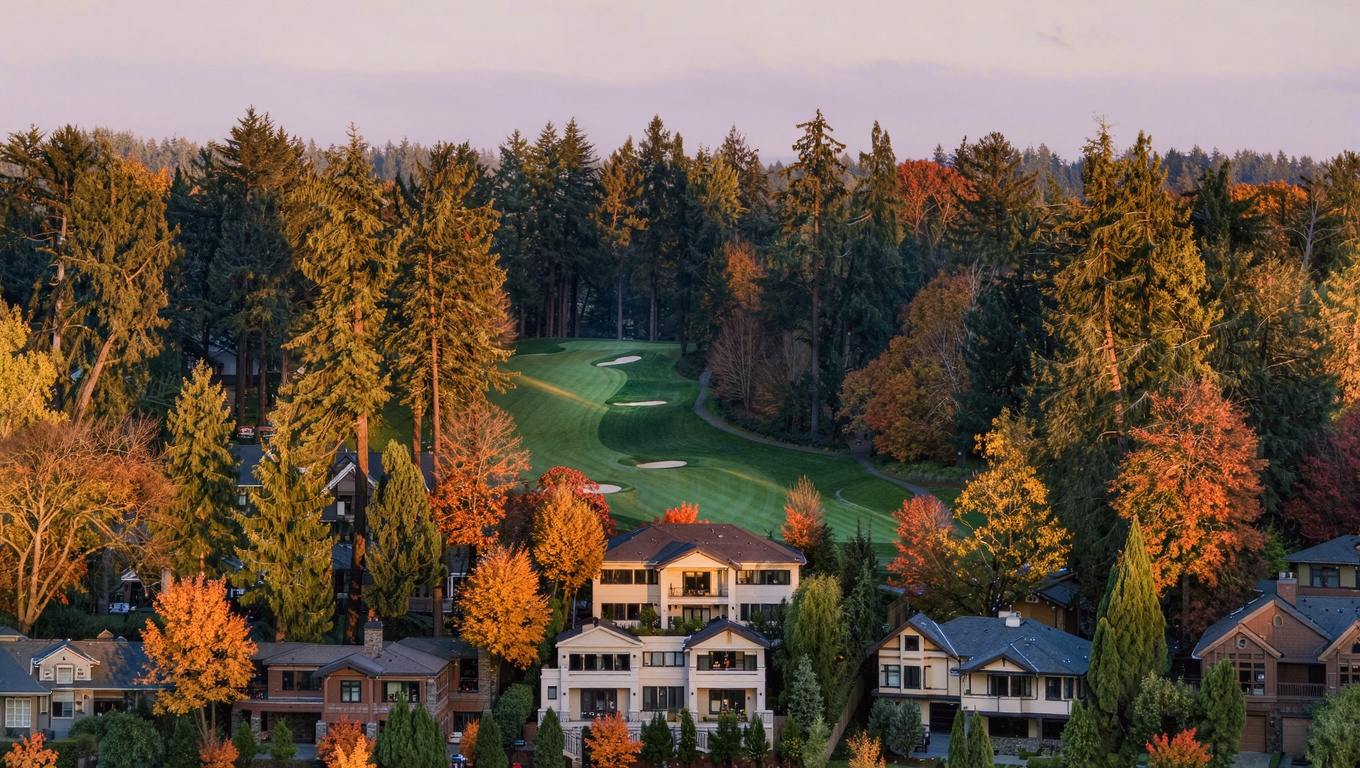
EastsideKing County CitiesSammamish June 27, 2026

Living in Pine Lake, Sammamish WA | 2026 Guide

Pine Lake is the neighborhood on the Sammamish Plateau that actually has its lake. That sounds obvious, but it matters more than people realize when they’re choosing a neighborhood. Pine Lake itself is a 170-acre freshwater lake with public access at Pine Lake Park — kayaking, paddle boarding, swimming, fishing — and the neighborhood wraps around the southeastern and northern edges of the lake. This is Issaquah School District territory, and the schools here are strong. If you’re a buyer who wants a real outdoor lifestyle woven into your daily routine rather than a separate weekend trip, Pine Lake is one of the few Sammamish neighborhoods that genuinely delivers it.

What is it actually like to live in Pine Lake in 2026?

Summer weekends in Pine Lake are unlike anything else in Sammamish. The park fills up, the boat launch stays busy from mid-morning through early evening, and the walking trail around the lake perimeter becomes the neighborhood’s main social corridor. Kids on bikes, families with kayaks strapped to their cars, people out with dogs on the trail — it has the energy of a community that chose where it lives for a reason. The rest of the year is quieter, but the proximity to the lake doesn’t disappear. Winter walks on the trail with the mist sitting on the water are their own thing entirely.

The neighborhood itself is well-maintained and HOA-governed on most streets. You’re looking at established 1990s through mid-2000s construction with mature landscaping throughout. The terrain here is slightly different from flat Sammamish plateau — there’s some gentle rolling topography near the lake shoreline that creates views on certain streets and gives the area a more varied feel than the grid-style development you see in other parts of the city. Buyers who are used to looking at similar-sized homes in more generic Sammamish streets often notice the difference when they walk Pine Lake properties.

Who ends up here? Buyers who did the research and specifically wanted the lake access. Buyers who plan to use the outdoor infrastructure from day one. Tech workers from Bellevue and Redmond who want more of a natural setting without leaving the Eastside. And people relocating from cities who are done with urban density and want their backyard to be a real outdoor environment, not just a managed green space.

Calm early morning shoreline of Pine Lake in Sammamish, Washington with still water reflecting the Douglas fir and alder tree canopy and soft mist over the surface
Pine Lake is a 170-acre freshwater lake with public access at Pine Lake Park. Kayaking, paddleboarding, swimming, and fishing are part of daily life for residents who choose this neighborhood.

Homes in Pine Lake: What the Data Shows

Pine Lake homes were built across a broad range — you’ll find properties from the early 1990s through the late 2000s depending on the specific street and subdivision. The most common footprint is 2,200 to 3,600 square feet, single-family detached, two-story, with the HOA maintaining common areas and streetscapes. Lots vary considerably. Some properties back directly to the lake or the park trail system. Others are separated from the water by a few blocks. That proximity difference drives a meaningful price spread within the same neighborhood, so it matters which block a specific home sits on.

Metric Pine Lake (98075) King County
Median Sales Price (May 2026) ~$1,175,000 ~$859,000
Median Days on Market ~24 days ~28 days
Active Listings Change (vs. Jan 2026) +28% +30%

Data reflects the 98075 ZIP code. Lake-proximate and trail-backing lots command a significant premium over comparable interior lots. Verify current inventory with a licensed REALTOR.

Search Active Pine Lake Listings

Updated daily from the MLS. No account required.

Schools Serving Pine Lake

Pine Lake is squarely in the Issaquah School District, which is one of the top-performing districts in the state. The standard feeder from this neighborhood runs Beaver Lake Elementary to Pine Lake Middle School to Skyline High School. Each school in this pipeline has a strong reputation. Beaver Lake Elementary is a smaller school with a tight community feel that fits the neighborhood’s character well. Pine Lake Middle School offers broad elective options and has a strong STEM program. Skyline High School is one of the larger Issaquah District high schools, with consistently high college-readiness metrics and a wide range of AP and IB course offerings.

Busing covers most of the neighborhood, with stops throughout the Pine Lake area. Drive times to each school are short from within the neighborhood — Beaver Lake Elementary is less than three miles from the heart of Pine Lake, and Pine Lake Middle School’s name makes its proximity obvious. This is a neighborhood where the school commute is genuinely easy, which matters more day-to-day than buyers sometimes factor in when comparing options.

Verify the Schools Yourself

Always verify your specific address with Issaquah School District before writing an offer. School assignments can vary by street within any neighborhood boundary.

Getting to Work from Pine Lake

Pine Lake sits in the central-southern part of the Sammamish Plateau, which gives it relatively direct access to both I-90 and SR-202. For Seattle commuters, the most common route is southeast on SE 216th Way to connect to Issaquah-Hobart Road, then west to I-90, then the express lanes into downtown. For Bellevue and Amazon workers, the I-90 to I-405 connection is under 20 miles. Microsoft commuters in Redmond can run SR-202 without touching the freeway at all for much of the route. Driving times vary significantly by time of day and direction — morning outbound (away from Seattle) is much cleaner than inbound.

Destination Distance 2026 Drive (Peak AM) Transit Option
Downtown Seattle 23 miles 38 to 58 min I-90 West / ST 554 Express
Bellevue / Amazon 15 miles 22 to 38 min I-90 to I-405 / ST 554
Microsoft (Redmond) 13 miles 20 to 32 min SR-202 / 2 Line Link Rail
SeaTac Airport 27 miles 35 to 52 min I-90 to I-405 to I-5

Quality 1990s Pacific Northwest single-family home exterior in the Pine Lake neighborhood of Sammamish, Washington with mature landscaping and established streetscape
Pine Lake homes run primarily 1990s through mid-2000s construction. Properties on streets near the lake or backing to the park trail system command the strongest premiums in the neighborhood.

What I See as a Valuation Expert in Pine Lake

When I’m assessing Pine Lake homes for lenders, the first question I ask is where the property sits relative to the lake and the trail corridor. The value spread within Pine Lake is wider than in most comparable Sammamish neighborhoods because the lake-proximate lots carry a lifestyle premium that simply doesn’t exist on interior streets. I’ve seen two homes with nearly identical square footage, build year, and condition sell for $80,000 to $120,000 different because one backed to the park trail and the other sat three blocks away from it. That’s not a small number at this price point, and it’s one of the reasons I always advise buyers here to look carefully at the specific lot, not just the house.

The broader valuation fundamentals are strong. Issaquah School District is a durable demand driver that has held value through multiple market cycles. The lake and park infrastructure is not something that can be replicated by a new development — you can’t build another Pine Lake, which gives the neighborhood a scarcity argument that more generic Sammamish subdivisions don’t have. Homes that have been updated in the kitchen and primary bath are moving significantly faster than unupdated comparable-age product.

One thing I flag for every buyer here: the park access and trail proximity are genuine assets, but verify the specific trail easements or park boundary proximity for the property you’re considering. Not every home that markets itself as “near Pine Lake” has meaningful access. The ones that genuinely back to the trail or have unobstructed views of the lake are a different category of asset than properties that are simply in the neighborhood.

Valuation Insight

“Lake-proximate and trail-backing lots in Pine Lake sell for $80,000 to $120,000 above comparable interior lots in the same neighborhood. That premium is one of the most durable in Sammamish because you can’t replicate the lake.”

10-Year Lens

Pine Lake’s scarcity argument gets stronger over time. As Sammamish continues to build out and newer neighborhoods become more generic, the lake access and established park infrastructure here become bigger differentiators. Issaquah School District demand is not going anywhere. Properties in this neighborhood that have been well-maintained will hold their value better than comparable-age homes in neighborhoods without these natural assets.

Honest counter-risk: The aging housing stock requires active maintenance investment. Buyers who underestimate the capital required to keep a 25-to-30-year-old home in competitive condition may see their value erode relative to newer product in other Sammamish neighborhoods if they defer maintenance.

Frequently Asked Questions About Pine Lake

Q: Is Pine Lake a good place to live in Sammamish?
A: Yes, especially if outdoor access and Issaquah schools are priorities. The neighborhood has a genuine lake and trail system that most Sammamish neighborhoods don’t, and the school pipeline from Beaver Lake Elementary through Skyline High is strong. The tradeoff is that housing stock is 20 to 30 years old and requires maintenance investment.

Q: What schools serve Pine Lake?
A: Issaquah School District. Most addresses feed into Beaver Lake Elementary, Pine Lake Middle School, and Skyline High School. Always verify your specific address with the district before writing an offer.

Q: Can you access Pine Lake itself from the neighborhood?
A: Yes. Pine Lake Park on SE 216th Way provides public access with a boat launch, swimming beach, picnic areas, and trailheads. Some properties within the neighborhood have trail access directly from their lots or streets.

Q: What are home prices like in Pine Lake?
A: Median sale price as of mid-2026 runs around $1.175M for detached single-family homes. Lake-proximate and trail-backing lots command a meaningful premium — sometimes $80,000 to $120,000 above comparable interior properties. Homes are selling in about 24 days on average.

Explore Pine Lake Yourself

The best way to understand Pine Lake is to drive SE 216th Way along the park edge and walk the trail perimeter. You’ll quickly see why the trail-backing properties command a premium and get a feel for which streets have the most direct lake access.

Bigger Picture

Want the full Sammamish story?

Compare neighborhoods, commute times, school districts, and what’s driving the 2026 market.

Read the Full 2026 Sammamish Living Guide →

Your guide to life outside Seattle.

Gregory Dorrell | Coldwell Banker Bain | WA License #111862
253-350-0045 · greg@livingoutsideseattle.com · www.livingoutsideseattle.com
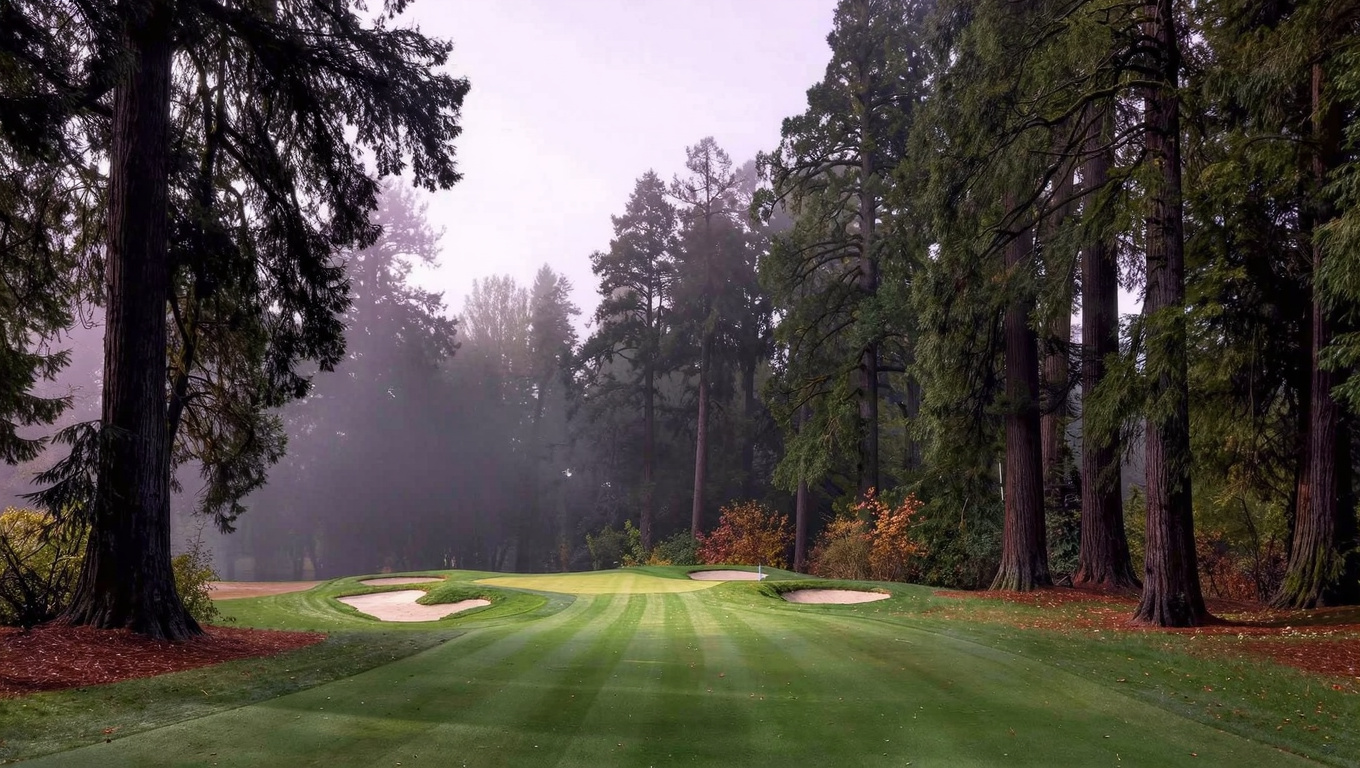
EastsideKing County CitiesSammamish June 26, 2026

Living in Klahanie, Sammamish WA | 2026 Guide

Klahanie is one of the most talked-about planned communities in the Sammamish area, and for good reason. This is a Family-First Established neighborhood built primarily in the late 1980s through mid-1990s, with community amenities that most Sammamish neighborhoods simply don’t have. There’s a catch that buyers need to know about up front: Klahanie sits on a district line, and your specific address will determine whether your kids go to school in Issaquah or Bellevue. That’s not a deal-breaker. But it’s something you need to verify before making an offer, not after.

What is it actually like to live in Klahanie in 2026?

Tuesday morning in Klahanie has a rhythm to it. The community trails pick up traffic early. Dog walkers, runners, parents pushing strollers before the workday starts. The Klahanie Community Association’s paved trail network connects through the neighborhood, so residents don’t have to get in a car to move around. By 8:30 AM the streets quiet down fast. It’s the kind of neighborhood where the morning actually feels slow once the school run is done.

Weekends center on the community amenities. The pools are a genuine social hub in summer. The tennis courts see consistent use through the spring and fall. There’s organized recreation for kids through the community association, and the neighborhood’s internal trail system gives families a real outdoor option without leaving the development. Klahanie also sits close enough to Lake Sammamish State Park that it’s a short drive to the beach on a Saturday. You see a lot of buyers who specifically chose Klahanie over other Sammamish neighborhoods for the amenity infrastructure.

Who buys here? Tech workers who wanted the structured community feel that Klahanie offers. A lot of buyers who looked at HOA-governed Sammamish neighborhoods and chose Klahanie specifically because the community association runs programming and maintains infrastructure that smaller HOAs can’t support. The community skews toward dual-income households with school-age children. Move-up buyers from Seattle and Bellevue who want space and community but don’t want to feel isolated.

Community clubhouse and outdoor amenity area in Klahanie, Sammamish, Washington with mature landscaping and Pacific Northwest architecture
Klahanie is one of the few Sammamish neighborhoods with a full community amenity package maintained by the Klahanie Community Association, including pools, tennis courts, and paved internal trails.  

Homes in Klahanie: What the Data Shows

Klahanie’s homes were built in several phases between 1987 and 1997. The mix is broader here than in most Sammamish neighborhoods: you have detached single-family homes, attached townhomes, and some condominium-style units depending on which part of Klahanie you’re in. Single-family homes typically run from 1,800 to 3,200 square feet, with lots on the smaller side compared to other Sammamish neighborhoods. The townhome product runs 1,200 to 1,800 square feet. Klahanie was ahead of its time as a master-planned community, and the infrastructure shows it. But the homes themselves are 30 to 35 years old, which means buyers need to budget for mechanical and systems replacement on many properties. This is the oldest housing stock in Sammamish.

Metric Klahanie (98075) King County
Median Sales Price (May 2026) ~$1,050,000 ~$859,000
Median Days on Market ~26 days ~28 days
Active Listings Change (vs. Jan 2026) +31% +30%

Data reflects the 98075 ZIP code. Klahanie’s price range varies significantly by product type. Detached single-family homes command a substantial premium over attached townhomes in the same community. Verify current inventory with a licensed REALTOR.

Search Active Klahanie Listings

Updated daily from the MLS. No account required.

Schools Serving Klahanie

This is the most important thing to know about Klahanie schools: your address determines your district. Klahanie sits on the boundary between Issaquah School District and Bellevue School District. Some streets feed into Issaquah, others into Bellevue. Both districts are excellent. But the school assignment process, the specific schools your kids attend, and the busing logistics are completely different depending on which side of the line your home sits on. Always verify your specific address with both districts before writing an offer.

If your address is in the Issaquah School District, the most common feeder is Endeavour Elementary, Pine Lake Middle School, and Skyline High School. Endeavour Elementary has a strong technology integration program. Pine Lake Middle is a well-regarded school with deep elective options. Skyline High School has a consistently high college readiness rate. If your address falls in the Bellevue School District, the feeder is typically Spiritridge Elementary, Tillicum Middle School, and Newport High School. Newport has an especially strong reputation for academic rigor and college placement.

The day-to-day experience is similar either way: bus service to neighborhood stops, relatively short distances to school. The meaningful difference is which district’s programming, athletics, and course offerings you’re working with. Some families specifically target one district over the other. If that’s you, narrow your Klahanie search to the appropriate streets before scheduling tours.

Verify the Schools Yourself

Klahanie addresses split between Issaquah and Bellevue school districts. Always verify your specific address with the appropriate school district (Issaquah or Bellevue) before writing an offer. Do not assume based on neighboring homes.

Getting to Work from Klahanie

Most Klahanie commuters take the community roads north to NE 8th Street and then connect to SR-202 west toward Redmond, or head south to I-90 via Issaquah Hobart Road. I-90 access is about four miles from the community core. For Bellevue commuters, the I-90 to I-405 connection works well. For Microsoft workers in Redmond, the SR-202 route avoids I-90 entirely and runs about 12 to 14 miles. For Seattle commuters, I-90 westbound is the main route but can back up significantly at the Mercer Island interchange during peak hours. The Issaquah Highlands Park and Ride serves this part of the plateau with Metro and Sound Transit express service.

Destination Distance 2026 Drive (Peak AM) Transit Option
Downtown Seattle 24 miles 40 to 60 min I-90 West / ST 554 Express
Bellevue / Amazon 16 miles 25 to 40 min I-90 to I-405 / ST 554
Microsoft (Redmond) 12 miles 18 to 30 min SR-202 / 2 Line Link Rail
SeaTac Airport 28 miles 35 to 55 min I-90 to I-405 to I-5

Late 1980s to 1990s two-story home exterior in the Klahanie neighborhood of Sammamish, Washington with established landscaping and community streetscape
Klahanie homes date to the late 1980s through mid-1990s, making this the oldest housing stock in Sammamish. Buyers should budget for major systems replacement on many properties in this price range.

What I See as a Valuation Expert in Klahanie

In Klahanie, the age of the build is always the first thing that matters for valuation. Klahanie’s homes are 30 to 35 years old, and that means a lot of the original mechanical systems are approaching end of useful life. HVAC units from the original construction years, original roofing on homes that haven’t had roof replacements, and original siding that may be showing wear. Buyers at this price point in Klahanie need a thorough inspection and should expect to price in $40,000 to $100,000 in deferred capital work, especially on the detached homes.

What drives value up inside Klahanie is the product type and the updates. Detached single-family homes sell at a substantial premium over attached townhomes of the same vintage. Full kitchen and bath renovations on the older stock reliably move the needle here because buyers are comparing updated Klahanie product against newer homes in other Sammamish neighborhoods, and the community amenity package gives updated Klahanie homes a real argument. Homes that have had full mechanical updates and kitchen renovations sell faster and at stronger price-per-square-foot than anything else in the community.

The school district assignment matters to value here more than in most Sammamish neighborhoods. Homes on the Bellevue School District side of the line, specifically those feeding into Newport High School, often command a premium over comparable Issaquah-assigned homes in the same development. This is not universal, but It’s common enough to flag. If you’re buying and can be flexible about school district, it’s worth understanding which side of the line each property you’re considering falls on.

Valuation Insight

“Detached homes in Klahanie with full mechanical updates and renovated kitchens sell for $100,000 to $150,000 above unupdated comparable-sized homes in the same community. The age of the stock creates a real value spread here.”

10-Year Lens

Klahanie’s core advantage is the community infrastructure. As Sammamish grows and newer developments lack the amenity depth that Klahanie has, the community association model here becomes a bigger differentiator. Properties that have been updated will hold their value well. The school district access to both Issaquah and Bellevue also creates durable demand from two different buyer pools.

Honest counter-risk: The age of the housing stock is a real exposure. As competing newer Sammamish neighborhoods mature, updated homes in those areas will increasingly compete with Klahanie’s unupdated product. Buyers who don’t plan to update may see their resale value squeezed by newer construction in the mid-2030s.

Frequently Asked Questions About Klahanie

Q: Is Klahanie a good place to live in Sammamish?
A: Yes, if you want a community with real amenity infrastructure and access to two strong school districts. Klahanie has more built-in community than most Sammamish neighborhoods. The tradeoff is that the housing stock is older and buyers need to budget for updates and system replacements on most properties.

Q: What schools serve Klahanie?
A: Klahanie addresses split between Issaquah and Bellevue school districts. Issaquah addresses typically feed into Endeavour Elementary, Pine Lake Middle, and Skyline High. Bellevue addresses feed into Spiritridge Elementary, Tillicum Middle, and Newport High. You must verify your specific address with the district before writing an offer.

Q: What are homes like in Klahanie?
A: A mix of detached single-family homes and attached townhomes, mostly built between 1987 and 1997. Single-family homes run 1,800 to 3,200 square feet. Median sale price as of mid-2026 is around $1.05M across all product types, with detached homes commanding a significant premium over townhomes.

Q: How far is Klahanie from Seattle?
A: About 24 miles from downtown Seattle via I-90. Peak-hour drive time is typically 40 to 60 minutes. Microsoft’s Redmond campus is about 12 miles and 18 to 30 minutes. Bellevue is about 16 miles and 25 to 40 minutes in peak traffic.

Explore Klahanie Yourself

The best way to understand Klahanie is to walk or drive the trail network and see the community amenities for yourself. The internal path system gives you a good sense of why residents value this community’s infrastructure over other Sammamish neighborhoods with fewer built-in amenities.

Bigger Picture

Want the full Sammamish story?

Compare neighborhoods, commute times, school districts, and what’s driving the 2026 market.

Read the Full 2026 Sammamish Living Guide →

Your guide to life outside Seattle.

Gregory Dorrell | Coldwell Banker Bain | WA License #111862
253-350-0045 · greg@livingoutsideseattle.com · www.livingoutsideseattle.com
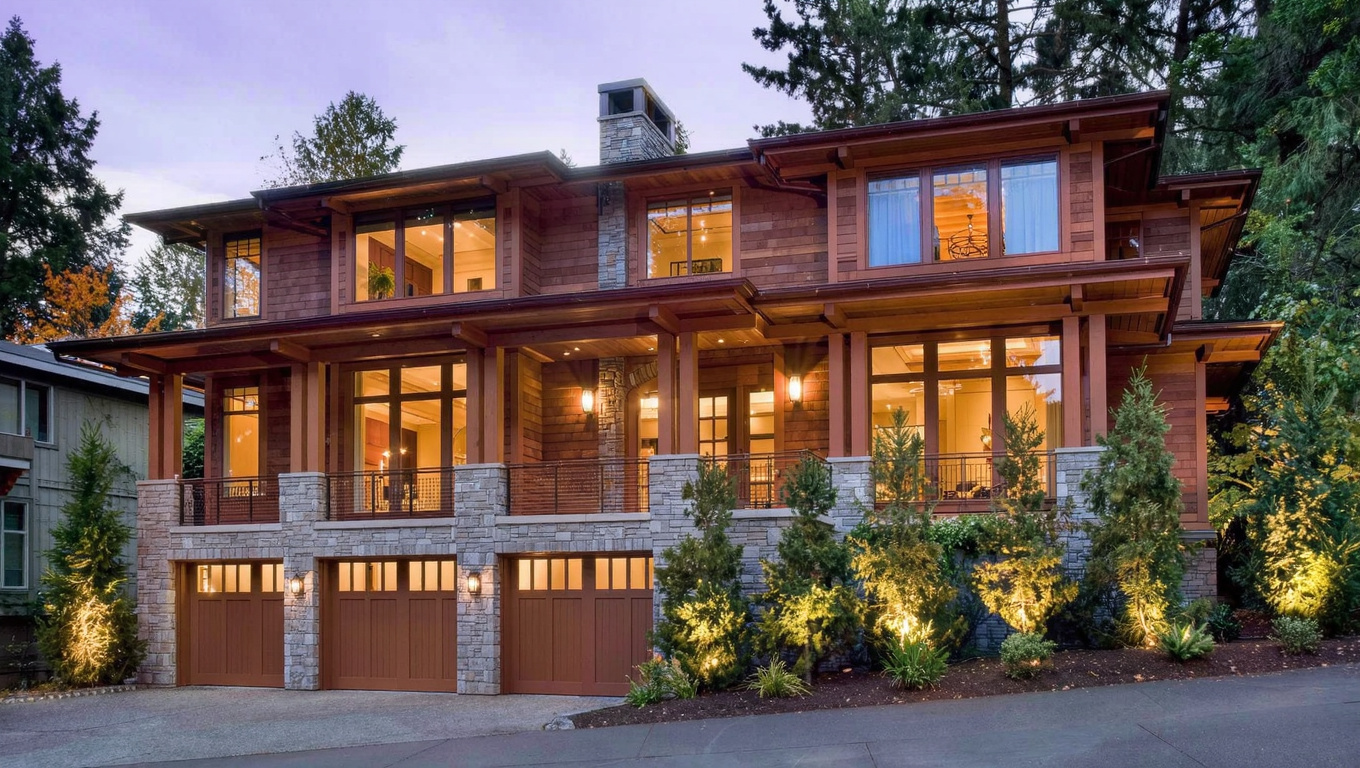
EastsideKing County CitiesSammamish June 23, 2026

Living in Trossachs, Sammamish WA | 2026 Guide

Trossachs is one of the most consistent performers in Sammamish real estate, and it doesn’t get as much attention as it deserves. This is a Family-First Established community on the southwest corner of the Sammamish Plateau, built primarily in the 1990s and early 2000s, and it has held its value through every market shift I’ve watched on the Eastside. If you’re comparing Sammamish neighborhoods and you want a place with deep roots, strong schools, and actual trail access right from your neighborhood, Trossachs belongs on your list.

What is it actually like to live in Trossachs in 2026?

Tuesday morning at 7:15 AM in Trossachs is a school run. The streets pick up for about 20 minutes as parents drive kids to Sunny Hills Elementary or the bus stop. Then the neighborhood goes quiet. Really quiet. You get a few dog walkers on the cul-de-sac loops, maybe someone pulling out late for a Bellevue commute. But by 8:15 the plateau has settled back into the kind of stillness that a lot of Eastside buyers spend years searching for.

Saturdays run on trails and soccer fields. Pine Lake Park gets heavy foot traffic from Trossachs residents on weekend mornings. Kids have organized sports at the Sammamish parks system through the fall and spring seasons. You see a lot of families at the Issaquah Farmers Market in the warmer months, and the Trossachs neighborhood association runs its own community events through the year. This is not a neighborhood where people disappear inside their homes. There’s a real community culture here.

Who lives in Trossachs? Mostly tech buyers who came for the Issaquah school district. A lot of Microsoft and Amazon employees who made the Eastside move and decided to stay here rather than keep looking. The homes skew toward move-up size buyers: people who wanted more than 2,000 square feet, a real backyard, and a neighborhood that wouldn’t feel anonymous. Trossachs is not the flashiest address in Sammamish. But it’s one of the most livable, and the people who buy here tend to stay.

Forest trail at Pine Lake Park in Sammamish, Washington near the Trossachs neighborhood with Douglas fir canopy and sword ferns
Pine Lake Park borders Trossachs on the south side. The trail system connects the neighborhood to several miles of forested paths without needing to get in a car.

Homes in Trossachs: What the Data Shows

Most Trossachs homes were built between 1994 and 2005. The dominant style is two-story Northwest traditional with craftsman-influenced detailing: covered porches, board-and-batten accents, and medium-pitch gable roofs. Square footage typically runs from 2,400 to 3,800 square feet, with most homes landing in the 2,800 to 3,200 range. Lot sizes are conventional Sammamish plateau lots, roughly 6,000 to 9,000 square feet, with mature landscaping throughout since the neighborhood has had 25 to 30 years to grow in. The community is entirely single-family detached homes. Most of Trossachs is governed by one of several smaller HOAs that keep the common areas well-maintained. You will not find condos or townhomes here.

Metric Trossachs (98075) King County
Median Sales Price (May 2026) ~$1,275,000 ~$859,000
Median Days on Market ~22 days ~28 days
Active Listings Change (vs. Jan 2026) +27% +30%

Data reflects the 98075 ZIP code (southern Sammamish). Trossachs homes vary by size, condition, and lot position. Verify current inventory with a licensed REALTOR before drawing comparisons.

Search Active Trossachs Listings

Updated daily from the MLS. No account required.

Schools Serving Trossachs

Trossachs is entirely within the Issaquah School District. The standard feeder pipeline for most Trossachs addresses is Sunny Hills Elementary, Pine Lake Middle School, and Skyline High School. Always verify your specific address with the Issaquah School District before writing an offer, since some streets in the southwest plateau can fall in a different attendance zone.

Sunny Hills Elementary runs one of the stronger STEM programs in the district at the elementary level. Pine Lake Middle School is well-regarded for its combination of academics and elective depth, including a strong band program and science electives that feed well into Skyline’s advanced coursework. Skyline High School consistently scores above state average on college readiness metrics and sends a high percentage of graduates to four-year universities. The school’s STEM and IB pathway options are a genuine draw for families relocating from high-performing metro districts.

The daily pipeline runs smoothly from Trossachs. Most elementary-age kids walk or take the neighborhood bus to Sunny Hills. Middle schoolers bus to Pine Lake. High schoolers either drive or take the district bus to Skyline. The commute is short by any measure. None of these schools are more than about four miles from the neighborhood core.

Verify the Schools Yourself

School ratings and attendance zones change. Always verify your specific address with the Issaquah School District before writing an offer.

Getting to Work from Trossachs

Most Trossachs commuters take SE 56th Street west to Issaquah Hobart Road and then connect to I-90 at exit 17 or exit 15. From there it’s a straight shot east to the SR-520 junction for Redmond, or west over the floating bridge to Bellevue and Seattle. Peak-hour I-90 westbound can back up at the Mercer Island interchange, so leaving before 7:30 AM makes a difference. For transit, the Issaquah Highlands Park and Ride is about six miles from Trossachs and serves Metro routes and Sound Transit 554 express service.

Destination Distance 2026 Drive (Peak AM) Transit Option
Downtown Seattle 26 miles 40 to 60 min I-90 West / ST 554 Express
Bellevue / Amazon 18 miles 25 to 40 min I-90 to I-405 / ST 554
Microsoft (Redmond) 14 miles 20 to 35 min I-90 to SR-520 East
SeaTac Airport 30 miles 35 to 55 min I-90 to I-405 to I-5

Quality 1990s two-story craftsman-influenced home exterior in the Trossachs neighborhood of Sammamish, Washington with mature landscaping
Trossachs homes were mostly built in the 1990s through early 2000s. The two-story craftsman-influenced style is the norm, and most properties show 25 to 30 years of mature landscaping.

What I See as a Valuation Expert in Trossachs

In Trossachs, valuation weight goes to three things first: the lot position, the build era, and the original builder. Trossachs has a mix of builders from the 1990s production era, and there are real differences in build quality between subdivisions. The homes that show the highest comparable sales are typically on lots with private yard space and no rear-neighbor visual overlap. Premium lot position in Trossachs can add $40,000 to $80,000 to final sale price versus a mid-block home with identical square footage.

HOA compliance and curb appeal matter a lot here because this is an HOA-governed community. Homes that have kept up with exterior paint cycles, landscaping standards, and minor repairs consistently sell faster and closer to asking price than ones that show deferred maintenance. The first impression from the street is a real pricing factor in Trossachs, not just an aesthetic one. Buyers are comparing multiple well-maintained options, so anything that stands out as neglected draws offers with larger inspection holdbacks.

What moves first in Trossachs are the homes that back to Pine Lake Park or have a trail easement behind them. Buyers pay a genuine premium for that direct trail access. Updated kitchens with an open layout to the family room also move faster here because the 1990s floor plans often have a more closed kitchen, and buyers want the open-concept flow. Full kitchen remodels on Trossachs homes reliably recoup well above average because the neighborhood demand supports the price lift.

Valuation Insight

“Trail-backing lots in Trossachs consistently sell $50,000 to $80,000 above comparable mid-block homes of the same size. That trail premium is one of the most durable in Sammamish.”

10-Year Lens

Trossachs is well-positioned for the next decade. The combination of Issaquah school district access, Pine Lake Park adjacency, and proximity to both the Bellevue and Redmond tech corridors creates durable demand. The neighborhood’s mature tree canopy and established character are also hard to replicate in newer construction. As Sammamish adds density along its commercial corridors, Trossachs will hold its single-family residential identity. I expect sustained demand here regardless of broader market cycles.

Honest counter-risk: Trossachs homes from the 1990s are approaching the age when major systems need replacement. Buyers should expect HVAC, roof, and potentially siding replacement on older homes. Factor $40,000 to $80,000 in deferred capital work into your offer analysis on any home built before 2000.

Frequently Asked Questions About Trossachs

Q: Is Trossachs a good place to live in Sammamish?
A: Yes, if you want an established family neighborhood with Issaquah schools and direct trail access. Trossachs is one of the most livable areas on the Sammamish Plateau. The community is well-maintained, the schools are strong, and the trail connection to Pine Lake Park is a genuine quality-of-life asset most neighborhoods at this price point can’t match.

Q: What are homes like in Trossachs?
A: Mostly two-story single-family homes built in the 1990s to early 2000s. Most run 2,400 to 3,800 square feet, with a median sale price around $1.27M as of mid-2026. The neighborhood is all detached homes and is entirely HOA-governed.

Q: What schools serve Trossachs?
A: Most Trossachs addresses feed into Sunny Hills Elementary, Pine Lake Middle School, and Skyline High School in the Issaquah School District. Always verify your specific address with the district before making an offer, since attendance boundaries can shift.

Q: How far is Trossachs from Seattle?
A: About 26 miles from downtown Seattle via I-90. Peak-hour drive time is typically 40 to 60 minutes. Most residents commute to Bellevue or Redmond, which are 18 and 14 miles respectively and take 25 to 40 minutes in morning traffic.

Explore Trossachs Yourself

The best way to get a feel for Trossachs is to drive the loop roads on a weekend morning and walk the Pine Lake trail from one of the neighborhood access points. You’ll get a sense of the lot sizes, the tree coverage, and what daily life actually looks like here.

Bigger Picture

Want the full Sammamish story?

Compare neighborhoods, commute times, school districts, and what’s driving the 2026 market.

Read the Full 2026 Sammamish Living Guide →

Your guide to life outside Seattle.

Gregory Dorrell | Coldwell Banker Bain | WA License #111862
253-350-0045 · greg@livingoutsideseattle.com · www.livingoutsideseattle.com
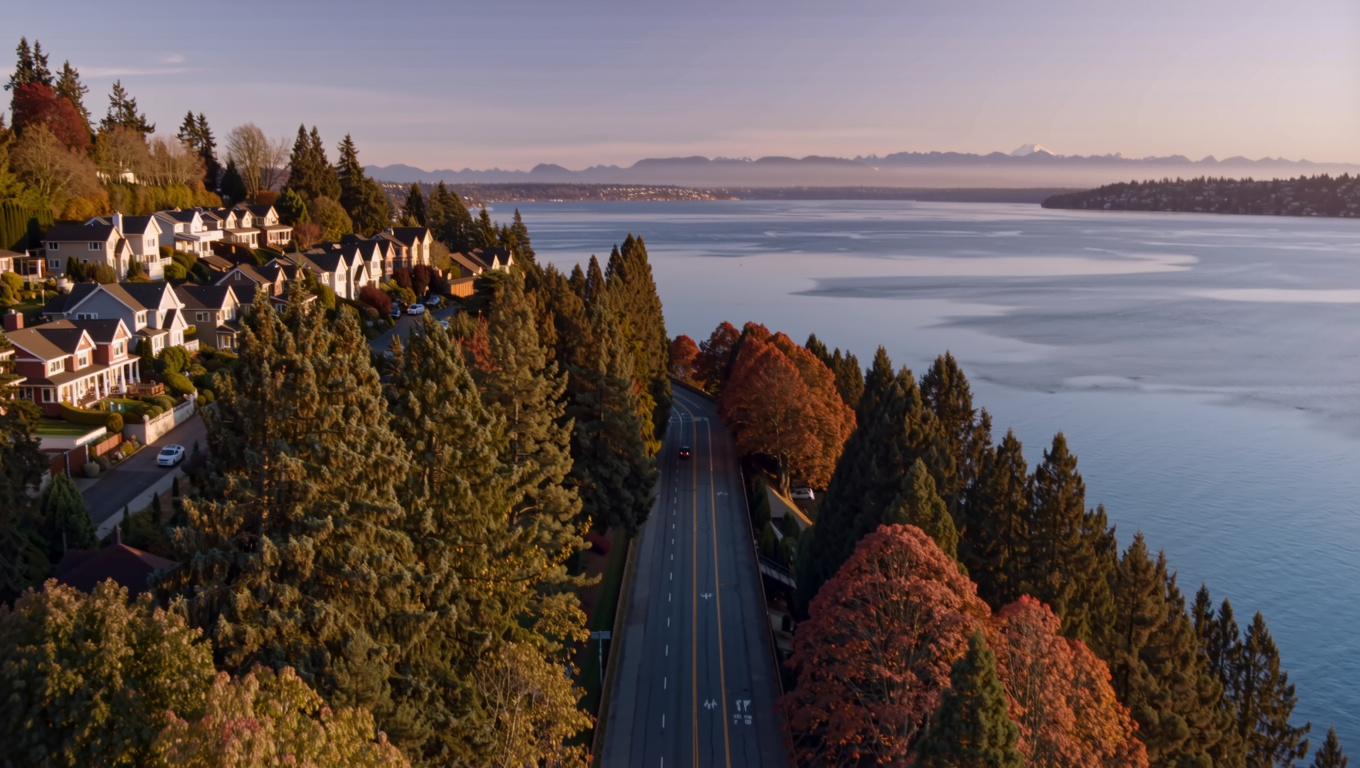
Uncategorized June 22, 2026

This Guide Has Moved

This article has been folded into our maintained guide: East & South King County Market Update [July 2026]. You are being taken there now.

Buyer ResourcesSeller Resources June 16, 2026

Property Tax Rates in King County Cities 2026

Buyers ask me all the time: “What are the property taxes going to be on this house?” It’s a fair question, and the answer matters more than most people realize when they’re focused on the purchase price and interest rate. On a $700,000 home, the difference between buying in Auburn and buying in Issaquah works out to roughly $2,500 a year — or about $210 a month that never shows up in a mortgage quote.

This post lays out the 2026 effective property tax rates for the eight cities I work in most across South and East King County. I also cover how the calculation works, why rates differ between cities just a few miles apart, and what this means if you’re running affordability math as a buyer or net-proceeds math as a seller.

Why King County Has No Single Tax Rate

A lot of buyers ask: “What’s the property tax rate in King County?” There isn’t one. Your bill is the sum of every taxing district whose boundary includes your property. That stack typically includes:

The Typical Levy Stack

Washington State levy — applies uniformly statewide

King County general levy — county services and administration

King County library district — public library system

City levy — varies by incorporated city; absent in unincorporated areas like Covington

School district levy — the single biggest variable between nearby cities

Fire district levy — local fire and rescue services

Emergency Medical Services (EMS) levy

Any voter-approved bond measures — school construction, parks, etc.

Two homes a mile apart — one in the Issaquah School District, one in the Kent School District — can carry meaningfully different tax bills even if their market values are identical. School district boundaries are the biggest driver of rate variation across South and East King County.

The 2026 total property tax collection in King County came in at $8.4 billion, up 10% from 2025’s $7.7 billion. That increase flows from rising assessed values, not any single rate change. But the effect on individual monthly payments is real.

2026 Property Tax Rates by City

These are median effective rates — actual tax bills divided by assessed market values — based on King County parcel data. Rates vary by ZIP code within each city, primarily because of school district boundaries. (Source: Ownwell, April 2026.)


Bar chart comparing 2026 property tax rates by city in King County Washington — Auburn highest at 1.19%, Issaquah lowest at 0.83%

2026 effective property tax rates for eight cities in South and East King County. Auburn carries the highest rate; Issaquah and Sammamish sit well below the county median of 0.99%. Source: Ownwell, April 2026.

City Effective Rate Median Home Value Median Annual Bill
Auburn 1.19% $566,000 $6,477
Maple Valley 1.11% $722,000 $7,963
Renton 1.03% $688,000 $7,145
Covington 1.03% $574,000 $5,862
Kent 1.01% $587,000 $5,919
Federal Way 1.00% $542,000 $5,412
Sammamish 0.89% $1,384,000 $12,054
Issaquah 0.83% $1,031,000 $9,132
King County Avg 0.99% $774,000 $7,644

How to Calculate Your King County Tax Bill

King County uses this formula:

(Assessed Value ÷ 1,000) × Levy Rate = Annual Tax Bill

For a home assessed at $650,000 in Renton with a levy rate of approximately $10.30 per $1,000:

$650,000 ÷ 1,000 = $650
$650 × $10.30 = $6,695 per year (~$558/month in escrow)

A few important things to understand about that assessed value:

King County Reassesses Every Year

Washington has no equivalent to California’s Proposition 13. Your assessed value is adjusted annually based on market conditions. If home prices in your neighborhood rose 8% last year, your assessment likely reflects that — and your bill goes up accordingly.

Your 2026 bill is calculated from the value as of January 1, 2025. So the assessment lags the market by about a year — but it catches up.

Buying at a Higher Price Does Not Reset Your Taxes

The assessor determines value independently of your sale price. A sale at market value is data they will consider in future assessments — but it doesn’t trigger an immediate reset the way it does in some other states. So if you buy a house below assessed value, your taxes don’t automatically drop either.

For the most accurate number on any specific parcel, use the King County eReal Property lookup at blue.kingcounty.com. Search by address to see the current assessed value and the levy rate stack broken down by district. It takes about 90 seconds and gives you a far more accurate number than any city average.

Why Issaquah and Sammamish Rates Are Lower

Issaquah (0.83%) and Sammamish (0.89%) sit well below the county average — yet their median tax bills are higher in dollar terms because home values there are much larger. Lower rates in these cities generally reflect two things.

First, fewer overlapping special districts. Some areas carry smaller bond debt loads than South King County cities, which compresses the total levy stack. Second — and this is the counterintuitive part — when the total assessed value base in a school district rises, the rate needed to raise the same budget dollar amount actually falls. High home values spread the levy cost across more dollars, pushing the percentage rate down.

City-by-City: What Buyers and Sellers Should Know


Homeowner reviewing property tax documents at kitchen table with laptop in Pacific Northwest home, King County Washington

Understanding your property tax rate before you make an offer helps buyers budget accurately and keeps sellers from being surprised at closing.

Auburn (1.19%)

Auburn carries the highest effective rate among the cities we track, with a $6,477 median annual bill on a $566,000 home. Rates vary by ZIP — the 98001 and 98002 ZIP codes trend higher than 98092. Buyers should ask their lender to calculate PITI based on the specific parcel, not a city average.

Maple Valley (1.11%)

Maple Valley’s rate and its growing median home value combine to produce one of the larger median bills in South King County at $7,963 per year. School construction bonds have contributed to the rate here. Strong schools drive demand for the area, and those same schools come with levy costs built into the rate.

Renton (1.03%)

Renton’s 1.03% rate on a $688,000 median home produces a $7,145 median annual bill. Rates vary within Renton by school district boundary — homes in the Issaquah School District portion of eastern Renton trend lower than those in the Renton School District. This surprises a lot of buyers who assume all of “Renton” carries one rate.

Covington (1.03%)

Covington shares Renton’s effective rate but with a lower median home value ($574,000), producing a $5,862 median bill. Covington is unincorporated King County, which means no separate city levy — one reason the total rate stays competitive. For buyers priced out of Maple Valley, Covington often offers similar inventory at lower total monthly carrying costs.

Kent (1.01%)

Kent sits nearly at the county average. The $5,919 median annual bill on a $587,000 home is one of the more affordable in this group in absolute dollar terms. Kent has one of the widest ranges of home types in South King County — condos to large single-family homes — so the actual bill on any specific purchase will vary considerably from the median.

Federal Way (1.00%)

Federal Way sits right at the county median rate and has the lowest median home value on this list at $542,000, producing a $5,412 median annual bill. For first-time buyers working with a tighter budget, Federal Way offers the lowest combined price-and-tax entry point among these eight cities.

Sammamish (0.89%)

Lower rate, but higher everything else. The $1,384,000 median home value produces a $12,054 median annual bill — over $1,000 a month in tax escrow — despite the below-average rate. Sammamish draws buyers who prioritize the Issaquah or Lake Washington school districts, newer construction, and lower density. That demand drives values, which keeps the rate lower but doesn’t lower the bill.

Issaquah (0.83%)

The lowest rate on this list. Issaquah’s 0.83% on a $1,031,000 median home means a $9,132 median annual bill. Part of the reason rates are lower is that the area’s high assessed value base spreads the levy burden across more dollars. School district quality drives demand, and demand drives values — which, counterintuitively, keeps the rate lower than South King County cities.

Important Property Tax Dates in King County

Date What Happens
January 1 Assessment date — value is frozen for the year’s calculation
February 10 Tax bills mailed
April 30 First half payment due
July 1 Appeal deadline — do not miss this
October 31 Second half payment due

The appeal window matters. If you receive your assessment notice and believe the value is too high — based on comparable sales or property condition — you have until July 1 to file with the King County Board of Equalization. Once that deadline passes, your ability to contest that year’s bill is gone.

Exemptions That Can Lower Your Bill

Washington offers several exemption programs worth knowing about, especially if you’re buying for a family member or planning long-term.

Senior/Disabled Exemption. Homeowners 61 or older — or permanently disabled — with household income under the program threshold may qualify for a significant reduction in assessed value and a freeze on future increases. This is one of the most valuable programs in the state and often goes unclaimed by people who don’t know it exists.

Veteran Exemption. Qualifying veterans with a service-connected disability may be eligible for a partial property tax reduction.

All exemptions require the home to be your primary residence. Investment properties and second homes do not qualify. To apply or check eligibility, contact the King County Assessor’s office at assessor.info@kingcounty.gov or (206) 296-7300.

What This Means for Your Buy or Sell Decision

For buyers: Your lender uses your total PITI payment — principal, interest, taxes, and insurance — to calculate affordability. Property taxes are a real monthly cost, not a closing-day item. On a $700,000 home, the difference between a 0.83% rate (Issaquah, ~$484/month) and a 1.19% rate (Auburn, ~$694/month) is $210 per month. Over a 30-year loan, that’s $75,600 in additional tax payments — more than most buyers realize when they’re focused on the interest rate.

For sellers: When a buyer’s lender calculates their debt-to-income ratio, property taxes push more buyers out of qualifying range at the higher end of pricing. In cities with higher effective rates, price sensitivity tends to be greater. Knowing your city’s rate — and being able to show the buyer the actual parcel-level calculation — is a transparency move that builds trust during negotiations.

For a broader look at all the costs of owning a home in King County, this post on total cost of homeownership in King County walks through the full monthly cost picture beyond just taxes. And if you’re a seller thinking about your net proceeds, Washington’s capital gains rules are the other tax conversation worth having before you list.

Run Your Own Numbers in 90 Seconds

To get the exact levy rate for any property you’re considering:

  1. Go to blue.kingcounty.com/Assessor/eRealProperty
  2. Search by address
  3. Find the “Current Year Tax” section — it shows the assessed value and the levy rate stack broken down by district
  4. Divide the tax bill by the assessed value to get the effective rate

This is the most accurate number you’ll find. I walk buyers and sellers through this lookup regularly — it often changes how they think about two comparable homes in different parts of the county. For where home values are heading in 2026 — which directly affects future assessed values and bills — here’s the King County housing market forecast.

Frequently Asked Questions

What is the property tax rate in King County in 2026?

The countywide median effective rate is 0.99%, but rates vary by city from 0.83% (Issaquah) to over 1.19% (Auburn). The rate for any specific property depends on all the overlapping taxing districts — state, county, city, school district, fire, EMS, and local bond measures.

When are King County property taxes due in 2026?

Half by April 30, and the other half by October 31. Tax bills are mailed in February. If your home has a mortgage, your lender typically collects taxes through escrow and pays on your behalf.

When is the King County property tax appeal deadline?

July 1 each year. If you receive your assessment notice and believe the value is too high, file with the King County Board of Equalization before that date. You’ll need supporting evidence like comparable sales or documentation of property condition issues.

Does buying at a higher price increase your property taxes right away?

Not automatically. King County reassesses independently based on market data. Your sale price is information the assessor will consider, but the assessment may not change until the next annual cycle. That said, sales well above assessed value typically result in higher assessments in subsequent years.

Where can I look up the exact property tax for a specific address?

Use the King County eReal Property portal at blue.kingcounty.com/Assessor/eRealProperty. It shows the current assessed value, each levy in the stack, and the total bill for any parcel in the county.

Are there exemptions that lower property taxes in King County?

Yes. The Senior/Disabled exemption is the most significant — qualifying homeowners 61 or older with income under the program threshold can freeze their assessed value and reduce their bill. Veteran exemptions are also available. All require the home to be your primary residence. Contact the King County Assessor at (206) 296-7300 or assessor.info@kingcounty.gov to check eligibility.

Data sourced from Ownwell (April 2026) and King County Assessor public records. Rates shown are median effective rates and will vary by specific parcel and ZIP code within each city. Verify levy rates for any specific property at blue.kingcounty.com before making financial decisions.

Your guide to life outside Seattle.

Gregory Dorrell | Coldwell Banker Bain | WA License #111862
253-350-0045  ·
greg@livingoutsideseattle.com  ·
www.livingoutsideseattle.com
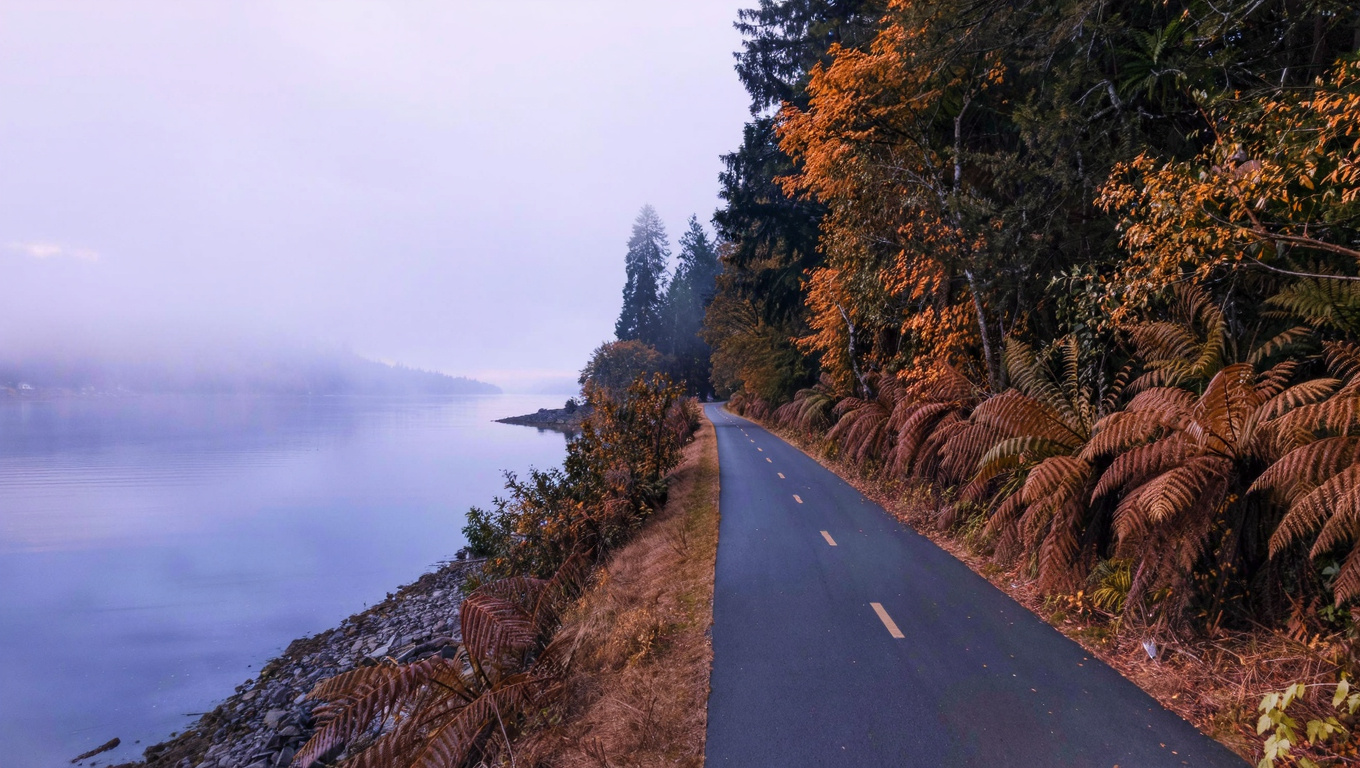
Market InsightsSeller Resources June 3, 2026

This Guide Has Moved

This article has been folded into our maintained guide: Living in Sammamish, WA | 2026 Real Estate & Lifestyle Guide. You are being taken there now.

Buyer Resources May 31, 2026

Total Cost of Homeownership in King County 2026

Most buyers focus on the mortgage payment. That’s the number that shows up in every rate calculator, every lender pre-approval letter, every Zillow estimate. But in King County, the mortgage is often just 60–70% of what you actually pay each month to own a home. The rest — property taxes, insurance, HOA fees, PMI, and maintenance — adds up fast, and most first-time buyers get surprised by it.

I’ve worked in South and East King County for over 13 years, and I do professional property valuations every single day as a BPO field agent. One pattern I see constantly: buyers who were “pre-approved” for a purchase price they couldn’t actually afford once all the real costs hit their bank account in month two. This guide walks you through the full picture — every cost, with real numbers for King County cities — so you can make a decision you’ll still feel good about a year from now.

What Goes Into Your True Monthly Payment

The mortgage principal and interest (P&I) is the fixed part — it doesn’t change month to month on a 30-year fixed loan. Everything else does, or at least it can. Here’s the full stack of costs to run through before you make an offer.

Principal and Interest (P&I)

The core of your payment, and the number your lender leads with. At current King County rates of around 6.4–6.7% for a 30-year fixed, a $686,000 loan (10% down on a $763,000 Renton home) produces a monthly P&I payment of roughly $4,360. It’s real, but it’s not the whole story.

Property Taxes

Significant in King County — and they just went up. For the 2026 tax year, King County’s total property tax levy is $8.4 billion, a 10% jump from 2025. The average effective rate across the county runs around 0.9%–1.1% of assessed value annually. On a $763,000 home in Renton, that works out to roughly $690–$840 per month ($8,280–$10,080 per year).

Your specific parcel’s levy code determines the exact number — the King County Assessor’s eReal Property search tool will show you the breakdown for any address you’re evaluating. Renton sits on the lower end; Sammamish and Issaquah homeowners typically pay more because of school district levies and city-specific ballot measures.

Homeowners Insurance

Washington State averages $1,474–$1,596 per year — roughly $125–$133 per month. That puts Washington below the national average, which is a piece of good news. Expect to pay more if your home has a wood roof, is older than 30 years, or sits in a wildfire-adjacent zone (relevant in Maple Valley, Enumclaw, or Black Diamond).

PMI (Private Mortgage Insurance)

Applies if you put down less than 20%. PMI typically runs 0.46%–1.5% of the original loan amount annually. On a $686,000 loan at a mid-range rate of 0.7%, that’s about $400 per month.

PMI drops off once you hit 20% equity — either through price appreciation or paying down the principal. Given King County’s 5-year appreciation history of roughly 5–6% annually, some buyers reach that equity threshold in 3–4 years rather than waiting out the full amortization schedule.

HOA Fees

These vary wildly by property type. Condos in King County typically run $300–$700 per month for a mid-range building — downtown Seattle luxury high-rises can exceed $1,000. Townhomes usually fall in the $150–$350 per month range. Single-family homes in planned communities often run $75–$200 per month for landscaping and common areas.

Many single-family homes in South King County have no HOA at all — which reduces monthly cost but means you carry 100% of exterior maintenance yourself.

Maintenance Reserve

The number most first-time buyers skip — and the one that bites hardest. The commonly cited “1% rule” (set aside 1% of your home’s value per year) is a reasonable floor. Studies show the average homeowner actually spends $8,800 per year on maintenance and repairs. For an older King County home (pre-1990), budget closer to 1.5%–2%.

On a $763,000 home, 1% equals $7,630 per year — about $636 per month set aside. You won’t spend it every month. Some months nothing breaks, then your furnace goes in January.

Infographic comparing total monthly homeownership cost for condo versus single-family home in King County WA 2026

The mortgage payment is just one piece. For a Renton condo at $422K, all-in monthly costs run about $3,642. For a single-family home at $763K, expect closer to $6,224 per month. Source: King County market data, 2026.

Condo vs. Single-Family: How Total Cost Compares

This is one of the most common calculations I walk buyers through. The sticker price on a condo is lower — but the total monthly cost is often closer to a single-family home than buyers expect, once HOA fees are factored in. Here’s a real-numbers comparison using current King County data.

Condo in Southwest King County — $422,000

10% down ($42,200) / Loan: $379,800 / Rate: 6.5%

P&I: ~$2,400  |  Taxes: ~$315  |  Insurance: ~$80  |  HOA: ~$450  |  PMI: ~$222  |  Maintenance: ~$175

Total: ~$3,642/month

Single-Family Home in Renton — $763,000

10% down ($76,300) / Loan: $686,700 / Rate: 6.5%

P&I: ~$4,342  |  Taxes: ~$715  |  Insurance: ~$130  |  HOA: $0  |  PMI: ~$401  |  Maintenance: ~$636

Total: ~$6,224/month

The income difference this requires is significant. At a 28% front-end debt-to-income ratio (typical for conventional loan qualification), the condo scenario requires roughly $156,000 in gross household income. The single-family scenario requires roughly $267,000. Those numbers shift with your credit score, debt load, and lender — but they illustrate why the condo-vs-house decision often comes down to math rather than preference.

How King County Cities Compare on Total Cost

Property taxes are the biggest variable after the mortgage itself. Here’s a rough comparison of annual tax cost by city for a home around $700,000–$800,000.

Renton

Effective levy rate approximately 0.9%–1.0%. On an $800,000 home: ~$7,200–$8,000 per year ($600–$667/month). Renton sits on the lower end of King County cities, making it one of the better values in South KC for total monthly cost.

Kent & Auburn

Effective levy rates slightly higher than Renton, typically 1.0%–1.1%. On a $700,000 home: ~$7,000–$7,700 per year ($583–$642/month). School district and fire district renewal levies are a consistent factor in both cities.

Issaquah

Higher rates due to Issaquah School District supplemental levies — one of the highest-rated districts in the state, and that comes with a cost. On a $900,000 home: ~$9,000–$10,800 per year ($750–$900/month).

Sammamish

Among the highest effective rates in South/East King County. On a $1,000,000 home: ~$10,000–$12,000 per year ($833–$1,000/month). School district, city, and specialty district levies stack up quickly in Sammamish.

Bar chart showing annual property tax cost by King County city for an $800,000 home in 2026 — Renton, Kent, Auburn, Issaquah, Sammamish

Annual property tax by city for an $800,000 home in King County. Renton and Kent are the most affordable in South KC; Issaquah and Sammamish carry higher levy rates driven by school district and specialty district measures. Source: King County Assessor 2026.

The Costs Most First-Time Buyers Underestimate

Beyond the monthly stack, a few one-time and recurring costs catch buyers off guard in year one.

Closing costs typically run 2%–3% of the purchase price. On a $763,000 home, that’s $15,260–$22,890 due at closing — on top of your down payment. This covers lender fees, title insurance, escrow, and prepaid items like the first year’s homeowners insurance and property tax reserves.

Immediate repair costs are real, especially in South King County where a lot of the housing stock was built in the 1980s and 1990s. Buyers of homes older than 30 years should budget up to $3,200 in unexpected year-one maintenance. A pre-listing inspection won’t catch everything — aging HVAC systems, older water heaters, and deck boards that just barely passed can all become your problem in year one.

HOA move-in fees and reserve contributions are easy to overlook. Some condo and townhome communities charge a one-time move-in fee ($500–$2,000) and require a contribution to the reserve fund at closing. Always request the HOA’s reserve study and financial statements before making an offer. Buildings with reserve deficits have hit some King County buyers with special assessments of $10,000–$30,000 per unit.

Utility cost changes hit harder than people expect when moving from a rental. You’re now paying for water, sewer, garbage, and often gas in addition to electricity. In South King County, expect $300–$500 per month depending on home size and season.

What This Means for Buyers in South and East King County

Real estate agent reviewing total homeownership costs with first-time buyer couple at kitchen table in King County Washington home

Running the full cost stack before making an offer is one of the most important steps a first-time buyer can take. The pre-approval letter and the real monthly budget are two different numbers.

My recommendation for buyers in Renton, Kent, and Auburn: run the full stack before falling in love with a specific home. The purchase price is a starting point. The number that actually matters for your quality of life is the total monthly outflow — and whether that leaves you enough runway to build equity, handle surprises, and not feel house-poor by month six.

For condos: the lower sticker price is real, but the HOA fee narrows the gap with single-family more than buyers expect. The King County Condo Buyer’s Guide walks through HOA due diligence in detail — including how to spot a building with a reserve fund problem before you commit.

For buyers still comparing property types, Condo vs. Townhouse vs. Single-Family in King County breaks down the full financial and lifestyle trade-offs side by side.

On the mortgage side: King County Mortgage Rates 2026 has the current rate picture and payment math, and the Mortgage Rate Buydown Guide explains how a seller-paid buydown can reduce your initial monthly cost in a way that pre-approval letters often miss.

Frequently Asked Questions

How much more than the mortgage payment is total homeownership cost in King County?

For most buyers, add $800–$1,500 per month on top of the P&I payment to get the true all-in cost. The biggest additions are property taxes ($600–$900/month on a median-priced home), insurance ($125–$135/month), and a maintenance reserve ($400–$700/month). PMI and HOA apply depending on your situation.

What is the property tax rate in Renton WA in 2026?

Renton’s effective property tax rate is approximately 0.9%–1.0% of assessed value annually, placing it on the lower end of King County cities. For a $763,000 home, expect roughly $6,900–$7,600 per year, or $575–$635 per month.

Do condos have lower total monthly costs than single-family homes in King County?

The purchase price is lower, but HOA fees close the gap. A condo at $422,000 with $450/month HOA ends up with a total monthly cost in the $3,600–$3,900 range. A single-family home at $763,000 (no HOA) runs $5,800–$6,400 per month all-in. The condo is still cheaper — but the difference is smaller than the price tags suggest.

Does PMI go away on a King County home?

Yes. Federal law requires lenders to cancel PMI automatically once your loan balance drops to 78% of the original purchase price. You can also request cancellation at 80%. Given King County’s appreciation history, some buyers hit that equity mark in 3–5 years rather than waiting out the amortization schedule.

What HOA fees should I expect for a King County townhome?

Townhome HOAs in South and East King County typically run $150–$350 per month. Lower-end communities cover exterior maintenance and landscaping only; higher-end communities include water, garbage, roof reserves, and exterior paint schedules.

What maintenance budget should I set for a King County home?

Budget 1%–1.5% of the home’s value per year. On an $800,000 home, that’s $8,000–$12,000 annually ($667–$1,000/month). For homes built before 1990, lean toward the higher end. Major systems — roof, furnace, water heater — can each cost $8,000–$15,000 when they need replacement.

Your guide to life outside Seattle.

Gregory Dorrell | Coldwell Banker Bain | WA License #111862
253-350-0045  ·
greg@livingoutsideseattle.com  ·
www.livingoutsideseattle.com
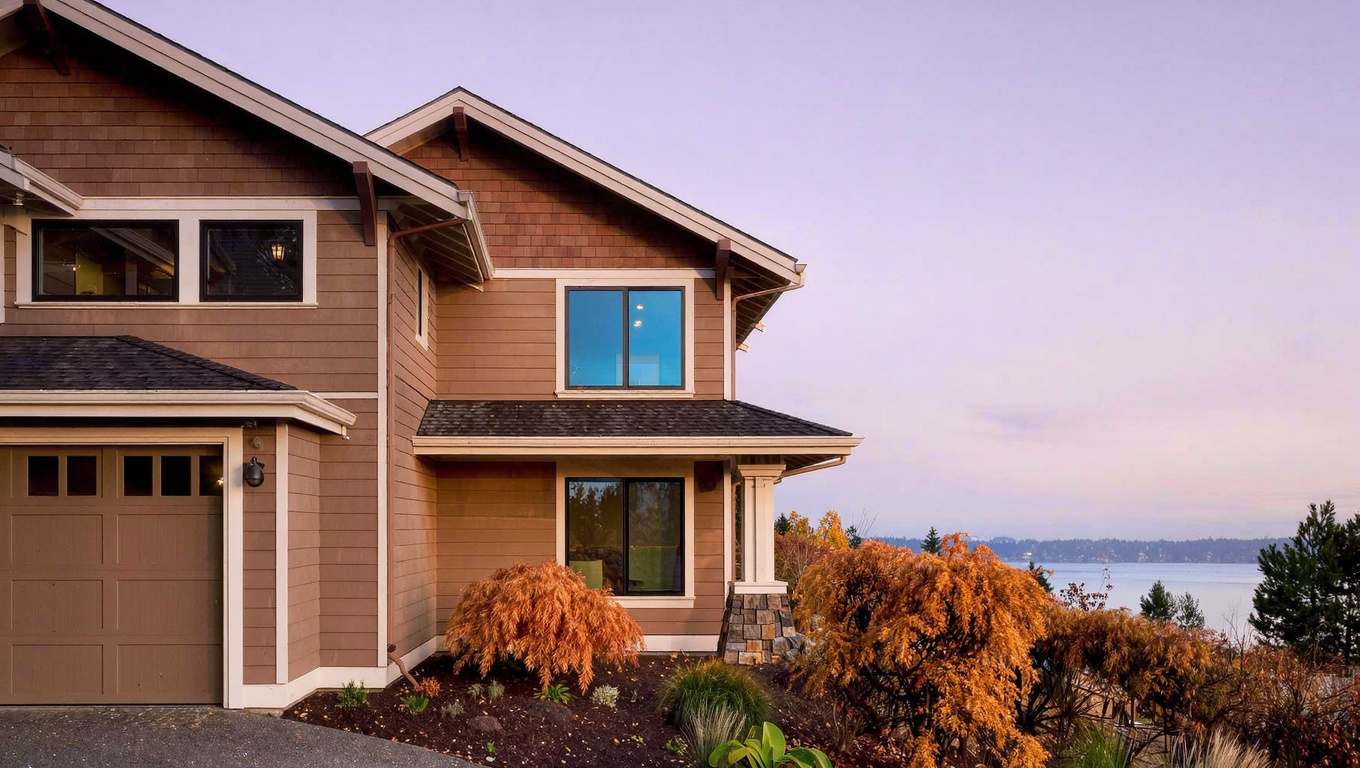
King County Market Update May 25, 2026

This Guide Has Moved

This article has been folded into our maintained guide: East & South King County Market Update [July 2026]. You are being taken there now.

EastsideKing County Cities May 17, 2026

Living in Sammamish, WA | 2026 Real Estate & Lifestyle Guide


Is Sammamish, WA a Good Place to Live?

Living in Sammamish, WA means trading a shorter commute for one of the best school systems in Washington State — and for most if you move here for the schools, that trade is worth every dollar. Sammamish sits on a plateau above Lake Sammamish, directly between the Microsoft campus in Redmond and the tech corridor in Bellevue. The city incorporated in 1999 and has grown steadily ever since, built almost entirely on master-planned communities with trails, parks, and strong HOA infrastructure. It is not a city that happened organically. It was designed for families, and it shows.

The median home price in Sammamish ran about $1.73 million in July 2026 — well above the King County median of $1 million. That premium exists for real reasons: the Issaquah and Lake Washington school districts consistently rank among the top performers in the state, the commute to Microsoft and Bellevue tech employers is 10 to 30 minutes by car, and the trail system connecting Beaver Lake Preserve, Lake Sammamish State Park, and dozens of neighborhood parks makes the outdoor lifestyle genuinely accessible. For buyers who can afford the price of entry, Sammamish delivers on what it promises.

Sammamish WA Real Estate Market in 2026

Sammamish home prices have firmed up over the last 12 months — up roughly 5% year-over-year citywide — after a softer stretch in 2025. The citywide median sat at about $1.73 million in July 2026, with meaningful differences by zip code. Zip 98075, which covers the southern and central plateau including Trossachs and Aldarra, generally runs above the citywide median. Zip 98074, covering the western and northern areas including Klahanie and Tally Ho, generally runs below it. Those are real differences for buyers working with a specific budget.

The market is still competitive by most standards — well-priced homes in strong school zones are still moving in one to three weeks with multiple offers. What has changed is the middle of the market. Homes in the $1.2 million to $1.6 million tier that have condition issues or are priced 5% to 8% above comparable sales are now sitting for four to six weeks before going under contract. That extra time is valuable. It gives buyers room to do a real inspection, review HOA documents thoroughly, and negotiate without the panic of 2021 and 2022.

One number worth knowing: the measurable school district premium in Sammamish is $50,000 to $100,000. Two otherwise identical homes — same year built, same square footage, same condition — can differ by that much based solely on whether they sit in the Issaquah School District versus outside it. Buyers should understand they are paying for that assignment, and sellers should make sure they are marketing it clearly.

Sammamish WA Commute Times to Seattle and Beyond

Sammamish is a car-dependent city in 2026. There is no light rail in Sammamish itself — the nearest stations are Redmond Technology Station on the 2 Line (about 10 miles west) or Bellevue Downtown Station on the same line. King County Metro runs several routes to the Issaquah Highlands Park and Ride and the Eastgate Park and Ride, where riders can connect to express buses toward Seattle. Most Sammamish residents drive to work or drive to a transit hub. If your job is in Redmond or Bellevue and you can flex your schedule past 9 AM, commute times drop meaningfully compared to peak-hour estimates below.

SR-520 floating bridge commute route from Sammamish to Seattle across Lake Washington
Most Sammamish commuters take SR-520 or I-90 toward Bellevue, Redmond, or Seattle. Peak-hour times vary significantly.

Destination Distance 2026 Peak Drive (AM) Transit Option
Downtown Seattle 24 miles 40 to 60 min I-90 / Bus to Link
Amazon (South Lake Union) 22 miles 40 to 60 min SR-520 / Drive or Bus Transfer
Microsoft (Redmond) 10 miles 20 to 35 min SR-202 / Drive
Bellevue Tech Corridor 10 miles 20 to 30 min SR-520 / I-405 / Drive
SeaTac Airport 28 miles 35 to 55 min I-405 South / Drive

The Sammamish to Bellevue stretch on SR-520 and I-405 is one of the most congested corridors in the region during morning rush. If your job allows schedule flexibility, even shifting your start time by 30 minutes makes a real difference.

Best Neighborhoods in Sammamish, WA

Sammamish is made up almost entirely of master-planned communities built between 1990 and 2015. Each has defined boundaries, consistent character, and HOA governance. Here is a guide to the main areas buyers should understand before starting their search.

Sammamish Washington plateau streetscape with Craftsman homes and tree-lined residential street
Sammamish neighborhoods are mostly master-planned communities built between 1990 and 2015, with strong HOA infrastructure and trail connectivity.

Trossachs

Trossachs is one of Sammamish’s largest and most established neighborhoods, located in the southwest part of the city. The character is leafy and well-organized, with winding streets, mature trees, and strong community infrastructure. Homes were mostly built between 1993 and 2005, ranging from 2,200 to 4,500 square feet on lots from 6,000 to 12,000 square feet. This is a high-demand neighborhood because of the school assignments and the quality of the housing stock. Students attend Sunny Hills Elementary, Pine Lake Middle School, and Skyline High School — rated 10 out of 10 on GreatSchools and consistently ranked in the top 5% of Washington high schools.

Trossachs neighborhood Sammamish WA with two-story Craftsman homes and mature trees

Klahanie

Klahanie sits on the western edge of Sammamish in unincorporated King County, but it is closely tied to the city in terms of identity and school assignment. The neighborhood is community-driven with its own amenity center, pools, tennis courts, and a small retail core with a Safeway. Homes range from 1,800 to 3,800 square feet, built mostly between 1988 and 2000. Klahanie is split between the Issaquah and Bellevue school districts depending on the specific street — always confirm the school assignment for any specific address before writing an offer.

Pine Lake

The Pine Lake area surrounds the actual lake of the same name in the central-east part of Sammamish. The character is a mix of older lakefront properties and newer hillside developments. Lakefront homes are rare and expensive, often well above the city median. Hillside homes near Pine Lake run 2,000 to 3,500 square feet on lots from 8,000 to 15,000 square feet, with some backing to Beaver Lake Park or the Pine Lake shoreline. Students are served by the Issaquah School District, with Pine Lake Middle School as a common assignment.

Tally Ho / Inglewood Hill

The Tally Ho and Inglewood Hill area covers the central ridgeline of Sammamish, with homes that often capture views of the Cascades or the valley below. Lots run from 10,000 square feet to a half acre and home sizes span 2,000 to 5,000 square feet across a wide range of construction years. This area falls primarily in the Lake Washington School District, feeding into Eastlake High School — ranked 6th in Washington State.

East Lake Sammamish Parkway

The homes along East Lake Sammamish Parkway are among the most sought-after in the city. This narrow strip runs the eastern edge of Lake Sammamish and includes everything from modest mid-century lakefront cottages to modern estates on the water. Lakefront prices start around $2 million and run significantly higher for turnkey properties with dock rights. Lake Sammamish State Park is the dominant recreational anchor for this entire corridor. If waterfront living is on your list, this is the area to study first.

East Lake Sammamish Parkway waterfront homes with Lake Sammamish shoreline and residential docks

Sahalee

Sahalee is a private gated community on the western plateau of Sammamish, built around the Sahalee Country Club — one of Washington’s most prestigious private golf courses. The character is upscale, quiet, and centered on the golf and country club lifestyle. Homes range from 2,800 to over 6,000 square feet, built mostly from the late 1980s through the 2000s, on lots from 10,000 to 20,000 square feet. Sahalee is served by the Issaquah School District. HOA fees here are higher than most Sammamish neighborhoods — always request the full HOA disclosure and reserve study before removing your financing contingency.

Sahalee Country Club community Sammamish WA with golf course views and luxury single-family homes

Aldarra

Aldarra is a high-end planned community in the southern part of Sammamish, built around the Aldarra Golf Club. The character is refined and private, with larger lots, newer custom homes, and a consistent level of finish throughout. Homes range from 3,000 to over 5,500 square feet, built mostly between 2000 and 2015, on lots from 10,000 square feet to over half an acre. Aldarra is served by the Issaquah School District. Students here typically attend Sunny Hills Elementary, Pine Lake Middle, and Skyline High.

Plateau Communities: Vistas, Highlands, and Eastridge

The plateau communities in central and eastern Sammamish — including Vistas, Highlands, and Eastridge — represent the city’s broadest middle market. These are solid single-family neighborhoods built between 1995 and 2012, with homes typically running 2,000 to 3,800 square feet on lots from 5,000 to 9,000 square feet. These communities are served by both the Issaquah and Lake Washington school districts depending on exact location — confirm before writing an offer. Buyers who want a move-in-ready Sammamish home at a more accessible price point than Trossachs or Sahalee typically land in these plateau communities.

Sammamish WA Home Values and Investment Outlook

The inventory increase in 2026 has brought some welcome balance to a market that spent most of the last decade tilted hard toward sellers. Sammamish buyers in 2024 and 2025 often wrote offers with no inspection, waived financing contingencies, and bid 10% or more over asking. That era is not completely over, but it is fading. Well-priced, well-presented Sammamish homes are still selling in one to three weeks with competitive offers. Overpriced homes or homes with condition issues are now sitting for a month or longer — something that felt impossible here just two years ago.

Price trends show the most softening in the $1.2 million to $1.6 million tier, while homes under $1.1 million and luxury properties above $2 million have held up relatively better. If you are selling in the middle tier, pricing discipline and presentation quality matter more than they have in years.

Sammamish Washington real estate 2026 -- Craftsman home on plateau street with Cascade Mountain views
Well-priced Sammamish homes in good school districts still sell in one to three weeks in 2026, but overpriced homes are sitting longer than they did two years ago.

Homes that hold value best in Sammamish consistently share a few traits: strong school assignment, construction from 2000 or later, open floor plan, attached garage, and a level usable yard. Homes with great school assignments but deferred maintenance are taking a pricing penalty in 2026 that they would not have taken two years ago. Buyers are not willing to absorb condition risk the way they once were.

The 12-month picture for Sammamish is steady, not flashy. Buyers who pay attention to school zones, inventory timing, and lot quality will find real opportunities over the next few months. Sellers who price honestly and present well will still see strong results.

Frequently Asked Questions: Living in Sammamish, WA

Is Sammamish, WA a good place to live?

Sammamish consistently ranks as one of the best places to live in Washington State for families. The combination of top-rated schools, low crime, excellent parks and trails, and proximity to Eastside tech employers makes it a strong choice for buyers who can meet the price of entry. The tradeoffs are high home prices, car dependency, and HOA costs that add real money to the monthly budget.

What is the average home price in Sammamish, WA in 2026?

The median home price in Sammamish was approximately $1.73 million in July 2026, up about 5% from a year ago. Zip code 98074 (western and northern Sammamish) generally runs below the citywide median, while zip 98075 (southern and central plateau) generally runs above it. Well-priced homes in strong school zones are still moving in one to three weeks.

What are the best neighborhoods in Sammamish, WA?

For top Issaquah School District assignments and established character, Trossachs and Aldarra lead the list. For waterfront access, the East Lake Sammamish Parkway corridor is in a class of its own. For a slightly more accessible price point with strong Lake Washington SD schools, Tally Ho and Inglewood Hill are worth a close look. For move-in-ready homes at the broadest range of prices, the central plateau communities cover the most ground.

What school district is Sammamish, WA in?

Sammamish is served by two school districts depending on your exact address. Most of the city falls in the Issaquah School District, which includes top-rated Skyline High School. Parts of the northern and western city are in the Lake Washington School District, home to Eastlake High School. Some neighborhoods like Klahanie overlap with the Bellevue School District. Always confirm the specific school assignment for any address before writing an offer.

How far is Sammamish, WA from Seattle?

Sammamish is about 24 miles east of downtown Seattle. By car on I-90, expect 40 to 60 minutes during AM peak hours. There is no direct light rail to Sammamish — the nearest station is Redmond Technology Station, about 10 miles away. For the Microsoft and Bellevue tech corridor, Sammamish is a 20 to 30 minute drive, which is one of its biggest draws for tech workers.

Explore Sammamish, WA Yourself

Sammamish is best understood by getting out and driving the plateau. Head to Beaver Lake Preserve for a trail walk, then drive through Trossachs or Klahanie to see what the neighborhoods actually look and feel like. Finish at Lake Sammamish State Park to understand what the waterfront lifestyle here is about. It will tell you more than any listing ever could.

View Sammamish on Google Maps →

Your guide to life outside Seattle.

Gregory Dorrell | Coldwell Banker Bain | WA License #111862
253-350-0045  ·
greg@livingoutsideseattle.com  ·
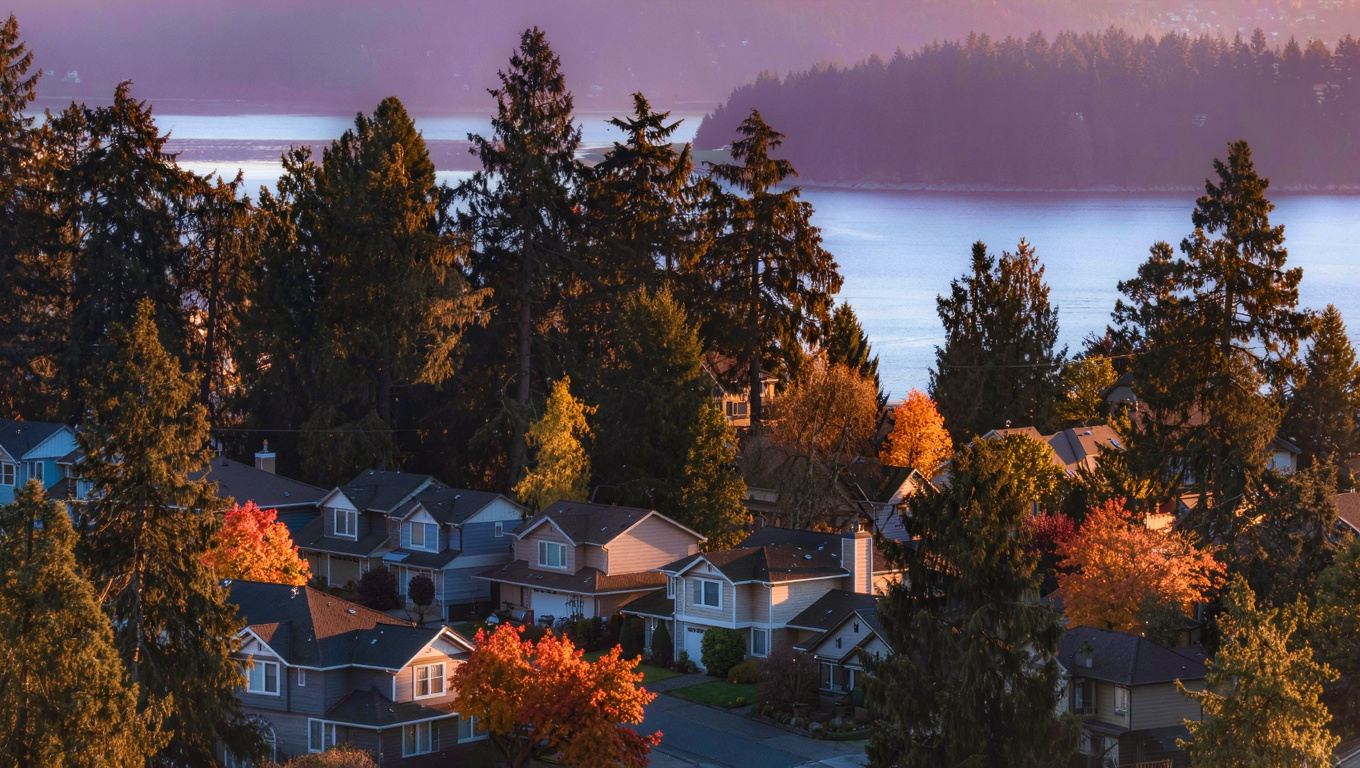
www.livingoutsideseattle.com