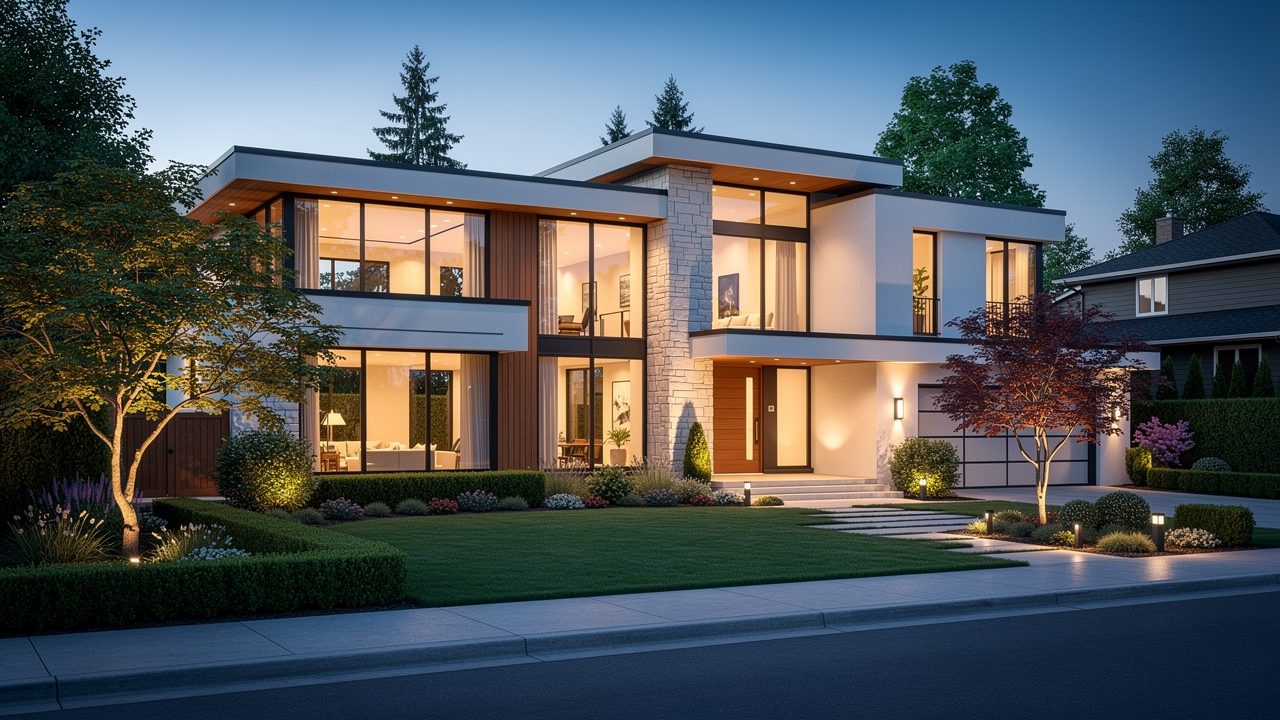
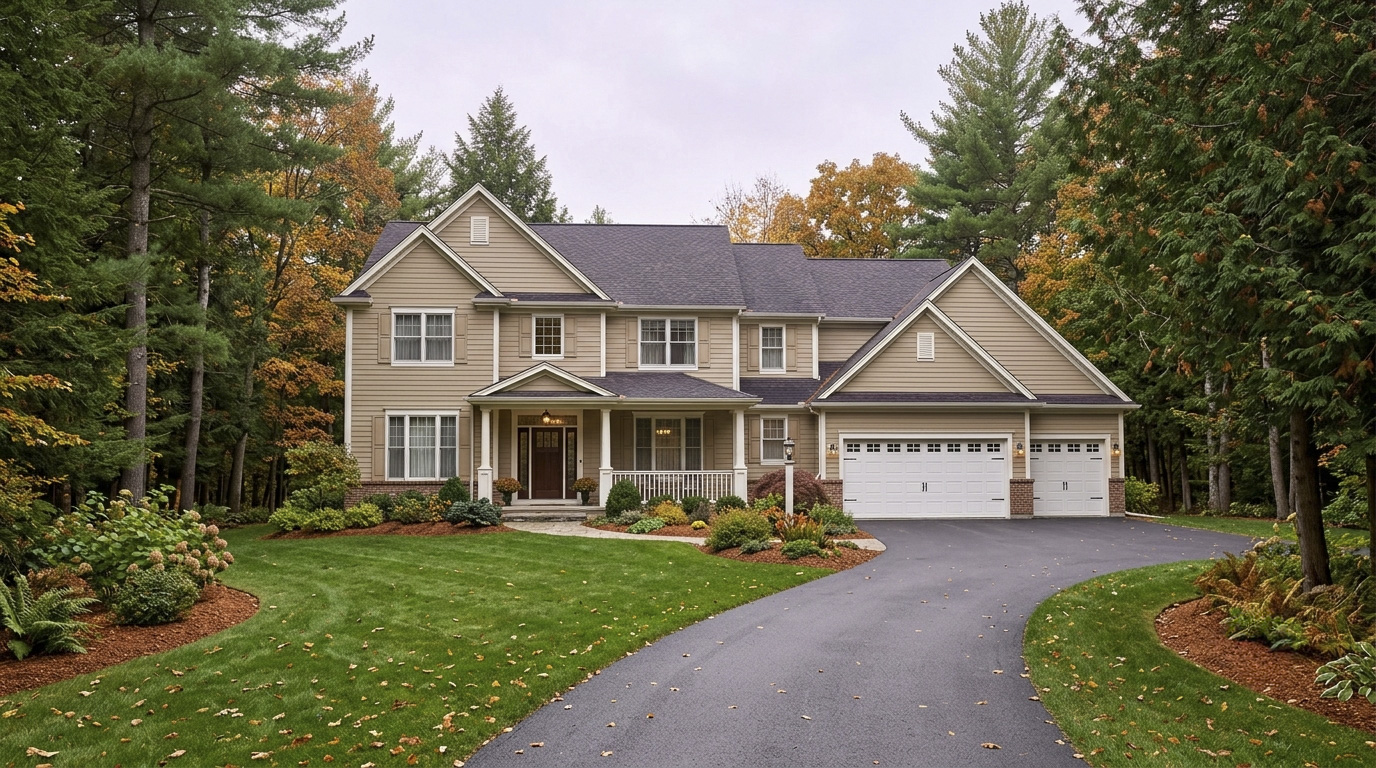
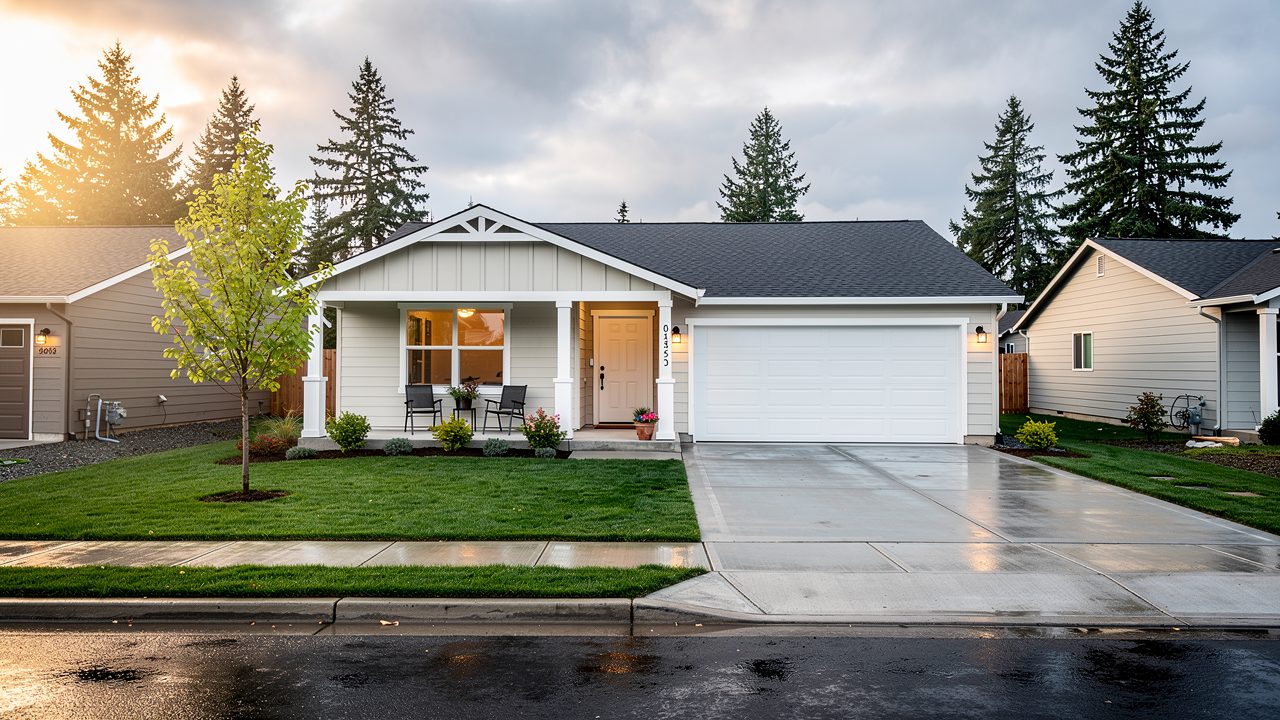
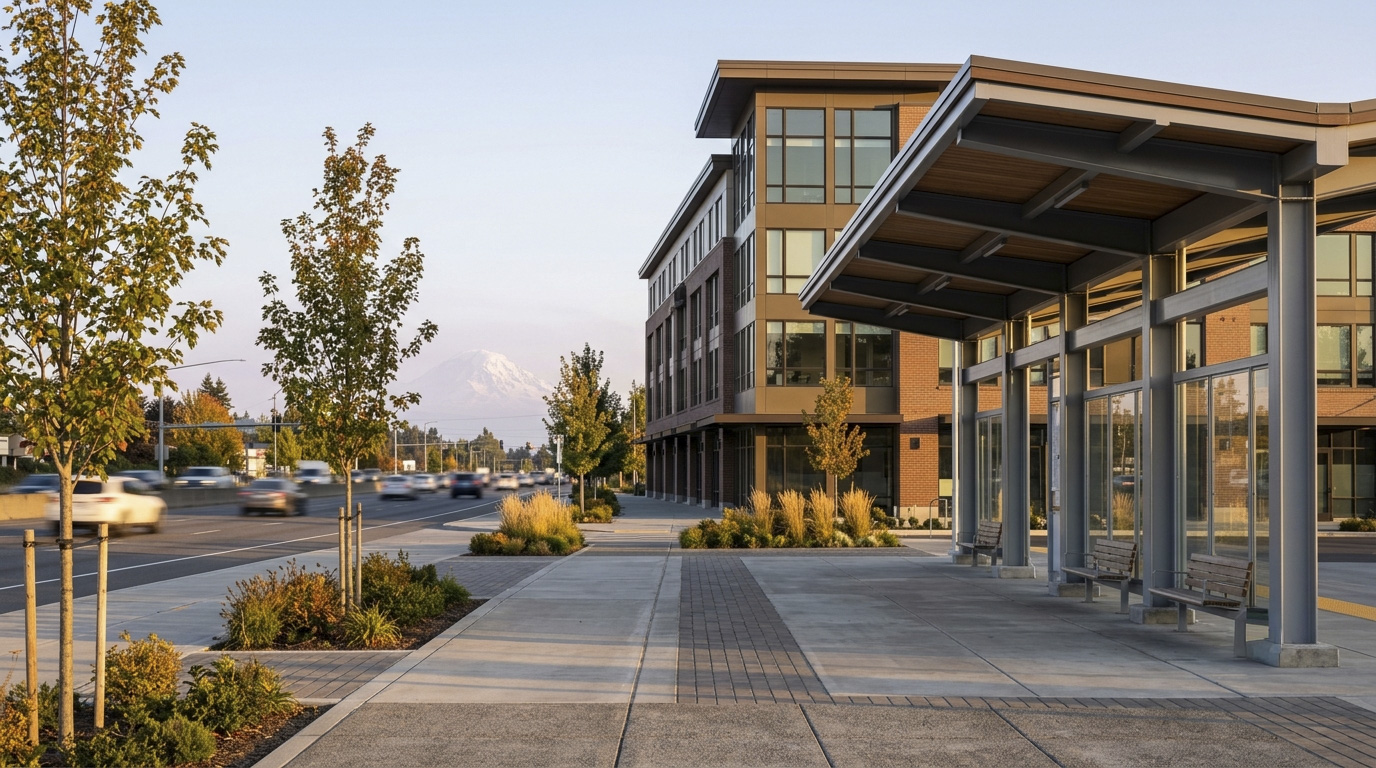
If you’ve built equity in a starter home and you’re eyeing Bellevue for your next move, the question isn’t whether you want it. It’s whether the math actually works. Here’s how to figure that out before you fall for a listing.
Start With Your Equity, Not the Listing Price
Before you even look at Bellevue inventory, get a real number on what your current home is worth today. Not what you paid. Not what an online estimate says. Here’s how I price homes: the BPO methodology.
Your usable equity, sale price minus your remaining mortgage and selling costs, is the foundation of your move-up budget. Most sellers underestimate selling costs. Between commission, excise tax, and typical repairs or concessions, budget 8 to 9% of your sale price coming off the top in King County.
What Bellevue Actually Costs Right Now
Bellevue sits well above the King County median, with a median home price around $1,450,000 as of June 2026, and that gap has been correcting somewhat as the broader Eastside market softens.
That’s actually good news for move-up buyers. A softer Bellevue market means less competition and more room to negotiate than you’d have found two or three years ago. Doesn’t mean Bellevue is cheap. Means the gap between where you are now and where you want to be has narrowed a little.
The Move-Up Buyer’s Biggest Mistake
The mistake I see most often: buyers assuming their current rate carries over. It doesn’t. Sitting on a 3% mortgage and moving up means taking on a new loan at today’s rates. Run the real numbers on your new monthly payment before you fall for a Bellevue listing.
Sometimes the math still works, because your equity gain outweighs the rate difference. Sometimes it doesn’t, and staying put a while longer makes more sense. Either way, know the number before you start touring homes. Not after you’ve made an offer.
Bridge Financing and Timing Your Sale
One of the hardest parts of moving up is timing the sale of your current home against the purchase of your new one. You’ve generally got three options. Sell first and rent temporarily. Buy first with a bridge loan or contingency. Or try to time both closings at once.
With more Bellevue inventory available than a couple years ago, buying first with a home sale contingency is more realistic than it used to be. Sellers are more willing to accept contingent offers when they’re not fielding multiple competing bids. Talk through your specific equity position and risk tolerance before choosing a path.
Condos vs. Single-Family: Where Move-Up Buyers Land
Not every move-up buyer needs or wants a single-family home. Bellevue’s condo market offers a real alternative for buyers who want the location and school district without the full single-family price tag or the yard work. Full breakdown in my Bellevue Condo Buyer’s Guide 2026.
Moving up mainly for schools or commute, not necessarily for more square footage? Seriously compare condo options against single-family listings before you commit to one path.
Frequently Asked Questions
How much equity do I need to move up to Bellevue?
It depends entirely on your current home’s value and Bellevue’s current price point, but the more useful number is your monthly payment at today’s rates on the new purchase. Some buyers with modest equity can still make the jump work if their income supports the new payment. Others with substantial equity find the payment jump too steep. Run the real numbers before assuming equity alone answers the question.
Should I sell my home before buying in Bellevue, or buy first?
It depends on your risk tolerance and the current inventory level. In a market with more available Bellevue inventory, buying first with a home sale contingency is more realistic than it’s been in recent years, since sellers are more willing to accept contingent offers. Selling first removes financing risk but may mean temporary housing.
Is now a good time to move up to Bellevue?
The current softening in Bellevue’s market is creating more negotiating room for move-up buyers than existed a couple years ago. Whether it’s the “right” time depends on your specific equity position and whether the new monthly payment fits your budget at today’s rates, not on trying to time the broader market perfectly.
Thinking About Moving Up to Bellevue?
Before you start touring homes, I’ll help you get a real number on your current equity and run the actual math on what a Bellevue purchase looks like at today’s rates. No guesswork. Just the real picture.
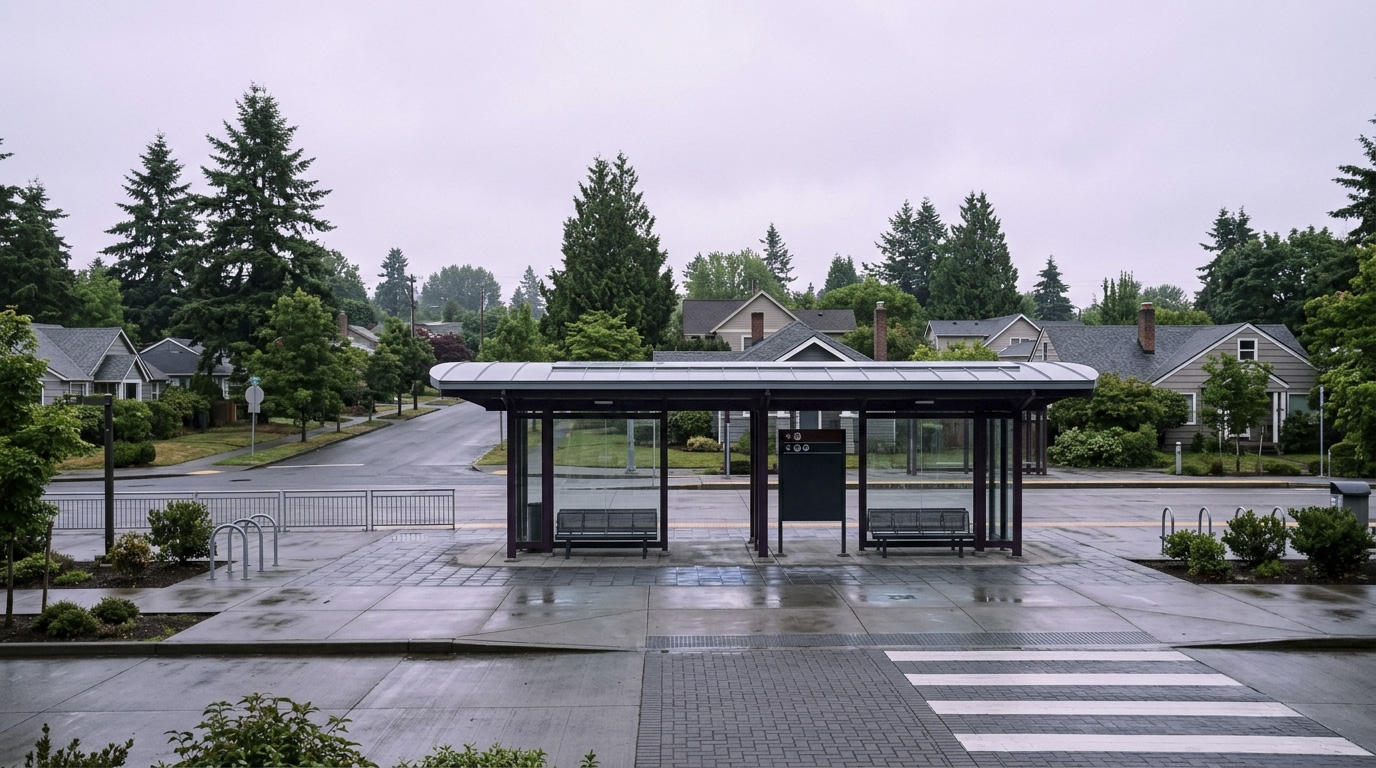
Scenic Hill sits just east of downtown Kent, close enough to walk to the Sounder station on a good day but quiet enough that most streets never see through traffic. This is a Family-First Established neighborhood, built out over several decades with a mix of ramblers, split-levels, and newer infill on the streets closest to the park. Buyers who want downtown Kent’s walkability without paying downtown prices keep landing here in 2026. It is one of the few pockets in the city where you can walk to a train platform and still park in your own driveway.
What is it actually like to live in Scenic Hill in 2026?
On a typical weekday morning, Scenic Hill runs quiet. Most of the neighborhood’s traffic drains downhill toward Central Avenue and the Sounder platform, so by the time the commute really builds on SR-167, the streets up here have already emptied out. Kids gather at bus stops along the flatter blocks near Woodland Way, and dog walkers use the neighborhood’s rolling sidewalks before the day gets going. It is not a neighborhood with a lot of drive-through traffic. Most of what happens here is local.
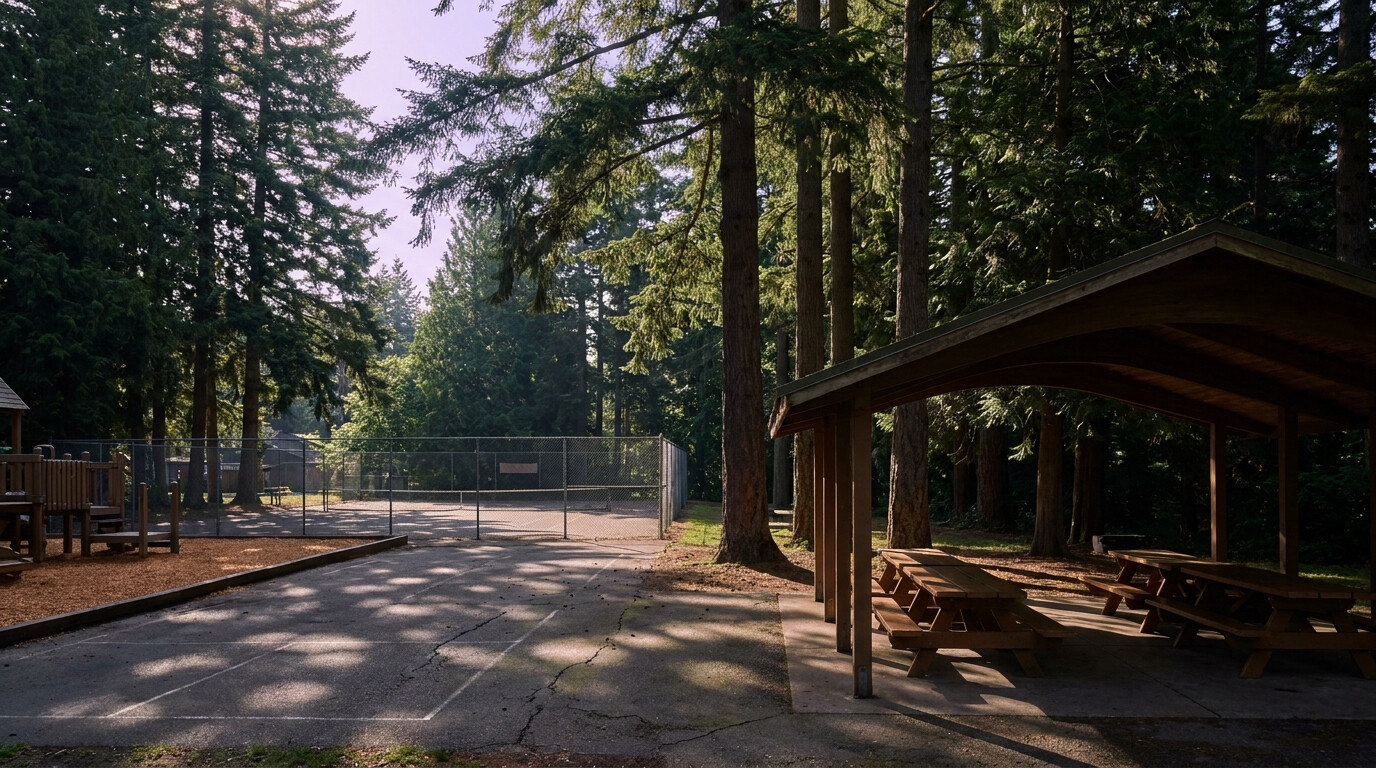
Weekends center on Scenic Hill Park. The tennis and pickleball courts fill up by mid-morning, and the picnic shelters get reserved early in the summer months. Families with younger kids gravitate to the playground, and the park’s evergreen tree cover keeps it comfortable even on a hot July afternoon. Some residents walk down into downtown Kent on the weekend for the farmers market or a coffee shop, using the neighborhood’s proximity to the core as a real amenity rather than just a selling point on a listing.
The people who choose Scenic Hill tend to want two things that do not usually come together this cheaply: walkable access to downtown and a real yard. A lot of buyers here are trading a condo or apartment closer to Seattle for more space, without giving up train access entirely. Longtime Kent families also show up, often moving a few blocks over from a starter home into something bigger on one of the newer infill lots near the park.
Scenic Hill Park anchors the neighborhood with tennis and pickleball courts, a playground, and shaded picnic areas.
Homes in Scenic Hill: What the Data Shows
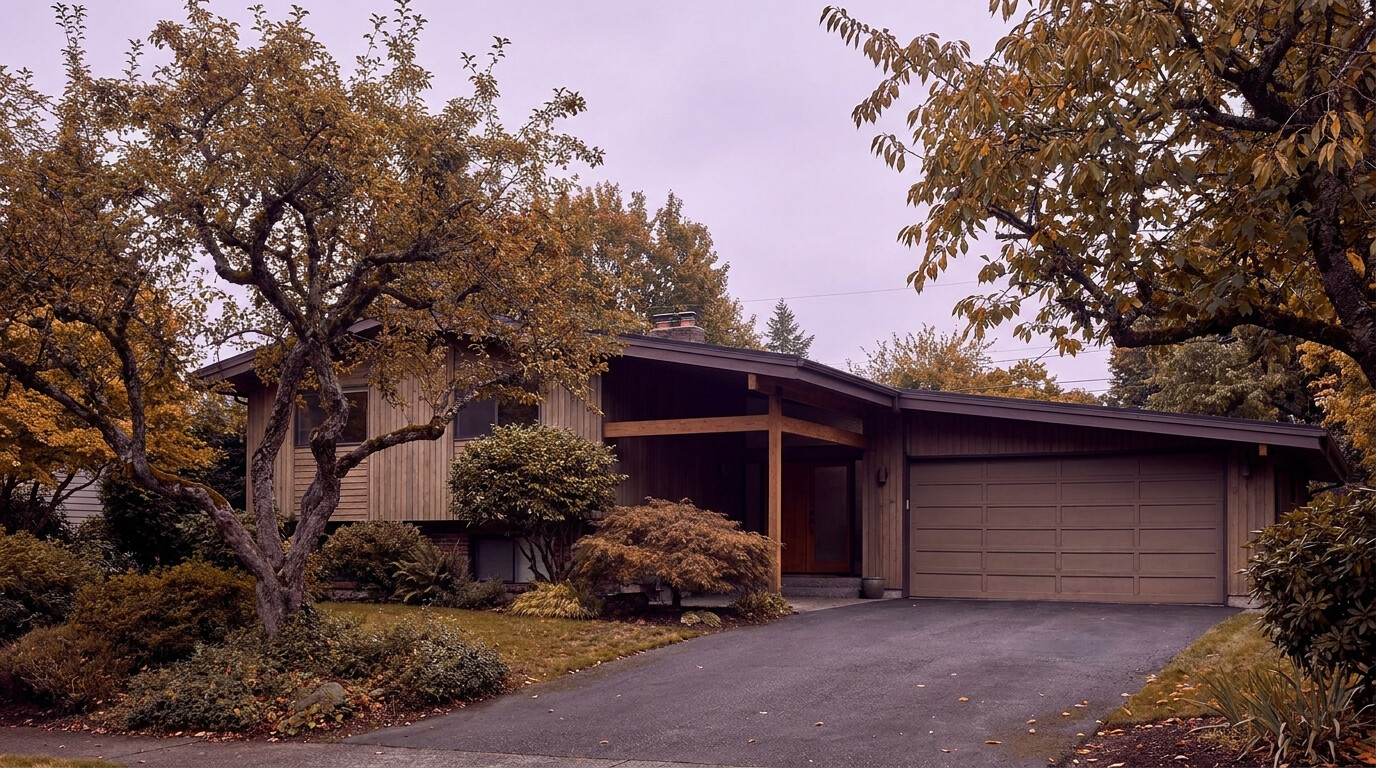
Most homes on Scenic Hill date back several decades, with ramblers, split-levels, and tri-levels making up the older housing stock north of Maple Street and larger homes with private patios and mountain views on the streets south of Scenic Hill Park. Expect 1,200 to 2,600 square feet on lots that run smaller than the newer subdivisions farther out in Kent, since this neighborhood built out closer to downtown decades before the city’s newest growth. A handful of newer infill homes and townhome-style properties have filled in smaller lots in recent years, adding some variety to the older stock. Detached single-family homes make up most of the neighborhood, with a small mix of condos and townhomes near the edges.
Market Pulse
Scenic Hill (Kent)
King County
Median Sales Price (June 2026)
~$697,000 citywide
~$998,000
Median Days on Market
~12 days
~10 days
Active Listings Change (vs. Jan 2026)
+95%
+127%
Figures reflect Kent citywide residential data for June 2026, the most recent closed month in the NWMLS export. Scenic Hill does not get isolated in the monthly pull, so treat the price row as a citywide reference point. In practice, homes on the streets south of Scenic Hill Park, with the larger lots and mountain views, typically sell above this citywide median, while the older rambler stock north of Maple Street tends to price closer to it.
Schools Serving Scenic Hill
This neighborhood falls inside the Kent School District. Scenic Hill Elementary School sits right in the neighborhood at Woodland Way South and anchors the pipeline. From there, students move on to Mill Creek Middle School on Central Avenue North, and then to Kent-Meridian High School on SE 256th Street. This is a different pipeline than several nearby Kent neighborhoods, which feed into Kentwood High School instead, so do not assume the same high school applies here. Always confirm the exact feeder for your specific address.
Scenic Hill Elementary runs a Dual Language program alongside its core curriculum, giving younger students an early start on a second language. Mill Creek Middle School offers a Gifted and Talented track along with Project Lead the Way coursework for students interested in engineering and technical subjects before high school. Kent-Meridian High School, the district’s original comprehensive high school, rounds out the pipeline with a long-running Running Start partnership that lets juniors and seniors earn college credit at Green River College while still in high school.
The day-in-the-life pipeline here mixes walking and busing. Elementary-age kids on the closest blocks can walk to Scenic Hill Elementary, while others catch a bus. Middle and high schoolers ride buses down toward Central Avenue and out to SE 256th Street. Because this neighborhood sits so close to downtown, some families also use the short walk to Kent Station as part of their after-school routine once kids are old enough for independent transit.
Getting to Work from Scenic Hill
Take Central Avenue or Woodland Way down the hill into downtown Kent to reach Kent Station, or head west to SR-167 for a straight shot north toward Renton and I-405. This is one of the more transit-friendly pockets in Kent, since the Sounder platform sits within an easy walk or a short drive of most Scenic Hill streets.
Destination
Distance
2026 Drive Time (Peak AM)
Transit Option
Downtown Seattle
21 miles
35 to 55 min
Sounder S Line from Kent Station
Bellevue / Amazon
17 miles
30 to 45 min
SR-167 to I-405
Microsoft (Redmond)
25 miles
40 to 55 min
SR-167 to I-405 to SR-520
SeaTac Airport
11 miles
15 to 25 min
SR-167 to I-5
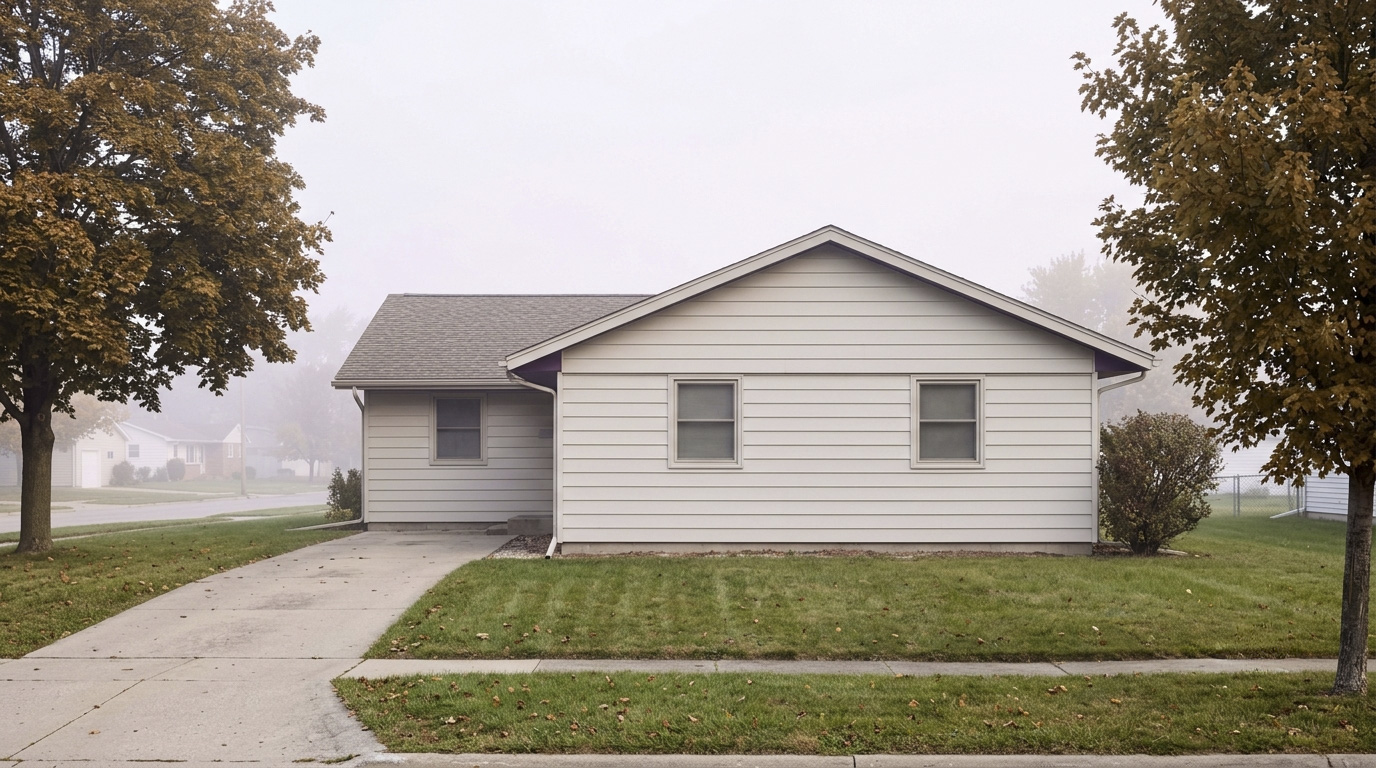
A typical split-level home on an established Scenic Hill street, north of Maple Street.
What I See as a Valuation Expert in Scenic Hill
When I price homes for institutional clients, the split between the older rambler stock and the newer infill closer to the park tends to drive a lot of the value swing. Homes south of Scenic Hill Park, with their larger lots and mountain or valley views, typically command a premium over the smaller ramblers and split-levels closer to Maple Street. Walkability to downtown Kent and the Sounder station also shows up as a real factor here, more than in most other Kent neighborhoods, since so few pockets in the city offer that kind of train access on foot.
Deferred maintenance is common on the older housing stock. Original single-pane windows, aging roofs, and outdated electrical panels show up often on homes that have not been touched since they were built decades ago. Curb appeal and yard upkeep vary block to block, since there is no HOA covering most of the neighborhood outside a handful of newer infill developments.
Updated kitchens, newer roofs, and homes on the larger lots south of the park tend to move fastest and hold value best. Interior lots on the older, unrenovated streets north of Maple Street move at a more typical Kent pace.
Frequently Asked Questions: Living in Scenic Hill
Q: Is Scenic Hill a good place to live? A: Yes, especially if you want walkable access to downtown Kent and the Sounder train station along with a real yard, something few other close-in Kent neighborhoods offer at this price point.
Q: What are homes like in Scenic Hill? A: Mostly ramblers, split-levels, and tri-levels from past decades, running 1,200 to 2,600 square feet, with larger homes and mountain views on the streets south of Scenic Hill Park and a handful of newer infill homes filling in smaller lots.
Q: What schools serve Scenic Hill? A: The Kent School District serves this area. Scenic Hill Elementary feeds into Mill Creek Middle School and then Kent-Meridian High School. Always confirm the exact pipeline for your address, since this differs from the feeder pattern in other Kent neighborhoods.
Q: How far is Scenic Hill from Seattle? A: About 21 miles from downtown Seattle, with a 35 to 55 minute drive during the morning commute, or a direct ride on the Sounder S Line from Kent Station.
Explore Scenic Hill Yourself
Walk it from Kent Station on a weekday morning to feel the commute for yourself, then come back on a Saturday to see Scenic Hill Park in full use. The contrast between the older streets north of Maple and the larger homes south of the park is easy to spot once you are standing on the hill.
If you’re relocating to Renton, you’re joining one of the more stable, well-positioned markets in King County. Here’s what you actually need to know before you land.
Why People Move to Renton
Renton sits at the intersection of I-405 and I-5, which works for commuters headed to Seattle, the Eastside, or south toward Tacoma. Boeing anchors a big share of local employment, and that stability shows up in the housing market too. See the latest numbers in my King County Real Estate Market Update.
Compared to Bellevue or Sammamish, Renton offers real value. A genuinely central location, without the Eastside luxury price tag.
What It Costs to Live in Renton
Renton’s median home price is running around $820,000, below King County’s overall median of $889,000, which makes it one of the more accessible entry points for relocating families and professionals.
Beyond housing, day-to-day costs in Renton track close to the King County average. Groceries, utilities, services. Not meaningfully cheaper or pricier than the rest of South King County.
Renton Neighborhoods Worth Knowing
Renton isn’t one neighborhood. It’s several distinct areas with different personalities. Kennydale sits along Lake Washington with some of the best water access in the city. Downtown Renton has grown up around The Landing, a mixed-use retail and dining hub that’s changed how the city center feels over the last decade. Fairwood and May Valley offer more suburban, larger-lot living further from the core. Full breakdown here: Living in Renton WA | 2026 Real Estate & Neighborhood Guide.
Relocating with a family? Spend time in each area before committing. Commute, school assignment, overall feel. They vary more than you’d expect for a city this size.
The Job Market
Boeing remains the single largest employer shaping Renton’s economy. That union-protected, long-tenured workforce gives the local housing market real stability compared to more tech-dependent Eastside cities. Beyond Boeing, Renton has a growing base of logistics, healthcare, and retail employers, plus easy access to both the Seattle and Bellevue job markets if you’re willing to commute 20 to 30 minutes.
What Surprises People Who Move to Renton
Most newcomers underestimate how central Renton actually is until they live there. The I-405/I-5 interchange access means you can reach Seattle, Bellevue, and even Tacoma in a reasonable drive. That’s not true of a lot of other affordable King County cities.
The other surprise: how much Renton has changed. The Landing and the downtown waterfront redevelopment added real amenities that didn’t exist a decade ago. If your mental image of Renton is outdated, visit in person before you rule it out.
Frequently Asked Questions
Is Renton WA a good place to relocate to in 2026?
Yes, particularly for buyers who want central King County access without Eastside luxury pricing. Renton’s location at the I-405/I-5 interchange, combined with Boeing’s stable employment base, makes it one of the more balanced relocation options in the county.
What is the commute like from Renton to Seattle and Bellevue?
Both commutes typically run 20 to 30 minutes without heavy traffic, though peak-hour congestion on I-405 and I-5 can extend that. Renton’s location gives commuters more flexibility than cities further south like Auburn or Federal Way.
What neighborhoods should I look at when relocating to Renton?
It depends on your priorities. Kennydale offers lake access, downtown Renton offers walkability near The Landing, and Fairwood or May Valley offer larger lots and a more suburban feel. Visiting each in person is the best way to find the right fit.
Ready to Explore Renton?
I spend a lot of time in Renton neighborhoods doing property valuations, so I know the differences between these areas better than a quick online search will tell you. Relocating and want a real local read? Happy to walk you through it.
Meridian Valley and the Benson Hill corridor cover the eastern reaches of Kent’s East Hill plateau — Meridian Valley wrapped around its private golf course just north of Lake Meridian, and the Benson corridor running up SR-515 toward the Renton line. This pocket has a Family-First Established feel, built around a private golf course and a string of quiet cul-de-sac streets that have not changed much in thirty years. Buyers who grew up nearby, or who already looked at East Hill and wanted a little more room to breathe, keep circling back to this corner of Kent in 2026. It is close enough to everything and far enough from the noise.
What is it actually like to live in Meridian Valley/Benson Hill in 2026?
Tuesday, 7:15 AM in Meridian Valley. Sprinklers are already running on the golf course, and the loudest thing on most streets is a garbage truck working its way through a cul-de-sac. Commute traffic builds fast once you hit SR-167, but inside the neighborhood itself the pace stays slow. Kids wait for the bus in small clusters at the end of long driveways, and most of the foot traffic before 8 AM is dog walkers making a loop before work.
Weekends center on the golf course and the park. Meridian Valley Country Club pulls in members for early tee times, and North Meridian Park fills up with families by mid-morning on a clear Saturday, kids on the ballfields and the picnic shelters filling by mid-morning. It is not a flashy scene. It is the kind of neighborhood where the same neighbors show up at the same park every weekend and everybody already knows everybody.
The buyers who land here almost always already know Kent. A lot of them grew up on the East Hill plateau a few miles south and want the same school district with a little more space and a quieter street. A smaller group comes from Renton, drawn by the lower price point on this side of the city line. Golf course frontage draws its own crowd too, buyers willing to pay extra for the view and the fairway access, even if they never pick up a club themselves.
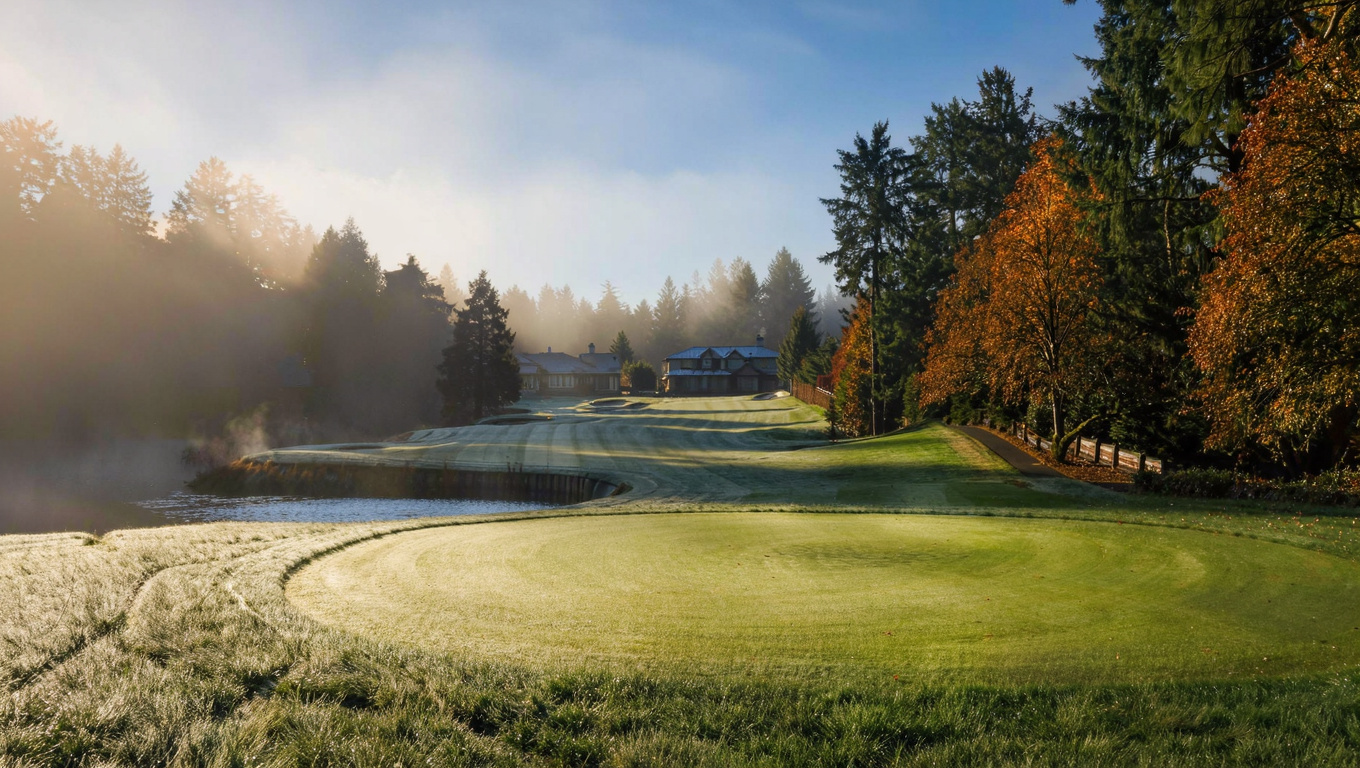
The Meridian Valley Country Club golf course anchors the neighborhood and shapes home values on the streets closest to the fairways.
Homes in Meridian Valley/Benson Hill: What the Data Shows
Most homes here went up in the 1980s and 1990s, with a scattering of newer construction filling in smaller lots near the Renton line. Expect 1,800 to 3,200 square feet on lots from 6,500 to 12,000 square feet, and noticeably larger parcels on the streets that back directly onto the golf course. Two-story traditional homes dominate, with a handful of ramblers mixed in from the earliest phase of development. Attached two- and three-car garages are standard, and homes fronting the fairways run bigger and pricier than the rest of the neighborhood.
Market Pulse
Meridian Valley/Benson Hill (Kent)
King County
Median Sales Price (June 2026)
~$697,000 citywide
~$998,000
Median Days on Market
~12 days
~10 days
Active Listings Change (vs. Jan 2026)
+95%
+127%
Figures reflect Kent citywide residential data for June 2026, the most recent closed month in the NWMLS export. Meridian Valley and Benson Hill do not get isolated in the monthly pull, so treat the price row as a citywide reference point. In practice, homes on or near the golf course, and homes closest to North Meridian Park, typically sell above this citywide median.
Schools Serving Meridian Valley/Benson Hill
This neighborhood falls inside the Kent School District. Meridian Elementary School anchors the pipeline, sitting right in the neighborhood at 140th Avenue SE. Verifying the actual feeder pattern for this specific area turned up something worth flagging: Meridian Elementary feeds into Mattson Middle School, not Meridian Middle School as some general Kent guides assume. Always confirm the exact feeder for your address before assuming the standard pipeline applies here.
Meridian Elementary runs a Gifted and Talented program alongside its core curriculum, with strong marks in both English Language Arts and math relative to the district average. Mattson Middle School, a short drive north in Covington, offers a Project Lead the Way program that gives students an early run at engineering and technical coursework before high school. Kentwood High School closes out the pipeline with a full slate of Advanced Placement courses and a graduation rate around 96%, along with multiple college success awards in recent years.
The day-in-the-life pipeline here is mostly bus-based. Elementary kids catch the bus at the end of their street, middle schoolers ride further to Mattson, and high schoolers make the longest trip out to Kentwood. Very little of this pipeline is walkable, so factor bus routes and drop-off logistics into your decision if you are relocating with school-age kids.
Getting to Work from Meridian Valley/Benson Hill
Take 132nd Avenue SE or SE 240th Street west to reach SR-167, the Valley Freeway that runs the length of Kent and connects north into Renton and I-405. This is one of the better-connected pockets of Kent for anyone commuting toward the Eastside.
Destination
Distance
2026 Drive Time (Peak AM)
Transit Option
Downtown Seattle
23 miles
38 to 58 min
Metro bus to Kent Sounder Station
Bellevue / Amazon
16 miles
28 to 42 min
SR-167 to I-405
Microsoft (Redmond)
24 miles
38 to 52 min
SR-167 to I-405 to SR-520
SeaTac Airport
13 miles
18 to 28 min
SR-167 to I-5
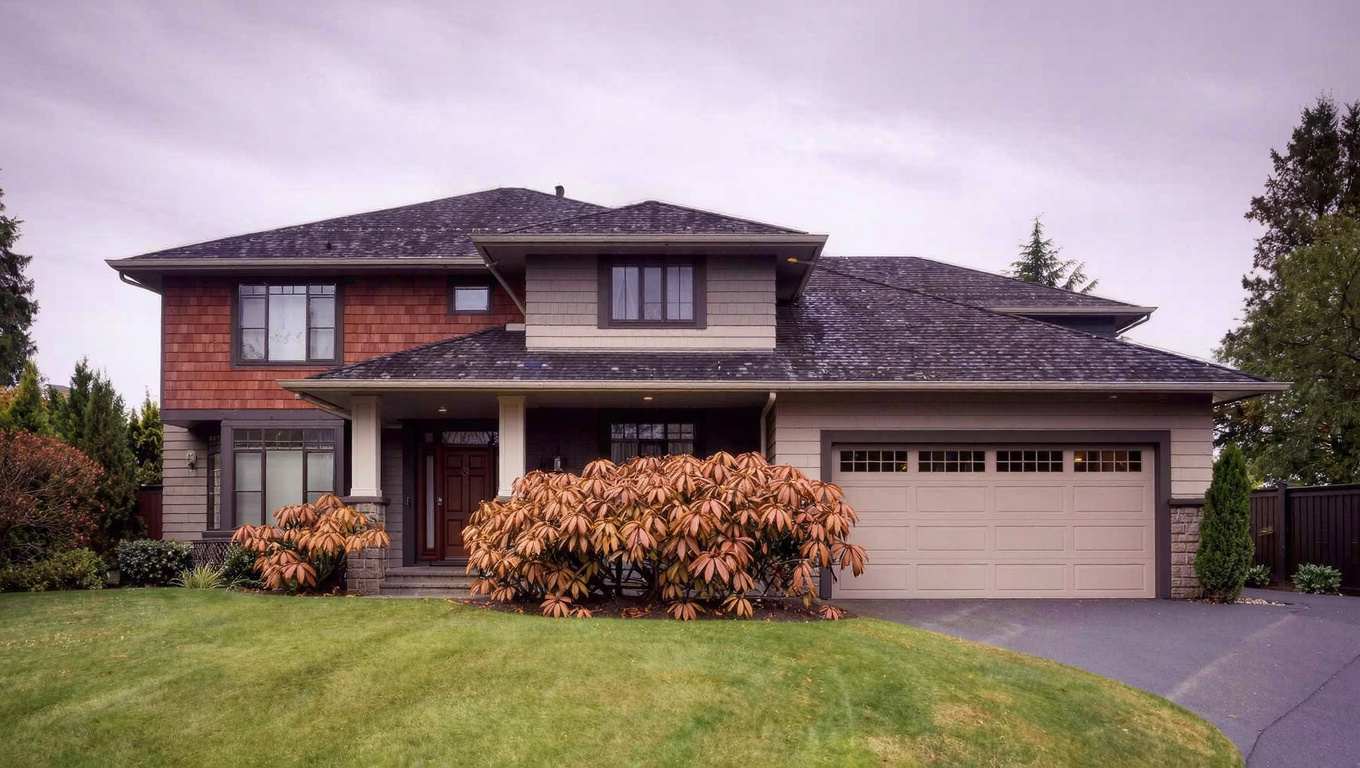
A typical 1980s two-story home on an established street in Meridian Valley/Benson Hill.
What I See as a Valuation Expert in Meridian Valley/Benson Hill
When I price homes for institutional clients, proximity to the golf course tends to drive more of the value swing than almost any other factor in this neighborhood. A home with a direct fairway view, or one backing onto the course itself, commands a real premium over an interior lot of the same size. Roof age and siding condition matter more here than in newer parts of Kent too, since most of this housing stock is now thirty to forty years old and due for a second or third round of major system replacement.
HOA presence is light outside the immediate country club streets, so curb appeal and yard maintenance vary block to block. I still see a lot of original windows and single-pane glass on homes that have not been updated since they were built. That is not a dealbreaker, but it shows up in the comps, often as a five-figure gap between an updated home and one that has not touched its systems since the 1990s.
Golf course frontage and homes within easy walking distance of North Meridian Park sell fastest and hold value best. Interior lots on the older, non-golf-adjacent streets move at a more typical Kent pace and price closer to the citywide median.
Frequently Asked Questions: Living in Meridian Valley/Benson Hill
Q: Is Meridian Valley/Benson Hill a good place to live? A: Yes, especially if you want an established, quiet neighborhood with strong Eastside commute access and a defining amenity in the Meridian Valley Country Club golf course.
Q: What are homes like in Meridian Valley/Benson Hill? A: Mostly 1980s and 1990s two-story homes running 1,800 to 3,200 square feet on lots from 6,500 to 12,000 square feet, with larger, pricier parcels backing directly onto the golf course.
Q: What schools serve Meridian Valley/Benson Hill? A: The Kent School District serves this area. Meridian Elementary feeds into Mattson Middle School and then Kentwood High School. Always confirm the exact pipeline for your address, since some general Kent guides list a different middle school feeder.
Q: How far is Meridian Valley/Benson Hill from Seattle? A: About 23 miles from downtown Seattle, with a 38 to 58 minute drive during the morning commute. This pocket sits closer to the Eastside than most of Kent, with a 28 to 42 minute drive to Bellevue.
Explore Meridian Valley/Benson Hill Yourself
Drive it on a weekday morning to feel the commute, then come back on a Saturday to see the golf course and North Meridian Park in full use. The difference between a golf-adjacent street and an interior street is easy to see once you are standing on it.
The southeast edge of Kent is where the city starts to loosen up. Fences give way to trees, driveways get longer, and a half-acre lot starts to feel normal instead of rare. This is a Wooded Sanctuary neighborhood, built for buyers who want more land and more quiet without leaving Kent behind entirely. A few streets here carry a Kent address. A few blocks over, you cross into the actual city of Covington, and the line matters less for daily life than it does for which school district shows up on your tax bill.
What is it actually like to live in Covington/SE Kent in 2026?
Tuesday, 7:15 AM in SE Kent. Long driveways mean you do not see your neighbors until you are both backing out toward the main road. Trees still hold most of the morning fog off Soos Creek, and the loudest sound most mornings is a school bus working its way down a cul-de-sac instead of highway traffic. Commuters heading toward SR-167 or the Covington side of SR-516 spread out fast, so the roads rarely feel as tight as East Hill or downtown Kent at the same hour.
Weekends lean toward the yard and the trail. A lot of these lots came with room to garden, park a boat, or let the kids run without hearing a fence line every fifteen feet, and residents use it. Jenkins Creek Park and the Soos Creek trail system pull in families for hikes, and Saturday mornings often mean a drive into Covington Town Center for coffee, groceries, or a kid’s soccer game at one of the nearby fields.
This pocket draws buyers who already looked at East Hill or Lake Meridian and wanted one more thing: space. Buyers who want acreage-adjacent living without leaving the Kent School District orbit end up here, alongside a smaller group willing to buy into the Tahoma School District boundary for that district’s reputation. It is quieter and greener than almost anywhere else in Kent, and buyers usually notice the difference in the first five minutes of a showing.
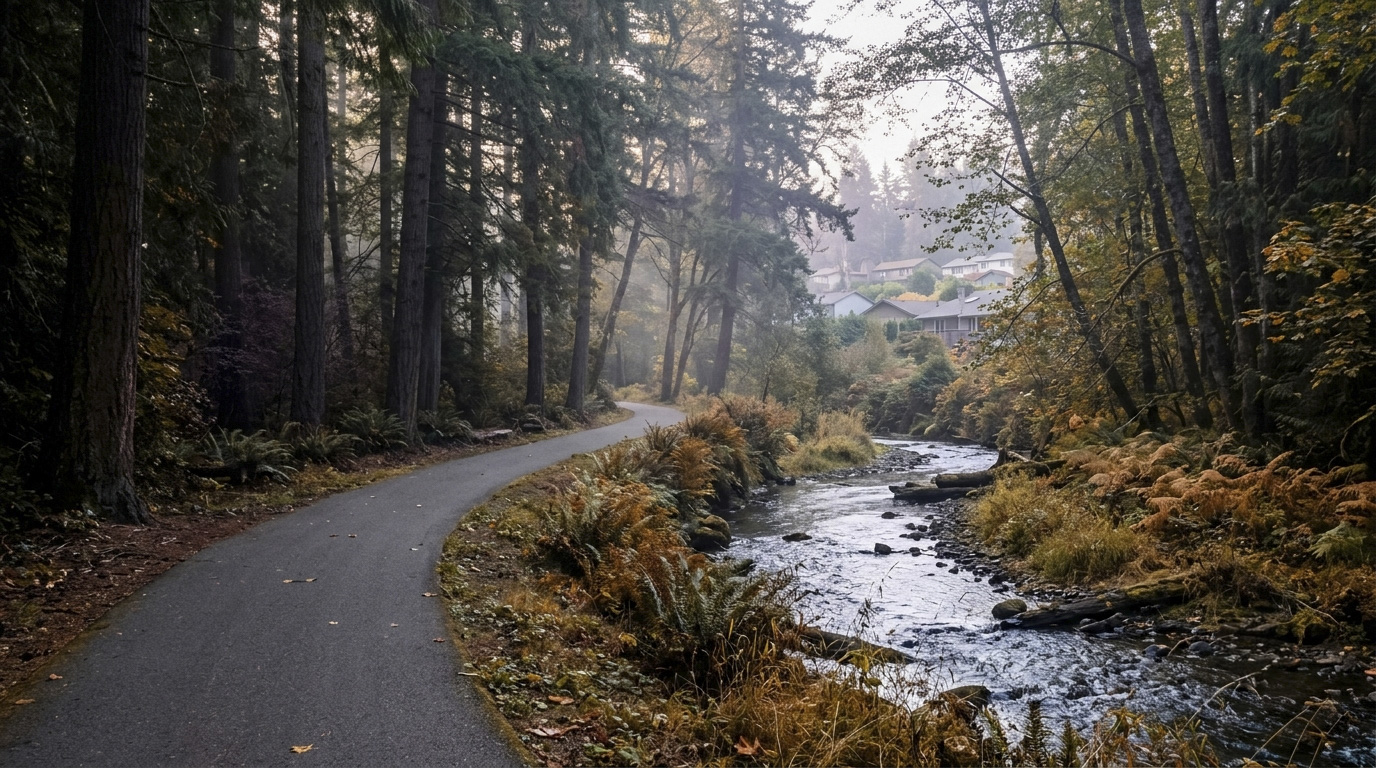
The trail through Jenkins Creek Park and the Soos Creek greenbelt anchors weekend life in Covington/SE Kent.
Homes in Covington/SE Kent: What the Data Shows
Homes in Covington/SE Kent mostly went up in the 1990s and early 2000s, later than East Hill and later still than the older stock in West Hill or downtown. Expect 1,800 to 3,500 square feet, with a real mix of two-story traditional homes and single-level ramblers. The defining feature here is the lot, not the house. Quarter-acre parcels are the floor, and half-acre lots show up regularly, especially on the streets closest to the Covington line. Attached three-car garages are common, and a fair number of properties back onto greenbelt or a wooded buffer instead of a neighbor’s fence. Buyers comparing this area to East Hill should expect to pay more for the land, not necessarily for the square footage.
Market Pulse
Covington/SE Kent (Kent, 98042)
King County
Median Sales Price (June 2026)
~$697,000 citywide
~$998,000
Median Days on Market
~12 days
~10 days
Active Listings Change (vs. Jan 2026)
+95%
+127%
Figures reflect Kent citywide residential data for June 2026, the most recent closed month in the NWMLS export. This southeast corridor does not get isolated in the monthly pull, so treat the price row as a citywide reference point. In practice, larger-lot homes here, and homes confirmed inside the Tahoma School District boundary, typically sell above this citywide median.
Schools Serving Covington/SE Kent
This is the one part of Kent where the school district itself changes street to street. Most of Covington/SE Kent falls in the Kent School District, but a meaningful stretch closer to the actual city of Covington sits inside the Tahoma School District instead. A home on one side of a street can feed into a completely different set of schools than a home directly across from it. Always confirm the district assignment for the specific address before writing an offer here.
If your address falls in the Kent School District, expect Cedar Valley Elementary, Cedar Heights Middle School, and Kentlake High School as the standard pipeline for this corridor. Cedar Heights runs a Project Lead the Way program alongside its core academics, and Kentlake offers a full Advanced Placement course lineup for families planning ahead for college applications. Confirm this pipeline against the specific address before assuming it applies.
Cross into the Tahoma School District boundary and the pipeline shifts to a Tahoma-zoned elementary school, Maple View Middle School, and Tahoma Senior High School, consistently one of the highest-rated high schools in the state. Tahoma’s boundary reaches into Covington itself and pulls in some SE Kent addresses close to the city line, so a Kent mailing address does not guarantee Kent School District. Confirm the district and the exact school assignment with both districts’ boundary tools before you get attached to a listing.
Getting to Work from Covington/SE Kent
SE Kent sits away from the freeway grid, so plan for surface streets before you reach anything with an interstate number. Take SE 272nd Street or Kent-Kangley Road west to reach SR-167, or head east through Covington and Maple Valley on SR-516 and SR-18.
Destination
Distance
2026 Drive Time (Peak AM)
Transit Option
Downtown Seattle
24 miles
40 to 60 min
Metro bus to Kent Sounder Station
Bellevue / Amazon
22 miles
38 to 55 min
SR-18 to I-405
Microsoft (Redmond)
29 miles
45 to 65 min
SR-18 to I-405 to SR-520
SeaTac Airport
16 miles
25 to 35 min
SR-167 to I-5
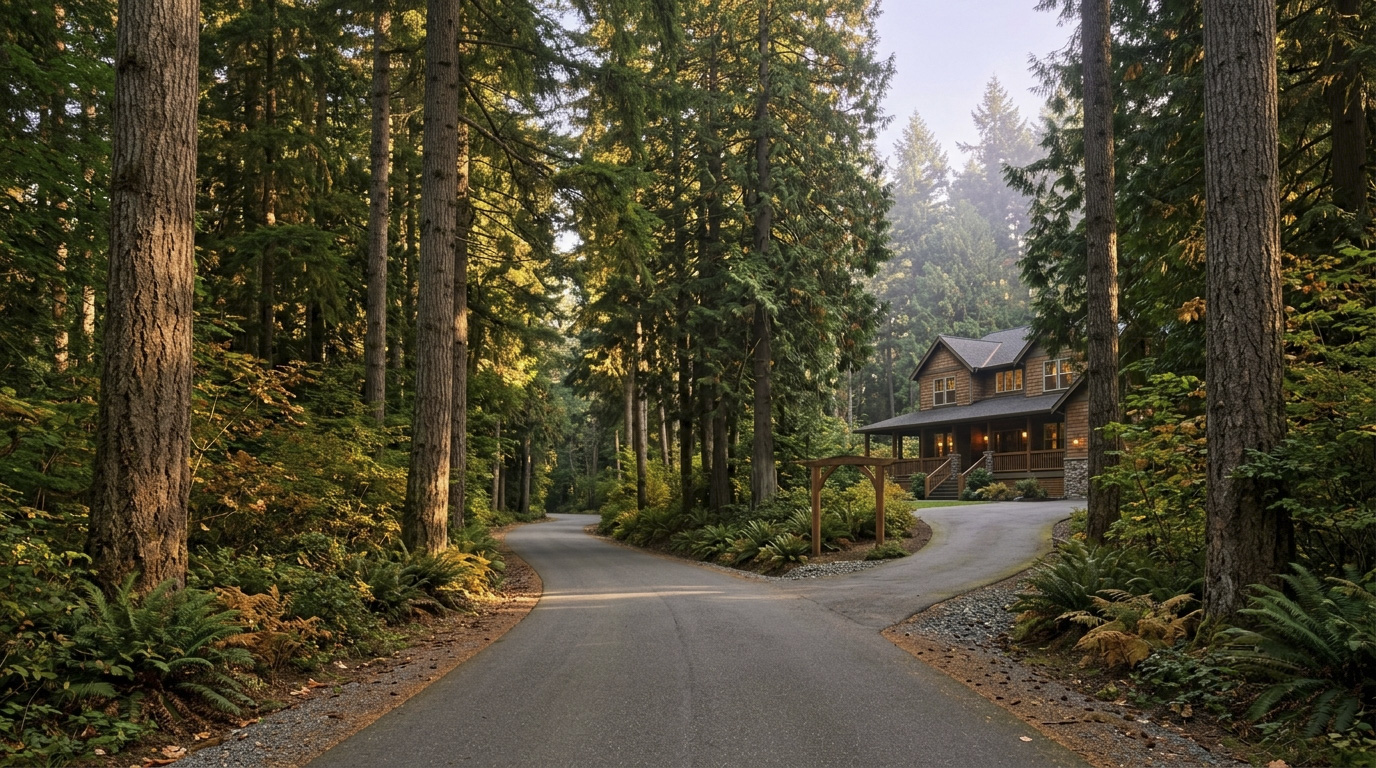
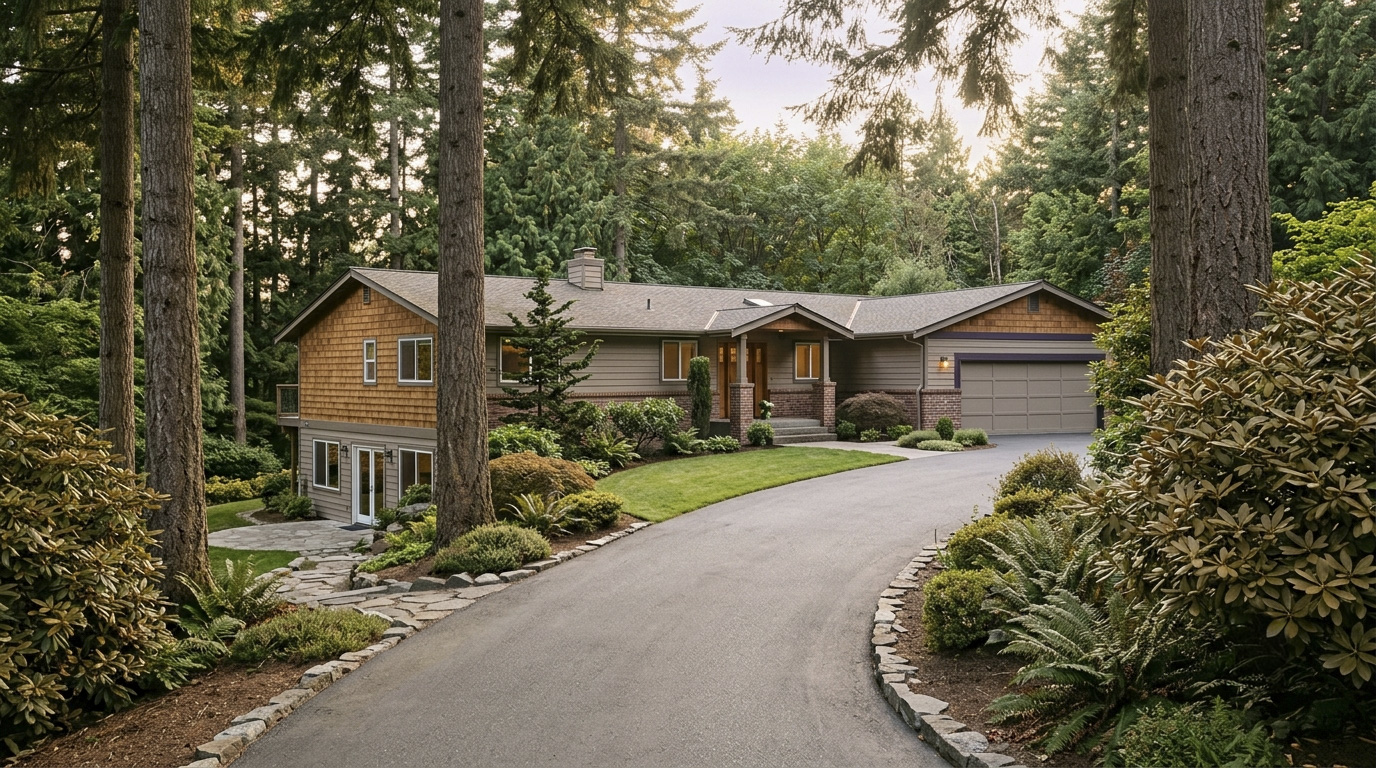
A typical 1990s two-story home on a wooded half-acre lot in Covington/SE Kent.
What I See as a Valuation Expert in Covington/SE Kent
When I price homes for institutional clients, lot size and privacy tend to carry more of the value swing than almost anywhere else I work in Kent. A well-treed half-acre lot with a usable backyard commands a real premium over a same-square-footage home on a standard quarter-acre, especially when the buffer blocks a neighbor’s view entirely. Septic systems show up on some of the older or more rural parcels out here too, and a septic inspection matters as much as the roof and the furnace when I am pricing a property in this corridor.
School district assignment is its own value driver, separate from the house itself. Two nearly identical homes on opposite sides of the district line can sell for meaningfully different numbers because of the school assignment alone. HOA presence is light out here. Most of these subdivisions went up without one, so curb appeal and maintenance vary more block to block than in a managed community further east.
Homes confirmed inside the Tahoma School District boundary pull the clearest premium in this corridor, and it rests on school reputation alone. Homes backing directly onto greenbelt or Jenkins Creek Park also move faster than interior lots with the same square footage.
Frequently Asked Questions: Living in Covington/SE Kent
Q: Is Covington/SE Kent a good place to live? A: Yes, especially for buyers who want more land and privacy than East Hill or Lake Meridian offer, and who do not mind trading some freeway access for quieter streets and bigger lots.
Q: What are homes like in Covington/SE Kent? A: Mostly 1990s and early 2000s construction, running 1,800 to 3,500 square feet on quarter- to half-acre lots, with more wooded and greenbelt-adjacent parcels than almost anywhere else in Kent.
Q: What schools serve Covington/SE Kent? A: It depends on the exact address. Part of this corridor falls in the Kent School District, with Cedar Valley Elementary, Cedar Heights Middle, and Kentlake High School as the standard pipeline. Part falls in the Tahoma School District, home to Maple View Middle School and Tahoma Senior High School. Always confirm which district serves a specific address before writing an offer.
Q: How far is Covington/SE Kent from Seattle? A: About 24 miles from downtown Seattle. Driving takes 40 to 60 minutes depending on traffic, since this corridor sits away from the main freeway routes that serve the rest of Kent.
Explore Covington/SE Kent Yourself
Drive the neighborhood before you decide, and drive it twice: once on a weekday morning to feel the commute, and once on a Saturday to see how the trails and the town center actually get used. Lot size and tree cover read completely differently in person than they do in a listing photo.
Countywide activity kept cooling this week. Closings dropped to 388, the slowest week since January, and new listings fell to 743. Active inventory eased slightly to 7,647, but with fewer sales clearing, weeks of supply pushed up to 19.7, the highest reading of 2026. The county median sale price slipped to $825,000, and just 17.5% of sales closed above list, also a 2026 low.
South King County did most of the slowing. Closings fell to 77 from 107 last week, weeks of supply jumped to 19.4 from 14, and the median sale price came back to $650,000. Here is the part that headline number hides: pendings rose to 169 from 143. Buyers down south are still writing offers, they just have not reached the closing table yet.
The Eastside went the other way. Closings ticked up to 90, supply eased to 24 weeks, and pendings cooled to 148. The median sale price came down to $1,337,500, which means the value side has finally caught up with the volume slowdown I flagged last week.
The takeaway: these two markets traded places. The Eastside is settling into its price level, while South King County’s dip looks like a timing gap rather than a demand problem. Watch the South King pending count next Monday. If those close, the slow week was noise.
Nationally, Freddie Mac’s weekly survey put the 30-year fixed at 6.67 percent on August 13, down slightly from 6.69 percent the week before, while the National Association of Realtors reports 1.54 million homes for sale, about 4.6 months of supply, and existing home sales running at a 4.06 million annual pace. King County residential supply is still tighter than the national picture at 3.8 months on the latest monthly NWMLS data, and local closings hold far closer to full list price than the national average.
Is King County a buyer’s or seller’s market right now?
King County at a glance: July 2026 (NWMLS)
Metric
Residential
Condo
Median sale price
$1,000,000
$520,000
Change vs. last month
+0.5%
+0.9%
Change vs. last year
+0.1%
−3.7%
Closed sales
1,504
413
New listings
3,099
1,016
Active listings
5,423
2,540
Months of supply
3.8
6.0
Median days on market
11
28
% of list price received
100%
99.1%
King County, July 2026 closed-sale data. Source: NWMLS via InfoSparks.
Two different markets are hiding in that table. Single-family homes county-wide are still moving quickly at asking price. Condos are carrying nearly twice the supply, taking more than twice as long to sell, and their median price has fallen harder over the past year. If you own a condo and plan to sell, pricing honestly matters more for you than for anyone else in this report.
The table below is the heart of this page. It compares all seven cities I serve, plus the county itself, using July 2026 NWMLS closed-sale data. This month the split looks different than it has in a while: Sammamish, Issaquah, and Federal Way all posted real year-over-year price gains, while Bellevue, Renton, and Auburn slipped slightly. Supply widened almost everywhere compared to last year, giving buyers more room across the board.
City comparison: July 2026 (single-family, NWMLS)
City
Median price
YoY
Active listings
Months of supply
Median DOM
% of list received
Closed sales
Bellevue
$1,830,000
−1.1%
372
4.9
13
97.7%
85
Sammamish
$1,725,000
+5.3%
253
5.5
18
97.3%
57
Issaquah
$1,575,000
+7.9%
135
4.4
9
97.5%
41
Renton
$810,000
−4.7%
317
3.9
19
100%
80
Kent
$700,000
+1.4%
270
3.8
11
100%
82
Auburn
$649,000
−1.2%
247
3.5
18
100%
65
Federal Way
$645,000
+7.5%
180
3.5
15
100%
59
King County (single-family)
$1,000,000
+0.1%
5,423
3.8
11
100%
1,504
King County (condo)
$520,000
−3.7%
2,540
6.0
28
99.1%
413
July 2026 closed-sale data. Each city’s figures are its own true NWMLS numbers. I never average medians across cities. Source: NWMLS via InfoSparks.
How is the Bellevue housing market right now?
Median price
YoY
Months of supply
Median DOM
% of list
Active
Closed
$1,830,000
−1.1%
4.9
13
97.7%
372
85
Single-family, July 2026. Source: NWMLS.
Bellevue is really two markets. Move-in-ready homes under the luxury tier still draw serious competition, while the condo segment and un-staged or dated listings carry the most negotiating room in the entire county. If you are comparing renting against owning here, my Bellevue rent vs. buy breakdown runs the actual numbers.
Is the Sammamish market cooling off?
Median price
YoY
Months of supply
Median DOM
% of list
Active
Closed
$1,725,000
+5.3%
5.5
18
97.3%
253
57
Single-family, July 2026. Source: NWMLS.
Sammamish is almost entirely one product type, larger single-family homes, so when supply builds the whole city feels it at once. Buyers here are taking their time and looking hard at lot slope, drainage, and road noise before they write. My neighborhood guides for Sahalee and East Lake Sammamish Parkway cover the pockets buyers ask about most.
Is Issaquah still a good buy on the Eastside?
Median price
YoY
Months of supply
Median DOM
% of list
Active
Closed
$1,575,000
+7.9%
4.4
9
97.5%
135
41
Single-family, July 2026. Source: NWMLS.
The Issaquah Highlands keeps pulling steady showing traffic because it is the most affordable way into Eastside schools without paying Bellevue or Sammamish prices. I wrote up the full case in my Issaquah buyer opportunity guide.
What are home prices doing in Renton?
Median price
YoY
Months of supply
Median DOM
% of list
Active
Closed
$810,000
−4.7%
3.9
19
100%
317
80
Single-family, July 2026. Source: NWMLS.
Renton is three markets wearing one name. The Highlands, Benson Hill, and downtown each price and move differently, which is why the citywide median bounces around. It stays the top landing spot for buyers who work on the Eastside but will not pay Eastside prices. Start with my downtown Renton guide if you are new to the city.
Is Kent a good place to buy a home right now?
Median price
YoY
Months of supply
Median DOM
% of list
Active
Closed
$700,000
+1.4%
3.8
11
100%
270
82
Single-family, July 2026. Source: NWMLS.
East Hill family homes are the engine here, and demand for them has not let up. Steady markets punish guesswork, so pricing accuracy matters more in Kent than almost anywhere I work. If you are weighing the move, start with my guide to buying a home in Kent and the Kent family neighborhoods breakdown.
Why are Auburn homes selling so fast?
Median price
YoY
Months of supply
Median DOM
% of list
Active
Closed
$649,000
−1.2%
3.5
18
100%
247
65
Single-family, July 2026. Source: NWMLS.
Auburn is the most affordable single-family entry point of my seven cities, and buyers know it. When the median home goes pending in eight days, showing up without a pre-approval letter means losing the house. Lakeland Hills and the Enumclaw plateau side keep drawing families who want newer construction for less. My guide to living in Auburn covers the neighborhoods and what your budget buys in each.
Is Federal Way the best value in King County?
Median price
YoY
Months of supply
Median DOM
% of list
Active
Closed
$645,000
+7.5%
3.5
15
100%
180
59
Single-family, July 2026. Source: NWMLS.
Federal Way sits in the sweet spot between Seattle and Tacoma commutes, and starter homes here have stayed insulated from the cooling happening on the Eastside. My Federal Way neighborhood guide maps out where those values are.
What does this mean if you’re buying or selling right now?
If you’re buying: your leverage depends on which half of the county you’re shopping. On the Eastside, use the extra supply. Ask for inspection time, negotiate on homes that have sat past three weeks, and don’t chase overpriced listings. In South King County, come prepared to move fast on the good ones, because they still go in under two weeks. Either way, with rates near their best level in almost two months, it may be worth a look at a rate buydown to bring the payment down further.
If you’re selling: the market is telling sellers one thing loudly: price to the current comps, not to your neighbor’s sale from March. Hundreds of King County sellers cut their price this week alone, and every one of those cuts started with an asking price the market rejected. Condition matters more than it has in years. If you get the first two weeks right, you sell. My guide on how to price your home to sell in King County walks through exactly how I build a list price.
Frequently asked questions
Is now a good time to buy in South King County?
If the payment works for you, yes. Prices in Kent, Auburn, and Federal Way are up modestly from last year, so waiting has not been rewarding buyers there. Inventory is better than it has been in years, and rates just hit a seven-week low. The value end of the county is competitive but not frantic.
Which King County suburb has the lowest home prices?
Among my seven cities, Federal Way and Auburn are essentially tied for the lowest single-family medians in July 2026, both just under $650,000. Kent isn’t far behind. For the lowest entry point of all, condos remain the cheapest way to own in King County.
Are Eastside home prices dropping?
June medians in Bellevue, Sammamish, and Issaquah all came in below last year, and supply on the Eastside has grown faster than anywhere else in the county. That reads as a real cooling, not a collapse. Well-priced homes still sell in under two weeks. The overpriced ones are the ones sitting and cutting.
How often is this page updated?
Every Monday I refresh the “what changed this week” section with the newest NWMLS activity. Once a month, when the new monthly data lands, I rebuild every table and city capsule on this page. Bookmark it. The URL never changes.
If you’re a first-time buyer priced out of Renton or Kent, Auburn is worth a serious look. It’s one of the last places in King County where a starter home doesn’t require a six-figure income just to qualify.
Here’s what actually matters if you’re thinking about buying there in 2026.
What You Get for Your Money in Auburn
Auburn sits at the affordable end of King County’s pricing spectrum, with a median home price around $560,000 as of June 2026. For a first-time buyer, that gap compared to Renton, Kent, or the Eastside can mean the difference between qualifying for a mortgage and not.
You’re typically getting more square footage and a bigger lot for the same monthly payment you’d pay for a smaller Kent condo or a Renton starter home. More space for less money. That’s Auburn’s core appeal.
Commute Reality Check
Auburn sits south of Kent, further from the job centers most King County buyers commute to. If you work in downtown Seattle, Bellevue, or the tech corridor, be honest about the drive. I-5 and SR-167 both see real congestion at peak hours.
But Auburn has its own employment base too. Muckleshoot-area employers, warehousing and logistics along the SR-167 corridor, a growing downtown. All of that supports jobs that don’t require a Seattle commute. Work locally, or have a flexible schedule? The commute math changes entirely.
What Neighborhoods to Look At
Auburn isn’t one uniform market. Some pockets are older and more established. Others are newer construction closer to the Green River trail system. For the full breakdown by area, see my Auburn WA Neighborhood Guide.
Families should look closely at school boundaries before falling in love with a specific street. Auburn School District covers a wide area, and school assignment can vary block by block in parts of the city.
Is Now the Right Time, or Should You Wait?
Every first-time buyer asks this question. The honest answer depends on your situation more than the market’s. Auburn’s days on market has stretched to about 35 days compared to a year ago, which means less pressure to rush a decision. For the full picture on why, see How Long Does It Take to Sell a Home in Auburn WA in 2026?
Waiting for rates to drop rarely pays off the way buyers hope. Home prices in affordable markets like Auburn tend to firm up as rates ease, since more buyers suddenly qualify. Find a home that fits your budget and needs today? The math usually favors buying now over waiting for a hypothetical better moment.
What First-Time Buyers Get Wrong About Auburn
The biggest mistake I see is buyers assuming “affordable” means “lower quality.” Not accurate. Auburn has plenty of well-maintained homes, strong neighborhoods, real long-term value. The homes that look rough usually reflect one owner’s deferred maintenance, not a citywide condition issue.
The second mistake is skipping a real inspection to save money on an already-affordable purchase. An inspection on a $500,000 home costs the same as one on a $1.5 million home. And it protects a much bigger share of your net worth in the affordable range.
Frequently Asked Questions
Is Auburn WA affordable for first-time home buyers?
Yes. Auburn consistently has some of the lowest median home prices in King County, making it one of the more accessible entry points for first-time buyers who are priced out of Renton, Kent, or the Eastside.
What is the commute like from Auburn to Seattle?
Auburn’s commute to downtown Seattle or Bellevue runs through I-5 or SR-167, both of which see real congestion during peak hours. Buyers who work locally or have flexible schedules avoid most of this friction. Buyers commuting daily to downtown Seattle should factor in 45 minutes to over an hour depending on traffic.
Should I buy in Auburn now or wait for rates to drop?
Waiting for rates to drop rarely benefits buyers in affordable markets like Auburn, since lower rates tend to bring in more buyers and firm up prices. If a home fits your budget and needs today, buying now usually makes more financial sense than waiting for uncertain future conditions.
Thinking About Buying in Auburn?
I’ve walked hundreds of King County homes doing professional valuations, plenty of them in Auburn. Want an honest read on a specific neighborhood or property? I’ll help you figure out what makes sense for your budget and timeline.
Midway sits at Kent’s north end, where the city runs into SeaTac and Des Moines along SR-99 and I-5. This is a Walkable Urban Edge neighborhood, built around the SR-99 corridor and the new Kent Des Moines light rail station, which opened in December 2025 next to Highline College. Buyers who want the lowest entry price in Kent, or who fly for work and want to feel it in their weekly schedule, end up looking here first. The area has leaned commercial for years, but new residential development keeps filling in around the transit hub.
What is it actually like to live in Kent Station/Midway in 2026?
Tuesday, 7:15 AM in Midway. Link trains pull into the elevated Kent Des Moines Station every few minutes, and RapidRide buses work the Pacific Highway corridor below. SR-99 traffic builds early along the retail strip, but the residential streets just off the highway stay quieter than you would expect this close to a major corridor. Older single-family blocks sit a few minutes’ walk from newer townhome clusters, so the morning rhythm depends on which block you are standing on.
Weekends lean local: errands along the SR-99 retail strip, campus events at Highline College, and quick trips to the Des Moines waterfront a few minutes west. A fair number of residents ride Link or RapidRide to SeaTac for a flight without ever touching I-5. This is not a neighborhood built around a single park the way Lake Meridian is built around its beach. The draw here is proximity, to the airport, to transit, and to a lower price point than almost anywhere else in Kent.
Who lives in Midway? A lot of first-time buyers and renters converting to owners, priced out of the rest of Kent or the Eastside. Frequent flyers and commuters who value the SeaTac drive time above square footage. And a growing number of buyers eyeing the newer townhome product near the light rail station, trading a bigger lot for walkability and a lower payment. Everywhere else in Kent sells space. Midway sells access.
The elevated Kent Des Moines Link station anchors daily life in Midway, with 1 Line trains and RapidRide service connecting residents to SeaTac, Seattle, and beyond.
Homes in Kent Station/Midway: What the Data Shows
Housing in Midway mixes two very different generations of product. Older single-family homes, most built between the 1950s and 1970s, sit on standard city lots close to the highway corridor, running 900 to 1,700 square feet. Alongside them, newer townhomes and multi-family buildings have gone up over the last decade near the light rail station, offering 2 and 3 bedroom layouts with attached garages and less yard to maintain. Lot sizes on the older single-family stock run 5,000 to 7,500 square feet. Buyers should expect more deferred maintenance here than in East Hill or Lake Meridian. This pocket has historically drawn less renovation investment than the newer subdivisions further east.
Market Pulse
Kent Station/Midway (Kent, 98032)
King County
Median Sales Price (June 2026)
~$697,000 citywide
~$998,000
Median Days on Market
~12 days
~10 days
Active Listings Change (vs. Jan 2026)
+95%
+127%
Figures reflect Kent citywide residential data for June 2026, the most recent closed month in the NWMLS export. Midway does not get isolated in the monthly pull, so treat the price row as a citywide reference point. In practice, older single-family homes in Midway itself typically sell below this citywide median, while newer townhome product near the light rail station prices closer to or above it.
Schools Serving Kent Station/Midway
Midway falls inside the Kent School District. Kent Elementary School, on 64th Avenue South, is the confirmed elementary for the 98032 corridor that includes this area. Confirm your specific street with the district before writing an offer, since Midway sits close to where Kent, Des Moines, and SeaTac attendance zones meet.
Kent Elementary runs standard neighborhood programming with a tight community feel, typical of the district’s smaller, older elementary campuses. Middle and high school assignment for this corridor should be verified directly. General district feeder patterns point toward Mill Creek Middle School and Kent-Meridian High School, but that has not been confirmed at the address level for the Midway pocket. This is one area of Kent where a five-minute call to the district saves a real headache later.
Elementary-age kids in most of Midway walk or bus a short distance to Kent Elementary. Middle and high schoolers bus further, and the exact route depends on which side of the SR-99 corridor the address falls on, since this stretch sits close to a boundary line rather than squarely inside one attendance zone.
Getting to Work from Kent Station/Midway
Midway is the most transit-connected pocket of Kent by a wide margin. Take Pacific Highway South (SR-99) directly to I-5 in either direction, or ride Link light rail from the Kent Des Moines Station, with RapidRide A running the corridor and reaching SeaTac in minutes without touching a freeway at all.
Destination
Distance
2026 Drive Time (Peak AM)
Transit Option
Downtown Seattle
18 miles
30 to 50 min
Link 1 Line from Kent Des Moines Station
Bellevue / Amazon
20 miles
35 to 50 min
I-5 to I-405
Microsoft (Redmond)
27 miles
42 to 60 min
I-5 to SR-520
SeaTac Airport
5 miles
10 to 15 min
SR-99 or RapidRide
A typical 1960s single-family home on a standard city lot in the Midway area of Kent.
What I See as a Valuation Expert in Kent Station/Midway
When I price homes for institutional clients, condition tends to carry more of the value swing than almost anywhere else I work in Kent. This pocket has an older housing stock that has not kept pace with the renovation investment I see in East Hill or Lake Meridian, so a well-updated single-family home stands out fast against its neighbors. Systems age matters too. Roofs, furnaces, and electrical panels on 1950s and 1960s homes need a hard look before you write an offer.
HOA presence is light on the older single-family stock and more common on newer townhome developments near the light rail station. Curb appeal varies block to block more than in a managed subdivision, and highway noise is a real factor on blocks closest to SR-99 that buyers should walk and listen to in person before deciding. Proximity to transit and the airport is the value driver that outweighs almost everything else here.
Newer townhomes within a short walk of the light rail station pull the strongest premium in this corridor, especially units marketed toward commuters and frequent flyers. Well-maintained transit-adjacent townhomes typically sell at a clear premium over comparable units a half-mile further out, even with nearly identical square footage and finish level.
Frequently Asked Questions: Living in Kent Station/Midway
Q: Is Kent Station/Midway a good place to live? A: Yes, especially for buyers who want the lowest entry price in Kent and value transit and airport access over lot size. It is one of the most walkable, transit-connected pockets in the city.
Q: What are homes like in Kent Station/Midway? A: A mix of older single-family homes from the 1950s through 1970s running 900 to 1,700 square feet, alongside newer townhomes and multi-family buildings near the light rail station. Older homes here often need more updating than homes further east in Kent.
Q: What schools serve Kent Station/Midway? A: The area falls in the Kent School District. Kent Elementary School is the confirmed elementary for the 98032 corridor. Middle and high school assignment should be confirmed directly with the district, since Midway sits close to where Kent, Des Moines, and SeaTac boundaries meet.
Q: How far is Kent Station/Midway from Seattle? A: About 18 miles north of downtown Seattle. Driving takes 30 to 50 minutes at peak times, or ride Link light rail straight from Kent Des Moines Station. SeaTac Airport is just 5 miles away, about 10 to 15 minutes without touching I-5.
Explore Kent Station/Midway Yourself
Stand under the elevated platform at Kent Des Moines Station before you decide. Watch the trains and buses cycle through, and get a feel for how much of the daily rhythm here revolves around transit instead of a car. It reads completely differently in person than it does from a listing photo of the house alone.
The Soos Creek Corridor is the long green spine running through East Hill Kent, built around nearly six miles of paved trail that follows Big Soos Creek from SE 192nd Street south toward Lake Meridian. It is a Wooded Sanctuary neighborhood, the kind of place where the trees showed up before the houses did. Buyers looking for space, quiet, and a real creek in the backyard, without giving up East Hill’s schools and commute options, end up here more than almost anywhere else I show in Kent. Most of the corridor sits on quarter-acre to half-acre lots, rare this close to the city core.
What is it actually like to live in Soos Creek Corridor in 2026?
Tuesday, 7:15 AM along the Soos Creek Corridor. The trail already has a steady stream of runners and dog walkers before most of the neighborhood has finished coffee, cutting through fog that hangs low over the creek bed under the fir canopy. Driveways here tend to be long, and a lot of them curve out of sight from the street, so you do not see your neighbors’ houses so much as their mailboxes. The quiet is the first thing people notice. No highway hum, just birds and the occasional school bus working its way down a cul-de-sac.
Weekends belong to the trail and the trees. Families walk the Soos Creek Trail in both directions, cyclists use it as a training loop, and a fair number of residents just disappear into their own half-acre for the better part of a Saturday, mowing, gardening, or building something in the garage. It is not a neighborhood built around a single gathering spot the way Lake Meridian is built around its beach. The draw here is space and privacy.
Who lives in the corridor? A lot of move-up buyers who outgrew a smaller East Hill lot and wanted room for a shop, a garden, or horses on the larger parcels. Buyers who found a lot big enough for a second dwelling. And a steady trickle of buyers priced out of Maple Valley or Covington who found the same wooded, semi-rural feel closer to Kent’s core, at a lower price. Everywhere else in Kent sells proximity. This stretch sells distance, even though you are still minutes from Kent-Kangley Road.
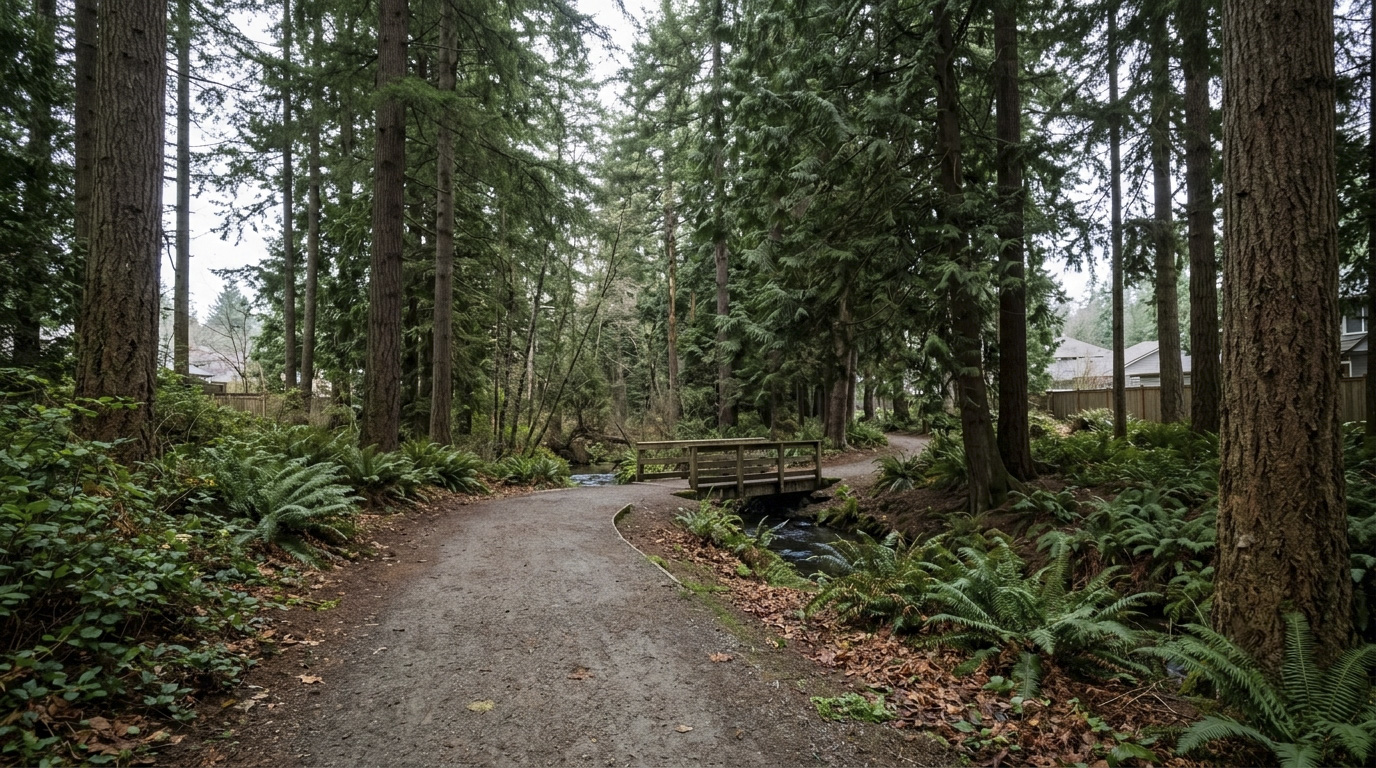
The Soos Creek Trail runs nearly six miles through the corridor, the daily gathering place for walkers, runners, and cyclists.
Homes in Soos Creek Corridor: What the Data Shows
Housing along the Soos Creek Corridor runs a wider mix than most East Hill pockets. You will find 1970s and 1980s split-levels and daylight ranches on the older, more established lots, alongside newer 1990s and 2000s two-story construction on subdivided parcels closer to the trail access points. Sizes typically run 1,900 to 3,600 square feet, and lots range from a standard quarter-acre up to a full acre or more on the older parcels. A handful of horse properties and true acreage lots still exist here, getting harder to find every year as infill development fills the gaps. Buyers should budget for well and septic checks on the older acreage parcels, since some of this stretch never connected to city sewer.
Market Pulse
Soos Creek Corridor (Kent, 98042)
King County
Median Sales Price (June 2026)
~$697,000 citywide
~$998,000
Median Days on Market
~12 days
~10 days
Active Listings Change (vs. Jan 2026)
+95%
+127%
Figures reflect Kent citywide residential data for June 2026, the most recent closed month in the NWMLS export. The Soos Creek Corridor does not get isolated in the monthly pull, so treat the price row as a citywide reference point, not a corridor-specific number. Larger acreage parcels along the corridor typically sell above this citywide median.
Schools Serving Soos Creek Corridor
The Soos Creek Corridor falls inside the Kent School District. Soos Creek Elementary, right on 218th Place, is the confirmed elementary for most of this stretch. As with anywhere along a long, spread-out corridor like this, confirm your specific address with the district before writing an offer. Boundaries here can shift more than in a compact neighborhood, since the corridor runs nearly six miles north to south.
Soos Creek Elementary runs a Gifted and Talented program and keeps a student-teacher ratio close to 14 to 1, tighter than the district average, with a close-knit community feel that shows up often in parent reviews. Middle school for this area is worth a closer look before you buy: the district’s East Hill middle feeder carries a Renton mailing address even though the school itself is part of Kent School District, which throws off a lot of online searches that filter strictly by city name. High school assignment for this specific stretch of the corridor should be confirmed directly with the district rather than assumed from the neighboring Lake Meridian pipeline.
Elementary-age kids in most of the corridor bus a short distance to Soos Creek Elementary. Middle schoolers bus toward the East Hill middle feeder, and the high school leg of the trip depends on your exact address within the corridor, since this stretch sits near a boundary line rather than squarely inside one attendance zone.
Getting to Work from Soos Creek Corridor
The corridor sits inland on the East Hill plateau, so plan on driving or catching a bus rather than walking to transit. Take Kent-Kangley Road or SE 208th Street west to 104th Ave SE, then head north or south to pick up SR-167, or catch a King County Metro bus along 132nd Ave SE toward the Kent Sounder Station for the train into Seattle.
Destination
Distance
2026 Drive Time (Peak AM)
Transit Option
Downtown Seattle
26 miles
40 to 60 min
Metro Bus to Sounder Train
Bellevue / Amazon
19 miles
35 to 50 min
SR-167 to I-405
Microsoft (Redmond)
26 miles
42 to 58 min
SR-167 to SR-520
SeaTac Airport
13 miles
20 to 30 min
SR-167 / I-5
A typical 1980s daylight ranch on a wooded quarter-acre lot in the Soos Creek Corridor.
What I See as a Valuation Expert in Soos Creek Corridor
In Soos Creek Corridor, lot size and privacy drive more of the value than square footage alone. A half-acre lot backing directly onto the trail or the creek greenbelt appraises differently than an identical house on a standard 7,000 square foot lot two streets over. Septic and well systems on the older acreage parcels need a hard look too. A failed septic inspection can knock a deal sideways fast.
HOA presence is light to nonexistent along most of the corridor, which buyers looking for space tend to like. That also means curb appeal and maintenance vary more block to block than in a managed subdivision. Long driveways and wooded lots can hide deferred exterior maintenance a drive-by would miss on a more open lot, so I always recommend a full walk of the property line, not just the house.
Lots with direct trail or creek access, and true half-acre-plus parcels, move first and pull the strongest premium I track in this corridor. Well-maintained homes on trail-adjacent lots typically sell 10% to 18% above comparable homes on standard lots just a few blocks away with no greenbelt exposure at all.
Frequently Asked Questions: Living in Soos Creek Corridor
Q: Is the Soos Creek Corridor a good place to live? A: Yes, especially for buyers who want space, privacy, and direct trail access without leaving Kent. It is one of the few pockets of East Hill with quarter-acre to full-acre lots still common on the market.
Q: What are homes like in the Soos Creek Corridor? A: A mix of 1970s to 2000s construction running 1,900 to 3,600 square feet, on lots ranging from a standard quarter-acre up to an acre or more on the older parcels. Some homes still run on well and septic systems.
Q: What schools serve the Soos Creek Corridor? A: The corridor falls in the Kent School District. Soos Creek Elementary is the confirmed elementary for most of the area. Middle and high school assignment should be confirmed directly with the district, since this long corridor sits near a boundary line.
Q: How far is the Soos Creek Corridor from Seattle? A: About 26 miles south of downtown Seattle. Driving takes 40 to 60 minutes at peak times, or you can catch a King County Metro bus to the Kent Sounder Station and ride the train in.
Explore Soos Creek Corridor Yourself
Walk a stretch of the trail before you decide. Park at one of the access points along 148th Ave SE, and get a feel for how much of this corridor is genuinely wooded versus built up. It reads completely differently in person than it does from a listing photo of the house alone.
Panther Lake sits in central Kent East Hill, built around the small lake that gives the neighborhood its name. It is a Wooded Sanctuary neighborhood, quiet and tucked away, even though it sits just a few minutes from the busier East Hill shopping corridors. Most homes here went up in the 1980s and 1990s, and a newer ring of townhomes sits closer to the water itself. If you want a real neighborhood feel built around a small water amenity, at a lower price than Lake Meridian, Panther Lake is where I start the search.
What is it actually like to live in Panther Lake in 2026?
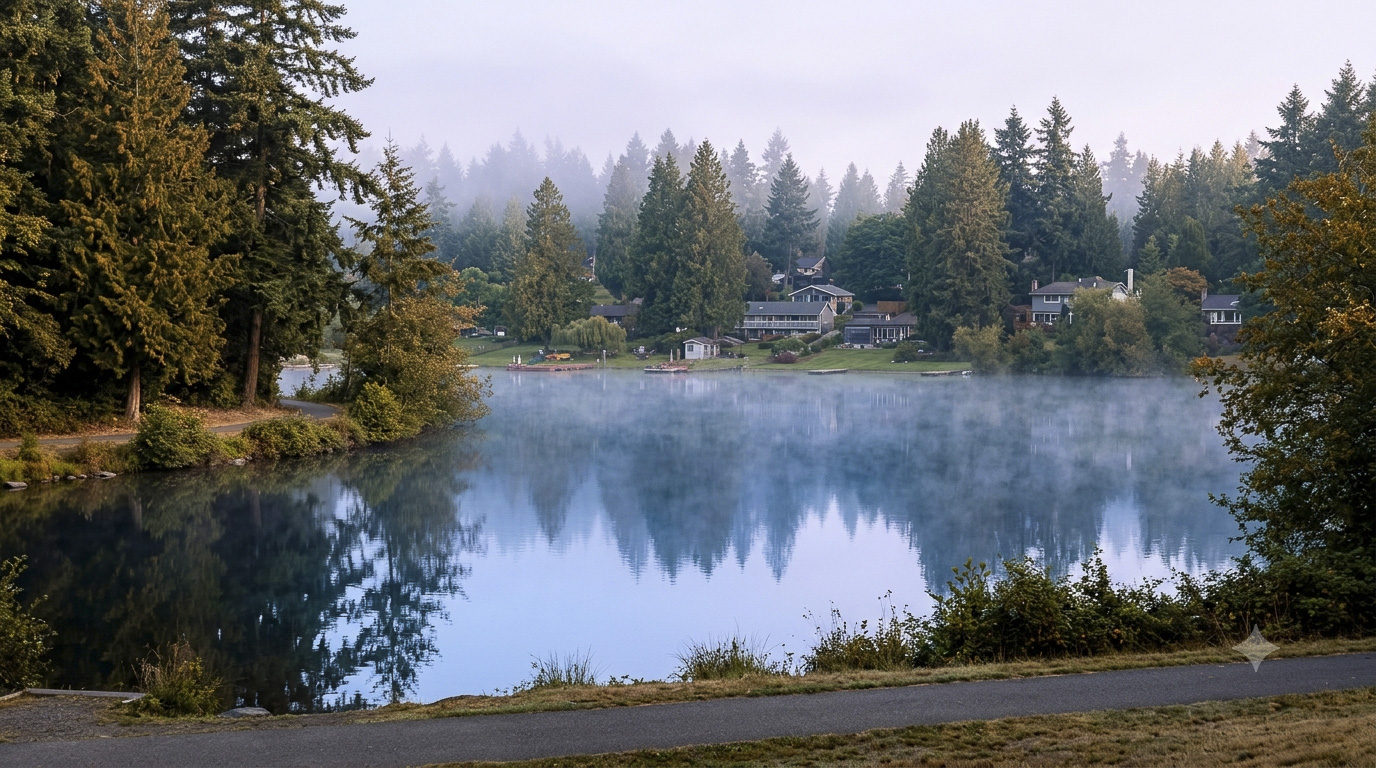
Tuesday, 7:15 AM at Panther Lake. Mist still sits over the water while a few early walkers make their way around the trail loop before work. Garage doors open one after another on the streets ringing the lake, and traffic heading out toward 132nd Ave SE is steady but never backed up. This is not a neighborhood in a hurry. Kids wait for the bus near the elementary school, and the loudest sound most mornings is a woodpecker working one of the big firs along the shoreline.
Weekends slow down even more. Fishing poles come out near the small dock by the park entrance, and the trail sees a steady stream of dog walkers and stroller pushers most of Saturday morning. Families head a few minutes south to Lake Meridian Park when they want a real swim beach, but plenty of Panther Lake residents never leave the neighborhood at all. A short drive to the Fred Meyer or the East Hill Safeway covers most errands. Sunday afternoons mean yard work and driveway basketball.
Who lives here? A mix of young families moving up from a starter condo, longtime East Hill residents who bought specifically for the lake, and a smaller group of retirees in the older ranch homes closest to the water. What sets Panther Lake apart from the rest of East Hill is scale. It is small and self-contained, built around one shared amenity, instead of spreading across a big grid of subdivisions the way Kent East Hill does as a whole.
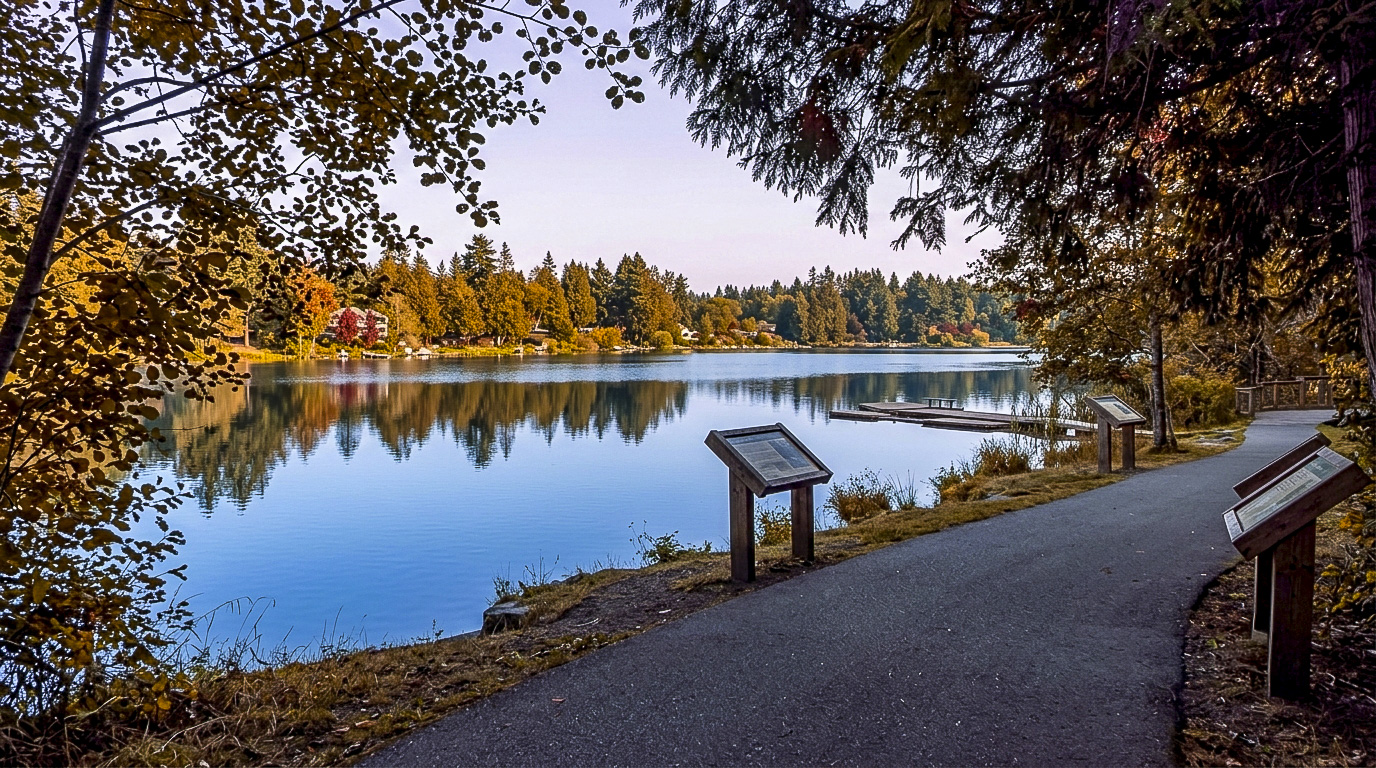
The trail loop around Panther Lake is the neighborhood’s daily gathering spot, used by walkers, runners, and anglers alike.
Homes in Panther Lake: What the Data Shows
Panther Lake’s housing stock is mostly 1980s and 1990s construction, single-level and two-story homes on modest East Hill lots. Sizes typically run 1,400 to 2,600 square feet on lots between 6,000 and 9,000 square feet. A newer ring of townhomes went up closer to the water in the 2010s, giving buyers a lower-maintenance option without leaving the lake behind. Homes directly on the water are rare and do not turn over often. When they do, they tend to sell fast. Most of the housing stock needs the usual checks for a neighborhood this age: roof, furnace, and water heater, since a lot of the original systems are approaching or past their expected life.
Market Pulse
Panther Lake (Kent, 98031)
King County
Median Sales Price (June 2026)
~$697,000 citywide
~$998,000
Median Days on Market
~12 days
~10 days
Active Listings Change (vs. Jan 2026)
+95%
+127%
Figures reflect Kent citywide residential data for June 2026, the most recent closed month in the NWMLS export. Panther Lake does not get isolated in the monthly pull, so treat the price row as a citywide reference point, not a Panther Lake-specific number.
Schools Serving Panther Lake
Panther Lake falls inside the Kent School District. Panther Lake Elementary sits right in the neighborhood and is the primary feeder for nearly every address here, feeding into Meridian Middle School and then Kentwood High School. As with anywhere in Kent, confirm your specific address with the district before writing an offer. Boundaries can shift block by block near the edges of any attendance zone.
Panther Lake Elementary runs a Gifted and Talented program alongside its standard track, and its small size, under 450 students, means a lower student-teacher ratio than a lot of the district. Meridian Middle layers on a Project Lead The Way engineering and design curriculum for students who want hands-on STEM work before high school. Kentwood High offers Advanced Placement coursework and its own Gifted and Talented track, with a graduation rate around 96 percent, well above the state average.
Elementary kids in Panther Lake mostly walk or take a short bus ride, since the school sits right inside the neighborhood boundary. Middle and high schoolers bus out, Meridian Middle a short ride north and Kentwood High a longer ride south into Covington, where the school is actually located even though it serves Kent addresses.
Getting to Work from Panther Lake
Panther Lake sits inland on the East Hill plateau, so you will drive or bus to reach the Sounder rather than walk to it like you can from downtown Kent. Take SE 208th Street west to 104th Ave SE, then head south to pick up SR-167, or catch King County Metro Route 914 straight to the Kent Sounder Station for the train into Seattle.
Destination
Distance
2026 Drive Time (Peak AM)
Transit Option
Downtown Seattle
26 miles
40 to 60 min
Metro 914 to Sounder Train
Bellevue / Amazon
19 miles
35 to 50 min
SR-167 to I-405
Microsoft (Redmond)
26 miles
42 to 58 min
SR-167 to SR-520
SeaTac Airport
13 miles
20 to 30 min
SR-167 / I-5
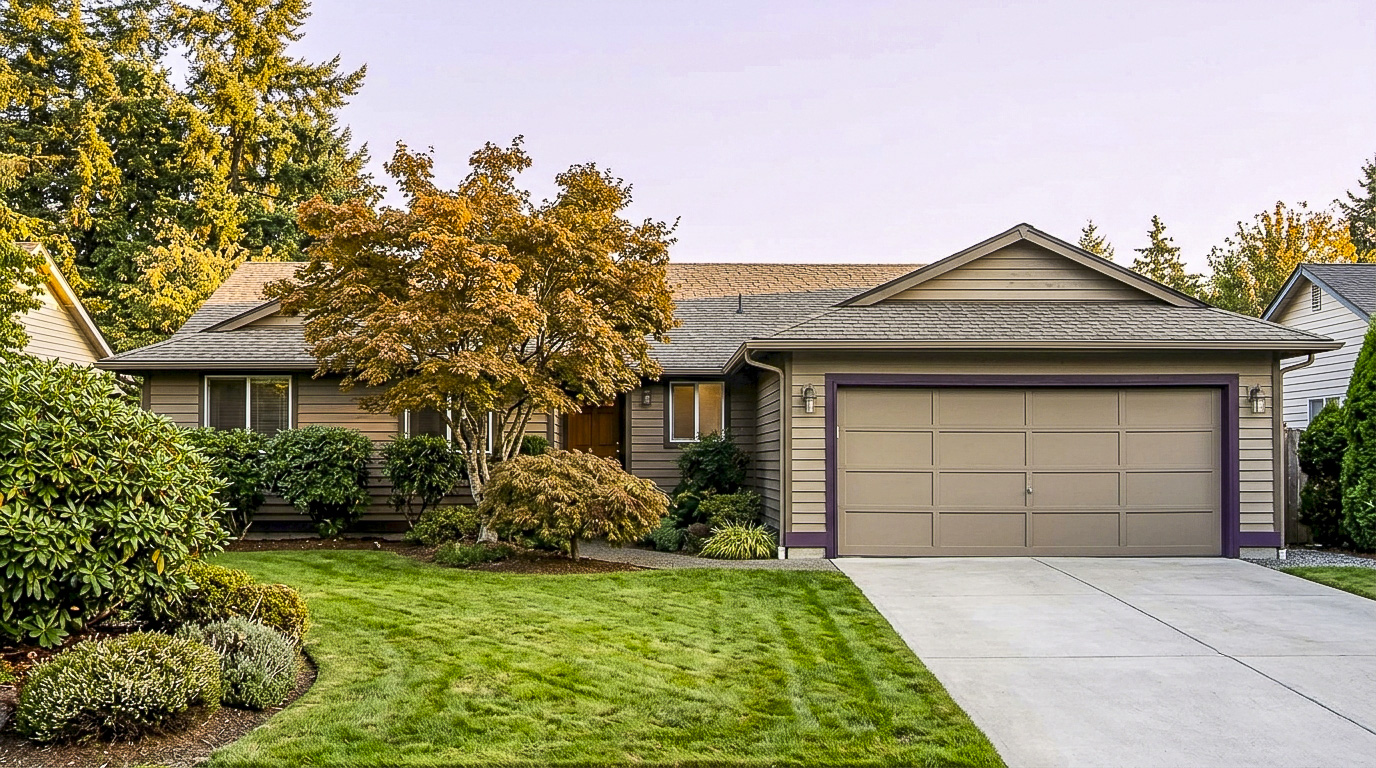
A typical 1980s single-level home on one of the streets ringing Panther Lake.
What I See as a Valuation Expert in Panther Lake
In Panther Lake, the roof and the original mechanical systems get the closest look for valuation. A big share of Panther Lake’s housing stock is now 30 to 40 years old, and I see furnaces and water heaters original to the house more often here than in East Hill’s newer pockets. Buyers who skip a full inspection on an older Panther Lake home are taking on real risk they cannot see from the curb.
HOA dues matter more here than in most of East Hill because of the newer townhomes ringing the lake. Those typically run $150 to $275 a month, covering exterior maintenance and shared landscaping. Older single-family homes on the streets further from the water carry no HOA at all, which is one reason buyers on a tighter budget gravitate toward those blocks first.
The streets closest to the water, with a real lake view or easy trail access, move first and pull a real premium. Updated homes on those blocks typically sell 6% to 10% above comparable homes two or three streets back with no lake proximity at all.
Frequently Asked Questions: Living in Panther Lake
Q: Is Panther Lake a good place to live? A: Yes, especially for buyers who want a real neighborhood feel built around a small lake at a lower price point than Lake Meridian. Panther Lake blends established 1980s and 1990s homes with newer townhomes near the water, all inside the Kent School District.
Q: What are homes like in Panther Lake? A: Mostly 1980s and 1990s single-family homes running 1,400 to 2,600 square feet, plus a newer ring of townhomes built in the 2010s closer to the lake. Homes directly on the water are rare and tend to sell fast when they come up.
Q: What schools serve Panther Lake? A: Panther Lake falls in the Kent School District. Panther Lake Elementary feeds into Meridian Middle School, which feeds into Kentwood High School. Always confirm your exact address with the district.
Q: How far is Panther Lake from Seattle? A: Panther Lake sits about 26 miles south of downtown Seattle. Driving takes 40 to 60 minutes at peak times, or you can catch King County Metro Route 914 down to the Kent Sounder Station and ride the train in.
Explore Panther Lake Yourself
Walk the loop trail around the lake before you decide. Grab coffee at the Starbucks near 208th and Benson, then swing back through on a Saturday morning to see the neighborhood at its most active. Panther Lake reads completely differently on the trail than it does from listing photos.
 Facebook
 X
X
 Pinterest
 Copy Link