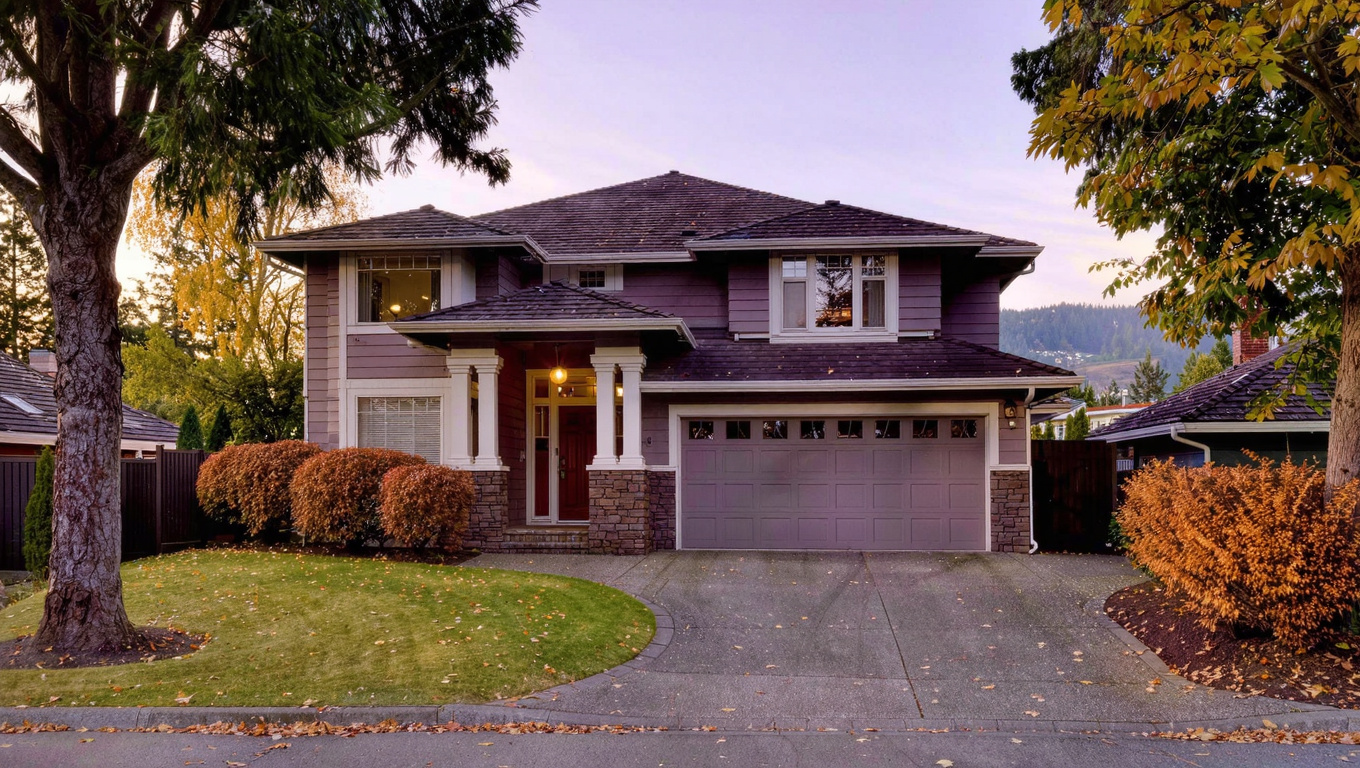
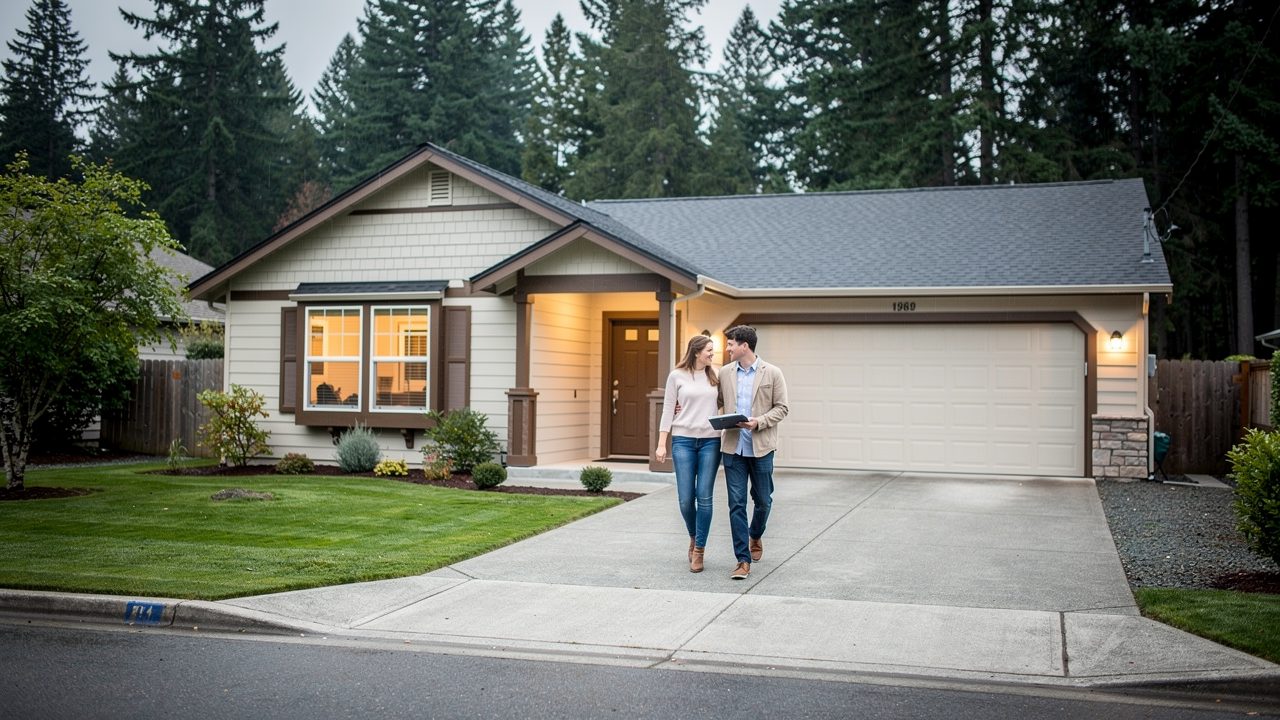
I walk through Federal Way homes almost every week doing professional property valuations for banks. And the question I hear most from sellers here isn’t about price. It’s about repairs. Fix the place up first, or just sell it as-is?
The honest answer: it depends on which repairs. Most cosmetic projects won’t pay you back. A few specific fixes almost always will. Here’s how to tell the difference in the current Federal Way market.
What the Federal Way Market Says Right Now
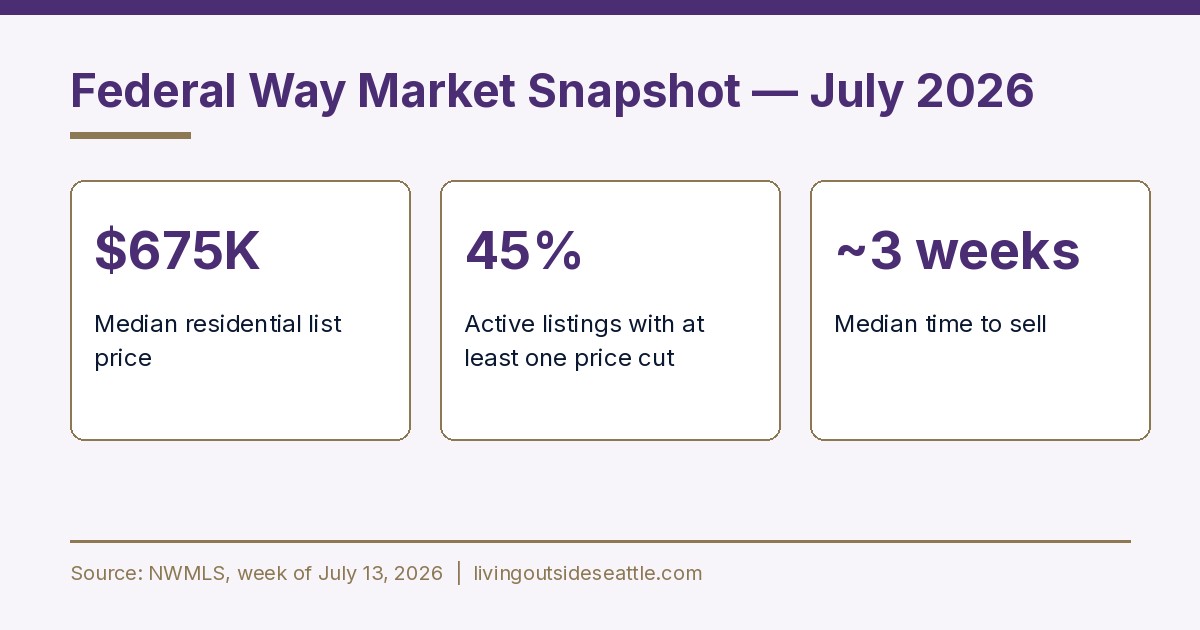
Numbers first. As of mid-July, the median list price for a Federal Way house is running around $675,000. Almost half the active listings in the city, about 45 percent, have already taken at least one price cut. Homes that do sell are going in roughly three weeks. Full market picture in my Federal Way market update.
NWMLS data, week of July 13, 2026: $675K median residential list price, 45% of actives with a price cut, sales closing in roughly three weeks.
What does that mean for your repair decision? Buyers have choices right now. When buyers have choices, condition matters more. A home that shows well sells. A home with visible problems joins the 45 percent taking price cuts.
Repairs That Usually Pay You Back
Water is the big one. Fix any active leak before you list. Roof, plumbing, gutters, all of it. Buyers in the Pacific Northwest are trained to sniff out moisture problems, and one water stain on a ceiling can cost you more in negotiation than the repair ever would.
Same with safety items. Bad electrical. A failing water heater. Broken railings, missing smoke detectors. These are the things a home inspector flags in bold, and they’re cheap to handle now versus expensive to argue about later. I cover what that inspection looks like in my seller’s guide to home inspections.
Then there’s the cheap stuff that’s really about presentation. Deep cleaning, fresh neutral paint in the main rooms, yard cleanup and moss treatment. None of that is technically a repair. It’s still the highest-return money you can spend before listing.
Repairs That Usually Don’t Pay Back
Big remodels rarely return their cost at sale. A $60,000 kitchen renovation doesn’t add $60,000 to your Federal Way sale price. Buyers here shop in a specific price band, and the neighborhood puts a ceiling on what they’ll pay. I price homes in this city every week, and remodeled homes and original homes settle a lot closer together than most sellers expect.
New flooring throughout, full bathroom gut jobs, finishing unfinished spaces. Usually the same story. If the money won’t come back, it’s often smarter to price the home for its condition and let the buyer make those choices.
What Selling As-Is Actually Means in Washington
Here’s where first-time sellers get tripped up. Selling as-is doesn’t let you skip disclosure. Washington still requires the Form 17 seller disclosure statement, and you still have to answer honestly about what you know. As-is tells buyers up front you won’t be making repairs. It doesn’t make problems disappear.
How I Run the Math With Sellers
The question isn’t whether to fix everything. It’s whether a specific repair returns more than it costs, after the time and stress of doing it. Sometimes a $4,000 fix protects $15,000 of price. Sometimes a $30,000 project returns $12,000. You want the first kind. The only way to know which is which is to run real numbers on your house against real Federal Way comps. Pricing it right matters either way, and my guide to pricing your home to sell in King County walks through how that works.
A Simple Decision Checklist
Before you spend a dollar on pre-listing work, run through this list:
Fix anything involving water, active leaks, drainage, or moisture damage
Fix safety items an inspector will flag: electrical, railings, smoke detectors
Budget for cleaning, paint, and yard work before any bigger project
Skip major remodels unless the numbers prove the return
If selling as-is, complete the Form 17 disclosure honestly and price for condition
Ask your agent for an as-is value and an after-repair value before deciding
Frequently Asked Questions
Can I sell my house as-is in Washington state?
Yes. Selling as-is is legal and common in Washington. You still have to complete the Form 17 seller disclosure statement honestly, and buyers can still inspect the home. As-is simply tells buyers up front that you don’t plan to make repairs.
Do I lose money selling a house as-is in Federal Way?
You typically net less than a comparable move-in-clean home, but not always less than the cost of major repairs plus months of project time. The right comparison is your as-is value against your after-repair value minus repair costs. Sometimes as-is wins that math, especially when the needed work is cosmetic or the repairs are large remodels that don’t return their cost.
What repairs are required to sell a house with an FHA or VA buyer?
FHA and VA appraisers flag health and safety items: peeling paint in older homes, missing handrails, broken windows, roof or water damage, and non-working systems. The lender can require those repairs before closing even on an as-is sale, so at Federal Way price points it’s smart to handle obvious safety items before listing.
Gregory Dorrell is a licensed real estate broker (WA License #111862) with Coldwell Banker Bain. Market data from NWMLS, week of July 13, 2026. Statistics are market-wide and not a guarantee of any individual outcome. This post is provided for informational purposes and does not constitute financial or legal advice.
Give a buyer a reason to say yes without cutting your price. Here is how concessions actually work in today’s market.
I do BPO work across east and south King County every day, and lately I am seeing the same request show up in offer after offer: a concession. Not a lower price. A credit, a buydown, a repair allowance. Something that makes the deal pencil out for the buyer without touching the number on the listing.
If you are selling right now, you need to understand what a concession actually is, what it costs you, and when it works better than just dropping your price. This is not the same conversation everywhere in King County. What makes sense in a still-tight Renton starter home market is not what makes sense if you are selling a condo in a building with 3 competing listings.
What a Seller Concession Actually Is
A concession is money you agree to give back to the buyer at closing, structured a specific way in the purchase agreement. It shows up on the closing statement, not as a lower list price. The home still sells for its listed number. You are just contributing part of your proceeds toward the buyer’s costs.
Three types show up most often in King County deals right now.
Closing Cost Credit
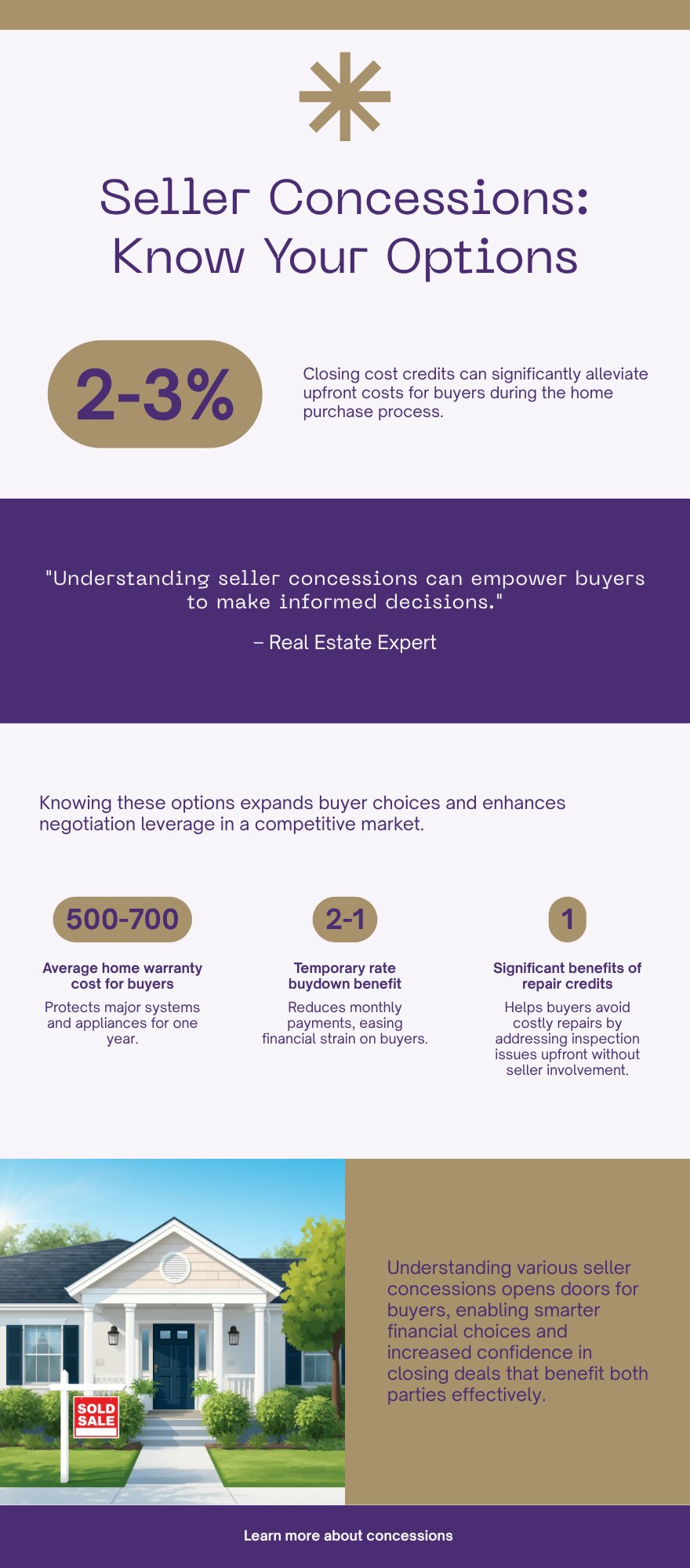
The simplest concession. You agree to cover 2% to 3% of the buyer’s closing costs: their lender fees, title insurance, escrow charges. This helps buyers who have the income to qualify for the loan but are short on cash to actually close. First-time buyers in Kent and Auburn run into this constantly. They can afford the payment. They cannot afford to also come up with $18,000 in closing costs on top of a down payment.
Rate Buydown
Instead of paying closing costs, you deposit money into an account that temporarily or permanently lowers the buyer’s interest rate. A temporary 2-1 buydown drops the rate by 2 points in year one and 1 point in year two, then it reverts to the full note rate. A permanent buydown pays discount points at closing to lower the rate for the life of the loan. I wrote a full breakdown of how buydowns work and what they cost in the mortgage rate buydown guide if you want the mechanics. Short version here: buydowns solve a monthly payment problem, not a cash-to-close problem.
Repair Credit
Covers something the inspection turned up that you would rather pay for in cash than fix yourself. Common when you are selling an older home in Auburn or Federal Way and the inspection flags a roof with a few years left, an aging water heater, or electrical panel work. If you want to know what an inspector is actually going to flag before it becomes a negotiation, my home inspection seller guide walks through it. You give the buyer money instead of hiring a contractor and managing the repair on your own timeline.
Home Warranty
The smallest concession and often the easiest yes. A one-year policy runs $500 to $700 and gives the buyer coverage on major systems and appliances. It is a low-cost way to close a deal that is close but not quite there.
The four concession types King County sellers see most, side by side.
Concessions vs. a Price Reduction: They Solve Different Problems
This is the part sellers get backwards most often. A price reduction and a concession are not interchangeable. They fix different symptoms.
A price reduction fixes a visibility problem. If your home is not showing up in buyer searches, if you are getting almost no traffic, the number is too high for how the market is searching. Buyers filter by price range online before they ever see your listing. Drop the price and you show up to a new set of buyers who never saw the home before. If you want the full picture on getting the number right from the start, I cover that in how to price your home to sell in King County.
A concession fixes a conversion problem. If you are getting showings, even good ones, but no offers, buyers are seeing the home and still walking away. That usually means the home is priced fine but something else is stopping them: they cannot cover cash to close, the payment is a stretch at current rates, or an inspection issue is spooking them. A concession addresses that specific friction without resetting your price in the public record.
The honest reality: if your home has been sitting with almost no showings for three or four weeks, no concession fixes that. You need a price adjustment. If your home is getting showings and going under contract twice only to fall through at inspection or financing, a concession targeted at the actual reason those deals died is usually the smarter move.
How Much Does a Concession Actually Cost You
Run the math before you agree to anything. A $700,000 King County sale with a 3% closing cost credit costs you $21,000 off your net proceeds. That sounds like a lot until you compare it to a straight $21,000 price cut, which also reduces your net by $21,000 but resets the public sale price and can affect appraisal comps for every home that sells near you afterward, including your neighbors’. If you want to see how a concession fits into your full cost-to-sell picture alongside commission and excise tax, I broke down the complete math in what it costs to sell a home in Washington State.
There is a real limit here too. Conventional loans cap seller concessions based on the buyer’s down payment: buyers putting down less than 10% are typically capped around 3% of the sale price, buyers putting 10% to 25% down can usually go up to 6%, and buyers putting 25% or more down can go higher. FHA and VA loans have their own caps, generally more generous on FHA and capped differently on VA. Your agent needs to check the buyer’s loan type before you agree to a number, because a concession that exceeds the cap does not get approved by the lender. It just falls apart at underwriting after you have already accepted the offer.
The Local Angle: King County Specifics
King County is not one market right now, and that matters for this decision specifically.
Single-family inventory in tight submarkets like Renton and parts of Kent is still moving fast enough that concessions are less common. If you are selling a well-priced starter home in a walkable Renton neighborhood, you likely will not need to offer one. Multiple offers are still happening in that segment, and buyers competing against each other are not asking sellers for closing cost help.
Condos and higher price bands are a different story. Inventory has grown across King County through 2026, and condo buyers especially are negotiating harder. If you are selling a condo in Bellevue or a higher-priced single-family home in Sammamish or Issaquah, expect concession requests to be part of most serious offers. Buyers in this segment have more choices, and they know it.
South King County cities like Auburn, Federal Way, and Covington see concessions most often tied to closing cost help for first-time buyers, since that is the dominant buyer profile in those markets. East King County concessions more often show up as rate buydowns, because buyers there are stretching further on payment relative to income and a lower rate does more for their monthly budget than a closing cost credit would.
Know which buyer profile you are selling to before you decide what concession, if any, makes sense.
What This Means for You as a Seller
Do not offer a concession preemptively before you have any offers or real market feedback. Wait until you have data: showing counts, buyer agent feedback, whether offers are coming in and falling through. A concession should respond to a specific, identified problem, not a guess.
When an offer comes in asking for a concession, ask your agent what type and why. A buyer asking for a rate buydown has a monthly payment concern. A buyer asking for a closing cost credit has a cash concern. Those point to different underlying situations and tell you something about how close that buyer actually is to being able to complete the purchase.
Compare the concession cost to your next-best alternative, which is usually sitting on the market longer while carrying your mortgage, taxes, and insurance, or dropping your price instead. Run the real numbers both ways before you say yes or no.
Concessions are negotiated privately and settled at the closing table, never disclosed in public listing history.
Frequently Asked Questions
Do I have to offer a concession to sell my home in King County?
No. Whether a concession makes sense depends on your specific market segment, your showing activity, and buyer feedback. Many single-family sellers in tighter King County submarkets sell without ever offering one.
Is a concession the same as paying the buyer’s agent commission?
No, those are separate line items on the closing statement, though both come out of your net proceeds. A concession specifically covers the buyer’s closing costs, rate buydown, or repairs. Earnest money is a separate deposit entirely, from the buyer’s side — see earnest money in King County if a buyer’s offer has you wondering how that piece works.
How do I know if a buyer’s concession request is within loan limits?
Your agent should confirm the buyer’s loan type and down payment percentage before you counter or accept. Conventional loan concession caps scale with down payment size, and FHA and VA loans each have their own separate limits.
Does offering a concession make my home look desperate?
Not if it is not disclosed publicly and not offered until you have a specific reason to. Concessions are negotiated privately within an accepted offer. They do not appear as a price change in public listing history the way a price reduction does.
Can I offer a concession and still get close to full asking price?
Yes, and that is often the entire point. A concession lets you hold your list price while still closing the gap that is stopping a buyer from moving forward. That is different from a price cut, which lowers the number everyone sees.
Should I offer a concession before listing or wait for an offer?
Wait. Offering one before you have any market feedback means giving away money you might not have needed to. Let the first two to three weeks of activity tell you whether a concession is actually the problem you need to solve.
If you’re relocating to King County and Federal Way is on your list, you’re looking at one of the more affordable options with genuine access to both Seattle and Tacoma. Here’s what actually matters before you commit.
Why People Relocate to Federal Way
Federal Way sits between Seattle and Tacoma along the I-5 corridor, which makes it workable for commuters headed either direction. It’s also one of the more affordable cities in South King County. That matters a lot for relocating families comparing costs against wherever they’re coming from.
For a full breakdown of specific neighborhoods and what each one offers, I put together a complete guide here: Federal Way WA Neighborhood Guide 2026. This post is about what relocating buyers specifically need to know before making the jump.
What It Costs to Relocate to Federal Way
Federal Way’s home prices sit below the King County median, with a median around $580,000 as of June 2026, making it one of the more accessible relocation targets in South King County.
Relocating from out of state, especially from California or parts of the Midwest? The price difference can be dramatic in either direction depending on where you’re coming from. Run the actual comparison instead of assuming based on reputation alone. A lot of relocating buyers are surprised, pleasantly or not, once they see real numbers side by side.
Commute Reality for Federal Way
Federal Way’s I-5 access means a straightforward drive to both Seattle and Tacoma. But “straightforward” doesn’t mean fast during peak hours. Budget 40 to 60 minutes to downtown Seattle depending on traffic, closer to 20 to 30 minutes to Tacoma.
Job flexible on hybrid or remote work? Federal Way’s commute math looks a lot better than it does for someone commuting five days a week into downtown Seattle. Be honest about your actual commute pattern before deciding on location purely based on price.
What Surprises Relocating Buyers About Federal Way
Most newcomers underestimate how much variety exists within Federal Way itself. Some areas sit close to Puget Sound with real water access and views. Others are more inland, quieter, further from the retail core. The city has also seen real investment in recent years, and areas that had a certain reputation a decade ago don’t necessarily reflect the current reality.
The other common surprise: how much further your money goes here compared to Renton, Kent, or anywhere on the Eastside. For relocating families with a fixed budget, that gap can mean the difference between a starter condo and an actual single-family home with a yard.
Schools and Family Considerations
Federal Way Public Schools covers a large service area. Like most King County cities, specific school assignment can vary significantly by street, not just by neighborhood name. Relocating with kids? Research the specific school your target address feeds into before you commit. Not after.
Key Takeaways
Federal Way offers genuine I-5 access to both Seattle and Tacoma at a price point below the King County median
Commute times vary significantly by time of day. Budget realistically, not optimistically
The city has more internal variety than its reputation suggests. Visit multiple areas before deciding
Relocating buyers often get meaningfully more home for their money here than in Renton, Kent, or the Eastside
School assignment can vary by street, so research the specific address, not just the neighborhood
Frequently Asked Questions
Is Federal Way WA a good place to relocate to in 2026?
Yes, particularly for buyers prioritizing affordability and access to both Seattle and Tacoma. Federal Way’s I-5 location and below-median home prices make it one of the more accessible relocation targets in South King County, though commute times to downtown Seattle can run 40 to 60 minutes during peak hours.
What is the commute like from Federal Way to Seattle?
Expect 40 to 60 minutes to downtown Seattle depending on traffic and time of day. The commute to Tacoma is typically shorter, around 20 to 30 minutes. Buyers with hybrid or flexible schedules find the commute math considerably more favorable than five-day-a-week commuters.
What should relocating families know about Federal Way schools?
Federal Way Public Schools covers a wide service area, and school assignment can vary by specific street even within the same general neighborhood. Always confirm the exact school assignment for a target address before committing, rather than assuming based on the neighborhood’s general reputation.
Thinking About Relocating to Federal Way?
I walk properties across South King County regularly for professional valuations, plenty of time spent in Federal Way. Relocating and want an honest, current read on the city? Happy to help.
Terrace View sits in Auburn’s North Auburn corridor, the stretch of the city running between downtown and the Kent line along Auburn Way North. If you want the lowest price of entry into Auburn and don’t mind putting some sweat equity into an older home, this is one of the first places I point buyers. Most homes here went up in the 1960s through the 1980s, on lots that give you a real yard without a master-planned community price tag. This is a Family-First Established neighborhood, and in 2026, it’s still one of the more affordable ways into Auburn’s housing market.
What is it actually like to live in Terrace View in 2026?
A weekday morning here starts with Auburn Way North carrying commuters south toward downtown and the I-5/SR-167 interchange, and north toward Kent and the Green River valley job corridor. It’s a working commuter route lined with older homes set back on quiet side streets, so the traffic stays on the arterial and the neighborhood streets themselves stay calm. Kids walk or get bused to Ilalko Elementary depending on exactly where they land in the boundary.
Weekends lean toward yard work and neighborhood errands. Auburn Way North has the practical stuff residents actually use: Fred Meyer at 801 Auburn Way N covers groceries, pharmacy, and general shopping in one stop, and Game Farm Wilderness Park gives families a nearby green space along the White River for walking and picnicking. It’s not a destination neighborhood with boutique shops. It’s a place people live because the commute works and the price makes sense.
The people who land in Terrace View tend to be first-time buyers stretching for their first home, longtime Auburn residents who bought decades ago and never left, and investors picking up rental-grade properties to update. It’s a different crowd than Lea Hill or Lakeland Hills, where the housing stock is newer and the price point runs higher. Terrace View is Auburn’s value play, and it draws buyers who want more house and land for the money over polish.
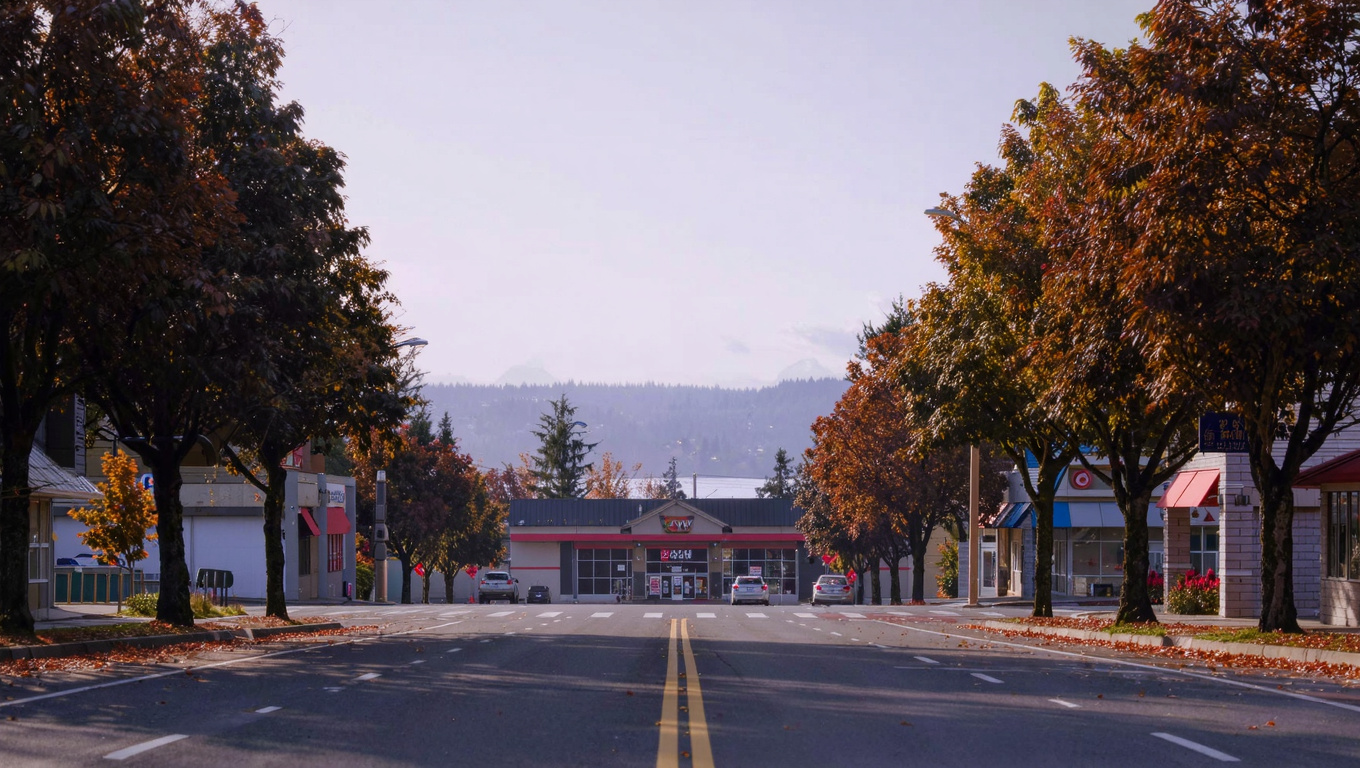
The Auburn Way North corridor, home to the Fred Meyer that anchors daily errands for Terrace View residents.
Homes in Terrace View: What the Data Shows
Terrace View’s housing stock is almost entirely single-family, built mostly from the 1960s through the 1980s with a scattering of older homes mixed in. Sizes typically run 1,200 to 2,200 square feet on lots from 6,000 to 10,000 square feet, so you get more land here than in Auburn’s newer subdivisions. Ranch-style and split-level homes are common, along with a handful of two-story builds from the 1980s. This isn’t a neighborhood of matching floor plans from a single builder. It’s a mix that reflects decades of individual construction, which means condition and updates vary a lot from house to house.
Market data as of June 2026, from NWMLS-sourced monthly exports (Auburn citywide residential figures; Terrace View / North Auburn-specific data is not separately tracked by NWMLS, so figures reflect city-level data).
Market Pulse
Terrace View (Auburn city-level)
King County
Median Sales Price (June 2026)
~$650,000
~$998,000
Median Days on Market (June 2026)
~8 days
~10 days
Active Listings Change (vs. Jan 2026)
+135%
+127%
Figures reflect Auburn citywide residential data from NWMLS InfoSparks, exported July 5, 2026. Terrace View and North Auburn do not have a separate MLS reporting area, so these numbers are city-level, not neighborhood-specific. Given the older housing stock here, homes in Terrace View tend to price toward the lower end of Auburn’s citywide range.
Schools Serving Terrace View
Terrace View kids typically attend Ilalko Elementary School, then move on to Mt. Baker Middle School, and finish at Auburn Senior High School. All three sit within a mile of each other in this part of Auburn, which keeps the school pipeline compact. As always in Auburn School District, boundaries shift block by block, so verify your exact address before writing an offer.
Ilalko Elementary carries a 6/10 GreatSchools rating and serves grades PK through 5. Mt. Baker Middle School is about three-quarters of a mile away and offers a Gifted & Talented program along with 14 sports. Auburn Senior High School, the district’s largest comprehensive high school, offers AP coursework and 19 sports for students who make it through the pipeline.
The walk from most Terrace View streets to Ilalko is manageable for elementary-age kids, and Auburn School District runs bus routes for the middle and high school legs given the distance involved. Families cross Auburn Way North on the way to school, so it’s worth understanding the crossing points near your specific address before you buy.
Getting to Work from Terrace View
Terrace View sits close to the SR-167 and I-5 interchange, so most regional commutes start with a short hop to one of those two freeways. For Seattle-bound commuters, the Auburn Sounder Station is the practical alternative to fighting I-5 traffic, with the S Line running north through Kent and Tukwila into downtown Seattle.
Destination
Distance
2026 Drive Time (Peak AM)
Transit Option
Downtown Seattle
30 miles
45 to 65 min
Auburn Sounder Station (S Line)
Bellevue / Amazon
24 miles
40 to 55 min
SR-167 to I-405
Microsoft (Redmond)
29 miles
45 to 60 min
SR-167 to I-405 to SR-520
SeaTac Airport
14 miles
20 to 30 min
SR-167 to I-5
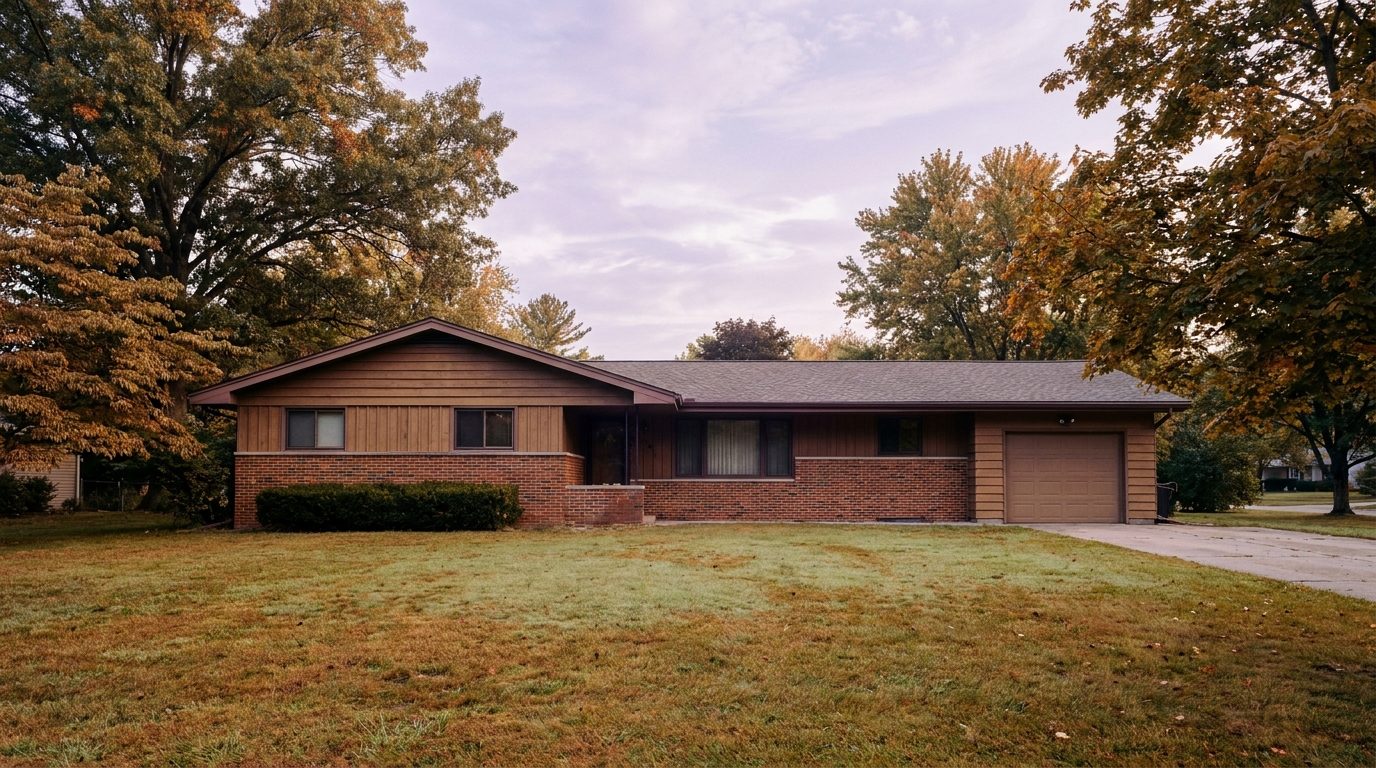
A single-family home representative of Terrace View’s 1960s to 1980s housing stock.
What I See as a Valuation Expert in Terrace View
When I assess homes here for institutional lenders, the lot and the mechanical systems carry most of the value. Terrace View’s older housing stock means the homes that show best are the ones where the roof, furnace, water heater, and electrical panel have been updated in the last 10 to 15 years. A cosmetically dated kitchen matters far less to an appraiser than a 40-year-old furnace still limping along.
Curb appeal and basic maintenance move the needle more here than in newer subdivisions, simply because the baseline condition varies so much house to house. A well-kept 1970s rambler with fresh paint and a tidy yard reads as a completely different property than the same floor plan two doors down with peeling siding and an overgrown lawn, even though the bones are identical. Buyers who want the best long-term value tend to look past cosmetic issues and focus on structural and system condition instead.
Corner lots and larger parcels toward the back streets away from Auburn Way North traffic noise tend to move first and hold value better. Homes closest to the arterial itself typically sell at a modest discount compared to those on the quieter interior streets, even within the same few blocks.
Explore Terrace View Yourself
The best way to get a feel for Terrace View is to drive it yourself. Head up Auburn Way North from downtown Auburn and take a few of the side streets to see the mix of homes firsthand.
Is Terrace View a good place to live? Terrace View works well for buyers who want the lowest entry price in Auburn and don’t mind an older home that may need updates. It suits people who want a real yard and a straightforward commute over newer construction polish.
What are homes like in Terrace View? Most homes are single-family houses built from the 1960s through the 1980s, ranging from about 1,200 to 2,200 square feet on lots from 6,000 to 10,000 square feet. Styles include ranch, split-level, and some two-story builds.
What schools serve Terrace View? Students typically attend Ilalko Elementary, Mt. Baker Middle School, and Auburn Senior High School, though exact boundaries vary by address within Auburn School District.
How far is Terrace View from Seattle? Terrace View is about 30 miles south of downtown Seattle. The Auburn Sounder Station offers a commuter rail alternative to driving I-5 or SR-167 during peak hours.
If you want an older, established stretch of Auburn without the price tag of the newer master-planned communities, Auburn Valley is worth a look. Living in Auburn Valley means a straight shot down Auburn Way South, an 88-acre wilderness park a few minutes away, and some of the most consistently affordable single-family homes left in the city. This is a Family-First Established neighborhood, built out mostly from the 1960s through the 1990s along the valley floor south of downtown. In 2026, buyers who want a real yard and a shorter commute to the warehouse and logistics corridor keep landing here.
Three Local Anchors
The Safeway at 101 Auburn Way S covers full grocery runs for most Auburn Valley addresses without leaving the corridor. Game Farm Wilderness Park, an 88-acre park at 2401 Stuck River Drive with hiking trails, camping sites, and river access along the Stuck River, sits a short drive south. And King County Metro service along Auburn Way South, with a stop at Auburn Way S and M St SE, connects the neighborhood to Auburn Station and the Sounder S Line into Seattle and Tacoma.
What is it actually like to live in Auburn Valley in 2026?
On a Tuesday morning, Auburn Valley moves at the pace of a working-class valley town. Auburn Way South carries a steady mix of commuters, delivery trucks, and buses heading toward the warehouse and logistics employers that line the valley floor, while side streets off the main corridor stay quiet and residential. The homes here sit back from the arterial on straight, unassuming blocks, mostly ranch and split-level styles that have not changed much in decades.
Weekends bring a different rhythm. Families head to Game Farm Wilderness Park for the trails and river access, and the Auburn Farmers Market downtown draws a Saturday crowd from across the city, Auburn Valley included, from June through September. It is a practical, unpretentious kind of neighborhood life, closer to how Auburn felt a generation ago than the newer subdivisions on the city’s edges.
The people who choose Auburn Valley tend to prioritize space and price over polish. Compared to Lakeland Hills or The Bridges, homes here are older and lots are less uniform, but buyers get a bigger yard for the dollar and a shorter drive to the industrial and logistics jobs that anchor a large share of Auburn’s employment base. It draws long-time Auburn families, first-time buyers stretching for a detached home, and buyers who work the valley floor corridor themselves.
Game Farm Wilderness Park’s trails and Stuck River access sit a short drive from most Auburn Valley streets.
Homes in Auburn Valley: What the Data Shows
Most homes in Auburn Valley date from the 1960s through the 1990s, part of Auburn’s earlier wave of postwar and mid-century growth along the valley floor rather than a single planned build-out. Square footage typically runs 1,200 to 2,400 square feet, with single-story ranches and simple two-story homes making up most of the stock. Lots tend to run larger than the newer subdivisions, often a quarter acre or more in the pockets furthest from Auburn Way South, and detached single-family homes dominate. It is an older, unpolished corridor that has not seen much new construction in years, which is exactly why prices here stay lower than the rest of the city.
Market data as of June 2026, from NWMLS-sourced monthly exports (Auburn citywide residential figures; Auburn Valley-specific data is not separately tracked by NWMLS, so figures reflect city-level data).
Metric
Auburn Valley (Auburn citywide)
King County
Median Sales Price (June 2026)
~$650,000
~$998,000
Median Days on Market (June 2026)
~8 days
~10 days
Active Listings Change (vs. Jan 2026)
+135%
+127%
Figures reflect Auburn citywide residential data from NWMLS InfoSparks, exported July 5, 2026. Auburn Valley does not have its own MLS reporting area, so these numbers are city-level, not neighborhood-specific. Homes in Auburn Valley tend to sit toward the lower to middle end of Auburn’s price range given the older housing stock, so buyers here often see figures below the citywide median.
Schools Serving Auburn Valley
Auburn Valley falls in the Auburn School District, and most addresses along this stretch of Auburn Way South feed a different pipeline than the neighborhoods further north and east. This corridor feeds a different pipeline than some general Auburn guides list for the east side of the city, so confirm your specific address before assuming which schools apply.
Most Auburn Valley students attend Chinook Elementary at 3502 Auburn Way S, which sits directly in the corridor. From there, the pipeline continues to Cascade Middle School at 1015 24th Street NE, an AVID National Demonstration School with a Gifted & Talented program, and finishes at Auburn Senior High School, which offers Advanced Placement coursework, 19 sports, and an 80 percent graduation rate.
Because Auburn Valley sits along a busy arterial corridor rather than inside a single platted subdivision, address-level boundary lines matter more here than in a master-planned community. Always verify your exact address with the district before writing an offer, especially near the edges of the corridor closer to downtown or the SR-18 interchange.
School ratings and assignments change. Always verify your specific address with the Auburn School District before writing an offer.
Getting to Work from Auburn Valley
Take Auburn Way South north to reach downtown Auburn and Auburn Station in a few minutes, or continue south to connect with SR-18 toward Covington and I-5 toward Tacoma. King County Metro service runs along the Auburn Way South corridor, connecting Auburn Valley to Auburn Station, where riders can catch the Sounder S Line into Seattle and Tacoma.
Destination
Distance
2026 Drive Time (Peak AM)
Transit Option
Downtown Seattle
31 miles
50 to 70 min
King County Metro to Auburn Station, Sounder S Line
Bellevue / Amazon
27 miles
45 to 65 min
SR-167 to I-405 north
Microsoft (Redmond)
31 miles
50 to 75 min
SR-167 to I-405 to SR-520
SeaTac Airport
16 miles
25 to 35 min
SR-167 north to Highway 518
A typical single-story ranch home in Auburn Valley, part of the neighborhood’s mid-century housing stock.
What I See as a Valuation Expert in Auburn Valley
When I price homes for institutional clients, lot size and system updates tend to drive value more than finish quality in Auburn Valley. Older mid-century homes vary widely in how well they have been maintained, so a roof replaced in the last decade, an updated electrical panel, or a newer water heater can separate two otherwise similar listings by tens of thousands of dollars.
Proximity to Auburn Way South itself is a real factor. Homes set back on quieter side streets away from the arterial typically command a premium over comparable homes fronting the corridor directly, where traffic noise and curb cuts matter to buyers.
Larger lots, especially those a quarter acre or more with room for parking multiple vehicles or a shop, tend to move first and draw the most competitive offers. Homes closer to Game Farm Wilderness Park also see stronger interest than similar homes further from any green space.
10-Year Lens
Auburn Valley’s older housing stock and lower price point give it a durable long-term case as one of the last true entry-level detached-home corridors in South King County, especially as newer construction elsewhere in Auburn continues to price higher. The honest counter-risk: homes here will need ongoing system updates as they age past 50 and 60 years old, and the corridor’s proximity to Auburn Way South’s truck and commuter traffic will always cap appreciation compared to quieter subdivisions further from the arterial. Continued inventory growth across King County in 2026 also means buyers have more leverage and more time to negotiate than in recent years.
Frequently Asked Questions
Q: Is Auburn Valley a good place to live? A: Auburn Valley works well if you want an older, established home with a larger yard at a lower price than Auburn’s newer subdivisions, and you don’t mind living along a busy arterial corridor. It suits buyers who want more space for the dollar and a short drive to the valley floor’s logistics and warehouse employers.
Q: What are homes like in Auburn Valley? A: Most homes date from the 1960s through the 1990s, running 1,200 to 2,400 square feet, mostly single-story ranch and simple two-story styles on lots that often run a quarter acre or more away from the main corridor.
Q: What schools serve Auburn Valley? A: Most Auburn Valley addresses feed Chinook Elementary, Cascade Middle School, and Auburn Senior High School, all part of the Auburn School District. Always verify your specific address before writing an offer.
Q: How far is Auburn Valley from Seattle? A: Auburn Valley sits about 31 miles from downtown Seattle, roughly 50 to 70 minutes by car during peak commute hours, or by King County Metro to Auburn Station and the Sounder S Line.
The first time most buyers hear the words earnest money is about five minutes before they write their first offer. Then they find out it’s a five-figure check. The questions start fast after that. Here’s the honest breakdown of how earnest money works in King County, how much you actually need, and how to get it back if the deal falls apart.
What Earnest Money Actually Is
Earnest money is a deposit you send with your offer to show the seller you’re serious. The money sits in an escrow account with a neutral third party, and if the sale closes, it gets credited toward your down payment and closing costs. You were going to pay it anyway. The deposit just moves part of it up front.
The catch is what happens if the sale doesn’t close. Depending on how your offer is written, that money either comes back to you or goes to the seller. That’s the entire game. The amount gets you taken seriously. The contingencies decide who keeps it.
How Much Earnest Money You Need in King County
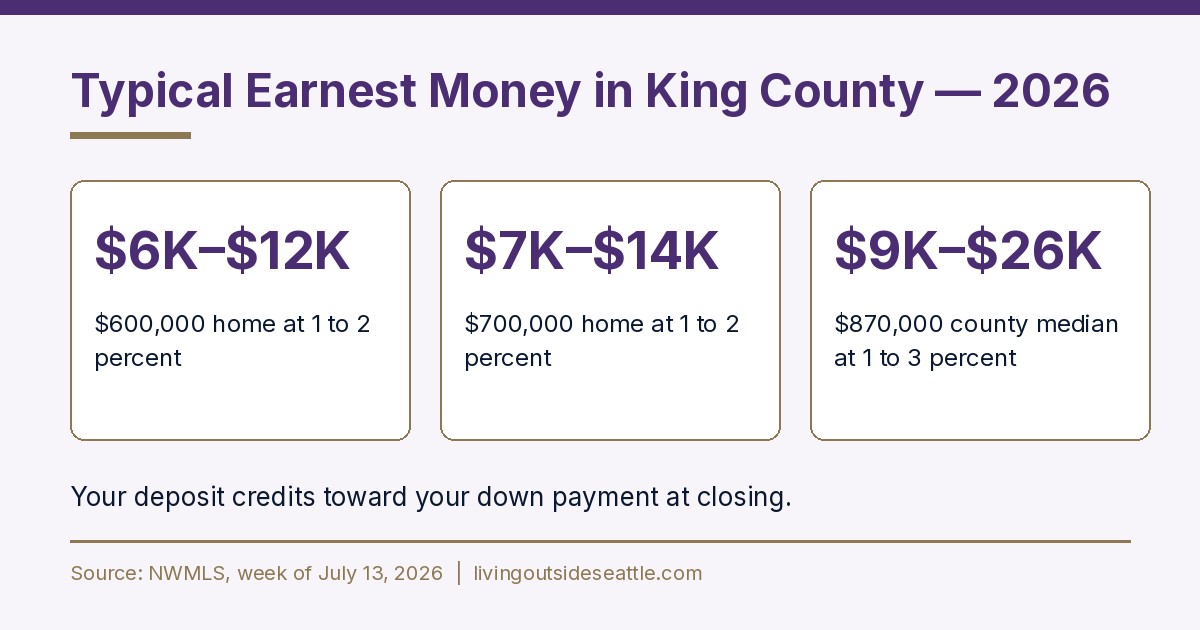
The convention here is 1 to 3 percent of the purchase price. King County’s median sale price is running around $870,000 right now, which puts a typical deposit anywhere from roughly $9,000 to $26,000. At South King County price points, think Kent, Auburn, or Federal Way, a 1 to 2 percent deposit on a $600,000 to $700,000 home lands in the $6,000 to $14,000 range.
At the county’s $870K median, 1 to 3 percent means roughly $9,000 to $26,000. South King County price points often land at $6,000 to $14,000.
Do you need to push toward the high end? Usually not right now. The county is sitting at more than 15 weeks of housing supply, and only about 12 percent of new listings even set an offer review date this month. In that market, a clean, well-priced offer with a standard deposit gets taken seriously. Two years ago buyers were oversizing deposits to win bidding wars. On most homes today, you don’t need to.
How Buyers Actually Lose Earnest Money
Those protections are contingencies written into your offer. The inspection contingency lets you walk away, deposit in hand, if the inspection turns up problems. The financing contingency protects you if your loan falls through. The title contingency protects you if the seller can’t deliver clean ownership. A low appraisal gets handled through the financing contingency in Washington, which is one more reason not to give that one up casually.
Waive those, and your deposit is exposed. Miss a contractual deadline, same thing. The offer terms matter more than the offer amount. I walk through how to structure this in my contingent offer guide for King County.
Before You Wire a Five-Figure Deposit
Wire fraud is real in real estate, and the deposit wire is the moment scammers target. Run through this list every time:
Get wiring instructions directly from the escrow company, never from an email link
Call escrow at a phone number you looked up yourself to verify the account details
Confirm the deposit amount and due date in your purchase contract
Know your contingency deadlines before the money moves
Keep the wire receipt and confirmation from escrow
What This Means for Your First Offer
Budget 1 to 3 percent. Keep your contingencies unless there’s a specific, strategic reason not to. And treat any advice to waive protections in today’s market with real suspicion. With over 15 weeks of supply sitting on the market, you have more negotiating room than buyers have had in years. Use it.
Frequently Asked Questions
Is earnest money refundable in Washington state?
Usually, yes, as long as your offer keeps its contingencies and you meet your deadlines. If the deal dies through your inspection, financing, or title contingency, the deposit comes back to you. If you waive those protections or miss contractual deadlines and then walk away, the seller can keep it.
Is earnest money part of the down payment?
Effectively, yes. The deposit sits in escrow during the transaction, and at closing it gets credited toward your down payment and closing costs. It isn’t an extra cost on top of the purchase. It’s part of the money you were already bringing, paid earlier.
How much earnest money is normal in King County in 2026?
One to 3 percent of the purchase price. On the county’s median sale price of about $870,000, that’s roughly $9,000 to $26,000. At South King County price points, a 1 to 2 percent deposit often lands between $6,000 and $14,000. With today’s supply levels, most buyers don’t need to go above the standard range unless they’re competing on a multiple-offer home.
Gregory Dorrell is a licensed real estate broker (WA License #111862) with Coldwell Banker Bain. Market data from NWMLS, week of July 13, 2026. This post is general information, not legal or financial advice. Review your purchase contract with your broker or attorney.
Living in Lakeland Hills, Auburn: What You Need to Know in 2026
If you want a planned community feel without leaving Auburn, Lakeland Hills is worth a look. Living in Lakeland Hills means wide, consistent streets, HOA-maintained landscaping, and a central neighborhood park that anchors the whole community. This is a Quiet Cul-de-Sac Community, built out mostly between 1995 and 2015, sitting on Auburn’s south end right where the city meets the King-Pierce County line. In 2026, buyers who want newer construction, a settled family feel, and a break from Auburn’s older core neighborhoods keep landing here.
Three Local Anchors
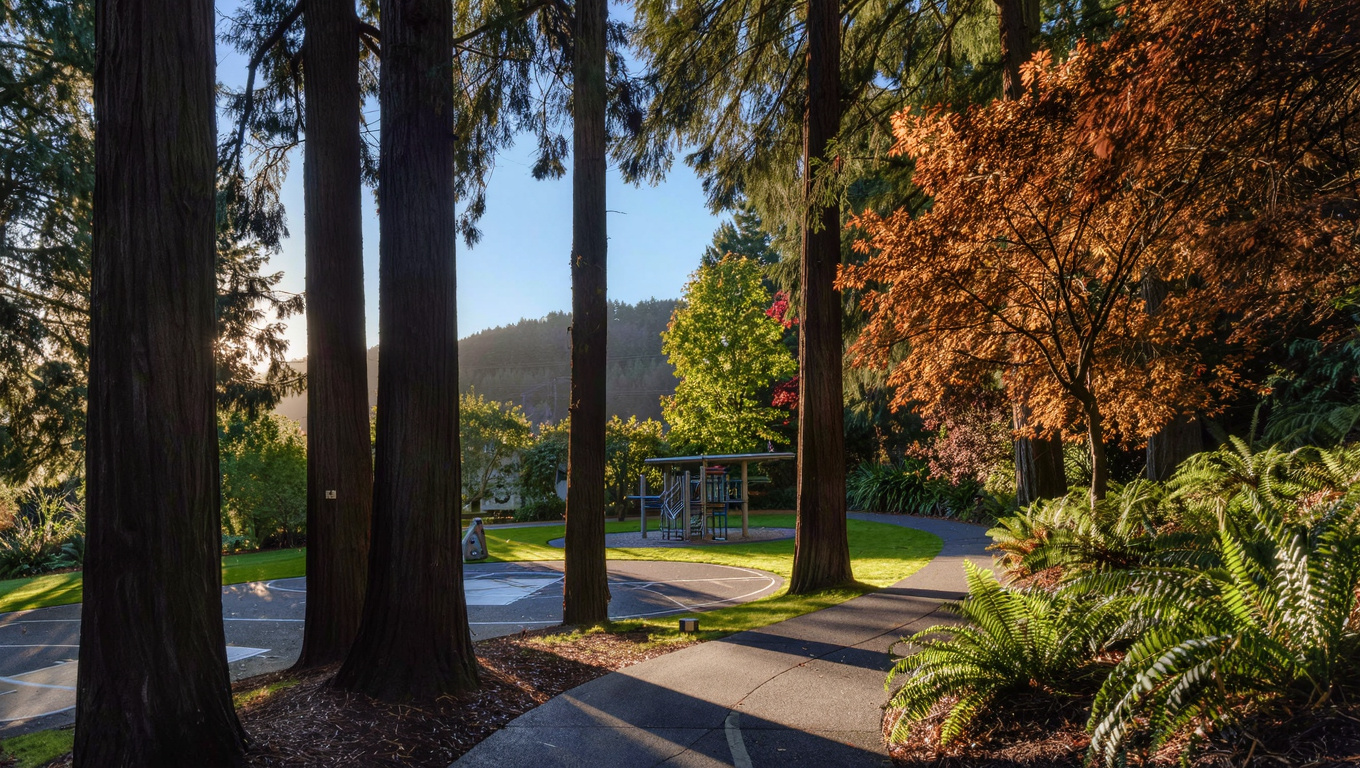
Haggen Food & Pharmacy at 1406 Lake Tapps Pkwy E covers full grocery runs a short drive from most Lakeland Hills streets. Lakeland Hills Park, a five-acre park built into a wooded hillside with a basketball court, a small climbing wall, a paved walking loop, and a playground, sits inside the community itself. And Pierce Transit’s Route 497 Lakeland Hills Express connects the neighborhood directly to Auburn Transit Center, where riders can pick up Sounder rail service into Seattle and Tacoma.
What is it actually like to live in Lakeland Hills in 2026?
On a Tuesday morning, Lakeland Hills moves at a suburban pace. Commuters back out of driveways along the neighborhood’s curving collector streets, most heading for SR-167 or Lake Tapps Parkway to start the drive north or east. School buses work their way through the cul-de-sacs a little later, and the consistent landscaping along the main entries gives the whole community a tidy, just-mowed look even before most residents are out the door.
Weekends slow down. Families walk to Lakeland Hills Park for the playground and the loop trail, kids shoot around on the basketball court, and Sunset Park nearby adds baseball and softball fields for weekend leagues. It is a family-forward rhythm, closer to a small planned suburb than to Auburn’s older Main Street blocks a few miles north.
The people who choose Lakeland Hills tend to want a newer home, a manicured street, and a sense that the neighborhood was designed rather than grown block by block. Compared to Lea Hill or West Auburn, homes here sit on a more uniform grid with HOA-backed consistency, and buyers often cross-shop Lakeland Hills against nearby Bonney Lake and Sumner rather than against downtown Auburn.
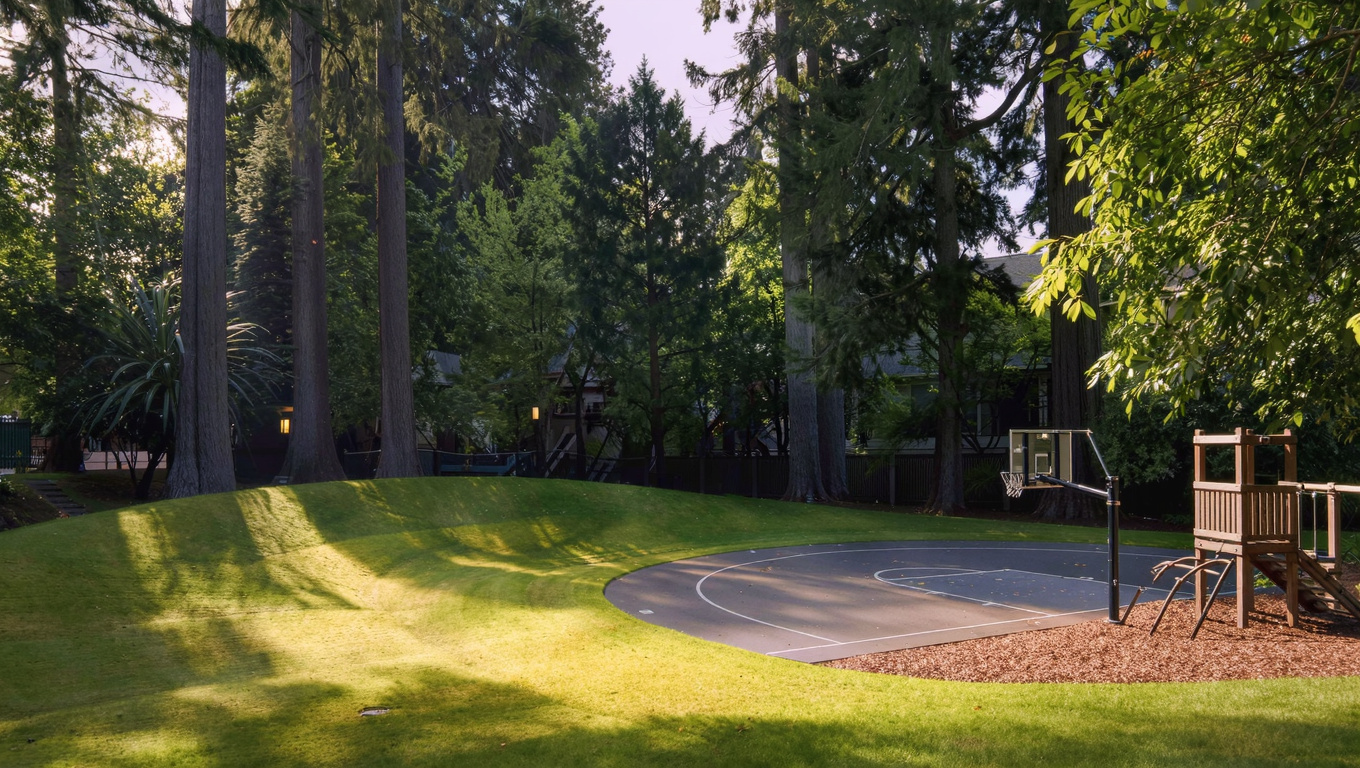
Lakeland Hills Park’s wooded walking loop and playground sit at the heart of the neighborhood.
Homes in Lakeland Hills: What the Data Shows
Most homes in Lakeland Hills date from the mid-1990s through 2015, part of a master-planned build-out rather than scattered infill. Square footage typically runs 1,600 to 3,500 square feet, with two-story traditional and Northwest contemporary styles dominating the community. Lots tend to be modest but consistent, usually 5,000 to 8,000 square feet, and detached single-family homes make up nearly all of the housing stock. HOA-maintained entries and common areas give the community a uniform look that stands apart from Auburn’s older, more mixed neighborhoods.
Market data as of June 2026, from NWMLS-sourced monthly exports (Auburn citywide residential figures; Lakeland Hills-specific data is not separately tracked by NWMLS, so figures reflect city-level data).
Metric
Lakeland Hills (Auburn citywide)
King County
Median Sales Price (June 2026)
~$650,000
~$998,000
Median Days on Market (June 2026)
~8 days
~10 days
Active Listings Change (vs. Jan 2026)
+135%
+127%
Figures reflect Auburn citywide residential data from NWMLS InfoSparks, exported July 5, 2026. Lakeland Hills does not have its own MLS reporting area, so these numbers are city-level, not neighborhood-specific. Homes here tend to sit toward the upper end of Auburn’s price range given the newer construction and master-planned setting.
Schools Serving Lakeland Hills
Lakeland Hills is one of the few Auburn neighborhoods split across two school districts. Most of the community falls in the Auburn School District, but the neighborhood sits right on the King-Pierce County line, and pockets on the south and east sides fall in the Dieringer School District instead. Address matters more here than almost anywhere else in Auburn, so confirm your specific street with the district before you get attached to a listing.
On the Auburn School District side, most students attend Lakeland Hills Elementary at 1020 Evergreen Way SE, and the neighborhood’s geography points to Mt. Baker Middle School as the likely next stop, though families should confirm this directly with the district since Auburn School District maintains seven middle schools and boundary lines shift. From there, students finish at Auburn Mountainview High School, which opened in 2005, offers Advanced Placement coursework, 21 sports, and a Gifted & Talented program, and posts a 90 percent graduation rate.
On the Dieringer School District side, students attend Dieringer Heights Elementary, then North Tapps Middle School for grades six through eight. Dieringer is a non-high-school district, which means families choose where their student attends high school rather than being assigned one automatically. Most Dieringer-zone families in this area send their kids to Auburn Riverside High School or Sumner High School. Always verify your exact address and your high school options with the district before writing an offer.
School ratings and assignments change, and Lakeland Hills sits across two districts. Always verify your specific address with the Auburn School District or the Dieringer School District before writing an offer.
Getting to Work from Lakeland Hills
Take Lake Tapps Parkway or Lakeland Hills Way to SR-164 or SR-167, then connect north toward I-405 or south toward I-5, depending on your destination. Pierce Transit Route 497 runs from the neighborhood to Auburn Transit Center, where riders can catch the Sounder S Line into Seattle and Tacoma without driving the freeway themselves.
Destination
Distance
2026 Drive Time (Peak AM)
Transit Option
Downtown Seattle
31 miles
55 to 75 min
Pierce Transit 497 to Auburn Station, Sounder S Line
Bellevue / Amazon
30 miles
50 to 70 min
SR-167 to I-405 north
Microsoft (Redmond)
34 miles
55 to 80 min
SR-167 to I-405 to SR-520
SeaTac Airport
17 miles
28 to 40 min
SR-167 north to Highway 518
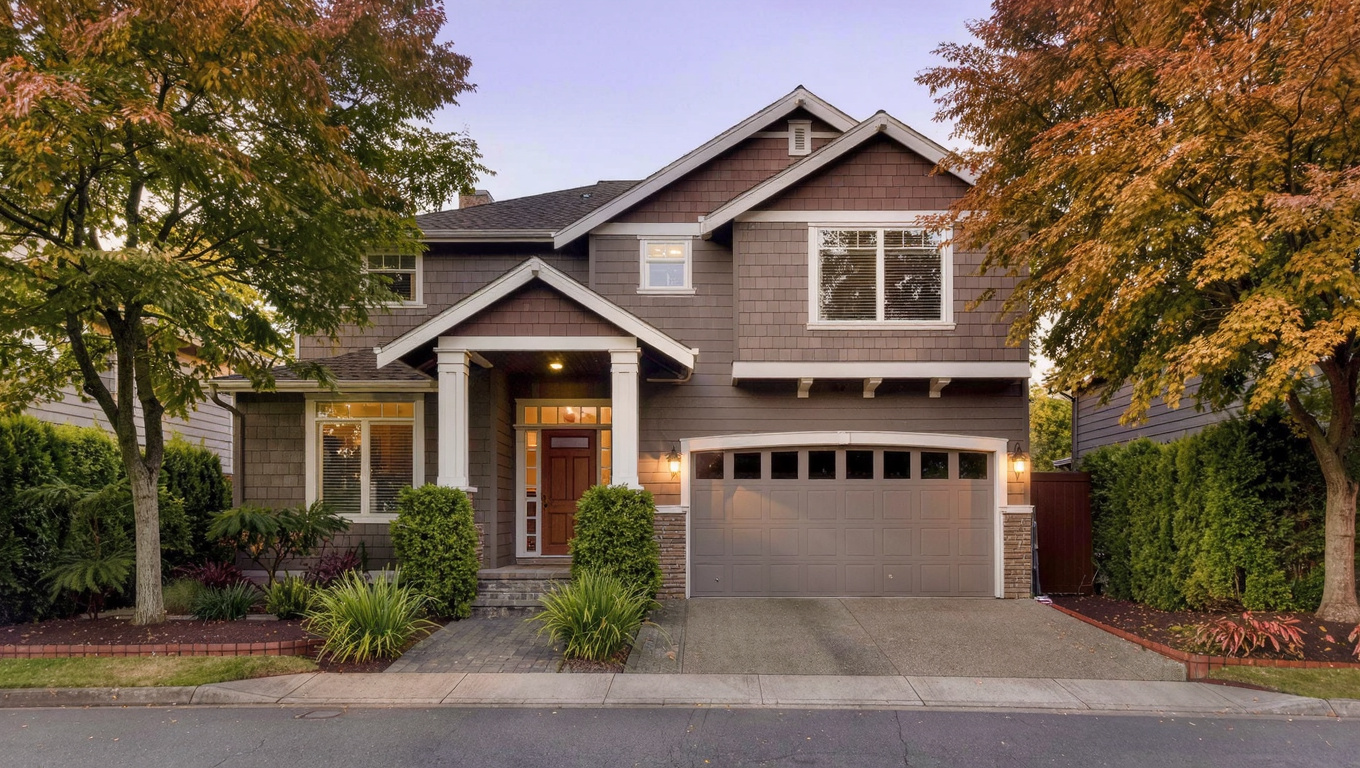
A typical two-story home in Lakeland Hills, built during the community’s main development period between 1995 and 2015.
What I See as a Valuation Expert in Lakeland Hills
When I assess homes here for institutional clients, lot usability and how well a house has kept pace with its systems tend to drive value more than raw square footage in Lakeland Hills. The community’s consistent HOA-maintained frontage means curb appeal rarely separates one listing from the next. What separates them instead is what is behind the walls: roof age, water heater age, and whether a kitchen or bath has been touched since the original build, especially on the earliest phase of homes from the mid-1990s.
HOA dues and coverage vary by section of the community, so confirm what a specific listing’s dues actually cover before you get too far into the process. Some sections include front-yard landscaping maintenance in the dues, which changes the real monthly cost of ownership compared to a similar home without that coverage.
Homes closer to Lakeland Hills Park, on the larger cul-de-sac lots, or with a partial view toward the valley typically command a premium and tend to move first when they come to market. Newer-phase homes built after 2005 with updated systems also draw stronger interest than the earliest phase of the community.
10-Year Lens
Lakeland Hills’ master-planned consistency, newer housing stock, and position near both Auburn and the growing Bonney Lake and Sumner areas give it a durable long-term case as a family-oriented entry point into South King and North Pierce County ownership. The honest counter-risk: the school district split adds real complexity for resale, since buyers have to verify which district and which high school options apply to a specific address, and the neighborhood remains fully car-dependent with no direct Sounder access from inside the community. Continued inventory growth across King County in 2026 also means less urgency and more negotiating room for buyers than in recent years.
Frequently Asked Questions
Q: Is Lakeland Hills a good place to live? A: Lakeland Hills works well if you want a newer, master-planned community with consistent landscaping and a central neighborhood park, and you don’t mind a car-dependent setting without direct Sounder access. It suits families who want a settled, tidy street over Auburn’s older, more mixed neighborhoods.
Q: What are homes like in Lakeland Hills? A: Most homes date from 1995 to 2015, running 1,600 to 3,500 square feet on 5,000 to 8,000 square foot lots, mostly two-story traditional and Northwest contemporary styles with HOA-maintained common areas.
Q: What schools serve Lakeland Hills? A: Lakeland Hills splits across the Auburn School District (Lakeland Hills Elementary and Auburn Mountainview High School) and the Dieringer School District (Dieringer Heights Elementary and North Tapps Middle School, with a family choice of high school). Always verify your specific address before writing an offer.
Q: How far is Lakeland Hills from Seattle? A: Lakeland Hills sits about 31 miles from downtown Seattle, roughly 55 to 75 minutes by car during peak commute hours, or by Pierce Transit Route 497 to Auburn Station and the Sounder S Line.
If you want to live in Auburn without a long drive to get anywhere, West Auburn and the Downtown Corridor are worth a look. Living in West Auburn means older streets built on a walkable grid, a Sounder train station a few blocks from your front door, and some of the most affordable home prices in the entire city. This is a Walkable Urban Edge neighborhood, built out mostly in the early to mid 1900s with a wave of infill since. In 2026, buyers priced out of the Eastside are discovering that downtown Auburn gives them a real Main Street, a commute option that skips I-5 traffic, and a price tag that still works.
Three Local Anchors
The Safeway at 101 Auburn Way S covers weekly groceries without a car trip out of the neighborhood. Game Farm Park, an 88-acre community park with a one-mile paved loop trail along the Stuck River, sits a short drive or bike ride to the east. And Auburn Station, the Sounder S Line stop with direct rail service to Seattle, anchors the whole corridor a few blocks from Main Street.
What is it actually like to live in West Auburn in 2026?
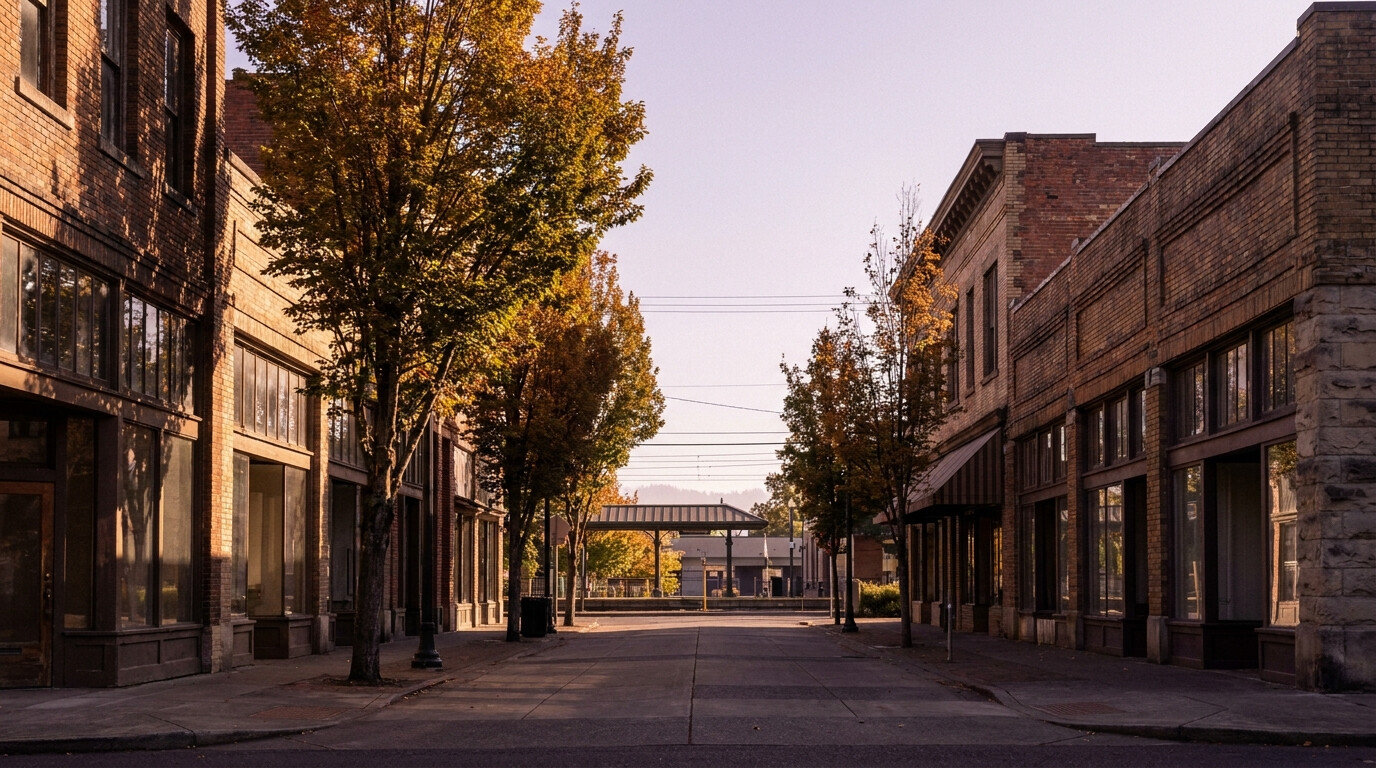
On a Tuesday morning, Main Street wakes up slower than the freeway corridors further south. Commuters heading for the train walk past the older brick storefronts near E Main Street, coffee in hand, timing their walk to the platform instead of a parking garage. The blocks around Auburn Way and Main are a mix of small offices, a few longtime local businesses, and homes that sit close enough to downtown that you can hear the trains before you see them.
Weekends look different. Saturdays bring people out to Game Farm Park for softball games and the walking loop, and from June through September, the Auburn Farmers Market takes over Les Gove Park with more than 40 vendors selling produce and local goods. It is a smaller-town rhythm than you would expect this close to a rail line into Seattle.
The people who choose West Auburn tend to want less house and more location. Compared to Lea Hill or Lakeland Hills, homes here are smaller and older, but you are trading square footage for a walk to the train, a walk to City Hall, and some of the lowest entry prices in Auburn. It draws first-time buyers, downsizers, and commuters who have decided that transit access is worth more than a three-car garage.
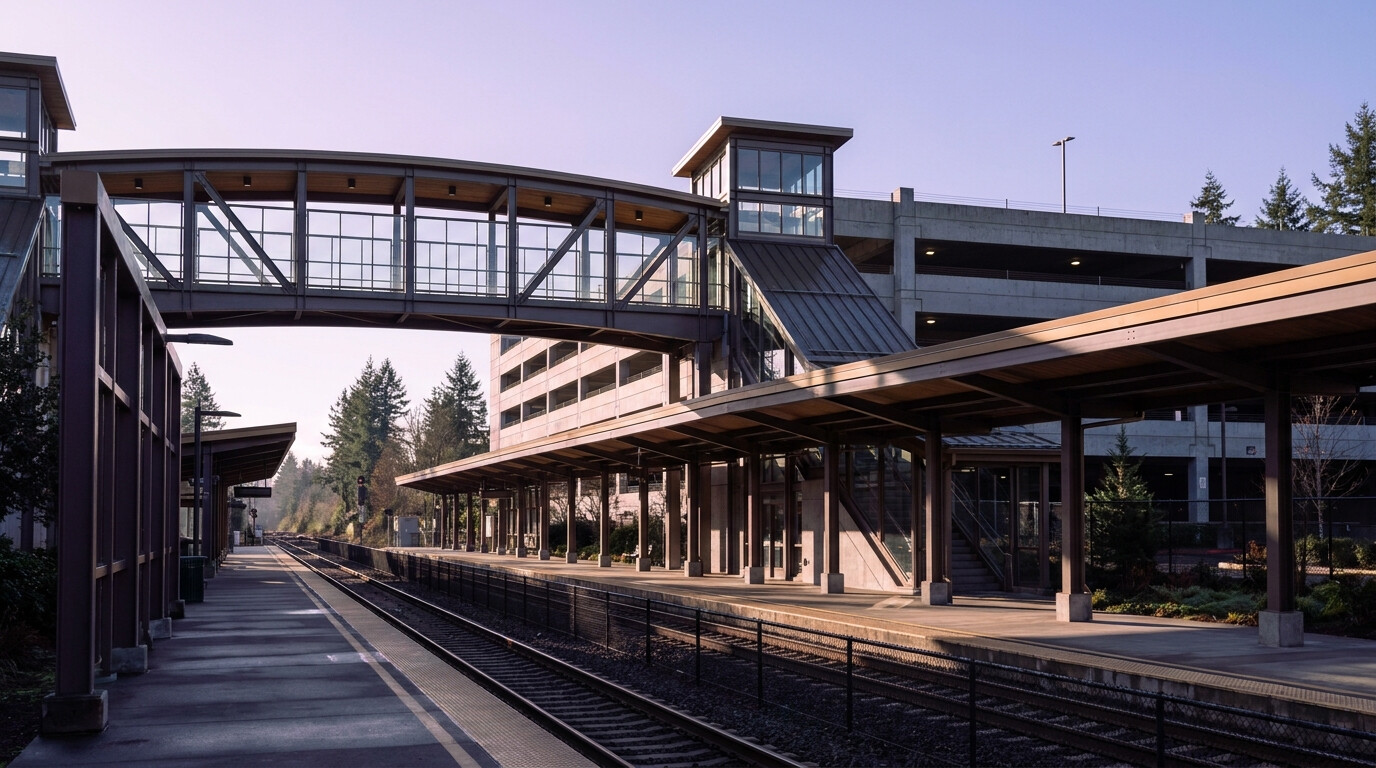
Auburn Station connects the Downtown Corridor to Seattle by Sounder rail in about 35 minutes.
Homes in West Auburn: What the Data Shows
The housing stock in West Auburn skews older than most of the city, with a lot of homes built between 1920 and 1960 on the original townsite grid, plus pockets of newer infill and small multi-family buildings closer to the station. Most single-family homes here run 1,000 to 1,800 square feet on compact lots, often a quarter acre or smaller. You will see bungalows, Craftsman-influenced cottages, and simple postwar ranches more than the large subdivisions found in East Auburn. Detached homes dominate, though the blocks nearest downtown include some duplexes and small apartment buildings. It is not a builder-community look. It is an older Main Street town that has been slowly filling back in.
Market data as of June 2026, from NWMLS-sourced monthly exports (Auburn citywide residential figures; West Auburn/Downtown-specific data is not separately tracked by NWMLS, so figures reflect city-level data).
Metric
Auburn (Citywide)
King County
Median Sales Price (June 2026)
~$650,000
~$998,000
Median Days on Market (June 2026)
~8 days
~10 days
Active Listings Change (vs. Jan 2026)
+135%
+127%
These figures reflect Auburn citywide residential data from NWMLS, not West Auburn-specific numbers, since the neighborhood is too small for its own MLS reporting segment. Within Auburn, West Auburn and Downtown (zip 98002) run toward the lower end of the citywide price range, often $460,000 to $530,000 for move-in-ready homes.
Schools Serving West Auburn
West Auburn falls inside Auburn School District, and the elementary feeder for most of the downtown grid is Dick Scobee Elementary. Address boundaries shift block by block this close to downtown, so always verify your specific address with the district before you write an offer. From Dick Scobee, students typically move on to Cascade Middle School, about half a mile away, then to Auburn Senior High School.
Cascade Middle School was recognized as an AVID National Demonstration School, a distinction tied to its work preparing students for college readiness. Auburn Senior High School runs a full slate of Advanced Placement courses along with a Gifted and Talented program and 19 sports programs, giving families a wide range of activities to choose from.
The day-to-day pipeline here is short by suburban standards. Most elementary kids in the downtown grid walk or get bused a few blocks to Dick Scobee. Middle schoolers head north to Cascade, still inside easy busing range. High schoolers travel slightly further to Auburn Senior High, off E Main Street, which is walkable from some of the closer-in downtown blocks and a short bus ride from the rest.
School ratings and assignments change. Always verify your specific address with the Auburn School District before writing an offer.
Getting to Work from West Auburn
The single biggest draw for West Auburn is Auburn Station. Take the Sounder S Line north and you are in downtown Seattle in about 35 minutes, no I-5 traffic involved. If you are driving, Auburn Way and SR-18 connect you to I-5 and Highway 167 within a few minutes, though peak-hour traffic on those corridors adds real time.
Destination
Distance
2026 Drive Time (Peak AM)
Transit Option
Downtown Seattle
27 miles
50 to 70 min
Sounder S Line, ~35 min
Bellevue / Amazon
21 miles
40 to 55 min
I-167 to I-405
Microsoft (Redmond)
28 miles
45 to 65 min
I-167 to I-405 to SR-520
SeaTac Airport
13 miles
25 to 35 min
SR-18 to I-5
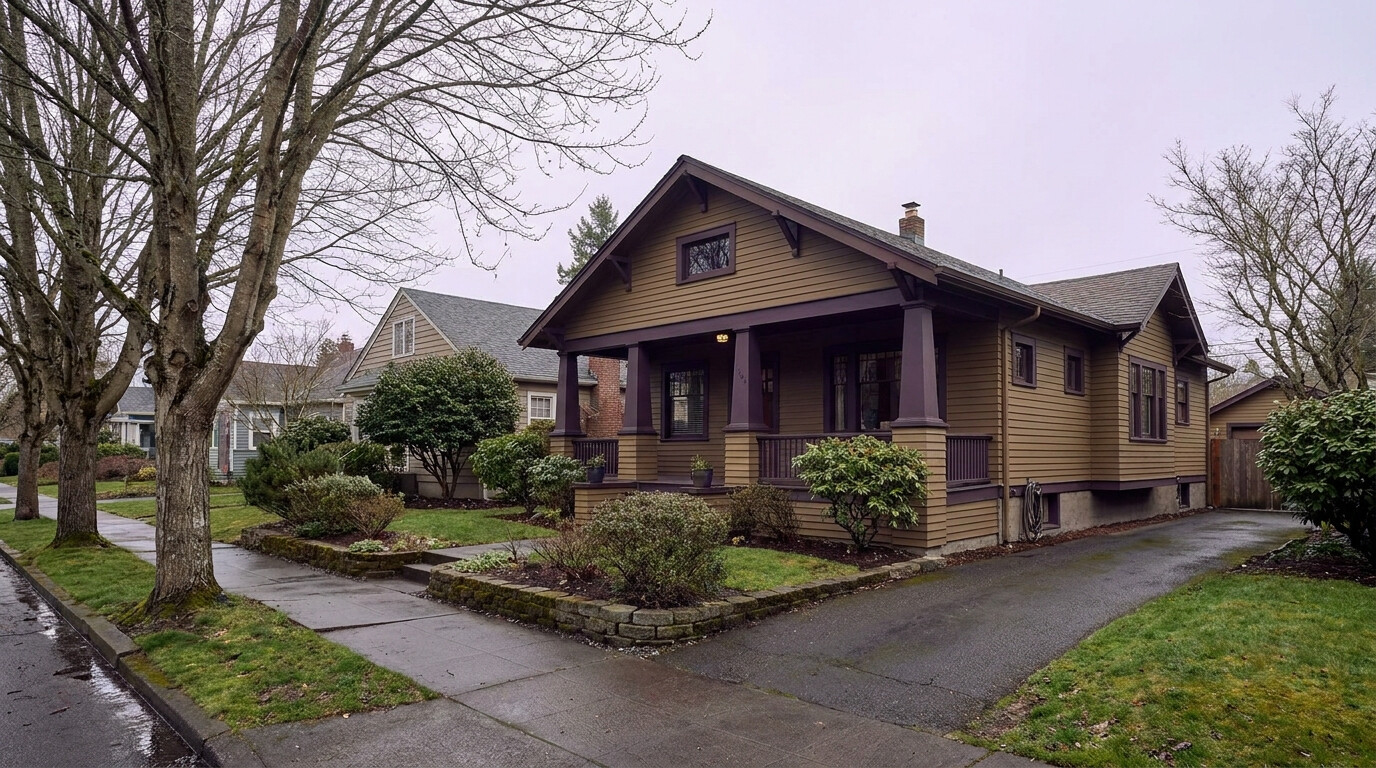
A classic bungalow-style home on the older grid streets near downtown Auburn.
What I See as a Valuation Expert in West Auburn
When I price homes for institutional clients and clients, the age of the systems drives a lot of the value swing. A 1920s bungalow with an updated electrical panel, newer roof, and modern plumbing appraises very differently than the same house with original knob-and-tube wiring still in the walls. Buyers in this price range are often working with tighter budgets, so a home that needs $40,000 in deferred maintenance can sit longer than one that is already move-in ready, even at a similar list price.
Curb appeal matters more here than in newer subdivisions, simply because the housing stock varies so much block to block. A well-maintained yard and fresh paint on an older home signal to buyers that the inside has probably been cared for too. There is no HOA governing most of West Auburn, so that consistency comes down to individual owners rather than a covenant, and it shows in how differently two adjacent blocks can present.
Proximity to the Sounder station tends to carry a real premium here, and walkability to Main Street is the other factor that moves fastest. Homes within a few blocks of the station or the downtown core generally draw more interest than similar homes a mile out, simply because the commute math changes so much.
Valuation Insight
Walking distance to Auburn Station typically commands a premium over otherwise comparable homes further from downtown, since it directly changes the buyer’s commute options.
The 10-Year Lens: As Sound Transit continues to invest in the Auburn Station area, including a planned second parking garage by 2027, West Auburn’s transit-oriented position should keep drawing buyers who want rail access without Eastside prices. The honest counter-risk is the age of the housing stock. Older homes in this price range need ongoing capital investment, and a buyer who skips inspections to compete on price can inherit expensive surprises.
Frequently Asked Questions
Q: Is West Auburn a good place to live? A: It works well if you want a walkable downtown, rail access to Seattle, and some of the most affordable home prices in the city. It is a better fit for buyers who value location over square footage.
Q: What are homes like in West Auburn? A: Mostly older, smaller homes from the early to mid 1900s on compact lots, ranging roughly 1,000 to 1,800 square feet, with prices often starting in the $460,000 to $530,000 range.
Q: What schools serve West Auburn? A: Most of the downtown grid feeds into Dick Scobee Elementary, then Cascade Middle School, then Auburn Senior High School, all part of Auburn School District. Always verify your specific address, since boundaries shift block by block this close to downtown.
Q: How far is West Auburn from Seattle? A: About 27 miles by road, but the Sounder S Line covers it in roughly 35 minutes directly from Auburn Station, which is the main reason many buyers choose this neighborhood.
If you are shopping for a home in Auburn and want more elbow room without leaving the city, Lea Hill is worth a hard look. Living in Lea Hill Auburn means a quiet plateau setting east of the Green River valley, newer construction than most of the city, and a view line toward the mountains on a clear day. It is a Family-First Established neighborhood, built out mostly from the 1990s through the 2010s, with the kind of wide streets and settled landscaping that comes with 20 to 30 years of growth. In 2026, buyers are drawn here for the combination of space, relative affordability compared to the Eastside, and a genuine sense of neighborhood.
Three Local Anchors
The closest full grocery options sit down the hill in Auburn’s core, with Fred Meyer and Safeway both a short drive away. Lea Hill Park, a 7-acre neighborhood park with an amphitheater lawn, sport court, and play area, sits right on the plateau at 124th Ave SE and 316th St SE. Green River College, Auburn’s community college campus, anchors the west edge of the neighborhood and doubles as a public gathering point with trails and open green space.
What is it actually like to live in Lea Hill in 2026?
On a typical weekday morning, Lea Hill runs on a predictable rhythm. Commuters head down the hill toward Auburn Way or over to the Green River College area, where King County Metro Route 181 connects the neighborhood to Auburn Station and the Sounder line into Seattle and Tacoma. School traffic follows soon after, with buses and parent drop-off lines forming around the elementary school. The plateau setting means quieter streets than the valley floor below, and the elevation gives some homes a genuine view of the surrounding hills and, on a clear day, distant peaks.
Weekends lean toward yard work, youth sports at Lea Hill Park, and errands down the hill for groceries and bigger shopping trips. Green River College hosts community events and continuing education classes that pull in residents beyond the traditional student population. The pace is unhurried. This is not a walkable urban neighborhood, and residents generally accept that a car is part of daily life here.
Lea Hill tends to attract households who want more square footage and a bigger lot than they would get in Kent or Renton for a similar price, plus buyers connected to Green River College as staff, faculty, or continuing students. Compared to Auburn’s older west-side neighborhoods, Lea Hill’s housing stock is newer and its streets are wider and more suburban in layout.
Lea Hill Park’s amphitheater lawn and sport court sit at the center of the neighborhood.
Homes in Lea Hill: What the Data Shows
Most homes on Lea Hill date from the 1990s through the mid-2010s, a mix of two-story traditional and Northwest contemporary styles. Square footage typically runs 1,800 to 3,200 square feet, with lots between 5,000 and 10,000 square feet, larger than what you will find in Auburn’s older core neighborhoods. Detached single-family homes dominate the plateau, with a handful of newer townhome pockets closer to 124th Ave SE. Buyers looking for move-in-ready homes with attached two-car garages and updated systems will find plenty of inventory in this era of construction.
Market data as of July 2026, most recent closed month June 2026.
Metric
Lea Hill (Auburn citywide)
King County
Median Sales Price (June 2026)
~$650,000
~$998,000
Median Days on Market (May 2026)
~11 days
~7 days
Homes for Sale (June 2026, vs. Jan 2026)
240 (vs. 102 January 2026, +135.3%)
Countywide inventory has also risen sharply through 2026
Figures reflect Auburn citywide residential data from NWMLS InfoSparks, exported July 5, 2026 (median sales price and homes for sale) and June 25, 2026 (days on market). Lea Hill does not have its own MLS reporting area, so these numbers are city-level, not neighborhood-specific. Days on market trails the other two metrics by one data cycle because that export had not yet refreshed for June at the time of this post.
Schools Serving Lea Hill
Most Lea Hill addresses fall in the Auburn School District, and the neighborhood elementary is Lea Hill Elementary School, located right on 124th Ave SE. From there, students move on to Cascade Middle School, an AVID National Demonstration School with a Gifted & Talented program, before finishing at Auburn Mountainview High School. Always verify your exact address with the district before writing an offer. School assignment boundaries shift, and a home two streets over can fall in a different attendance zone.
Auburn Mountainview offers Advanced Placement coursework, 21 sports, and a Gifted & Talented program, with a 90 percent graduation rate. Cascade Middle School’s AVID recognition reflects a specific focus on college and career readiness for students who might not otherwise have that support built into their schedule. Lea Hill Elementary serves grades pre-K through 5 with a roughly 12-to-1 student-teacher ratio.
The path from Lea Hill Elementary through Cascade Middle School to Auburn Mountainview High School means most families on the plateau stay within a consistent, walkable-to-drivable pipeline for all thirteen years, without the bus rides across town that some Auburn neighborhoods require.
School ratings and assignments change. Always verify your specific address with the Auburn School District before writing an offer.
Getting to Work from Lea Hill
Take Lea Hill Road down to Auburn Way North, then connect to SR-18 or Highway 167 depending on your destination. King County Metro Route 181 runs along Lea Hill Road with stops near Green River College, connecting to Auburn Station for Sounder service into Seattle and Tacoma.
Destination
Distance
2026 Drive Time (Peak AM)
Transit Option
Downtown Seattle
28 miles
50 to 70 min
Metro 181 to Auburn Station, Sounder S Line
Bellevue / Amazon
27 miles
45 to 65 min
SR-18 to I-405 north
Microsoft (Redmond)
32 miles
50 to 75 min
SR-18 to I-405 to SR-520
SeaTac Airport
14 miles
25 to 35 min
SR-18 to Highway 167 north
A typical two-story home on Lea Hill, built during the neighborhood’s main growth period in the 1990s and 2000s.
What I See as a Valuation Expert in Lea Hill
When I price homes for institutional clients, lot size and usable yard space tend to drive value more than square footage alone on Lea Hill. Two homes with the same floor plan can appraise differently if one sits on a flat, fully usable 8,000 square foot lot and the other backs up to a slope or drainage easement that eats into the buildable and livable space.
Curb appeal and maintenance history matter more here than in newer subdivisions, simply because the housing stock is old enough now that deferred maintenance starts to show. A roof at 20-plus years, original windows, or an aging furnace will show up in a comparative analysis even if the home looks fine from the street. HOA presence varies by pocket of the neighborhood, so confirm whether a specific listing carries HOA dues and what they cover before you get too far into the process.
Streets with view potential toward the mountains, and homes closer to Lea Hill Park and Green River College, typically command a premium and tend to move first when they come to market. Larger, flatter lots with room for a shop or RV parking also draw strong interest in this part of Auburn.
10-Year Lens
Lea Hill’s combination of newer housing stock, a stable school pipeline, and proximity to Green River College gives it a solid long-term case as an entry point into King County ownership at a lower price than the Eastside. The honest counter-risk: this is still a car-dependent neighborhood with no light rail access on the horizon, and continued inventory growth across King County in 2026 means buyers have more leverage and less urgency than they did a few years ago. Appreciation here will likely track the broader South King County market rather than outpace it.
Frequently Asked Questions
Q: Is Lea Hill a good place to live? A: Lea Hill works well if you want more space and newer construction than Auburn’s older neighborhoods, and you don’t mind a car-dependent, plateau setting. It suits buyers who want a quieter, more suburban feel within city limits.
Q: What are homes like in Lea Hill? A: Most homes date from the 1990s through the mid-2010s, running 1,800 to 3,200 square feet on lots between 5,000 and 10,000 square feet, mostly two-story traditional and Northwest contemporary styles.
Q: What schools serve Lea Hill? A: Most Lea Hill addresses attend Lea Hill Elementary, Cascade Middle School, and Auburn Mountainview High School, all part of the Auburn School District. Always verify your specific address before writing an offer.
Q: How far is Lea Hill from Seattle? A: Lea Hill sits about 28 miles from downtown Seattle, roughly 50 to 70 minutes by car or transit during peak commute hours, using Metro Route 181 to Auburn Station and the Sounder S Line.
Kent is one of the more realistic entry points into King County homeownership right now. If you’re a first-time buyer looking here, this is what actually matters before you start touring homes.
What Kent Costs Right Now
Kent’s median residential price is running around $687,000, below King County’s overall median of $889,000, and the entry-level range specifically has softened over the past year as rate-sensitive buyers pull back.
That softening isn’t bad news if you’re buying. Less competition on the homes in your actual budget range, and more room to negotiate than you’d find in Renton or Bellevue right now.
Kent’s Days on Market Tells You Something Important
Kent’s median days on market is running around 12 days, the slowest of the seven cities I track in King County. For a first-time buyer, that’s useful information. More time to think. More time to get a proper inspection. Less pressure to waive contingencies just to compete.
Don’t mistake a slower market for a weak one. Kent still moves. It just doesn’t move at the frantic pace some other cities do right now.
Neighborhoods to Know
Kent covers a wide area with distinct pockets. Some neighborhoods sit closer to the valley floor with older housing stock and lower price points. Others, particularly toward the east hill, offer newer construction and larger lots at a higher price. Full breakdown in my Kent WA Neighborhoods for Families guide.
Schools a priority? Research specific elementary and middle school assignments before committing to a neighborhood. Kent School District covers a large area, and assignment boundaries don’t always match what you’d assume from the zip code alone.
What First-Time Buyers Should Know About Financing
Most first-time buyers in Kent use FHA or conventional loans with a down payment in the 3% to 5% range. Washington State and King County both offer down payment assistance programs worth checking out before you assume you need 20% down.
Get pre-approved, not just pre-qualified, before you start touring. A pre-approval carries real weight with sellers in this price range, where multiple qualified buyers are often still competing for the best-priced homes even in a softer market.
Should You Buy in Kent Now or Wait?
Waiting for rates to drop is a common instinct. It rarely pays off the way buyers expect. When rates ease, more buyers suddenly qualify, and that added competition tends to push prices back up. Offsetting whatever you saved on the rate.
Kent’s current mix of softer prices and longer days on market is about as buyer-friendly as this city gets. Find a home that fits your budget and needs? The math usually favors moving now over waiting for a hypothetical better moment that brings more competition with it.
Key Takeaways
Kent remains one of the more affordable entry points in King County for first-time buyers
The 12-day median days on market gives buyers more time and negotiating leverage than faster-moving cities
Neighborhood and school boundaries vary significantly across Kent, so research the specific area, not just the zip code
Down payment assistance programs are worth investigating before assuming you need 20% down
Waiting for rates to drop often brings more buyer competition that offsets the rate savings
Frequently Asked Questions
Is Kent WA a good place for first-time home buyers in 2026?
Yes. Kent has some of the more accessible home prices left in King County, combined with a slower 12-day median days on market that gives first-time buyers more room to negotiate and less pressure to waive contingencies.
What down payment do I need to buy a home in Kent WA?
Most first-time buyers use FHA loans (as low as 3.5% down) or conventional loans with 3% to 5% down. Washington State and King County both offer down payment assistance programs that can reduce this further. Getting pre-approved early clarifies your actual required down payment based on your specific loan program.
What Kent neighborhoods are best for families?
It depends on your school priorities and budget. Areas closer to the valley floor tend to have older housing at lower price points, while east hill neighborhoods offer newer construction and larger lots at a higher cost. Checking specific school assignment boundaries before committing to a neighborhood is essential, since they don’t always align with zip code assumptions.
Ready to Start Looking in Kent?
I walk through Kent neighborhoods regularly doing professional property valuations, so I know which areas fit which budgets and priorities. First-time buyer trying to figure out where to start? Happy to walk you through it.
 Facebook
 X
X
 Pinterest
 Copy Link