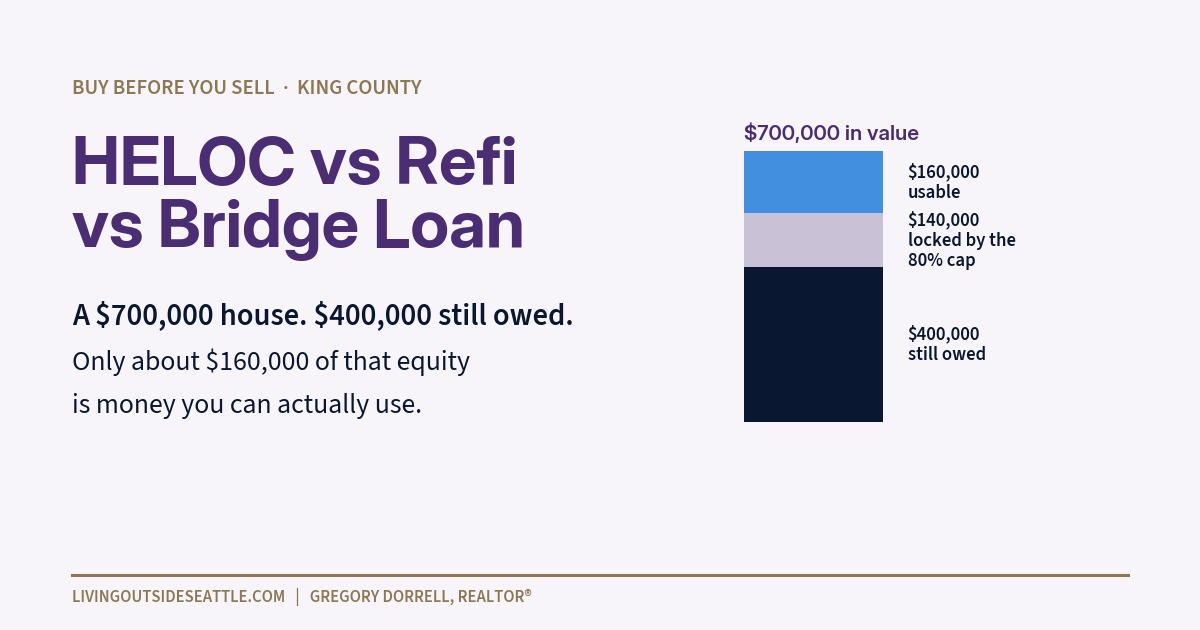
You own a $700,000 house and owe $400,000. Only about $160,000 of that equity is reachable before you sell. Here is what a HELOC, a cash-out refinance, and a bridge loan each cost to get it.
If you have owned your home in Bellevue, Sammamish, or anywhere else in King County for more than a few years, there is a good chance you are sitting on more equity than you think. That is a good problem to have, until tax season shows up and you start wondering how much of that gain the IRS is going to want.
Here is the short version: most sellers pay nothing. The federal government lets you exclude up to $250,000 of profit if you are single, or $500,000 if you are married and filing jointly, as long as you meet two simple tests. This is called the Section 121 exclusion, and it is the single biggest reason most King County homeowners sell without writing a capital gains check at all.
But “most” is not “all.” Across King County, the median single-family home sold for about $967,000 over the twelve months through August 2026. On the Eastside, the single-family median runs past $1.7 million in both Bellevue and Sammamish. More sellers are bumping into that ceiling than you might expect. Here is exactly how the exemption works, who it covers, how to figure the cost basis that decides your actual gain, and what happens when that gain runs past the limit.
One note on the numbers in this post: every median I use is single-family only. I never blend condos into a city median, because in a couple of these cities that distorts the picture badly. More on why in the local section below.
What the Section 121 Exclusion Actually Does
Section 121 is a provision in the federal tax code that lets you exclude a chunk of the profit from selling your primary home from your taxable income. Profit here is not the difference between what you paid and what you sold for. It is your net sale price, after commission and closing costs come off, minus your adjusted basis, which is what you paid plus the capital improvements you have put into the house over the years. Getting that basis number right is the biggest lever most King County sellers have, and it is the part people guess at. I walk through how to build it a few sections down.
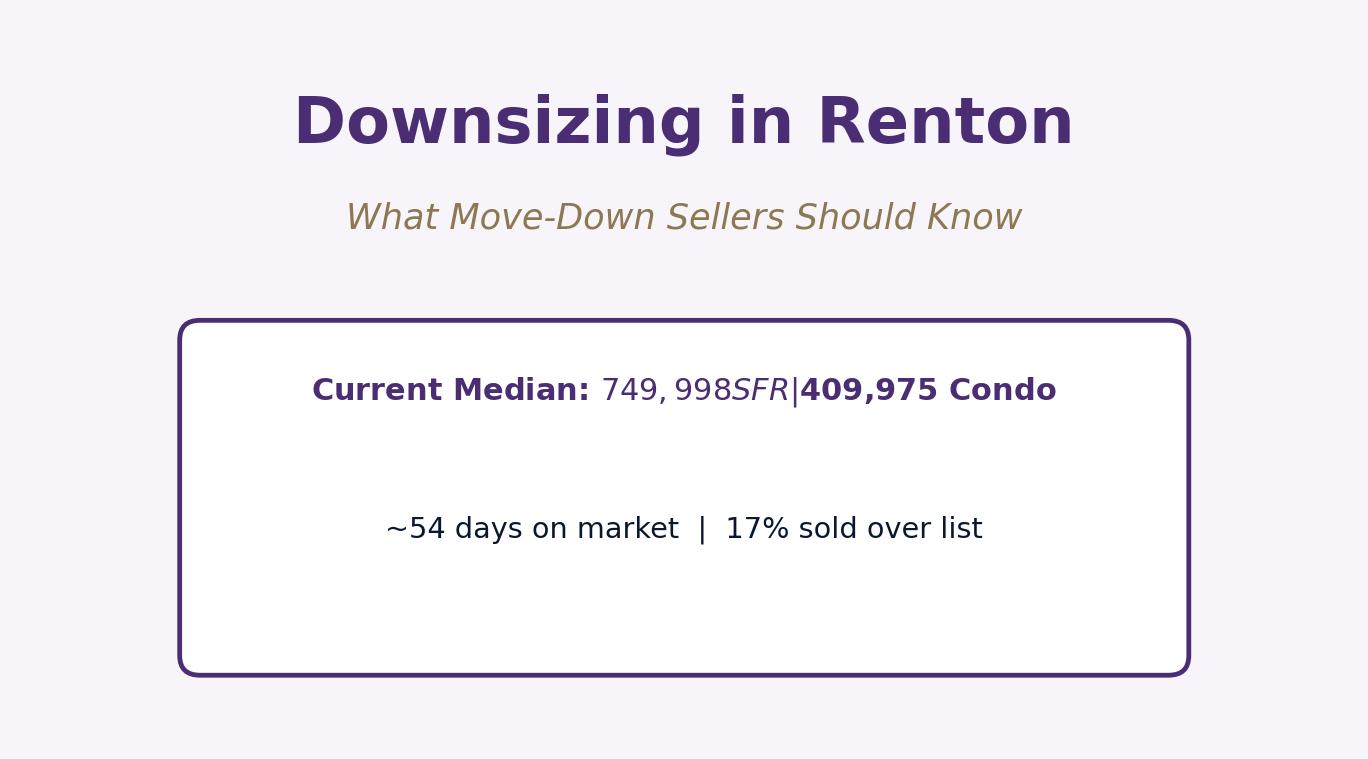
Say you bought a single-family home in Renton in 2016 for $430,000, right at that year’s single-family median, and you are selling it today for $785,000, right at the current one. Before any adjustments that looks like a $355,000 gain. If you are single, the first $250,000 is excluded and you owe federal capital gains tax on the remaining $105,000. If you are married and filing jointly, the whole $355,000 falls under the $500,000 exclusion and you owe nothing. Adjust for selling costs and improvements and the taxable number usually drops further, which is the whole point of the basis section below.
That is the entire mechanism. There is no application to file in advance and no special form your accountant needs to submit to claim it, though the sale does get reported and the exclusion gets claimed on your tax return for that year.
The Two Tests You Have to Pass
To qualify for the exclusion, you need to clear two separate tests, both measured against the five years right before your sale date.
The Ownership Test
You have to have owned the home for at least 24 months out of the last 60. That is it. Those 24 months do not need to be continuous, and they do not need to be the most recent 24 months, as long as they fall somewhere inside that five-year window.
The Use Test
You have to have lived in the home as your primary residence for at least 24 months out of the same five-year window. Again, those months do not have to run back to back. If you lived in the house for a year, rented it out for two years while you were relocated for work, then moved back in for a year before selling, you would still meet the use test, as long as the total adds up to 24 months within the five-year period.
For married couples filing jointly, only one spouse needs to meet the ownership test, but both spouses need to meet the use test to get the full $500,000 exclusion.
You Can Only Use This Every Two Years
The exclusion is not a one-time-in-your-life benefit, but you generally cannot claim it again if you used it on a different home sale within the past two years. If you are selling one primary residence and buying another, this rarely comes up. It matters more for people who have moved more than once in a short window, like a job relocation that got reversed.
If that describes your situation, it is worth a conversation with a tax professional before you list, not after.
What Happens If You Do Not Meet Both Tests
Life does not always line up with a tax code’s tidy 24-month rule. If you are selling because of a job change, a health issue, or another qualifying unforeseen circumstance, and you have not hit the full two years, you may still qualify for a partial exclusion. The IRS prorates the amount based on how much of the 24-month period you actually met. If you lived in the home for 12 months instead of 24 because your employer relocated you, you could potentially claim about half of the usual exclusion.
There are also special rules that pause the five-year clock for active-duty military, Foreign Service, and intelligence community members serving away from home, extending the window up to 10 years. If that applies to you, this is a case where getting your CPA involved early is worth the fee.
How to Figure Your Cost Basis (Where Remodels Change the Math)
Here is where a lot of King County sellers leave money on the table. Your basis is not just what you paid. It is what you paid plus every capital improvement you have made since, and a huge share of the housing stock in Bellevue, Renton, Kent, and Sammamish was built between the 1960s and the 1990s and has had serious money put into it since. I see it every week in the field. A 1978 split-level in Newcastle with a studs-out kitchen, a 1994 two-story in Sammamish with a new roof, windows, and heat pump. That work raised the value of the house. It also raised the basis, which lowers the taxable gain, but only if you can document it.
The Basis Formula
Adjusted basis = original purchase price + closing costs from when you bought (title, escrow, recording, transfer fees, some legal) + capital improvements, minus any depreciation you claimed, casualty loss deductions, or energy credits and subsidies that reduced basis.
Amount realized = contract sale price minus selling costs (commission, real estate excise tax, escrow and title, and any concessions you credited the buyer).
Your gain = amount realized minus adjusted basis. The exclusion then comes off that gain, not off your sale price.
Notice that selling costs come off the top. Sellers routinely forget this and overestimate their own gain by six figures on an Eastside sale, because commission and excise tax alone can run 7% of the price.
What Counts as an Improvement, and What Does Not
The IRS test is whether the work adds to the value of the home, prolongs its useful life, or adapts it to a new use. Kitchen and bathroom remodels count. So does an addition, a finished basement, a permitted ADU or DADU, a new roof, new windows, new siding, a furnace or heat pump, an electrical panel upgrade, a whole-house repipe, a new deck, fencing, a paved driveway, a sewer connection or septic system, a well, and permanent landscaping like retaining walls and hardscape.
Repairs do not count. Repainting a room, replacing a cracked window pane, fixing a leak, servicing the furnace, routine yard work: that is maintenance, and it stays out of your basis no matter what it cost you. The honest line between the two is condition versus capability. If it put the house back the way it was, it is a repair. If it made the house better or different, it is an improvement.
One nuance worth raising with your CPA: work that would be a repair on its own generally does count when it is done as part of a larger remodel. The drywall patching and painting inside a full kitchen gut are part of the kitchen project, not separate maintenance.
The Rule People Get Wrong: Replaced Improvements Come Back Out
You count what is still in the house, not everything you ever spent on it. If you remodeled the kitchen in 2004 and remodeled it again in 2019, the 2004 kitchen generally comes out of your basis when the new one goes in. Same with a roof you have replaced twice, or windows you upgraded and then upgraded again. This is the single most common basis error I hear about from sellers who have owned a home for twenty-plus years, and it usually runs in the seller’s favor to fix, because the current improvements are typically the expensive ones.
What to Keep, and What to Do If You Did Not Keep It
The records that hold up are contractor invoices, paid receipts, cancelled checks or card statements, permits with final inspections, and the settlement statement from when you bought the house. Keep them for as long as you own the home plus at least three years after you sell.
If the receipts are long gone, you are not necessarily out of luck. Permit history through King County or your city’s permit portal can establish that the work happened and when, and most of the big-ticket items on that list above required a permit. Be straight with yourself about the limit, though: a permit proves the work, not the cost. It supports a reconstruction of your basis, it does not replace the records, and your CPA is the one who decides what is defensible on a return.
Worked Example: What the Records Are Worth
A married couple bought a Bellevue single-family home in 2006 for $625,000, with about $6,000 in closing costs. Over twenty years they documented a kitchen and two baths at $180,000, a roof and windows at $45,000, a heat pump and panel upgrade at $30,000, and a deck and fencing at $20,000. That is $275,000 in improvements, for an adjusted basis of $906,000.
They sell at $1,800,000. Commission, excise tax, escrow and title, and a modest concession run roughly 8%, or $144,000, so the amount realized is $1,656,000. Their gain is $750,000. Subtract the $500,000 married exclusion and $250,000 is taxable.
Run the same sale with no improvement records and the basis is $631,000, the gain is $1,025,000, and $525,000 is taxable. Those receipts were worth $275,000 of gain, which is roughly $41,000 of federal tax at the 15% rate. That is what a shoebox of invoices is worth.
Gain Above the Exclusion: What You Actually Owe
If your profit runs past your exclusion limit, the excess is taxed at long-term capital gains rates, assuming you owned the home for more than a year, which almost every seller reading this has. For 2026, the federal long-term capital gains brackets work like this:
2026 Long-Term Capital Gains Brackets
Single filers: 0% up to $49,450 in taxable income, 15% from $49,451 to $545,500, 20% above that.
Married filing jointly: 0% up to $98,900 in taxable income, 15% from $98,901 to $613,700, 20% above that.
Most sellers with gain above the exclusion land in the 15% bracket, not the 20% one. Take the Bellevue couple from the basis section: $250,000 of taxable gain, mostly at 15%, is about $37,500 in federal capital gains tax. Run the same sale without their improvement records and $525,000 is taxable, which pushes part of the gain into the 20% bracket for a lot of households. That gap is not rounding.
There is one more line item that catches high-equity sellers off guard. Gain above the exclusion counts as net investment income, so the 3.8% net investment income tax generally applies on top of the capital gains rate once modified adjusted gross income passes $250,000 for a married couple or $200,000 for a single filer. On $250,000 of taxable gain that is another $9,500 or so. Your CPA will size it exactly, but plan on it rather than being surprised by it at filing time.
Knowing your real net number before you list changes how you negotiate.
Washington Has No State Capital Gains Tax on Real Estate. Here Is What It Does Have.
This trips people up constantly, so it is worth saying plainly: Washington State does not tax the sale of your home under its capital gains tax law. That state-level capital gains tax exists and applies to certain investment assets like stocks and bonds, but real estate is explicitly carved out.
What Washington does charge is the Real Estate Excise Tax, or REET, and it is a completely different animal. REET is not based on your profit. It is based on your sale price, and every seller pays it regardless of gain or loss. As of 2026, the state’s graduated REET structure runs 1.10% on the first $500,000 of the sale price, 1.28% on the portion between $500,000 and $1.5 million, 2.75% between $1.5 million and $3 million, and 3.00% above that. King County and most cities within it add a local REET on top, typically in the 0.25% to 0.50% range.
So on that same $1.8 million Bellevue sale, REET runs about $26,550 to the state plus roughly $9,000 in local excise tax, call it $35,500 total, and you pay it on the full sale price no matter what your gain was. That is separate from, and on top of, any federal capital gains tax on the profit above your exclusion. These are two entirely different tax lines, and mixing them up is one of the most common mistakes I see sellers make when they are estimating their net proceeds. I wrote a full breakdown of Washington’s REET rates and how they stack by price tier if you want the complete picture on that side of the ledger, and a broader total cost-to-sell breakdown covering commission and concessions too.
The Local Angle: Why This Matters More on the Eastside
Here is where being a BPO field agent shapes how I look at this. I price King County homes for banks and institutional clients every week, and on any Bellevue assignment the first thing I do is separate the houses from the condos. Blend them and the number you get describes neither one.
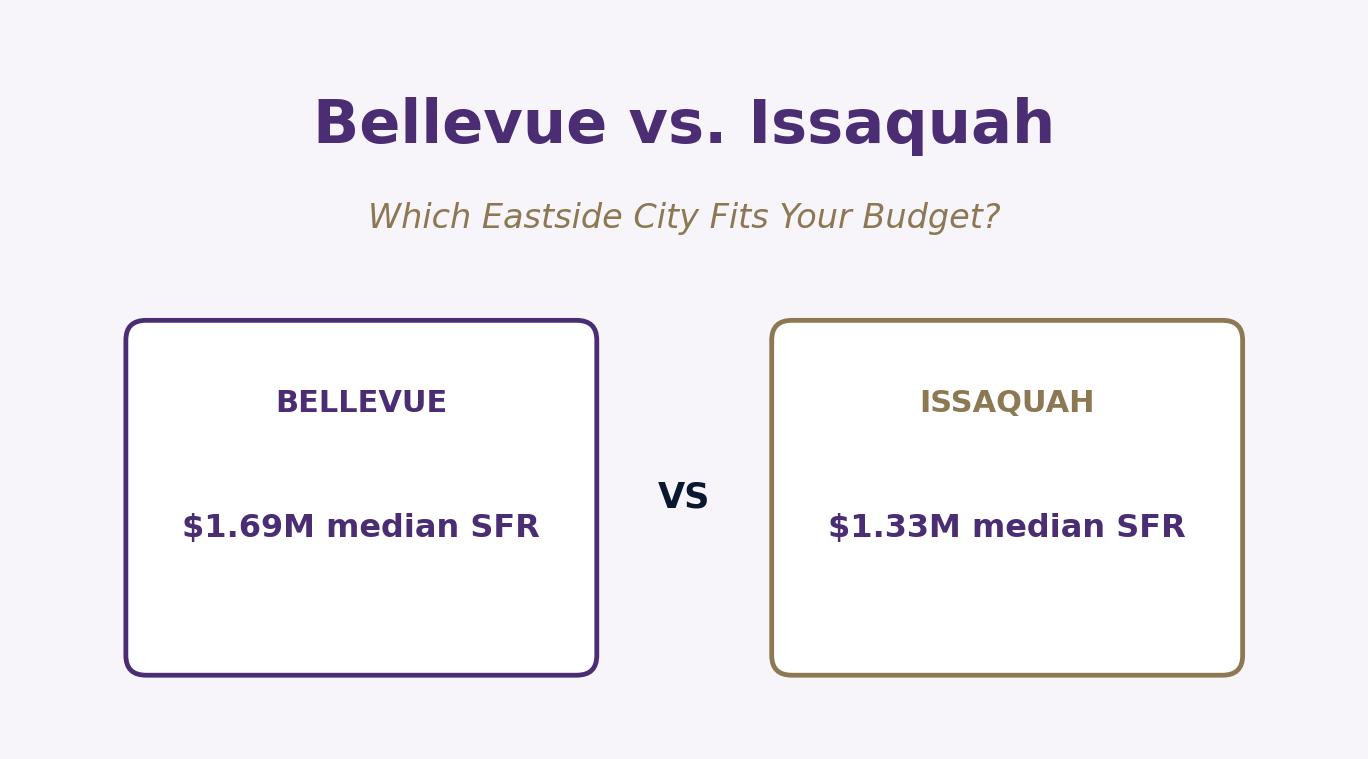
Over the twelve months through August 2026, the median single-family home in Bellevue sold for about $1.8 million. In Sammamish it was about $1.69 million. Issaquah ran about $1.42 million. Down south, single-family medians came in near $784,000 in Renton, $698,000 in Kent, $664,000 in Auburn, and $646,000 in Federal Way. Single-family only, every one of those.
If you have seen a chart that puts Bellevue below Sammamish, you were looking at a blended median. About 32% of Bellevue’s closed sales over that same stretch were condominiums, at a median around $681,000. In Sammamish, condos were about 9% of sales. Fold that many sub-$700,000 sales into one city’s median and not the other’s, and Bellevue comes out looking cheaper than Sammamish. It is not. That is a mix difference, not a value difference, and it is exactly the kind of thing that leads a seller to price a Bellevue house off the wrong number.
Why Blended Medians Make Bellevue Look Cheap
Bellevue: single-family median about $1.8 million. Condo median about $681,000. Condos are roughly 32% of closed sales.
Sammamish: single-family median about $1.69 million. Condo median about $600,000. Condos are roughly 9% of closed sales.
The same effect shows up countywide. King County’s single-family median is about $967,000, but the all-property-types median is about $859,000. If you are selling a house, the second number is not your number. Figures are 12-month medians through August 2026, Northwest MLS.
For the tax question, the single-family number is the one that matters, because that is what a single-family seller actually closes at. At a $1.8 million Bellevue sale, after selling costs come off, a married couple needs roughly $1.15 million of adjusted basis to stay entirely inside the $500,000 exclusion. If you bought before about 2015, you almost certainly do not have that. Which is why the basis work above is not optional on the Eastside.
South King County sellers are less likely to hit the ceiling on a primary home sale. At Renton’s $784,000 single-family median, a married couple would need an adjusted basis under about $221,000 before any of the gain becomes taxable, which generally means a purchase in the 1990s or earlier with little documented work since. It happens, especially with long-held family homes and inherited property, but it is not the common case in Kent, Auburn, or Federal Way either. The two tests and the exclusion amounts are identical no matter which city you are in. What changes is how likely you are to need the excess math at all.
If tapping into that equity before you sell is part of your plan, whether to fund a move-up purchase or bridge two closings, I covered how HELOCs and cash-out refinances compare for King County homeowners, and what that means for move-up buyers specifically in my Bellevue move-up buyer guide.
One Honest Caution: Rental History Complicates This
If your home was ever a rental property, even for part of the time you owned it, the math gets more complicated. Any depreciation you claimed while it was a rental generally has to be “recaptured” and taxed separately when you sell, and that portion does not qualify for the Section 121 exclusion no matter how long you lived in the home afterward. This comes up often with people who bought a house, rented it out for a few years, then moved in before selling. If that describes your situation, do not estimate this one yourself. Get a CPA to run the actual numbers before you set a listing price, because the gap between what you think you will net and what you will actually net can be significant.
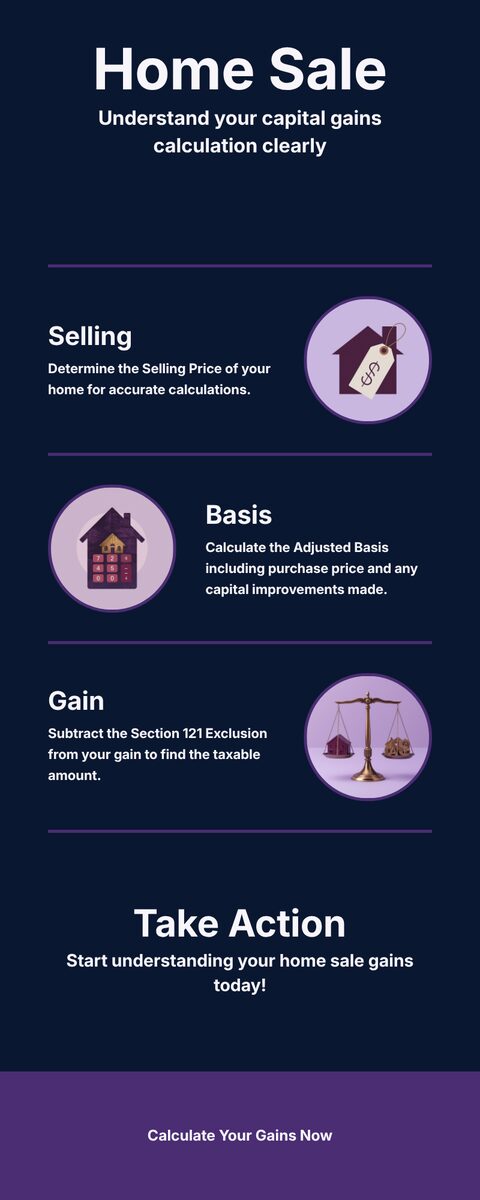
Selling price minus adjusted basis equals gain. Gain minus your exclusion equals what’s actually taxable.
What This Means for You As a Seller
Pull together your original purchase price, the settlement statement from that purchase, and every record you have for major improvements: invoices, cancelled checks, permits, final inspections. Add them up the way the basis section above lays out, and take out anything you later replaced. That is your adjusted basis, and it is the number that determines your actual gain, not the difference between what you paid and what you are selling for today. If you have remodeled this house at any point, this step is worth a weekend of digging through files.
If your gain looks like it might land anywhere near $250,000 as a single filer or $500,000 as a married couple, loop in a CPA before you set your listing price. Knowing your real net number in advance changes how you think about timing the sale, whether you negotiate on price versus concessions, and whether there is any benefit to waiting or accelerating your timeline around the two-year use test.
And if you are not sure where your numbers stand, that is exactly the kind of question I help sellers work through every week using real comparable data, not a guess. Reach out and we can run the actual math for your specific home before you make any decisions.
Frequently Asked Questions
Do I have to buy another home to avoid capital gains tax on my house sale?
No. That was the rule decades ago under the old “rollover” provision, but it was replaced by the Section 121 exclusion in 1997. You do not need to reinvest in another home at all. You can rent afterward, downsize, or do anything else with the proceeds and still keep the exclusion, as long as you meet the ownership and use tests.
Does Washington State tax the profit from selling my home?
No. Washington’s state capital gains tax specifically excludes real estate. You will still pay the Real Estate Excise Tax (REET) on the sale price, but that is a separate tax from capital gains and applies regardless of whether you had a profit.
Can I use the Section 121 exclusion more than once?
Yes, but generally not more than once every two years. As long as at least two years have passed since you last used the exclusion on a different home sale, and you meet the ownership and use tests on the current sale, you can claim it again.
What counts toward my home’s adjusted basis?
Your original purchase price, plus most closing costs from when you bought, plus capital improvements like a new roof, an addition, a remodeled kitchen, a finished basement, a heat pump, or a permitted ADU. Routine repairs and maintenance, like repainting a room or fixing a broken appliance, do not count. One rule people miss: an improvement you later tore out and replaced comes back out of your basis, so you count what is in the house today, not everything you ever spent. Keep your receipts.
What if I only lived in my King County home for one year before I have to sell?
You may still qualify for a partial exclusion if the sale is due to a job change, health issue, or another IRS-recognized unforeseen circumstance. The exclusion amount gets prorated based on how much of the required 24 months you actually met. Talk to a CPA about your specific circumstances before assuming you get nothing.
Do I need to report the sale to the IRS if my entire gain is excluded?
In most cases where your full gain qualifies for the exclusion and you did not receive a Form 1099-S, you do not need to report the sale. If you did receive a 1099-S or your gain exceeds the exclusion, you will need to report it on your tax return even if part or all of it is excluded. Your tax preparer can confirm which applies to you.
Does a kitchen remodel reduce the capital gains tax when I sell?
Indirectly, yes. A remodel is a capital improvement, so it adds to your adjusted basis, and a higher basis means a smaller taxable gain. A $180,000 kitchen and bath remodel removes $180,000 of gain from the calculation. If your gain is already inside the $250,000 or $500,000 exclusion it changes nothing on your tax return, but on a high-equity Eastside sale it can be worth tens of thousands of dollars in federal tax.
What if I do not have receipts for improvements I made years ago?
Start with permit history. King County and each city keep permit records, and most major work (additions, roofs, electrical panels, repipes, decks, ADUs, sewer and septic) required one. A permit establishes that the work happened and when, which supports reconstructing your basis. Be clear on the limit, though: a permit proves the work, not the cost. Contractor invoices, cancelled checks, and card statements are what actually document the dollars, and your CPA decides what is defensible on a return.
Why do Bellevue median home prices sometimes look lower than Sammamish?
Property mix. Roughly 32% of Bellevue closed sales are condominiums, against about 9% in Sammamish, so a blended median that mixes condos with houses pulls Bellevue down much harder. Compare single-family to single-family and Bellevue is the more expensive market: about $1.8 million versus about $1.69 million over the twelve months through August 2026. If you are selling a house, use the single-family number.
Selling a longtime home in King County is not just an emotional milestone, it is a financial one, and the tax side of that equation deserves the same attention as your listing price. Most sellers walk away from the Section 121 exclusion without owing the IRS a dime. A growing number of Eastside sellers are finding their equity has quietly outgrown that exclusion, and the sooner you know which camp you are in, the better decisions you can make about timing, pricing, and what you actually walk away with.
Reach me at greg@livingoutsideseattle.com or 253-350-0045 if you want to run your specific numbers before you list.
Most sellers walk into a bridge loan or HELOC application with a number in their head. It usually comes from a Zillow search the night before. That number is often wrong. And finding out after a lender pulls your file wastes weeks you don’t have if you’re trying to buy before you sell.
I do BPO work across east and south King County every day. Part of that job is telling banks what a property is actually worth, not what an algorithm guessed. The gap between those two numbers is what trips people up when they try to use their equity to buy their next home before selling the current one.
Here’s how to find out how much home equity you actually have before you talk to a lender.
Why Your Zillow Estimate Isn’t Your Real Equity Number
An online home value estimate is a computer’s best guess based on public records and recent sales nearby. It cannot walk through your house. It doesn’t know you refinished the kitchen last year. It doesn’t know your foundation has a crack the last inspection flagged. In King County, details like a busy road behind the fence or a territorial view can move a price by tens of thousands of dollars, and no algorithm sees either one.
Research on automated valuation models shows they typically miss by 2% on homes that are actively listed and by closer to 7% on homes that aren’t. On an $838,000 home, King County’s current median sold price as of early September 2026, a 7% miss is about $58,000. That’s not a rounding error. That’s the difference between qualifying for a bridge loan and getting turned down.
So what does this mean for you? If you’re using an online estimate to decide whether you have enough equity to buy before you sell, you’re making a real financial decision on a number that could be off by tens of thousands of dollars.
The Actual Equity Formula
Total equity and usable equity are two different numbers. Lenders care about the second one.
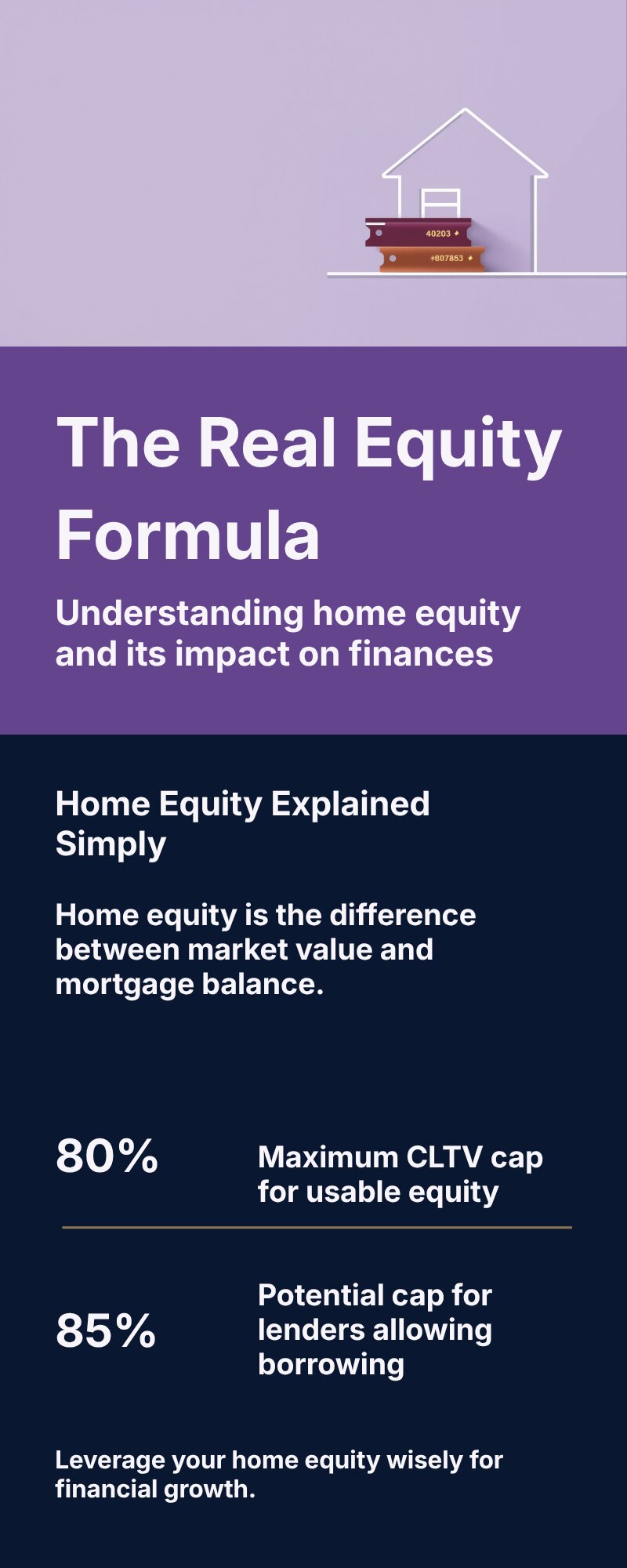
Home equity is simple math on paper. Take your home’s current market value, subtract your outstanding mortgage balance, and that’s your equity.
The part people get wrong is the market value half. Get that number right first, using one of these sources, ranked by accuracy.
A recent professional appraisal, if you’ve had one done in the last six months for a refinance or another reason, is your most reliable starting point. A BPO or CMA from an agent who actually works your neighborhood is next best, and it’s usually free. Pulling comparable sales yourself, what homes like yours actually sold for in the last 90 days, is the minimum bar. An online estimate alone is the least reliable option. It shouldn’t be the number you build a financing decision around.
Once you have a real value, subtract your exact mortgage payoff. Not your last statement balance. Your payoff includes accrued interest since your last payment and any prepayment fees your loan carries. Call your servicer or pull your payoff quote online. It’s usually a few hundred dollars higher than your statement balance, and that gap matters when you’re close to a lender’s cutoff.
What Lenders Will Actually Let You Borrow
Here’s the part that catches sellers off guard. Having equity and being able to borrow against all of it are two different things.
Most HELOC lenders cap you at 80 to 85% combined loan-to-value. That means your existing mortgage plus the new HELOC can’t exceed 80 to 85% of your home’s appraised value. Bridge loan lenders work the same way, typically capping around 80% loan-to-value on the property being used as collateral. Both also want a credit score in the high 600s or better and a debt-to-income ratio under roughly 43%.
Run the real math on a $700,000 home with a $350,000 mortgage balance. On paper, that’s $350,000 in equity. But at an 80% CLTV cap, a lender will only let your combined loans reach $560,000. Subtract your existing $350,000 mortgage and your actual borrowing power lands closer to $210,000. Not the full $350,000 you might have assumed. That’s the number you plan around.
The Local Angle: King County Equity Looks Different by City
Longer ownership on the Eastside means bigger equity cushions, but a cooling market narrows the gap for everyone.
Equity math isn’t the same everywhere in King County right now, and that matters if you’re trying to time a move.
Sellers in Bellevue, Sammamish, and Issaquah usually sit on the largest equity cushions in the county. Home values there have appreciated the most over the years someone’s owned the property. A homeowner who bought in Sammamish eight years ago has a very different equity position than someone who bought in Kent or Auburn three years ago, even if both owe roughly the same amount today. If you’re a South King County owner thinking about rolling that equity into an Eastside upgrade, the math above is your starting point before you run that comparison.
King County’s median sold price sits at $838,000 as of early September 2026, down about 4.2% from a year ago, with 3.8 months of supply on the market. A cooling market doesn’t erase equity for most long-term owners. But it does mean your value today may be lower than it was six or twelve months ago. If your last equity check was done during last year’s peak pricing, don’t assume that number still holds. Run it again.
Sellers in Renton, Kent, Auburn, and Covington who bought more recently should be the most careful here. Thinner equity cushions mean a smaller AVM miss can be the difference between clearing a lender’s CLTV threshold and falling just short of it.
What This Means for You as a Seller
Get a real number before you fill out a single bridge loan or HELOC application. Ask an agent who works your specific neighborhood for a BPO-backed estimate or a full CMA, not just a quick online opinion. Pull your actual mortgage payoff quote from your servicer instead of trusting your last statement. Then run the CLTV math yourself, using 80% as a conservative planning number, so you know your real borrowing power before a lender tells you.
If the number that comes back is lower than you hoped, that’s better to know now. It gives you time to adjust. Wait a few more months. Consider a smaller bridge. Look at a contingent offer instead, or read through how a sell-and-buy-at-the-same-time double move actually gets structured once you know your real number.
FAQ
How do I find out how much equity I have in my home?
Subtract your exact mortgage payoff balance from your home’s current market value, based on a professional CMA, BPO, or recent appraisal rather than an online estimate alone.
What’s the difference between total equity and usable equity?
Total equity is your home’s value minus what you owe. Usable equity is smaller, because most lenders cap combined borrowing at 80 to 85% of your home’s value, not 100%.
Can I use my home’s Zillow estimate to apply for a HELOC?
You can use it as a rough starting point, but lenders will order their own appraisal or valuation, and automated estimates miss by roughly 2% on-market and up to 7% off-market. Don’t build your financing plan around it alone.
How much equity do I need for a bridge loan?
Most bridge loan lenders want to see at least 20% equity in your current home, with the bridge loan itself capped around 80% loan-to-value on that property.
Does a cooling market affect my home equity?
Yes. King County’s median sold price is down about 4.2% year-over-year as of September 2026. If your last equity estimate is more than a few months old, especially from last year’s pricing, check it again before applying for financing.
Should I get an appraisal or a CMA before applying for a HELOC?
A CMA or BPO from an agent who knows your market is usually free and a good first step. Your lender will likely still order its own appraisal once you formally apply, but starting with an accurate number means fewer surprises.
Zillow Zestimate vs. CMA: What Your King County Home Is Really Worth
Every King County homeowner has checked their Zestimate at least once. Most check it a lot more than that. It is free, instant, and sitting right there at the top of every Zillow listing, so it is easy to treat that number as a real answer instead of what it actually is: an educated guess built entirely from a spreadsheet, with no one having ever walked through your front door.
Zillow is more upfront about this than most people realize. The company’s own numbers show the Zestimate misses by a wide margin once a home is off the market, and King County’s mix of older housing stock, view premiums, and wildly different micro-markets from one zip code to the next makes that gap even more likely to matter here than in a lot of the country.
What a Zestimate Actually Is
Zillow is upfront about this, even if the giant number on every listing does not make it obvious: a Zestimate is an automated valuation model, not an appraisal. Zillow’s own help documentation describes it as an estimate built from public and user-submitted data, and states plainly that it is “not equivalent to an appraisal.”
Under the hood, it is a neural network, what Zillow calls the Neural Zestimate, mapping hundreds of millions of data points nationwide. For any single home, it pulls from county and tax assessor records, prior sale history, direct data feeds from MLS systems and brokerages (NWMLS included here in King County), basic home characteristics like square footage and bed and bath count, and for on-market homes, the current listing price and days on market.
That is a genuinely large amount of data. It is also entirely data the algorithm can read from a spreadsheet, nothing it can see, smell, or stand inside.
The Real Numbers Behind “Accurate”
Zillow reports two different accuracy figures, and the gap between them tells you most of what you need to know.
Zestimate Median Error Rate
On-market homes: about 1.9–2%
Off-market homes: about 7%
The gap is not a coincidence. Once a home is listed, the Zestimate leans heavily on the actual list price a human being set, an agent’s professional judgment gets folded back into the “estimate,” which makes it look more accurate without the algorithm actually getting smarter. Off-market, there is no such anchor. The Zestimate is working from stale data and statistical inference alone, and the error rate roughly quadruples.
A 7% error rate sounds small until you attach a real King County number to it. At the county’s current median sold price of $838,842, that is a swing of roughly $58,700, enough to change whether a seller is pricing competitively or leaving real money on the table, and enough to make a buyer’s “the Zestimate says it’s worth less” negotiating line something worth pushing back on with actual comps.
Why the Gap Runs Wider in King County
Automated valuation models struggle everywhere, but a few things about King County widen the miss specifically.
Huge price dispersion over short distances. A county that spans Sammamish and Auburn, Mercer Island and South Park, does not have one housing market, it has dozens of overlapping micro-markets, sometimes a few blocks apart, with very different price ceilings.
An older, heavily renovated housing stock. A large share of King County homes were built in the 1970s through 1990s and have since been updated, sometimes with permits that update county records, sometimes without. A fully remodeled kitchen and a 1988 original kitchen can sit in homes with identical tax records and wildly different Zestimates.
View and lot premiums the algorithm cannot price. Lake Washington, Puget Sound, and Mount Rainier views add real value that shows up in comparable sales but not in any structured data field. Two homes with identical square footage a block apart can differ by six figures because one has a filtered territorial view and the other looks at a fence.
Legal versus livable square footage. Basement conversions, ADUs, and finished spaces that were never permitted often are not reflected, or are reflected incorrectly, in county records, which throws off a model that leans on those records for its baseline.
Five Things the Algorithm Can’t See
1. Views — a Lake Washington or Puget Sound glimpse a neighboring roofline blocks or doesn’t
2. Renovation quality and recency — tasteful, recent updates versus original finishes from decades ago
3. Deferred maintenance — roof age, furnace condition, foundation issues an appraiser or inspector would flag immediately
4. Micro-location — a quiet cul-de-sac versus a home backing a busy arterial, even within the same zip code
5. Legal square footage — whether a finished basement or bonus room actually counts, permit-wise
Zestimate vs. County Assessed Value vs. an Agent’s CMA
These three numbers get confused constantly, and they’re answering three different questions.
Zestimate (Zillow AVM)
What it is: An algorithm’s daily-updated estimate from public records and market data
Who sets it: No one, it’s computer-generated
Best used for: Casual tracking of your home’s value over time
County Assessed Value
What it is: Washington State requires assessors to value property at “100% of true and fair value,” which courts have interpreted as fair market value. King County’s accredited appraisers reassess property each year using the market, cost, or income approach.
Who sets it: Licensed government appraisers, without necessarily setting foot inside your home
Best used for: Calculating your property tax bill, not for pricing a sale
Agent CMA (Comparative Market Analysis)
What it is: A report built from truly comparable recent sales, pending sales, and active competition, pulled from the MLS and adjusted for condition, updates, lot, and location by someone who has usually seen the inside of the home
Who sets it: A real estate agent with local market knowledge
Best used for: Setting a list price or evaluating whether an offer is fair
Three numbers, three different jobs. Only one of them is built to set a list price.
Zillow’s own guidance agrees with this ranking: for serious pricing decisions, a CMA from an agent is the more reliable number, precisely because it incorporates local MLS detail and professional judgment that public data alone cannot capture. For the full mechanics of how a CMA is actually built and how to read one, see how to read a CMA in King County.
What This Means for You
If you’re selling: Use your Zestimate as a rough starting point at most. Before you set a list price, get a CMA, most agents, including me, will run one at no cost and no obligation. Off-market accuracy is roughly a coin flip on being within a meaningful margin; don’t price a six- or seven-figure asset off it.
If you’re buying: Don’t anchor an offer to a seller’s Zestimate, and don’t let a low Zestimate talk you out of a fair offer on a home you actually want. Ask your agent to run comps on the specific home, not the algorithm’s version of it.
If you’re just curious: A Zestimate is fine for casually watching your equity trend over months or years. It’s not the number to make a five- or six-figure decision on.
Frequently Asked Questions
Is Zestimate accuracy improving over time?
Zillow has invested heavily in the model, the shift to a neural-network-based Zestimate in 2021 was a real accuracy improvement over the prior version. But the fundamental limitation hasn’t changed: it still can’t see inside your home, and off-market accuracy still trails on-market accuracy by several multiples.
Why did my Zestimate jump or drop overnight?
Zestimates update as new data becomes available. A neighbor’s home selling, a new listing coming on the market with different pricing, or updated tax records can all move the number without anything changing about your own home.
Does “claiming” my home on Zillow improve my Zestimate’s accuracy?
It can help at the margins. Adding accurate details, updated square footage, a finished basement, recent renovations, gives the algorithm more to work with. It still won’t account for quality, condition, or views the way a human evaluation would.
Is Redfin’s Estimate more accurate than Zillow’s Zestimate?
Both are automated valuation models with similar structural limitations, neither can inspect a home. Redfin has reported comparable or slightly better error rates in some markets, but the same on-market versus off-market accuracy gap shows up in both tools, for the same underlying reason: neither one has been inside your house.
Can I get a CMA if I’m not ready to sell yet?
Yes, a CMA costs you nothing and doesn’t commit you to anything. If you’re a few years out from selling and just want a realistic number to plan around, that’s exactly the right time to ask for one.
A Zestimate is a fine place to start a conversation about your home’s value. It is a poor place to end one. If you are within a year or two of buying or selling in King County, the fastest way to close the gap between the algorithm’s guess and reality is still the same one it has always been: get someone who actually knows the neighborhood to look at the actual house.
Reach me at greg@livingoutsideseattle.com or 253-350-0045 whenever you want a real number instead of an estimated one.
If you’re selling your current home and buying your next one, a simultaneous closing in Washington State is one of the best ways to avoid two moves, a bridge loan, or a rent-back agreement. It also depends on a chain of deadlines most people never think about until they’re staring at a wire cutoff time on closing morning.
I work with move-up sellers across King County who want to time this right. The mechanics aren’t complicated once you understand the order of operations. But the sequence matters, and one missed cutoff can push your move-in to the next day.
Why a Simultaneous Closing in Washington State Is Hard to Pull Off
Washington uses escrow closings, not table closings. Nobody sits around a conference table exchanging keys and checks. Instead, a neutral escrow company holds everyone’s documents and money, then records the deed and releases funds once every condition is met. Signing happens days before closing. Closing is when funds move and the county records the transfer.
That separation is what makes a same-day sale-and-purchase possible, and also what makes it fragile. Your sale has to fully fund and record before your purchase can use those proceeds. If your sale slips to the afternoon, your purchase slips too, or it doesn’t happen that day at all.
King County’s recording cutoff is typically 10 a.m. for same-day recording. If your buyer’s wire hasn’t hit escrow by then, your sale doesn’t record until the next business day, and neither does your purchase. This is the single biggest reason simultaneous closings fall apart. Not bad faith, not missing paperwork. A wire that got sent at 11 a.m. instead of 8 a.m.
The Order of Operations, Step by Step
Here’s the sequence your escrow officer is actually managing behind the scenes.
Step 1: Your Buyer’s Funds Arrive
Your buyer’s lender (or your buyer directly, if it’s a cash deal) wires funds to your escrow company. For the funds to be usable same-day, they need to be an actual wire, not a cashier’s check, and they need to land before the county’s morning recording cutoff. Escrow confirms the funds, records your sale, and your transaction is done. This releases your net proceeds.
Step 2: Your Proceeds Move to Your Purchase
Those proceeds move to the escrow company handling your purchase. If it’s the same escrow company handling both sides, this can happen quickly, sometimes within the same morning. If it’s two different companies, expect more lag, because the funds have to be wired between escrow accounts rather than shifted internally.
Step 3: Your Purchase Records and Keys Release
Your purchase escrow confirms your funds are in hand, verifies the seller’s payoff and any other conditions are met, and records your purchase. Once recording is confirmed by the county, the deal closes and keys can change hands.
Every one of those steps depends on the one before it landing early enough in the day. That’s why using the same escrow company for both your sale and your purchase, when possible, removes one entire layer of wire-to-wire risk.
Each step depends on the one before it landing early enough in the day — this is the sequence your escrow officer is managing.
What Can Push Your Simultaneous Closing to the Next Day
A handful of things routinely knock a same-day closing off schedule, and none of them are exotic.
The buyer’s lender wires late. Loan funding often happens later in the process than people expect, especially if the lender isn’t set up to “table fund” (release money without an internal post-signing review). If your buyer’s loan funds at 1 p.m., your sale isn’t recording that morning.
Your outgoing proceeds get held up in transit between escrow companies. Wires generally move same-business-day, but a wire initiated late in the afternoon can land the next morning instead. If your sale records at 11 a.m. and your proceeds don’t clear to your purchase escrow until 2 p.m., your purchase is now racing a clock it can’t win.
A title issue surfaces late. Anything from an unreleased lien to a name discrepancy can stall recording on either side. This is why I tell sellers to get title work started the moment you’re under contract, not the week of closing.
Two different escrow companies aren’t proactively coordinating. When your sale and purchase run through two separate title companies, someone needs to be on the phone connecting the dots early, not exchanging emails the morning of.
The Local Angle: King County Specifics
King County’s market right now makes the timing question more urgent than it might sound. Inventory sits around 3.8 months of supply countywide, median days on market is running about three weeks, and prices are down modestly year over year. That’s a more balanced market than King County has seen in a while, which is good news for move-up sellers: your home is less likely to sit, but you’re also less likely to get a rushed, aggressive closing timeline forced on you by a bidding war. You have more room to negotiate a closing date that actually lines up.
That said, county-level recording infrastructure doesn’t bend for anyone. Whether you’re closing in Renton, Kent, Bellevue, Auburn, or Sammamish, the same 10 a.m.-ish recording cutoff and wire-timing mechanics apply, because it’s the county recorder’s office, not your city, that’s the constraint.
If your purchase is contingent on your sale under NWMLS Form 22B, the same-day closing conversation usually comes up once your sale is under contract and you’re negotiating your own purchase timeline. Your agent should be talking to both escrow companies well before closing week, not the day before.
Getting ahead of title work and lender wire timing early is the difference between a smooth same-day close and a scramble.
What This Means for You as a Seller
If you’re planning to sell and buy on the same day, a few things are worth doing early instead of the week of closing.
Ask your agent to push for the same escrow company on both transactions when it’s realistic. It won’t always be possible, especially if you’re buying from a builder or an estate, but when it is, it removes the biggest point of failure.
Get your title work started as soon as you’re under contract on your sale, not once you’re under contract on your purchase. Title issues are one of the few things in this process you can actually get ahead of.
Confirm your buyer’s loan is set up to table fund, or at least ask your agent to ask. Not every lender does this, and it matters more than most sellers realize.
Build in a one-day buffer if you can. Ask about a short rent-back on your sale side, even a single day, so a wire delay doesn’t leave you standing in a parking lot with a moving truck and nowhere to put it. If a bridge loan or HELOC makes more sense for your situation than timing a same-day close, that’s worth weighing too.
FAQ
Can I really close on selling and buying a home on the same day in Washington?
Yes. It happens regularly, especially when both transactions run through the same escrow company. The key constraint is timing: your sale has to record before your purchase can use those proceeds, and both need to beat the county’s same-day recording cutoff.
What time does my buyer’s wire need to arrive for a same-day closing?
Escrow companies in King County generally need funds in hand by around 10 a.m. to guarantee same-day recording. Earlier is always safer. A wire sent at 9 a.m. is far more reliable than one sent at 9:45.
What happens if my sale doesn’t close in time to fund my purchase?
Your purchase closing slides, usually to the next business day. This is why a short rent-back or a one-day cushion in your purchase contract can save you from a stressful scramble.
Do I need to use the same escrow company for both transactions?
No, but it helps. Using one escrow company for both sides means your proceeds move internally instead of via a wire between two different companies, which cuts out one entire step where things can go wrong.
Is a simultaneous closing the same thing as a double escrow?
No, and this distinction matters. A double escrow (or back-to-back closing) usually refers to an investor reselling a property the same day they buy it, a different transaction type with its own lending and title complications. A simultaneous closing, in the sense most sellers mean it, is simply your own home sale and your own home purchase recording on the same day. You’re not reselling anything, you’re using your proceeds to buy your next home.
What if my purchase depends on selling my current home first?
That’s a home sale contingency, typically documented on NWMLS Form 22B. It’s a related but separate topic from same-day closing mechanics. If you want the deeper dive on how contingent offers work, read the full contingent offer guide alongside this one.
Selling your King County home doesn’t mean you have to be out the same day the buyer gets the keys. A rent-back agreement lets you stay put for a few extra weeks and close the timing gap most sellers dread.
I get this question almost every week from sellers who are stuck on one problem: their house is about to sell, but their next place isn’t ready yet. Maybe the new construction isn’t finished. Maybe the seller they’re buying from won’t move out until October. Maybe they just need three weeks to pack a house their family has lived in for fifteen years without doing it in a panic.
A rent-back agreement solves that. It’s a simple idea with real legal teeth in Washington, and if you’re selling in King County right now, it’s worth understanding before you’re mid-negotiation and trying to learn it on the fly.
What a Rent-Back Agreement Actually Is
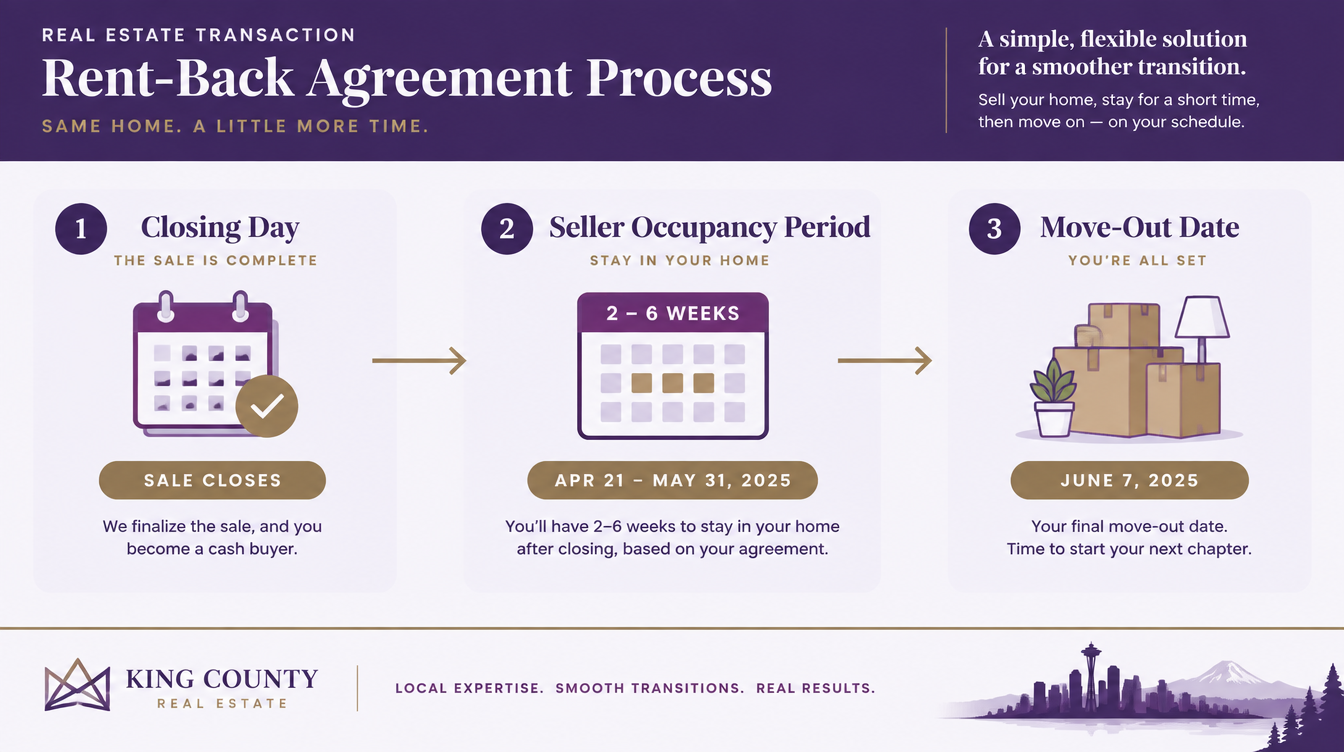
Here’s the honest mechanics of it. On closing day, the buyer owns your house. You get your sale proceeds. And then you become the buyer’s tenant, paying them rent to stay in the home you just sold.
That flip in roles surprises a lot of sellers. You’re not delaying the sale. The sale happens on schedule, title transfers, and your equity lands in your account. What changes is who owns the walls around you while you finish your move.
In Washington, this gets formalized with NWMLS Form 65B, Rental Agreement for Seller Occupancy After Closing. It’s a real lease, even if it’s short. It spells out your move-out date, your rent amount, who pays utilities, who’s responsible for damage, and what happens if you don’t leave on time. I always tell sellers: read this form as carefully as you read your purchase agreement. It’s not a formality. It’s the document that protects you if anything about your move goes sideways.
The three-month NWMLS legal cap and the buyer’s 60-day lender deadline are two separate limits. The tighter one wins.
One detail that trips people up: the occupancy period is capped at three months after closing under the standard NWMLS form, and no rent can be collected past that three-month mark. In practice, most rent-backs I see in King County run two to six weeks. Anything longer starts running into a different set of complications, which I’ll get to next.
Why There’s a Hard Time Limit
This isn’t NWMLS being arbitrary. It comes down to how the buyer’s mortgage works.
If your buyer used a conventional, FHA, or VA loan to purchase the home, they almost certainly signed an owner-occupancy agreement with their lender. That document says they intend to move into the property as their primary residence, usually within 60 days of closing. Fannie Mae, Freddie Mac, and FHA all build this requirement into their loan terms.
For you as the seller, that means your buyer has a real deadline of their own, tied to their mortgage, not just their patience. Let them stay past that window without a documented, lender-aware exception, and they’re putting their own loan compliance at risk. That’s not small. It’s the reason most rent-backs in King County stay short. And it’s the reason your agent should be checking your buyer’s loan type before this gets negotiated, not after.
Don’t ask for six weeks when you might only need two. And don’t assume you can extend a rent-back the way you’d extend a normal lease. The three-month legal ceiling and the buyer’s 60-day owner-occupancy clock are two separate limits. The tighter one wins.
What It Actually Costs You
Rent-back agreements aren’t free, and they shouldn’t be. There are two common ways to set the rent number, and I’ve seen both work well depending on the situation.
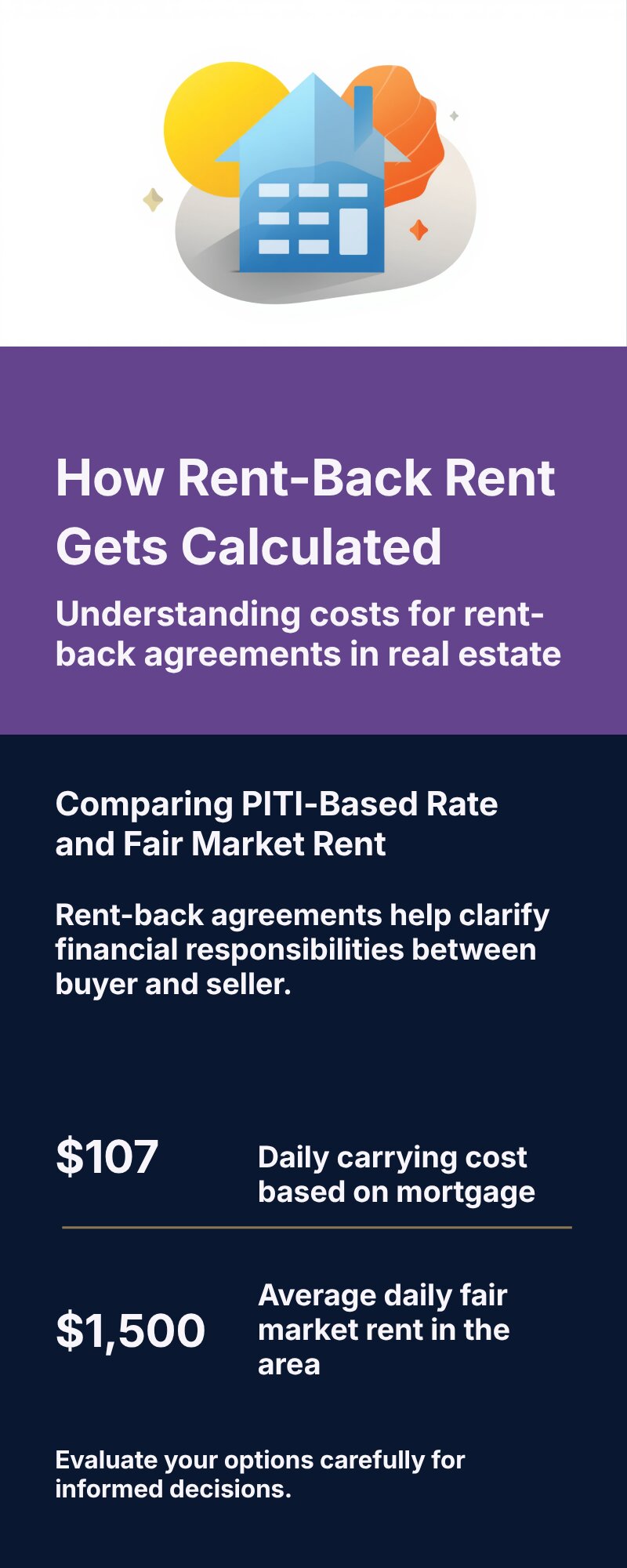
The first is tying it to the buyer’s daily carrying cost, their principal, interest, taxes, and insurance (PITI), divided by 30. If their new mortgage payment is $3,200 a month, that’s roughly $107 a day. This approach feels fair to buyers because it just covers what owning the home is actually costing them while you’re still in it.
The second is fair market rent, based on what comparable homes in your King County neighborhood are renting for. In tighter rental markets like Renton or Kent, this can run higher than the PITI number. In softer pockets, it can run lower.
Rent-back rent is usually set one of two ways: the buyer’s daily carrying cost, or fair market rent for the neighborhood.
Either way, expect a security deposit held by the title company, and expect the buyer’s agent to push for a number that at least covers their costs. I generally recommend sellers budget for the higher of the two calculations when they’re planning their move-out cash flow. It’s a rent payment on top of a move you’re already paying for, and it should be part of your closing math from day one, alongside your other costs to sell in Washington State, not a surprise you’re negotiating with movers already in your driveway.
Insurance Is the Part People Forget
This is the piece I see catch people off guard the most. Your homeowners insurance policy ends at closing. Full stop. The buyer’s new policy takes over the property, but it doesn’t automatically cover you as an occupant staying behind.
Sellers staying in the home during a rent-back need their own renter’s insurance in place before closing, not after. This protects your personal belongings, and it gives the buyer an added layer of protection too, since it shows there’s coverage in place if something happens while you’re the one living there. Both sides should confirm this with their insurance carriers before the rent-back period starts, not assume it’s handled.
I bring this up with every seller considering a rent-back. It’s the one detail that’s easy to skip in the excitement of getting your timing solved. Don’t skip it.
The Local Angle: King County Specifics
King County’s market right now makes rent-backs more common than they were a couple years ago, not less. Inventory is up sharply year over year, sitting around 3.9 months of supply countywide as of early September, and prices have softened about 4% from a year ago. That’s still a market that leans toward sellers, but it’s closer to balanced than it’s been in a while.
What that means practically: buyers have more selection and a little more patience right now, which makes them more willing to negotiate a rent-back to win your listing, especially if you’re priced right and your home shows well. I’m seeing this play out across Renton, Kent, and Auburn, where move-up sellers are using rent-backs to bridge the gap while their next purchase closes, rather than scrambling into short-term housing or a storage unit.
On the Eastside, in Bellevue and Sammamish, I’m seeing rent-backs used differently, mostly by sellers who are building or waiting on new construction to finish. Those timelines run longer than a typical closing gap, so the rent-back covers the last stretch, not the whole wait.
Every rent-back should be written into the purchase and sale agreement, with a real move-out date on the calendar.
Every rent-back I negotiate gets written into the purchase and sale agreement itself, never handled as a handshake side deal. That’s what makes it enforceable if something doesn’t go as planned.
What This Means for You as a Seller
If you’re weighing a move-up sale in King County and your timing doesn’t line up cleanly, ask about a rent-back before you assume you’ll need a bridge loan or HELOC, or a short-term rental. It’s often the simplest, cheapest way to close the gap between selling your current home and getting into your next one. For the full playbook on structuring a double move, see my guide on selling and buying a house at the same time in King County.
Talk to your lender’s loan officer about your buyer’s loan type early, before you’re negotiating the rent-back terms. Get your renter’s insurance lined up before closing, not the week of. And put the whole arrangement in writing on NWMLS Form 65B, with a real move-out date and a real rent number, so there’s no ambiguity if your timeline shifts.
FAQ
Is a rent-back agreement legal in Washington State?
Yes. It’s a standard, well-established tool, formalized through NWMLS Form 65B. As long as the agreement stays within its own terms, it’s exempt from the Residential Landlord-Tenant Act, which keeps the process simpler for both sides.
How long can a seller rent back their home after closing in King County?
The NWMLS form caps occupancy at three months after closing, with no rent collected past that point. In practice, most buyers’ loan terms require them to move in within 60 days, so that’s the tighter and more realistic limit for most transactions.
Who pays for utilities during a rent-back period?
This is negotiated in the agreement itself. Some sellers keep utilities in their name and pay directly through the rent-back period; others fold utility costs into the rent number. Either way, it should be spelled out in writing, not assumed.
Does a rent-back affect my mortgage payoff or sale proceeds?
No. The sale closes on schedule and your proceeds are disbursed at closing like any other sale. The rent-back is a separate rental arrangement that happens after you no longer own the home.
What happens if I don’t move out on the agreed date?
This is where the written agreement matters most. Form 65B addresses holdover liability, and if a seller doesn’t vacate on time, the buyer may have to pursue a formal eviction process. It’s rare, but it’s exactly why the terms need to be clear and realistic from the start, not optimistic.
Can I negotiate a rent-back into my offer if I’m buying and selling at the same time?
Yes, and this is one of the most common uses I see. If you’re selling your King County home to buy your next one, a rent-back on the sale side can buy you the days or weeks you need to close on your purchase without double-moving. It pairs naturally with a contingent offer or a bridge loan strategy on the buy side, depending on your equity position.
If you bought your Bellevue or Sammamish home ten, fifteen, or twenty years ago, you are likely sitting on more equity than you think. Bellevue’s median home price is running close to $1.4 to $1.5 million right now. Sammamish is close behind at around $1.6 million. If your mortgage is small or paid off, that gap between what you owe and what your home is worth could be enough to buy your next home in cash.
I do BPO work across King County every single day, and the Eastside is where I see this scenario the most. Long-time owners in Bellevue and Sammamish built enormous equity just by staying put through two decades of appreciation. Most of them never sat down and ran the actual math on what that equity could do for their next move.
This guide walks through that math, plus what it takes to structure a downsizing sale into a cash purchase without getting squeezed by timing, taxes, or a rushed decision.
The Equity Math: What Your Eastside Home Is Actually Worth to You
Here is the calculation most Bellevue and Sammamish sellers skip until they are already talking to an agent: what do you actually walk away with, and what does that buy you.
Start with your home’s current value. If you bought in Bellevue before 2015, you likely paid somewhere between $500,000 and $800,000 for a home that would sell today in the $1.3 to $1.6 million range depending on the neighborhood and condition. In Sammamish, that same era of purchase often lands buyers in the $1.5 to $1.8 million range today. Subtract your remaining mortgage balance, if any. For owners who have been in their home 15 or more years, that balance is often small relative to the total value, sometimes zero.
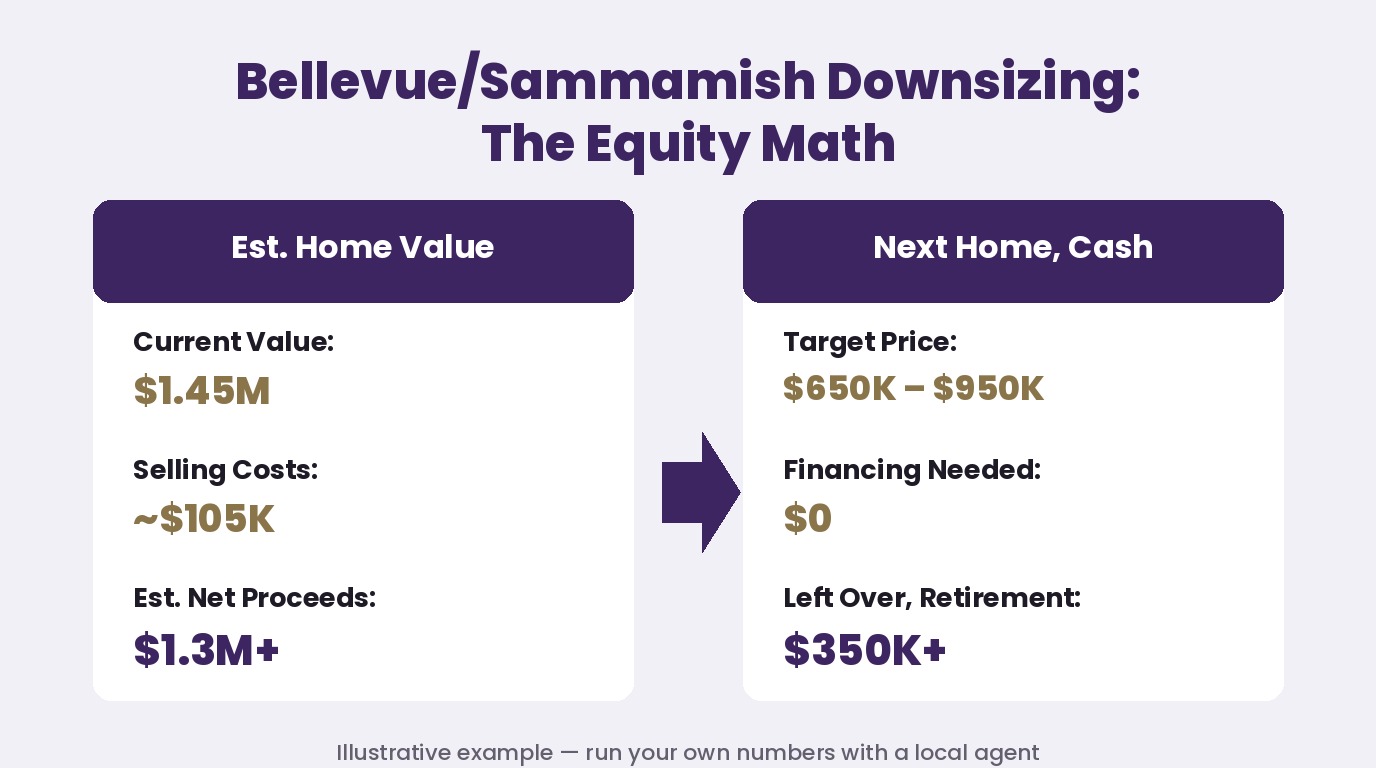
A sample equity walk from current value to net proceeds after selling costs and REET.
From there, subtract selling costs. Budget roughly 6 to 7% of your sale price for agent commission, and add Washington’s Real Estate Excise Tax, which runs graduated rates starting around 1.28% and climbing on the portion of your sale price above $3.025 million. On a $1.5 million Bellevue sale, plan for something in the range of $95,000 to $115,000 in combined commission and REET, before any repair credits or concessions. Your net proceeds are what is left after that math, not your sale price. I break down a full worked example on a comparable Eastside sale in my Sammamish net proceeds guide, if you want to see the numbers laid out line by line.
Here is the part that matters most: Washington does not tax real estate capital gains at the state level. At the federal level, if you have lived in the home as your primary residence for at least two of the last five years, married couples can exclude up to $500,000 in gain, and single filers up to $250,000. For most longtime Eastside owners, that exclusion covers most or all of the taxable gain. Talk to a CPA to confirm your specific number, but for most people in this situation, the tax bill is smaller than they expect.
The result for a lot of Bellevue and Sammamish sellers: net proceeds well north of $1 million, sometimes $1.5 million or more, depending on how long you have owned and what you paid. That is enough to buy a smaller home, a townhome, or a condo in many parts of King County without touching a mortgage at all.
Why Buy in Cash? The Real Advantages
A cash purchase is not just about skipping a mortgage payment. It changes how competitive your offer looks and how much control you have over your own timeline.
Your offer gets taken more seriously
In a market where sellers still worry about financing falling through, a cash offer with no loan contingency is a cleaner, faster deal. That matters most on well-priced homes in tight neighborhoods where you may still see competition, even with King County inventory up from where it was two years ago.
If you are weighing the reverse move, trading up rather than down, the same equity math shows up in my Bellevue move-up buyer’s guide.
You skip the interest cost entirely
At today’s rates, financing even a $700,000 purchase means real interest paid over the life of the loan. Paying cash means that money stays with you instead of a lender. It also means no appraisal contingency tied to a loan, which removes one more point where a deal can fall apart.
Your monthly cost drops dramatically
No mortgage payment on the next home means your fixed monthly cost becomes property tax, insurance, and maintenance or HOA dues. For a lot of people downsizing specifically to reduce their monthly financial pressure in retirement, this is the entire point.
You have more flexibility on timing
Cash buyers are not tied to a lender’s underwriting timeline. You can often close faster, which gives you more leverage to negotiate price or close on your own schedule rather than a bank’s.
None of this means a cash purchase is automatically the right move for everyone. If keeping some funds liquid for retirement, healthcare, or helping family matters more to you than owning outright, a smaller mortgage on the next home might make more sense even with strong equity. Run both scenarios before you commit to either one.
Sell First or Buy First? Structuring the Timing
This is where most downsizing sellers in Bellevue and Sammamish get stuck. You need your equity to buy in cash, but you do not want to sell your current home and end up homeless between closings, or worse, rushed into a purchase you did not fully vet.
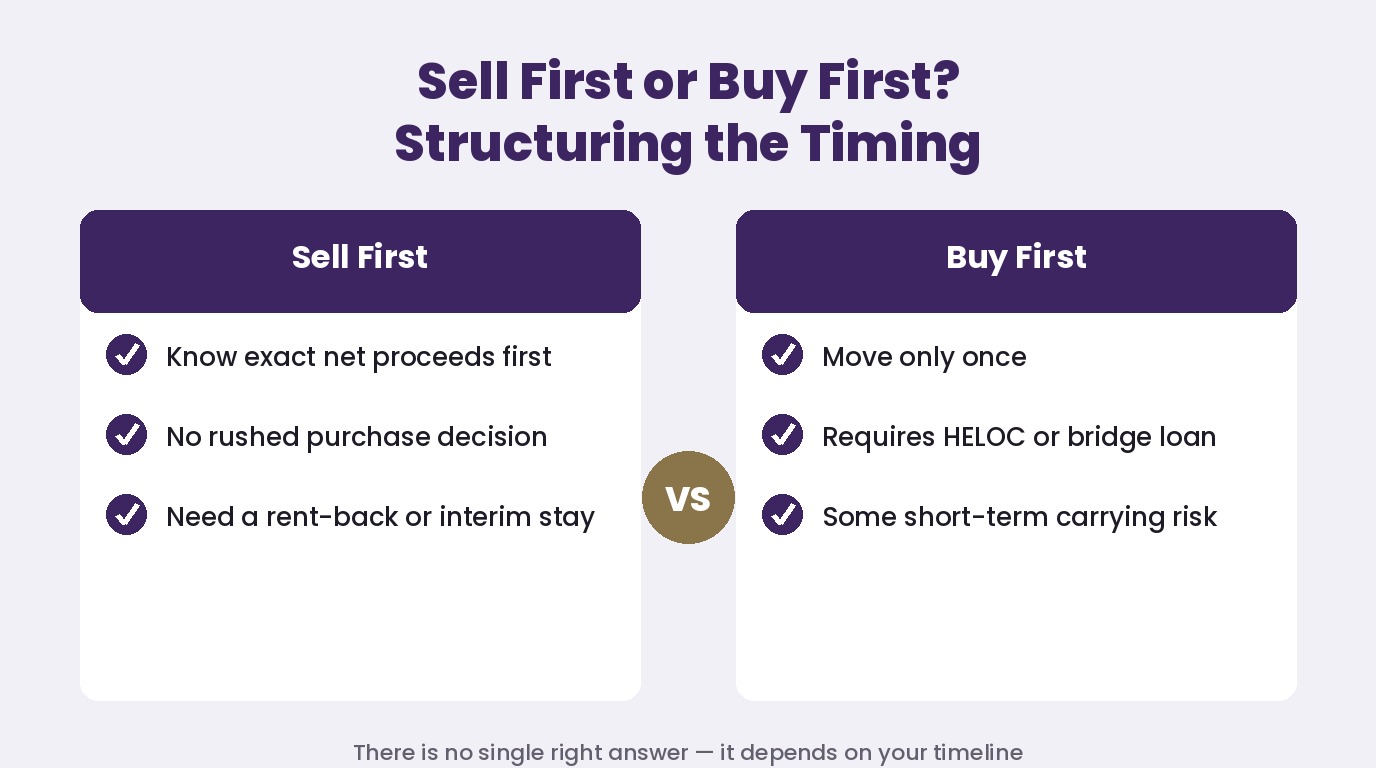
Sell first for certainty on your proceeds. Buy first with a bridge loan or HELOC to move only once.
Selling first is the cleanest path if your timeline allows it. You know your exact net proceeds before you make an offer on anything, which means you can shop with real numbers instead of estimates. The tradeoff is you need somewhere to land in the gap, whether that is a rent-back agreement on your sale, a short-term rental, or staying with family while you find the right next home.
Buying first works if you have the equity to bridge the gap. Some Eastside sellers use a HELOC or bridge loan against their current home’s equity to fund the next purchase before their sale closes, then pay it off with sale proceeds. This lets you move once instead of twice, but it requires qualifying for bridge financing and carrying some short-term risk if your home takes longer to sell than expected. For the full comparison of financing tools that can bridge this gap, see my HELOC vs. cash-out refinance guide.
A rent-back agreement is often the simplest bridge. If you sell first but need a few extra weeks to find and close on the next home, a rent-back lets you stay in your current house as the buyer’s tenant for a short period after closing. It is one of the most common tools I use with Eastside sellers navigating exactly this kind of transition, and Washington’s standard rent-back form caps the period at three months, which is usually plenty of runway.
The right structure depends on how firm your timeline is and how much liquidity you want to carry during the transition. There is no universally correct answer here. What matters is deciding on purpose instead of defaulting into whichever option feels least stressful in the moment.
Deciding how to structure the sale and purchase timeline is the hardest part of downsizing, not the math.
Where the Equity Actually Goes: Landing Spots on the Eastside and Beyond
Once you know your net proceeds, the next question is where that money buys you a comfortable next chapter without a mortgage.
Staying in Bellevue or Sammamish, smaller footprint. A well-maintained condo or townhome on the Eastside can run anywhere from $600,000 to $1 million depending on the building, HOA amenities, and proximity to downtown Bellevue or the Sammamish plateau. If staying close to your current community, doctors, and social circle matters most, this keeps you local while still freeing up substantial cash.
Moving to South King County. Cities like Renton, Kent, Covington, and Maple Valley offer smaller single-family homes and townhomes typically in the $500,000 to $700,000 range, a meaningful step down from Eastside pricing. This route often leaves the largest amount of leftover cash for retirement, travel, or helping the next generation, while still keeping you within a reasonable drive of the Eastside.
A 55+ community. Communities like Providence Point in Issaquah combine low-maintenance living with built-in social connection, which appeals to a lot of Bellevue and Sammamish sellers who want less upkeep without losing the neighborhood feel they are used to.
Whichever direction you land, the math usually works in your favor if you have owned on the Eastside for more than a decade. The harder decision is rarely financial. It is deciding what kind of life you actually want in the next home before you start touring listings.
What This Means for You as a Move-Down Seller
If you own in Bellevue or Sammamish and the house has more space than you use, the math is almost certainly in your favor right now. Get an accurate current valuation first, not a guess. Run your actual net proceeds after commission, REET, and your federal exclusion. Then decide, deliberately, whether selling first or bridging the gap with a HELOC or rent-back fits your situation better.
The goal is not just to downsize. It is to walk into your next home without a mortgage payment hanging over retirement, using equity you already earned by staying put on the Eastside this long. For the broader framework on deciding whether downsizing makes sense in the first place, my King County empty nester downsizing guide covers the full decision, from timing to what to do with decades of accumulated belongings.
FAQ
How much equity do Bellevue and Sammamish homeowners typically have?
It depends heavily on purchase date. Owners who bought before 2015 in Bellevue or Sammamish often have $700,000 to $1.2 million or more in equity today, since median prices in both cities have roughly doubled or more over that period. The only way to know your real number is a professional valuation, not an automated estimate.
Can I really buy my next home in cash after selling in Bellevue or Sammamish?
For many longtime owners, yes. If your net proceeds after commission, REET, and taxes exceed the price of your target home, a cash purchase is realistic. This is most common when downsizing to a smaller home, condo, or a lower-cost area like South King County.
Do I owe capital gains tax when I sell my Eastside home?
Washington state does not tax real estate capital gains. At the federal level, married couples can exclude up to $500,000 in gain, and single filers up to $250,000, if the home was your primary residence for at least two of the last five years. Most longtime Eastside owners fall within or close to this exclusion, but confirm your specific situation with a CPA.
Should I sell my current home before buying the next one?
Selling first gives you certainty on your exact net proceeds before you shop. If you need to avoid a housing gap, a rent-back agreement or a bridge loan against your current equity can let you buy first or bridge the timing without a double move.
Is a cash offer really an advantage in the current Bellevue and Sammamish market?
Yes, though the advantage varies by property. Well-priced Eastside homes still draw competitive interest even with more inventory available than a few years ago. A cash offer with no financing contingency is typically viewed as lower risk by sellers and can help you win in a competitive situation.
What if I want to keep some of my equity invested instead of paying all cash?
That is a reasonable choice, not a compromise. Some sellers use part of their proceeds for a cash purchase and keep the rest liquid, or take a small mortgage on the next home specifically to preserve cash for retirement or healthcare needs. Run both scenarios with your financial advisor before deciding.
I get asked about these programs constantly by King County sellers who found them through a Google search or a Facebook ad. Knock. Orchard. HomeLight’s Buy Before You Sell. They all promise the same thing: buy your next house before you sell your current one, skip the contingent offer, move once instead of twice.
All three actually operate here, which surprises some sellers who’ve read older posts claiming otherwise. What most comparisons miss is a fairer question than “which is cheapest”: every one of these transactions still involves a real estate agent and a commission. The programs just handle that piece differently, and that difference matters more than the headline fee percentage.
What These Programs Actually Solve
Every one of these programs exists to fix the same problem: you found the house you want, but your equity is still locked inside the house you’re living in. In King County right now, that problem is real. The county’s median sold price sits around $845,000, months of supply is running about 3.9, and the median days on market is 21. That’s still a market where a clean, non-contingent offer beats a contingent one most of the time, especially in tighter Eastside segments like Bellevue and Sammamish.
These three programs are one path through a bigger decision. If you’re weighing whether to sell and buy at the same time at all, or how buy-first programs stack up against a straightforward bridge loan or HELOC, those posts cover the broader framework. This one stays focused on the three named programs themselves.
So the appeal makes sense. You get access to your equity before your old house sells, you make a stronger offer on the new one, and you avoid living through two moves in three months. The part that gets skipped over is that “buy before you sell” isn’t one product. It’s three different structures, and they handle your real estate agent relationship in three different ways.
The Real Difference: Who You’re Required to Work With
Here’s what most comparisons of these three programs get wrong. They quote each program’s fee side by side as if that fee is the total cost, when in every case you’re also paying a real estate agent to actually list and sell your home. The programs just differ in whether you get to choose that agent.
Knock is the most flexible: Knock’s own FAQ confirms “you can work with any agent for listing your current home and the purchase of your new home.” Their roughly 2.25% fee is a separate charge on top of whatever commission you negotiate with your own agent.
HomeLight works through a network of local agents. You’re not required to use your existing agent, and you’re typically matched with a “certified HomeLight Buy Before You Sell agent” from their network. That agent still earns a standard commission, separate from HomeLight’s flat 2.4% fee.
Orchard is the one true exception: their own FAQ states plainly that “you will need to use an Orchard agent to help you sell your current home” (you can use an outside agent to buy, but not to sell). Because Orchard is acting as your listing brokerage, their quoted fee bundles a full 3-6% commission together with a separate 1.9-2.4% program fee. It looks like one number, but it’s doing the job of two separate charges the other programs keep apart.
Once you line these up honestly, the total cost gap between the three narrows considerably. Orchard isn’t necessarily the most expensive option, it’s the one where the agent commission is baked into the number you see instead of being a separate line item you’d pay Knock’s or HomeLight’s agent anyway.
Knock: Bring Your Own Agent
Knock’s Home Swap program is, at its core, a bridge loan. You get funds to cover your down payment and carrying costs on the new home while your old one sits on the market, and in some structures you can rent back your new home briefly during the transition.
The program fee: a fixed fee of about 2.25% of your new home’s purchase price, plus roughly $1,850 in estimated closing costs that vary by loan amount and state requirements. On a $700,000 replacement home, that fee alone runs close to $15,750, before closing costs. Your listing agent’s commission is separate and negotiable, since you’re free to use whichever agent you already trust.
The safety net: if your old home hasn’t sold within six months, Knock will make a non-contingent backup offer to buy it from you directly.
So what does this mean for you? Knock is available for sellers listing in Washington state, including King County. Because you keep your own agent, this is a good fit if you already have a relationship you don’t want to give up. If your home is priced right and likely to move inside that six-month window, the backup offer is more of an insurance policy than something you expect to use.
Orchard: Their Agent, Bundled Pricing
Orchard’s Move First program does operate in the Seattle metro area, including King County. Orchard expanded into Washington in 2022 as part of its push into the Western U.S., and its own site currently lists Seattle among its active selling markets. If you’ve read that Orchard skips this market entirely, that’s out of date.
What’s different about Orchard is that you’re required to list with Orchard’s own agents. That’s why their pricing looks higher at first glance: a 3-6% brokerage commission plus a separate 1.9-2.4% program fee (minimum $9,000). On a $700,000 sale, that’s roughly $21,000 to $42,000 in commission plus $13,300 to $16,800 in program fee, for a combined total in the $34,000 to $59,000 range. But that commission is money you’d be paying an agent under any of these three programs anyway, it’s just visible here instead of being a separate line item.
The safety net: if your home hasn’t sold within 120 days, Orchard extends a guaranteed backup offer, with the option to extend the listing period further on some plans.
So what does this mean for you? Orchard is a legitimate option in King County, not a wasted application. The real trade-off isn’t price, it’s that you give up your choice of listing agent to get it. If you already have an agent relationship you value, that’s the real cost of Orchard, more than the dollar figure on the quote.
HomeLight: A Network Agent, Not Necessarily Your Own
HomeLight’s Buy Before You Sell program works through a network of local agents and lenders rather than an in-house brokerage model. You get an equity unlock to use toward your new down payment, you buy first, then an agent lists and sells the old home on the open market.
The program fee: a flat fee of 2.4% of your departing home’s sale price in most markets, with regional variations (Florida runs 2.9%, parts of the Chicago area charge a flat $1,500 instead). On an $845,000 King County median-priced home, that 2.4% fee comes out to roughly $20,280, separate from your agent’s commission.
The safety net: if your home hasn’t sold within 90 to 120 days depending on the source you check, HomeLight extends a backup purchase offer. Under their “Upside Protection” structure, if the home eventually sells for more than that backup offer, you get the difference back, minus HomeLight’s costs and the agent’s commission.
So what does this mean for you? HomeLight is available in Washington state, and the flat 2.4% program fee is simple to run the math on. But confirm up front whether you’ll be matched with a HomeLight network agent or whether your own agent can participate, since that varies and directly affects whether you keep the representation and local market knowledge you already have in King County’s submarket-by-submarket pricing.
The Local Angle: What This Costs a King County Seller Specifically
Run the real numbers on a $700,000 King County departing home and a $700,000 replacement home, and here’s how it breaks down once agent commission is accounted for on all three.
Knock Home Swap
Program fee: about 2.25% of the new home’s price (~$15,750 on a $700K purchase) plus roughly $1,850 in closing costs, plus your own agent’s commission (typically 2.5-3% listing side, negotiated separately).
Agent choice: any agent you want. Backup offer window: 6 months.
HomeLight Buy Before You Sell
Program fee: flat 2.4% of the departing home’s sale price (~$16,800 on a $700K sale), plus your agent’s commission (network-matched in most cases, confirm up front).
Agent choice: typically a network agent. Backup offer window: 90 to 120 days.
Orchard Move First
All-in fee: 3-6% brokerage commission (~$21,000 to $42,000 on a $700K sale) plus a 1.9-2.4% program fee, $9,000 minimum (~$13,300 to $16,800). Combined total: roughly $34,300 to $58,800, but this figure already includes the agent commission the other two programs charge separately.
Agent choice: must use Orchard’s in-house agent to sell. Backup offer window: 120 days.
Add a comparable commission to the Knock and HomeLight numbers and the three programs land closer together than the headline fees suggest. The number that should drive your decision isn’t which fee percentage is smallest, it’s whether keeping your own agent (Knock), accepting a network match (HomeLight), or trading agent choice for a single bundled number (Orchard) fits how you want to sell.
All three programs operate in King County, and once agent commission is counted consistently, their total costs are closer than a fee-only comparison suggests.
Compare any of those numbers to a bridge loan or HELOC, and the math often tilts further in your favor if you have the equity and timeline flexibility for a more traditional structure. I’ve written about how bridge loans, HELOCs, and buy-first programs stack up against each other in more detail. It’s also worth asking your lender about lesser-known regional buy-first and bridge programs beyond these three national brands. Several exist, availability and terms vary a lot, and your own agent or lender will know what’s currently on offer for King County.
What This Means for You
If you’re a King County seller with solid equity in your current home and a property that will sell inside 60 to 90 days at a fair price, look hard at a HELOC or bridge loan before any of these three programs. You’ll typically pay less in total cost, and you keep full control of your sale timeline instead of a program’s backup-offer clock.
If your equity is thinner, your timeline is tight, or you need the certainty of a guaranteed backup offer to make a competitive, non-contingent offer on your next home, all three programs are real options here. Start with the agent-choice question, not the fee percentage: do you want to keep your current agent (Knock), are you open to a matched agent (HomeLight), or is a single bundled number worth giving up that choice (Orchard)? Then run the actual numbers, including commission, on your specific purchase and sale prices.
Either way, don’t sign up for a program based on a “top 3 options” article that compares program fees without accounting for who’s earning the commission. That’s the mistake I see most often, and it’s an easy one to avoid once you’ve seen how the fees actually break down.
FAQ
Is Orchard’s Move First program available in King County, Washington?
Yes. Orchard expanded into the Seattle metro area in 2022 and currently lists Seattle, WA among its active Move First markets, along with Washington state more broadly for its buying services. It’s a real option for King County sellers, though it requires listing with Orchard’s own in-house agent.
Can I use my own real estate agent with Knock, HomeLight, or Orchard?
With Knock, yes, their own FAQ confirms you can work with any agent for both the sale and purchase. With HomeLight, you’re typically matched with an agent from their network; confirm up front whether your existing agent can participate. With Orchard, no: you must use an Orchard agent to sell your current home, though you can use an outside agent to buy your next one.
Is Orchard actually more expensive than Knock or HomeLight?
Not necessarily. Orchard’s quoted fee looks higher because it bundles a full 3-6% agent commission together with its 1.9-2.4% program fee. Knock and HomeLight quote a smaller program fee, but you still pay a separate agent commission on top of it under those programs too. Once commission is counted consistently across all three, the total costs land in a similar range.
How much does Knock’s Home Swap program cost in King County?
Knock charges a fixed program fee of about 2.25% of your new home’s purchase price, plus an estimated $1,850 in closing costs. On a $700,000 replacement home, that’s roughly $17,600 in program fees, plus your own agent’s commission negotiated separately.
What happens if my home doesn’t sell in time with these programs?
Knock provides a non-contingent backup offer if your home hasn’t sold within six months. HomeLight’s window runs 90 to 120 days, and Orchard’s runs 120 days with a possible extension. All three backup offers typically come in below what a well-priced, patiently marketed open-market sale would fetch.
Is a bridge loan or HELOC cheaper than these buy-first programs?
Often, yes, if you have enough equity and a realistic sale timeline. Bridge loans and HELOCs don’t carry a program fee tied to a percentage of your home’s value, and you still choose your own agent. Costs run more toward loan origination and interest. I break down the full comparison in my guide to buy-first financing options in King County.
Are Knock, Orchard, and HomeLight the only buy-first programs available in King County?
No. These three are the best-known brands, but several lesser-known mortgage lenders offer similar bridge-style programs with their own fee structures and availability. Ask your agent or preferred lender what’s currently offered in King County before assuming these three are your only options.
The data on which repairs pay you back at closing, and which ones just cost you a slower sale.
I’ve spent nine years walking through King County homes doing BPO work for banks and institutional clients. I see the same pattern every week: a seller spends $18,000 renovating a kitchen that a buyer plans to tear out anyway, then skips the $400 gutter cleaning that would have kept the inspector from writing up water damage. The math is backwards.
This post is the ROI-focused companion to my room-by-room guide on preparing your home for sale. That guide walks through the full prep checklist. This one is narrower: which of those repairs actually pay you back, and which ones you can skip without costing yourself a dime at closing.
Right now, King County has 3.9 months of supply and homes are sitting a median of 21 days before going under contract. That is still a seller’s market, but it is looser than it was a year ago, with prices down about 4% year over year. In a market like this, buyers have more homes to compare. A home that looks tired next to three well-kept competitors sits longer and sells for less. The repairs that matter are the ones that change how a buyer feels walking in the door, not the ones that satisfy your own taste.
Here is the honest breakdown of what earns its money back before you list, and what to leave alone.
The Repairs Worth Doing
Garage Door Replacement
This is the single best-returning project a seller can make right now. National Cost vs. Value data puts garage door replacement at roughly 268% return, meaning a $4,700 door adds back over $12,500 in perceived value. It is the first thing a buyer sees pulling into the driveway, and an old, dented, or mismatched door reads as neglect before anyone steps inside. In King County’s rain-heavy climate, doors also take a beating from moisture and rarely age well past 15 years.
So what this means for you: if your garage door is original to the house and the house is more than 15 years old, this is close to a guaranteed win. Get two quotes and do it before your photos are taken.
Garage door replacement returns roughly 268% of its cost, the highest ROI of any pre-sale repair.
Front Door and Entry Hardware
A steel entry door replacement returns around 216%. Buyers form an opinion of your home in the first ten seconds, standing at your front door waiting for their agent to unlock it. A scratched, faded, or dated door undercuts everything else you have done.
So what this means for you: this is a same-week fix. If a full replacement is not in the budget, a professional repaint plus new hardware gets most of the visual benefit for a fraction of the cost.
Exterior Paint and Siding Touch-Up
Manufactured stone veneer accents run close to 208% ROI, but most sellers do not need to go that far. A full or partial exterior repaint, especially around King County’s older housing stock in Renton, Kent, and Auburn, does similar work at a lower cost. Faded, chalky, or peeling paint signals deferred maintenance to a buyer’s inspector before the inspection even happens.
So what this means for you: focus on the front-facing elevation and any trim that is visibly weathered. You do not need to repaint the whole house to get the visual lift.
Roof, Gutter, and Moss Cleanup
This one is specific to living here. Moss grows fast in the Pacific Northwest’s wet, shaded conditions, and it does real damage: it holds moisture against the roof surface, lifts shingles, and shortens the life of the roof. A mossy roof and stained siding read as bigger problems than they are, and they will show up on the inspection report regardless.
So what this means for you: a professional moss treatment and gutter cleaning typically runs a few hundred dollars and prevents an inspector from flagging “roof moss and potential moisture intrusion” as a line item that spooks a buyer during their option period. Cheap fix, outsized effect on how the report reads.
Moss traps moisture and lifts shingles. A cheap cleanup now prevents a costly inspection flag later.
Minor Kitchen and Bathroom Refresh
A minor kitchen update, cabinet refacing or repainting, new hardware, updated fixtures, a countertop swap, returns roughly 113% nationally. That is very different from a full gut renovation. The goal is to remove anything that looks dated (brass fixtures, dark laminate, a stained sink) without spending on a rebuild the next owner may not even want.
So what this means for you: set a hard budget here. If new cabinets and countertops start pushing past $10,000-$15,000 for the room, you have crossed from refresh into remodel, and the numbers below explain why that is the wrong move before a sale.
Garage doors and entry doors return more than double their cost. A full kitchen remodel returns less than half.
Three Repairs Worth Skipping
One Honest Caution
A Full Kitchen or Bathroom Remodel. This is the repair sellers most often regret. A major upscale kitchen remodel returns closer to 40% of its cost nationally. You are spending your own money to build a kitchen for a stranger, and that stranger has their own taste. I have priced homes where the seller’s $60,000 kitchen remodel from two years earlier added almost nothing to the appraised value, because the next buyer’s agent and their client saw a kitchen they would have designed differently anyway.
So what this means for you: if your kitchen or bathroom is functional but dated, do the minor refresh above. Save the full remodel for a house you plan to keep living in.
One Honest Caution
Replacing Systems That Still Work. A furnace, water heater, or heat pump that is old but functioning is a disclosure conversation, not a $10,000-$12,000 replacement project. Buyers do not pay a premium for a brand-new HVAC system the way they do for a renovated kitchen. What they actually want is the confidence that the system works and has been maintained.
So what this means for you: get the unit serviced, keep the maintenance records, and be ready to offer a credit if the buyer’s inspector wants a newer system. That is almost always cheaper than replacing it yourself, and it puts the decision in the buyer’s hands where it belongs. If you want the full math on credits, concessions, and what typically shows up in a King County closing statement, I break it down in my seller concessions guide and full cost-to-sell breakdown.
One Honest Caution
Elaborate Landscaping Overhauls. Intricate water features, exotic garden beds, and complex hardscaping can actually work against you. A buyer touring a home in Covington or Maple Valley is not looking for a project. They are picturing a Saturday morning, not a weekend of ongoing yard maintenance they did not sign up for.
So what this means for you: clean, simple, and low-maintenance beats elaborate every time. Mow, edge, mulch, and trim. Save the ambitious landscaping plans for your next house.
The Local Angle: What I See in King County Specifically
Doing BPO work across east and south King County every week puts me inside homes at every price point and every condition, long before they hit the market. The pattern holds across the board: the homes that sell fastest and closest to list price are not the ones with the newest kitchens. They are the ones where nothing looks broken, neglected, or overdue.
King County’s older housing stock, especially in Renton, Kent, and Auburn, tends to carry more deferred exterior maintenance than newer construction in Sammamish or Issaquah. If your home was built before 2000, budget extra attention for roof condition, exterior paint, and drainage. Those are the items buyers’ inspectors flag hardest in this climate, and they are also the cheapest to get ahead of. For a full walkthrough of what a King County inspector actually looks at, see my home inspection seller guide.
What This Means for You as a Seller
Before you spend a dollar, walk your home like a buyer would: pull up to the curb, walk to the front door, and stand in the kitchen. Fix what would make you hesitate at each of those three stops. That is almost always cheaper, faster, and more effective than a full renovation, and it is the difference between a home that competes in a 3.9-months-of-supply market and one that sits.
If you are not sure which repairs on your specific home will move the needle, that is exactly the kind of question a BPO-trained eye is built to answer. I look at these trade-offs on properties across King County every week, and I am glad to walk through your specific list with you before you spend anything.
FAQ
Do I need to replace my roof before selling in King County?
Only if it is failing an inspection or clearly near the end of its life. A roof with moss, minor wear, or cosmetic issues usually just needs cleaning and minor repair, not full replacement. Save the full re-roof unless your inspector or a roofer tells you it is structurally necessary.
Is it worth remodeling my kitchen before I sell?
Rarely for a full remodel. A minor refresh, new hardware, paint, updated fixtures, returns over 100% of its cost. A full gut renovation typically returns less than half, because you are paying full remodel prices for taste the next buyer may not share.
What repairs do King County home inspectors flag most often?
Roof and gutter issues (especially moss and drainage), water intrusion signs, aging water heaters, and electrical panel age are the most common flags I see across South and East King County. Getting ahead of these before listing avoids surprises during the buyer’s inspection period.
Should I fix a home inspection issue or offer a credit instead?
For big-ticket items like an aging furnace or roof, a credit is often cheaper and faster than doing the work yourself, since you are not paying retail contractor pricing under a deadline. For cheap, visible items like a garage door or exterior paint, fixing it before listing usually beats a credit because it also improves your photos and first impression.
How much should I budget for pre-listing repairs in King County?
Most sellers doing the curb-appeal and system-maintenance items above spend somewhere between $1,500 and $5,000, well below the cost of a single kitchen remodel, and see a meaningfully faster sale in a market where days on market already sit around 21.
Does a mossy roof actually hurt my sale price?
It can, both directly through an inspection flag and indirectly through first impressions. A mossy roof and stained siding read as bigger problems than they usually are, and a buyer’s initial gut reaction happens before they ever read the inspection report.
Kent and Renton owners eyeing Sammamish or Issaquah are staring at a $580K-$632K price gap. Here’s how existing home equity actually closes it, city by city.
Most people find their next house before they’ve figured out how to leave the one they’re in.
I do BPO work across east and south King County every day, and the question I hear more than any other from move-up sellers isn’t “what’s my house worth.” It’s “how do I not end up homeless for three weeks between closings.” Fair question. The honest answer is that selling and buying at the same time is one of the most stressful parts of a real estate transaction, and it’s also one of the most manageable, if you pick the right strategy for your situation instead of guessing your way through it.
This post is the hub for that decision. There are really only three ways to structure a double move in King County right now, and which one fits you depends on your equity, your risk tolerance, and how competitive the market is in the city you’re buying into. I’ll walk through all three here, then point you to the deep-dive posts on financing and paperwork so you’re not reading a 4,000-word article when you just need to know which lane to pick.
The Three Ways to Structure a Double Move
Every version of “how do I buy and sell at the same time” comes down to one of three structures. There’s no fourth secret option a lender is hiding from you. It’s sequencing, and each sequence trades speed for cost or cost for risk.
Sell First, Then Buy
You put your current home on the market, get it under contract, and negotiate a rent-back period from your buyer so you can stay in the house while you shop for your next one. This is the most common approach I see in King County right now, and it’s the one I recommend to most sellers unless there’s a specific reason not to.
The math works because King County inventory is still tight enough that sellers have leverage to ask for a rent-back, and buyers are used to granting one. A 30 to 45 day rent-back on a $700,000 to $900,000 South or East King County sale typically runs somewhere in the range of $150 to $200 per day, based on the buyer’s carrying costs. That’s real money, but it’s a fraction of what a bridge loan costs, and you’re not carrying two mortgages while you wait.
The tradeoff: you don’t have a home lined up when you accept an offer on your current one. If the market in your target city is competitive, you’re shopping on a clock, and that pressure can push you toward a house you like instead of the one you actually want.
Buy First With a Bridge Loan or HELOC
You tap your current home’s equity through a bridge loan or a home equity line of credit, use that cash to buy your next home without a sale contingency, then sell your current home once you’ve moved. This is the fastest path and the one that makes your offer strongest in a multiple-offer situation, because a non-contingent offer backed by cash beats a contingent offer every time.
It’s also the most expensive option. Bridge loans in this market run roughly 10 to 13% APR plus 1.5 to 3 points, and you’re paying two mortgage payments during the overlap. On a fully drawn $500,000 bridge loan held for four months at 12%, you’re looking at close to $30,000 in interest and fees before you’ve paid a single closing cost on either house. A HELOC is usually cheaper than a bridge loan if you already have one in place or can get approved quickly, but it still means carrying two housing payments for however long the overlap lasts.
I steer buy-first toward sellers with substantial equity and a low tolerance for losing the house they want. If you’re in Bellevue or Sammamish with 40% or more equity in your current home, this option is worth a serious look. If your equity is tighter, the carrying cost eats into the math fast. For the full head-to-head breakdown of bridge loans versus HELOCs versus cash-out refinancing, including real numbers on cost and timing, read that guide before you commit to either one.
Write a Contingent Offer
You make an offer on your next home that’s contingent on selling your current one, using NWMLS Form 22B. This is the cheapest option on paper because you’re not paying bridge loan interest or a rent-back fee. It’s also the weakest offer you can put in front of a seller, because most sellers will attach a kick-out clause that lets them keep marketing the house and gives you 48 to 72 hours to remove your contingency if a better offer shows up.
Contingent offers do work in King County when the market softens enough that sellers have fewer competing offers to choose from. At around 2.9 months of supply, which is close to where several South King County submarkets have sat this year, a clean contingent offer with a strong sold-comp price and a short kick-out window can get accepted. In Bellevue or Sammamish, where competition stays tighter, a contingent offer is a much harder sell.
The mechanics of writing a contingent offer sellers will actually accept, including how to structure the kick-out timeline and price it competitively, are covered in my contingent offer guide. That one is worth reading closely before you write the offer, because the defaults built into the standard form can work against you if you leave them blank.
Each double-move strategy trades speed for cost, or cost for risk. Pick based on your equity and timeline.
How to Pick the Right Strategy
Start with your equity. If you’re sitting on 35% or more equity in your current home and you can’t stomach losing the house you want, buy-first is worth pricing out. If your equity is more modest, or you’d rather not carry two payments even for a few months, sell-first with a rent-back is almost always the better move.
Next, look at the market you’re buying into, not the market you’re selling in. A seller in Auburn with a contingent offer looking at a home in Kent has decent odds. That same seller looking at a home in Bellevue is competing against buyers who can close without any contingency at all, and the contingent offer usually loses.
At current King County inventory levels, sell-first with a rent-back is the default play for most sellers.
Finally, be honest about your timeline. If you need certainty about where you’re living on a specific date, whether that’s a school year, a job start date, or a lease ending, sell-first with a rent-back gives you the most control, because you’re not depending on finding the right house in a compressed window.
From the Field
Pricing right the first time matters most when you’re on someone else’s clock.
What This Means for You
If you’re planning a move in King County in the next few months, don’t pick a strategy because it’s what a friend did or because it sounds simpler. Run the actual numbers on your equity, price out what a bridge loan or rent-back would really cost, and look honestly at how competitive your target city is right now. That’s the difference between a double move that goes smoothly and one that costs you money or the house you wanted.
If you’re specifically weighing whether this is even the right time to trade up, my Renton move-up guide and the full cost-to-sell breakdown for Washington sellers are the two best next reads. Between the three, you’ll have the full picture on cost, timing, and whether the move pencils out before you talk to a lender.
FAQ
Can I make a non-contingent offer if my current home hasn’t sold yet?
Yes, if you have another way to fund the purchase, most often a bridge loan, a HELOC, or enough cash reserves to carry both payments. Without one of those, you’ll need a sale contingency, which puts you at a disadvantage against other buyers in a competitive King County market.
How long does a rent-back typically last after I sell my King County home?
Most rent-backs I negotiate run 30 to 45 days, though some buyers will agree to 60 days depending on their own timeline and financing. The daily rate is tied to the buyer’s carrying cost on the home, not a fixed number, so it varies by sale price and city.
Is a HELOC or a bridge loan cheaper for buying before I sell?
A HELOC is usually cheaper if you already qualify and have one set up, since it avoids some of the fees baked into a dedicated bridge loan product. A bridge loan can move faster if you need funds quickly and don’t already have a HELOC in place. Both carry real cost, so run the numbers on your specific situation before committing to either.
What happens if my current home doesn’t sell during a contingent offer’s window?
Under NWMLS Form 22B, if you don’t get your home under a valid purchase and sale agreement within the negotiated window, and the seller invokes a kick-out clause after receiving a competing offer, you typically have 48 to 72 hours to remove your contingency or the seller can move forward with the other buyer. You’d get your earnest money back, but you’d lose the house.
Do I need to use the same agent for both my sale and my purchase?
You don’t have to, but it usually helps. Coordinating two closings means your listing agent and your buyer’s agent, plus both title companies and both lenders, all need to stay in sync on dates. One agent managing both sides of your transaction can tighten that coordination significantly.


 Facebook
 X
X
 Pinterest
 Copy Link