

 Facebook
 X
X
 Pinterest
 Copy Link

Most people find their next house before they’ve figured out how to leave the one they’re in.
I do BPO work across east and south King County every day, and the question I hear more than any other from move-up sellers isn’t “what’s my house worth.” It’s “how do I not end up homeless for three weeks between closings.” Fair question. The honest answer is that selling and buying at the same time is one of the most stressful parts of a real estate transaction, and it’s also one of the most manageable, if you pick the right strategy for your situation instead of guessing your way through it.
This post is the hub for that decision. There are really only three ways to structure a double move in King County right now, and which one fits you depends on your equity, your risk tolerance, and how competitive the market is in the city you’re buying into. I’ll walk through all three here, then point you to the deep-dive posts on financing and paperwork so you’re not reading a 4,000-word article when you just need to know which lane to pick.
The Three Ways to Structure a Double Move
Every version of “how do I buy and sell at the same time” comes down to one of three structures. There’s no fourth secret option a lender is hiding from you. It’s sequencing, and each sequence trades speed for cost or cost for risk.
Sell First, Then Buy
You put your current home on the market, get it under contract, and negotiate a rent-back period from your buyer so you can stay in the house while you shop for your next one. This is the most common approach I see in King County right now, and it’s the one I recommend to most sellers unless there’s a specific reason not to.
The math works because King County inventory is still tight enough that sellers have leverage to ask for a rent-back, and buyers are used to granting one. A 30 to 45 day rent-back on a $700,000 to $900,000 South or East King County sale typically runs somewhere in the range of $150 to $200 per day, based on the buyer’s carrying costs. That’s real money, but it’s a fraction of what a bridge loan costs, and you’re not carrying two mortgages while you wait.
The tradeoff: you don’t have a home lined up when you accept an offer on your current one. If the market in your target city is competitive, you’re shopping on a clock, and that pressure can push you toward a house you like instead of the one you actually want.
Buy First With a Bridge Loan or HELOC
You tap your current home’s equity through a bridge loan or a home equity line of credit, use that cash to buy your next home without a sale contingency, then sell your current home once you’ve moved. This is the fastest path and the one that makes your offer strongest in a multiple-offer situation, because a non-contingent offer backed by cash beats a contingent offer every time.
It’s also the most expensive option. Bridge loans in this market run roughly 10 to 13% APR plus 1.5 to 3 points, and you’re paying two mortgage payments during the overlap. On a fully drawn $500,000 bridge loan held for four months at 12%, you’re looking at close to $30,000 in interest and fees before you’ve paid a single closing cost on either house. A HELOC is usually cheaper than a bridge loan if you already have one in place or can get approved quickly, but it still means carrying two housing payments for however long the overlap lasts.
I steer buy-first toward sellers with substantial equity and a low tolerance for losing the house they want. If you’re in Bellevue or Sammamish with 40% or more equity in your current home, this option is worth a serious look. If your equity is tighter, the carrying cost eats into the math fast. For the full head-to-head breakdown of bridge loans versus HELOCs versus cash-out refinancing, including real numbers on cost and timing, read that guide before you commit to either one.
Write a Contingent Offer
You make an offer on your next home that’s contingent on selling your current one, using NWMLS Form 22B. This is the cheapest option on paper because you’re not paying bridge loan interest or a rent-back fee. It’s also the weakest offer you can put in front of a seller, because most sellers will attach a kick-out clause that lets them keep marketing the house and gives you 48 to 72 hours to remove your contingency if a better offer shows up.
Contingent offers do work in King County when the market softens enough that sellers have fewer competing offers to choose from. At around 2.9 months of supply, which is close to where several South King County submarkets have sat this year, a clean contingent offer with a strong sold-comp price and a short kick-out window can get accepted. In Bellevue or Sammamish, where competition stays tighter, a contingent offer is a much harder sell.
The mechanics of writing a contingent offer sellers will actually accept, including how to structure the kick-out timeline and price it competitively, are covered in my contingent offer guide. That one is worth reading closely before you write the offer, because the defaults built into the standard form can work against you if you leave them blank.
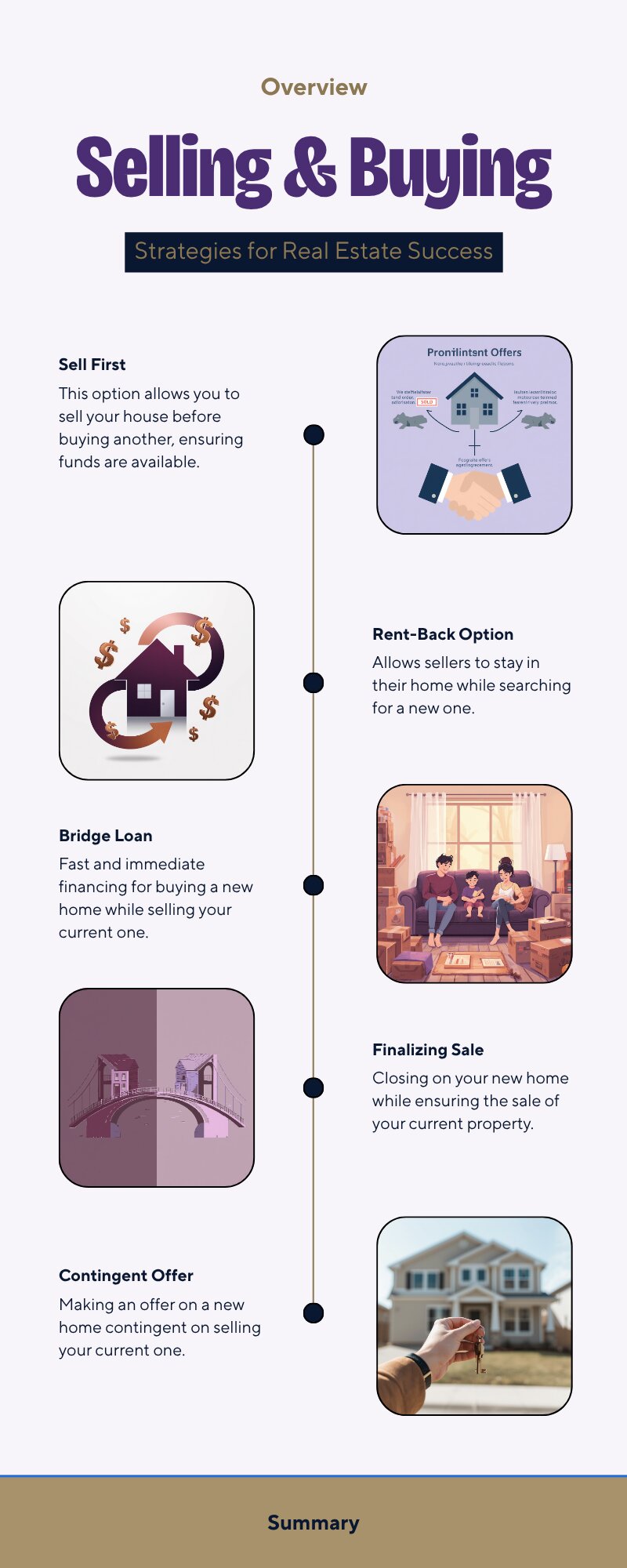
Each double-move strategy trades speed for cost, or cost for risk. Pick based on your equity and timeline.
How to Pick the Right Strategy
Start with your equity. If you’re sitting on 35% or more equity in your current home and you can’t stomach losing the house you want, buy-first is worth pricing out. If your equity is more modest, or you’d rather not carry two payments even for a few months, sell-first with a rent-back is almost always the better move.
Next, look at the market you’re buying into, not the market you’re selling in. A seller in Auburn with a contingent offer looking at a home in Kent has decent odds. That same seller looking at a home in Bellevue is competing against buyers who can close without any contingency at all, and the contingent offer usually loses.
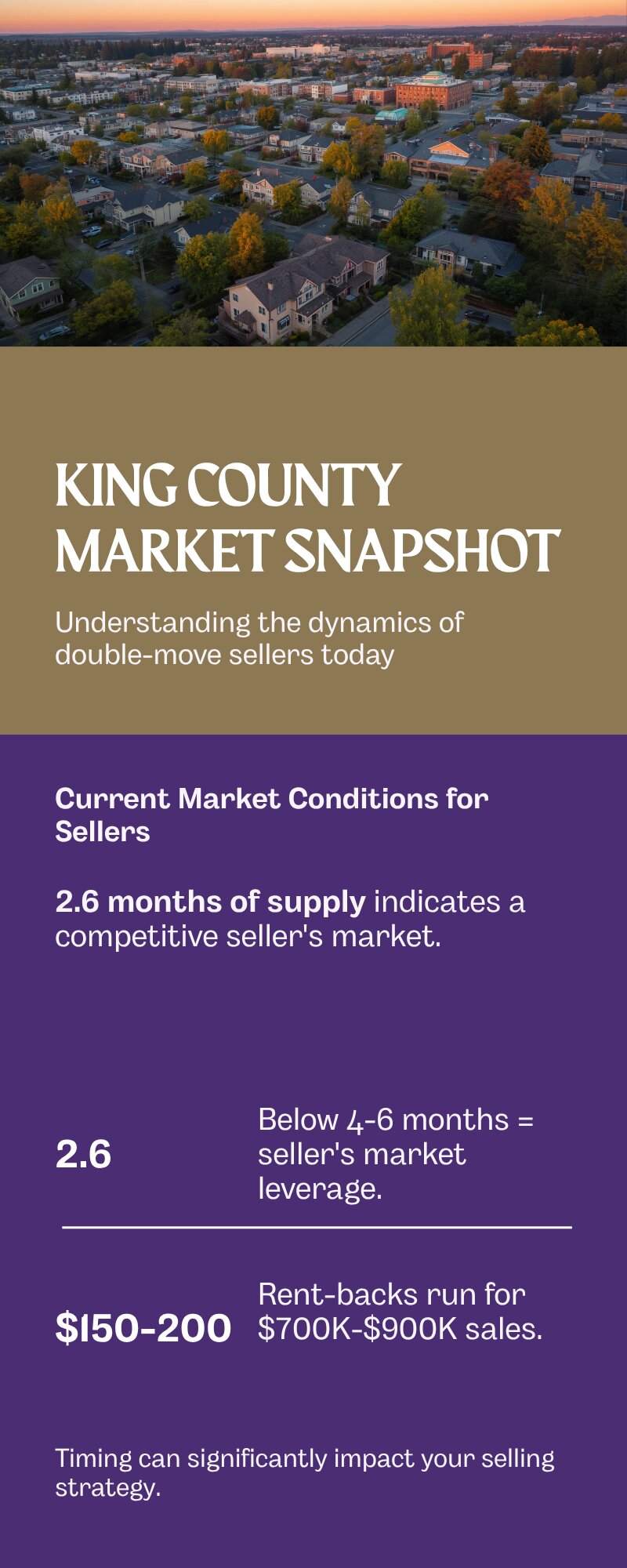
At current King County inventory levels, sell-first with a rent-back is the default play for most sellers.
Finally, be honest about your timeline. If you need certainty about where you’re living on a specific date, whether that’s a school year, a job start date, or a lease ending, sell-first with a rent-back gives you the most control, because you’re not depending on finding the right house in a compressed window.
From the Field

Pricing right the first time matters most when you’re on someone else’s clock.
What This Means for You
If you’re planning a move in King County in the next few months, don’t pick a strategy because it’s what a friend did or because it sounds simpler. Run the actual numbers on your equity, price out what a bridge loan or rent-back would really cost, and look honestly at how competitive your target city is right now. That’s the difference between a double move that goes smoothly and one that costs you money or the house you wanted.
If you’re specifically weighing whether this is even the right time to trade up, my Renton move-up guide and the full cost-to-sell breakdown for Washington sellers are the two best next reads. Between the three, you’ll have the full picture on cost, timing, and whether the move pencils out before you talk to a lender.
FAQ
Can I make a non-contingent offer if my current home hasn’t sold yet?
Yes, if you have another way to fund the purchase, most often a bridge loan, a HELOC, or enough cash reserves to carry both payments. Without one of those, you’ll need a sale contingency, which puts you at a disadvantage against other buyers in a competitive King County market.
How long does a rent-back typically last after I sell my King County home?
Most rent-backs I negotiate run 30 to 45 days, though some buyers will agree to 60 days depending on their own timeline and financing. The daily rate is tied to the buyer’s carrying cost on the home, not a fixed number, so it varies by sale price and city.
Is a HELOC or a bridge loan cheaper for buying before I sell?
A HELOC is usually cheaper if you already qualify and have one set up, since it avoids some of the fees baked into a dedicated bridge loan product. A bridge loan can move faster if you need funds quickly and don’t already have a HELOC in place. Both carry real cost, so run the numbers on your specific situation before committing to either.
What happens if my current home doesn’t sell during a contingent offer’s window?
Under NWMLS Form 22B, if you don’t get your home under a valid purchase and sale agreement within the negotiated window, and the seller invokes a kick-out clause after receiving a competing offer, you typically have 48 to 72 hours to remove your contingency or the seller can move forward with the other buyer. You’d get your earnest money back, but you’d lose the house.
Do I need to use the same agent for both my sale and my purchase?
You don’t have to, but it usually helps. Coordinating two closings means your listing agent and your buyer’s agent, plus both title companies and both lenders, all need to stay in sync on dates. One agent managing both sides of your transaction can tighten that coordination significantly.
Your guide to life outside Seattle.
253-350-0045 ·
greg@livingoutsideseattle.com ·
www.livingoutsideseattle.com
