EastsideIssaquahKing County Cities May 17, 2026

Living in Mirrormont Issaquah

Living in Mirrormont, Issaquah: What You Need to Know in 2026

Mirrormont is the acreage neighborhood that sits in unincorporated King County south of Issaquah, tied to Issaquah identity for shopping, schools, and lifestyle. In 2026, with buyers looking for lot size, room for animals, and the kind of privacy that simply does not exist on the Eastside anymore, Mirrormont is one of the strongest options in the region. If you want a home where you can have horses, chickens, a workshop, and a real garden without an HOA telling you what color to paint your trim, Mirrormont delivers.

What is it actually like to live in Mirrormont in 2026?

On a weekday morning, Mirrormont feels like real country living. Driveways are long, lots are screened by mature firs and cedars, and you can hear birds and the occasional sound of a horse from a neighbor’s pasture. Most residents leave for work between 7 and 8 AM, heading north toward Issaquah and the I-90 corridor. The roads are narrow and winding, which keeps speeds down and gives the neighborhood a real rural character.

On a weekend, Mirrormont stays quiet but turns more active for residents. People walk dogs along the loop roads, ride horses on the trail easements that connect properties, and head into Tiger Mountain State Forest for hikes. The community pool opens in the summer and becomes a real gathering spot. Annual events like the neighborhood garage sale weekend and the Easter egg hunt give residents a reason to actually meet each other, which matters in a neighborhood where you cannot see your neighbor’s house.

Most residents are a mix of long-time owners who bought in the 1970s and 1980s when Mirrormont was considered the country, plus newer buyers from Bellevue and Issaquah who specifically wanted acreage and quiet. Many residents work from home or run small businesses out of detached shops on the property. What separates Mirrormont from other Issaquah-area neighborhoods is the lot rules. Most properties allow horses, chickens, and outbuildings without the restrictions that define master-planned communities. The land is the asset, and what you can do on it is the real value.

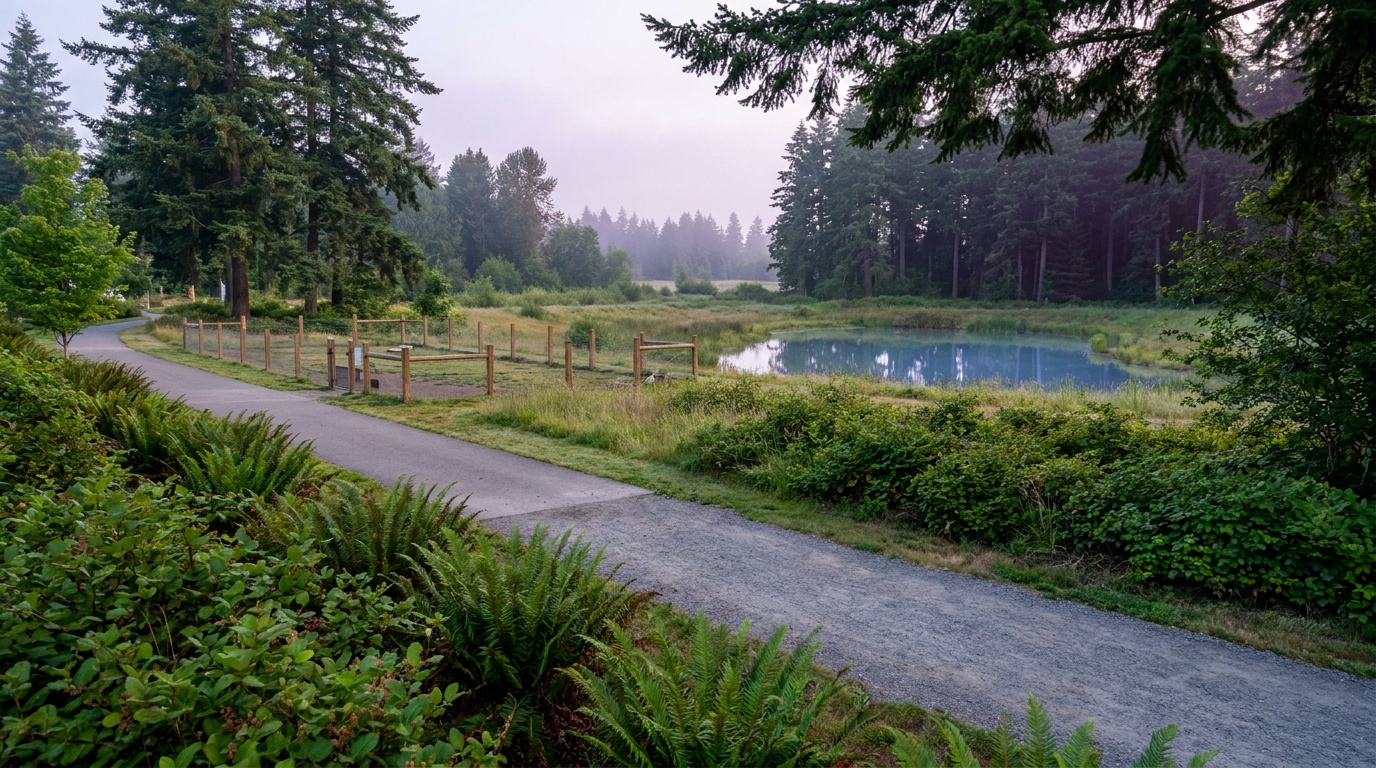
A country lane through the wooded Mirrormont neighborhood near Issaquah, with split-rail fencing along the right side.

Homes in Mirrormont: What the Data Shows

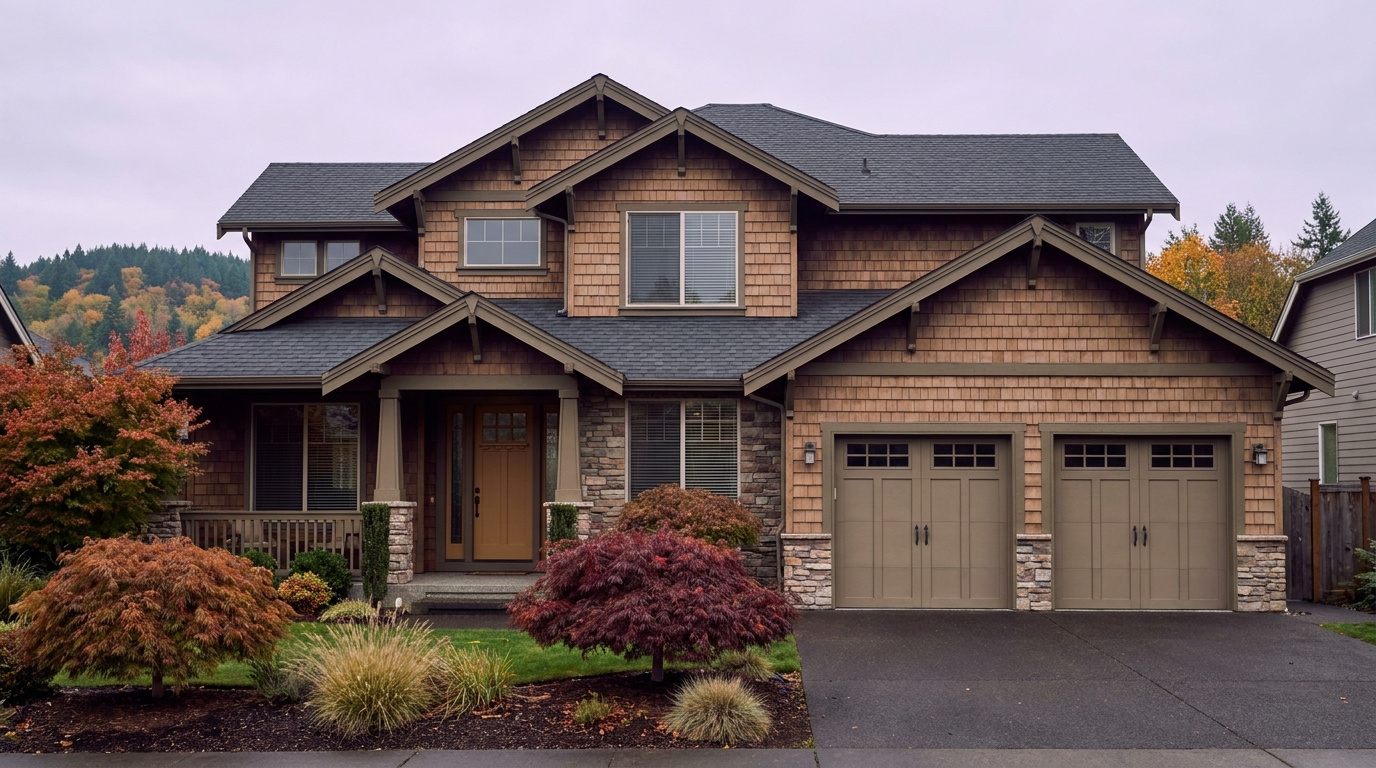
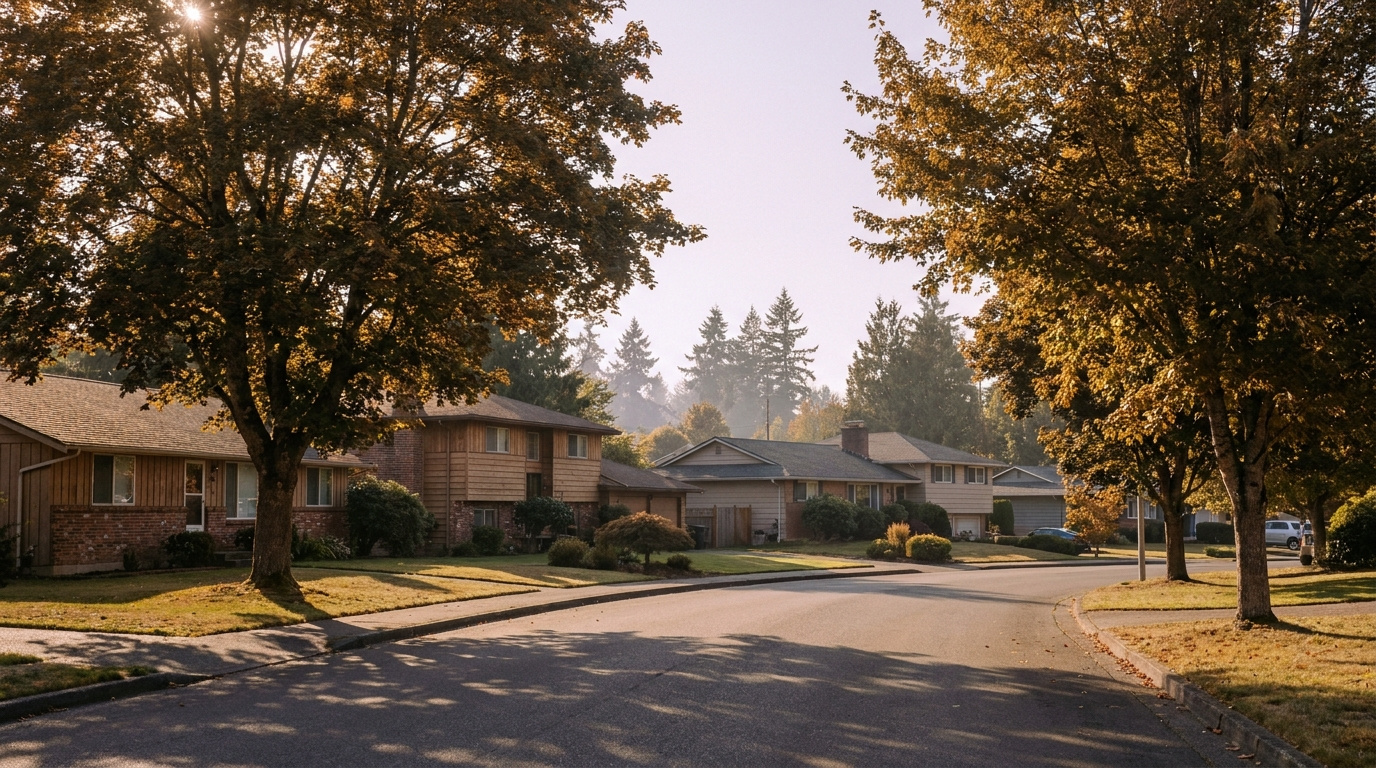
Most homes in Mirrormont were built between the 1970s and the 2000s, with the strongest concentration of construction in the late 1970s and 1980s. You will find Pacific Northwest contemporary homes, cedar-clad ranches, custom builds from the 1990s, and a smaller share of newer 2010s and 2020s rebuilds. Single-family homes typically run 2,000 to 5,000 square feet on lots between one and five acres, with a meaningful share of properties at three acres or larger. Many homes have detached shops, barns, or outbuildings that add real utility for owners who use the property. There is no townhome or condo inventory in Mirrormont. Detached single-family homes on acreage are the only product type.

Market Pulse Mirrormont (98027) King County
Median Sales Price (May 2026) ~$1,395,000 ~$859,000
Median Days on Market ~32 days ~28 days
Active Listings Change (vs. Jan 2026) +14% +30%

Estimates based on current NWMLS data for the Mirrormont residential pockets within the 98027 ZIP code. Inventory turnover here is the lowest of any Issaquah-area neighborhood, mostly because long-time owners stay put. When a property does hit the market, motivated buyers move quickly.

Schools Serving Mirrormont

Mirrormont kids attend a different school pipeline than most other Issaquah neighborhoods. Most addresses feed Maple Hills Elementary in Renton, then Maywood Middle School, then Liberty High School. All three schools are part of the Issaquah School District, but the campuses sit south of I-90 in the Renton area rather than in Issaquah proper. Always confirm your specific address with the Issaquah School District before you write an offer because a few outlier properties have been reassigned over the years.

Maple Hills Elementary is one of the smaller and more community-feeling schools in the district, with strong test scores and a tight parent-teacher ratio. Maywood Middle School has solid music and STEM programs and a strong Project Lead the Way curriculum. Liberty High School is one of the top-rated public high schools in Washington, with a 96 percent graduation rate, strong AP offerings, and a state-recognized performing arts program.

The school pipeline for Mirrormont involves driving for most families. Walking distance is essentially zero given the spread-out nature of the neighborhood. Most kids ride buses to elementary and middle school, then drive themselves to Liberty High once they are old enough.

Getting to Work from Mirrormont

Mirrormont residents typically take Issaquah-Hobart Road north to reach Issaquah and I-90. Some southern properties use SR-18 to reach I-5 or I-405. The exact route depends on which loop in the neighborhood you live on.

Destination Distance 2026 Peak Drive (AM) Transit Option
Downtown Seattle 22 miles 45 to 65 min Drive to I-90 / ST 554 from Issaquah
Bellevue / Amazon Bellevue 14 miles 28 to 40 min I-90 to I-405 / ST 554 from Issaquah
Microsoft (Redmond) 17 miles 32 to 45 min I-90 to SR-520 / Connector Bus
SeaTac Airport 24 miles 38 to 55 min SR-18 to I-5 / Drive

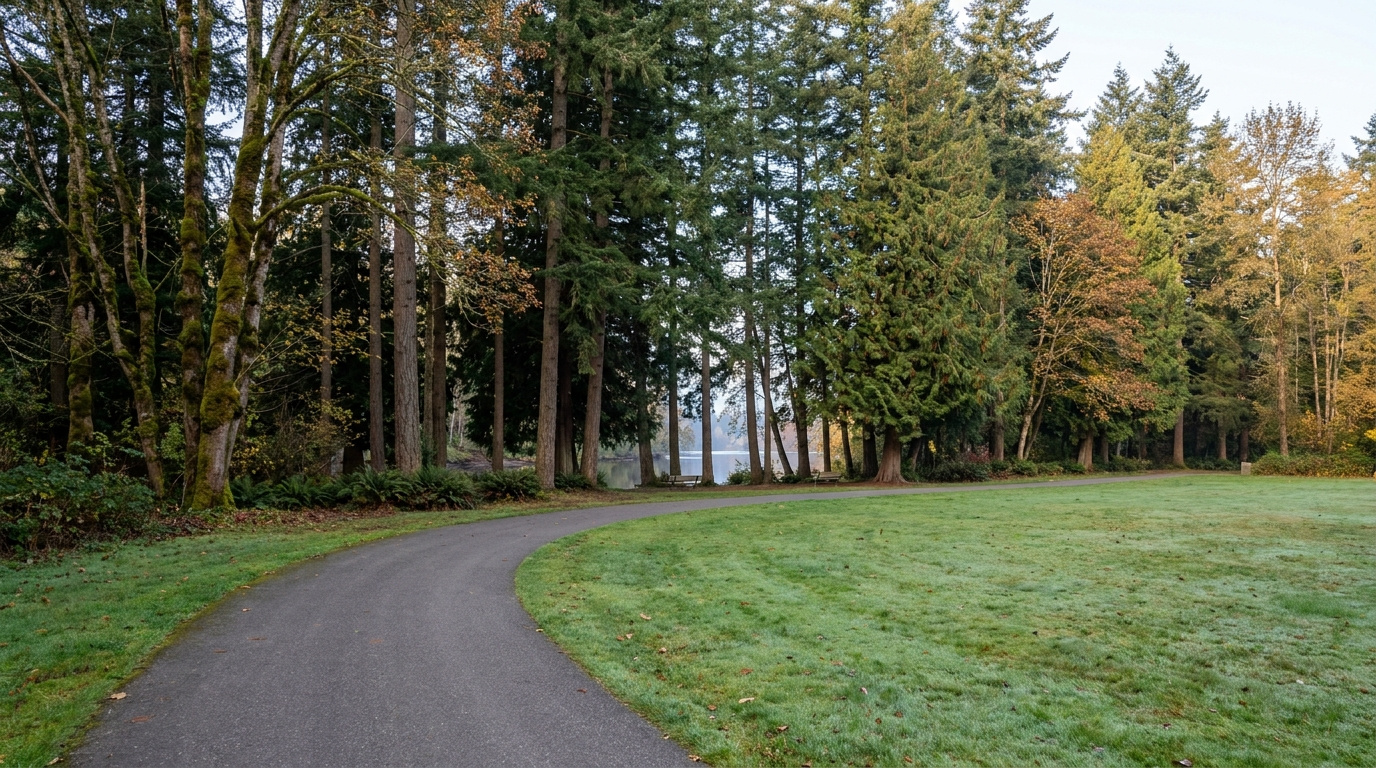
A maintained forest trail at the edge of the Mirrormont neighborhood near Issaquah, suitable for hikers and equestrians.

What I See as a Valuation Expert in Mirrormont

The biggest valuation factor in Mirrormont is the lot, the systems, and what the property can do. On a 1985 home with 3,000 square feet of living space sitting on two acres, the lot itself can carry 50 to 60 percent of the appraised value, with another 10 to 20 percent from any usable outbuildings, fenced pasture, or detached shop. When I assess homes here for institutional lenders, I spend serious time on lot grade, drainage, septic system condition, well capacity, and the condition of any barns or shops. A flat usable two-acre lot with a healthy septic system and a permitted detached shop will appraise much stronger than a same-size home on a steep slope with a failing system.

The HOA picture is light by Eastside standards. The Mirrormont Park Association charges a modest annual fee that covers the pool, tennis courts, and community events, but it is voluntary in some sub-areas and not a true governing HOA. Most architectural decisions, landscaping, and outbuilding additions are governed by King County code rather than by HOA rules. That gives owners flexibility but also means properties vary widely in maintenance and condition.

Within Mirrormont, certain lots and pockets carry premium pricing. Properties with usable flat acreage suitable for horse pasture or large gardens, lots backing directly to Tiger Mountain State Forest, properties with newer wells and recently inspected septic systems, and any home with significant outbuildings tend to move first when they hit the market.

Explore Mirrormont Yourself

The fastest way to know if Mirrormont fits is to drive Mirrormont Boulevard up the hill, then turn onto a few of the side loops to see how the lot sizes open up.

View Mirrormont on Google Maps →

Your guide to life outside Seattle.

Gregory Dorrell | Coldwell Banker Bain | WA License #111862
253-350-0045  ·
greg@livingoutsideseattle.com  ·
www.livingoutsideseattle.com
Buyer Resources May 16, 2026

King County Mortgage Rates 2026: What Buyers Are Actually Paying


King County Mortgage Rates 2026: What Buyers Are Actually Paying Now

King County mortgage rates in 2026 have been anything but predictable. In just 11 days in late March, the 30-year fixed rate jumped from 5.98% to 6.38%. That’s 40 basis points, and I got three calls from buyers who thought I’d made a mistake when they checked the numbers twice.

I’ve spent over 13 years as a field inspector evaluating properties for institutional clients across King County. When I tell you this rate move caught experienced buyers off guard, I mean it. Here’s what happened, what it costs you per month, and what to do about it.

Why King County Mortgage Rates Jumped 40 Basis Points in March 2026

Bar chart showing King County mortgage rates at 3%, 5%, and 6.38% — 2026 comparison

The Federal Reserve didn’t cause this rate spike. The Fed has been holding steady for months. What drove Seattle area mortgage rates up was the bond market reacting to geopolitical events ‚Äî Middle East tensions, oil price volatility, and fear. The kind of volatility that reminds us mortgage rates don’t happen in a vacuum.

Mortgage rates track the 10-year Treasury bond, not the Fed’s benchmark rate directly. When investors rushed into bonds as a safe haven in late March, yields moved, and mortgage rates followed. It’s counterintuitive, but that’s how bond markets work.

The result: the 30-year fixed rate hit 6.38% as of March 26, 2026. The 15-year fixed settled around 6.03%. And the Seattle area mortgage rate environment shifted fast enough to reshape buyer budgets overnight.

How the Bond Market Controls Your Seattle Area Mortgage Rate

Most buyers assume the Fed controls mortgage rates. It doesn’t, not directly. The Fed sets the federal funds rate, which affects short-term borrowing. Mortgage rates follow the 10-year Treasury yield, which responds to inflation expectations, global risk sentiment, and economic data.

When geopolitical tension spiked in late March 2026, bond investors moved money in ways that pushed mortgage rates up even though the Fed held steady. This is why rates can move 40 basis points between Fed meetings without any Fed action at all.

The Fed’s current position is “wait and see.” They’re watching inflation data and employment before making any moves. No rate cuts are on the near-term table. The bond market is doing the talking, and bond markets respond to global events faster than any central bank can.

For King County buyers, this means rate movements are harder to predict than ever. You can’t just watch Fed announcements to know where your rate is going.

What the Rate Increase Costs King County Buyers Per Month

Monthly mortgage payment comparison table for King County homes at different interest rates 2026

Let’s do the math on a real King County scenario. The median single-family home price in King County was $995,000 as of March 2026. With 10% down, that’s an $895,500 loan.

At 5.98% (late February), the monthly payment was about $5,370. At 6.38% (late March), it’s about $5,500. That’s $130 more per month on the same house.

On a $900,000 loan, each half-point rate increase costs roughly $300 to $350 per month. For buyers with a fixed budget, that $130 to $350 swing might be the difference between qualifying and not qualifying, or between a $700K range and a $650K range. In a market where King County’s median days on market is just 7 days, that payment pressure matters.

For context: the 30-year fixed rate was 6.65% this same week in March 2025. So despite the spike, you’re still borrowing at a lower rate than a year ago. That matters for perspective, even if the recent jump doesn’t feel good.

King County Housing Market Context: Inventory, Supply, and Demand in 2026

Here’s what makes this rate environment unusual. King County had 5,071 homes for sale in March 2026, up 37.5% year-over-year from 3,687 in March 2025. More inventory than we’ve seen in years. Monthly supply sits at 2.2 months for single-family homes, up from 1.4 last year. For condos, it’s 4.2 months, up from 3.3.

Buyers have more options. That’s good. But higher rates are squeezing the qualifying pool, especially at the upper end of the market. The list price ratio is holding at 100%, meaning homes sell at asking price on average. But the pool of buyers who can qualify at 6.38% is smaller than it was at 5.98%.

New listings jumped 16.5% year-over-year to 3,686 in March. That’s a market in transition. More homes, more time on market (though still fast at 7 days median), and fewer buyers who qualify per listing because of rate pressure.

Should You Lock a Mortgage Rate Now or Wait for Rates to Drop?

If you’re buying in the next 30 to 60 days, lock a rate. Here’s why: locking removes uncertainty. You know your payment. You know your deal works at that number. Rate locks typically run 30 to 45 days, so locking now protects you through closing.

Will rates drop? Maybe. But waiting for rates to fall while hoping prices stay flat has never worked consistently for buyers. If rates drop 1% but prices rise 3%, you’ve lost ground on both your monthly payment and your equity position.

Some buyers ask about rate buydowns. If a seller or builder is offering a 2-1 buydown, that’s worth evaluating. You pay less in the first year, a bit more in the second, then market rate from there. rate buydown explainer In a market with growing inventory, seller-paid buydowns are a real negotiating tool.

When Will Seattle Area Mortgage Rates Come Down?

Watch oil prices and geopolitical headlines, not just Fed announcements. That’s what’s been driving rates lately. If there’s a de-escalation in the Middle East or OPEC signals more production, rates could soften. But that’s speculation, and you can’t build a purchase timeline around it.

The Fed is on pause for the foreseeable future. Rate hikes are off the table, which brings some stability. But cuts aren’t imminent either.

For King County buyers in this environment, be realistic about budget. If your payment tolerance is $4,500 per month and rates stay at 6.38%, you’re looking at roughly a $700K purchase price with 10% down. If you were counting on rates dropping to 5.5%, your budget shifts meaningfully.


Frequently Asked Questions: King County Mortgage Rates 2026

What is the current 30-year fixed mortgage rate in the Seattle area?

As of late March 2026, the 30-year fixed rate is 6.38%, up from 5.98% just four weeks earlier. The 15-year fixed is around 6.03%. For reference, rates were at 6.65% this same week in March 2025, so you’re still borrowing at a lower rate than a year ago despite the recent increase.

Why did mortgage rates go up if the Federal Reserve didn’t raise rates?

Mortgage rates track the 10-year Treasury bond, not the Fed’s benchmark rate directly. When geopolitical tension spiked in the Middle East in late March 2026, bond market volatility pushed mortgage rates up even though the Fed held steady. This is why rates can move sharply between Fed meetings without any Fed action.

How much does a 0.5% mortgage rate increase add to a monthly payment in King County?

On a $900,000 loan, each half-point rate increase adds roughly $300 to $350 per month. On a $700K purchase with 10% down, the jump from 5.98% to 6.38% added about $130 per month.

What first-time buyer programs are available in King County?

Washington State Housing Finance Commission (WSHFC) offers programs including Home Advantage, which provides up to $10,000 in down payment assistance for buyers earning up to $147,400 in King County. The Covenant Homeownership Program also offers 0% interest down payment assistance for qualifying buyers. Talk to a lender before assuming these programs are out of reach.

Is it still a good time to buy a home in King County with rates at 6.38%?

That depends on your situation. If you’re planning to stay in the home five or more years and can afford the payment at today’s rate, buying now gives you price certainty and equity-building time. If rates drop later, you can refinance. The bigger risk is waiting for rates to fall while prices continue to rise.

Your guide to life outside Seattle.

Gregory Dorrell | Coldwell Banker Bain | WA License #111862
253-350-0045  ·
greg@livingoutsideseattle.com  ·
www.livingoutsideseattle.com

Gregory Dorrell is a licensed real estate broker (WA License #111862) with Coldwell Banker Bain. This post is provided for informational purposes and does not constitute financial or investment advice. Mortgage rates, terms, and availability are subject to change and vary by lender and individual circumstances. Please consult with a mortgage lender for current rates and pre-qualification information.


Buyer Resources May 16, 2026

What Is a Mortgage Rate Buydown? A Plain-English Guide for King County Buyers


What Is a Mortgage Rate Buydown? A King County Buyer’s Guide

You’ve probably seen it in listings: “Seller offering 2-1 rate buydown.” Most buyers scroll past it without fully understanding what it means. That’s a mistake, especially in a King County market where 6.38% is the going rate and every monthly dollar matters.

A rate buydown is one of the most useful negotiating tools available right now. Here’s how it works, what it actually costs, and when you should ask for one.

What a Mortgage Rate Buydown Actually Is

A buydown is a way to reduce your mortgage interest rate, either for a set period or permanently, by paying money upfront. Think of it as prepaying interest now to lower your payment later.

There are two main types.

A temporary buydown reduces your rate for the first one, two, or three years of the loan, then steps back up to the full rate. The most common version is the 2-1 buydown. A permanent buydown, often called paying “points,” reduces your rate for the entire life of the loan in exchange for a lump sum at closing.

Right now in King County, the 2-1 buydown is the version worth understanding because it’s the one sellers are offering.

How the 2-1 Buydown Works: The Real Numbers

2-1 rate buydown payment schedule King County 2026 — year one 4.38%, year two 5.38%, year three 6.38% on $630K loan

The “2-1” refers to the rate reduction in each year. On a 6.38% base rate:

Year Your Rate Payment on $630K Loan Savings vs. Full Rate
Year 1 4.38% ~$3,140/mo ~$780/mo
Year 2 5.38% ~$3,540/mo ~$380/mo
Year 3+ 6.38% ~$3,920/mo $0

Figures are approximate based on a $630,000 loan (10% down on $700,000 home) at a 6.38% base rate.

Over the first two years, that’s roughly $13,920 in payment savings on a $630,000 loan. The seller funds this difference upfront at closing, usually from their sale proceeds. You get lower payments for two years without doing anything extra.

The cost to the seller to fund a 2-1 buydown on a $630,000 loan is approximately $13,920. That’s what they’re crediting to you. It comes off their bottom line, not yours.

Temporary vs. Permanent Buydown: Which Makes More Sense?

A permanent buydown (paying points) costs roughly 1% of the loan amount per 0.25% rate reduction. On a $630,000 loan, buying your rate down from 6.38% to 6.13% costs about $6,300. To 5.88% costs $12,600. The rate stays lower for 30 years, so if you keep the loan long enough, it pays off.

The break-even math matters here. I run this analysis for clients regularly. If you pay $6,300 to save $95 per month, you break even in about 66 months, just over five years. If you plan to stay longer than that, a permanent buydown pencils out. If you think you’ll refinance when rates drop, a temporary buydown often makes more sense since you get the near-term relief without the permanent cost.

When to Ask for a Seller-Paid Buydown

When to ask seller for 2-1 rate buydown King County — inventory rising, days on market increasing, seller negotiating room 2026

Not every seller will offer a buydown, and not every market gives you the leverage to ask. Here’s when the conditions are right.

King County had 5,071 homes for sale in March 2026, up 37.5% year-over-year. Monthly supply sits at 2.2 months for single-family homes. That’s still a seller’s market, but it’s softer than it was. With inventory rising and buyer pools shrinking due to rate pressure, sellers have more motivation to help buyers qualify than they did two years ago.

The best candidates for a seller-paid buydown are homes that have been sitting on market longer than the median 7 days, new construction where builders frequently offer incentives, and price ranges above $800,000 where the buyer pool is thinner. If a seller has reduced their price once already, they may prefer a buydown credit over another price cut since it helps more buyers qualify without lowering the headline sale price.

You can also negotiate a buydown as part of a competitive offer structure. Instead of offering over asking, you offer asking price and request a seller credit toward a buydown. This can be more attractive to certain sellers who care about the sale price on paper.

What a Buydown Cannot Do

A buydown lowers your payment, but it does not change your qualifying rate. Lenders qualify you at the full note rate, 6.38% in this example, not the reduced Year 1 rate. This is an important distinction. If you can barely qualify at 6.38%, a 2-1 buydown makes your first two years more comfortable, but it doesn’t help you get approved. That’s a conversation to have with your lender before you start shopping.

A buydown also does not protect you if rates rise further. If rates climb to 7.5% by Year 3, your payment goes back to the 6.38% note rate regardless. You’re not getting a floating benefit; you’re getting a fixed discount on a fixed rate.

The Bottom Line for King County Buyers

If you’re purchasing in the next 60 days and the seller has any negotiating room, asking for a 2-1 buydown is worth the conversation. The worst they can say is no. The best case is $13,000 to $14,000 in payment savings during your first two years of ownership while you settle in, build equity, and wait for a refinance opportunity.

Frequently Asked Questions: Mortgage Rate Buydowns

Who pays for a 2-1 buydown?

Usually the seller, though buyers can also pay for it out of pocket or roll it into closing costs if the lender allows. In today’s King County market, seller-funded buydowns are the most common scenario. The seller provides a credit at closing that the lender holds in an escrow account and draws from each month to cover the difference between your reduced payment and the full rate payment.

What happens if I refinance during the buydown period?

The unused portion of the buydown funds is typically applied to your loan payoff at refinance. You don’t lose the money, but you do lose the future payment savings. This is why the 2-1 buydown works well in a market where refinancing is likely within a few years. You use the savings in Year 1 and Year 2, then refinance when rates drop rather than reverting to 6.38% in Year 3.

Can I use a buydown with FHA or VA loans?

Yes. Both FHA and VA loans allow temporary buydowns, including the 2-1 structure. The same mechanics apply. FHA and VA borrowers are often in the first-time buyer and lower-down-payment segments where the Year 1 payment relief makes the biggest difference in monthly cash flow.

Is a permanent buydown better than a 2-1 buydown?

It depends on how long you plan to keep the loan. Run the break-even calculation: divide the cost of buying down the rate by the monthly savings. If your break-even is 5 years and you plan to stay for 10+, the permanent buydown wins. If you expect to refinance within 3 years, the 2-1 temporary buydown makes more sense.

How much does a permanent buydown cost in King County?

One point equals 1% of the loan amount. On a $630,000 loan, one point costs $6,300 and typically reduces your rate by about 0.25%. To drop from 6.38% to 5.88% would cost approximately 2 points, or $12,600. Your lender can quote you exact pricing since rates and point costs vary daily.

Your guide to life outside Seattle.

Gregory Dorrell |
Coldwell Banker Bain | WA License #111862
253-350-0045
·

greg@livingoutsideseattle.com

·

www.livingoutsideseattle.com

Gregory Dorrell is a licensed real estate broker (WA License #111862) with
Coldwell Banker Bain. This post is provided for informational purposes and does
not constitute financial or investment advice. Mortgage rates, buydown costs, and
lender policies vary and are subject to change. Consult with a licensed mortgage
lender for current pricing and qualification guidance.


EastsideIssaquahKing County Cities May 15, 2026

Living in Squak Mountain Issaquah

Living in Squak Mountain, Issaquah: What You Need to Know in 2026

Squak Mountain is the wooded sanctuary of Issaquah, the residential pockets that climb up the slopes of Squak Mountain itself between Cougar Mountain to the west and Tiger Mountain to the east. In 2026, with buyers looking for privacy, mature landscaping, and lot size that is genuinely hard to find on the Eastside, Squak Mountain is one of the strongest options in the city. If you want a home with trees, space, and direct trail access without driving an hour from Bellevue, this is the neighborhood that delivers.

What is it actually like to live in Squak Mountain in 2026?

On a weekday morning, Squak Mountain feels genuinely quiet. Streets curve up the hillside with no through traffic. You hear birds, the occasional deer, and not much else. Driveways are long, lots are screened with mature firs and cedars, and most homes are not visible from the street. People who choose Squak Mountain do so for this exact reason. It is the closest thing to country living that you can have inside Issaquah city limits.

On a weekend, the mountain stays quiet but turns more active for residents. Trail runners and hikers use the network of trails that lace through the residential streets and into Squak Mountain State Forest. Families with kids head down the hill for groceries, restaurants, and youth sports, then come back up. The neighborhood does not have a commercial core, which is part of the appeal. There is nothing to draw outside traffic.

Most residents are a mix of long-time owners who bought in the 1980s and 1990s when Squak Mountain was still considered far out, plus newer buyers from Bellevue and Sammamish who specifically wanted privacy and lot size. Many residents work from home, which is part of why the neighborhood holds value during shifts in commute patterns. What separates Squak Mountain from neighboring Issaquah neighborhoods is the lot itself. You will not find a 4,000 square foot lot here. The land is the asset.

A territorial view from a Squak Mountain residential property in Issaquah, looking out toward distant ridges.

Homes in Squak Mountain: What the Data Shows

Most homes on Squak Mountain were built between the 1970s and the 2000s, with a strong bias toward 1970s and 1980s construction. You will see classic Pacific Northwest contemporary homes, cedar-clad split-levels, custom builds from the 1990s, and a smaller share of newer 2010s and 2020s rebuilds where someone tore down an aging home and put up a modern replacement. Single-family homes typically run 1,800 to 5,000 square feet on lots between a quarter acre and a full acre or more, with a meaningful share of properties in the half-acre to one-acre range. There is no townhome inventory and no condo inventory. Squak Mountain is single-family detached only.

Market Pulse Squak Mountain (98027) King County
Median Sales Price (May 2026) ~$1,275,000 ~$859,000
Median Days on Market ~25 days ~28 days
Active Listings Change (vs. Jan 2026) +18% +30%

Estimates based on current NWMLS data for the Squak Mountain residential pockets within the 98027 ZIP code. Inventory turnover is lower here because long-time owners stay put. When a property does hit the market, motivated buyers move on it.

Schools Serving Squak Mountain

Most Squak Mountain kids attend Issaquah Valley Elementary, then Issaquah Middle School, then Issaquah High School. Some southern Squak Mountain pockets in the Renton-Issaquah Road corridor may feed Briarwood Elementary or even Maywood Middle School depending on the exact address, so always confirm your specific school assignment with the Issaquah School District before you write an offer.

Issaquah Valley Elementary houses the Spanish Dual Language Immersion program and serves a diverse student body. Issaquah Middle School was rebuilt and modernized in recent years and has strong music and STEM programs. Issaquah High has a strong four-year graduation rate, multiple AP programs, and a competitive athletics presence.

The school pipeline for Squak Mountain involves driving for most families, since walking distance is rare given the spread-out nature of the neighborhood. Most kids ride buses to elementary and middle school, then drive themselves to high school once they are old enough.

Getting to Work from Squak Mountain

Squak Mountain residents typically take Renton-Issaquah Road (SR-900) or descend into Olde Town to reach I-90 at exit 17 or exit 15. The exact route depends on which side of the mountain you live on.

Destination Distance 2026 Peak Drive (AM) Transit Option
Downtown Seattle 18 miles 40 to 58 min I-90 / ST 554 from Issaquah Transit Center
Bellevue / Amazon Bellevue 10 miles 25 to 35 min I-90 to I-405 / ST 554
Microsoft (Redmond) 13 miles 30 to 40 min I-90 to SR-520 / Connector Bus
SeaTac Airport 22 miles 38 to 52 min SR-900 to I-405 to I-5

A wooded Pacific Northwest forest trail near a Squak Mountain residential property in Issaquah.

What I See as a Valuation Expert in Squak Mountain

The biggest valuation factor on Squak Mountain is the lot. On a 1985 home with 3,000 square feet of living space, the lot itself can carry 50 to 65 percent of the appraised value, depending on size, slope, and view. When I assess homes here for institutional lenders, I look at lot grade, drainage, mature tree health, and any view first, then the structure second. A flat half-acre lot with western Olympic views and a tired 1980s home will appraise much stronger than a same-size home on a steep north-facing slope with limited usable yard.

HOAs are rare on Squak Mountain. Most properties are fee simple, which means no monthly dues and no master association rules. The few exceptions are some pocket subdivisions tucked along the lower slopes that have small road maintenance HOAs in the $20 to $80 monthly range. Always read the title commitment carefully because some properties have private road easements with cost-sharing requirements that function like an informal HOA.

Within Squak Mountain, certain streets and pockets carry premium pricing. South-facing lots with afternoon sun, properties with western Olympic views, lots backing directly to Squak Mountain State Forest, and any home over an acre tend to move first when they hit the market.

Explore Squak Mountain Yourself

The fastest way to know if Squak Mountain fits is to drive Mountain Park Boulevard up the hill, then turn onto a few of the side streets to see how the lots open up.

View Squak Mountain on Google Maps →

Your guide to life outside Seattle.

Gregory Dorrell | Coldwell Banker Bain | WA License #111862
253-350-0045  ·
greg@livingoutsideseattle.com  ·
www.livingoutsideseattle.com
EastsideKing County Cities May 12, 2026

Living in Talus, Issaquah WA | 2026 Neighborhood Guide

Living in Talus, Issaquah: What You Need to Know in 2026

Talus is the master-planned community tucked into the south side of I-90, built into the lower slopes of Cougar Mountain. In 2026, with buyers looking for newer construction, low-maintenance lifestyles, and direct trail access, Talus is a strong fit, especially for tech families and second-time buyers from Bellevue. If you want a home that is five minutes from the freeway but feels like it backs to a forest, Talus is one of the few Eastside neighborhoods that delivers both.

What is it actually like to live in Talus in 2026?

On a weekday morning, Talus feels quiet. The internal streets curve, traffic is mostly residents heading out for the day, and you can hear birds more than cars. Parents walk kids to the bus stop. Tech workers head down the hill to I-90. Trail runners head straight from their driveways into the Cougar Mountain trail system before work. The pace is calm, which is part of why people pay to live here.

On a weekend, Talus stays calm but more visible. People are out walking dogs, running, biking, or heading to Harvey Manning Park. The Bridges at Talus area has a strong neighborhood feel because residents see each other on the trail and at the park, not just on the way out. Most weekend activity happens off-property: residents drive five minutes to Issaquah for groceries, restaurants, and shopping.

Most residents are a mix of tech families, dual-income professionals, and move-up buyers from older Bellevue and Issaquah neighborhoods who wanted newer construction without sacrificing nature access. Talus has a younger demographic skew than Olde Town and Squak Mountain, mostly because the community itself is newer. What separates Talus from Issaquah Highlands is scale and feel. The Highlands has a real downtown, more density, and more master-plan polish. Talus is smaller, quieter, more wooded, and more tucked into the mountain.

A Northwest Contemporary home with native landscaping in Talus, Issaquah.

Homes in Talus: What the Data Shows

Most homes in Talus were built between 2003 and 2018, with newer infill in the Bridges at Talus and Mountain Aire areas. Single-family homes typically run 1,800 to 3,500 square feet on lots between 3,000 and 5,000 square feet. Lots are smaller than older Issaquah neighborhoods because Talus was designed around shared open space and trail buffers instead of large private yards. The architectural style is mostly Northwest Contemporary and Modern Craftsman, with mixed siding, covered porches, and rooflines that vary by sub-area. Burnstead Construction was a major builder in the Bridges at Talus pocket and is known for solid mid-tier craftsmanship. There are also townhomes throughout Talus, typically 1,400 to 2,200 square feet, which give the neighborhood housing diversity at a lower price point.

Market Pulse Talus (98027 (Talus pocket)) King County
Median Sales Price (May 2026) ~$1,195,000 ~$859,000
Median Days on Market ~36 days ~28 days
Active Listings Change (vs. Jan 2026) +26% +30%

Estimates based on current NWMLS data for the 98027 ZIP code Talus pocket. Days on market run a bit longer here than in Issaquah Highlands, mostly because the buyer pool is smaller and more specific.

Schools Serving Talus

Most Talus kids attend Issaquah Valley Elementary, then Issaquah Middle School, then Issaquah High School. One important note for buyers: Cougar Mountain Middle School is physically located inside Talus at 1929 NW Talus Drive. The school opened in 2022 and serves a different attendance zone than most of Talus, so do not assume your kids will attend the school in your own neighborhood. Always confirm your specific address with the Issaquah School District before you write an offer.

Issaquah Valley Elementary houses the Spanish Dual Language Immersion program and is one of the more diverse elementary schools in the district. Issaquah Middle School was rebuilt and modernized in recent years and has strong music and STEM programs. Issaquah High has a strong four-year graduation rate, multiple AP programs, and a competitive athletics presence.

The school pipeline for Talus is solid but involves some driving. The walkability of Issaquah Valley and Issaquah Middle is limited from most Talus addresses, so most families bus or drive. That is the trade-off for the quieter, more wooded setting.

Getting to Work from Talus

Talus has one main exit onto Renton-Issaquah Road (SR-900), which connects quickly to I-90 at exit 15. Most residents take I-90 east or west depending on destination.

Destination Distance 2026 Peak Drive (AM) Transit Option
Downtown Seattle 18 miles 38 to 55 min I-90 / ST 554 from Issaquah Highlands P&R
Bellevue / Amazon Bellevue 9 miles 22 to 32 min I-90 to I-405 / ST 554
Microsoft (Redmond) 12 miles 28 to 38 min I-90 to SR-520 / Connector Bus
SeaTac Airport 22 miles 35 to 50 min SR-900 to I-405 to I-5

A Cougar Mountain trail in Talus, Issaquah, showing the neighborhood's immediate trail access.

What I See as a Valuation Expert in Talus

The HOA picture in Talus is straightforward but important. Most single-family homes pay around $80 to $200 per month to the master association, with townhomes running $300 to $450 per month depending on what is covered. The HOA in Talus has been generally well-managed, but as the original construction is now 20+ years old, capital reserves are getting tested. Always pull the resale certificate and the most recent reserve study before you write an offer. A weak reserve fund and a pending special assessment can change your monthly cost picture quickly.

Curb appeal in Talus is strong because the master plan required mature street trees, native landscaping, and consistent architectural standards. When I assess homes in Talus for institutional lenders, I weight the established landscaping into the appraised value, especially on lots that back to greenbelt or trail access. A 2008 build with original native landscaping that has matured well will appraise stronger than a same-vintage home where the yard has been removed or simplified.

Within Talus, certain pockets sell faster and at the top of the price range. The Bridges at Talus area, lots backing directly to Cougar Mountain greenbelt, and any home with a clear westerly territorial view tend to move first when they hit the market. Cul-de-sac lots and homes near Harvey Manning Park also command premiums because of the limited through traffic.

Explore Talus Yourself

The fastest way to know if Talus fits is to drive the perimeter loop, walk a section of the trail at Harvey Manning Park, and check out the Bridges at Talus pocket on the south side.

View Talus on Google Maps →

Your guide to life outside Seattle.

Gregory Dorrell | Coldwell Banker Bain | WA License #111862
253-350-0045  ·
greg@livingoutsideseattle.com  ·
www.livingoutsideseattle.com
EastsideKing County Cities May 12, 2026

Living in Olde Town Issaquah, WA | 2026 Neighborhood Guide

Living in Olde Town Issaquah: What You Need to Know in 2026

Olde Town is the historic heart of Issaquah, the part of the city that existed long before the Highlands and the master-planned communities up the hill. In 2026, with buyers looking for character, walkability, and a neighborhood that feels like a real place instead of a development, Olde Town is having a moment. If you want a home you can walk out of and grab coffee, see live salmon in the creek, and end your evening on a brewery patio, this is the part of Issaquah that delivers.

What is it actually like to live in Olde Town in 2026?

On a weekday morning, Olde Town feels like a small town that decided to keep being a small town. People walk to coffee at Issaquah Coffee Company. Kids bike to Issaquah Valley Elementary. Commuters head a few blocks over to Front Street to catch the express bus into Seattle. The streets are narrow and lined with mature trees, and a lot of homes still have their original front porches.

On a weekend, the neighborhood comes alive. Front Street fills with people moving between the bakery, the brewery, the bookstore, and the small boutique shops. The Issaquah Salmon Hatchery is busy every fall when the chinook return up the creek. The Saturday farmers market sets up at Pickering Barn just north of downtown. In October, Salmon Days takes over the entire neighborhood and pulls in people from across the Eastside.

Most residents here are a mix. You have long-time Issaquah families who bought decades ago and stayed. You have younger buyers who wanted character and walkability over square footage. You have a growing share of empty nesters downsizing from larger Eastside homes. What separates Olde Town from Issaquah Highlands is simple: this neighborhood was not designed in one sweep. It grew over a hundred years, one block at a time. That gives it a kind of character no master-planned community can copy, but it also means lot sizes, home conditions, and street layouts vary widely from block to block.

The Issaquah Salmon Hatchery creek corridor in Olde Town Issaquah on a soft autumn morning.

Homes in Olde Town: What the Data Shows

Olde Town housing is a real mix. You will find early-1900s craftsman bungalows with original woodwork, mid-century cottages from the 1940s and 1950s, post-war ramblers, and newer infill builds where someone tore down an old structure and put up something modern. Single-family homes typically run 1,200 to 2,400 square feet on lots between 4,000 and 8,000 square feet, with a handful of larger legacy properties on quarter-acre lots tucked along the side streets. The architectural mix is part of the charm. There are also condos and townhomes near Front Street for buyers who want the walkability without the maintenance of an old house.

Market Pulse Olde Town (98027) King County
Median Sales Price (May 2026) ~$945,000 ~$859,000
Median Days on Market ~30 days ~28 days
Active Listings Change (vs. Jan 2026) +28% +30%

Estimates based on current NWMLS data for the 98027 ZIP code. Older homes here often need updating, which is reflected in price spread. A renovated craftsman commands a strong premium over a same-size original-condition home.

Schools Serving Olde Town

Most Olde Town kids attend Issaquah Valley Elementary, then Issaquah Middle School, then Issaquah High School. All three schools sit within walking or short-driving distance of the neighborhood, which is rare in modern subdivisions.

Issaquah Valley Elementary is one of the older buildings in the district and houses the Spanish Dual Language Immersion program, which is a real draw for families who want bilingual education. Issaquah Middle School was rebuilt and modernized in recent years and offers strong music and STEM programs. Issaquah High has a strong four-year graduation rate, multiple AP programs, and a competitive athletics presence.

The Olde Town pipeline has the advantage of being walkable, which is unusual. A kindergartener at Issaquah Valley can walk to school in many cases, then ride a bike to Issaquah Middle, then drive a few minutes to Issaquah High. That continuity is one of the quiet reasons families stay in Olde Town long-term.

Getting to Work from Olde Town

Olde Town has direct access to I-90 via the Front Street / Sunset Way interchange and the Newport Way exit a few blocks west. The Issaquah Transit Center sits inside the neighborhood, which is the only Issaquah neighborhood where you can walk to your bus stop instead of drive.

Destination Distance 2026 Peak Drive (AM) Transit Option
Downtown Seattle 17 miles 35 to 55 min I-90 / ST 554 from walkable transit center
Bellevue / Amazon Bellevue 9 miles 22 to 32 min I-90 to I-405 / ST 554
Microsoft (Redmond) 12 miles 28 to 38 min I-90 to SR-520 / Connector Bus
SeaTac Airport 22 miles 35 to 50 min I-405 to I-5 / Drive

A restored Craftsman bungalow in Olde Town Issaquah, representative of the neighborhood's historic housing stock.

What I See as a Valuation Expert in Olde Town

The biggest valuation factor in Olde Town is honestly the home itself, not the neighborhood. Two craftsman bungalows on the same block can appraise $200,000 apart based purely on the condition of the foundation, the wiring, the roof, and whether the kitchen and bathrooms have been touched in the last 15 years. When I assess homes in Olde Town for institutional lenders, I spend most of my time on the systems and the structure, not the cosmetics. An untouched 1925 craftsman with old knob-and-tube wiring and a settled foundation will appraise much lower than a same-vintage home that has been sympathetically updated.

HOAs are rare in Olde Town. Most properties are fee simple, which means no monthly dues and no master association rules to worry about. The few exceptions are the newer townhome and condo projects near Front Street. Those have HOAs in the $250 to $500 monthly range, depending on what is covered. If you are looking at one of those, always pull the resale certificate and reserve study before you write an offer.

Original-condition craftsman homes that have been well-maintained also command character premiums that newer homes simply cannot copy. Buyers who specifically value walkability and history are willing to pay 8 to 15 percent above an equivalent home in a less-walkable Issaquah neighborhood.

Explore Olde Town Yourself

The fastest way to know if Olde Town fits is to walk Front Street on a Saturday morning, then wander a few blocks east into the residential streets to see the housing variety up close.

View Olde Town on Google Maps →

Your guide to life outside Seattle.

Gregory Dorrell | Coldwell Banker Bain | WA License #111862
253-350-0045  ·
greg@livingoutsideseattle.com  ·
www.livingoutsideseattle.com
EastsideKing County Cities May 12, 2026

Living in Issaquah Highlands

Living in Issaquah Highlands, Issaquah: What You Need to Know in 2026

Issaquah Highlands is the plateau community that turned a King County hilltop into one of the Eastside’s most-searched ZIP codes. In 2026, with the inventory surge giving buyers more choices, this Tech-Modernist neighborhood is back in serious demand, especially for families pulled in by Issaquah and Skyline schools. If you want newer construction, walkable amenities, and a real downtown core inside your own neighborhood, the Highlands is at the top of most buyer lists.

What is it actually like to live in Issaquah Highlands in 2026?

On a weekday morning, the Highlands feels like a small modern town that someone designed on purpose, because that is exactly what happened. Parents walking kids to Grand Ridge Elementary cross paths with tech workers heading down the hill to the Park & Ride or driving toward Microsoft. The streets are wide, the sidewalks are clean, and there is actually morning foot traffic in the plaza by 7 AM.

On a weekend, the place feels different again. The Saturday farmers market runs spring through fall in the central plaza. Trail runners head into Grand Ridge from the eastern edge of the neighborhood. Families fill the playgrounds at Central Park. The Regal cinema, a handful of restaurants, and the Safeway pull steady traffic, but it never feels packed the way Bellevue Square does.

Most residents are tech families, dual-income professionals, and a growing number of move-up buyers from Bellevue and Sammamish who wanted more square footage without leaving the I-90 corridor. What separates the Highlands from older Issaquah neighborhoods is the planning. This whole community was designed in one sweep starting in the late 1990s, with a real downtown plaza, parks, schools, and trails layered in from day one. Olde Town has more character, but the Highlands has more convenience.

Saturday morning street scene in the Issaquah Highlands showing the master-planned community's residential character.

Homes in Issaquah Highlands: What the Data Shows

Most homes in the Highlands were built between 2000 and 2018, which means modern layouts, energy efficiency, and lower repair risk than older Issaquah housing. Single-family homes typically run 2,200 to 4,000 square feet on lots between 4,000 and 7,500 square feet, with smaller lots in the earlier-built sections and larger ones in the upper Discovery Heights and Magnolia Park areas. The architectural style is mostly Northwest Contemporary and Modern Craftsman, with wide gables, mixed siding materials, covered porches, and varied rooflines that keep the streets from feeling repetitive. Several major builders worked in the Highlands over the years, including Polygon Northwest, Conner Homes, Buchan Homes, and Toll Brothers in the higher-end pockets. There are also townhomes and condos near the plaza for buyers who want walkable urban density without giving up the school district.

Market Pulse Issaquah Highlands (98029) King County
Median Sales Price (May 2026) ~$1,295,000 ~$859,000
Median Days on Market ~22 days ~28 days
Active Listings Change (vs. Jan 2026) +24% +30%

Estimates based on current NWMLS data for the 98029 ZIP code. The Highlands has held value better than the broader county average.

Schools Serving Issaquah Highlands

Most Highlands kids attend Grand Ridge Elementary, then Pacific Cascade Middle, then Issaquah High School. A few northern streets feed into Skyline High in Sammamish instead of Issaquah High, so always confirm your specific address before writing an offer.

Grand Ridge Elementary is a newer building (built within the master plan) and consistently scores in the top tier of Washington elementary schools. Pacific Cascade Middle has strong STEM and arts programs and routinely sends kids to Issaquah High prepared for AP and IB-style coursework. Issaquah High has a strong four-year graduation rate, multiple AP programs, and a competitive athletics presence.

Most parents I work with cite the Issaquah School District as the single biggest reason they targeted the Highlands in the first place. The district has held its top-tier reputation for years. The school pipeline within the Highlands is one of the most cohesive in King County, because most kids stay together from elementary through high school.

Getting to Work from Issaquah Highlands

The Highlands has two main exits onto I-90, the Highlands Drive interchange and the Sunset Way / Front Street interchange a couple of minutes south. That gives you faster freeway access than older Issaquah neighborhoods on weekday mornings.

Destination Distance 2026 Peak Drive (AM) Transit Option
Downtown Seattle 17 miles 35 to 55 min I-90 / ST 554 from P&R
Bellevue / Amazon Bellevue 8 miles 20 to 30 min I-90 to I-405 / ST 554
Microsoft (Redmond) 11 miles 25 to 35 min I-90 to SR-520 / Connector
SeaTac Airport 22 miles 35 to 50 min I-405 to I-5 / Drive

Grand Ridge trail in the Issaquah Highlands with rooftops visible through the trees, showing the community's immediate trail access.

What I See as a Valuation Expert in Issaquah Highlands

The HOA picture in the Highlands is more complicated than most neighborhoods. The whole community is governed by a master association with separate sub-associations for individual subdivisions, so monthly dues vary widely. Most single-family homeowners pay between $90 and $180 per month, but townhome and condo owners can run $300 to $500 monthly when their HOAs cover exterior maintenance, insurance, or shared amenities. Always pull the resale certificate and the most recent reserve study before you write an offer. A weak reserve fund and a pending special assessment can change your monthly cost picture fast.

Curb appeal is a real factor here. Because the master plan required street trees and landscaping standards, mature trees and established shrubs are now hitting their best years. When I assess homes in the Highlands for institutional lenders, I weight that mature landscaping into the appraised value, especially on lots that back to greenbelt or shared open space. A 2002 build with well-kept original landscaping and a recent paint and roof refresh will appraise stronger than a similar home where the yard has been let go.

Within the Highlands, certain streets and pockets sell faster and at the top of the price range. The Discovery Heights area at the upper elevation, the streets that back directly to Grand Ridge open space, and the homes around Central Park tend to move first when they hit the market. Cul-de-sac lots with no through traffic also see premium pricing.

Explore Issaquah Highlands Yourself

The fastest way to know if Issaquah Highlands fits is to walk the central plaza on a Saturday morning, then drive the loop streets up through Discovery Heights to see the housing variety in person.

View Issaquah Highlands on Google Maps →

Your guide to life outside Seattle.

Gregory Dorrell | Coldwell Banker Bain | WA License #111862
253-350-0045  ·  greg@livingoutsideseattle.com  ·  www.livingoutsideseattle.com
EastsideKing County Cities May 12, 2026

Living in Issaquah, WA: Your 2026 Real Estate & Lifestyle Guide

Living in Issaquah, WA: Your 2026 Real Estate & Lifestyle Guide

Why Issaquah Stands Out in 2026

King County’s median home price sits near $859,000 as of May 2026. Active listings are up about 30% from last year, which has shifted us into a more balanced market. Issaquah’s median price runs well above the county number, usually in the $1.1M to $1.3M range, depending on the neighborhood. Most buyers here are tech families, dual-income professionals, and folks coming in from Bellevue or Seattle who want trail access and top-rated schools without leaving the I-90 corridor.

Issaquah feels like a wooded sanctuary that happens to have a Costco headquarters. You can hike Tiger Mountain in the morning, grab coffee on Front Street in Olde Town, and be at a Microsoft meeting in Redmond by 10. The “Issaquah Alps,” meaning Cougar, Squak, and Tiger Mountains, wrap around the city and shape every neighborhood. Salmon return to the hatchery downtown every fall, and the city actually throws a festival for it. That mix of outdoor character and tech-fueled growth is what makes Issaquah different from anywhere else on the Eastside.

Front Street in Olde Town Issaquah on a quiet morning with mature street trees and historic storefronts.

Commute Times from Issaquah

In 2026, Issaquah is still primarily a car-and-bus city. The Sound Transit 2 Line opened to Redmond in 2024 and now runs through to Seattle, but the planned Issaquah Link extension is still in planning and is not expected for many years. The Stride S2 BRT line, which will connect Bellevue and Bothell, is also on the way and will improve I-405 transit. For now, most Issaquah residents either drive I-90 or use the Sound Transit 554 express bus from the Issaquah Highlands Park & Ride.

Destination Distance 2026 Peak Drive (AM) Transit Option
Downtown Seattle 17 miles 35 to 55 min I-90 / ST 554 Express
Amazon (South Lake Union) 17 miles 40 to 55 min Drive / Bus + Light Rail
Microsoft (Redmond) 10 miles 25 to 35 min I-90 to SR-520 / Connector
Bellevue Tech Corridor 8 miles 20 to 30 min I-90 to I-405 / ST 554
SeaTac Airport 22 miles 35 to 50 min Drive / I-405

Times reflect honest peak-hour reality, not best-case scenarios. I drive these routes for inspections most weeks, so I see the traffic patterns up close.

Neighborhoods in Issaquah: A Quick Look

This is the hub page for Issaquah. Each neighborhood below has its own deep-dive post with photos, recent sales, and school details. Click through on any name to read more.

Issaquah Highlands

Issaquah Highlands sits up on the plateau north of I-90 and feels like its own small town. The vibe is family-forward and tech-heavy, with newer construction, walking trails, and a real downtown core around the Grand Ridge Plaza. Most homes were built between 2000 and 2020, so you get modern layouts and energy efficiency. Single-family homes typically run 2,200 to 4,000 square feet on lots between 4,000 and 7,500 square feet. There are also townhomes and condos for buyers who want lower maintenance. Issaquah Highlands feeds into the Issaquah School District, including the top-rated Issaquah High School and Skyline High. The neighborhood has its own farmers market, a Regal cinema, and direct access to the Grand Ridge trail system.

Olde Town Issaquah

Olde Town is the historic heart of the city and runs along Front Street. The character is walkable, slightly funky, and full of small businesses, breweries, and the salmon hatchery. Housing here is a mix of early-1900s craftsman bungalows, mid-century cottages, and newer infill builds. Lot sizes vary widely, but you’ll see plenty of 4,000 to 8,000 square foot lots with homes between 1,200 and 2,400 square feet. This area feeds Issaquah Valley Elementary and Issaquah High. The big claim to fame is the Issaquah Salmon Days Festival every October. If you want to walk to dinner, drop off mail by foot, and live somewhere with real history, Olde Town is the answer.

Aerial overview of Issaquah neighborhoods showing the Highlands plateau and Olde Town valley.

Talus

Talus is a master-planned community on the south side of I-90, built into the hills below Cougar Mountain. The community has a quiet, tucked-away feel even though you’re five minutes from the freeway. Homes are mostly 2003 to 2015 construction, with sizes ranging from 1,800 to 3,500 square feet. Lot sizes are small, often 3,000 to 5,000 square feet, because the neighborhood was designed around shared open space and walking paths. Talus is part of the Issaquah School District. Most addresses feed Issaquah Valley Elementary, Issaquah Middle, and Issaquah High. Note that Cougar Mountain Middle School is physically located inside Talus but serves a different attendance zone, so always confirm your specific address before writing an offer. The community has its own pool, clubhouse, and miles of internal trail. It’s a strong fit for buyers who want newer construction without the higher density of the Highlands.

Squak Mountain

Squak Mountain refers to the residential pockets along the slopes of, you guessed it, Squak Mountain itself. The vibe here is wooded, private, and quieter than central Issaquah. Lots are larger, often a quarter acre to a full acre or more, and homes range from 1970s split-levels to custom builds over 4,000 square feet. Many properties have territorial or mountain views. Squak Mountain feeds the Issaquah School District. The big draw is the immediate trail access into Squak Mountain State Forest, which connects to Tiger Mountain. If you want trees, space, and a true Pacific Northwest setting without losing easy I-90 access, this is one of the best options in the city.

Mirrormont

Mirrormont sits in the south end of the Issaquah area, technically in unincorporated King County but tied to Issaquah for schools and identity. The character is rural and large-lot, often described as semi-equestrian. Lots commonly run one to five acres, and homes range from 2,000 to 5,000 square feet, with everything from 1970s ramblers to newer custom builds. The neighborhood is part of the Issaquah School District. Mirrormont has its own community pool and tennis courts, plus direct access to the Tiger Mountain trail system. Buyers here want privacy, room for animals or hobbies, and a quieter pace, while still being 25 minutes from Bellevue.

Providence Point

Providence Point is an active adult community for residents 55 and older, located on the north end of Squak Mountain. The character is calm, manicured, and amenity-rich. Most homes are condos and townhomes built between the late 1980s and 2000s, sized from about 900 to 1,800 square feet. The community has a clubhouse, pools, walking paths, and full landscaping handled by the HOA. Providence Point sits within the Issaquah School District boundaries, but the community itself is age-restricted under federal HOPA rules. If you’re downsizing, want a low-maintenance lifestyle, and like having neighbors at a similar life stage, Providence Point is worth a serious look.

Montreux

Montreux is a gated community on the east side of Issaquah, perched on the slope above I-90 with views toward Lake Sammamish. The character is upscale, private, and quiet. Homes are mostly custom builds from the late 1990s and 2000s, ranging from 3,500 to over 6,000 square feet on lots between 7,000 and 12,000 square feet. Many homes have territorial or lake views. Montreux feeds the Issaquah School District, including the top-rated Sunset Elementary and Issaquah High. Inside the gates you’ll find a clubhouse, pool, sport court, and walking paths. This is a strong fit for buyers who want a luxury setting with HOA-managed common areas.

Sycamore

Sycamore is one of Issaquah’s older established neighborhoods, located west of Olde Town and tucked along the lower flank of Cougar Mountain. The character is quiet, mature, and family-oriented, with a strong neighborhood feel because most residents have been there for years. Homes are mostly 1970s and 1980s construction, sized from 1,800 to 3,000 square feet on lots that run 7,000 to 10,000 square feet. The neighborhood feeds Issaquah Valley Elementary, Issaquah Middle, and Issaquah High. Tibbetts Creek and the connecting trail to Cougar Mountain Regional Wildland Park are right there. Sycamore offers good value compared to newer Issaquah neighborhoods, especially for buyers willing to update an older home.

Newport / Cougar Mountain

The Newport Way corridor and the Cougar Mountain area sit on the western edge of Issaquah, climbing up toward the Bellevue line. The character mixes wooded privacy with quick freeway access. Housing varies a lot here, from 1980s contemporary builds to newer custom homes, with sizes from 2,000 to 4,500 square feet. Lots commonly run 8,000 square feet to a half acre, with many backing to greenbelt. This area is split between the Issaquah and Bellevue school districts depending on the exact street, so buyers should always confirm the school assignment before writing an offer. Cougar Mountain Regional Wildland Park is the headline amenity, with miles of trails right out the back door.

Tiger Mountain Foothills

Tiger Mountain Foothills covers the southeast pockets of Issaquah where the city meets the forest. The character is rural-feeling, with larger lots, mature trees, and very little through traffic. Homes here range from 1970s and 1980s ramblers to newer 2010s and 2020s custom builds, typically 2,200 to 5,000 square feet on lots between half an acre and three acres. The Issaquah School District serves this area, with most kids going to Issaquah High. The headline amenity is direct access to West Tiger Mountain trails, including the popular Poo Poo Point hike. Buyers who want acreage and trail access without driving 45 minutes from Bellevue should put this area on the short list.

Market Dynamics & Investment Value in Issaquah

The 30% inventory surge across King County has changed the Issaquah market in real ways. A year ago, well-priced homes here saw multiple offers within the first weekend. Today, many homes sit for two to four weeks before going under contract, and price reductions are more common than they have been in several years. That gives buyers time to actually think, get a real inspection done, and negotiate on terms. For sellers, it means pricing has to be honest from day one. Aspirational pricing that worked in 2022 is not working in 2026.

Issaquah home values have held up better than many other parts of King County over the last 12 months. The combination of Issaquah School District ratings, proximity to Bellevue and Microsoft, and limited buildable land keeps demand steady. Newer construction in places like Issaquah Highlands and Talus has shown the strongest price stability, mostly because buyers are willing to pay for energy efficiency, modern layouts, and lower repair risk. Older homes on larger lots have also held value well, especially in Squak Mountain and Mirrormont, where the lot itself often carries most of the appraised value.

Restored Craftsman home in Issaquah on a quiet morning, representative of the valuation lens applied across the city's housing stock.

I bring that same lens to every Issaquah home I help a client evaluate, whether you are buying or selling.

The 12-month picture for Issaquah is steady, not flashy. Buyers who pay attention to inventory, school zones, and lot quality will find real opportunities over the next few months. Sellers who price honestly and present well will still see strong results. Anyone betting on a quick flip should look elsewhere.

Explore Issaquah Yourself

The best way to know if Issaquah fits is to come walk Front Street, drive up to the Highlands, and hike a section of the Tiger Mountain trail. Once you see how the neighborhoods connect, the rest makes sense.

View Issaquah on Google Maps →

Tiger Mountain trail in Issaquah looking northwest toward Lake Sammamish in the distance.

Your guide to life outside Seattle.

Gregory Dorrell | Coldwell Banker Bain | WA License #111862
253-350-0045  ·  greg@livingoutsideseattle.com  ·  www.livingoutsideseattle.com