

 Facebook
 X
X
 Pinterest
 Copy Link
Bellevue Condo Buyer’s Guide 2026: What to Know
The condo you can afford in Bellevue depends far more on the building’s paperwork than on the unit itself. Here is how to read both before you write an offer.
Bellevue is the one Eastside market where a condo can be the smart buy and the risky buy at the same time. The unit looks great. The view is real. Then you pull the HOA documents and find a reserve account that cannot cover the next roof, or a building that no lender will finance with a normal loan. I see this pattern constantly in my valuation work, and it is the single biggest reason Bellevue condo deals fall apart.
This Bellevue condo buyer guide walks you through what actually matters when you buy here in 2026: what you will pay by neighborhood, how to vet an HOA so you do not inherit someone else’s deferred maintenance, the financing trap that catches first-time buyers, and what to inspect that a standard home inspector will skip. The goal is simple. By the end, you should be able to look at a listing and a document packet and know whether it is a deal or a problem dressed up as a deal.
What You Will Actually Pay: Bellevue Condo Prices by Neighborhood
The first thing to understand is that “Bellevue condo prices” is almost a meaningless phrase. The spread between neighborhoods is enormous, and where you shop sets your budget more than anything else you decide.
The citywide median condo list price sits around $599,000 in 2026, with roughly 38 days on the market. That number hides a wide range. Here is how the main areas break down.
Downtown Bellevue (98004)
Downtown is the premium play. Median condo list prices here run around $1.04 million, with one-bedroom luxury units near $874,000 and two-bedrooms around $1.65 million. You are paying for walkability, towers with concierge service, and being steps from the new light rail. The 2 Line is opening through downtown Bellevue in 2026, and buildings near the Bellevue Downtown and East Main stations are pricing that access in. What this means for you: downtown is where you go for lifestyle and transit, not for value.
Crossroads
Crossroads is the affordability story in Bellevue. Condos here start under $600,000, and you can still find units in the $200,000s through the $500,000s. For a first-time buyer who wants a Bellevue address and a Bellevue School District zone without a million-dollar mortgage, this is the most realistic entry point. What this means for you: if your budget is under $500,000, Crossroads is probably where your search starts and ends.
Factoria / Bel-Red
Factoria’s condo market starts around $560,000, which makes it another accessible door into the city. The Bel-Red corridor is changing fast as light rail and new development reshape the area, so this is a neighborhood where buying in early could pay off. What this means for you: Bel-Red and Factoria give you a middle path, more space than downtown for less money, with upside as the corridor builds out.
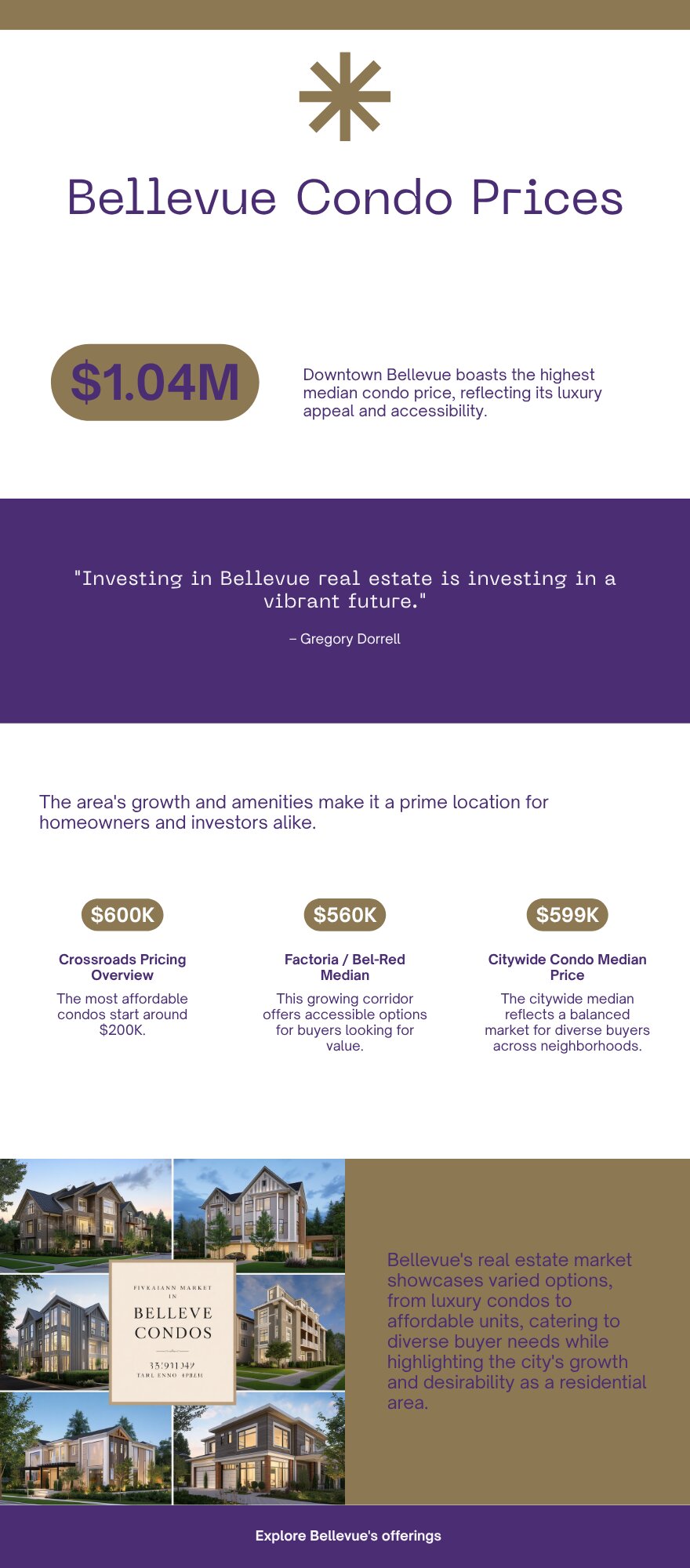
Where you shop sets your budget. Downtown runs near $1M while Crossroads starts under $600K.
One more number that matters: across all closed sales, the average Bellevue condo trades around $496,000. Listings often start higher than they close, especially downtown and in Crossroads where there is more room to negotiate and units sit longer. So do not treat a list price as the price. There is often room to work.
The HOA Is Buying You, Too: How to Vet the Association
Here is the part most first-time condo buyers underestimate. When you buy a condo, you are not just buying a unit. You are buying a share of a small business called the homeowners association, and that business has a balance sheet, debts, and risks. A beautiful unit inside a poorly run HOA is a bad buy.
In Washington, the law is now firmly on your side when it comes to information. Under RCW 64.90, every condo association that is not exempt must maintain a reserve study, update it annually, and get a full professional site inspection at least every third year. The reserve study has to include a 30-year projection, and reserve funds must sit in a segregated account. That is not optional. It is statutory. So if a seller or HOA cannot produce a current reserve study, that itself is a red flag.
When you go under contract, you receive a resale certificate package. Read it like your money depends on it, because it does. Here is what to pull and what to look for.
The reserve study
Confirm it was updated within the last three years and includes the 30-year projection. A reserve study that shows the account is badly underfunded is telling you a special assessment is coming. Someone is going to pay for that roof, those elevators, and that siding. If the reserves are not there, that someone is you.
Twelve to twenty-four months of meeting minutes
This is where the truth lives. Minutes reveal pending litigation, deferred maintenance the board keeps postponing, owner conflict, and any special assessment being discussed. A building can look pristine and still have a lawsuit or a six-figure repair hiding in the minutes.
The budget and delinquency rate
Look at how many owners are behind on dues. If more than 15 percent of owners are over 60 days past due, that alone can make the building hard to finance. High delinquency also means the working budget is stretched thin.
The master insurance policy
Confirm the building carries adequate hazard and liability coverage. Insurance costs have climbed across Washington, and underinsured buildings can face sudden dues increases or assessments.

The paperwork is the deal. Pull all of this before you write an offer.
There is also new protection worth knowing. Senate Bill 5686, effective January 1, 2026, added safeguards around special assessments and assessment-lien foreclosures, including a 30-day notice, a standstill period, and access to a meet-and-confer process. That is good news if you ever fall behind, but it does not change the basic homework. You still want to buy into a building that will never need to lean on those protections.
The Financing Trap: Warrantable vs. Non-Warrantable
This is the one that catches people off guard, and it can blow up a deal at the last minute. Not every condo can be bought with a normal loan.
A warrantable condo is a building that meets Fannie Mae and Freddie Mac standards. When a building is warrantable, you can use a standard conventional loan, including 3 percent down options, plus FHA and VA financing, at normal interest rates. A non-warrantable condo fails one of those tests. When that happens, conventional, FHA, VA, and USDA loans are off the table, and you are pushed into a specialty portfolio loan with a higher rate and usually a bigger down payment.
What makes a building non-warrantable? The common triggers are: a single owner or entity controlling more than 10 percent of the units; too many units owned by investors rather than occupied by owners, since lenders generally want at least 51 percent owner-occupied; reserves that are too thin; more than 15 percent of owners more than 60 days behind on dues; active litigation involving the association, which is common in newer buildings with construction defect claims; or too much of the building’s square footage used for commercial space.
So what this means for you is concrete: before you fall in love with a unit, ask your lender to confirm the building is warrantable. A good loan officer can check the project against Fannie Mae’s Condo Project Manager database quickly. If it comes back non-warrantable, you are not necessarily out, but you need to know going in that your financing, rate, and down payment all change. Walking into that surprise three weeks before closing is how people lose earnest money and homes.
What to Inspect That a Standard Inspector Will Miss
A normal home inspection covers your unit. It does not cover the building, and the building is where the expensive problems live. So your due diligence has to look in two directions at once.
Inside the unit, you want the usual: plumbing, electrical, appliances, windows, and signs of water intrusion, which matters more in our wet climate than almost anywhere. But the bigger questions are about the shared systems you are buying a fraction of. How old is the roof, and is it funded in the reserve study? What is the condition of the siding and the building envelope, which is the single most expensive thing a Pacific Northwest condo can face? When were the elevators, boilers, and shared HVAC last serviced or replaced?
The Local Angle: How Bellevue Condos Differ from the Rest of King County
If you have shopped condos in Kent, Renton, or Auburn, Bellevue will feel like a different sport. A few things set it apart.
First, the price floor is higher. The same dollars that buy a comfortable condo in South King County buy you a smaller unit, or a Crossroads or Factoria address, in Bellevue. That is the tradeoff for the schools, the jobs, and the Eastside location.
Second, HOA dues run higher, especially downtown. A luxury downtown building can charge anywhere from $800 to more than $1,500 a month once you factor in elevators, concierge staff, garages, and amenities. That dues figure is part of your real monthly cost, and it affects how much loan you qualify for. A $1,200 monthly HOA payment is the equivalent of carrying a much larger mortgage. So when you compare a Bellevue condo to a South King County townhome, compare the all-in monthly number, not just the price.
Third, light rail is reshaping value right now. With the 2 Line opening through downtown Bellevue in 2026 and the Bel-Red corridor building out, location relative to a station is becoming a bigger price driver than it has ever been on the Eastside. That cuts both ways. Transit-adjacent units may cost more today, but they also tend to hold value better. If you are buying to stay five to ten years, proximity to a station is worth paying attention to.
What This Means for You as a Buyer
Buying a Bellevue condo in 2026 comes down to three decisions, in this order.
Pick your neighborhood by budget first. If you are under $500,000, you are realistically looking at Crossroads or Factoria, and that is fine. Those are real Bellevue addresses with real Bellevue schools. Downtown is a lifestyle and transit decision, not a value one.
Vet the HOA before you vet the view. Get the reserve study, the minutes, the budget, and the insurance policy, and read them or have someone read them for you. A great unit in a broken HOA is the most common expensive mistake I see.
Confirm financing on the building, not just on you. Get your lender to verify the project is warrantable early. If it is not, decide whether the specialty loan terms still make the deal work before you are emotionally committed.
Do those three things in order and you will avoid almost every condo horror story out there. Skip them and you are gambling.

Read the reserve study before you fall for the view.
Frequently Asked Questions
How much do you need to buy a condo in Bellevue in 2026?
Plan around the citywide median of roughly $599,000, but your real number depends on neighborhood. Crossroads and Factoria condos start in the $500,000s and below, while downtown high-rises run near or above $1 million. Remember to budget monthly HOA dues, which range from a few hundred dollars to more than $1,500, into what you can actually afford.
What is a non-warrantable condo and why does it matter?
A non-warrantable condo is a building that fails Fannie Mae and Freddie Mac standards, often because of too many investor-owned units, thin reserves, high dues delinquency, or active litigation. It matters because you cannot use a standard conventional, FHA, or VA loan to buy one. You would need a specialty loan with a higher rate and larger down payment, so always confirm warrantability before you make an offer.
What HOA documents should I review before buying a Bellevue condo?
Pull the reserve study (updated within the last three years with a 30-year projection), 12 to 24 months of meeting minutes, the operating budget and delinquency rate, the master insurance policy, and any pending special assessments. Washington law requires associations to maintain a current reserve study, so a missing one is a warning sign.
Are Bellevue condos a good investment in 2026?
It depends on the building and the location. Transit-adjacent units near the new 2 Line stations and in the developing Bel-Red corridor are positioned to hold value well. A unit in a financially healthy, warrantable building is a reasonable buy. A cheaper unit in a building with thin reserves or pending litigation can cost you far more later through special assessments.
How much are HOA dues for a Bellevue condo?
Dues vary widely by building. Smaller, simpler buildings charge a few hundred dollars a month, while downtown luxury high-rises with elevators, concierge service, and amenities can run from $800 to more than $1,500 monthly. Always factor the dues into your total monthly housing cost, because lenders count them when calculating what you qualify for.
Should I buy a condo or a townhome in Bellevue?
Condos usually cost less up front and come with shared-building risk through the HOA. Townhomes often have lower or simpler dues but cost more. The right answer depends on your budget, how long you plan to stay, and how much shared maintenance risk you are comfortable taking on. Run the all-in monthly cost on both before deciding.
Your guide to life outside Seattle.
253-350-0045 ·
greg@livingoutsideseattle.com ·
www.livingoutsideseattle.com
This Guide Has Moved
This article has been folded into our maintained guide: King County Condo Buyer’s Guide: Due Diligence Checklist. You are being taken there now.
King County Condo Buyer’s Guide: Due Diligence Checklist
A standard home inspection only covers your unit. Here’s how to check everything else — so you don’t inherit someone else’s financial mess.
If you’re shopping for a condo in King County, you already know the appeal. The $400K to $550K price range gets you into cities like Renton, Kent, Auburn, and Federal Way where single-family homes now regularly push past $700,000. Condos let first-time buyers get into the market with a lower entry point and no yard to maintain.
But buying a condo isn’t the same as buying a house. When you buy a condo, you’re not just buying the unit. You’re buying into the association that owns everything outside your four walls — the roof, the parking structure, the elevators, the exterior siding. You’re signing on as a stakeholder in the financial health of an organization you probably know nothing about yet.
That’s where most first-time condo buyers get burned. They fall in love with the unit, get excited about the price, and skip the due diligence that would tell them whether the building is a smart buy or a costly surprise waiting to happen. I’ve done BPO assessments on condo buildings across King County for years. The difference between a well-run community and a poorly-run one shows up in the documents — if you know what to look for.
Here’s what you need to check before you write that offer.
The Reserve Study: Your Most Important Document
The reserve study is an independent engineering report that tells you two things: what major components the association owns (roof, siding, pavement, elevators, common area systems) and how much money the HOA needs to set aside right now to cover those replacements when they come due.
Think of it like a maintenance budget projected out 20 or 30 years. A well-funded reserve means the HOA has been saving consistently and won’t need to hit owners with a surprise bill when the roof fails. An underfunded reserve means the opposite.
Here’s the number that matters most: the funding percentage. Most reserve studies show this as a percentage of “full funding.” Anything above 70% is generally healthy. Below 30% is a serious red flag. According to the Community Associations Institute, more than 70% of HOAs nationally are considered underfunded. That’s not a comfort — it’s a warning about how common the problem is.
In Washington state, as of 2026, HOAs must include reserve fund information in resale certificates. Still, don’t rely on what the HOA tells you in summary form. Ask for the full reserve study report and read the section on reserve component status yourself.
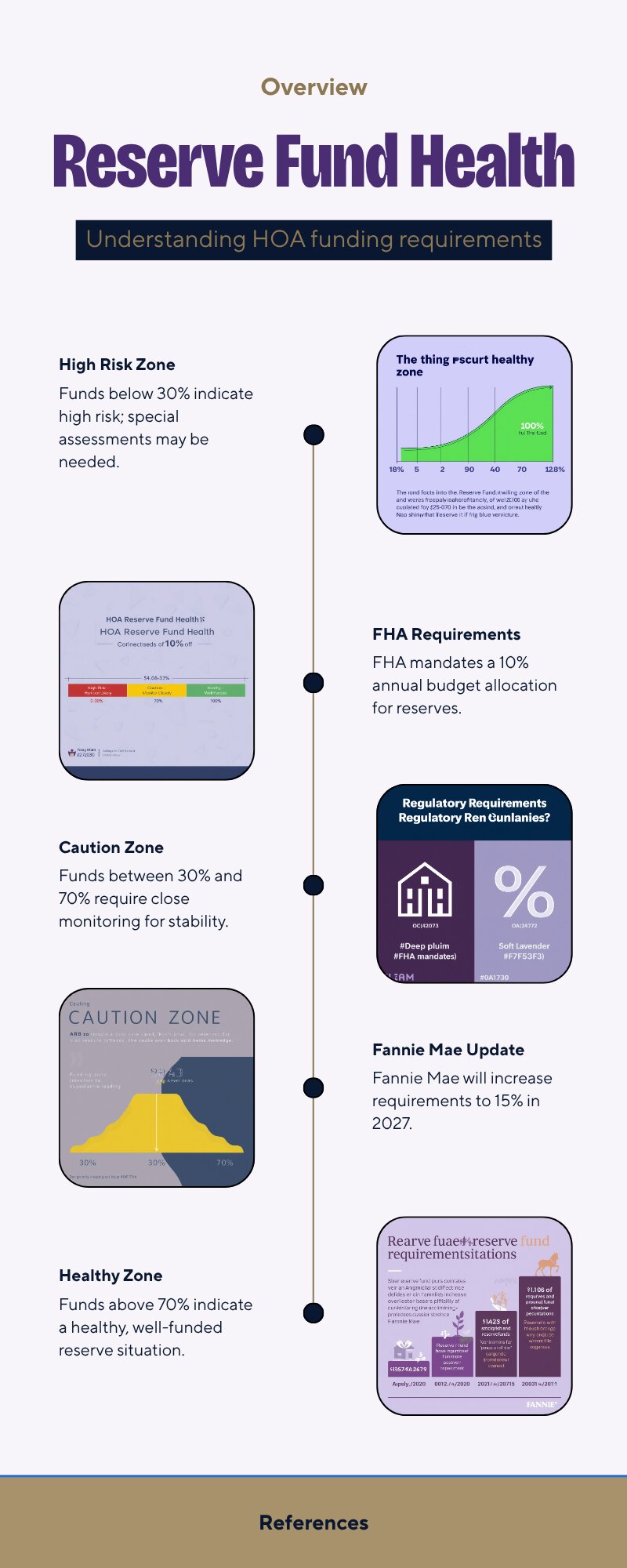
Anything above 70% is generally healthy. Below 30%, a special assessment is likely — not a matter of if, but when.
Special Assessments: What They Are and How to Spot the Risk
A special assessment is an extra charge the HOA levies on every unit owner to cover a large expense the reserve fund can’t handle. They’re not uncommon. What makes them dangerous is that they can hit without much notice and they don’t care when you bought your unit.
An older 50-unit building might face a $200,000 roof replacement with nothing saved. That works out to $4,000 per unit — potentially due in a lump sum or in payments spread over a couple of years. Special assessments in King County can run $60,000 to $80,000 per unit when major structural or mechanical work has been deferred for years.
Before you make an offer, ask for the last five years of special assessment history. If there’s been one large assessment or multiple smaller ones in that window, ask why. The answer tells you a lot about how the board manages the property. Also ask whether any special assessments have been approved but not yet levied. Washington’s WUCIOA law requires this to be disclosed in the resale certificate — but only for assessments already approved by the board. A vote that hasn’t happened yet won’t show up anywhere except in the board minutes.
Which brings me to the board minutes.
Read the Board Meeting Minutes
Board minutes are a window into everything the summary documents won’t tell you. Most buyers never ask for them. That’s a mistake.
You’re looking for a few things specifically. First, any discussion of upcoming major repairs or capital projects. Second, any mention of litigation — whether the HOA is suing a contractor or a homeowner is suing the HOA. Third, any talk of raising dues significantly, levying a special assessment, or adjusting the reserve contribution downward to balance the operating budget. That last one is a classic sign of financial stress.
Under Washington’s WUCIOA updates effective January 1, 2026, condo associations must now hold open board meetings and provide better documentation to buyers. The resale certificate that comes with any condo sale must include 26 specific items and can only cost you up to $275. You also have a 5-day cancellation right after receiving all required documents. That window is your formal due diligence period — use it.
The Warrantable vs. Non-Warrantable Problem
This is the one that trips buyers up most often, and it has nothing to do with the unit itself. It has to do with the building.
A condo building is considered “warrantable” when it meets Fannie Mae and Freddie Mac lending standards. A warrantable building means you can get a conventional mortgage, FHA financing, or a VA loan — whatever you qualify for. Normal rates, normal down payments.
A non-warrantable building doesn’t meet those standards, and you lose access to the most competitive loan products. You’re looking at higher rates and larger down payments — often 20% or more — because portfolio lenders are taking on more risk. For a $500,000 condo, the difference between a warrantable and non-warrantable rate at current levels can easily add $200 to $250 to your monthly payment.
What Makes a Building Non-Warrantable?
The most common triggers in King County:
Single entity owns 25%+ of units — often an investor who bought in bulk during slower markets.
More than 35% commercial square footage — common in mixed-use buildings in downtown Renton or Federal Way.
Short-term rental policies — buildings that allow Airbnb-style rentals trigger automatic non-warrantable status.
Active or pending litigation — even a small dispute can knock a building out of warrantable status.
Ask your lender to run a condo project approval check before you get emotionally invested in a unit.
Many King County condo buildings — especially older mid-rises in Renton, downtown Kent, and Federal Way — fall outside warrantable guidelines. Knowing this upfront shapes your financing strategy before you’re already under contract.
For a full look at what mortgage rates look like right now for King County buyers, see our King County Mortgage Rates 2026 guide. If your condo ends up in the non-warrantable category, a mortgage rate buydown negotiated into the deal can help offset the higher rate.
Rental Cap Rules: What They Mean for Your Investment and Resale
Some condo associations limit how many units can be rented out at any given time. This is a rental cap, and it matters in two ways.
First, if you’re buying as an investor or might need to rent your unit down the road, a rental cap could block you entirely if the cap is already at its limit. Second — and this affects every buyer — a tight rental cap can make your building non-warrantable, which reduces your future buyer pool when you go to sell.
In Washington state, a rental cap must be written into the Declaration (the CC&Rs), not just the rules and regulations. Washington courts have ruled that caps can’t be created by the board alone — they need a supermajority vote to amend the Declaration. Check the current governing documents to see whether a cap exists, what the limit is, and whether it’s currently at capacity.
What a Standard Inspector Won’t Check
Here’s what a lot of condo buyers don’t realize: Washington state home inspectors are not required to inspect common elements, shared structural systems, or common area amenities. The inspector looks at your unit. The roof, the parking structure, the building envelope, the elevators, the main plumbing stack — those fall outside the standard inspection scope.
That means the structural and mechanical health of the entire building you’re buying into rests entirely on the HOA documents, not on any physical inspection you can order.
This is why the reserve study and the board minutes matter as much as they do. They’re the closest thing you have to a building inspection. If the association has been commissioning regular reserve studies and following the funding plan, you can feel reasonably confident. If the last reserve study is eight years old and nobody can find the financials, that’s your answer.
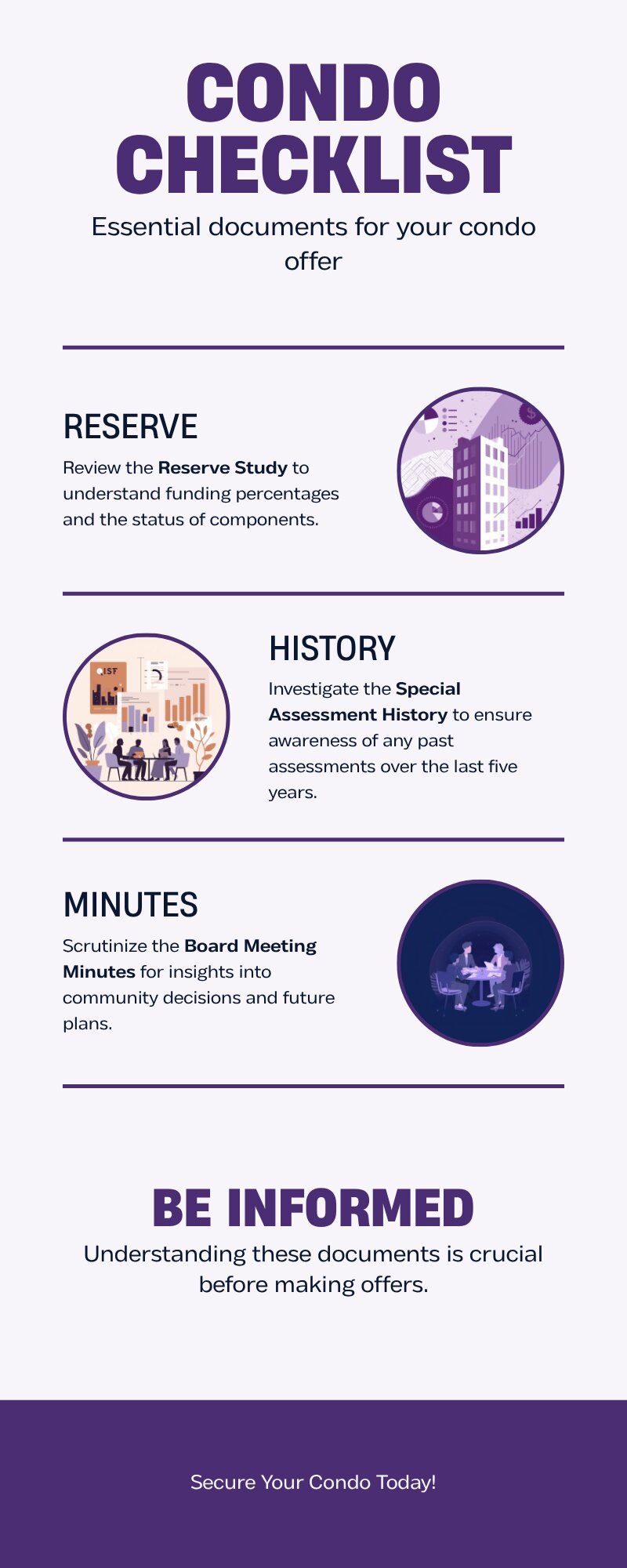
Washington’s new WUCIOA rules (effective 2026) cap the resale certificate fee at $275 and give you a 5-day cancellation window after receiving all required documents.
The Local Angle: What Makes King County Condos Different
King County’s condo market is concentrated in a handful of cities. The sub-$500K inventory you’ll find in Renton, Kent, Auburn, and Federal Way tends to be in older mid-rise buildings — think 1980s and 1990s construction. Some of these buildings have been well-maintained. Many have deferred capital work for years because the HOA fees were kept artificially low to attract owners.
As of the May 2026 King County market update, condo inventory is elevated relative to last year. That’s actually good news for buyers doing due diligence — you have more options and more negotiating room if a building’s documents reveal problems. You can move to the next building rather than feeling pressured to overlook red flags. For more on current conditions, see my East and South King County market update.
One thing I always watch from a pricing standpoint: HOA fees relative to market rates for the building’s age and amenities. An older building with fees significantly below market isn’t a deal — it’s a warning sign that the board has been cutting corners on reserves or maintenance to keep fees low. That cost shows up later. Often all at once.
If you’re weighing a condo against a townhouse or a single-family home in the same price range, the Condo vs. Townhouse vs. Single-Family Home in King County comparison guide can help you think through the tradeoffs before you commit to any one property type.
What This Means for You as a Buyer
Getting a condo offer right comes down to this: the unit is the easy part. Every agent will show you the finishes and the view. The due diligence that protects you happens in the documents.
Request the full resale certificate as soon as you’re seriously interested in a building — Washington law now limits the fee to $275 and gives you five days to review after receiving all required items. Use those five days. Read the reserve study funding percentage. Scan the last two years of board minutes for anything that sounds expensive. Pull the special assessment history. Have your lender check the project for warrantability before you fall in love with the floor plan.
If any of those documents are hard to get, incomplete, or missing entirely — that’s important information. A well-run HOA has nothing to hide.
Frequently Asked Questions
How do I get the reserve study and HOA financials as a condo buyer in Washington?
Request them in writing through your real estate agent as part of the offer or as a pre-offer document request. Under Washington’s WUCIOA law, the resale certificate is a required disclosure and must be provided within a set timeline. Your agent can request the full reserve study separately — not all associations include the full report in the standard resale package.
What reserve fund percentage should I look for when buying a condo in King County?
A funding level at or above 70% of “full funding” is generally healthy. Below 50% warrants a deeper conversation with the HOA or your agent. Below 30% is a serious red flag for near-term special assessments. FHA requires HOAs to allocate at least 10% of their annual budget to reserves — Fannie Mae is moving toward 15% effective January 2027.
What makes a condo non-warrantable in Washington state?
The most common triggers are high investor ownership (one entity owning 25%+ of units), active or pending litigation, short-term rental policies, and high commercial space concentration. Your lender can run a condo project approval check to confirm status before you’re under contract.
Can I use an FHA loan on a condo in King County?
Yes, if the building is FHA-approved or spot approval is available. FHA has its own approval process separate from conventional warrantability. Your lender will know whether the specific project is on FHA’s approved list or whether spot approval is an option for that building.
What should I look for in condo board meeting minutes?
Look for any discussion of deferred repairs, upcoming capital projects, special assessment votes (including proposed but not yet approved), litigation, significant dues increases, or decisions to reduce reserve contributions. Any of these can signal financial stress in the association.
Is a condo’s rental cap in the CC&Rs or the rules?
In Washington state, rental caps must be in the Declaration (CC&Rs) to be enforceable — not just the rules and regulations. If you see a rental cap only in the R&Rs and it’s not in the Declaration, its enforceability may be questionable under current Washington case law. Still, treat it as a real restriction until a real estate attorney tells you otherwise.
Buying a condo in King County can be a smart move. The entry-level price points in South King County are some of the last affordable options for first-time buyers in the region. But the savings on purchase price can disappear fast if you walk into a building with underfunded reserves, pending litigation, or a non-warrantable status nobody mentioned upfront.
The documents tell the story. Take the time to read them.
Your guide to life outside Seattle.
253-350-0045 ·
greg@livingoutsideseattle.com ·
www.livingoutsideseattle.com
