

 Facebook
 X
X
 Pinterest
 Copy Link
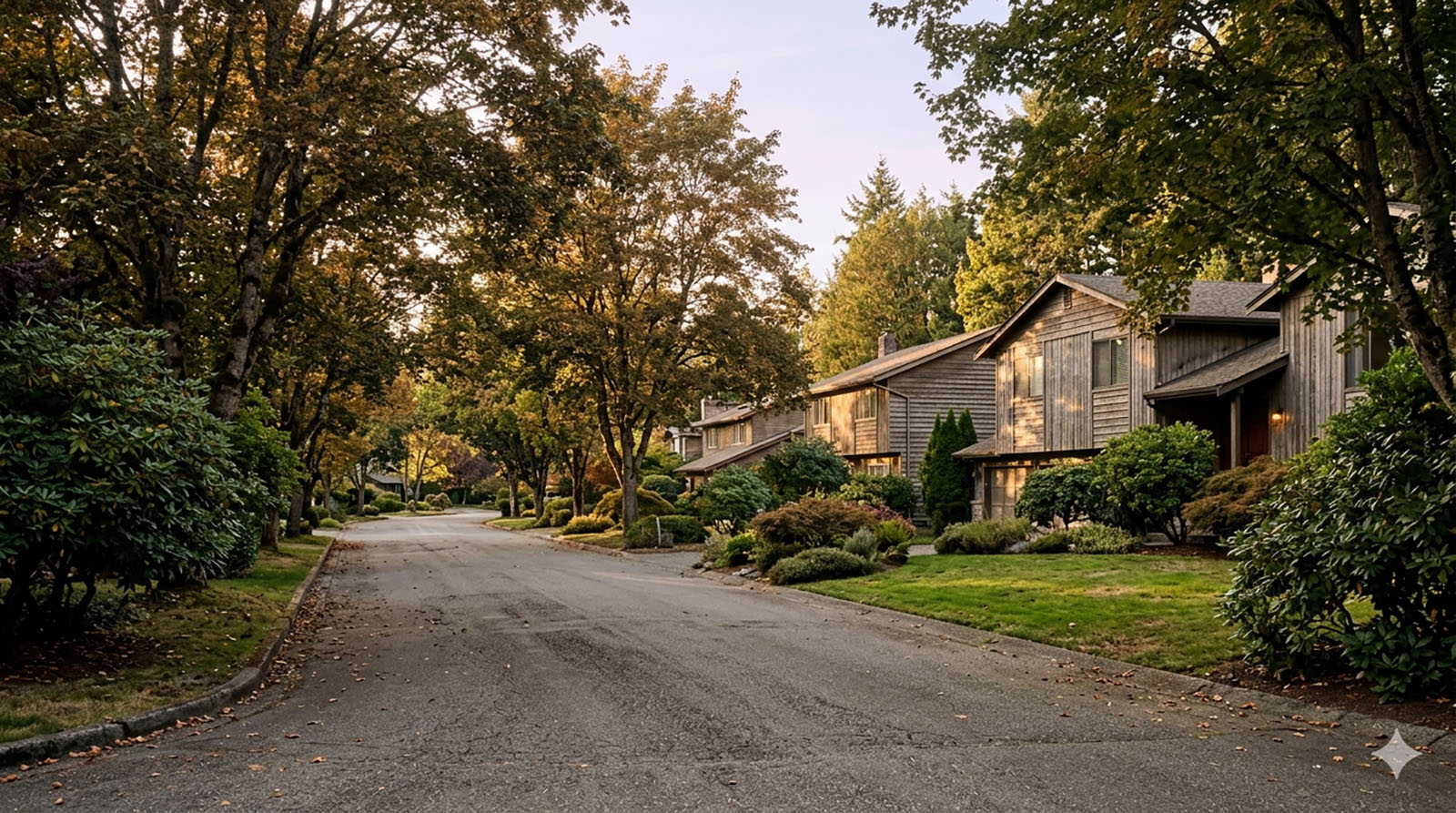
Sycamore is one of Issaquah’s older established neighborhoods, tucked along the lower flank of Cougar Mountain just west of Olde Town. In 2026, with buyers looking for value, real lots, and the kind of mature neighborhood character you cannot manufacture in new construction, Sycamore is one of the most underrated options in Issaquah. If you want a solid 1970s or 1980s home with bones, room to update, and a quiet established street where neighbors actually know each other, Sycamore is worth a serious look.
What is it actually like to live in Sycamore in 2026?
On a weekday morning, Sycamore feels like a real neighborhood. Streets are lined with mature firs, cedars, and yes, some sycamore trees that gave the area its name. Kids walk or bike to Issaquah Valley Elementary or catch the bus on the corners. Commuters head east toward I-90 and the Issaquah Transit Center. The pace is calm, and the streets are quiet enough that you can hear birds even at 8 AM.
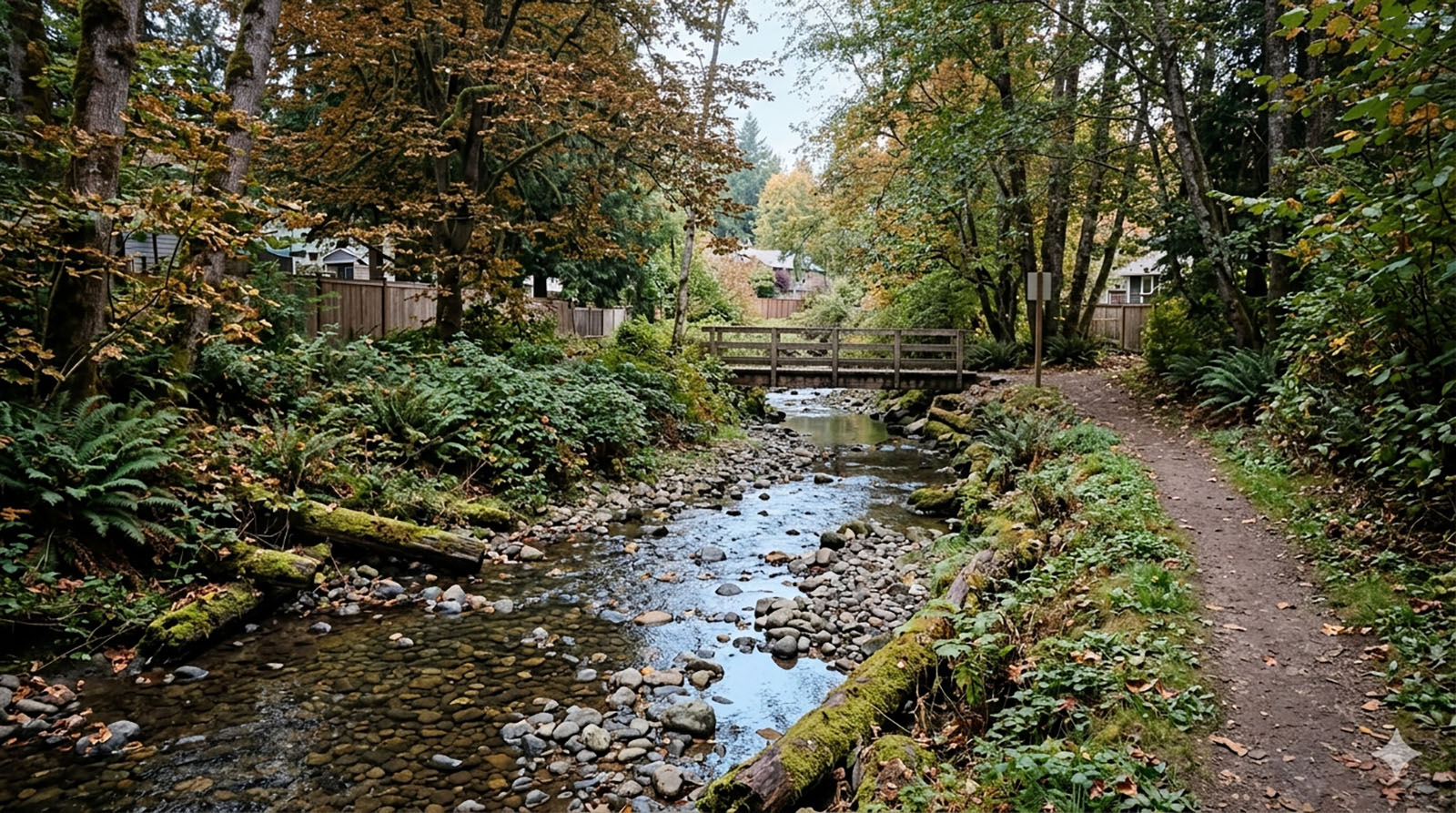
On a weekend, Sycamore stays quiet but more active for residents. People walk dogs along the loop streets, run on the Tibbetts Creek trail, and head into Olde Town for breakfast or coffee. Many residents work on their homes on weekends because the housing stock is mature enough that there is always something to do. The neighborhood holds an annual block party in summer that pulls people out and reinforces the established community feel.
Most residents are a mix of long-time owners who bought in the 1980s and 1990s when Sycamore was the affordable alternative to newer Issaquah construction, plus newer buyers who specifically wanted character, value, and walkability to Olde Town. Many residents work from home or have flexible schedules. What separates Sycamore from the master-planned communities up the hill is simple: this neighborhood was not designed in one sweep. It grew over the 1970s and 1980s, with houses set on irregular lots and streets that follow the contours of the lower mountain slope. That gives it the kind of organic character that newer neighborhoods cannot copy.
Homes in Sycamore: What the Data Shows
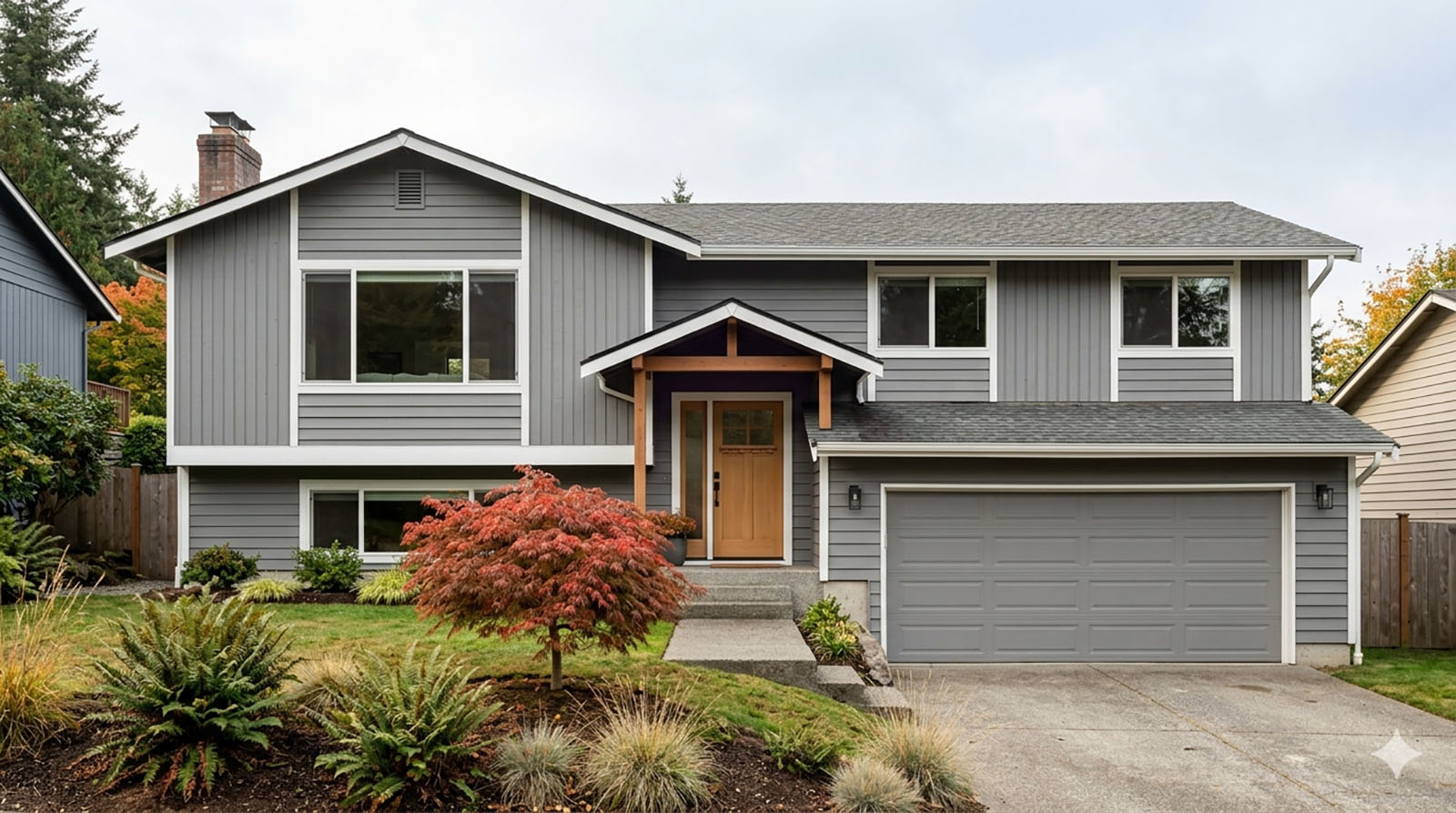
Most homes in Sycamore were built between the early 1970s and the late 1980s, with a smaller share of newer infill on lots where someone has torn down an aging structure and built modern. You will find classic Pacific Northwest split-levels, cedar-clad contemporaries, traditional two-story homes, and a handful of one-level ramblers tucked along the quieter streets. Single-family homes typically run 1,800 to 3,000 square feet on lots between 7,000 and 10,000 square feet, with some larger legacy lots in the upper sections of the neighborhood. Lot orientation varies because the streets follow the natural topography, which means light, view, and outdoor usability differ noticeably from one home to the next. There is no townhome or condo inventory in Sycamore. Detached single-family homes are the only product type.
| Market Pulse | Sycamore (98027) | King County |
|---|---|---|
| Median Sales Price (May 2026) | ~$995,000 | ~$859,000 |
| Median Days on Market | ~28 days | ~28 days |
| Active Listings Change (vs. Jan 2026) | +21% | +30% |
Estimates based on current NWMLS data for the Sycamore residential pockets within the 98027 ZIP code. Sycamore’s pricing runs above the King County median but well below newer Issaquah construction, which is exactly why value-focused buyers target this neighborhood.
Schools Serving Sycamore
Most Sycamore kids attend Issaquah Valley Elementary, then Issaquah Middle School, then Issaquah High School. All three schools sit within five to ten minutes of the neighborhood, and the bus pickup network is well-established because Sycamore has been part of the same school pipeline for decades.
Issaquah Valley Elementary houses the Spanish Dual Language Immersion program and is one of the more diverse elementary schools in the district. Issaquah Middle School was rebuilt and modernized in recent years and offers strong music and STEM programs. Issaquah High has a strong four-year graduation rate, multiple AP programs, and a competitive athletics presence.
The school pipeline for Sycamore involves driving for some families and walking for others, depending on which street you live on. The eastern end of the neighborhood is closer to Issaquah Valley and walkable for many kids. The western end requires driving or busing.
Getting to Work from Sycamore
Sycamore residents typically take Newport Way east to reach I-90 at exit 17. Some northern properties use Front Street to access I-90 at the same interchange. The neighborhood has good freeway access without being directly on a major arterial, which keeps internal traffic light.
| Destination | Distance | 2026 Peak Drive (AM) | Transit Option |
|---|---|---|---|
| Downtown Seattle | 17 miles | 35 to 55 min | I-90 / ST 554 from Issaquah Transit Center |
| Bellevue / Amazon Bellevue | 9 miles | 22 to 32 min | I-90 to I-405 / ST 554 |
| Microsoft (Redmond) | 12 miles | 28 to 38 min | I-90 to SR-520 / Connector Bus |
| SeaTac Airport | 22 miles | 35 to 50 min | I-405 to I-5 / Drive |
What I See as a Valuation Expert in Sycamore
The biggest valuation factor in Sycamore is honestly the home itself, not just the neighborhood. Two same-vintage homes on the same block can appraise $150,000 apart based purely on the condition of the systems, the roof, the siding, and whether the kitchen and bathrooms have been updated in the last 10 to 15 years. In Sycamore, valuation weight goes heavily to the major systems, the foundation, and the condition of any deck or outbuilding. A 1985 home with a 2018 roof, recent siding work, and an updated kitchen will appraise much stronger than a same-vintage home where deferred maintenance has been deferred.
HOAs are rare in Sycamore. Most properties are fee simple, which means no monthly dues and no master association rules to worry about. The neighborhood relies on King County code rather than private HOA rules for landscaping and architectural standards. That gives owners flexibility but also means properties vary widely in maintenance and curb appeal from one block to the next.
Within Sycamore, certain streets and pockets carry premium pricing. Lots backing directly to Tibbetts Creek or the Cougar Mountain greenbelt, properties with morning sun and afternoon shade, homes on the quieter cul-de-sacs, and any home that has been sympathetically updated tend to move first when they hit the market.
Explore Sycamore Yourself
The fastest way to know if Sycamore fits is to drive Newport Way west from Olde Town, then turn into the loop streets to see how the neighborhood opens up onto the lower slope of Cougar Mountain.
View Sycamore on Google Maps →
Your guide to life outside Seattle.
253-350-0045 · greg@livingoutsideseattle.com · www.livingoutsideseattle.com
