

 Facebook
 X
 Pinterest
 Copy Link
Why Winter Prep Is Different Here
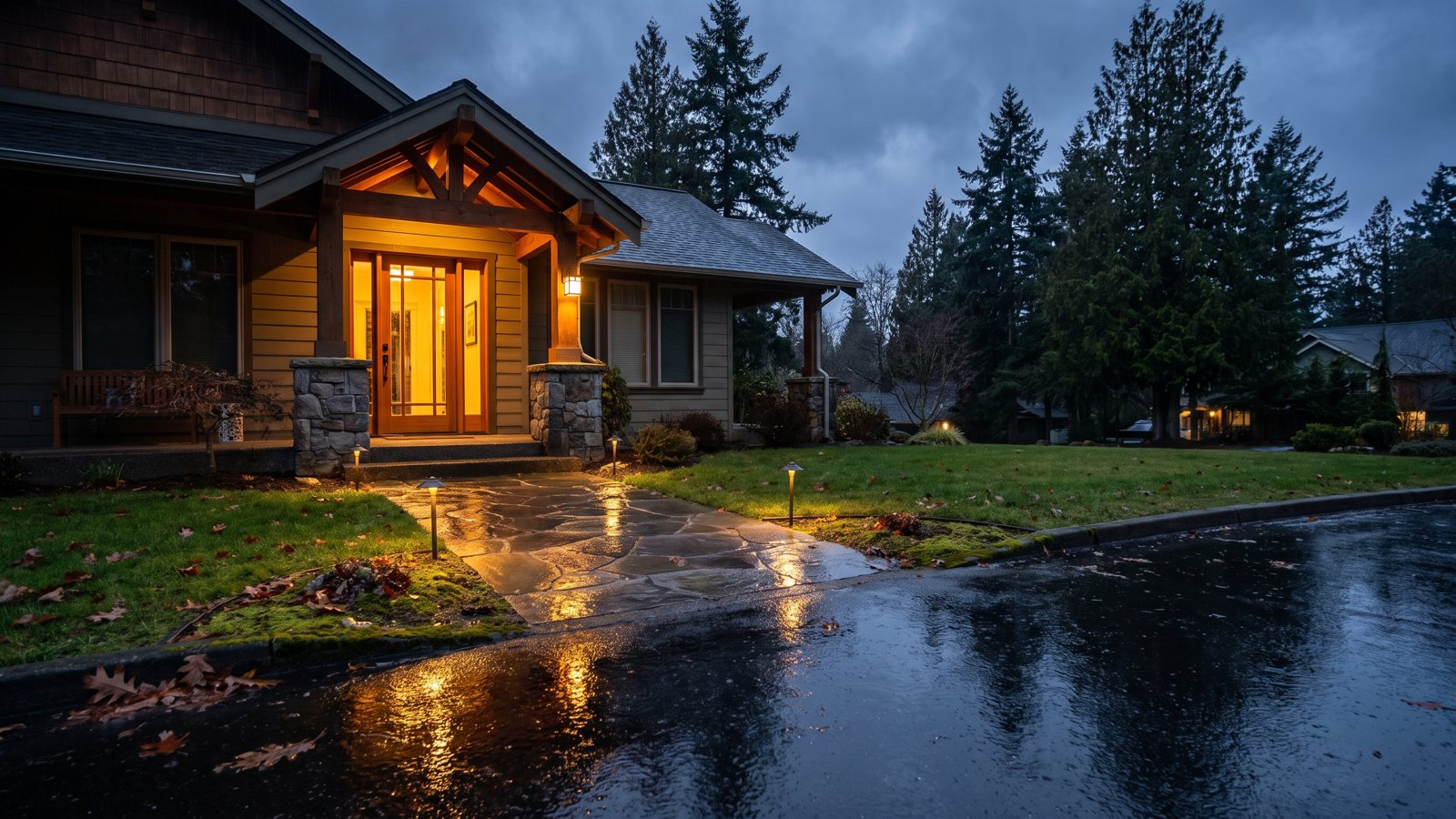
Selling in the Pacific Northwest in winter is not the same as selling in July. The rain does not stop. The sun sets early. Moss grows on everything that stays damp.
Buyers drive up in the dark. They walk a wet path and stand in your entry with soggy shoes. The first 60 seconds shape the whole showing.
This post covers the season, not the whole job. For the room-by-room list, read my guide on how to prepare your home for sale in King County. For which repairs are worth the money, read home repairs worth it before selling. This post is the wet, dark layer on top of both.
I assess property values professionally every day, and I walk a lot of wet yards in January. The homes that show well in winter are almost never the fanciest. They are the ones where someone took care of the water.
The Winter Prep Table
Here is the short version. Use it as your checklist, then read the sections below for the why.
| Task | Why it matters in winter | When to do it |
|---|---|---|
| Clear moss and debris from roof edges and walkways | Moss makes a home look neglected and makes paths slippery | 3 weeks before photos |
| Clean gutters and check downspouts | Overflowing water stains siding and pools by the foundation | 2 to 3 weeks before photos |
| Check drainage and the crawlspace | Buyers and inspectors look for standing water and damp smells | 2 to 3 weeks before listing |
| Add exterior lighting | Many showings happen after dark | 1 to 2 weeks before photos |
| Dry out the entry | A wet, cold entry sets the mood for the whole home | Before every showing |
| Check heat and smell | Cold or musty rooms feel smaller and older | 1 week before listing |
| Clear leaves and yard debris | Leaf piles hide steps and cover walkways | Day of photos, then weekly |
Source: Gregory Dorrell, field experience walking King County homes. Task timing is my recommendation, not a published standard.
Moss: Fix What Buyers Can See
Moss loves the Puget Sound area. It grows on roofs, decks, steps, fences, and siding. Buyers see it and think one thing: this house has not been cared for.
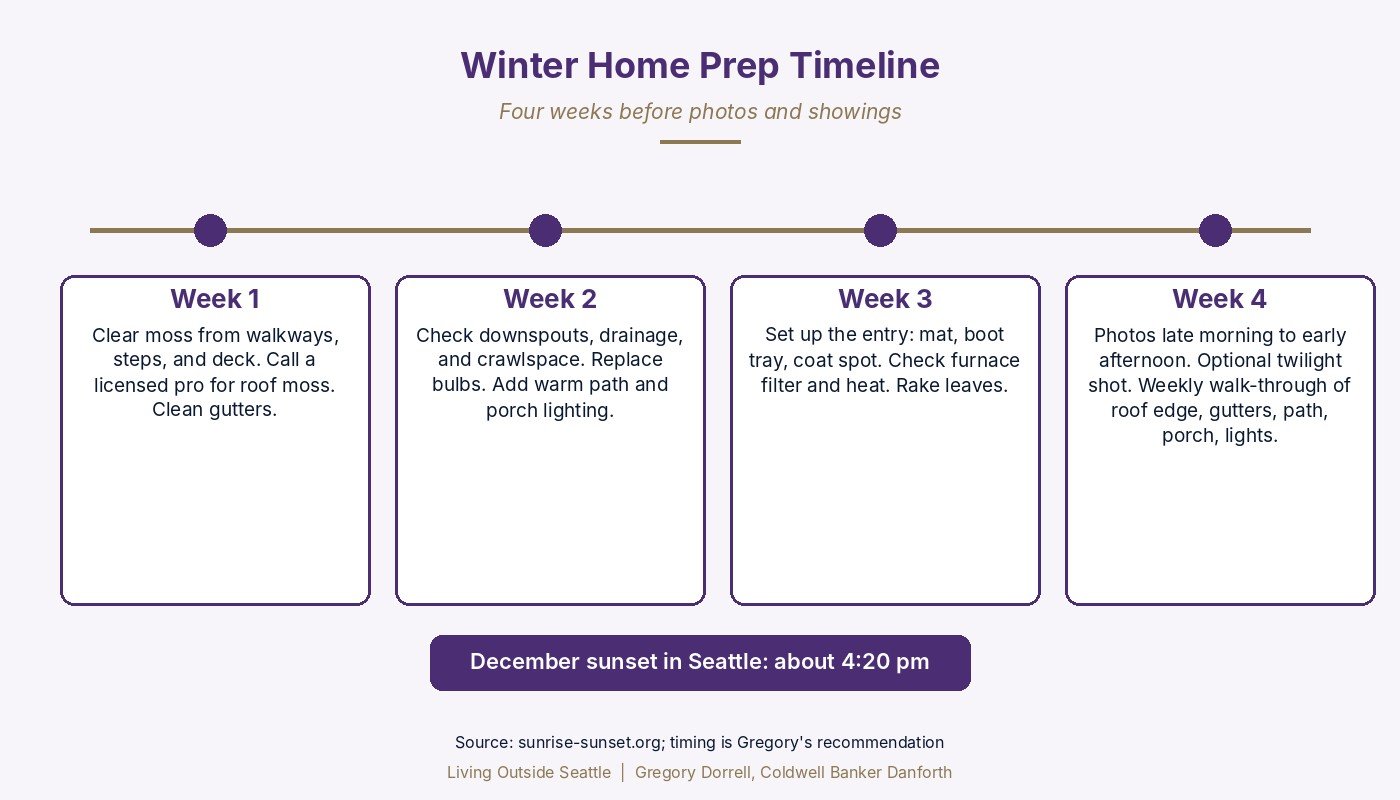
Start with the walkways and steps. Moss on a wet path is a slip risk, and a showing agent will notice it right away. Scrub it, treat it, and let it dry. Do the same for the deck and front steps.
The roof needs more care. Moss can hold water against the shingles. But please do not climb a wet roof yourself. Hire a licensed roofing or moss-treatment company, and ask them to tell you if the roof itself has problems. That way you know before the buyer’s inspector does.
If the roof is near the end of its life, say so honestly with your agent. It is better to plan for it than to be surprised after the offer. My home inspection seller guide shows what inspectors flag and why a pre-listing inspection can help.
Gutters, Downspouts, and Drainage
Clean them out before photos. Check that every downspout moves water away from the house, not right next to the foundation. Look for water stains on siding, drips at the corners, and puddles near the walls. These are things a buyer’s inspector will write down.
Next, look at the ground. Does water pool by the foundation, the garage, or the front steps? Walk the yard during or right after a hard rain. That is the best test. A downspout extension or a bit of regrading may be all it takes, but ask a pro if you are not sure.
The crawlspace matters too. Many King County homes have one. Open the access, look inside with a flashlight, and check for standing water, a damp smell, or loose insulation. If something looks wrong, have it looked at before you list. Buyers do not like surprises about moisture, and the sooner you know, the more options you have.
Early Dark: Lighting for Showings and Photos
Here are the numbers. On December 21, the sun in Seattle rises at 7:18 a.m. and sets at 4:20 p.m. That is about 9 hours of daylight. On December 1, it sets at 4:19 p.m.
*Source: sunrise-sunset.org, Seattle, WA, December 2026.*
So many buyers see your home after dark. If the outside is dim, the home feels unsafe and cold. A little light fixes that.
Here is what I would do:
- Check every bulb. Replace burned-out ones at the front door, garage, and walkway.
- Use warm white bulbs. Match the color across the front of the house so it looks even.
- Light the path. Use simple path lights or timers so the walk from the car to the door is clear.
- Turn on interior lights for every showing. Open the blinds in the day. Turn every lamp on at dusk.
- Put lights on a timer. That way the home looks welcoming even when no one is there.
The Entry, the Porch, and the Wet Shoes Problem
Every showing in winter starts with wet shoes and wet coats. Plan for that.
Set a sturdy doormat outside and a second one inside. Put down a boot tray. Add a small bench or a place for coats. Many buyers will take their shoes off if you give them a simple spot to do it. Ask your agent to put a note on the lockbox listing so showing agents know your preference.
Sweep the porch. Wipe the door. Check the doorbell and the house numbers. If the porch light is yellow and dim, change it. The front door is the first thing buyers touch, so make it clean and warm.
Heat, Smell, and Fresh Air
A cold house feels smaller and older. A musty house feels wet. Both hurt a showing.
Set the heat to a comfortable level before each showing, and do not shut it off while you are away. Change the furnace filter and run the bathroom fans.
Skip heavy air fresheners and strong cooking smells before showings. A clean house with a little fresh air does more than any candle. Open windows for a few minutes on dry days, then warm the house back up.
Photos in Low Light
Winter photos need a plan. You only get about 9 hours of daylight at the darkest point, and many of those hours are gray.
Here is how I would plan it:
- Book photos for the middle of the day. Late morning to early afternoon gives the best light.
- Do the outside first on dry breaks. If it is pouring, ask your photographer about moving the exterior shots to another day.
- Prep the night before. Clean, light, and declutter so the shoot is quick.
- Turn on every light inside. Warm lights make rooms look cozy on a gray day.
- Ask about a twilight shot. A lit front of the house at dusk can be a strong first photo for a winter listing.
Leaves, Debris, and the Weekly Check
Leaves cover steps, clog drains, and hide trip hazards. Rake them before photos, and again before the weekend of your first showings.
Pick up branches after wind storms, and trim anything hanging over the walkway or roof edge.
Then make a weekly habit. Once a week, walk your home like a buyer. Look at the roof edge, the gutters, the path, the porch, and the lights. Winter can undo your work in a few days, so a quick check keeps the home ready.
Frequently Asked Questions
Is winter a bad time to list a home in King County?
Not always. There are fewer homes for sale, and the buyers who are out are serious. But your home has to show well in the rain and the dark. The prep in this post is how you do that.
How far ahead should I start winter prep?
I would start two to three weeks before you plan to take photos. That gives you time to clear moss, clean gutters, check drainage, and fix lighting without rushing.
Should I deal with moss on my roof before listing?
If you can see moss, yes, talk to a licensed roofing or moss-treatment company. They can clear it safely and tell you if the roof has deeper issues. Do not climb a wet roof yourself.
What is the best time of day for listing photos in winter?
Late morning to early afternoon is best. The sun sets around 4:20 p.m. in December, so waiting until late in the day leaves you with dark, dim photos.
Your guide to life outside Seattle.
253-350-0045 · greg@livingoutsideseattle.com · www.livingoutsideseattle.com
Sunrise and sunset times from sunrise-sunset.org for Seattle, WA, December 2026. Task timing and prep advice are my own recommendations from walking King County homes, not a published standard. I am not a roofing, drainage, or home inspection professional, so ask a licensed pro about any repair.
