

 Facebook
 X
X
 Pinterest
 Copy Link
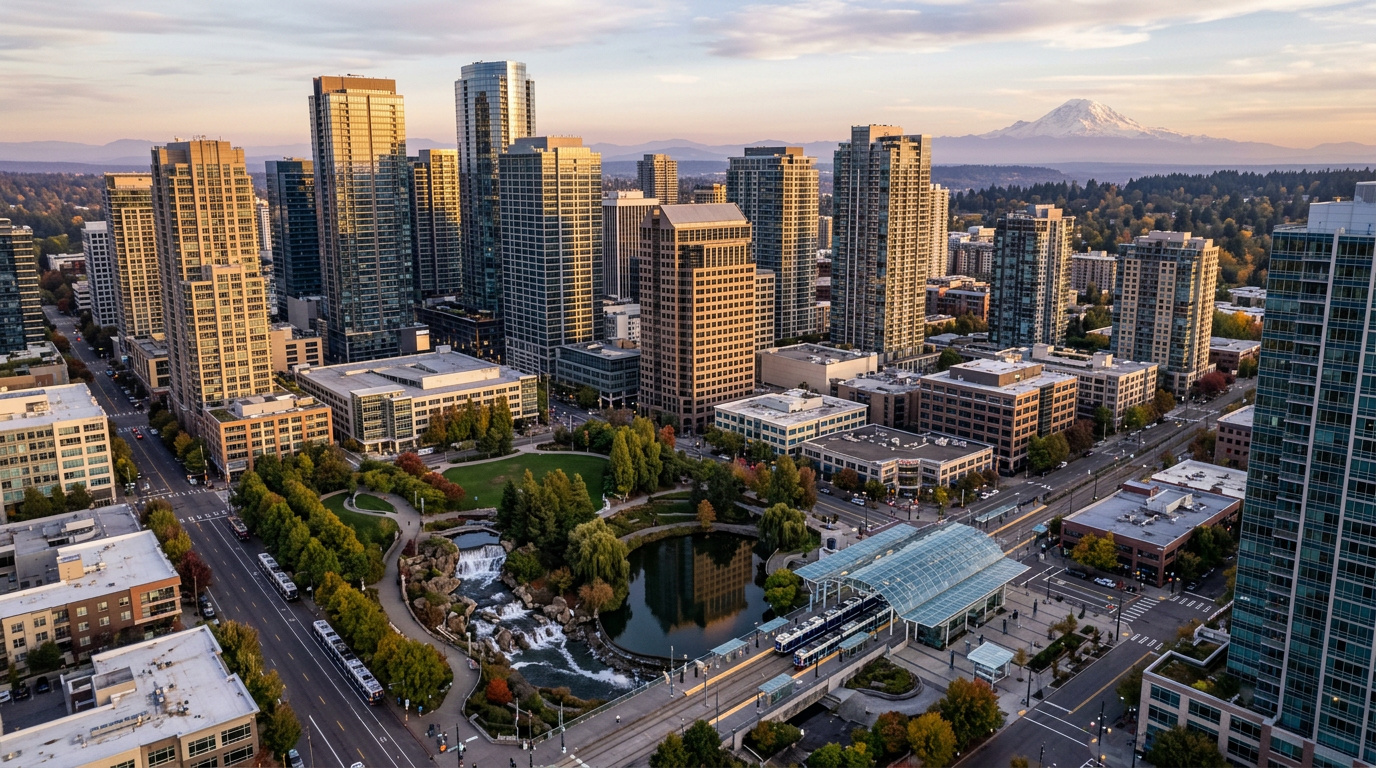
What is it actually like to live in Downtown Bellevue in 2026?
Downtown Bellevue carries a Walkable Urban Edge feel that is genuinely rare on the Eastside. This is the neighborhood inside Downtown Bellevue, the city’s high-rise core built around Bellevue Way and NE 8th Street, and 2026 has been a turning point for it. The 2 Line light rail opened here in March, connecting the neighborhood to downtown Seattle in about 25 minutes without a car. That single change has pulled in buyers who used to look only at Seattle condos because they wanted transit and gave up on the space and schools that come with the Eastside. Now they do not have to choose.
On a Tuesday morning, the sidewalks along Bellevue Way fill up early. Commuters walk toward the light rail entrance near City Hall, coffee in hand, while others head the opposite direction toward the tech offices that anchor the neighborhood’s daytime population. Bellevue Downtown Park opens half an hour before sunrise and the loop around the promenade gets steady foot traffic before the workday starts. It is a different rhythm than the rest of Bellevue. Nobody is warming up a car in a driveway here. People are walking.
Weekends shift the neighborhood’s center of gravity toward Lincoln Square and Bellevue Square, both a few blocks apart with restaurants, shops, and a movie theater that draw people in from across the Eastside. Downtown Park hosts farmers markets and community events through the summer. The residents here skew toward professionals and empty nesters who have traded a yard for an elevator, plus a growing number of remote and hybrid workers who picked the neighborhood specifically for the light rail option. That is different from Bellevue’s residential neighborhoods like Somerset or Bridle Trails, where the draw is space and schools rather than walkability.
Homes in Downtown Bellevue: What the Data Shows
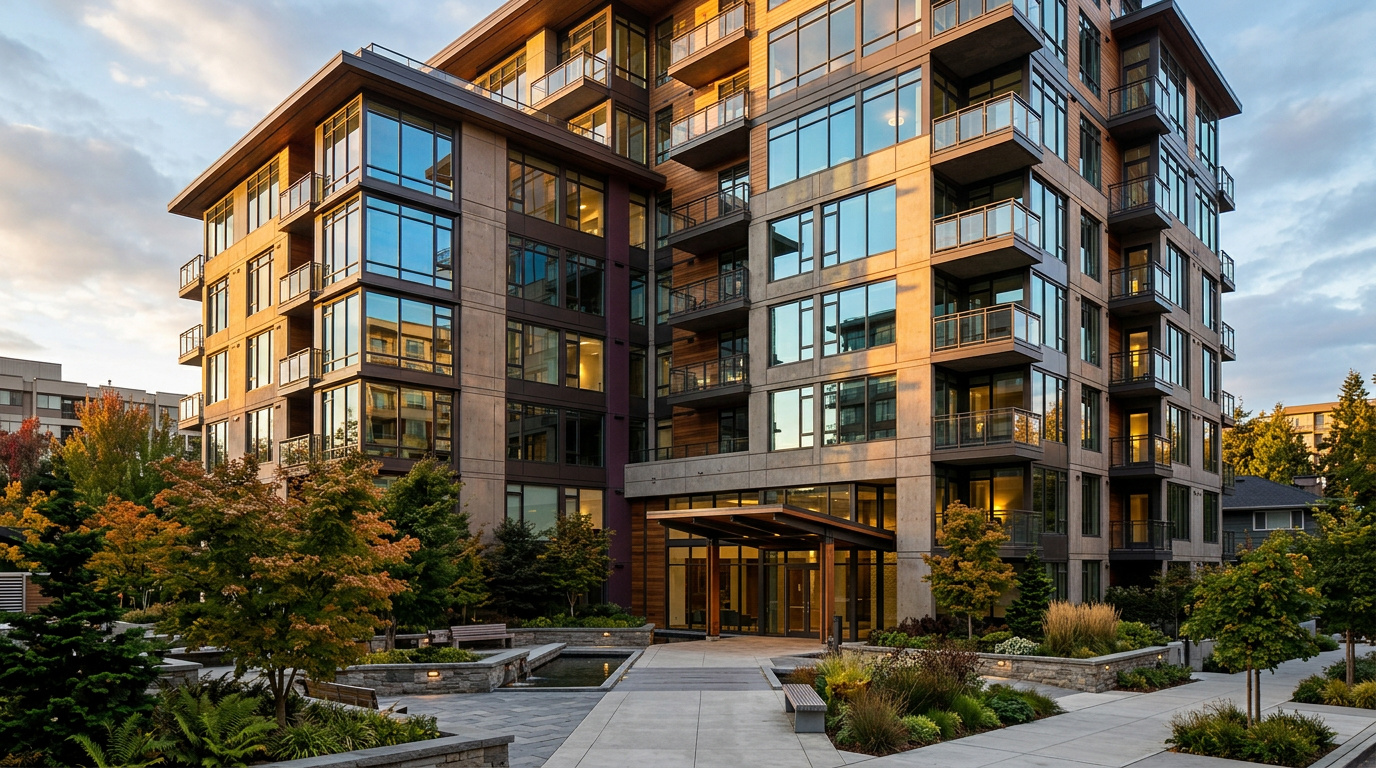
Housing in Downtown Bellevue is overwhelmingly condos and high-rise apartments, with a handful of townhomes on the edges near Wilburton. Units range from studio and one-bedroom layouts in the mid-$600,000s up to penthouse-level homes at $3 million and above. Buildings here run from older 1990s and 2000s mid-rises to newer towers built in the last five years with amenity floors, concierge service, and secure parking. Square footage tends to run 700 to 2,000 square feet, smaller than what you would find in Bellevue’s single-family neighborhoods, but the tradeoff is location. This is the only part of Bellevue where you can walk to a light rail platform, a grocery store, and a park all inside ten minutes.
Data as of July 2026.
| Market Pulse | Bellevue (city) | King County |
|---|---|---|
| Median Sales Price (July 2026) | ~$1,830,000 | ~$1,000,000 |
| Median Days on Market | ~13 days | ~11 days |
| Active Listings Change (vs. Jan 2026) | +215% | +144% |
Figures reflect city-level Bellevue residential data from the NWMLS-sourced monthly feed (InfoSparks, July 2026 pull) since Downtown Bellevue does not have its own separate MLS reporting area. Condo-specific pricing in the neighborhood itself tends to run below the citywide single-family median shown here. Active listings change measures city inventory growth since January 2026, not a Downtown-specific count.
Schools Serving Downtown Bellevue
Downtown Bellevue sits inside the Bellevue School District, and the middle and high school assignment is consistent across the neighborhood. Students attend Chinook Middle School, then move on to Bellevue High School, rated 10/10 on GreatSchools. The elementary assignment is the one piece that genuinely varies by exact address here. The district has been actively redrawing elementary boundaries around downtown, Wilburton, and the Spring District as new development adds households to the area, so the specific elementary school for a given address can differ block to block and can change again as those boundary lines get finalized.
Chinook Middle School consistently ranks in the top 20% of Washington middle schools and sends the large majority of its students on to Bellevue High, which posts a 91% graduation rate and an average SAT score of 1360. Because the elementary boundary is in motion, I never guess at a specific elementary name for a Downtown Bellevue address. I check the district’s own School Locator tool for every client, every time, because a wrong assumption here is worse than an honest “let’s verify.”
In practical terms, families with elementary-age kids in Downtown Bellevue are typically within a short drive or a district bus ride of their assigned school, whichever one that turns out to be. Middle and high schoolers walk or bike to Chinook and Bellevue High from most Downtown Bellevue addresses, both being a reasonable distance from the neighborhood’s core.
Getting to Work from Downtown Bellevue
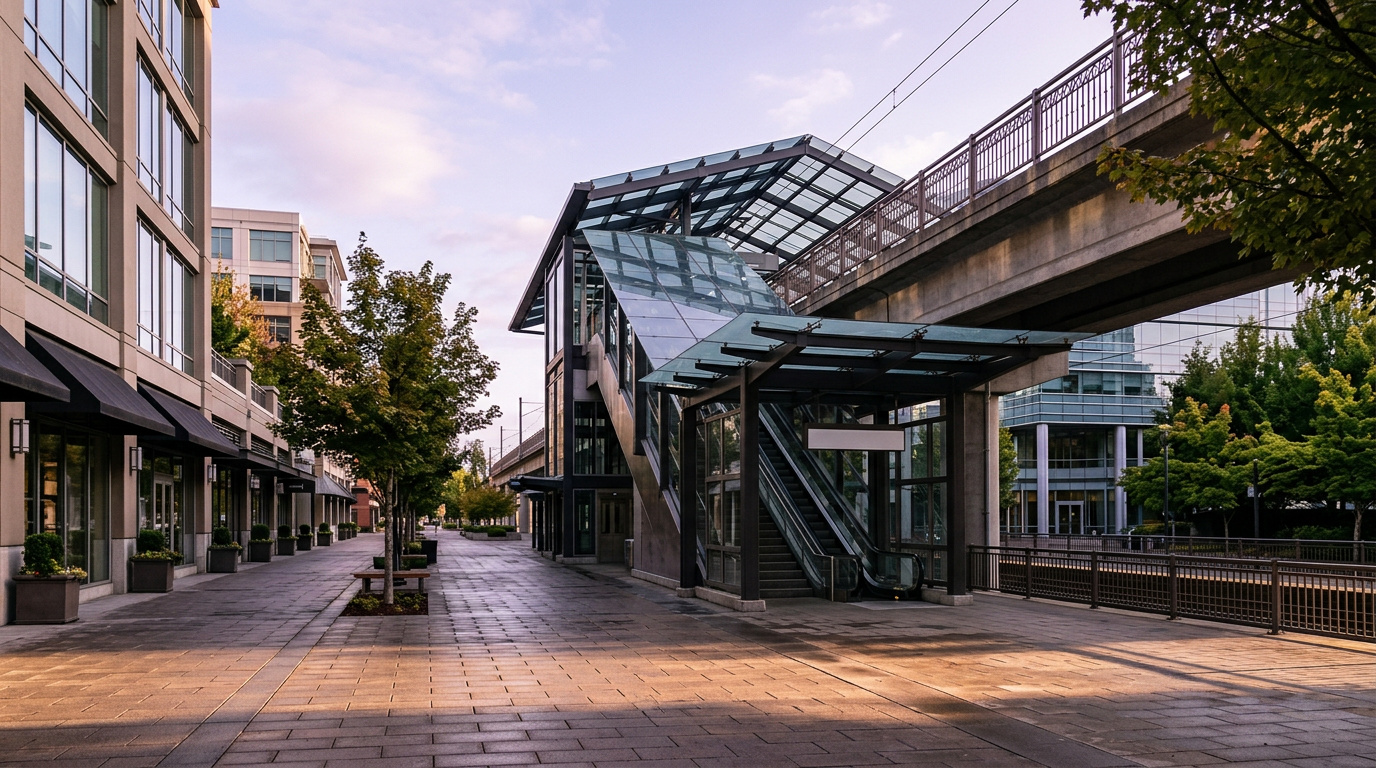
Take the 2 Line from Bellevue Downtown Station and Seattle is about 25 minutes away with no traffic to worry about. That is the headline change for this neighborhood in 2026. For anyone not using rail, NE 8th Street and 112th Avenue NE both connect quickly to I-405, putting the rest of the Eastside within easy reach.
| Destination | Distance | 2026 Peak Commute | Transit Option |
|---|---|---|---|
| Downtown Seattle | 10 miles | 25 min rail / 45-60 min drive | 2 Line light rail, walk to station |
| Amazon (South Lake Union) | 12 miles | 30 min rail / 45-55 min drive | 2 Line to Capitol Hill transfer |
| Microsoft (Redmond) | 8 miles | 15-25 min drive / 20 min rail | SR-520 or 2 Line east |
| SeaTac Airport | 15 miles | 25-40 min drive / 45 min rail | I-405 South or 2 Line to 1 Line |
Trains run every 8 to 10 minutes during peak hours. Downtown Bellevue is the only neighborhood in the city where most addresses are within walking distance of the platform itself, no drive or bus connection needed.
What I See as a Valuation Expert in Downtown Bellevue
When I assess condos here for institutional lenders, floor level and view corridor drive value more than almost anything else in the building. A unit on floor 12 with an unobstructed view toward the Cascades or Lake Washington typically commands a real premium over an identical floor plan two floors down facing another building. HOA dues and reserve fund health matter just as much as square footage in this neighborhood, since you are buying into a shared building, not just a unit.
Buildings with strong reserve funds and recent capital improvements hold value better through a soft patch in the market than buildings deferring maintenance to keep dues low. I always pull the HOA financials and recent meeting minutes before pricing a unit here. A low monthly due on paper can mean a large special assessment is coming, and that changes the real cost of ownership.
The units that move first in this neighborhood combine a walkable location to the light rail station, a healthy HOA, and updated interior finishes. Older buildings with dated kitchens and baths sit longer, even at a lower price per square foot, because buyers here are often willing to pay more for turnkey rather than take on a renovation inside an HOA-governed building.
Frequently Asked Questions: Living in Downtown Bellevue, WA
Q: Is Downtown Bellevue a good place to live? A: Yes, especially if you want a walkable urban lifestyle with direct light rail access to Seattle. Downtown Bellevue combines shopping, dining, and a 21-acre park with the fastest transit commute of any Bellevue neighborhood, though homes here are almost all condos rather than single-family houses.
Q: What are homes like in Downtown Bellevue? A: Mostly condos and high-rise units ranging from 700 to 2,000 square feet, priced from the mid-$600,000s to $3 million and up for penthouse-level units. Buildings range from established 1990s and 2000s mid-rises to newer towers with amenity floors and concierge service.
Q: What schools serve Downtown Bellevue? A: The Bellevue School District serves this neighborhood. Middle and high school assignment is consistent (Chinook Middle School, then Bellevue High School), but elementary assignment varies by exact address as the district redraws boundaries around downtown and the Spring District. Always verify with the district’s School Locator tool.
Q: How far is Downtown Bellevue from Seattle? A: About 10 miles. By car on I-90 during peak hours, expect 45 to 60 minutes. By the 2 Line from Bellevue Downtown Station, the ride to Seattle’s Westlake Station takes about 25 minutes, consistently faster than driving at rush hour.
Explore Downtown Bellevue Yourself
Walk Bellevue Way from Lincoln Square to Bellevue Square, then cut through Downtown Park to see the waterfall and the promenade. Finish at the Bellevue Downtown Station to see the platform that changed this neighborhood’s commute story in 2026. One walk covers most of what makes this area different from the rest of the city.
View Downtown Bellevue on Google Maps →
Your guide to life outside Seattle.
253-350-0045 · greg@livingoutsideseattle.com · www.livingoutsideseattle.com
