

 Facebook
 X
X
 Pinterest
 Copy Link
Bridge Loans in Washington State: 2026 Guide for Sellers
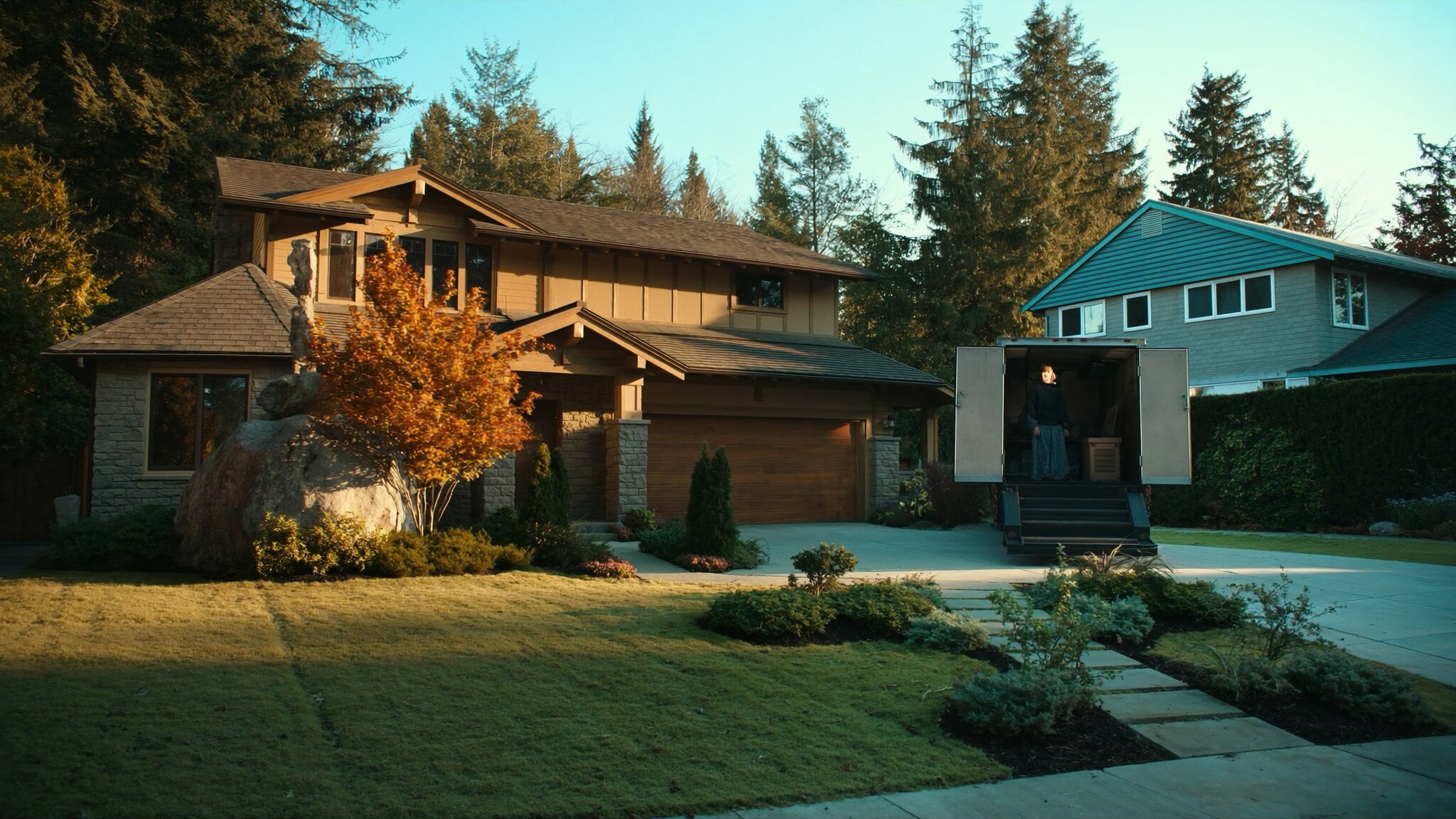
How move-up sellers in King County use bridge loans to buy their next home before selling, and when a HELOC is the smarter play.
You found the next house. Bigger yard, better layout, the right school zone. There’s just one problem: your down payment is locked up in the home you’re still living in. This is the wall almost every move-up seller in King County hits, and a bridge loan is one of the main tools for getting over it.
I work with move-up sellers across Renton, Kent, Auburn, Covington, and Maple Valley, and this question comes up in almost every planning conversation: “How do I buy before I sell?” A bridge loan is often the first answer people hear. It can be a great tool. It can also be an expensive mistake if you use it in the wrong situation. Here’s how bridge loans actually work in Washington State, what they cost in 2026, and how to know if one fits your move.
How a Bridge Loan Works in Washington State
A bridge loan does exactly what the name says. It bridges the gap between buying your next home and selling your current one.
Here’s the typical sequence. You apply with a lender who writes bridge loans. The lender looks at the equity in your current home and approves a short-term loan against it, usually up to 70 to 75 percent of your home’s value minus what you still owe. You use that money as the down payment on your next home. You move once, on your schedule. Then you list your old home, and when it sells, the sale proceeds pay off the bridge loan in full.
Most residential bridge loans in Washington are interest-only. That matters because it keeps your monthly carrying cost down while you hold two properties. You’re not paying down principal. You’re buying time. The loan comes due either when your home sells or at the end of the term, whichever comes first. In my market, that exposure window is usually short. Well-priced homes in South King County have been selling in 6 to 14 days, so most bridge borrowers here are paying interest for two to four months, not a year.
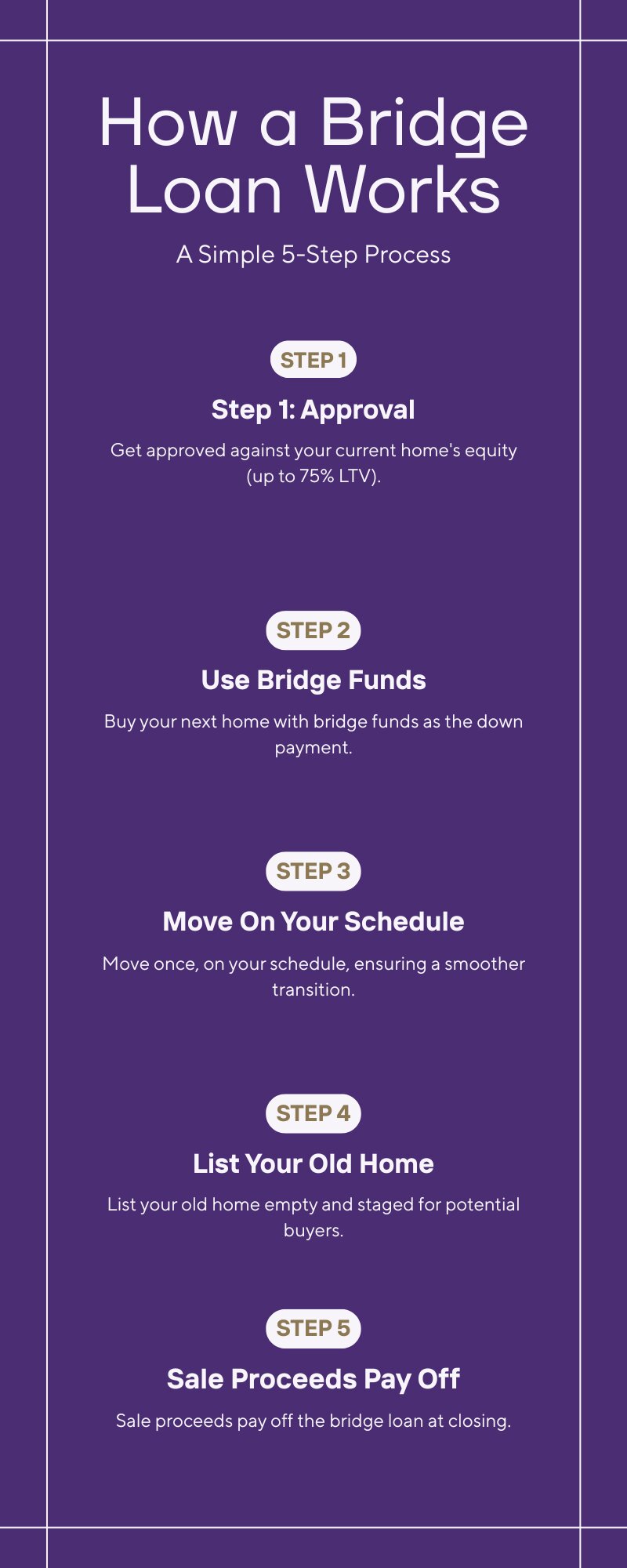
The full bridge loan cycle. In fast South King County segments, most borrowers reach payoff in two to four months.
What a Bridge Loan Costs in 2026
This is where you need to go in with clear eyes. Bridge money is more expensive than mortgage money.
In 2026, standard 30-year mortgage rates have been sitting in the mid-6 percent range. Residential bridge loans from banks and credit unions are typically running about 8 to 10 percent. Private and hard-money bridge lenders charge more, often 9 to 12 percent. On top of the rate, most lenders charge origination points, commonly 1.5 to 2.5 percent of the loan amount, plus normal closing costs.
Let’s make that real. Say you borrow $200,000 against your Kent home to put down on a house in Covington. At 9 percent interest-only, that’s $1,500 a month. If your Kent home sells in three months, you’ve paid $4,500 in interest plus roughly $3,000 to $5,000 in points and fees. Call it $8,000 to $9,500 total for the ability to buy first, move once, and sell an empty, staged home at full strength.
Is that worth it? For a lot of my sellers, yes. An empty home shows better and often sells for more than the cost of the bridge. You also skip the misery of living in a staged house with kids and dogs while strangers tour it. But the math only works if your home actually sells inside the window. That’s the whole game with a bridge loan.
Bridge Loan vs. HELOC: Which One Fits?
A home equity line of credit is the other common way to unlock your equity, and for some sellers it beats a bridge loan outright.
A HELOC is cheaper. Rates in 2026 are generally running a point or two below bridge loan rates, and most HELOCs have little or no closing costs. It’s also flexible. You draw what you need, when you need it, and there’s no balloon date forcing a payoff.
So why doesn’t everyone just use a HELOC? Timing. Here’s the trap I warn sellers about constantly: lenders will not open a HELOC on a home that’s already listed for sale, and many want it seasoned for months before you draw on it. A HELOC is a tool you set up six months to a year before your move, while you’re still just thinking about it. Once the sign is in the yard, that door is closed, and a bridge loan becomes the realistic option.
The other difference is qualification. With either tool, the lender needs to see you can carry the payments. Some bridge lenders will soften the math if your current home is already under contract. If you want to understand exactly how lenders count your income and debts, I broke that down in my guide to how mortgage qualification works in Washington State.
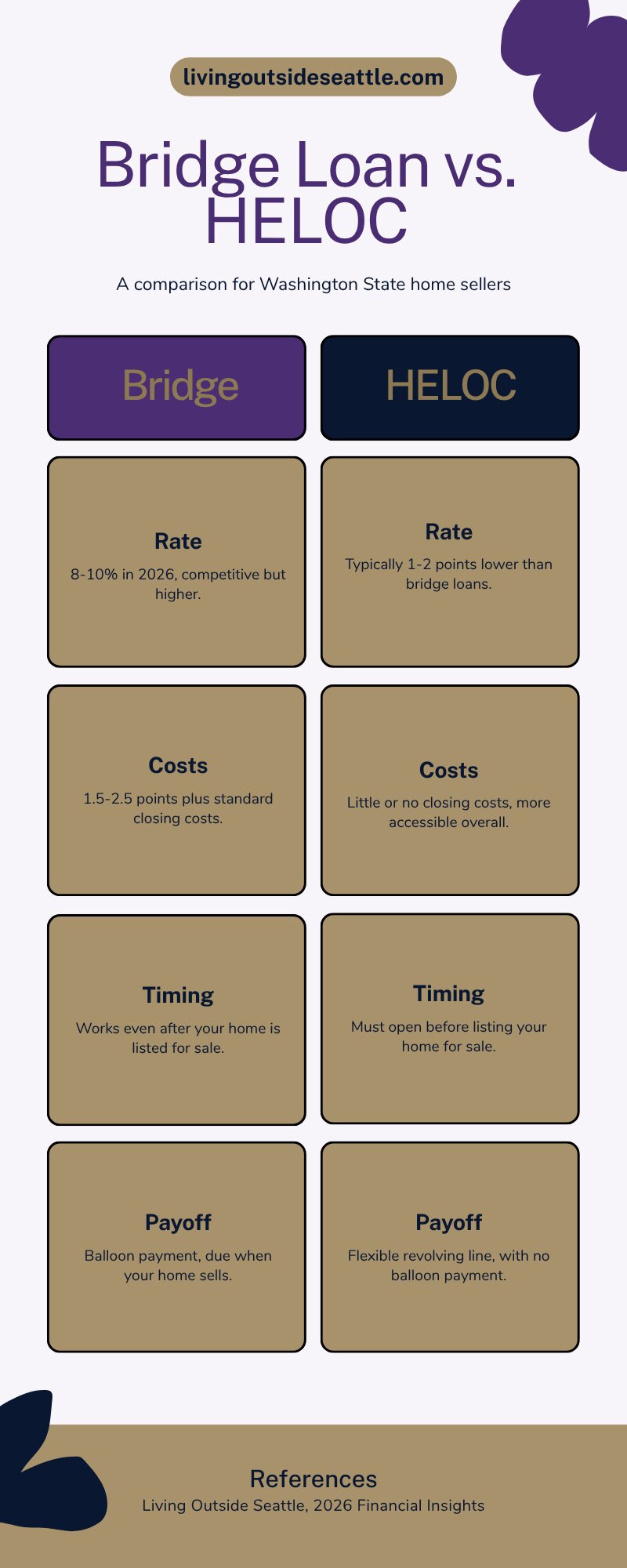
The deciding factor is usually timing: a HELOC must be opened before you list, a bridge loan works after.
Who Offers Bridge Loans in Washington State
Here’s something that surprises people: most big national banks got out of the consumer bridge loan business years ago. You won’t find one at most major retail banks.
In Washington, bridge loans come from three places. First, regional banks and credit unions. Several Washington-based institutions still write true bridge loans for their members, and this is usually the cheapest version of the product. Second, local mortgage companies. A handful of Puget Sound area lenders offer bridge programs designed specifically for buy-before-you-sell moves. Third, the newer “buy before you sell” programs. Seattle-based Flyhomes has rebuilt its whole business around this model, and national players like HomeLight offer versions of it here too. These programs package equity access, a non-contingent offer, and the sale of your old home into one product. Ask your real estate agent if they know a lender that offers this type of program.
Those programs can be slick, but read the fee structure carefully. Between program fees, loan costs, and pricing requirements on your departing home, the all-in cost can run well past what a straight bridge loan from a credit union costs. Convenience has a price tag. Sometimes it’s worth paying. Just know what it is before you sign.
The Local Angle: Why Bridge Loans Work Differently in King County
Bridge loans are unusually well-suited to South King County right now, and the reason is speed plus equity.
Start with equity. Homeowners who bought in Renton, Kent, or Auburn even six or seven years ago are sitting on six-figure equity positions. Kent’s median sale price has been running around $732,500 and Renton’s spring median hit $859,000. If you bought your Kent home for $450,000 in 2019, you likely have $300,000 or more in equity doing nothing. A bridge loan turns that trapped equity into a down payment without forcing you to sell first.
Now speed. The bridge loan’s biggest risk is a slow sale, and well-priced South King County homes simply aren’t selling slowly. Kent has been averaging about 8 days on market and Renton homes have been moving in about 6 days in spring. That means a typical bridge borrower here carries the loan for a couple of months, not a year. Compare that to a slower sub-market, like some Eastside condo segments, where months of supply are higher and a bridge gets riskier. Where your current home sits matters more than any national average.

One move, on your schedule. That convenience is what a bridge loan actually buys.
What This Means for You as a Move-Up Seller
Here’s the decision framework I walk sellers through.
A bridge loan makes sense when three things are true. You have strong equity, ideally enough to borrow your full down payment at 75 percent loan-to-value or less. Your current home sits in a fast-moving segment and will be priced to sell, not priced on hope. And you’ve found, or are about to find, a next home worth moving fast on. When all three line up, paying $8,000 to $12,000 for a clean, one-move transition is often money well spent.
A HELOC makes more sense when your move is six months or more away and you have the discipline to set it up early. Open it while your home is unlisted, let it sit at zero balance, then draw on it when you find the right house. Cheapest equity access there is.
And sometimes the answer is neither. If your equity is thinner or the numbers feel tight, a well-structured contingent offer can still win in the right situation. I wrote a full guide on how to write a contingent offer that sellers will accept in King County, and it pairs with this post. Whichever route you take, the first step is the same: know what your current home is worth and how fast it will sell. That’s a pricing question, and it’s the one I can answer with real data.
FAQ: Bridge Loans in Washington State
How long do you have to pay back a bridge loan?
Most residential bridge loans in Washington run 6 to 12 months, and the loan is paid off automatically from your sale proceeds at closing. In fast markets like Renton and Kent, most borrowers pay theirs off within two to four months. Most lenders charge no penalty for early payoff.
How much does a bridge loan cost in 2026?
Expect interest rates around 8 to 10 percent from banks and credit unions, or 9 to 12 percent from private lenders, plus origination points of roughly 1.5 to 2.5 percent of the loan amount. On a $200,000 bridge held for three months, total cost typically lands between $8,000 and $10,000.
Are bridge loans hard to get?
They’re more specialized than a standard mortgage, not necessarily harder. Lenders generally want a credit score of about 680 or better, combined loan-to-value of 75 percent or less on your current home, and a believable exit plan. The bigger challenge is finding a lender, since most national banks no longer offer them.
Can I get a bridge loan if my house is already on the market?
Usually yes, and this is a key advantage over a HELOC. Lenders won’t open a home equity line on a listed property, but bridge lenders expect your home to be listed or about to be. Some even offer better terms once you’re under contract.
Is a bridge loan better than a contingent offer?
A bridge loan makes your offer stronger because it removes the home-sale contingency, which matters in competitive segments of King County. A contingent offer costs nothing but is easier for a seller to pass over. If the home you want has multiple offers, the bridge-backed offer usually wins.
Bridge loans aren’t exotic anymore. In a market where most move-up sellers are equity-rich and good homes still move in days, buying before you sell is a real strategy, not a luxury. The key is sizing the loan against an honest number for your current home and a realistic timeline for your area.
Your guide to life outside Seattle.
253-350-0045 ·
greg@livingoutsideseattle.com ·
www.livingoutsideseattle.com
HELOC vs. Cash-Out Refinance: King County Guide 2026
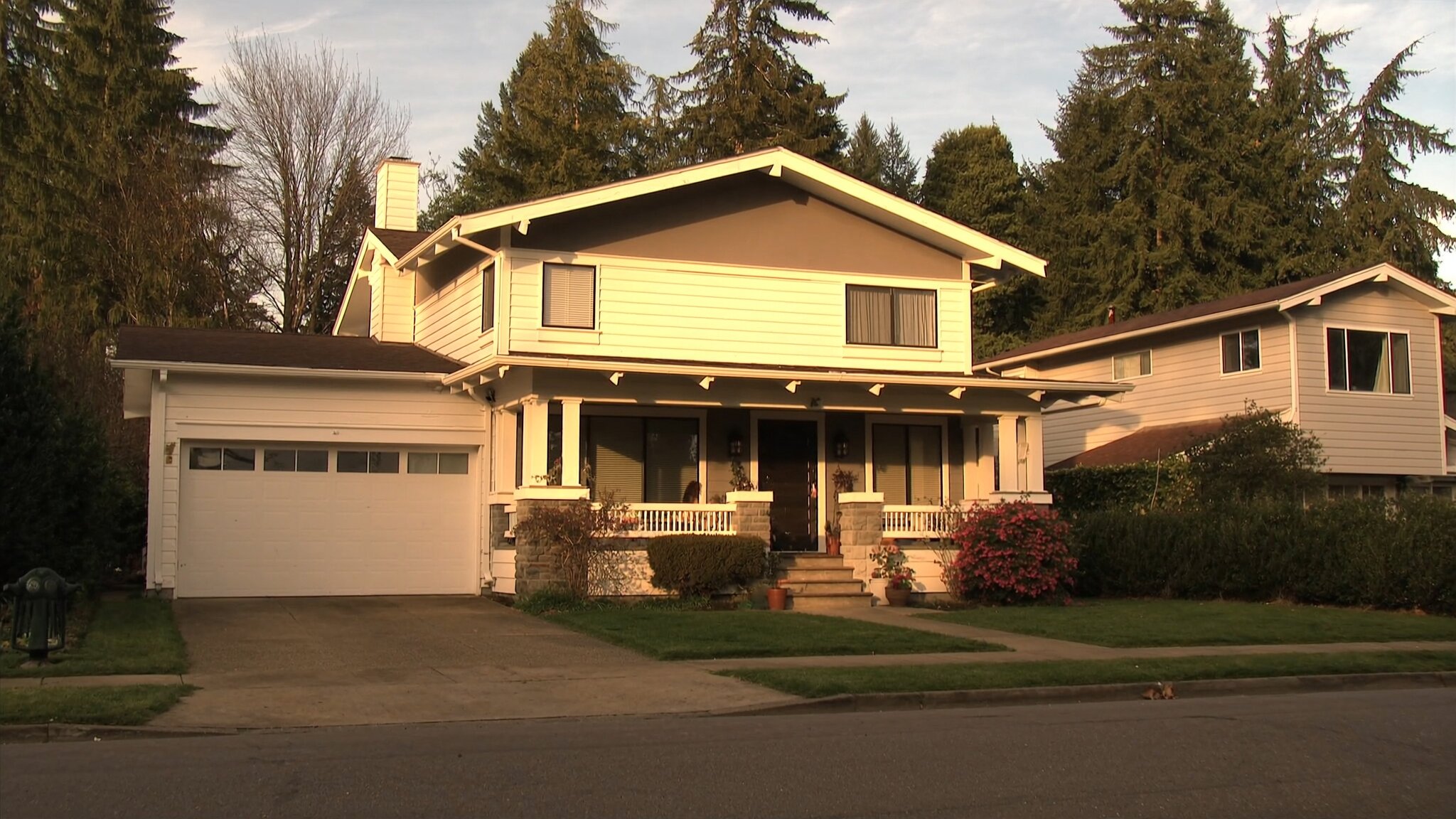
Most King County homeowners are sitting on well over six figures of equity. Here’s how to use it without giving up the mortgage rate you fought for.
If you bought your home in King County more than a few years ago, you’re probably wealthier than you think. The typical American homeowner with a mortgage is holding around $212,000 in equity they could actually borrow against. In King County, where the median home sits near $835,000, plenty of homeowners I work with in Renton, Kent, and Covington are well past that number.
The question I hear all the time: how do I get to that money without wrecking the 3% mortgage I locked in years ago? There are two main answers. A home equity line of credit, or a cash-out refinance. They sound similar. They are not. Pick the wrong one and it can cost you hundreds of dollars a month for decades.
I price homes every day as a BPO field agent, so I see what equity positions actually look like across South and East King County. Let me walk you through how each option works, what each one costs, and the simple math that tells you which one fits your situation.
How a HELOC Works (and What It Costs)
A HELOC is a line of credit secured by your house. Think of it like a credit card with a much lower rate and your home as collateral. The bank approves you for a limit, often up to 80% or 85% of your home’s value minus what you owe. You draw what you need, when you need it, and you only pay interest on what you’ve actually used.
The national average HELOC rate in June 2026 is sitting around 7.25% to 7.4%, not far off the 2026 low of 7.19% from March. HELOC rates are variable. They move with the prime rate, which is currently 6.75%. If the Fed cuts, your rate drops. If the Fed hikes, it climbs. That flexibility cuts both ways, and you need to be honest with yourself about whether your budget can handle a rate that moves.
Costs are the quiet advantage here. Most HELOCs come with low or no closing costs. Compare that to what you’ll see below for a refinance, and the gap is real money.
How a Cash-Out Refinance Works (and What It Costs)
A cash-out refinance replaces your entire existing mortgage with a new, bigger one. You owe $400,000 and want $100,000 in cash? Your new loan is $500,000, and the whole thing carries today’s rate. In 2026 that means roughly 6.8% for most borrowers, with the best-qualified getting closer to 6.25%.
That word “entire” is the trap. You’re not borrowing $100,000 at today’s rate. You’re re-borrowing all $500,000 at today’s rate, including the $400,000 you already had locked at something much lower.
Then come the closing costs. A cash-out refinance typically runs 2% to 5% of the full new loan amount. On a $500,000 loan, that’s $10,000 to $25,000. On a HELOC, you’d often pay close to nothing to open it.
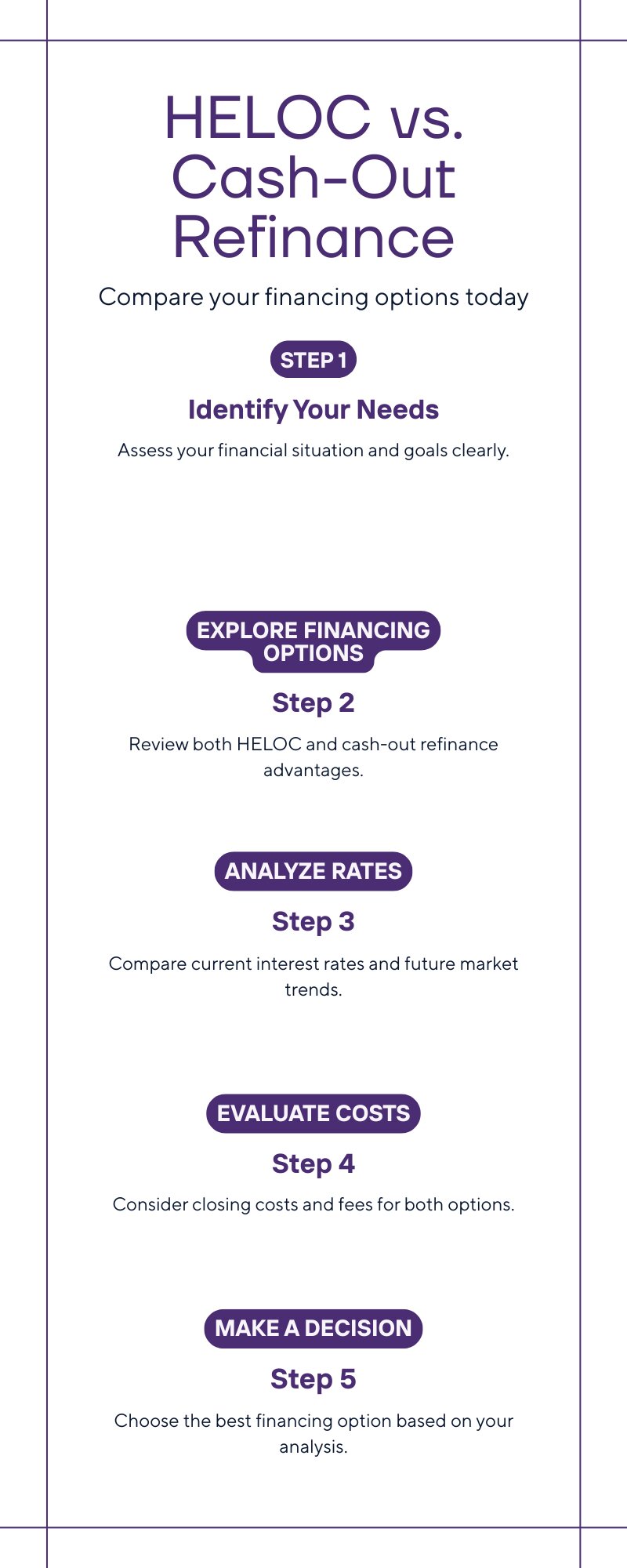
The core difference: a HELOC adds a second loan, a cash-out refinance replaces your entire mortgage at today’s rate.
HELOC vs. Cash-Out Refinance: The Math That Decides It
Here’s a real-world King County example. Say you own a home worth $850,000, you owe $400,000 at 3%, and you want $100,000 for a remodel.
Keep your mortgage and add a HELOC
Your existing payment stays around $1,686 a month in principal and interest. Interest on the full $100,000 HELOC draw at 7.4% runs about $617 a month during the draw period. Total: roughly $2,300 a month.
Cash-out refinance instead
A new $500,000 loan at 6.6% costs about $3,193 a month. That’s nearly $900 more every month than the HELOC route, plus five figures in closing costs, for the exact same $100,000 in your pocket. Over ten years that monthly gap is more than $100,000. The HELOC isn’t just a little better in this scenario. It’s not close.
So when does the refinance win? Two cases. First, if your current rate is already high. Buyers who purchased in late 2023 or 2024 at 7% or above can sometimes refinance today, pull cash out, and barely change their payment. Second, if you need one large fixed sum and you want one predictable fixed payment for 30 years. Some people sleep better with that, and that’s a legitimate reason.
The Tax Rules Most Homeowners Get Wrong
A lot of people still believe HELOC interest is automatically deductible. It isn’t. Under current IRS rules, interest on a HELOC or cash-out refinance is only deductible if the money goes toward buying, building, or substantially improving the home that secures the loan. A kitchen remodel in your Kent home can qualify. Paying off credit cards or buying a car does not.
Two more catches. You have to itemize your deductions to claim it, and most households take the standard deduction instead. And the burden of proof is on you, so keep every contractor invoice and receipt. If you’re borrowing a meaningful amount, a one-hour conversation with a CPA before you sign is worth far more than it costs. I’m a real estate agent, not a tax advisor, and this is exactly the kind of decision where the right professional pays for itself.
The Local Angle: King County Equity in 2026
King County’s median home price has come down about 7.5% from last year. I know that sounds like bad news for equity. Here’s the context that matters: if you bought in Renton or Auburn before 2021, your home is still worth dramatically more than you paid. A pullback from the peak hasn’t erased years of gains. Most long-term owners in South King County are still holding $200,000 to $400,000 or more in usable equity.
What I see in the field is homeowners using that equity three ways. Remodels are the big one, especially kitchens and primary suites in 1980s and 1990s homes in Covington and Maple Valley, where an updated home sells noticeably faster. Second is debt consolidation, which can make sense at 7.4% against credit cards charging 22%, as long as the spending that built the debt stops. Third, and growing fast, is move-up buyers using a HELOC as bridge money to buy their next home before selling their current one. If that’s your situation, I broke down how that strategy works in my contingent offer guide for King County, and I compared the keep-or-sell decision in renting out your King County home vs. selling.
One more local note. Where prices go from here affects how much cushion you have. My King County housing market forecast for 2026 covers the inventory and price trends that matter if you’re deciding whether to tap equity now or wait.

Kitchen and primary suite remodels are the most common use of equity I see across South King County.
What This Means for You
If you’re a King County homeowner with a mortgage rate under 5.5%, start with the HELOC conversation. Keeping your existing rate is worth real money every month, and the rate math above shows how much. Get quotes from at least three lenders, including a local credit union, because HELOC rates and fees vary more than first mortgage rates do.
If your rate is 6.5% or higher, run both options side by side. A cash-out refinance might lower your rate and put cash in your pocket at the same time. Current rate context is in my King County mortgage rates guide.
And before either one, get a real valuation. Every dollar of borrowing power depends on what your home is actually worth, and online estimates in our market routinely miss by tens of thousands. If you’re also weighing what a sale would net you instead, my guide to capital gains on home sales in Washington covers the tax side of that decision.
FAQ
Is a HELOC or cash-out refinance better in 2026?
For most homeowners, a HELOC. The majority of King County mortgage holders have rates between 2.5% and 5%, and a cash-out refinance would replace that low rate with today’s 6.5% to 7% on the entire balance. A HELOC charges a higher rate, but only on the smaller amount you borrow.
How much equity can I borrow against my King County home?
Most lenders let you borrow up to 80% or 85% of your home’s value, minus your current mortgage balance. On an $850,000 home with $400,000 owed, that’s roughly $280,000 to $322,000 in available credit, depending on the lender and your qualifications.
Does opening a HELOC change my current mortgage rate?
No. A HELOC is a separate second loan. Your existing mortgage, its rate, and its payment stay exactly the same. That’s the main reason HELOCs are winning in 2026.
Is HELOC interest tax deductible?
Only if the money is used to buy, build, or substantially improve the home securing the loan, and only if you itemize deductions. Home improvements can qualify. Debt payoff, tuition, and cars don’t. Confirm your situation with a tax professional.
Can I use a HELOC to buy my next house before selling my current one?
Yes, and it’s one of the most common moves I see from move-up sellers in Renton and Kent. You open the HELOC on your current home while you still live there, use the draw for the down payment on the next home, then pay the line off when your old home sells.
What credit score do I need for a HELOC?
Most lenders want 680 or higher, with the best rates going to borrowers above 740. You’ll also generally need to keep at least 15% to 20% equity in the home after the line is opened.
Your home equity is a tool. Used well, it funds the remodel, clears the expensive debt, or bridges you into your next home. Used carelessly, it puts the roof over your head at risk. The right first step is knowing your real number.
Your guide to life outside Seattle.
253-350-0045 ·
greg@livingoutsideseattle.com ·
www.livingoutsideseattle.com
