

 Facebook
 X
X
 Pinterest
 Copy Link
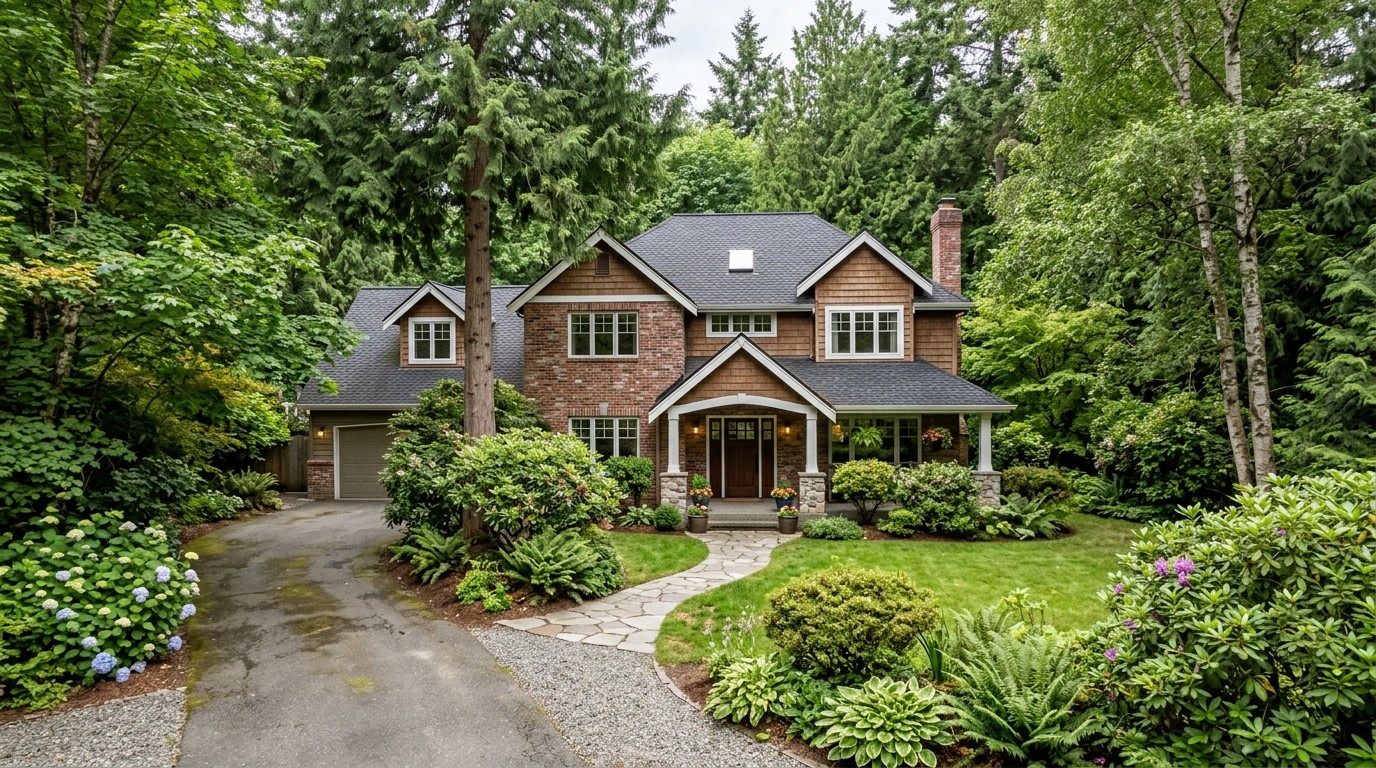
I’ve walked several families through this exact situation on Eastside inherited homes, and the tax questions are almost always the first and biggest source of anxiety. Here’s the honest breakdown.
Stepped-Up Basis: The Part That Helps You Most
When you inherit a home, your cost basis isn’t what the original owner paid decades ago. It resets to the home’s fair market value on the date they died. This is called stepped-up basis, and it’s the single biggest tax advantage in inheriting real estate.
Say a Sammamish home was purchased in 1995 for $280,000 and is worth $1.6 million today. If the original owner had sold it themselves, they’d face capital gains tax on roughly $1.3 million of appreciation. But if you inherit it and sell shortly after at close to that same $1.6 million value, your taxable gain is close to zero, because your basis is the $1.6 million value at inheritance, not the original 1995 purchase price.
This is why executors and heirs should get a qualified appraisal at or near the date of death. That appraisal becomes your basis documentation, and it matters more than almost anything else in this process.
Federal Capital Gains: Usually Minimal If You Sell Promptly
Because of stepped-up basis, federal capital gains tax on an inherited home you sell within a reasonable window after death is often minimal. Your gain is calculated from the stepped-up value forward, not from what the deceased originally paid. The longer you hold the property before selling, and the more it appreciates after the date of death, the more federal gain you’ll owe tax on. This is one more reason inherited home sales often move faster than a typical sale.
Washington’s Capital Gains Excise Tax: The Part People Miss
Washington has a state-level capital gains excise tax, but it’s important to know real estate has broad exemptions here. Real property, including inherited homes, is generally exempt from Washington’s capital gains excise tax specifically. Where people get confused is conflating this state capital gains tax with the real estate excise tax, REET, which is a separate transfer tax due at closing regardless of gain or loss. I break down REET’s graduated brackets in my Washington State REET guide.
At Eastside price points, REET matters more than most sellers expect specifically because the tax brackets are graduated by sale price. A $1.6 million inherited Sammamish home sale lands in a meaningfully higher REET bracket than a $700,000 South King County sale. This is a real cost of selling, not a gain-based tax, and it applies whether you’re an original owner or an heir.
The “Millionaires’ Tax” Question
Washington’s recent high-value tax changes have generated a lot of questions from Eastside families specifically, since Sammamish and Issaquah routinely clear the price thresholds where these provisions start to matter. The details are evolving and genuinely require a conversation with a tax professional who’s current on Washington’s latest rules, not a blog post. What I can tell you from the field: don’t assume a high sale price automatically triggers the worst-case scenario, and don’t assume it doesn’t. Get a real answer from a CPA before you list, not after.
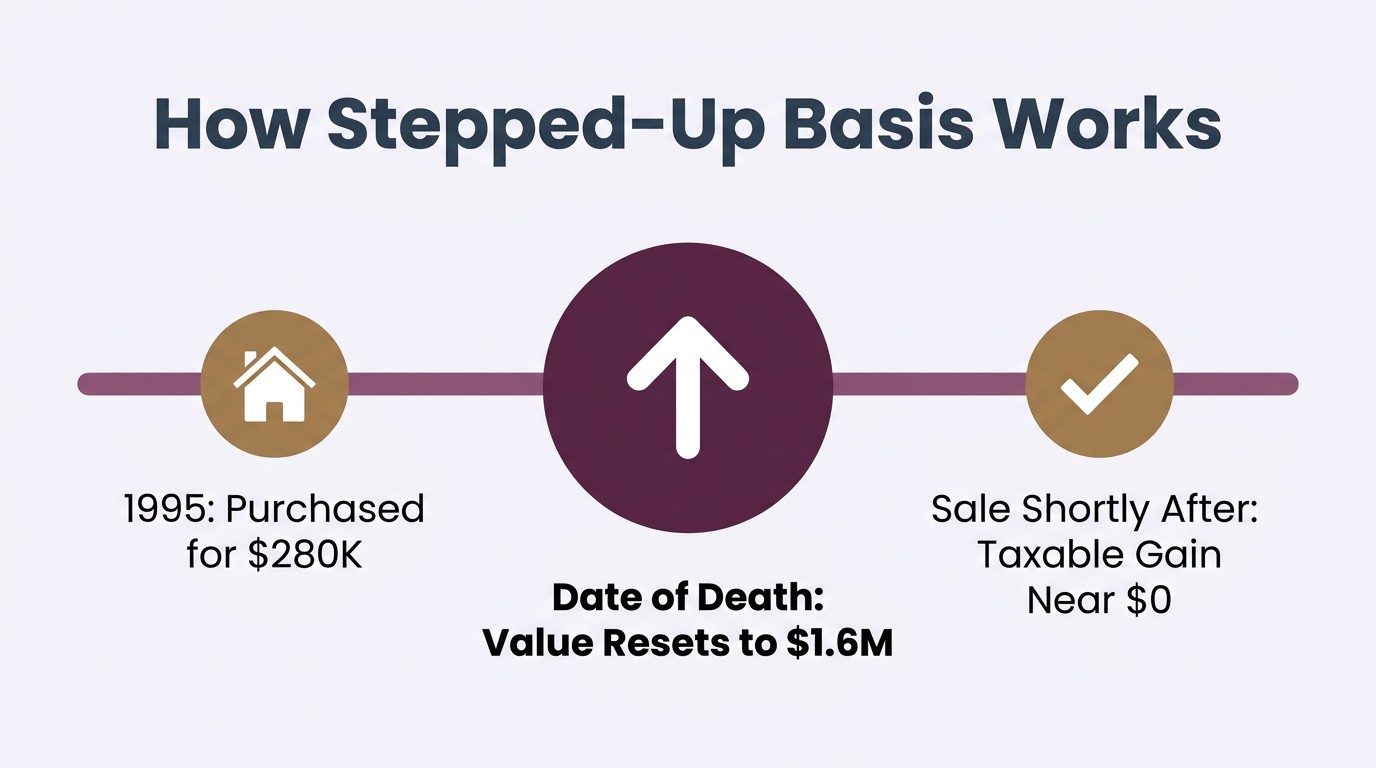
How stepped-up basis resets your cost basis to the date-of-death value, and why that matters at Eastside price points.
What This Means for Your Sale Timeline
Because federal exposure is usually low right after inheriting and tends to grow the longer you hold and the more the home appreciates, many heirs choose to sell relatively soon after settling the estate rather than holding the property as a rental or second home. That’s not universal advice. If you want to keep the home or rent it out, the tax picture changes and deserves its own analysis. I cover that specific comparison in my probate sale versus rental guide.
Frequently Asked Questions
Do I owe capital gains tax on an inherited home in Washington State?
Usually minimal federal capital gains if you sell within a reasonable time after inheriting, because your cost basis steps up to the home’s value at the date of death. Washington’s state capital gains excise tax generally exempts real property, including inherited homes, though you should confirm your specific situation with a CPA given how often these rules get refined.
What is stepped-up basis and why does it matter for inherited homes?
It means your cost basis for tax purposes becomes the home’s fair market value on the date the previous owner died, not what they originally paid for it. This usually erases most of the capital gain that would otherwise be taxable, especially on a home that appreciated significantly over decades of ownership.
Does Washington’s real estate excise tax apply to inherited home sales?
Yes. REET applies to the sale itself regardless of whether there’s a taxable gain, and it’s calculated on graduated brackets based on the sale price. At Eastside price points, this often lands in a higher bracket than sales in more affordable parts of King County.
Your guide to life outside Seattle.
253-350-0045 · greg@livingoutsideseattle.com · www.livingoutsideseattle.com
Gregory Dorrell is a Real Estate Broker with Coldwell Banker Danforth (WA License #111862) specializing in East and South King County. This article is general information, not tax or legal advice. Washington’s tax rules on high-value transactions are subject to change; consult a qualified CPA or estate attorney for your specific situation.
