Buyer Resources June 24, 2026

Auburn WA Neighborhood Guide 2026: Best Areas by Budget

Auburn WA Neighborhood Guide: Best Areas by Lifestyle and Budget

Everyone says Auburn is affordable. But which part? Here’s how the city actually breaks down — by price, schools, commute, and what you’re really getting at each budget.

I price homes in Auburn five days a week. I know the streets, the school zones, the traffic patterns, and which blocks people fight over and which ones sit. So when first-time buyers come to me and say “I heard Auburn is affordable” — my first question back is always: Which part?

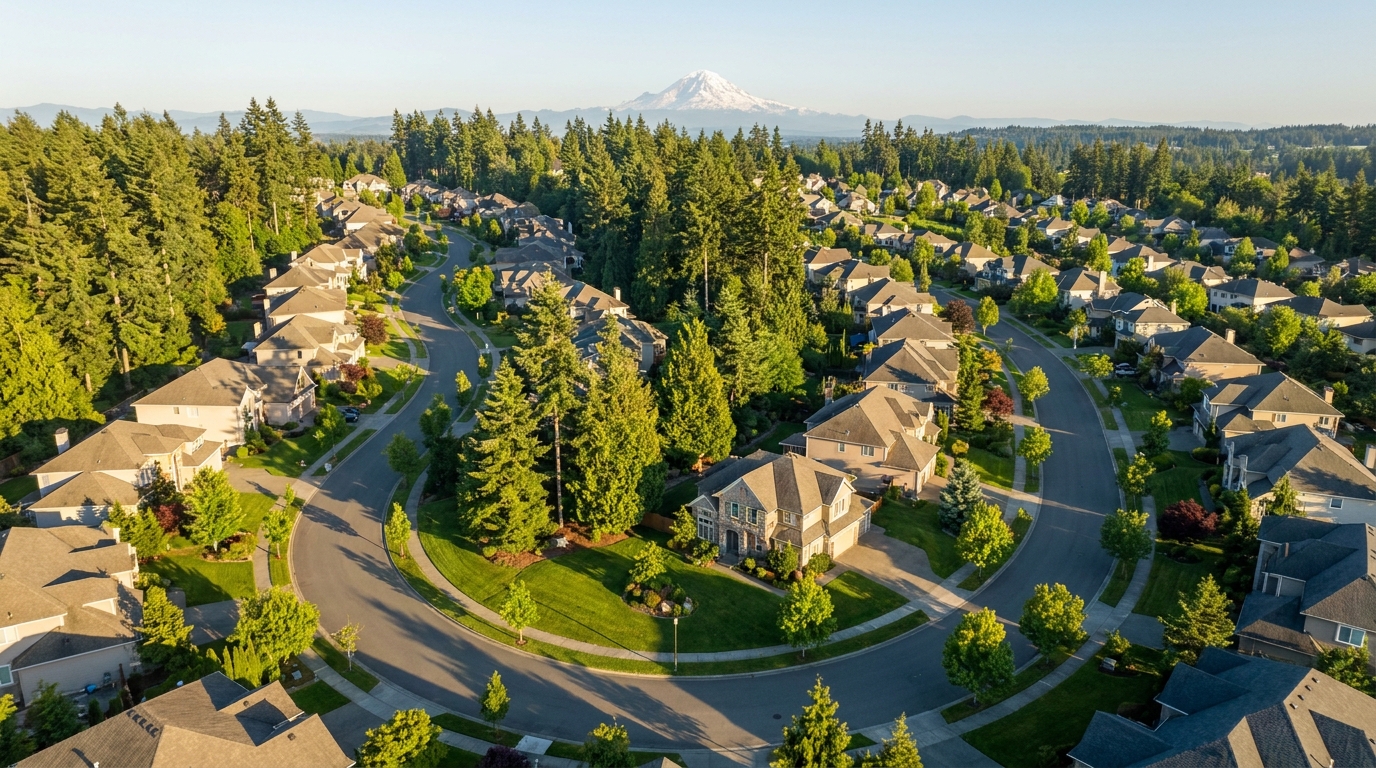
Auburn is a city of about 82,000 people spread across the Green River Valley and the hills above it. The median home price sits around $556,000 to $610,000 right now, depending on the neighborhood and the quarter — about 30 percent below Seattle and noticeably cheaper than Renton. But Auburn is not one homogeneous blob. The city has distinct pockets that feel completely different from each other. Lakeland Hills has master-planned cul-de-sacs and a Mount Rainier view on a clear day. Downtown Auburn has walkable blocks and Sounder access. Lea Hill has affordable wooded lots that buyers outside King County have never heard of. And West Hill sits up above the valley with bigger lots and a quieter pace.

The neighborhood you pick changes your school district, your commute, and what $600,000 actually buys. This guide breaks it down so you can match your budget and lifestyle to the right part of Auburn.

Lakeland Hills: The Most Well-Known Neighborhood in Auburn

Lakeland Hills is the first neighborhood most people mention when they look at Auburn, and for good reason. It is a large master-planned community in the southeast part of the city, built mostly between the 1990s and early 2000s, with the River Rock Auburn development adding newer construction on the hillside near the White River.

The median home price here runs around $660,000, with single-family homes in the $560,000 to $790,000 range for typical 2,000–3,000 square foot homes. Larger homes and newer builds push past $900,000. There are also condos in Lakeland at a median around $433,000, which makes this one of the more accessible condo markets in South King County.

Lakeland Hills Auburn WA neighborhood street with craftsman homes and Pacific Northwest trees — residential real estate 2026

Lakeland Hills is Auburn’s most in-demand neighborhood, with a median home price around $660,000 and trail access to Roegner Park and the White River.

What draws buyers to Lakeland Hills is the combination of planned amenity access and relative quiet. Roegner Park connects to the White River Trail — a paved multi-use path that runs along the river. Lakeland Hills Park has playgrounds and walking paths. Lakeland Town Center has your everyday retail and restaurants so you are not driving into downtown Auburn for groceries or a weeknight dinner.

For buyers: Lakeland Hills is the right fit if you want planned neighborhoods, trail access, and a community feel, and you have a budget of $600,000 or above. If you are right at the entry of that range, expect competition on well-priced homes — this neighborhood does not sit long.

Downtown and Central Auburn: Walkable, Affordable, Underestimated

Downtown Auburn gets overlooked by buyers who equate “downtown” with “industrial” or “urban” in a way that does not match what they want. But the downtown core and the Central Auburn neighborhoods that surround it are undervalued right now.

The median for single-family homes near downtown runs around $460,000 — the lowest in the city. That gets you within walking distance of the Auburn Transit Center, where the Sounder South Line departs for downtown Seattle. The train takes about 35 minutes. On a weekday morning when SR-167 is moving at a crawl, that matters.

The Sounder Commute Reality

Auburn Station to King Street Station in downtown Seattle: approximately 35 minutes. The train operates weekday peak hours only — not a seven-days-a-week option. Sound Transit Express routes 566 and 578 fill in the gaps, connecting Auburn north through Kent and Renton to Bellevue, and south to Federal Way and downtown Seattle.

For daily Seattle commuters, the math is simple: a 35-minute train ride versus 45–70 minutes on SR-167 during peak hours. The Sounder access alone justifies the downtown Auburn location for the right buyer.

The trade-off is that downtown Auburn is still going through a revitalization arc. Main Street has walkable retail and restaurants, but the surrounding blocks are mixed — light industrial and residential in ways that buyers with specific lifestyle expectations sometimes find jarring on first visit. Walk it before you commit. If you like the urban texture and the Sounder access matters to your life, the value here is real.

For buyers: Downtown and Central Auburn make the most sense for buyers who commute to Seattle by train, are comfortable with urban-adjacent neighborhoods, and want the lowest entry price point in the city.

North Auburn: SR-167 Access, Transitional Pricing

North Auburn runs from roughly the Auburn city limits up toward the Kent border, along and above the SR-167 corridor. This area is less geographically cohesive than Lakeland Hills or downtown — it is a collection of neighborhoods that share easy highway access more than any single character.

Prices in North Auburn are broadly in the $550,000 to $680,000 range for single-family homes. You get variety here: some neighborhoods are established 1980s and 1990s subdivisions, some have newer infill construction. Lot sizes tend to be moderate — not the larger rural lots you see on Lea Hill, but not the tight cul-de-sacs of Lakeland either.

The commute story for North Auburn is highway-first. SR-167 north puts you in Renton in about 20 minutes in normal traffic — a realistic commute to Amazon’s Renton tech hub, Boeing, or connections to I-405. The Kent Sounder Station is also reachable for buyers who prefer the train but want to be slightly closer to Kent.

For buyers: North Auburn is the right fit if SR-167 access is your primary commute need and you want suburban neighborhoods without paying Lakeland Hills premiums. Buyers relocating from Pierce County often look here first because the orientation — toward the highway and toward the north — matches how they already live.

Lea Hill: Auburn’s Affordable, Wooded Side

Lea Hill is the neighborhood I bring up when buyers tell me Auburn is still too expensive. It sits on the plateau east of the Green River, above downtown Auburn, and it offers a different value proposition from the rest of the city.

Median prices on Lea Hill run around $400,000 to $450,000. You find a mix of older ranch-style homes from the 1960s, contemporary builds from the 2000s and 2010s, and wooded lots that do not exist anywhere else in Auburn at this price point. The feel is more rural than any other part of the city — quiet streets, tree canopy, a pace that buyers coming out of denser parts of King County find rare.

Lea Hill Auburn WA wooded neighborhood street with mature Pacific Northwest trees and quiet residential homes 2026

Lea Hill offers Auburn’s lowest median prices — roughly $400,000 to $450,000 — with wooded lots and a quiet pace that buyers from denser King County cities find rare at this price point.

The trade-off is that Lea Hill is more car-dependent than other parts of Auburn. The Green River Valley below is where most of the retail, transit, and services are. You will drive for most errands. The Lea Hill area feeds into Auburn School District, which is generally well-regarded, though school performance varies by specific school.

The buyer I send to Lea Hill is the one who wants more house and more land for less money, does not need to commute by Sounder, and values quiet over walkability. This is also one of the areas I watch most carefully from a long-term standpoint, because it is priced well below the rest of Auburn while offering a lifestyle that a specific group of buyers actively seeks out.

For buyers: Lea Hill is your best option in Auburn if budget is the primary driver and you want space and greenery over proximity to downtown.

West Hill: Views, Space, and Auburn’s Premium Side

West Hill sits above the valley on the west side of Auburn, running roughly along the ridge between Auburn and the Tukwila-Kent area. This is Auburn’s most expensive neighborhood zone, and the price gap from the rest of the city is real.

West Hill homes have run at a median around $720,000, though the range is wide — from established mid-century homes in the $550,000s to custom builds and larger modern homes above $1 million. The elevation gives some properties views of the Cascades and Mount Rainier on clear days. Lot sizes trend larger, and the neighborhood character is quieter and more established than the master-planned feel of Lakeland Hills.

School assignments on West Hill feed primarily into Auburn School District. Commute is primarily by car — West Hill sits above the valley and you will drive down to access SR-167 or the Auburn Transit Center.

For buyers: West Hill makes sense if you want Auburn’s price advantage over Bellevue and Renton but want more space and a quieter character than Lakeland Hills provides. If you are comparing West Hill to East Hill in Kent, you will find similar pricing with a similar suburban feel — the decision often comes down to which commute corridor aligns better with your job.

The School District Question: What Every Auburn Buyer Needs to Verify

Auburn is served primarily by Auburn School District No. 408, which covers Auburn, Algona, Pacific, and parts of unincorporated King County — approximately 18,000 students across 26 schools. This is a solid district with strong programs at the high school level, including Auburn Riverside High School.

But portions of Auburn — particularly in the Lakeland Hills area and some northern neighborhoods — fall within Federal Way Public Schools boundaries. Federal Way SD serves about 120,000 residents across Federal Way, portions of Kent, Des Moines, Auburn, and unincorporated King County.

The practical implication: do not assume a home’s school assignment based on the address. I have seen buyers purchase in Lakeland Hills expecting Auburn Riverside High School, only to discover the home feeds into Thomas Jefferson High School in the Federal Way district. Both are real schools with real programs, but they are different, and the difference matters for families with school-age children.

The fix is simple: confirm the exact school assignment on King County’s school lookup tool before you go under contract. Any agent worth their license will pull this for you before you make an offer. I pull it as a matter of course on every Auburn transaction.

What This Means for Auburn Buyers in 2026

Auburn prices are down 3 to 4 percent from a year ago, inventory is up, and days on market have lengthened. That combination gives buyers real negotiating leverage that did not exist in 2022 or 2023. Sellers in some neighborhoods are negotiating on price and concessions in ways that were not available 18 months ago.

The entry point that attracts the most first-time buyers is the $550,000 to $650,000 range, which covers solid options in North Auburn, Central Auburn, and portions of Lakeland Hills. If you are working with a tighter budget, Lea Hill at $400,000 to $450,000 opens up options that are hard to find at this price anywhere in King County. And if you have $700,000 or above, West Hill and upper Lakeland Hills give you space and views that you would pay significantly more for on the Eastside.

The King County down payment assistance programs are also relevant for Auburn buyers — the KCHA deferred loan and WSHFC Home Advantage programs both apply, and Auburn’s price points often fit well within the purchase price caps. The City of Auburn also offers its own closing cost assistance of up to $3,000 for qualifying first-time buyers through the Community Services Department.

If you have not looked at the buy-now-vs.-wait math for Auburn, I’d look at that before making a timing decision — the numbers on waiting usually surprise people.

FAQ: Auburn WA Neighborhood Questions

Which Auburn neighborhood is best for first-time buyers on a budget?

Lea Hill offers the lowest median prices in Auburn, typically in the $400,000 to $450,000 range. Central Auburn and North Auburn have more options in the $500,000 to $600,000 range. All three are served by Auburn School District. Lakeland Hills is the most competitive market in Auburn and carries the highest prices for comparable square footage.

What school district is Lakeland Hills in?

Most of Lakeland Hills feeds into Auburn School District, but the eastern portions — Lakeland North and Lakeland South — fall within Federal Way Public Schools boundaries. You need to verify the specific school assignment for any address before making an offer. Do not rely on the neighborhood name alone.

How long is the Sounder commute from Auburn to Seattle?

The Sounder South Line from Auburn Station to King Street Station in downtown Seattle is approximately 35 minutes. The train operates weekday peak hours only. For daily Seattle commuters, the combination of Sounder plus Sound Transit Express bus routes 566 and 578 covers most schedules.

Is Auburn WA a good place to buy in 2026?

Auburn prices are down 3 to 4 percent from a year ago, inventory is up, and days on market have lengthened. That combination gives buyers negotiating leverage that did not exist in 2022 or 2023. Lea Hill in particular offers a price-to-value ratio that is hard to match elsewhere in South King County at this price point.

How does Auburn compare to Kent and Federal Way on price?

Kent’s median sits higher than Auburn’s — around $732,000 for single-family homes as of mid-2026. Federal Way tracks closer to Auburn, generally in the $500,000 to $580,000 range for entry-level single-family. Auburn’s advantage over Kent is meaningful for buyers working with pre-approval limits in the $550,000 to $650,000 range. The South King County price comparison across cities has the full breakdown.

What is the property tax rate in Auburn WA?

Auburn’s property tax rate and how to calculate your annual bill is covered in detail in the King County property tax rates guide — it breaks down rates by city across South and East King County so you can budget accurately before you make an offer.

The Bottom Line on Auburn Neighborhoods

Auburn is one of the most misunderstood cities in King County. People know it is affordable but they do not know what they are actually buying. The neighborhood you pick changes your school assignment, your commute, your lot size, and how much competition you face when you make an offer.

If you want planned community amenities and trail access, Lakeland Hills is worth the premium. If you want the lowest entry price and are willing to be more car-dependent, Lea Hill delivers more for less than anything else in the South King County market at this price. If the Sounder commute matters, downtown or Central Auburn gives you that option at a price point that makes the math work. And if you want space and views without paying Eastside prices, West Hill is a legitimate option worth a visit.

I know Auburn block by block because I price homes here every single day. If you want a straight answer on where your specific budget fits and which neighborhoods have the right schools for your family, reach out directly.

Your guide to life outside Seattle.

Gregory Dorrell | Coldwell Banker Bain | WA License #111862
253-350-0045  ·
greg@livingoutsideseattle.com  ·
www.livingoutsideseattle.com