

 Facebook
 X
X
 Pinterest
 Copy Link
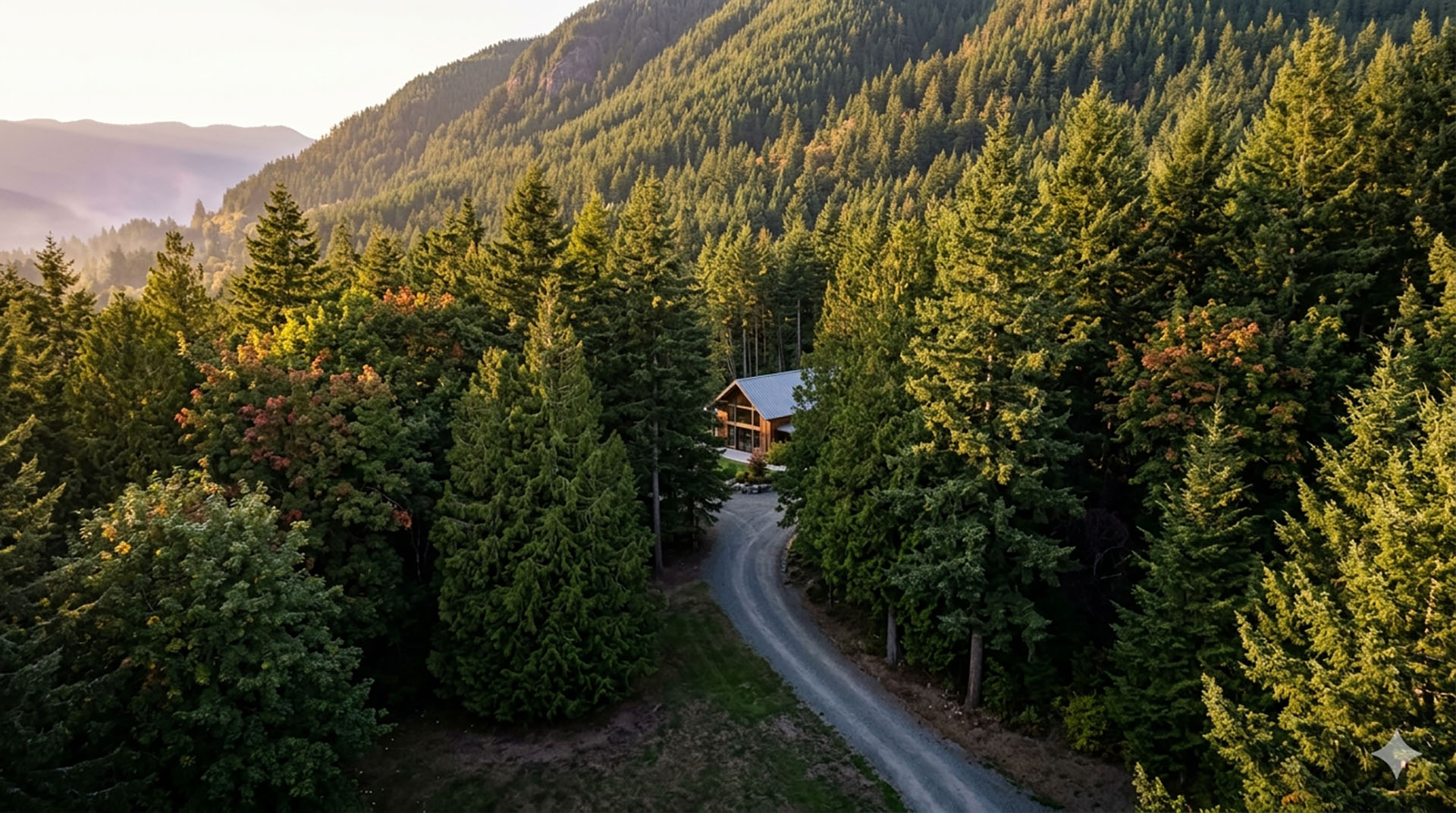
The Tiger Mountain Foothills cover the southeast pockets of Issaquah where the city limits give way to the West Tiger Mountain trail system and the protected forest that wraps around the eastern edge of King County. In 2026, with buyers looking for larger lots, mature trees, and direct trail access to one of the most popular hiking destinations in Washington, this part of Issaquah is a quietly strong option. If you want a home where you can walk out the door and be on the trail to Poo Poo Point in under ten minutes, with serious lot size and the calm of a neighborhood where you can hear birds before you can hear cars, the Foothills delivers.
What is it actually like to live in Tiger Mountain Foothills in 2026?
On a weekday morning, the Foothills feel genuinely quiet. Streets curve up the lower slope of Tiger Mountain with mature firs and cedars screening one home from the next. Driveways are long, lots are spread out, and most homes are not visible from the street. Residents leave for work between 7 and 8 AM, heading north toward I-90. The pace is calm, and you can hear birds and the occasional sound of trail traffic from the West Tiger trailheads.
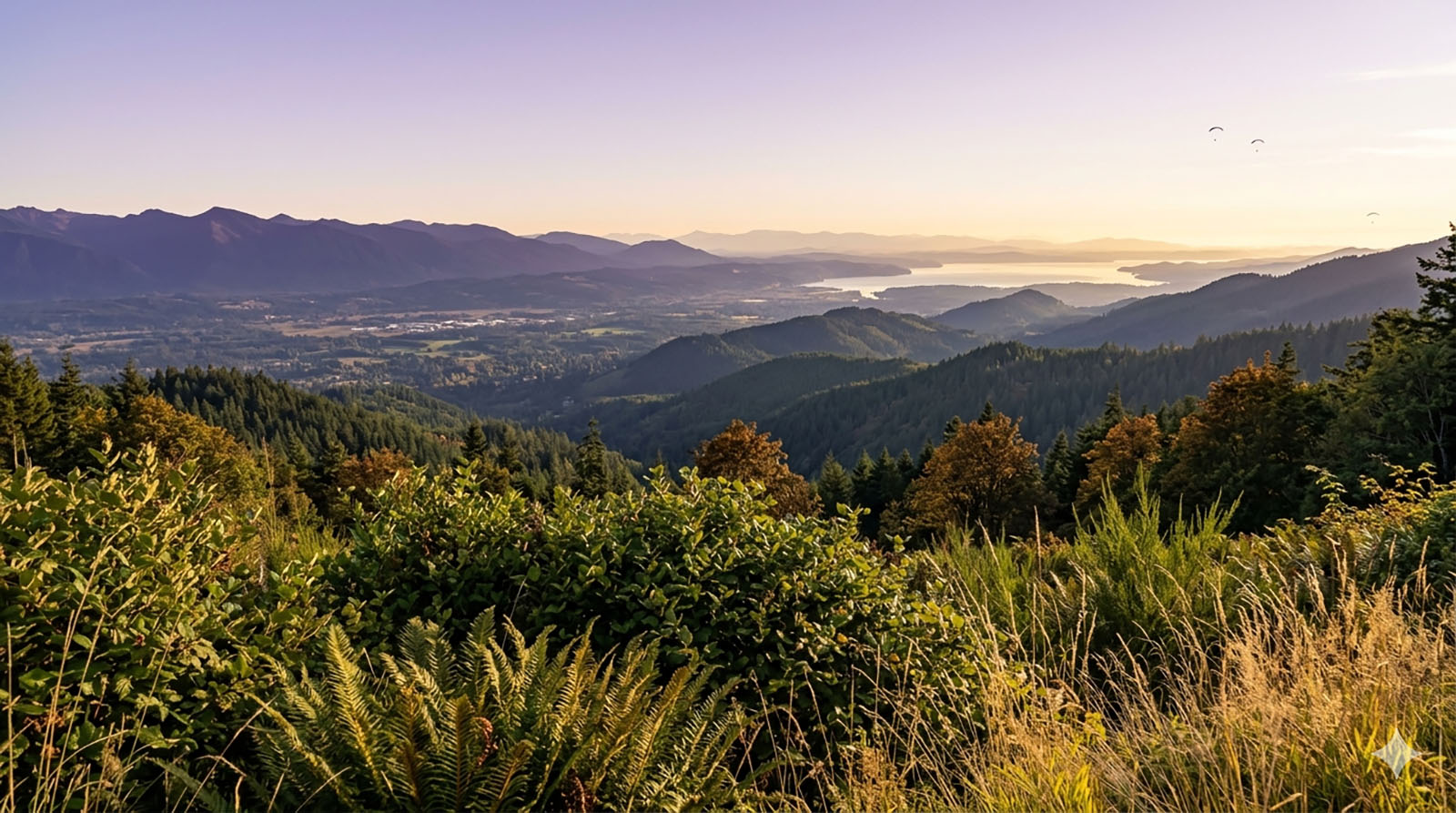
On a weekend, the Foothills stay quiet but turn more active for residents and visitors. Hikers pour into the West Tiger Mountain trailheads on Saturday and Sunday mornings, especially during paragliding season at Poo Poo Point. Residents adapt to this pattern by hitting the trails early or by accessing them from less-used trailheads on the back side of the mountain. The Issaquah Salmon Hatchery hosts events in fall that pull people from across the Eastside, but the Foothills stay relatively buffered from that activity.
Most residents are a mix of long-time owners who bought in the 1970s and 1980s when this part of Issaquah was considered far out, plus newer buyers from Bellevue and Sammamish who specifically wanted acreage and trail access. Many residents work from home or run businesses out of detached shops on the property. What separates the Foothills from other Issaquah neighborhoods is the immediate trail access. You will not find a closer walk-to-trail neighborhood inside Issaquah city limits.
Homes in Tiger Mountain Foothills: What the Data Shows
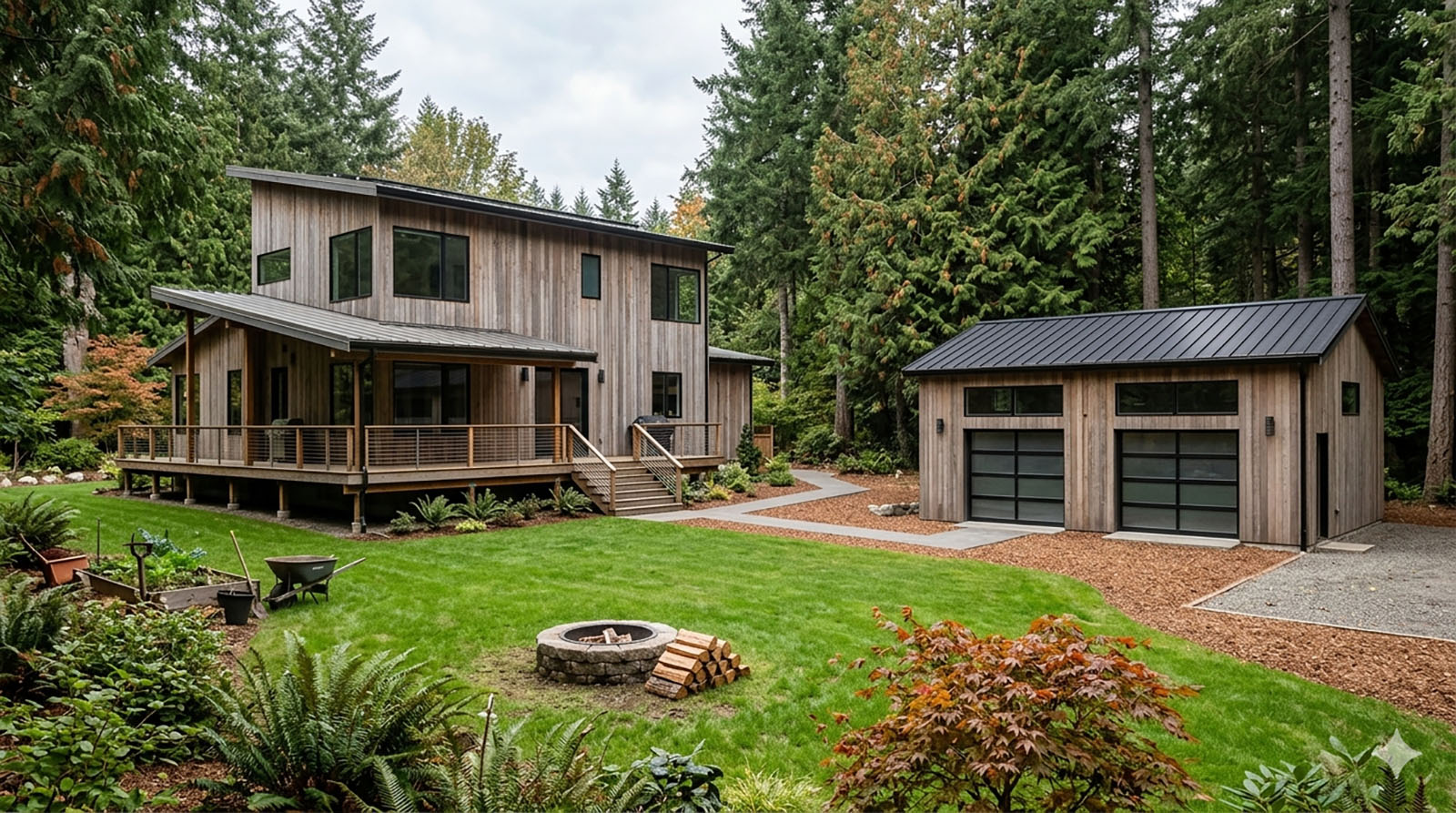
Most homes in the Foothills were built between the 1970s and the 2000s, with a smaller share of newer 2010s and 2020s custom rebuilds where someone has torn down an aging home and replaced it. You will find Pacific Northwest contemporary homes, cedar-clad ranches, custom builds from the 1990s, and a meaningful share of newer modern transitional homes on the rebuild lots. Single-family homes typically run 2,200 to 5,000 square feet on lots between half an acre and three acres, with a few larger legacy properties on the more established streets. Many homes have detached shops, barns, or outbuildings that add real utility for owners who use the property. There is no townhome or condo inventory in the Foothills. Detached single-family homes on substantial lots are the only product type.
| Market Pulse | Tiger Mountain Foothills (98027) | King County |
|---|---|---|
| Median Sales Price (May 2026) | ~$1,395,000 | ~$859,000 |
| Median Days on Market | ~30 days | ~28 days |
| Active Listings Change (vs. Jan 2026) | +16% | +30% |
Estimates based on current NWMLS data for the Tiger Mountain Foothills residential pockets within the 98027 ZIP code. Inventory turnover here is lower than newer Issaquah neighborhoods because long-time owners stay put. When a property does hit the market, motivated buyers move quickly.
Schools Serving Tiger Mountain Foothills
Most Foothills kids attend Issaquah Valley Elementary, then Issaquah Middle School, then Issaquah High School. All three schools sit five to ten minutes north of the neighborhood. Always confirm your specific address with the Issaquah School District before you write an offer because a few outlier properties have been reassigned over the years.
Issaquah Valley Elementary houses the Spanish Dual Language Immersion program and serves a diverse student body. Issaquah Middle School was rebuilt and modernized in recent years and offers strong music and STEM programs. Issaquah High has a strong four-year graduation rate, multiple AP programs, and a competitive athletics presence.
The school pipeline for the Foothills involves driving or busing for nearly all families. Walking distance is essentially zero given the spread-out nature of the neighborhood and the rural-feeling roads. Most kids ride buses to elementary and middle school, then drive themselves to Issaquah High once they are old enough.
Getting to Work from Tiger Mountain Foothills
Foothills residents typically take Front Street or Issaquah-Hobart Road north to reach I-90 at exit 17. The exact route depends on which side of the mountain you live on. The southern-most properties may use SR-18 to reach I-5 or I-405 for southern destinations.
| Destination | Distance | 2026 Peak Drive (AM) | Transit Option |
|---|---|---|---|
| Downtown Seattle | 19 miles | 38 to 58 min | I-90 / ST 554 from Issaquah Transit Center |
| Bellevue / Amazon Bellevue | 11 miles | 25 to 35 min | I-90 to I-405 / ST 554 |
| Microsoft (Redmond) | 14 miles | 30 to 40 min | I-90 to SR-520 / Connector Bus |
| SeaTac Airport | 23 miles | 38 to 52 min | I-405 to I-5 / Drive |
What I See as a Valuation Expert in Tiger Mountain Foothills
The biggest valuation factor in the Foothills is the lot, the systems, and the immediate trail access. On a 1985 home with 3,000 square feet of living space sitting on three-quarters of an acre, the lot itself can carry 45 to 60 percent of the appraised value, depending on size, slope, usability, and trail proximity. In this area, valuation weight goes heavily to lot grade, drainage, septic system condition where applicable, well capacity where applicable, and the condition of any outbuildings. A flat usable lot with a healthy septic system, a permitted shop, and walking distance to a trailhead will appraise much stronger than a same-size home on a steep slope with a failing system.
HOAs are rare in the Foothills. Most properties are fee simple, which means no monthly dues and no master association rules. The few exceptions are some pocket subdivisions that have small road maintenance HOAs in the $20 to $80 monthly range. Always read the title commitment carefully because some properties have private road easements with cost-sharing requirements that function like an informal HOA.
Within the Foothills, certain lots and pockets carry premium pricing. Properties with direct trail access from the property line, lots backing to Tiger Mountain State Forest, properties with newer wells and recently inspected septic systems, homes with significant outbuildings, and any home within walking distance of the Poo Poo Point trailhead tend to move first when they hit the market.
Explore Tiger Mountain Foothills Yourself
The fastest way to know if the Foothills fits is to drive Issaquah-Hobart Road south past the Issaquah retail core, then turn east onto a few of the side roads to see how the lots open up.
View Tiger Mountain Foothills on Google Maps →
Your guide to life outside Seattle.
253-350-0045 · greg@livingoutsideseattle.com · www.livingoutsideseattle.com
