

 Facebook
 X
X
 Pinterest
 Copy Link
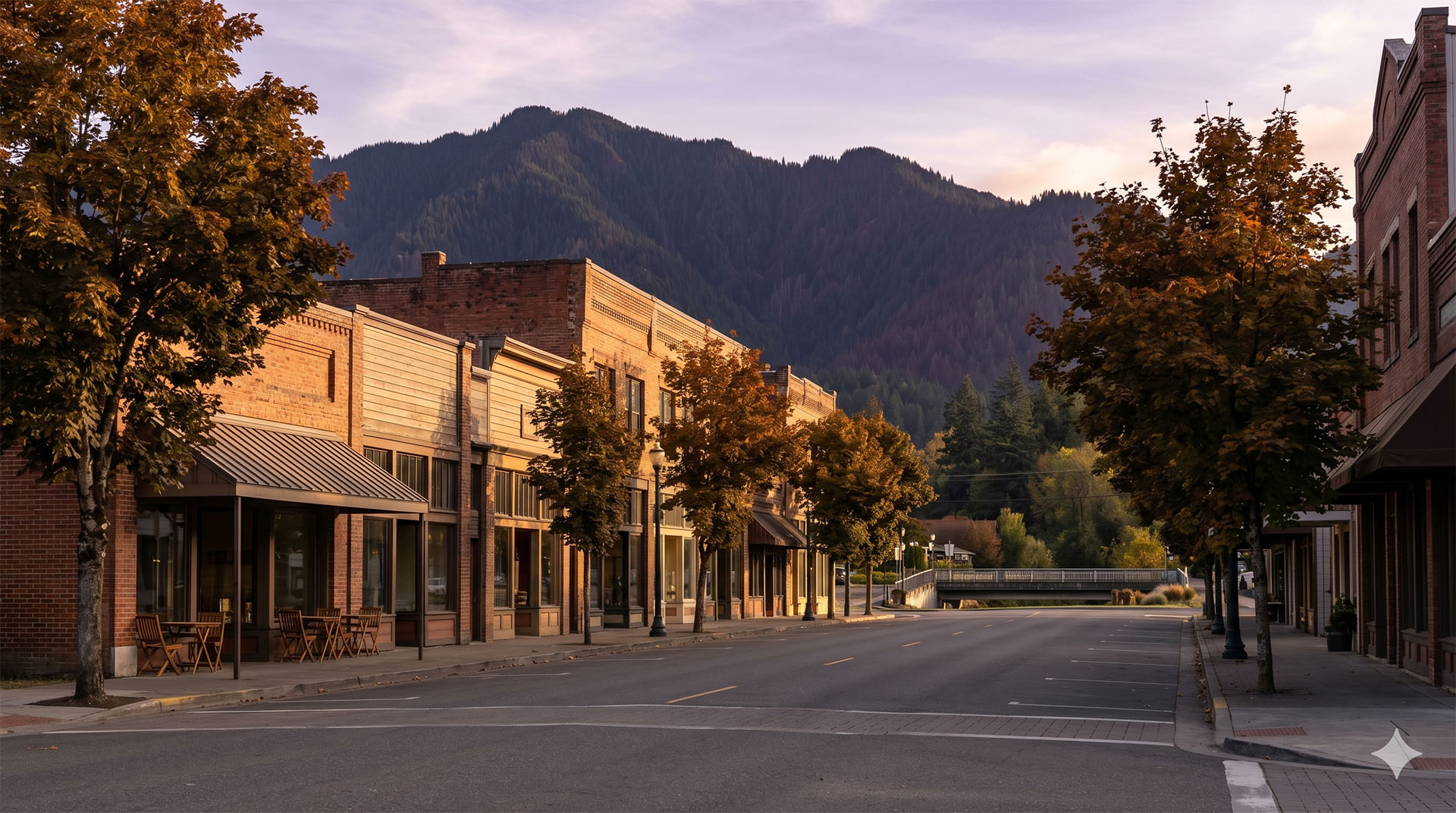
Olde Town is the historic heart of Issaquah, the part of the city that existed long before the Highlands and the master-planned communities up the hill. In 2026, with buyers looking for character, walkability, and a neighborhood that feels like a real place instead of a development, Olde Town is having a moment. If you want a home you can walk out of and grab coffee, see live salmon in the creek, and end your evening on a brewery patio, this is the part of Issaquah that delivers.
What is it actually like to live in Olde Town in 2026?
On a weekday morning, Olde Town feels like a small town that decided to keep being a small town. People walk to coffee at Issaquah Coffee Company. Kids bike to Issaquah Valley Elementary. Commuters head a few blocks over to Front Street to catch the express bus into Seattle. The streets are narrow and lined with mature trees, and a lot of homes still have their original front porches.
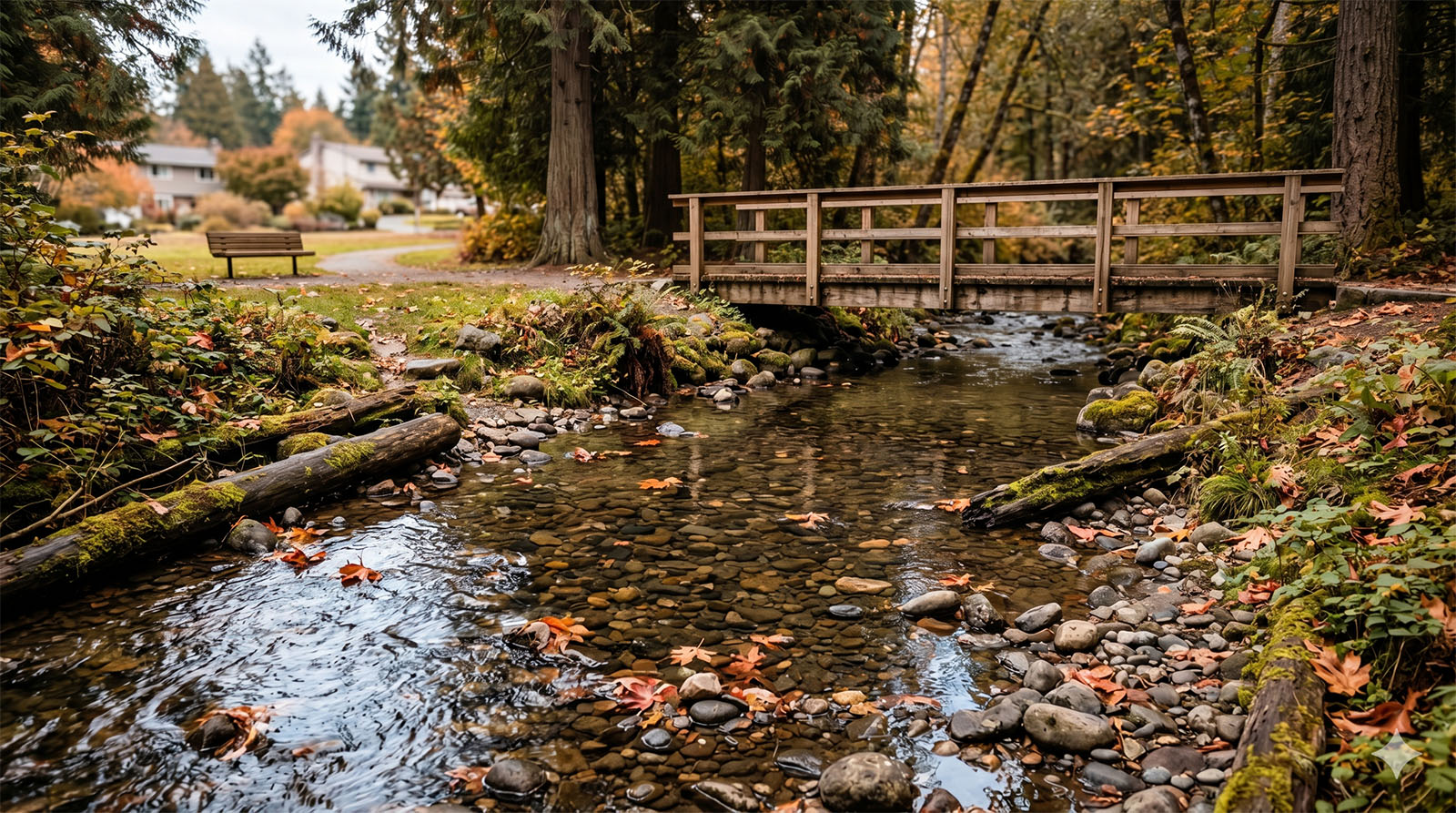
On a weekend, the neighborhood comes alive. Front Street fills with people moving between the bakery, the brewery, the bookstore, and the small boutique shops. The Issaquah Salmon Hatchery is busy every fall when the chinook return up the creek. The Saturday farmers market sets up at Pickering Barn just north of downtown. In October, Salmon Days takes over the entire neighborhood and pulls in people from across the Eastside.
Most residents here are a mix. You have long-time Issaquah residents who bought decades ago and stayed. You have younger buyers who wanted character and walkability over square footage. You have a growing share of empty nesters downsizing from larger Eastside homes. What separates Olde Town from Issaquah Highlands is simple: this neighborhood was not designed in one sweep. It grew over a hundred years, one block at a time. That gives it a kind of character no master-planned community can copy, but it also means lot sizes, home conditions, and street layouts vary widely from block to block.
Homes in Olde Town: What the Data Shows
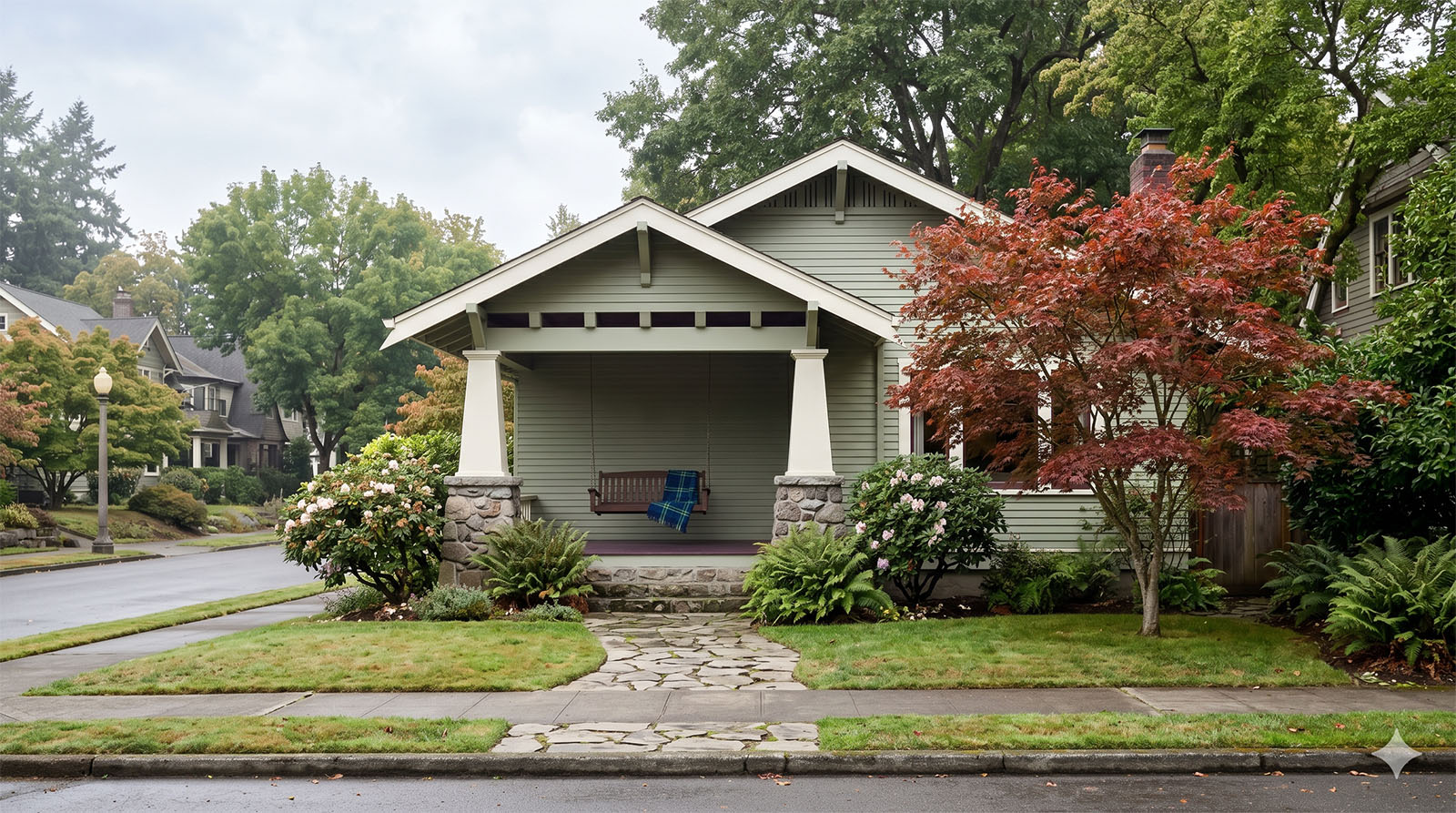
Olde Town housing is a real mix. You will find early-1900s craftsman bungalows with original woodwork, mid-century cottages from the 1940s and 1950s, post-war ramblers, and newer infill builds where someone tore down an old structure and put up something modern. Single-family homes typically run 1,200 to 2,400 square feet on lots between 4,000 and 8,000 square feet, with a handful of larger legacy properties on quarter-acre lots tucked along the side streets. The architectural mix is part of the charm. There are also condos and townhomes near Front Street for buyers who want the walkability without the maintenance of an old house.
| Market Pulse | Olde Town (98027) | King County |
|---|---|---|
| Median Sales Price (May 2026) | ~$945,000 | ~$859,000 |
| Median Days on Market | ~30 days | ~28 days |
| Active Listings Change (vs. Jan 2026) | +28% | +30% |
Estimates based on current NWMLS data for the 98027 ZIP code. Older homes here often need updating, which is reflected in price spread. A renovated craftsman commands a strong premium over a same-size original-condition home.
Schools Serving Olde Town
Most Olde Town kids attend Issaquah Valley Elementary, then Issaquah Middle School, then Issaquah High School. All three schools sit within walking or short-driving distance of the neighborhood, which is rare in modern subdivisions.
Issaquah Valley Elementary is one of the older buildings in the district and houses the Spanish Dual Language Immersion program, which is a real draw if you want bilingual education. Issaquah Middle School was rebuilt and modernized in recent years and offers strong music and STEM programs. Issaquah High has a strong four-year graduation rate, multiple AP programs, and a competitive athletics presence.
The Olde Town pipeline has the advantage of being walkable, which is unusual. A kindergartener at Issaquah Valley can walk to school in many cases, then ride a bike to Issaquah Middle, then drive a few minutes to Issaquah High. That continuity is one of the quiet reasons families stay in Olde Town long-term.
Getting to Work from Olde Town
Olde Town has direct access to I-90 via the Front Street / Sunset Way interchange and the Newport Way exit a few blocks west. The Issaquah Transit Center sits inside the neighborhood, which is the only Issaquah neighborhood where you can walk to your bus stop instead of drive.
| Destination | Distance | 2026 Peak Drive (AM) | Transit Option |
|---|---|---|---|
| Downtown Seattle | 17 miles | 35 to 55 min | I-90 / ST 554 from walkable transit center |
| Bellevue / Amazon Bellevue | 9 miles | 22 to 32 min | I-90 to I-405 / ST 554 |
| Microsoft (Redmond) | 12 miles | 28 to 38 min | I-90 to SR-520 / Connector Bus |
| SeaTac Airport | 22 miles | 35 to 50 min | I-405 to I-5 / Drive |
What I See as a Valuation Expert in Olde Town
The biggest valuation factor in Olde Town is honestly the home itself, not the neighborhood. Two craftsman bungalows on the same block can appraise $200,000 apart based purely on the condition of the foundation, the wiring, the roof, and whether the kitchen and bathrooms have been touched in the last 15 years. In Olde Town, valuation weight goes mostly to the systems and the structure, not the cosmetics. An untouched 1925 craftsman with old knob-and-tube wiring and a settled foundation will appraise much lower than a same-vintage home that has been sympathetically updated.
HOAs are rare in Olde Town. Most properties are fee simple, which means no monthly dues and no master association rules to worry about. The few exceptions are the newer townhome and condo projects near Front Street. Those have HOAs in the $250 to $500 monthly range, depending on what is covered. If you are looking at one of those, always pull the resale certificate and reserve study before you write an offer.
Original-condition craftsman homes that have been well-maintained also command character premiums that newer homes simply cannot copy. Buyers who specifically value walkability and history are willing to pay 8 to 15 percent above an equivalent home in a less-walkable Issaquah neighborhood.
Explore Olde Town Yourself
The fastest way to know if Olde Town fits is to walk Front Street on a Saturday morning, then wander a few blocks east into the residential streets to see the housing variety up close.
View Olde Town on Google Maps →
Your guide to life outside Seattle.
253-350-0045 · greg@livingoutsideseattle.com · www.livingoutsideseattle.com
